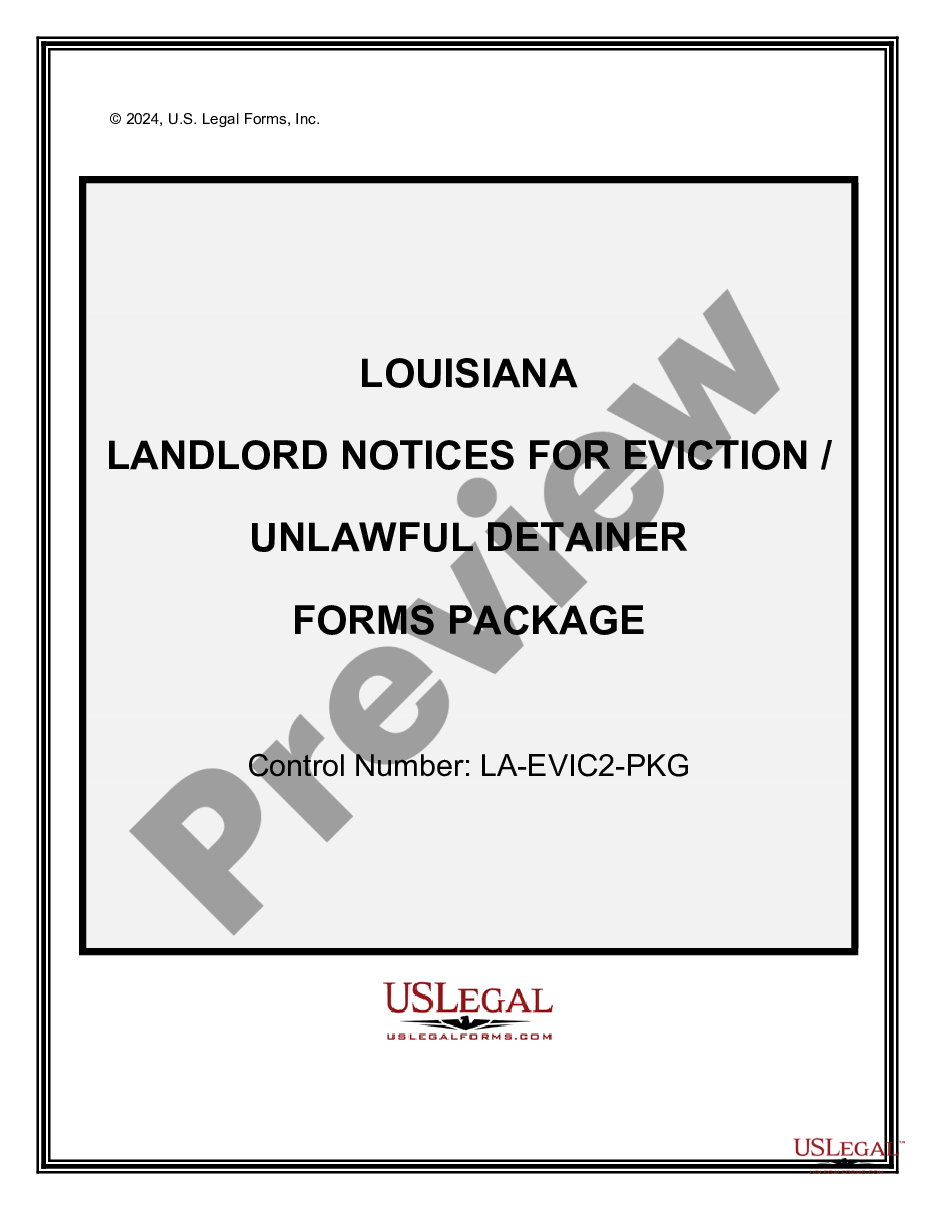
Louisiana Landlord Notices for Eviction / Unlawful Detainer Forms Package
Overview of this form package
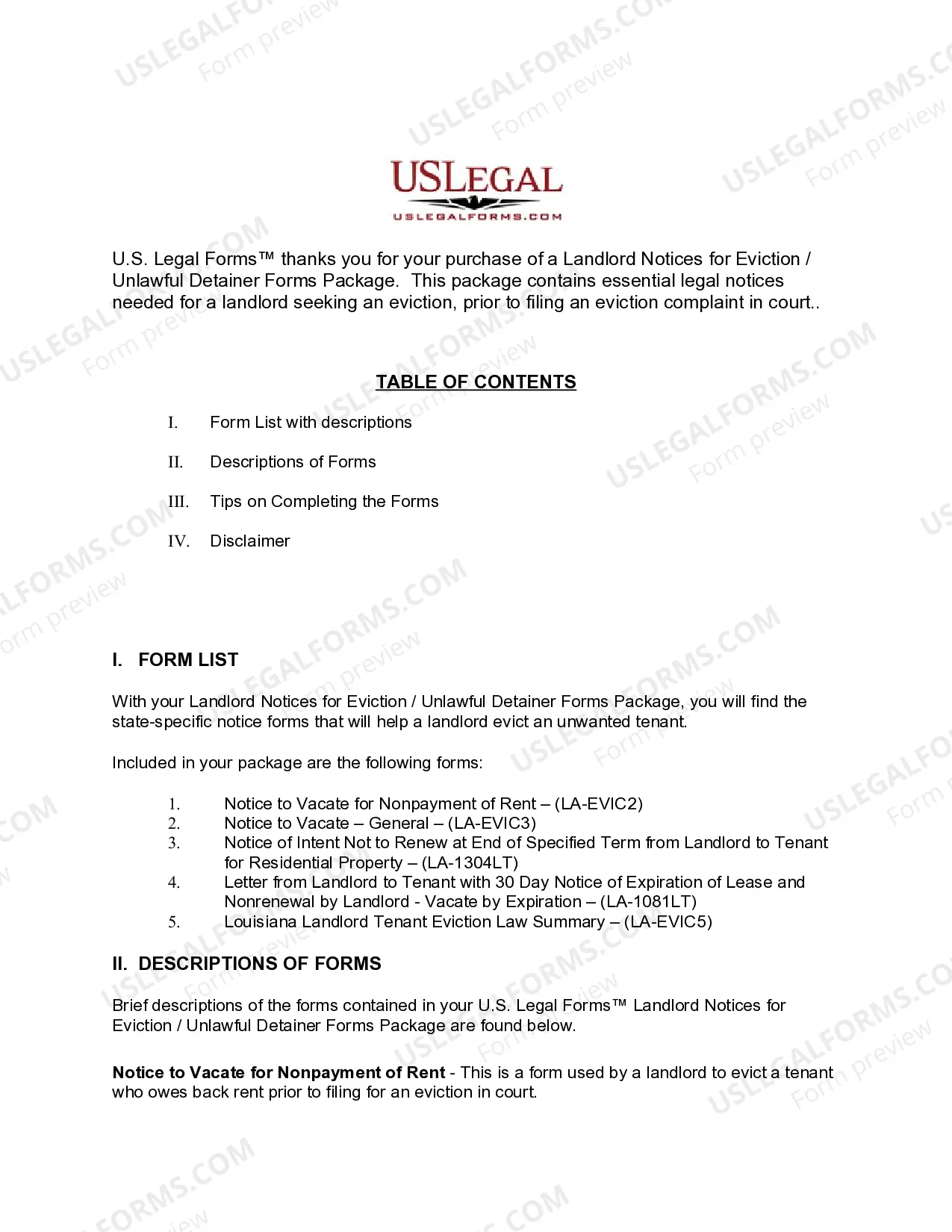
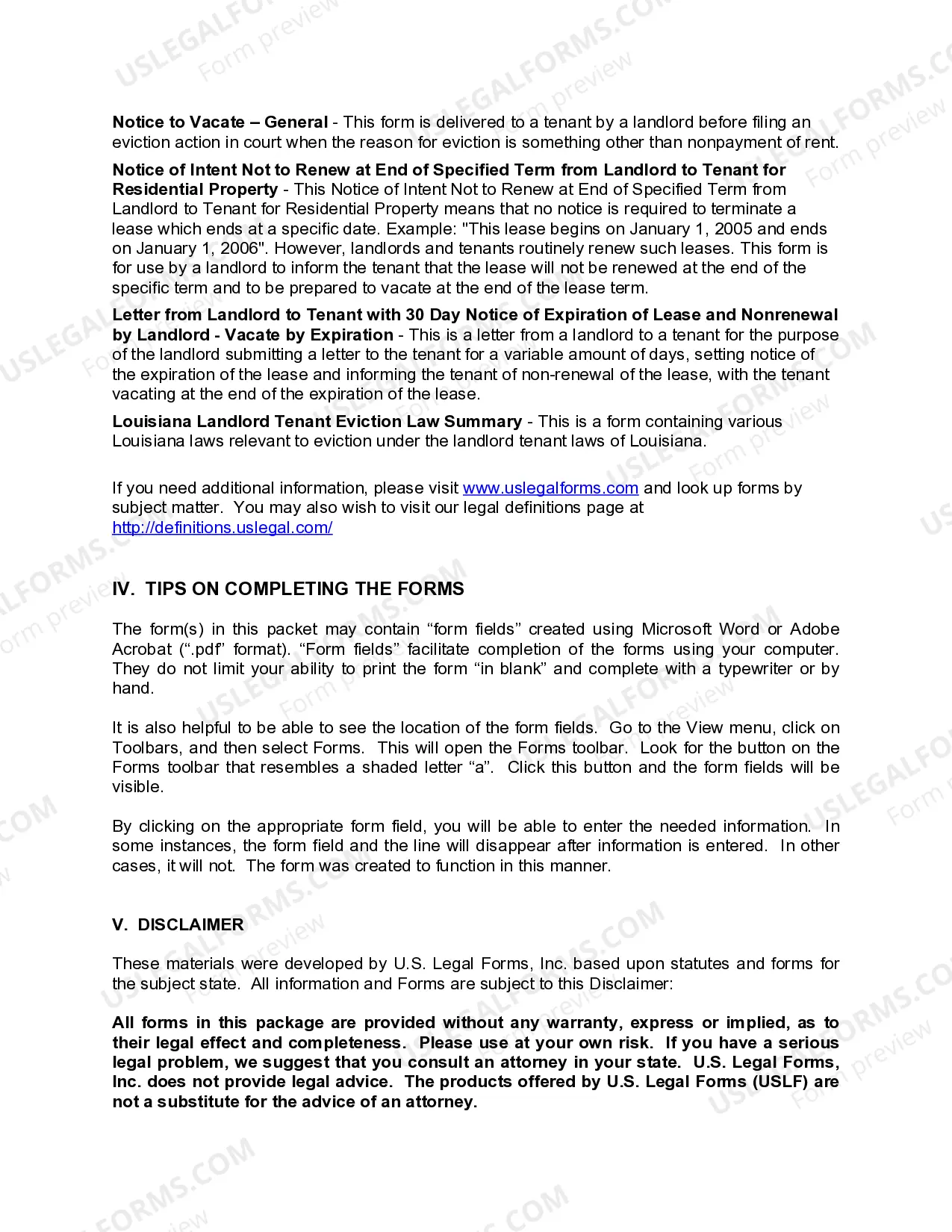
The Louisiana Landlord Notices for Eviction / Unlawful Detainer Forms Package provides a collection of legally required notices that a landlord must use before initiating an eviction process. This package is specifically tailored to comply with Louisiana's eviction laws, ensuring that landlords have the appropriate documentation for various eviction scenarios. Whether you are dealing with nonpayment of rent or other lease violations, this package equips you with the necessary forms to fulfill your legal obligations while managing tenant issues effectively.
Forms provided in this package
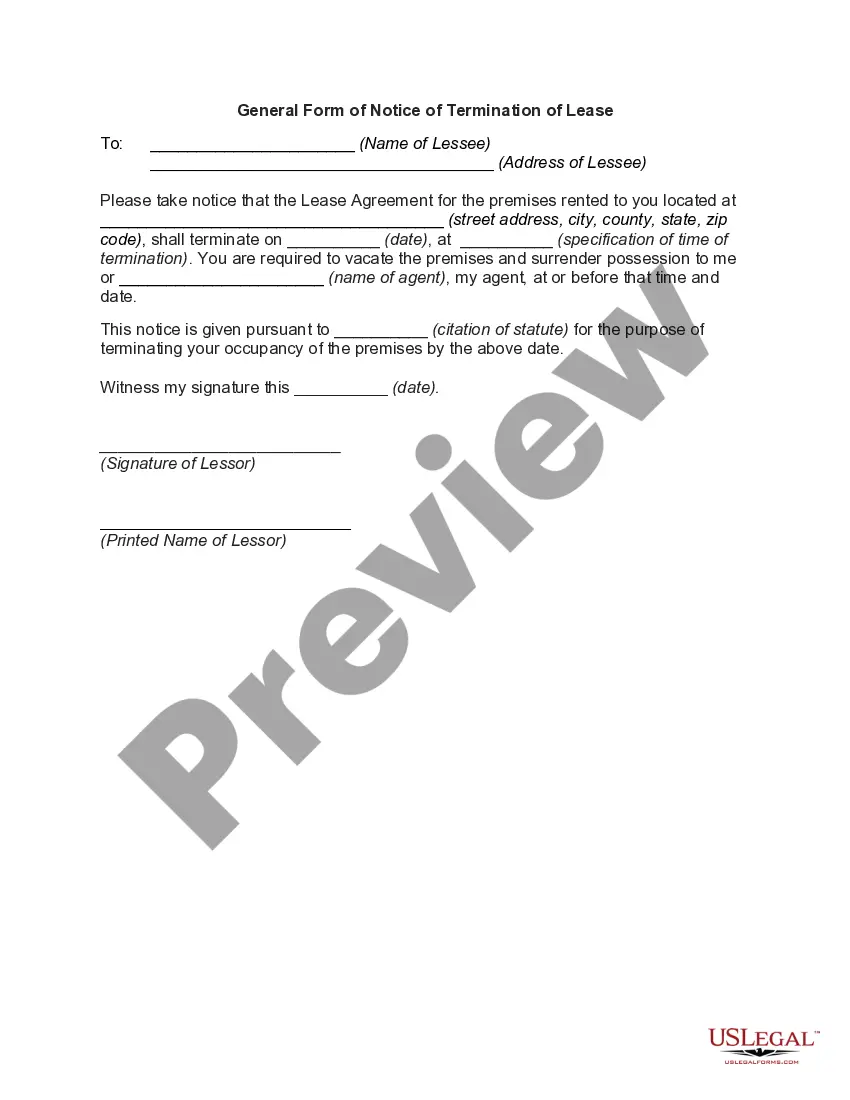

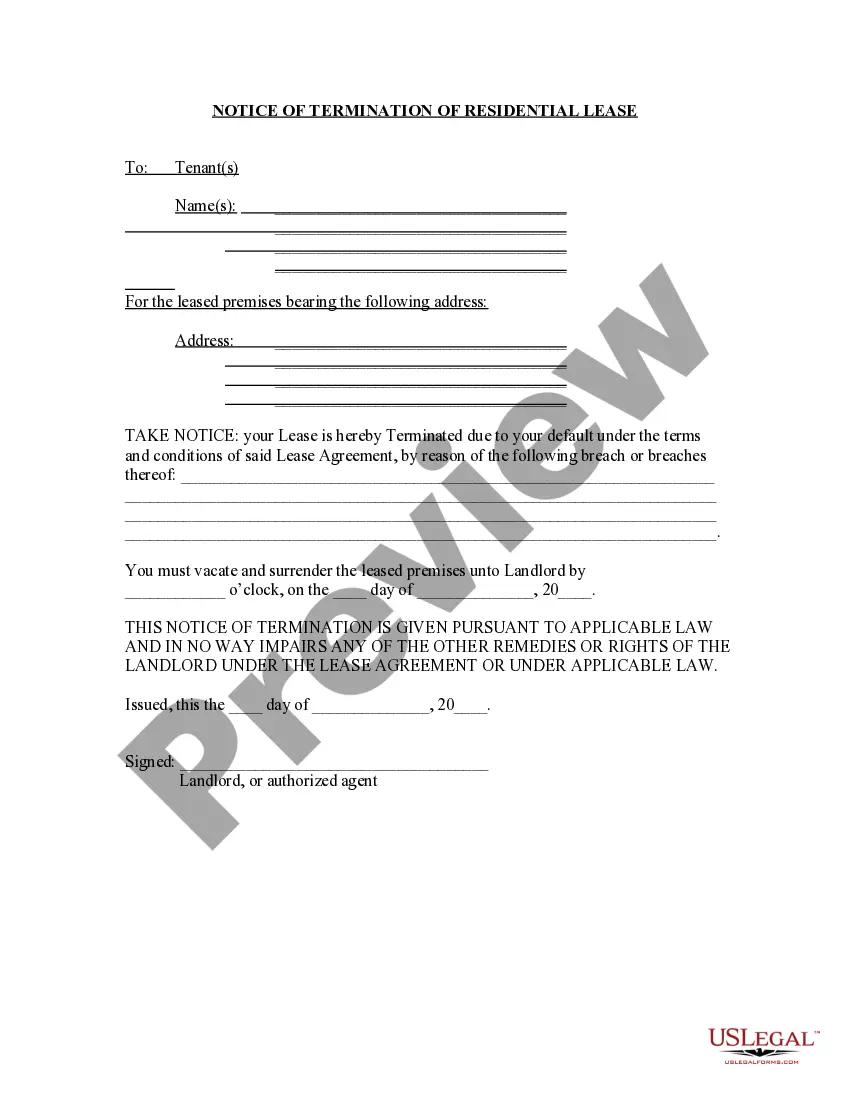
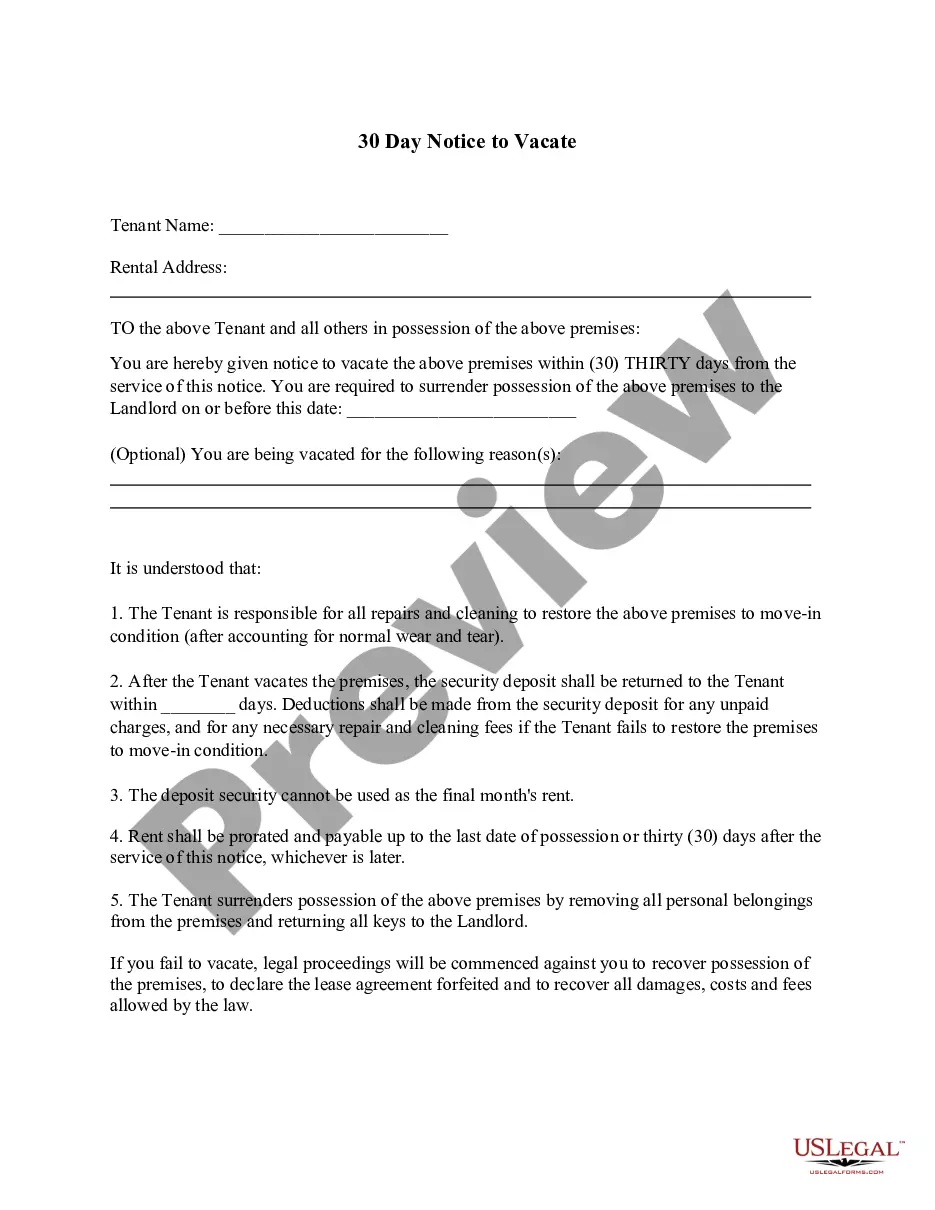
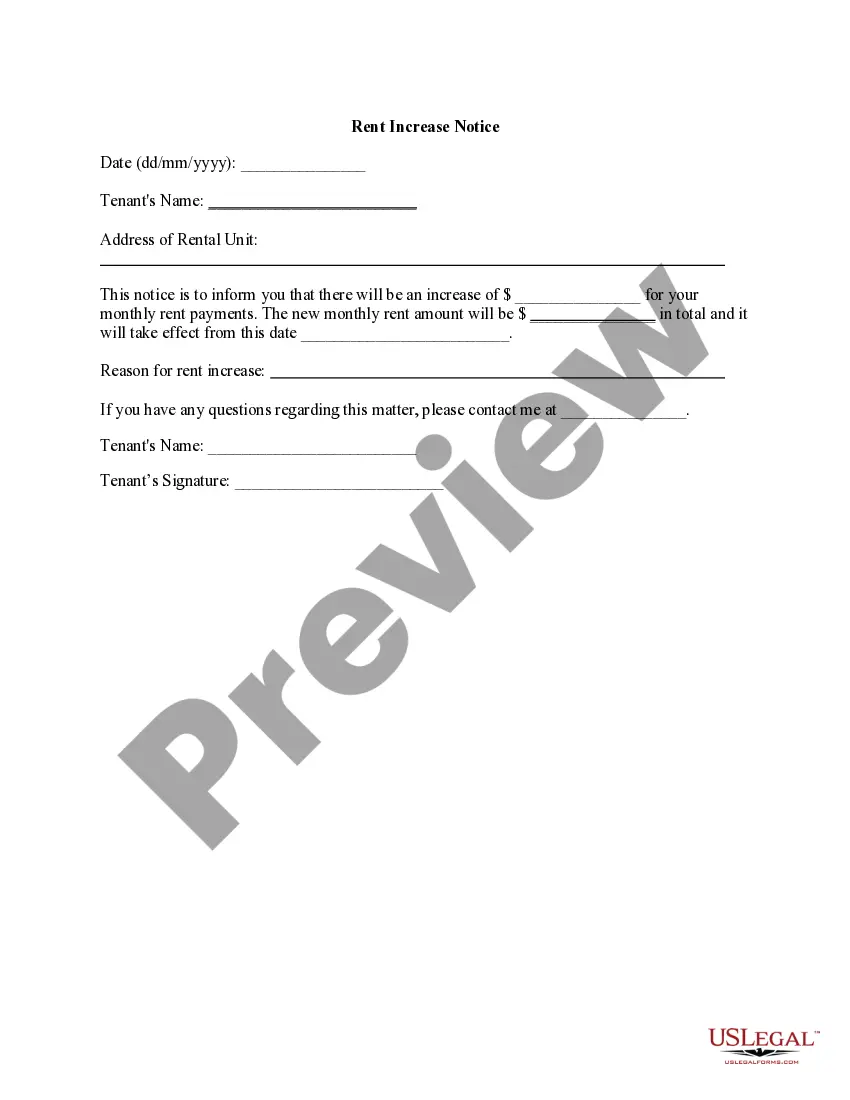
When to use this form package
This form package is essential for landlords who need to provide formal notices to tenants prior to filing an eviction complaint in court. You may need to use this package in the following situations:
- When a tenant has not paid rent and you want to initiate eviction for nonpayment.
- When you wish to evict a tenant for reasons other than nonpayment.
- When you decide not to renew a lease at the end of its term.
- When you need to notify tenants about the expiration of their lease.
Who this form package is for
- Landlords managing residential properties in Louisiana.
- Property managers responsible for tenant relations and lease enforcement.
- Real estate professionals assisting landlords with eviction processes.
- Individuals unfamiliar with the eviction process looking for a simple solution.
Instructions for completing these forms
- Review the included notices and select the appropriate one based on your situation.
- Fill in the required fields, including tenant information and specific dates.
- Ensure that the notice is dated and signed where indicated.
- Deliver the completed notice to the tenant according to legal requirements.
- Maintain a copy of the notice for your records before proceeding with any further legal action.
Do forms in this package need to be notarized?
Most forms in this package do not require notarization. However, local laws or specific situations may demand it. Our online notarization service, powered by Notarize, lets you complete the process through a verified video call, available anytime.
Get your form ready online
Our built-in tools help you complete, sign, share, and store your documents in one place.
Make edits, fill in missing information, and update formatting in US Legal Forms—just like you would in MS Word.
Download a copy, print it, send it by email, or mail it via USPS—whatever works best for your next step.
Sign and collect signatures with our SignNow integration. Send to multiple recipients, set reminders, and more. Go Premium to unlock E-Sign.
If this form requires notarization, complete it online through a secure video call—no need to meet a notary in person or wait for an appointment.
We protect your documents and personal data by following strict security and privacy standards.

Make edits, fill in missing information, and update formatting in US Legal Forms—just like you would in MS Word.

Download a copy, print it, send it by email, or mail it via USPS—whatever works best for your next step.

Sign and collect signatures with our SignNow integration. Send to multiple recipients, set reminders, and more. Go Premium to unlock E-Sign.

If this form requires notarization, complete it online through a secure video call—no need to meet a notary in person or wait for an appointment.

We protect your documents and personal data by following strict security and privacy standards.
Mistakes to watch out for
- Not providing the notice in a timely manner as required by law.
- Failing to complete all necessary fields, which may render the notice invalid.
- Not keeping a copy of the notice for your records.
- Misunderstanding the requirements for delivering the notice to the tenant.
Why complete this package online
- Convenience of downloading forms immediately without waiting for delivery.
- Easy to edit and customize forms to fit your specific needs.
- Access to state-specific legal information to ensure compliance.
- Forms created by licensed attorneys, providing reliability and peace of mind.
Legal use & context
- These notices are legally binding and should be used to maintain compliance with eviction laws in Louisiana.
- Failure to follow proper notice procedures can result in delays or legal issues during eviction proceedings.
- Landlords should always keep documentation of the notices issued for legal protection.
What to keep in mind
- The Louisiana Landlord Notices for Eviction / Unlawful Detainer Forms Package is designed specifically for landlords in Louisiana.
- Properly completed notices are essential for legally initiating an eviction process.
- Using these forms can help prevent legal errors and ensure compliance with state laws.
Looking for another form?
Form popularity
FAQ
Know Your Rights. It goes without saying, but take some time to know your rights as a tenant. Keep Good Records. Make Sure Notice is Proper. Service of the Unlawful Detainer. Talking to an Attorney. Managing Partner Lipton Legal Group, A PC Beverly Hills, CA.
Evictions in Louisiana typically follow a 5 to 10 day timeline mandated by its Code of Civil Procedure. Most evictions are handled in Justice of the Peace Courts. Otherwise, a landlord must file suit in the county or parish where the property is located.
Address the Tenant(s) Named in the Residential Lease. List the Lease Information. Notify the Tenant of the Eviction. Give a Reason for the Eviction. Serve the Eviction Notice to the Tenant(s)
Address the Tenant(s) Named in the Residential Lease. List the Lease Information. Notify the Tenant of the Eviction. Give a Reason for the Eviction. Serve the Eviction Notice to the Tenant(s)
Eviction Process for No Lease / End of Lease In the state of Louisiana, if tenants hold over, or stay in the rental unit after the rental term has expired, then the landlord must give tenants notice before evicting them. This can include tenants without a written lease and week-to-week and month-to-month tenants.
Serve written notice. All eviction processes must begin with the serving of written notice. File papers with a judge. If the notice period has come to a close and the issues have not been fixed, you must file a petition with the justice of the peace in the county where the unit is located. Go to court.
Courts commonly refer to eviction actions as "forcible entry and detainer" or "unlawful detainer" actions. The legal theory is that the landlord alleges the tenant unlawfully continues to have use and possession of the rental property, and the landlord seeks the assistance of the court to have the tenant removed.
As soon as rent is late or a violation has occurred, the landlord can give the tenant a five-day notice to vacate, and the tenant must move out of the rental unit by the end of the five days. If the tenant does not move out, then the landlord can go to court and file an eviction lawsuit against the tenant.
The most effective way to serve a notice of eviction is to send the notice via certified mail with a return receipt. After this is done, the notice of eviction is posted conspicuously on the property, such as the front door or garage.