Kentucky Mutual Wills Package with Last Wills and Testaments for Married Couple with Adult and Minor Children
What this document covers
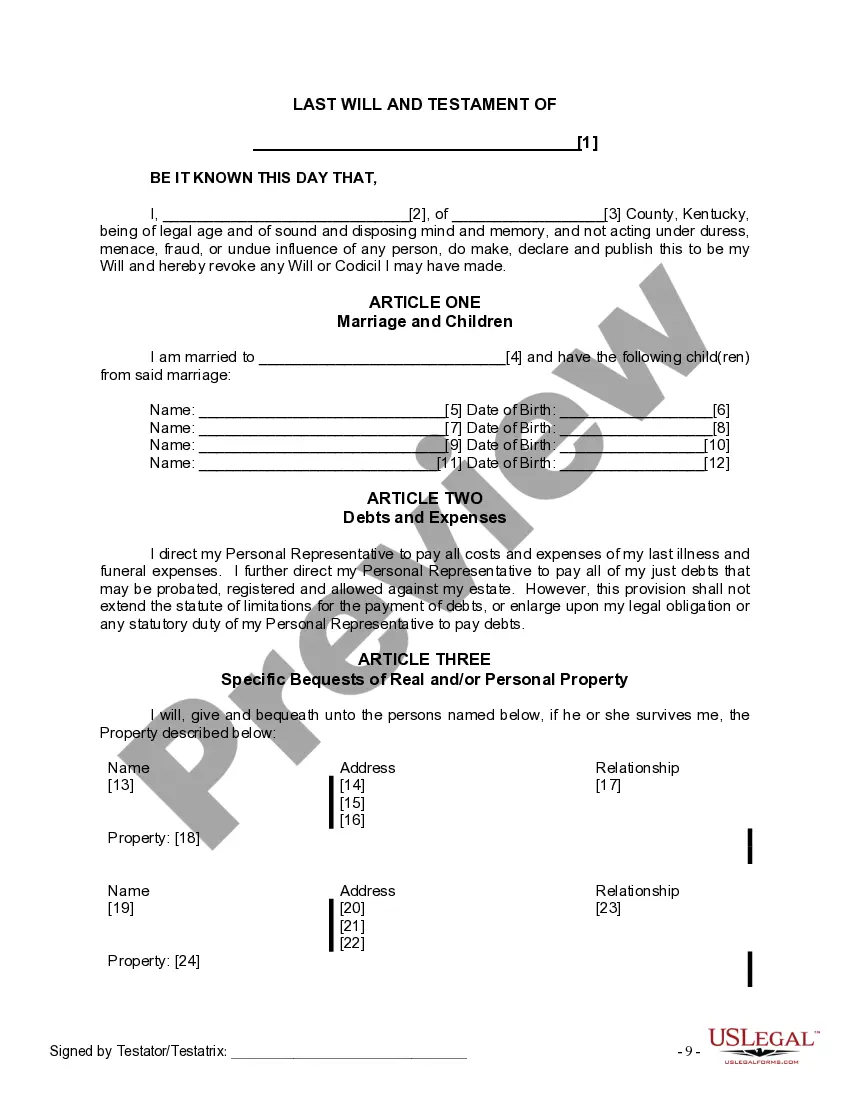
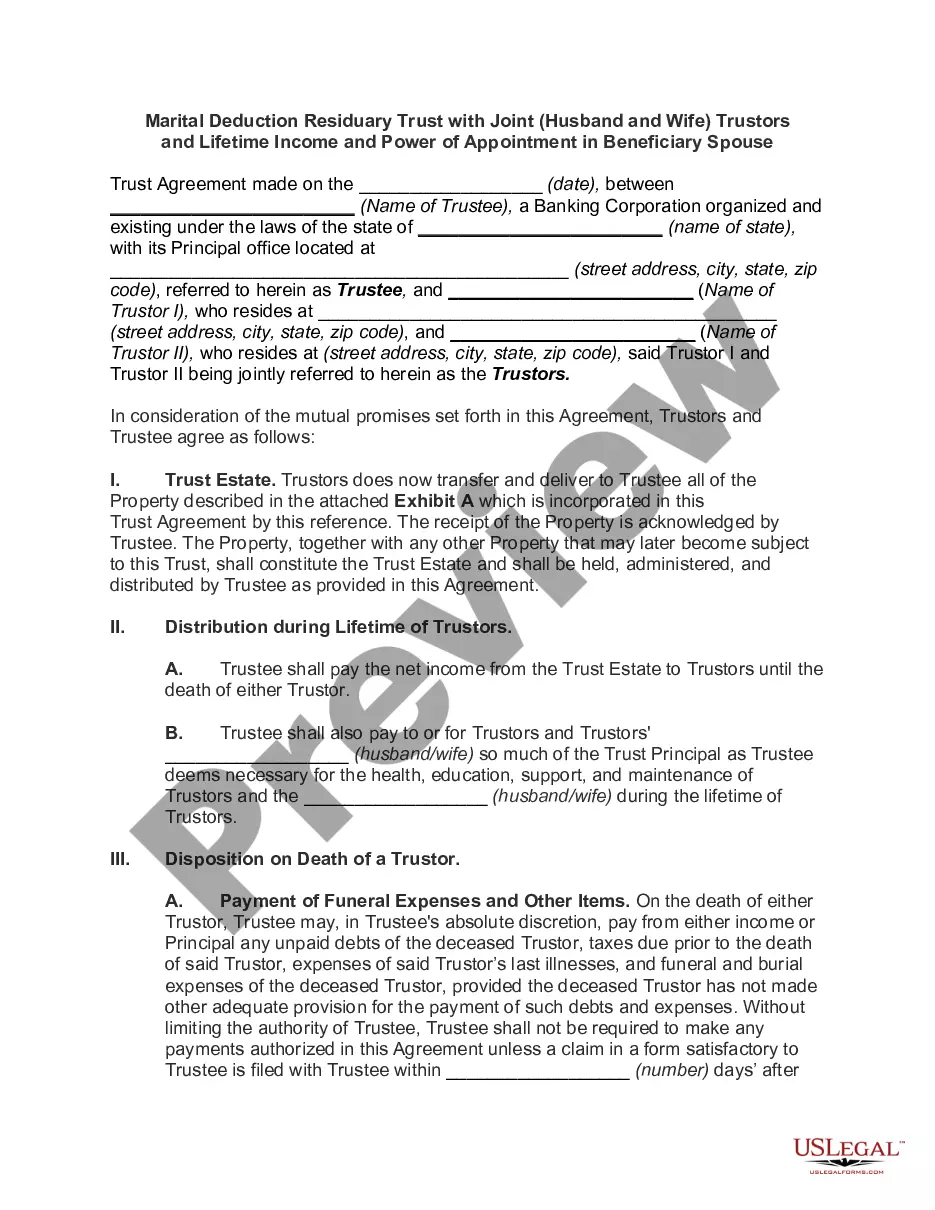
The Mutual Wills Package for Married Couples with Adult and Minor Children is designed to help two spouses create legally binding wills that outline the distribution of their assets upon death. This package is particularly beneficial as it includes provisions for both adult and minor children, along with instructions for appointing guardians and trustees. Unlike individual wills, this package ensures that both spouses' wishes are documented collectively, facilitating a unified estate plan that caters to their family's needs.
Key parts of this document
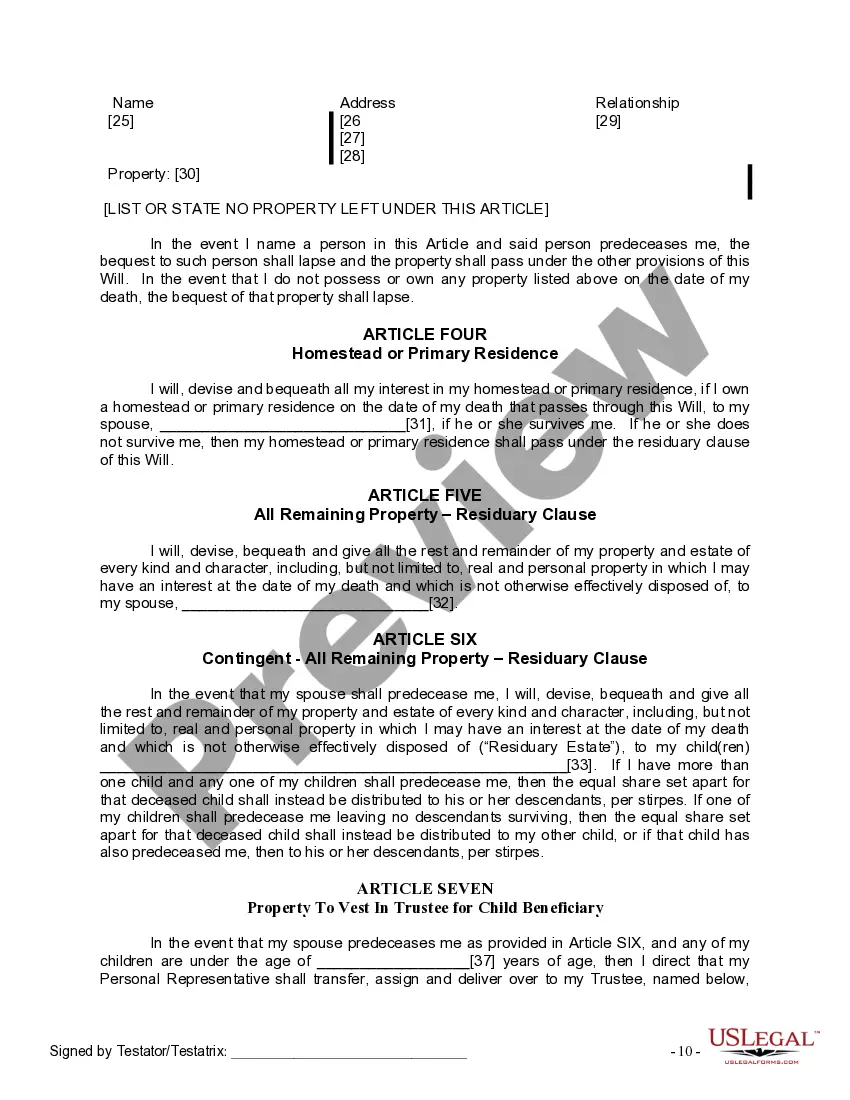
- Two wills, one for each spouse, with clauses tailored for both adult and minor children.
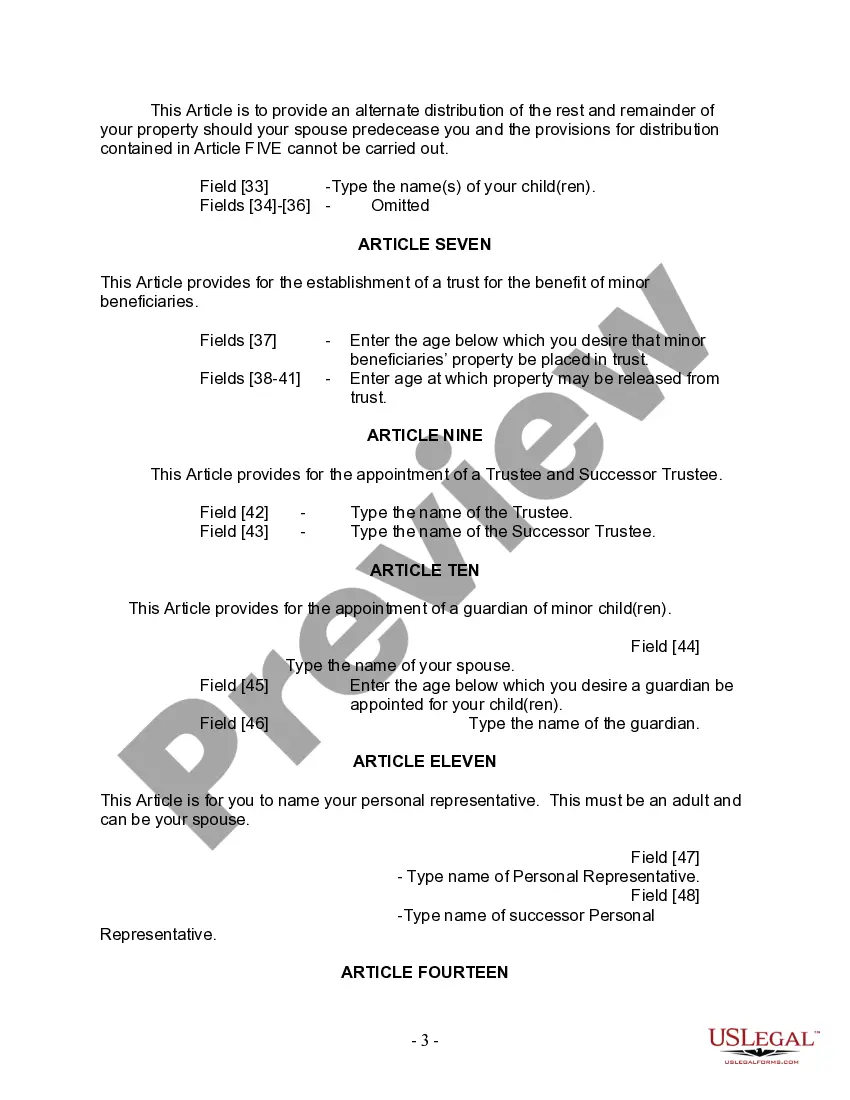
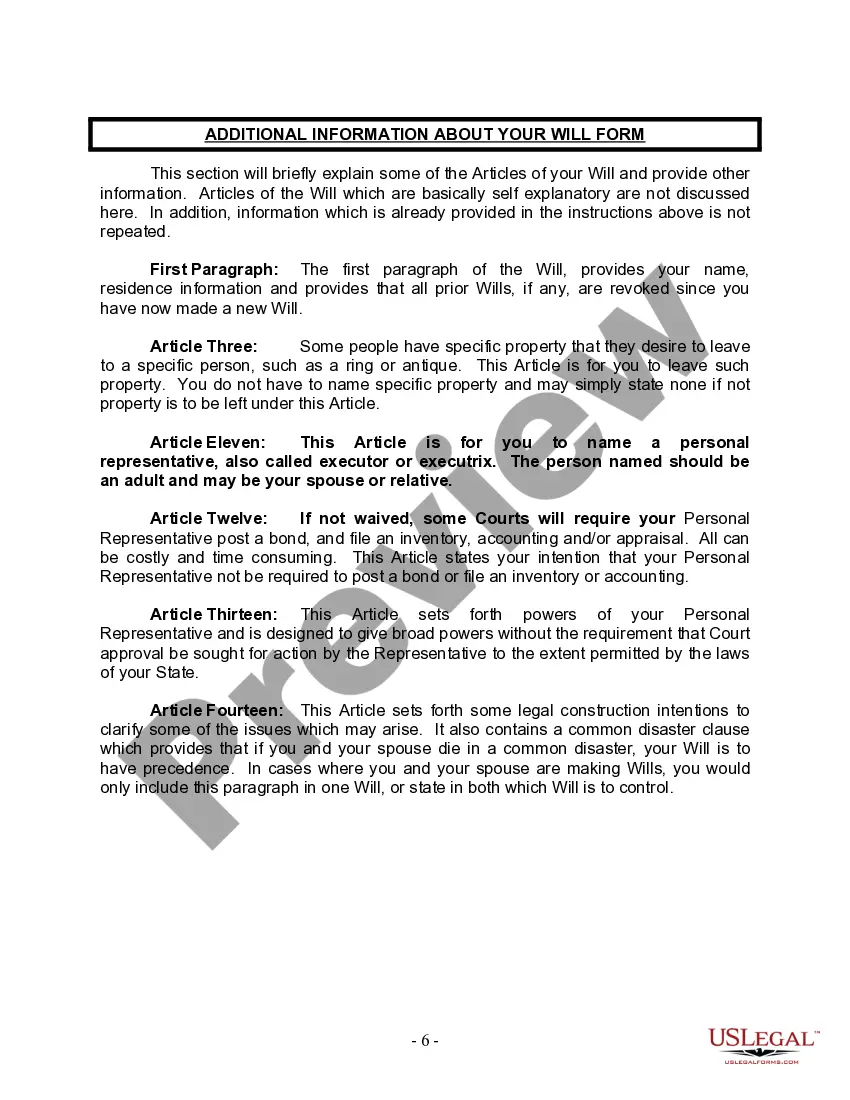
- Appointment of a personal representative (executor) to manage estate affairs.
- Detailed specifications for the distribution of property and specific bequests.
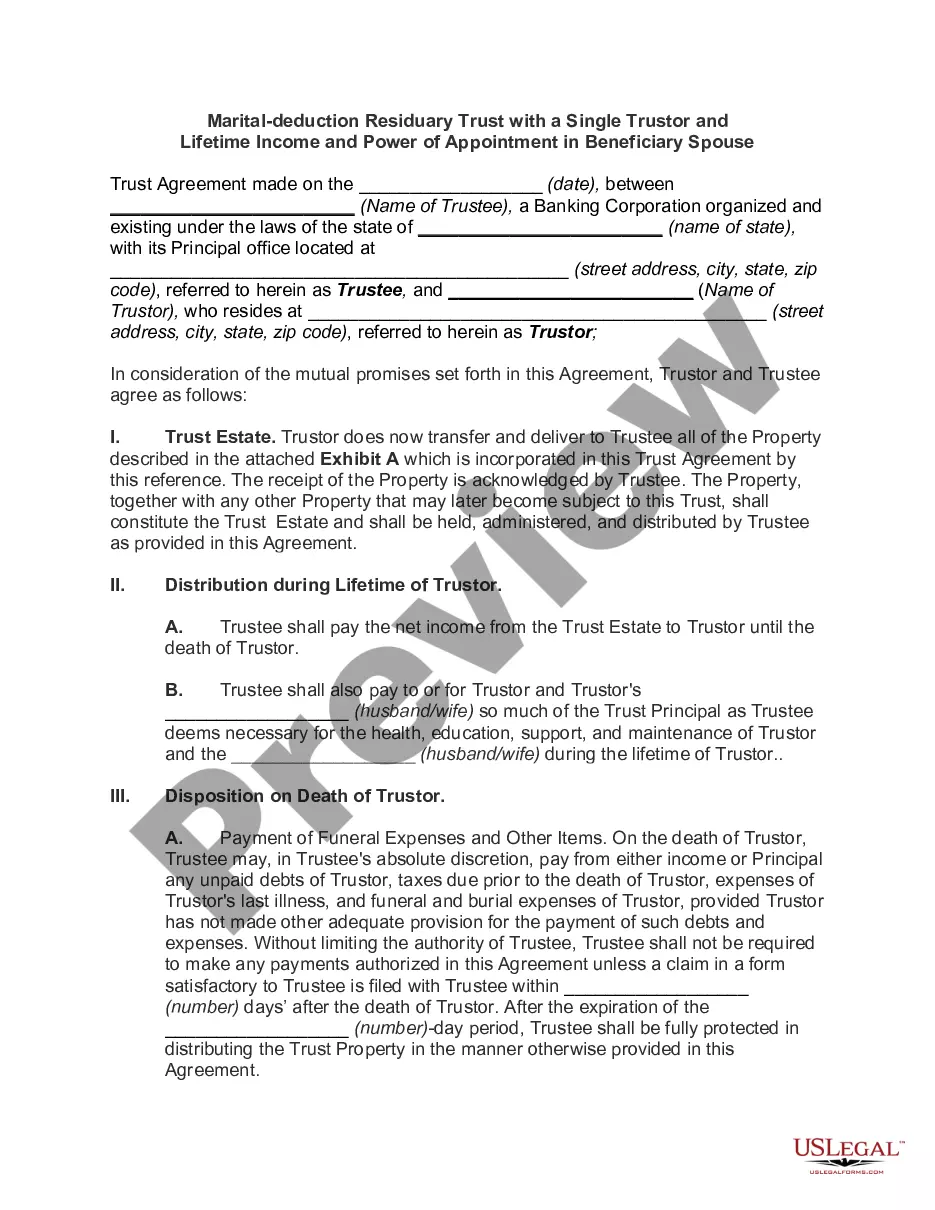
- Establishment of a trust for minor children, specifying guardian and trustee roles.
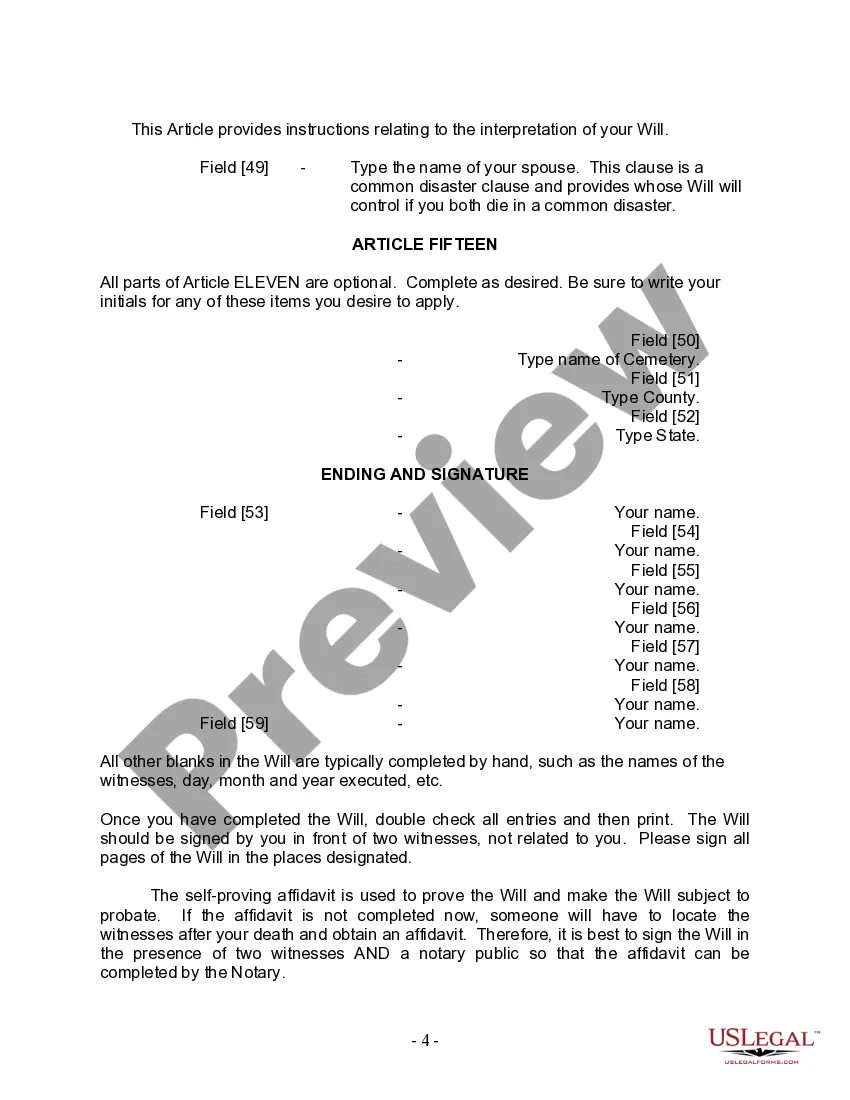
- Instructions on signing the wills with witnesses and potentially a notary public.





When to use this form
This form is particularly useful for married couples looking to streamline their estate planning. Use this package if you want to ensure that your assets are distributed according to your wishes after both spouses pass away, especially if you have minor children who require guardianship or trusteeship arrangements.
Who needs this form
- Married couples with both minor and adult children.
- Couples looking to establish a mutual understanding of asset distribution.
- Spouses who want to plan for potential incapacity or unexpected events.
Steps to complete this form
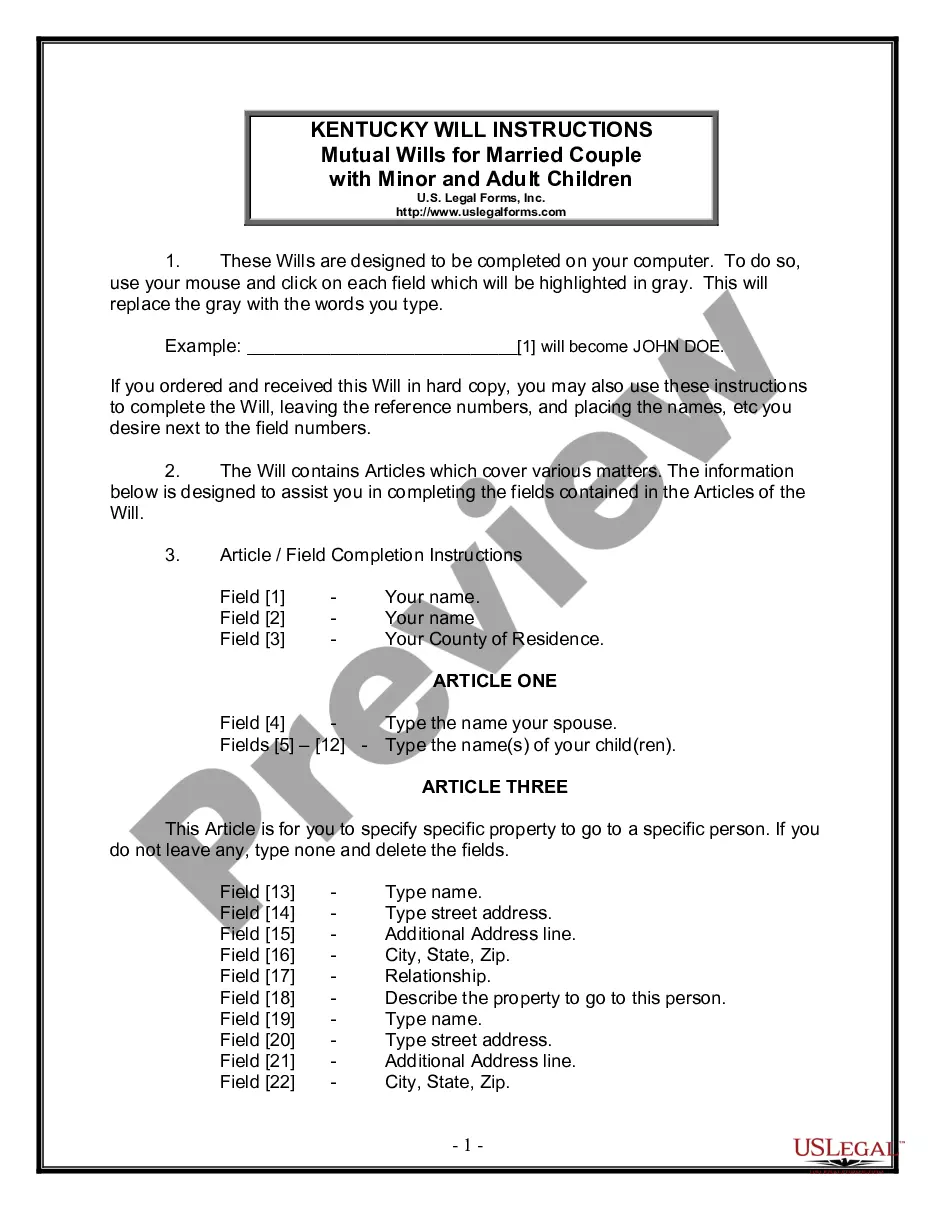
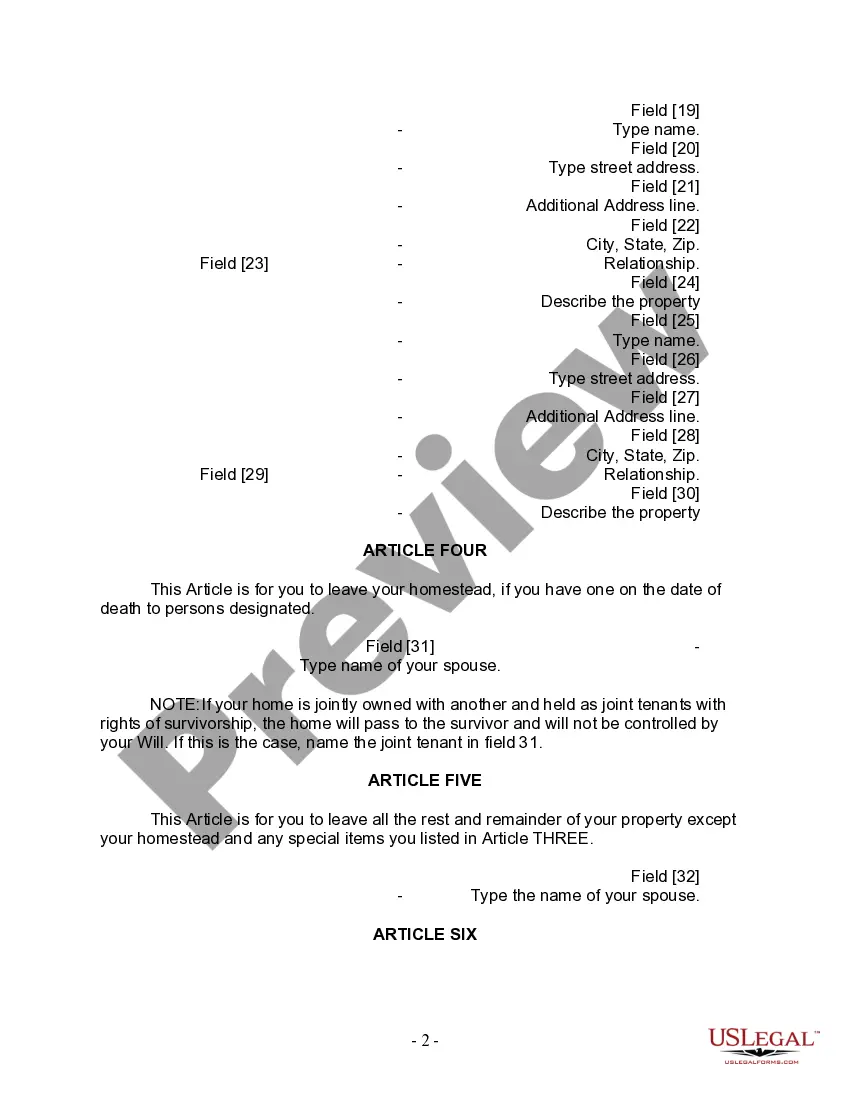
- Identify the parties: Enter the names of both spouses and their county of residence.
- Specify the beneficiaries: List all children and any specific individuals intended to receive bequests.
- Complete the asset distribution: Clearly state how properties and assets should be divided among the beneficiaries.
- Choose guardians and trustees: Give the names of individuals who will care for minor children and manage their inheritance.
- Sign the wills in the presence of two witnesses and a notary, if required by your state.
Notarization guidance
Yes, this form must be notarized to be legally valid. Notarization ensures that the wills are recognized by the state, supporting their legal standing. US Legal Forms provides integrated online notarization services, making the process safe and convenient.
Get your form ready online
Our built-in tools help you complete, sign, share, and store your documents in one place.
Make edits, fill in missing information, and update formatting in US Legal Forms—just like you would in MS Word.
Download a copy, print it, send it by email, or mail it via USPS—whatever works best for your next step.
Sign and collect signatures with our SignNow integration. Send to multiple recipients, set reminders, and more. Go Premium to unlock E-Sign.
If this form requires notarization, complete it online through a secure video call—no need to meet a notary in person or wait for an appointment.
We protect your documents and personal data by following strict security and privacy standards.

Make edits, fill in missing information, and update formatting in US Legal Forms—just like you would in MS Word.

Download a copy, print it, send it by email, or mail it via USPS—whatever works best for your next step.

Sign and collect signatures with our SignNow integration. Send to multiple recipients, set reminders, and more. Go Premium to unlock E-Sign.

If this form requires notarization, complete it online through a secure video call—no need to meet a notary in person or wait for an appointment.

We protect your documents and personal data by following strict security and privacy standards.
Mistakes to watch out for
- Failing to properly witness or notarize the wills, which can invalidate them.
- Neglecting to update the wills after major life changes, such as births or deaths.
- Not clearly specifying guardianship arrangements for minor children.
Why use this form online
- Convenience of completing the forms at your own pace from home.
- Easy edits allow for quick revisions in response to changing circumstances.
- Access to professionally drafted forms, ensuring legal compliance.
Looking for another form?
Form popularity
FAQ
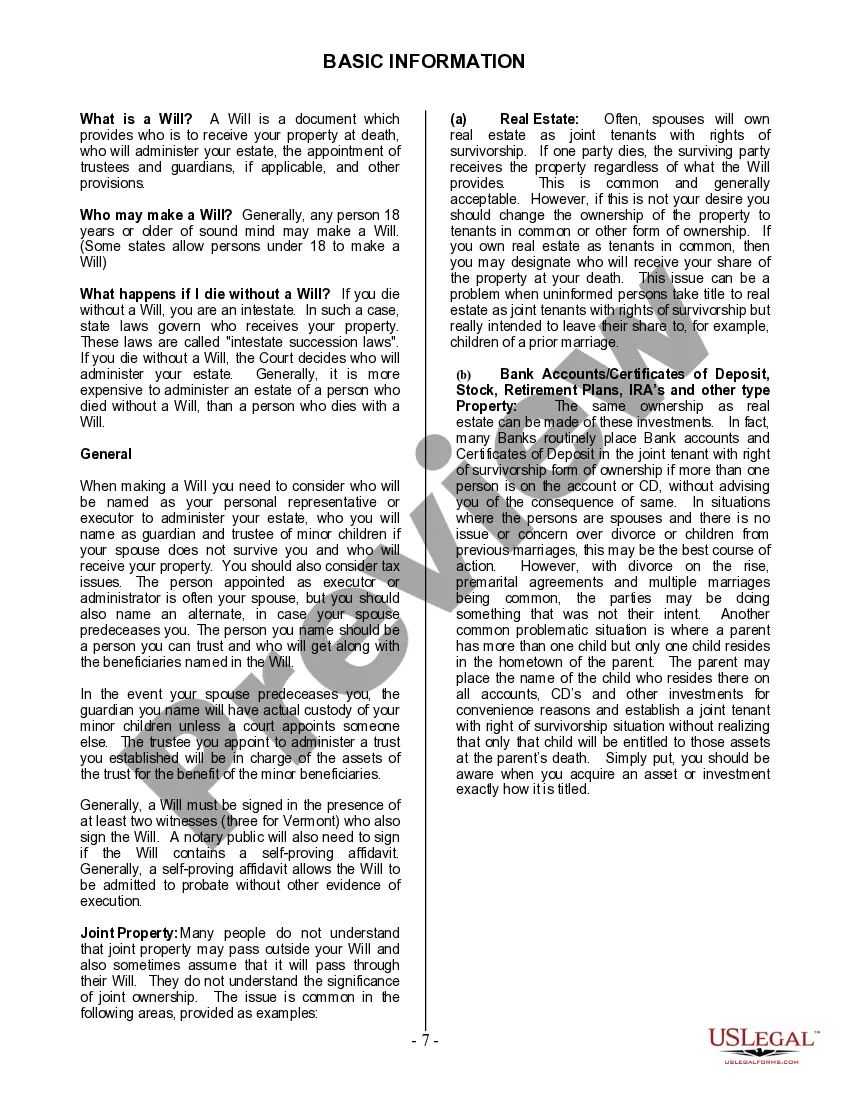
Most single people should have a will. A will can help you determine who will get your property (including your home, business, pets, and digital assets), name guardians for your children, and name an executor. A will also puts your wishes in writing so there's no confusion about your intentions.
Property in a living trust. One of the ways to avoid probate is to set up a living trust. Retirement plan proceeds, including money from a pension, IRA, or 401(k) Stocks and bonds held in beneficiary. Proceeds from a payable-on-death bank account.
While you can write your own last will and testament, it's very important to follow your state's requirements. If the court finds it invalid, someone other than your chosen executor could handle your estate and distribute your assets differently than you intended.
Create the initial document. Start by titling the document Last Will and Testament" and including your full legal name and address. Designate an executor. Appoint a guardian. Name the beneficiaries. Designate the assets. Ask witnesses to sign your will. Store your will in a safe place.
Mirror wills are based on the idea that married or unmarried couples will likely have the same wishes regarding their estate. No matter which spouse dies first, the estates are handled the same way. The basic structure of a mirror will is similar to an individual last will.
The reality is, however, that both you and your spouse should each have your own will, and it should be planned as soon as possible. Some couples think that they can have one joint will together, but this is not a sound approach.
A joint will is one that two people, typically a married couple, sign together. Instead of each spouse having a separate will, they have one document that they've both agreed to. Most joint wills are written such that when one spouse dies, their portion of the estate passes to the other.
Joint wills are usually created by married couples. They often state that: After one spouse has died, all the couple's property will be left to the surviving spouse; and. After the surviving spouse dies, the remaining property will be left to the couple's children.
The Free Last Will and Testament Template for Word is compatible with Word 2003 or later versions.