Kentucky Special or Limited Power of Attorney for Real Estate Sales Transaction By Seller
Understanding this form
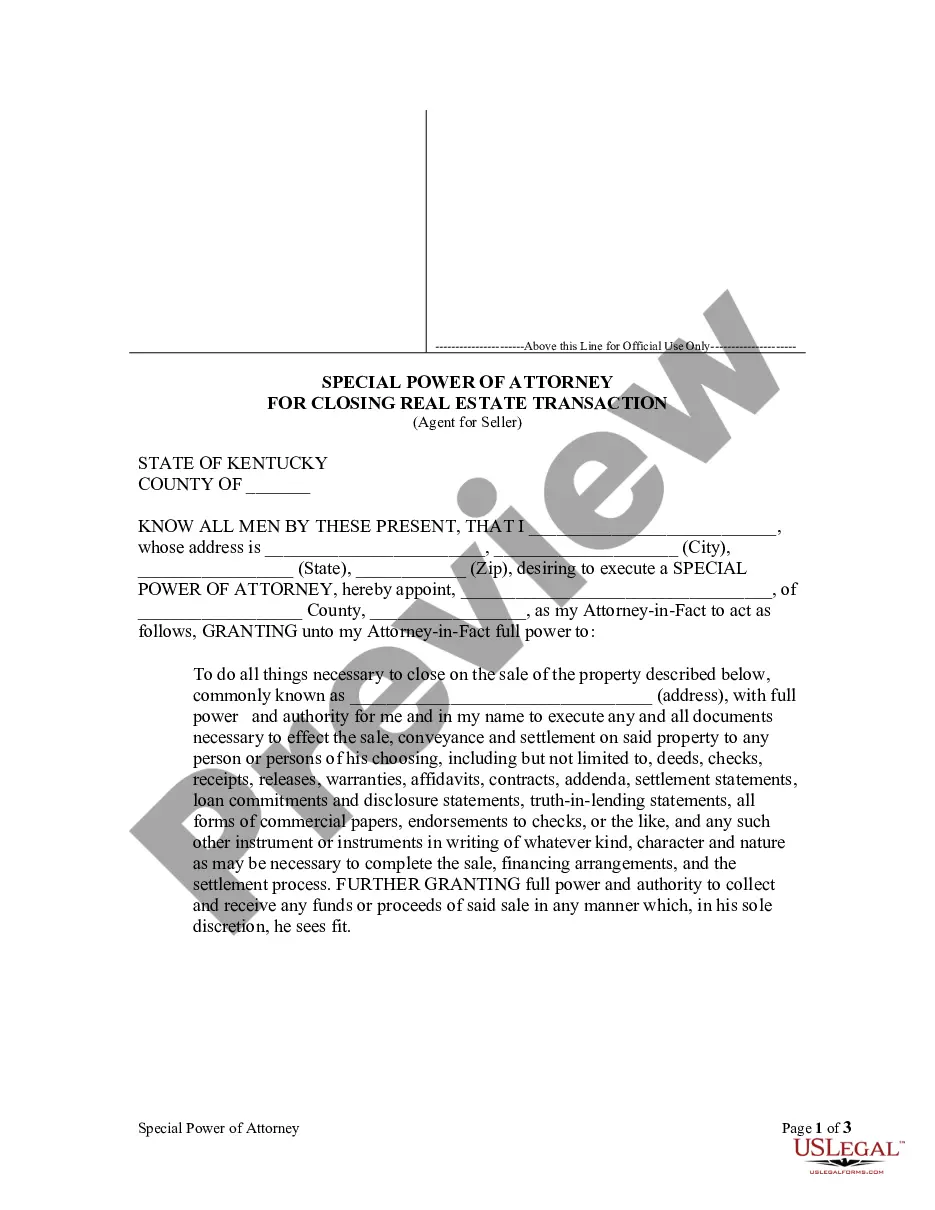
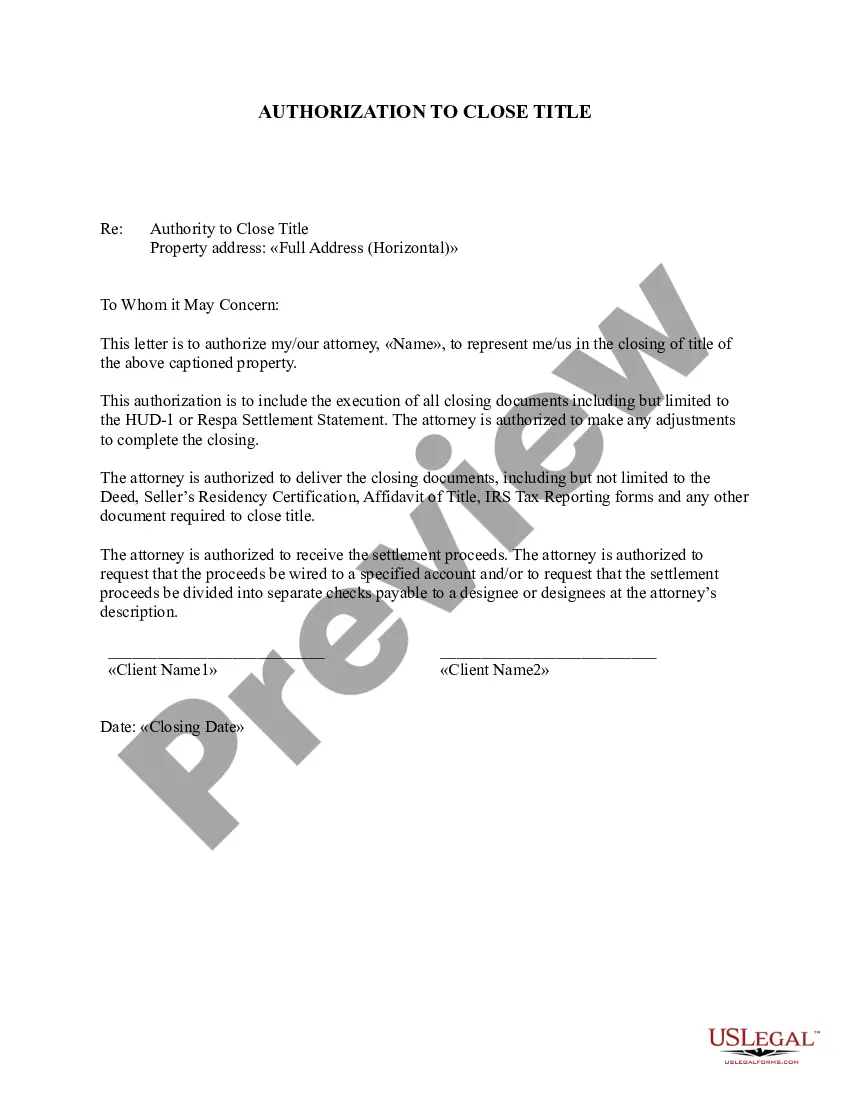
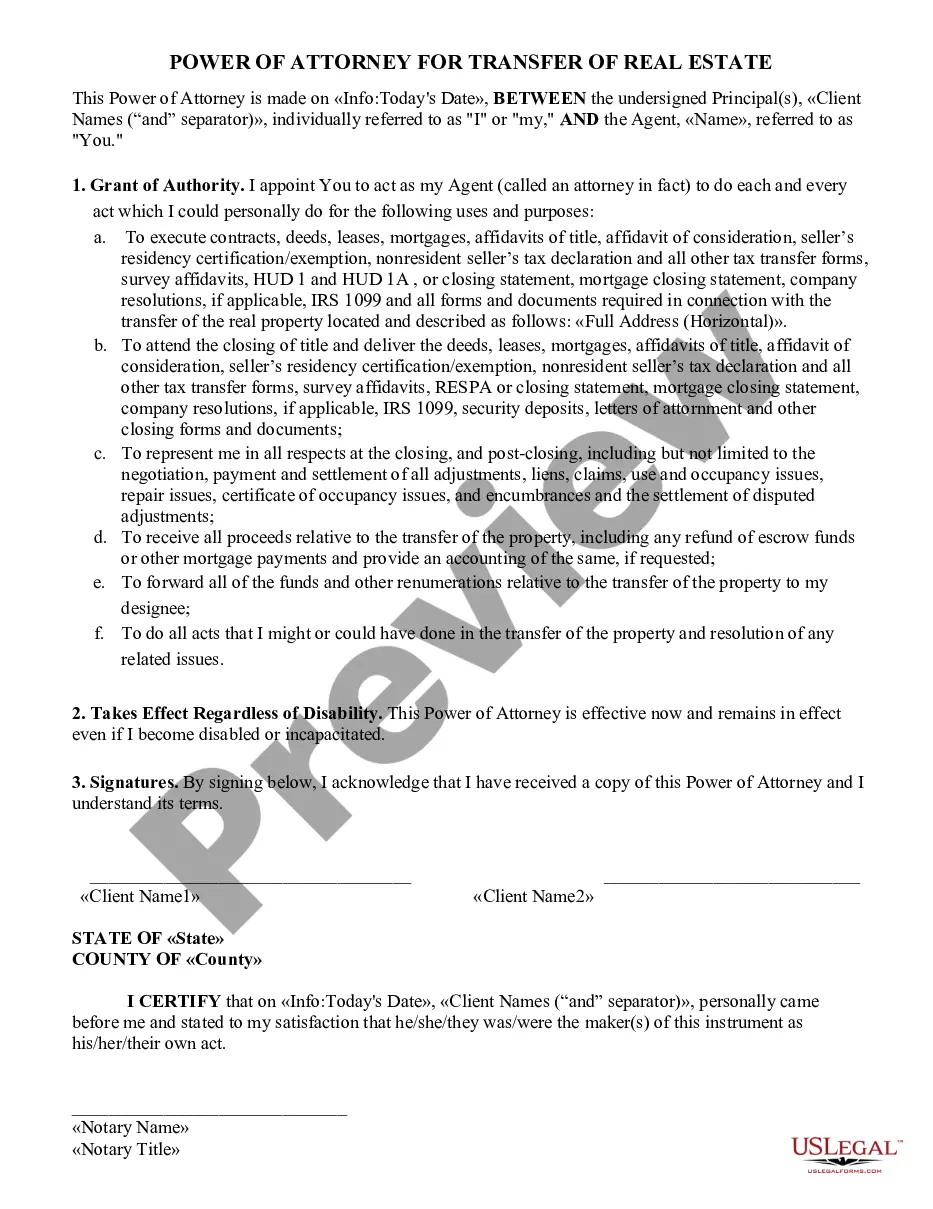
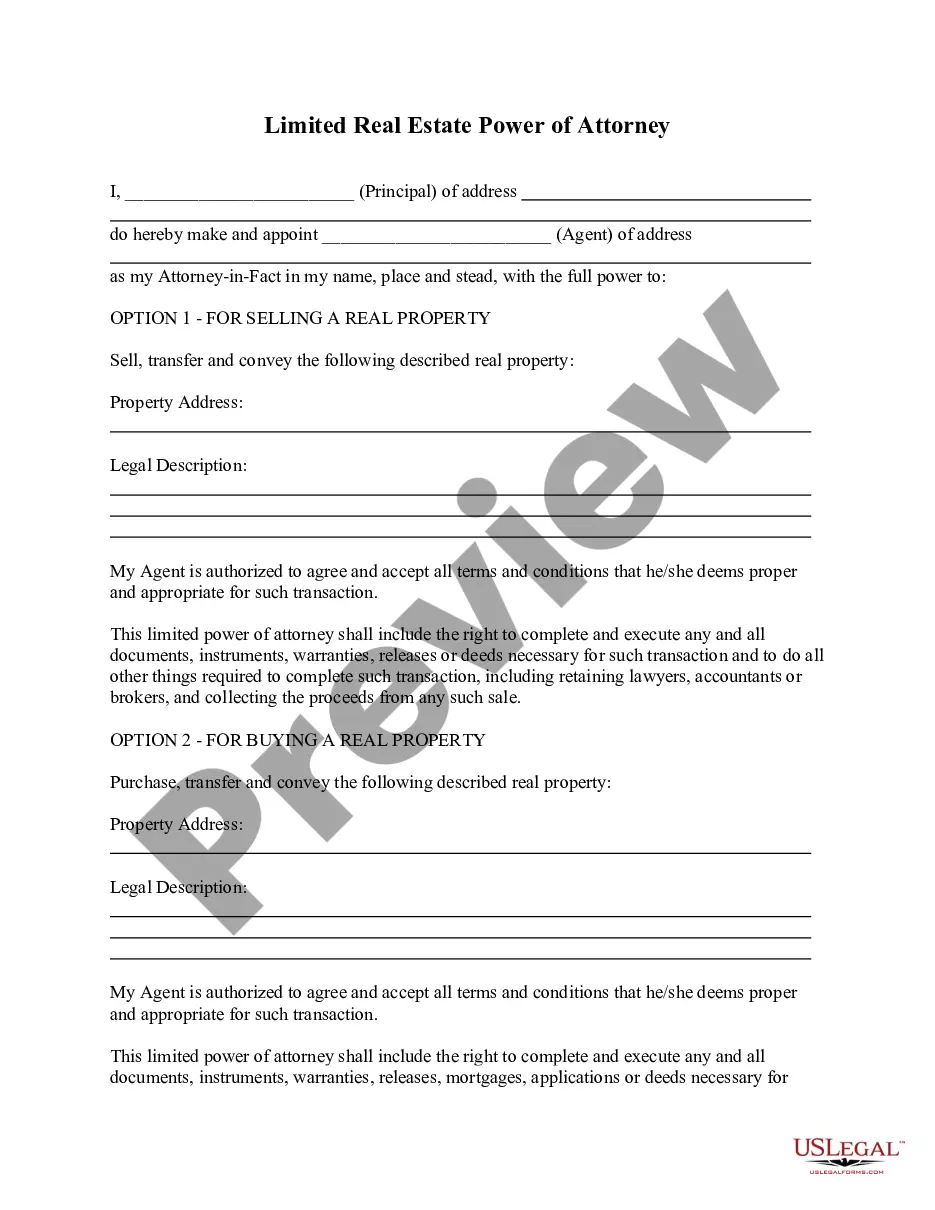
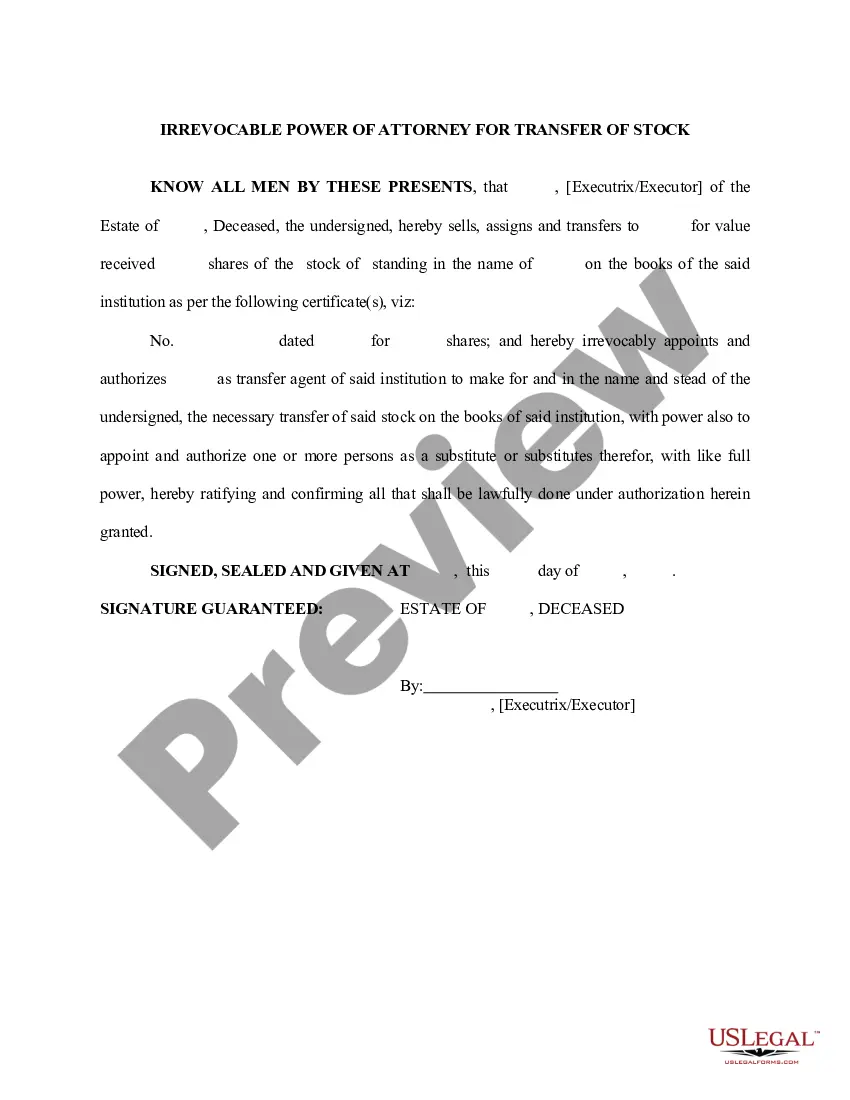
This Special or Limited Power of Attorney for Real Estate Sales Transaction By Seller form allows a seller to appoint an attorney-in-fact, giving them the authority to execute all necessary documents and act on their behalf in the sale of a specific real estate property. This form is distinct from other power of attorney documents as it specifically focuses on real estate transactions, ensuring all legal aspects of the sale are handled appropriately.
What’s included in this form
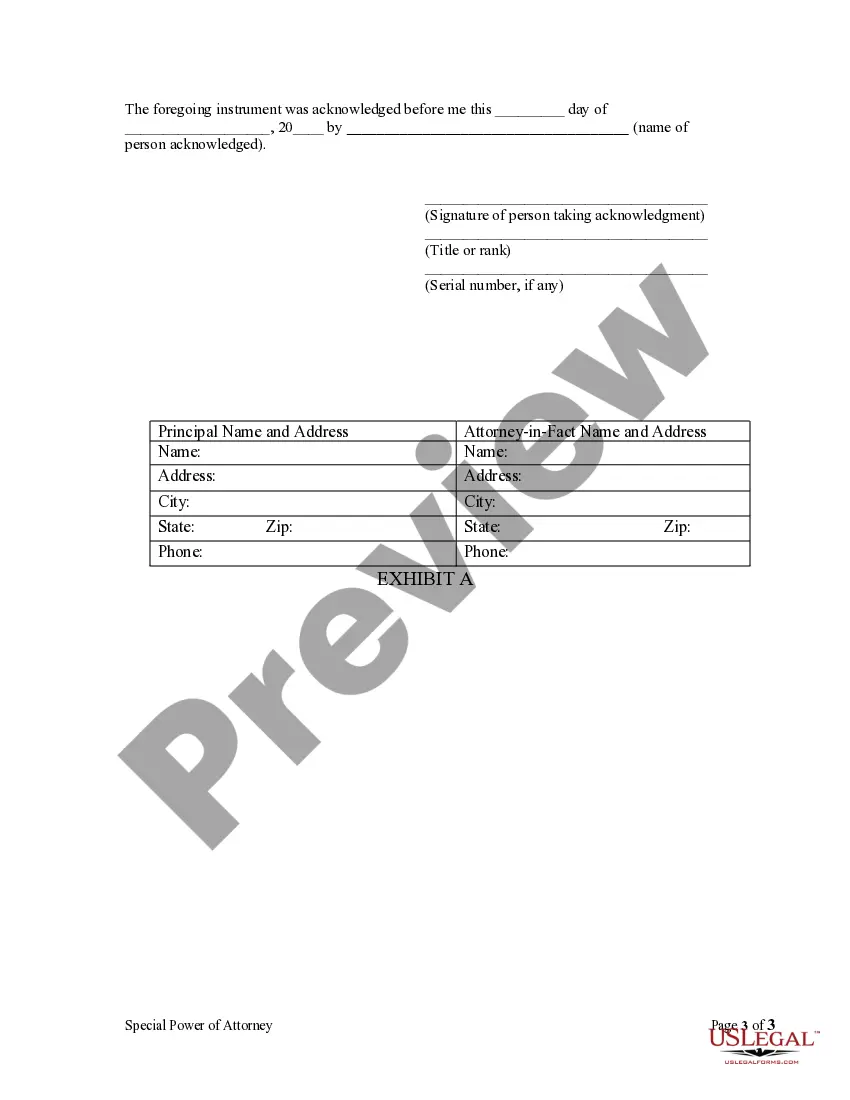
- Identification of the seller and the attorney-in-fact.
- Authorization for the attorney-in-fact to execute documents related to the property sale.
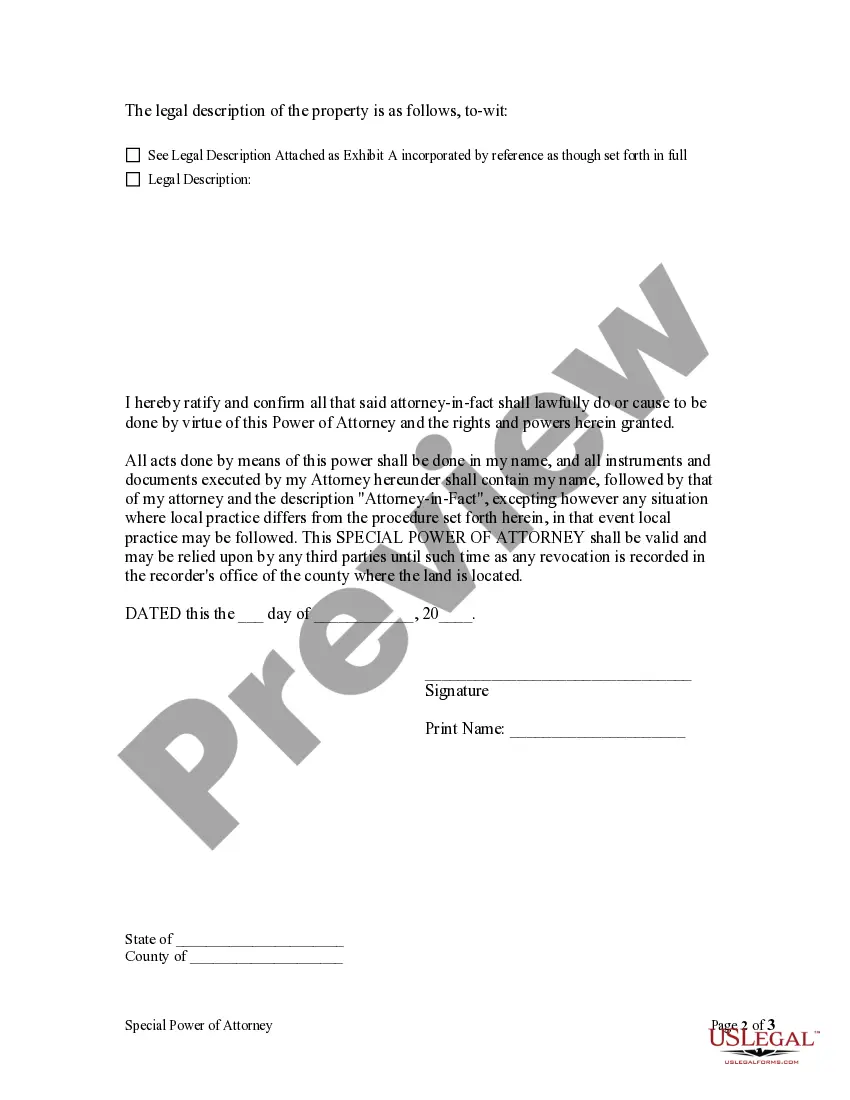
- Legal description of the property being sold.
- Power to collect and receive funds from the transaction.
- Incorporation of any additional legal descriptions or documents as necessary.

Common use cases
This form is useful when a seller is unable to attend the closing of a real estate transaction but still wishes to ensure that the sale proceeds smoothly. It is often used when the seller is out of town, has health issues, or simply prefers to designate someone else to handle the transaction. By using this power of attorney, the seller can trust their chosen attorney-in-fact to act in their best interest.
Who this form is for
- Real estate sellers who cannot attend the closing in person.
- Individuals needing to delegate their authority for a specific property transaction.
- Individuals looking to facilitate a smooth real estate sale process.
Completing this form step by step
- Identify the parties involved: fill in the seller's and attorney-in-fact's names and addresses.
- Specify the property: provide the legal description and common address of the real estate being sold.
- Grant authority: ensure the attorney-in-fact has full power to act on the seller's behalf.
- Sign and date the document: the seller must sign the form in the presence of a notary (if required by local law).
- Attach necessary legal descriptions or additional documents as specified in the form.
Is notarization required?
This form needs to be notarized to ensure legal validity. US Legal Forms provides secure online notarization powered by Notarize, allowing you to complete the process through a verified video call, available anytime.
Get your form ready online
Our built-in tools help you complete, sign, share, and store your documents in one place.
Make edits, fill in missing information, and update formatting in US Legal Forms—just like you would in MS Word.
Download a copy, print it, send it by email, or mail it via USPS—whatever works best for your next step.
Sign and collect signatures with our SignNow integration. Send to multiple recipients, set reminders, and more. Go Premium to unlock E-Sign.
If this form requires notarization, complete it online through a secure video call—no need to meet a notary in person or wait for an appointment.
We protect your documents and personal data by following strict security and privacy standards.

Make edits, fill in missing information, and update formatting in US Legal Forms—just like you would in MS Word.

Download a copy, print it, send it by email, or mail it via USPS—whatever works best for your next step.

Sign and collect signatures with our SignNow integration. Send to multiple recipients, set reminders, and more. Go Premium to unlock E-Sign.

If this form requires notarization, complete it online through a secure video call—no need to meet a notary in person or wait for an appointment.

We protect your documents and personal data by following strict security and privacy standards.
Common mistakes
- Not providing a complete legal description of the property.
- Failing to include the full names and addresses of both the seller and the attorney-in-fact.
- Not signing the document or signing without a notary present when required.
- Using outdated versions of the form that may not comply with current state regulations.
Advantages of online completion
- Convenience: complete the form at your own pace from anywhere.
- Editability: easily correct any errors or update details as needed.
- Reliable access: get the most current version of the form, ensuring compliance with legal standards.
Summary of main points
- This form empowers someone to sell your property on your behalf.
- It is specific to real estate transactions, ensuring the necessary powers are granted.
- Understanding the powers you grant is crucial to protect your interests.
Looking for another form?







Form popularity
FAQ
The non-durable power of attorney is used only for a set period of time and usually for a particular transaction in which you grant your agent authority to act on your behalf. Once the transaction is completed, or should the principal become incapacitated during this time, the non-durable power of attorney ceases.
A power of attorney agent is not barred by law to sell the property unto himself by following proper procedures. He is selling the property on behalf of his principal in the capacity of his agent/representative and buying it as a buyer.In his absence or at his option, the POA can act.
What's the difference between durable and general power of attorney? A general power of attorney ends the moment you become incapacitated.A durable power of attorney stays effective until the principle dies or until they act to revoke the power they've granted to their agent.
Just as under the present law, a power of attorney is not required by the new law to be recorded, unless it is being use to convey, release or transfer any interest in real estate.
The durable power of attorney is almost always required. This instrument gives another person specific powers to sign for an individual in a real estate transaction where the exact name and description of the property is stated in the document.
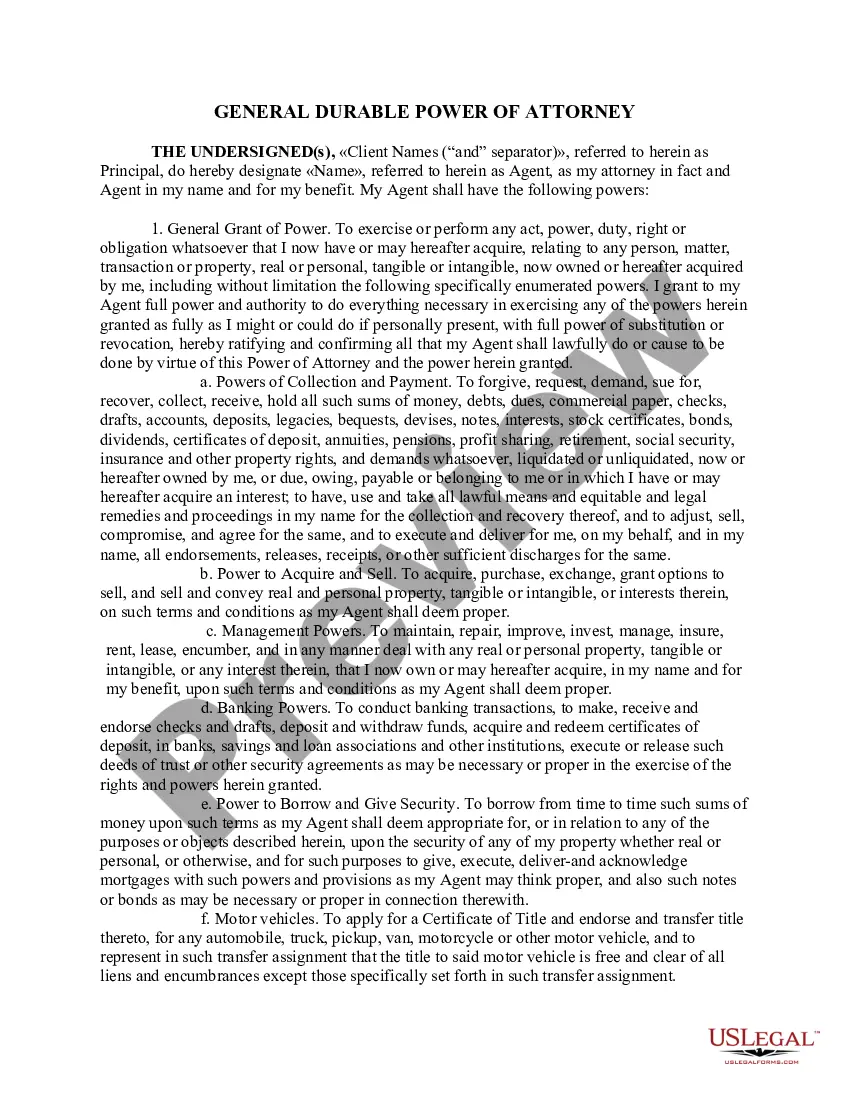
General Power of Attorney. Durable Power of Attorney. Special or Limited Power of Attorney. Springing Durable Power of Attorney.
Remember that all of the authorized agents under the power of attorney or representatives in an estate must sign the listing agreement, disclosure documents, etc. For example, when there are two executors in an estate, then they both must sign the Listing Contract.
Step 1: Bring Your Power of Attorney Agreement and ID. Step 2: Determine the Preferred Signature Format. Step 3: Sign as the Principal. Step 4: Sign Your Own Name. Step 5: Express Your Authority as Attorney-in-Fact. Step 6: File the Documentation Somewhere Safe.