Kentucky Letter from Tenant to Landlord for Failure of Landlord to comply with building codes affecting health and safety or resulting in untenantable condition - demand for remedy
Overview of this form
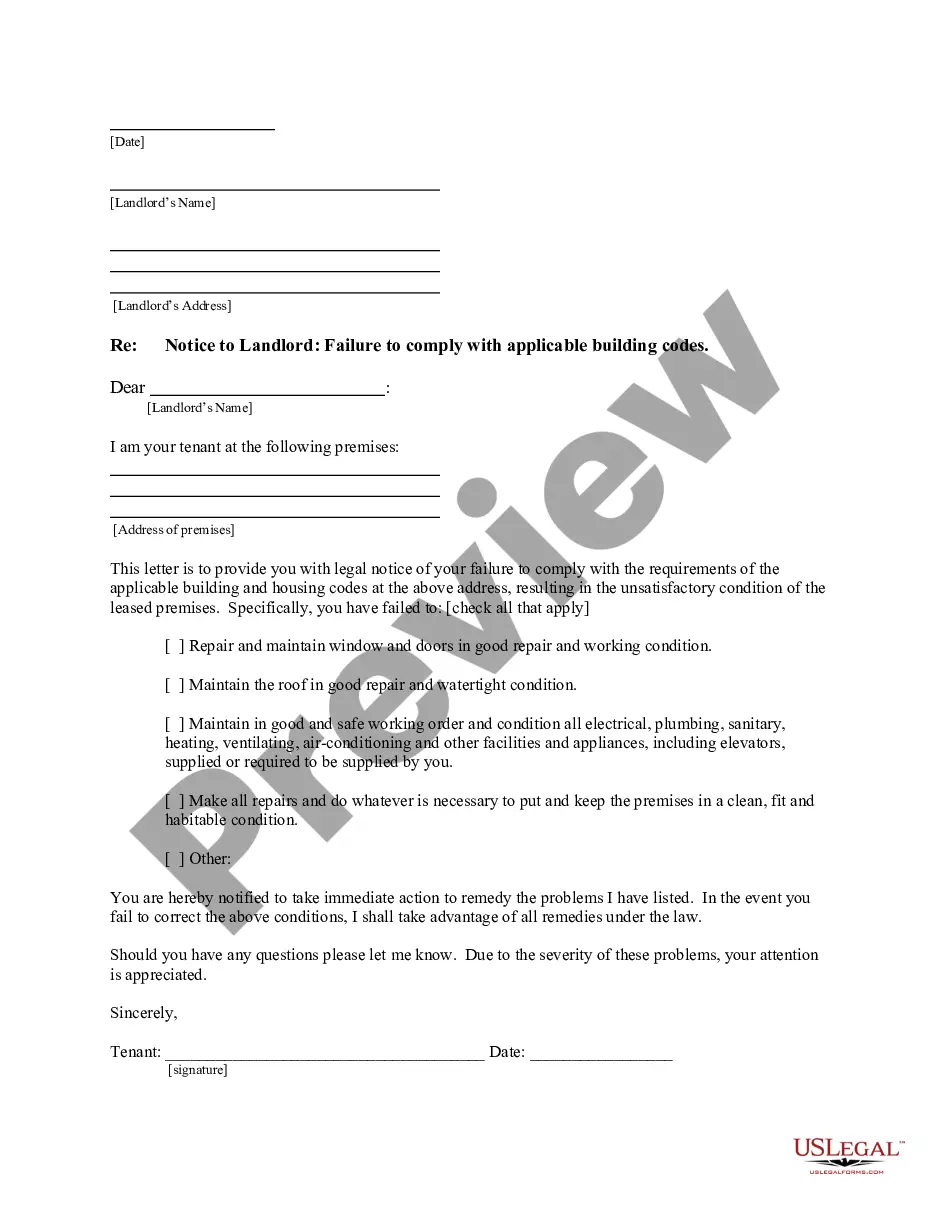
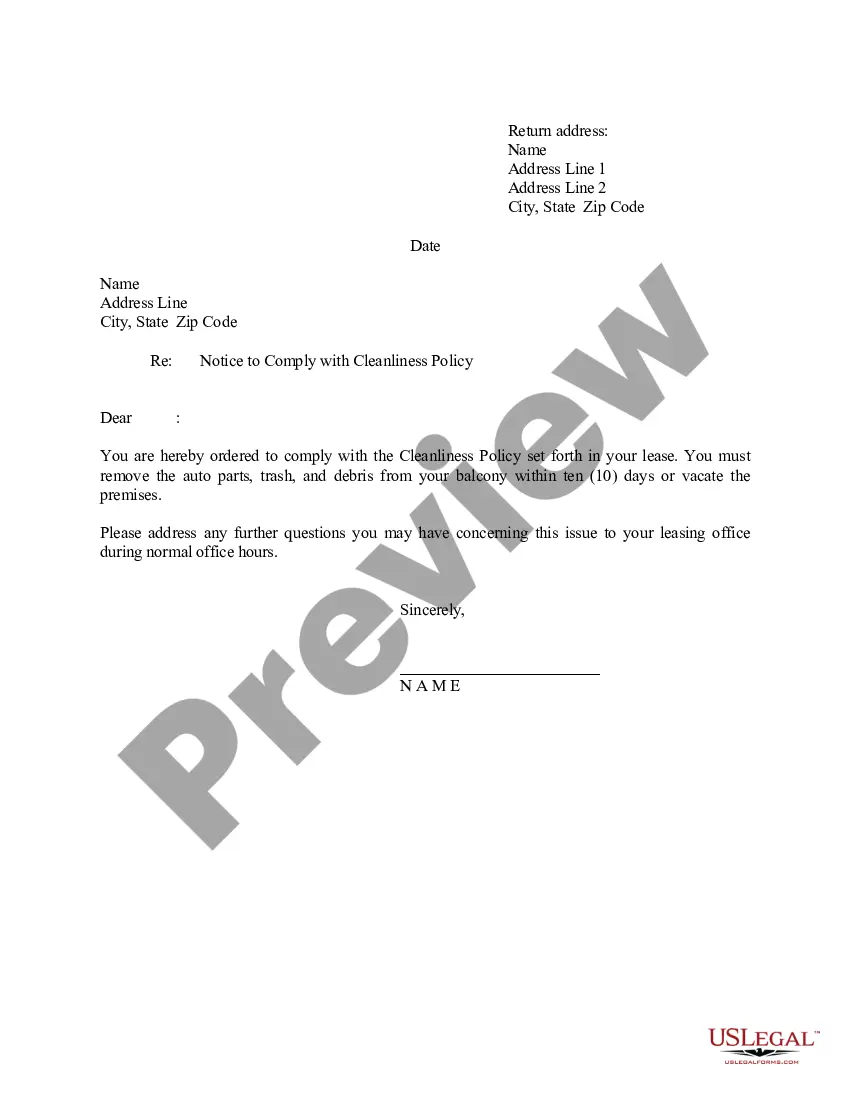
This form is a demand letter from a tenant to a landlord regarding the failure to comply with building codes that affect health and safety. It specifically requests that the landlord remedy unsafe or unhealthy conditions in the property within ten days. This letter serves to document the tenantâs request and highlight serious violations, ensuring the landlord is aware of their legal obligations.
Form components explained
- Identification of the tenant and landlord.
- A description of the untenantable conditions affecting health and safety.
- A demand for repairs or remedies to be completed within ten days.
- Signature line for the tenant.
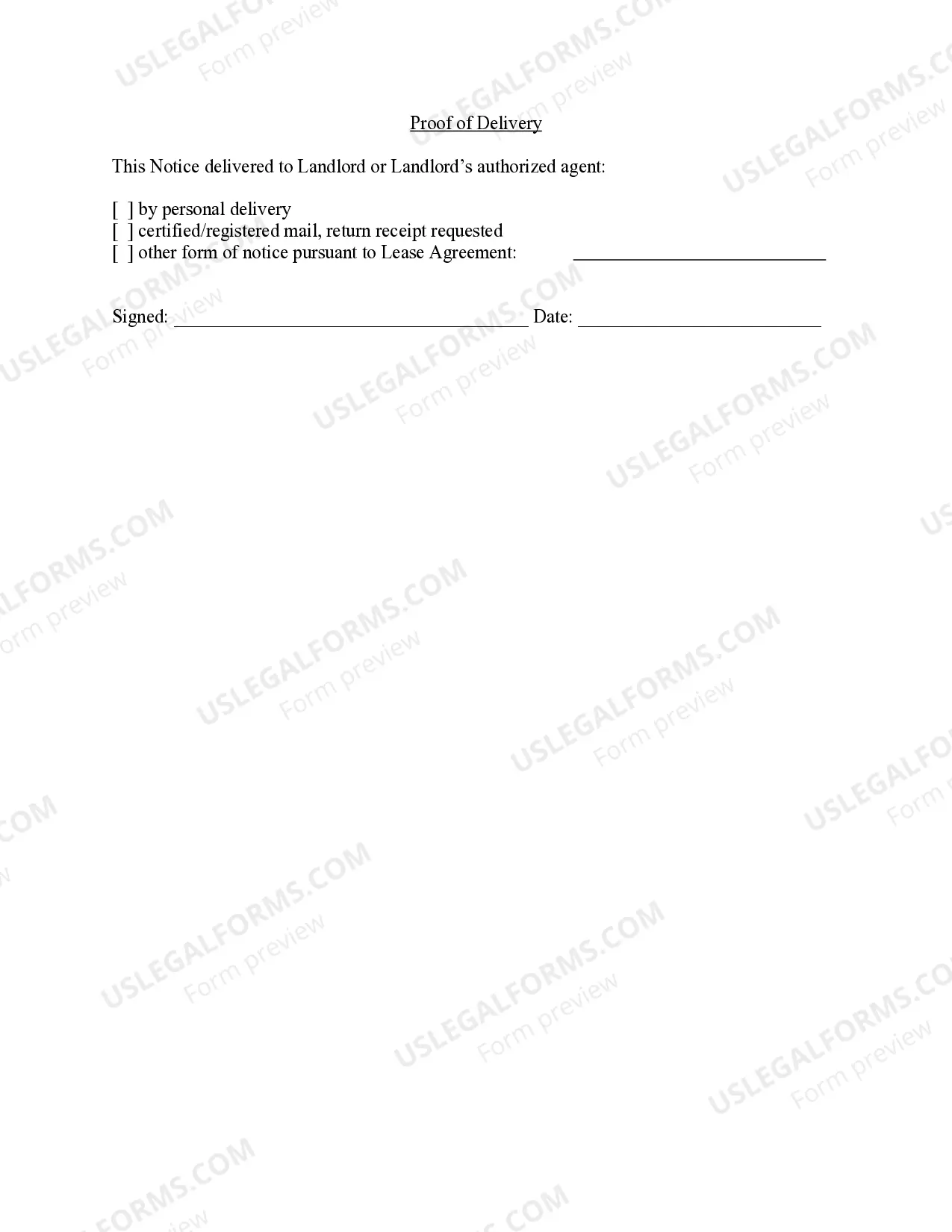
- Proof of delivery section to document that the landlord received the notice.



When to use this form
This form should be used when a tenant identifies conditions in their rental unit that violate local building codes or are otherwise unsafe or unhealthy. Common situations include malfunctioning utilities, structural issues, or unsanitary conditions that require immediate attention from the landlord. This form recalibrates the responsibility of the landlord to provide a safe living environment.
Who needs this form
- Tenants living in rental properties who are experiencing unsafe conditions.
- Individuals seeking to formally request repairs from their landlord.
- Residents unsure of their legal rights regarding property conditions.
Instructions for completing this form
- Begin by identifying yourself and the landlord in the appropriate sections.
- Clearly describe the unsafe conditions that necessitate this demand.
- Specify a deadline of ten days for the landlord to address the issues.
- Sign and date the letter to validate your request.
- Document proof of delivery to ensure the landlord receives the notice.
Does this document require notarization?
This form does not typically require notarization unless specified by local law. It is important to check your stateâs regulations regarding witness or notarization requirements for such documents.
Get your form ready online
Our built-in tools help you complete, sign, share, and store your documents in one place.
Make edits, fill in missing information, and update formatting in US Legal Forms—just like you would in MS Word.
Download a copy, print it, send it by email, or mail it via USPS—whatever works best for your next step.
Sign and collect signatures with our SignNow integration. Send to multiple recipients, set reminders, and more. Go Premium to unlock E-Sign.
If this form requires notarization, complete it online through a secure video call—no need to meet a notary in person or wait for an appointment.
We protect your documents and personal data by following strict security and privacy standards.

Make edits, fill in missing information, and update formatting in US Legal Forms—just like you would in MS Word.

Download a copy, print it, send it by email, or mail it via USPS—whatever works best for your next step.

Sign and collect signatures with our SignNow integration. Send to multiple recipients, set reminders, and more. Go Premium to unlock E-Sign.

If this form requires notarization, complete it online through a secure video call—no need to meet a notary in person or wait for an appointment.

We protect your documents and personal data by following strict security and privacy standards.
Common mistakes
- Failing to include specific details about the unsafe conditions.
- Not allowing sufficient time for the landlord to respond before taking further action.
- Forgetting to document proof of delivery, which is crucial for legal purposes.
Why complete this form online
- Editable template allows for customization to fit your specific situation.
- Instantly downloadable for quick access.
- Drafted by licensed attorneys, ensuring legal accuracy and reliability.
Legal use & context
This demand letter is a formal means to prompt landlords to fulfill their responsibilities. While it is not a guarantee of compliance, it lays the groundwork for potential legal action if the situation does not improve. Tenants should be aware of their rights and local tenant protection laws that may enhance their position in these matters.
Summary of main points
- This form serves as an official demand for repairs from a landlord.
- Ensure you provide detailed information about the violations.
- Documentation of your request is crucial for potential future action.
Looking for another form?









Form popularity
FAQ
Explain that you are making a complaint. Relate what the complaint is actually about and make sure to include the specific details about the complaint, especially an account of the event. Inform the management of what you wish to be done regarding the complaint that you are making. End on a positive tone.
You can make a formal complaint by writing a letter to your landlord. Explain your problem and what you want them to do to solve it. Tell them what rights you have and what you think they should have done. Talk to an adviser at your nearest Citizens Advice to find out what rights you have.
When writing a maintenance request letter, include as much detail as possible. Describe what's happening and how the problem occurs so that the person performing the repair can recreate it if needed. This information can also help them better diagnose the issue or prepare to fix it before even coming to the unit.
Dear (Name of landlord or manager), I am writing to request repairs to the (appliance, heating/air conditioning, plumbing issue be specific!) due to (reason for repair; this could include things such as broken handle, leaky sink hose, even normal wear-and-tear that would necessitate replacement).
Sample Noise Complaint Letter Dear Landlord/Manager's Name, I am writing to formally request your help in dealing with an ongoing issue with my neighbor. I have lived in your apartment number or address for the last three years and have greatly enjoyed my experience in this building.
The landlord had a duty to reasonably maintain the property; The landlord knew or should have known of the dangerous condition; The landlord breached their duty by failing to repair/fix the dangerous condition;
Be professional. Use professional letterhead and be sure to sign in ink. Express your dissatisfaction clearly, with facts, dates, and details (including copies of receipts and so on) to help substantiate your claim. Be sincere. Be prompt. Don't expect compensation every time.
Any time you write a letter or email to your landlord, keep your language clear and concise to eliminate any potential for confusion. Include relevant details such as the date of writing, the dates of any instances referenced within the letter, and your contact information and unit number.
Uninhabitable conditions can include dangerous ones, such as holes in the floor, unsafe or exposed wiring, or non-working air conditioning in dangerously hot summer months. Gross infestations of roaches, fleas or other pests are also uninhabitable conditions.