Kentucky Letter from Tenant to Landlord with Demand that landlord repair floors, stairs or railings
What this document covers
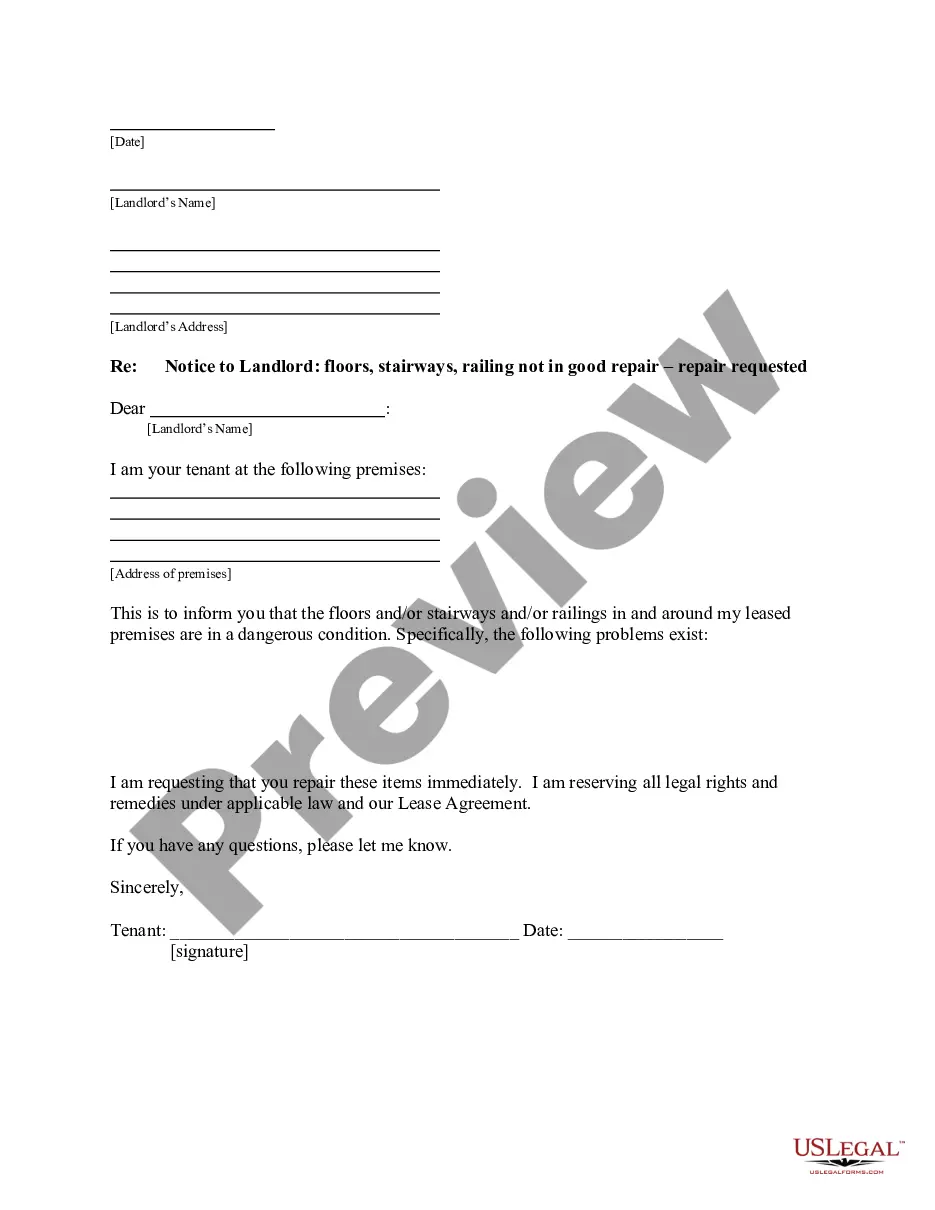
This form is a Letter from Tenant to Landlord with Demand that landlord repair floors, stairs, or railings. It serves to inform the landlord of issues regarding the lease premises, specifically that certain areas are not in good repair. By using this form, the tenant notifies the landlord of their responsibility to maintain the property and formally demands repairs be made.
Form components explained
- Tenant's name and contact information.
- Landlord's name and contact information.
- Description of the specific issues (floors, stairs, railings).
- Statement of the landlord's duty to maintain the property.
- Demand for repairs to be completed.
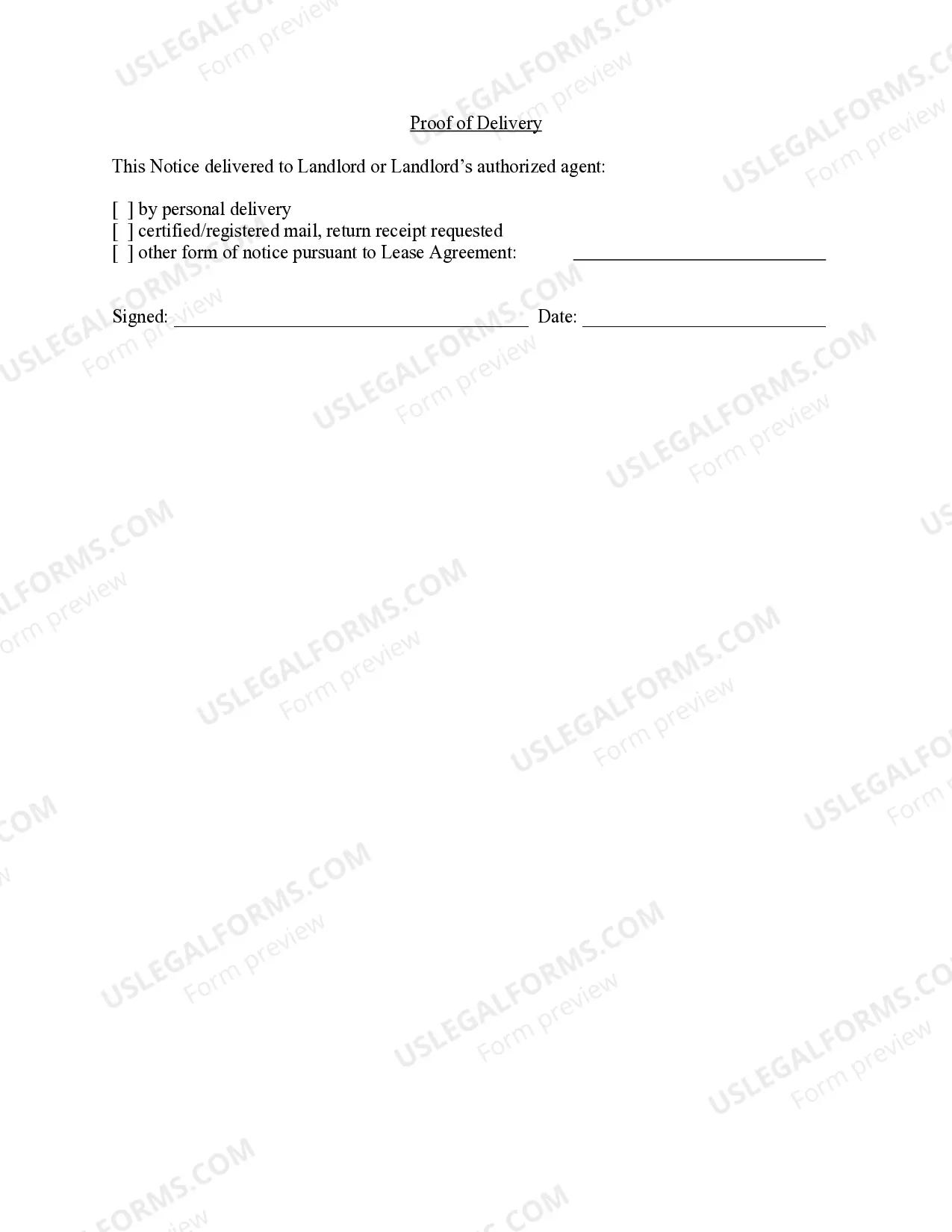
- Proof of delivery method.



When to use this form
This form should be used when a tenant identifies safety or usability issues with floors, stairs, or railings of the rental property. It is appropriate to use this letter when the landlord has not addressed these issues despite prior notifications or when repairs are urgently needed to ensure tenant safety.
Who this form is for
- Tenants who reside in a rental property.
- Individuals experiencing issues with repair of floors, stairs, or railings.
- Tenants seeking to formally notify the landlord of necessary repairs.
How to prepare this document
- Identify the parties involved by entering your name as the tenant and the landlord's name.
- Clearly describe the repair issues with the floors, stairs, or railings.
- State the legal obligation of the landlord to maintain safe conditions.
- Specify your demand for repairs and any relevant deadlines.
- Complete the proof of delivery section to document how this letter will be delivered to the landlord.
- Sign and date the letter.
Does this form need to be notarized?
This form does not typically require notarization to be legally valid. However, some jurisdictions or document types may still require it. US Legal Forms provides secure online notarization powered by Notarize, available 24/7 for added convenience.
Get your form ready online
Our built-in tools help you complete, sign, share, and store your documents in one place.
Make edits, fill in missing information, and update formatting in US Legal Forms—just like you would in MS Word.
Download a copy, print it, send it by email, or mail it via USPS—whatever works best for your next step.
Sign and collect signatures with our SignNow integration. Send to multiple recipients, set reminders, and more. Go Premium to unlock E-Sign.
If this form requires notarization, complete it online through a secure video call—no need to meet a notary in person or wait for an appointment.
We protect your documents and personal data by following strict security and privacy standards.

Make edits, fill in missing information, and update formatting in US Legal Forms—just like you would in MS Word.

Download a copy, print it, send it by email, or mail it via USPS—whatever works best for your next step.

Sign and collect signatures with our SignNow integration. Send to multiple recipients, set reminders, and more. Go Premium to unlock E-Sign.

If this form requires notarization, complete it online through a secure video call—no need to meet a notary in person or wait for an appointment.

We protect your documents and personal data by following strict security and privacy standards.
Mistakes to watch out for
- Failing to provide clear details about the specific repairs needed.
- Not specifying a time frame for repairs to be completed.
- Omitting to keep a copy of the letter for personal records.
- Not following up to ensure the letter was received.
Why complete this form online
- Convenient access to legally drafted templates that save time.
- Edit and customize the form easily to fit your specific scenario.
- Reliable guidance to ensure you meet legal requirements.
Main things to remember
- This letter initiates a formal request for necessary property repairs.
- It documents the tenant's communication with the landlord.
- Clear descriptions of issues and requests for action can help to resolve problems effectively.
- Proper completion and delivery are essential for legal enforceability.
Looking for another form?



Form popularity
FAQ
The landlord had a duty to reasonably maintain the property; The landlord knew or should have known of the dangerous condition; The landlord breached their duty by failing to repair/fix the dangerous condition;
When a home is condemned, the owner (and tenants, if any) are notified in writing that the building must be vacated. A sign is attached to the building stating that the dwelling is not fit for human habitation, and that it cannot be occupied.The owner of the building may be ordered to repair or demolish the building.
If the structure is unstable or there is a severe problem with damp in the property, it may be deemed uninhabitable.If the layout is unsafe, if there isn't enough natural light, or if there is not enough ventilation, the problem may be uninhabitable.
Landlords Must Fix Major Problems Your landlord must keep the structure of the building sound, including stairways, floors, and roofs; keep electrical, heating, and plumbing systems operating safely; supply hot and cold water in reasonable amounts; and exterminate infestations of pests such as cockroaches.
Tenants may be able to file their complaints with their city or county rent control board, local tenant association, rental housing association, district attorney's office and consumer protection agency. California residents can find the appropriate agencies based on the nature of their complaint by contacting the
A rental verification helps landlords and property managers to verify the rental history of their applicant. This is done through a background check combined with a phone call verification.Calling the previous and current landlord is an important step of the rental verification.
Uninhabitable conditions can include dangerous ones, such as holes in the floor, unsafe or exposed wiring, or non-working air conditioning in dangerously hot summer months. Gross infestations of roaches, fleas or other pests are also uninhabitable conditions.
A rented home is 'unfit for habitation' when conditions or safety issues are so bad that it's not reasonable for you to live there. This could be because the poor conditions: affect your health seriously. put you at risk of physical harm or injury.
The landlord verification form is a document used by a landlord when verifying the previous rental information of an applicant for tenancy. The requesting landlord must send the form to the applicant's current or past landlord in order to obtain all details related to the tenancy of the individual.