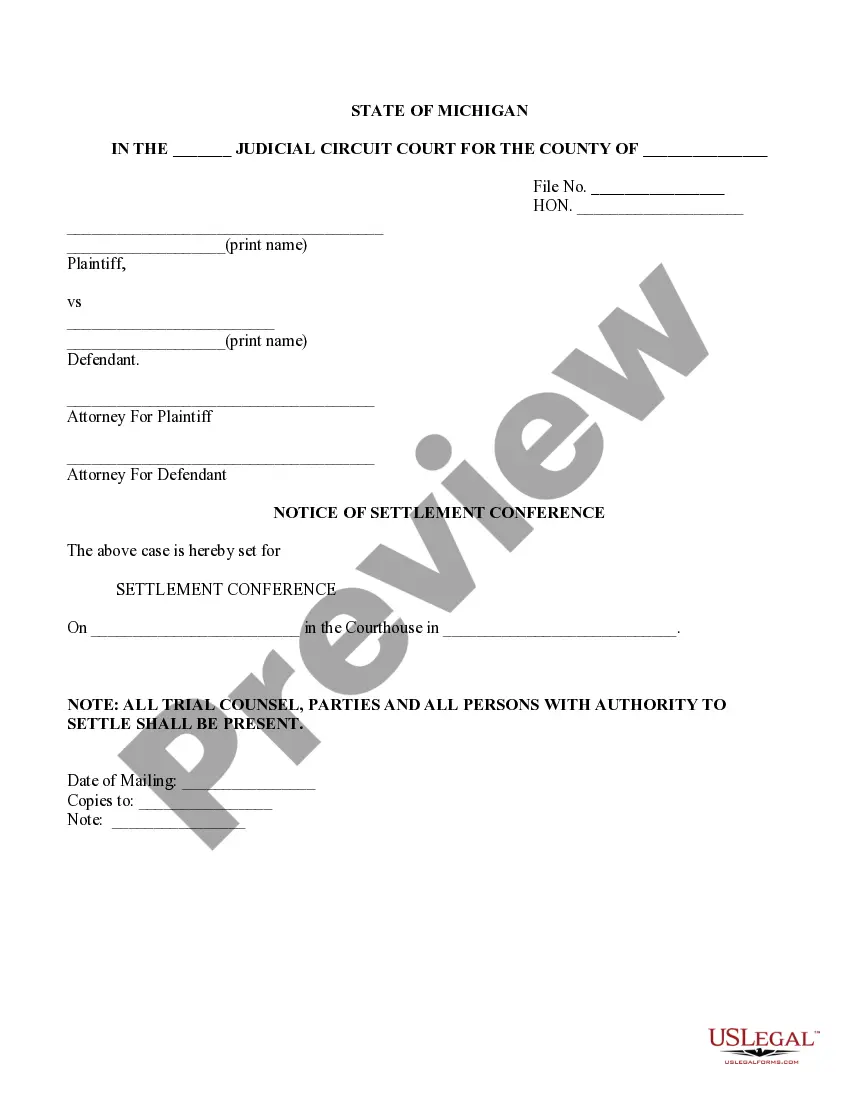
Kentucky Letter from Tenant to Landlord containing Notice that doors are broken and demand repair
Overview of this form
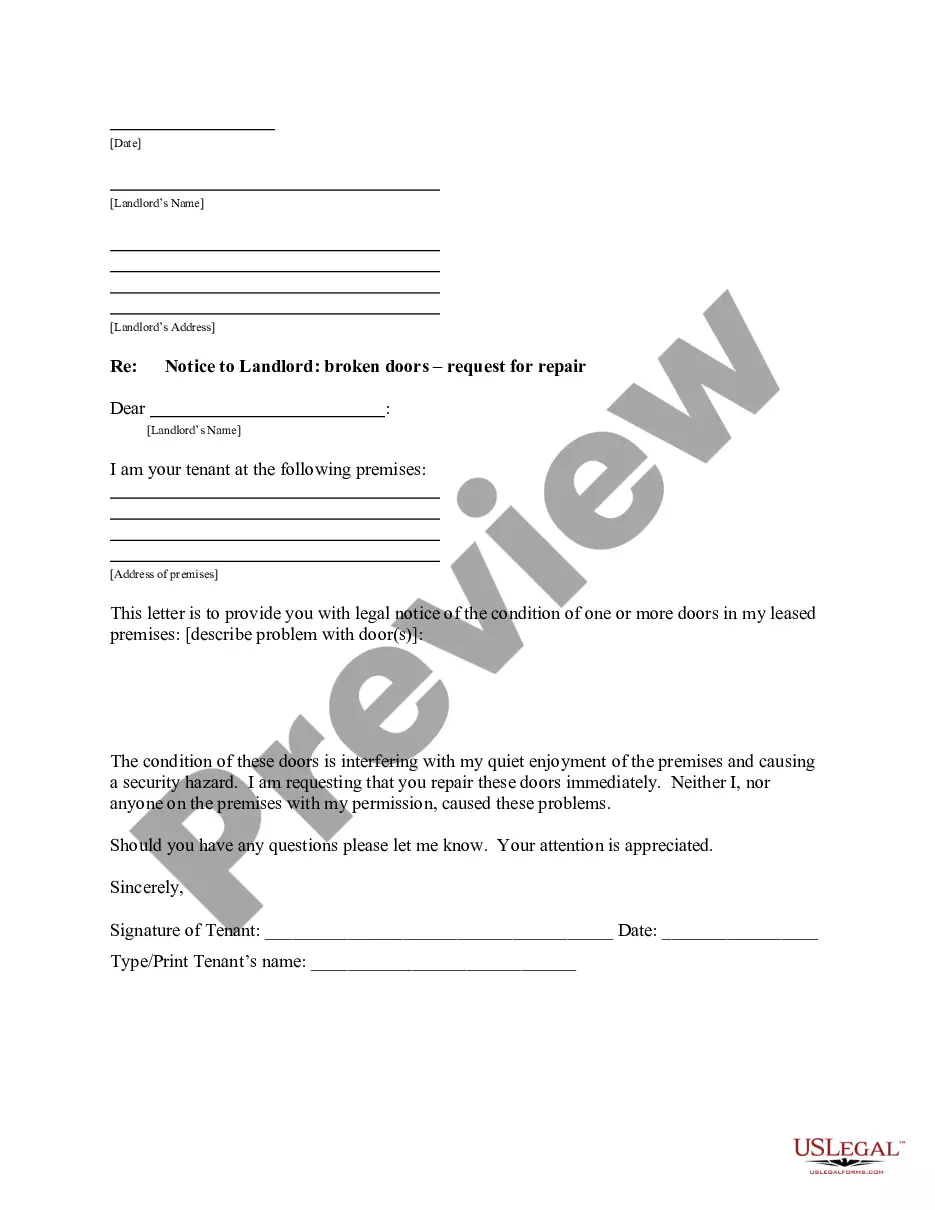
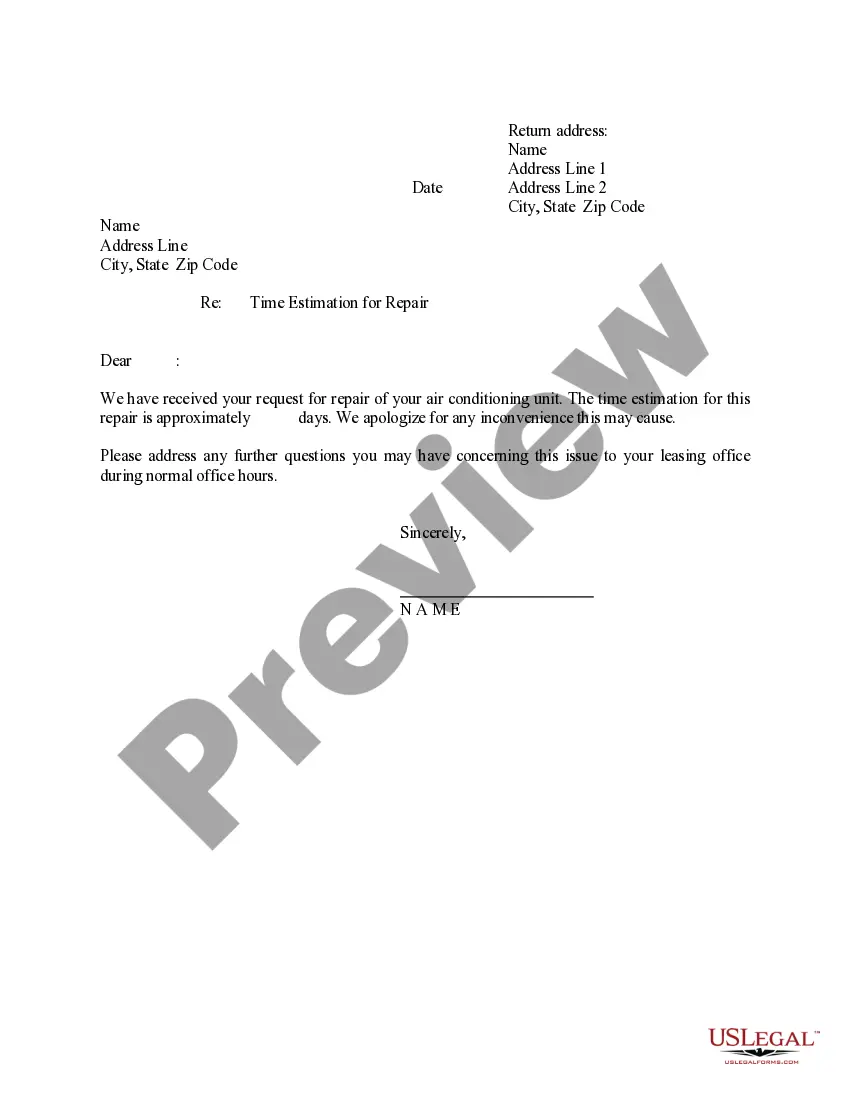
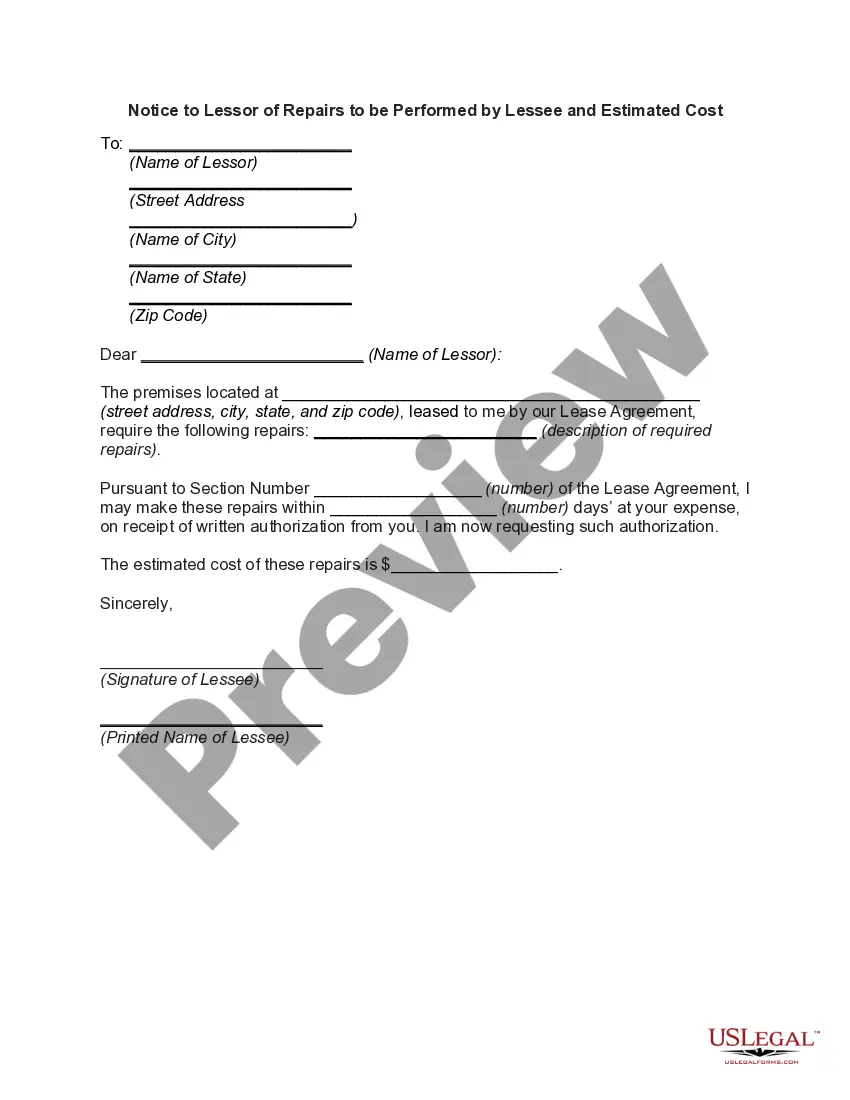
This form is a letter from a tenant to the landlord that notifies them of broken doors in the rental property. It serves as a formal request for repairs, ensuring that the landlord is aware of the issue and prompting them to take action. This form is crucial for documenting the tenant's concerns and follows the appropriate legal channels outlined in the lease agreement.
Key parts of this document
- Tenant's Name: The person sending the notice.
- Landlordâs Information: Name and address of the landlord or authorized agent.
- Details of the Issue: A description of the broken doors.
- Request for Repair: A clear demand for the landlord to fix the issue.
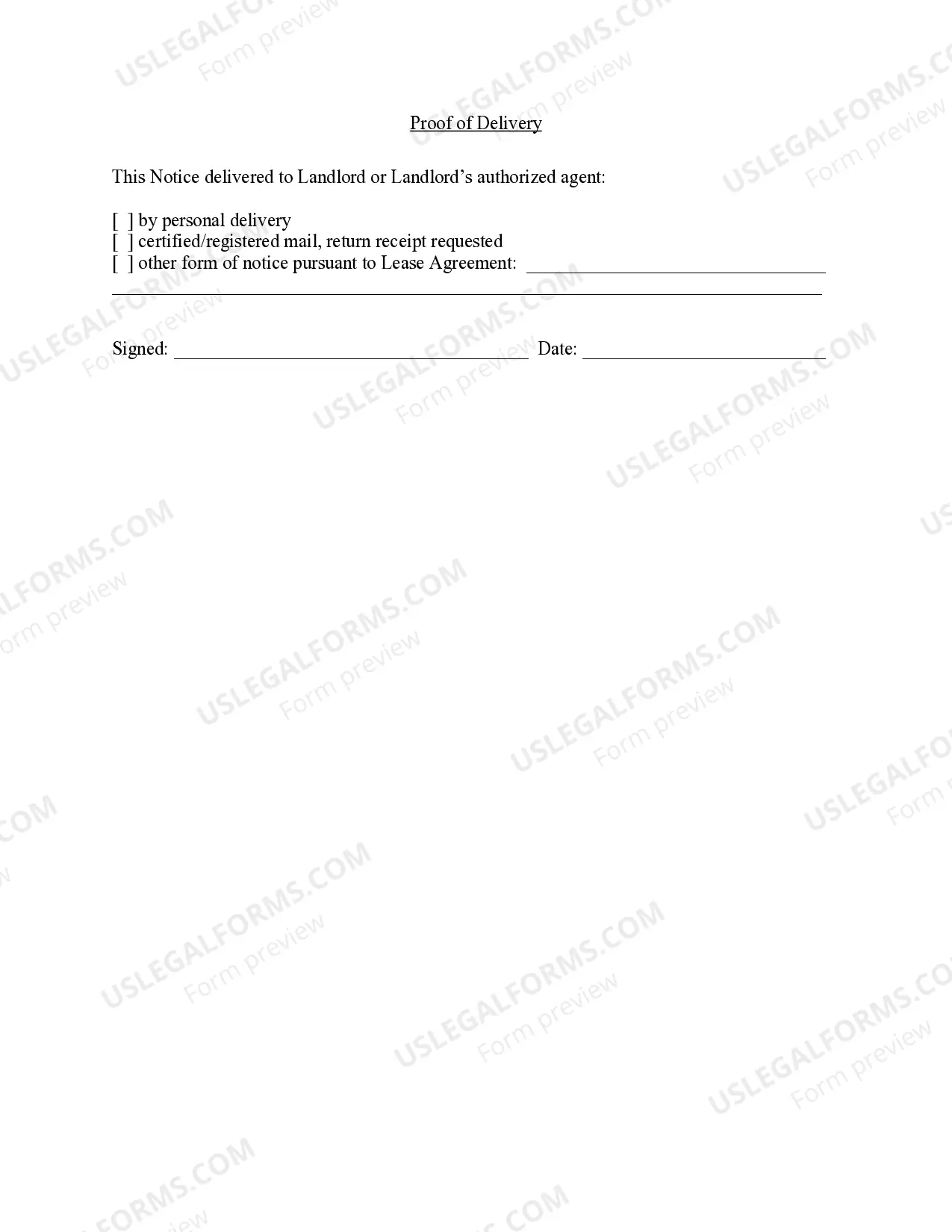
- Proof of Delivery: Method used to deliver the notice.
- Signatures: Signatures of the tenant and date of signing.


When to use this document
Who needs this form
- Current tenants experiencing issues with broken doors.
- Individuals who have a lease agreement covering maintenance responsibilities.
- Tenants who need to document their requests for repairs officially.
How to complete this form
- Identify the parties: Enter your name as the tenant and the landlord's name and address.
- Specify the issue: Clearly describe the broken doors and any related safety concerns.
- Make your request: State that you are demanding repairs as per the lease agreement.
- Provide proof of delivery: Indicate how you will deliver this notice to the landlord.
- Sign and date the form: Ensure that you sign the letter and enter the date of signing.
Notarization guidance
This form does not typically require notarization unless specified by local law. It is sufficient that you complete and deliver this letter to your landlord following the proper procedures outlined in your lease agreement.
Get your form ready online
Our built-in tools help you complete, sign, share, and store your documents in one place.
Make edits, fill in missing information, and update formatting in US Legal Forms—just like you would in MS Word.
Download a copy, print it, send it by email, or mail it via USPS—whatever works best for your next step.
Sign and collect signatures with our SignNow integration. Send to multiple recipients, set reminders, and more. Go Premium to unlock E-Sign.
If this form requires notarization, complete it online through a secure video call—no need to meet a notary in person or wait for an appointment.
We protect your documents and personal data by following strict security and privacy standards.

Make edits, fill in missing information, and update formatting in US Legal Forms—just like you would in MS Word.

Download a copy, print it, send it by email, or mail it via USPS—whatever works best for your next step.

Sign and collect signatures with our SignNow integration. Send to multiple recipients, set reminders, and more. Go Premium to unlock E-Sign.

If this form requires notarization, complete it online through a secure video call—no need to meet a notary in person or wait for an appointment.

We protect your documents and personal data by following strict security and privacy standards.
Common mistakes
- Failing to include the landlord's correct address.
- Not clearly stating the specific issues with the doors.
- Neglecting to provide proof of delivery method.
- Not signing the letter before sending it.
Benefits of using this form online
- Immediate access: Download and complete the form at any time.
- Editability: Easily customize the form to fit your specific situation.
- Legal assurance: The form is drafted by licensed attorneys to ensure legal compliance.
Legal use & context
- This letter serves as formal documentation of your repair request.
- Failure to notify the landlord properly can limit your rights under the lease agreement.
- The landlord is typically obligated to address repair requests in a timely manner.
Key takeaways
- Use this form to notify your landlord about broken doors needing repair.
- Ensure you provide clear and direct information in your notice.
- Maintain a record of your communication for future reference.
Looking for another form?
Form popularity
FAQ
To write a letter from a landlord to a tenant notice to vacate in Word, start with a formal header that includes your name, address, and the date. Use a clear subject line like 'Notice to Vacate' followed by a respectful greeting. Clearly state the intent to evict the tenant, citing the specific reason with reference to your lease agreement. For additional help, consider using a template from US Legal Forms that aligns with legal requirements.
2. Step-by-Step Guide to Respond to a Demand Notice. Step 1 : Login to your e-filing account on www.incometaxindiaefiling.gov.in with user ID and password. Step 2: Click on 'E-file' and go to 'Respond to Outstanding Tax Demand'.
Although they are not legally required, demand letters are frequently used in contract law, tort law, and commercial law cases. Most courts consider the recipient sending a demand letter as a measure of good faith to try to come to a resolution.
Once you've written your demand letter and sent it on to the insurance company, the response time may vary. Typically, you can expect an answer within a few weeks. However, sometimes this process can take as long as a few months.
Don't Blow It Off. You or your business can suffer consequences from failing to answer a demand letter in a timely fashion. Assess the Validity of the Arguments. Understand the Obligee's Motives. Determine Whether or Not You Need a Lawyer. Respond Formally, Factually, and Professionally. Get Verification of Receipt.
Type your letter. Concisely review the main facts. Be polite. Write with your goal in mind. Ask for exactly what you want. Set a deadline. End the letter by stating you will promptly pursue legal remedies if the other party does not meet your demand. Make and keep copies.
Respond to The Demand LetterResponding to the demand letter will be seen as a sign of good faith on your part if the issue ends up going to trial. But, you should also be aware that what you say in your conversation with the obligee can be used against you later.
No, a demand letter is not necessary prior to filing a superior court limited/unlimited jurisdiction lawsuit in California.
Never ignore a demand letter.If you receive one, contact your attorney immediately. Some people think if they don't respond, the sender will go away. This is usually not the case especially if the other party has retained an attorney. Respond and try to resolve the issue or you run the risk of going to court.
Although an attorney often writes the demand letter, you can also do it yourself in several cases:If you have a fairly simple legal issue and you want to go through the process yourself, without an attorney.