Kentucky Warranty Deed from Corporation to Two Individuals
Understanding this form
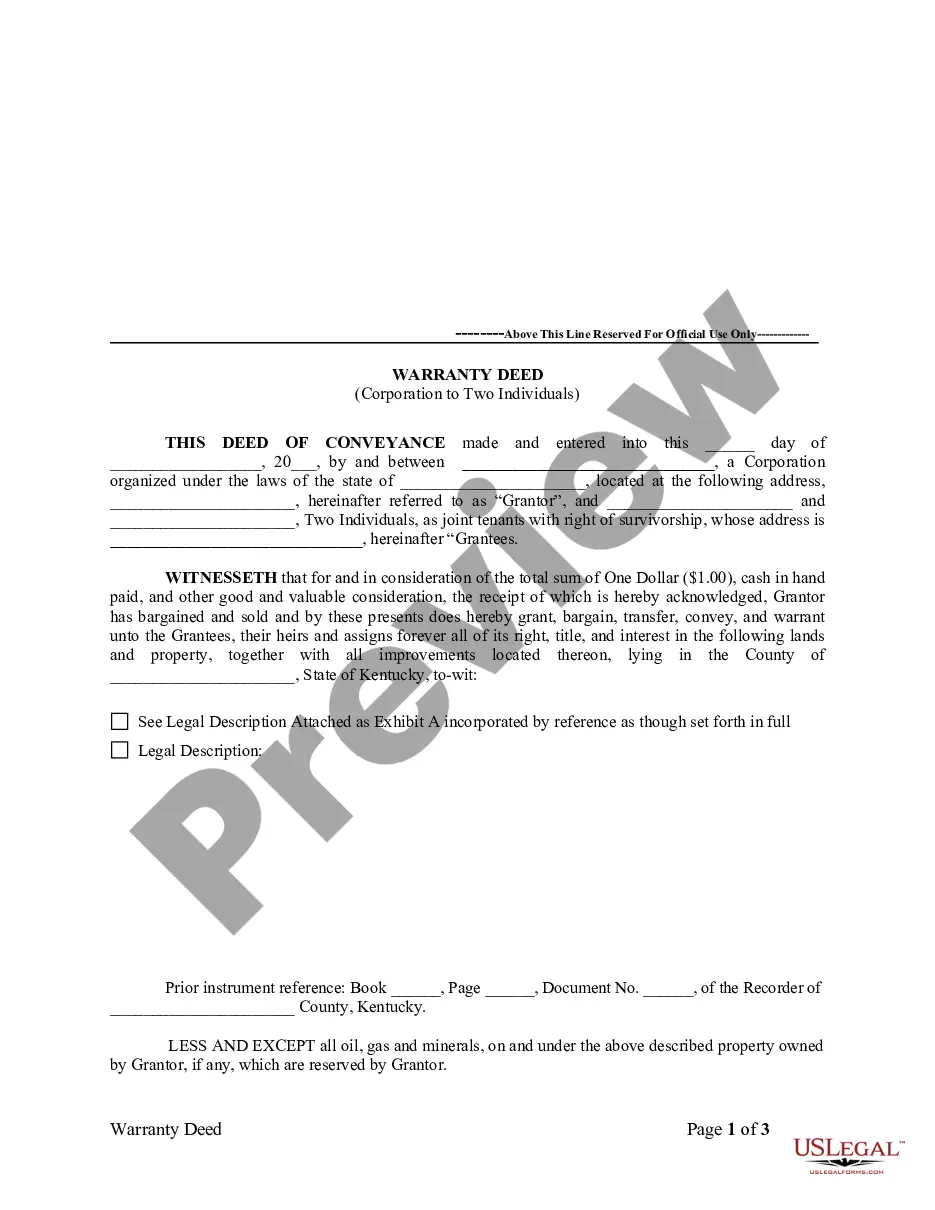
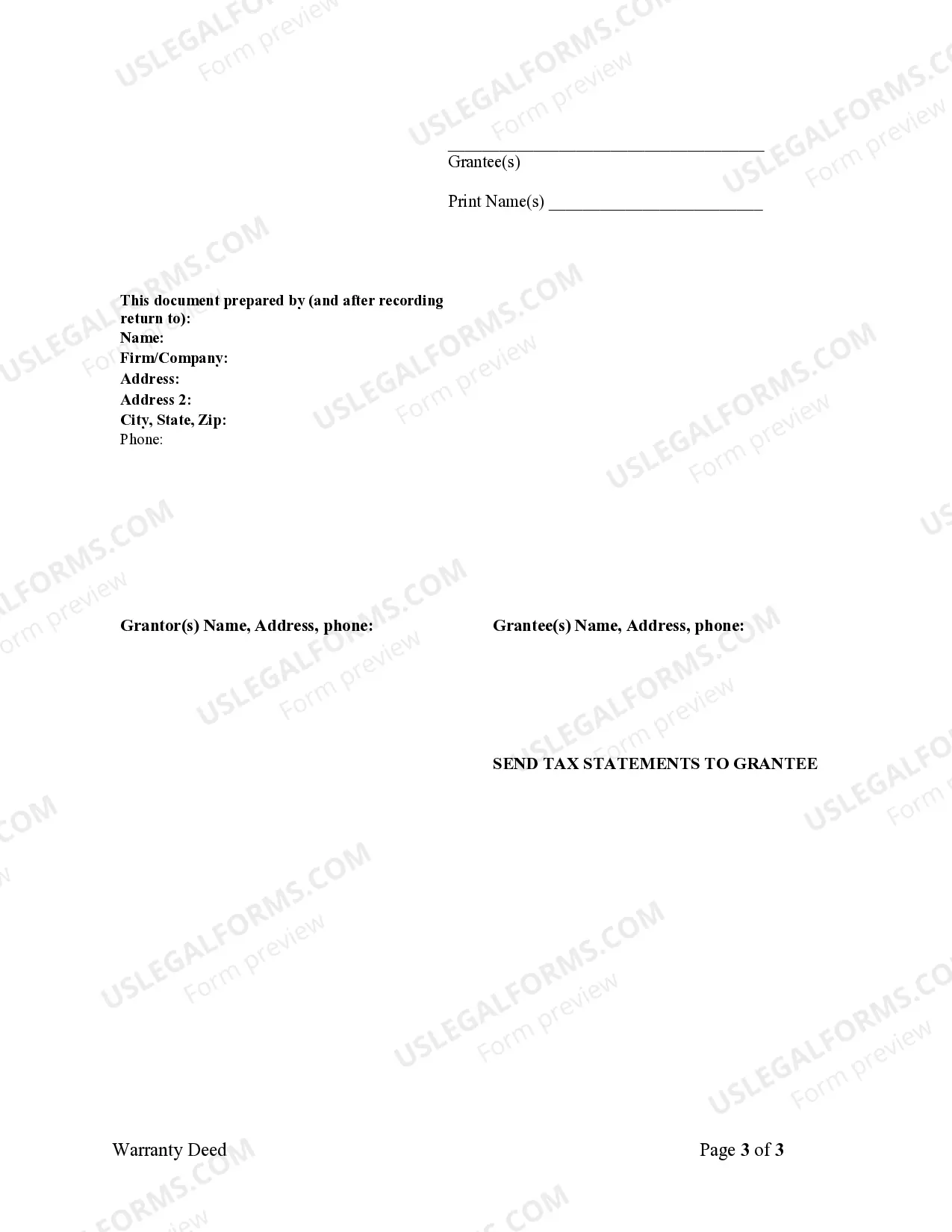
This Warranty Deed from Corporation to Two Individuals is a legal document used to transfer property ownership from a corporation (the Grantor) to two individuals (the Grantees). This deed guarantees that the corporation holds clear title to the property being conveyed and that it is free of any liens or claims. It is distinct from other types of deeds, as it specifically involves a corporate entity as the seller, which may include specific state statutory requirements that must be observed.
Key components of this form
- Date of the deed's execution.
- Identification of the Grantor (corporation) and Grantees (two individuals).
- Property description, including legal references and any reservations (like oil, gas, and minerals).
- Consideration amount, typically a nominal value to show value exchanged.
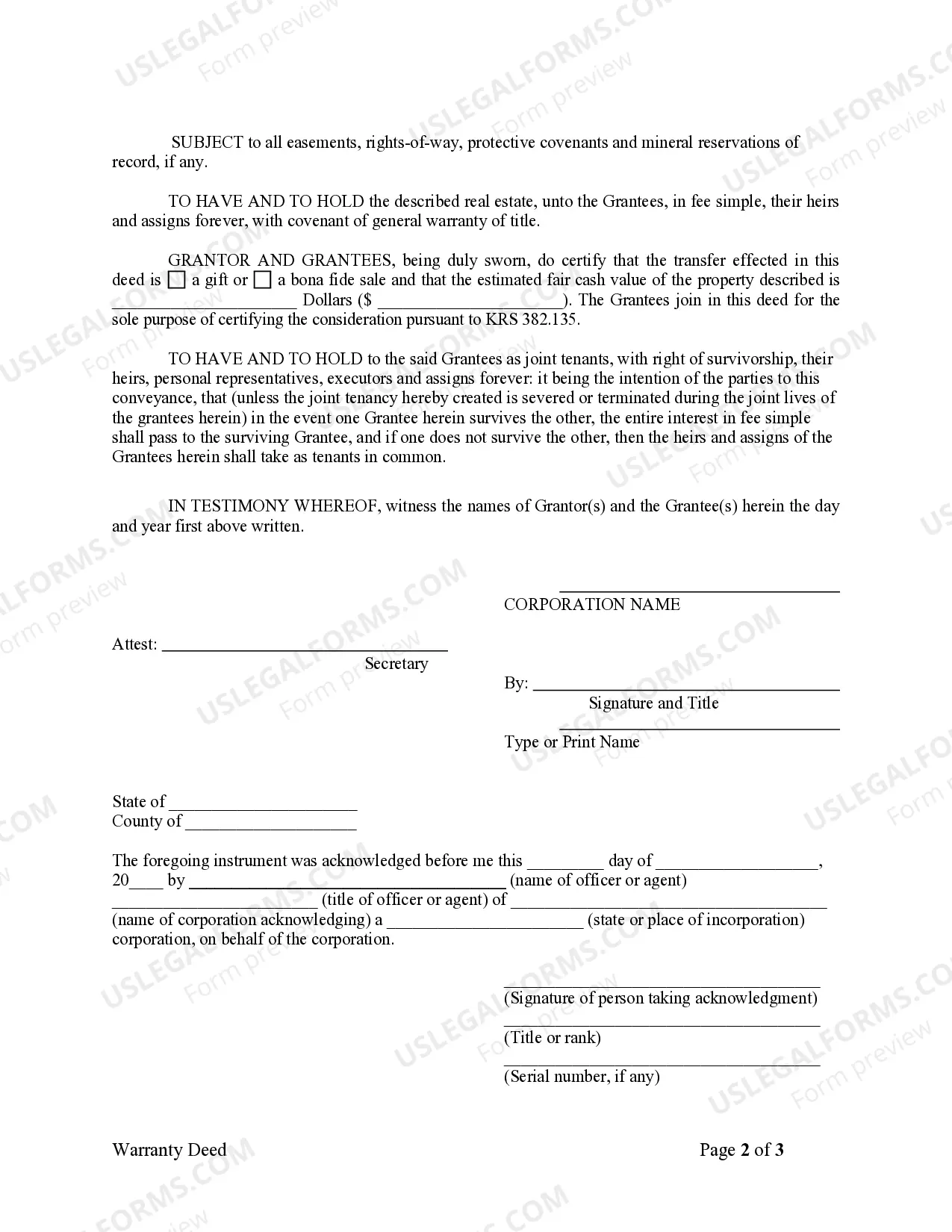
- Joint tenant language ensuring right of survivorship for the Grantees.
- Certification of property value and purpose of deed.




Common use cases
This form should be used when a corporation intends to transfer ownership of real property to two individuals. It is commonly utilized in situations where individuals want to acquire property together while ensuring that ownership rights pass to the survivor in the event of one party's death. Additionally, this deed may be employed in gift situations or sales at nominal prices.
Who this form is for
- Corporations looking to transfer property to individuals.
- Individuals acquiring property with a spouse, partner, or friend.
- Estate executors handling property transfers from a corporate entity to heirs.
- Business owners needing to allocate property ownership in a specific manner.
Instructions for completing this form
- Identify and enter the full name and address of the Grantor (corporation).
- List the names and addresses of the two Grantees.
- Specify the date of the deed's execution.
- Provide a complete legal description of the property being transferred.
- Indicate the consideration amount, confirming its receipt.
- Ensure all parties sign and date the document as required.
Is notarization required?
This form does not typically require notarization unless specified by local law. However, it is advisable to check with local recording offices for any specific requirements regarding notarization to ensure legal validity.
Get your form ready online
Our built-in tools help you complete, sign, share, and store your documents in one place.
Make edits, fill in missing information, and update formatting in US Legal Forms—just like you would in MS Word.
Download a copy, print it, send it by email, or mail it via USPS—whatever works best for your next step.
Sign and collect signatures with our SignNow integration. Send to multiple recipients, set reminders, and more. Go Premium to unlock E-Sign.
If this form requires notarization, complete it online through a secure video call—no need to meet a notary in person or wait for an appointment.
We protect your documents and personal data by following strict security and privacy standards.

Make edits, fill in missing information, and update formatting in US Legal Forms—just like you would in MS Word.

Download a copy, print it, send it by email, or mail it via USPS—whatever works best for your next step.

Sign and collect signatures with our SignNow integration. Send to multiple recipients, set reminders, and more. Go Premium to unlock E-Sign.

If this form requires notarization, complete it online through a secure video call—no need to meet a notary in person or wait for an appointment.

We protect your documents and personal data by following strict security and privacy standards.
Mistakes to watch out for
- Failing to provide complete legal descriptions for the property.
- Not stating the correct consideration amount or purpose of the transfer.
- Neglecting to include all necessary signatures.
- Using incorrect terminology for joint tenancy or survivorship clauses.
Why use this form online
- Easy access to legally vetted templates prepared by licensed attorneys.
- Convenient downloading and editing options to customize the form as needed.
- Time-efficient process, eliminating the need for paper forms or in-person visits.
Looking for another form?









Form popularity
FAQ
To transfer a property title to a family member in Kentucky, you will typically need to execute a deed that states the transfer clearly. A Kentucky Warranty Deed from Corporation to Two Individuals can simplify this process. After preparing the deed, remember to file it with the county clerk's office. This step legally establishes the new ownership and updates public records.
Either (1) a sworn, notarized certificate signed by the grantor or his agent and the grantee or his agent, that the consideration reflected in the deed is the full consideration paid for the property, or (2) a sworn, notarized certificate signed by the grantor or his agent and the grantee or his agent, stating that the
Step 1: Find your KY quitclaim form. Step 2: Gather the information you need. Step 3: Enter the information about the parties. Step 4: File the deed in the County Clerk's office of the county where the property is located, along with the consideration certificate.
A warranty deed, also known as a general warranty deed, is a legal real estate document between the seller (grantor) and the buyer (grantee). The deed protects the buyer by pledging that the seller holds clear title to the property and there are no encumbrances, outstanding liens, or mortgages against it.
In a Non-Warranty Deed, the seller gives no warranties.In a Non-Warranty or Quitclaim Deed, the seller merely is giving the buyer whatever rights, if any, that the seller has in the property and the seller makes no warranties of any nature about the seller's rights in the property.
Corporate warranty deeds offer the seller's guarantee to the buyer in regards to the validity of the chain of title. Generally, special warranty deeds only protect against problems occurring since the seller purchased the property.
Basically it is exactly the same document. Title Deed is just a more common name that is used. The legal documentation submitted when transferring a property is called a Deed of Transfer.Next time you order a Title Deed and receive a Deed of Transfer, don't be alarmed, they are the same document.
Technically, any seller (attorney or non-attorney) can prepare their own deed; however, it must contain all the correct language, for the specific situation, in order for it to do what you want it to do2026and in order for it to be acceptable for recording by the county clerk's office in the county in which the property
Key Takeaways. A property deed is a legal document that transfers the ownership of real estate from a seller to a buyer.General warranty deeds give the grantee the most protection, special warranty deeds give the grantee more limited protection, and a quitclaim deed gives the grantee the least protection under the law
Retrieve your original deed. Get the appropriate deed form. Draft the deed. Sign the deed before a notary. Record the deed with the county recorder. Obtain the new original deed.