Kansas Written Revocation of Will
Understanding this form
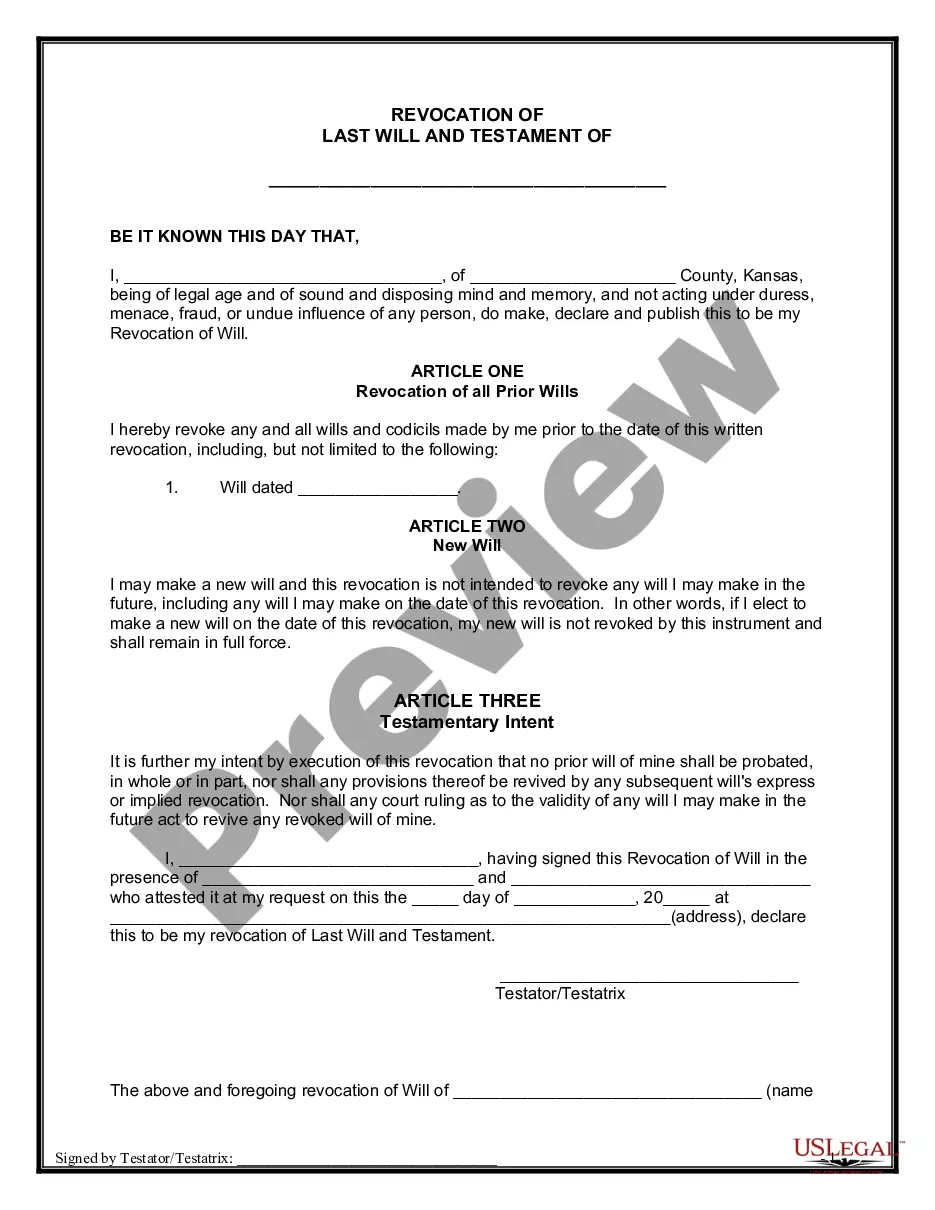
The Written Revocation of Will is a legal document used to revoke a previous will in a separate written format. This form is particularly important when a new will does not explicitly revoke all prior wills. It ensures that no old wills are probated, providing clear evidence of your intent to revoke the previous documents. This form is crucial for individuals who want to clarify their testamentary wishes and prevent any disputes among heirs regarding which will should be honored.
Key parts of this document
- Identification: Includes names and addresses of the testator/testatrix.
- Revocation Clause: Explicitly revokes all prior wills and codicils.
- Intent Declaration: States that no previously made will shall be probated.
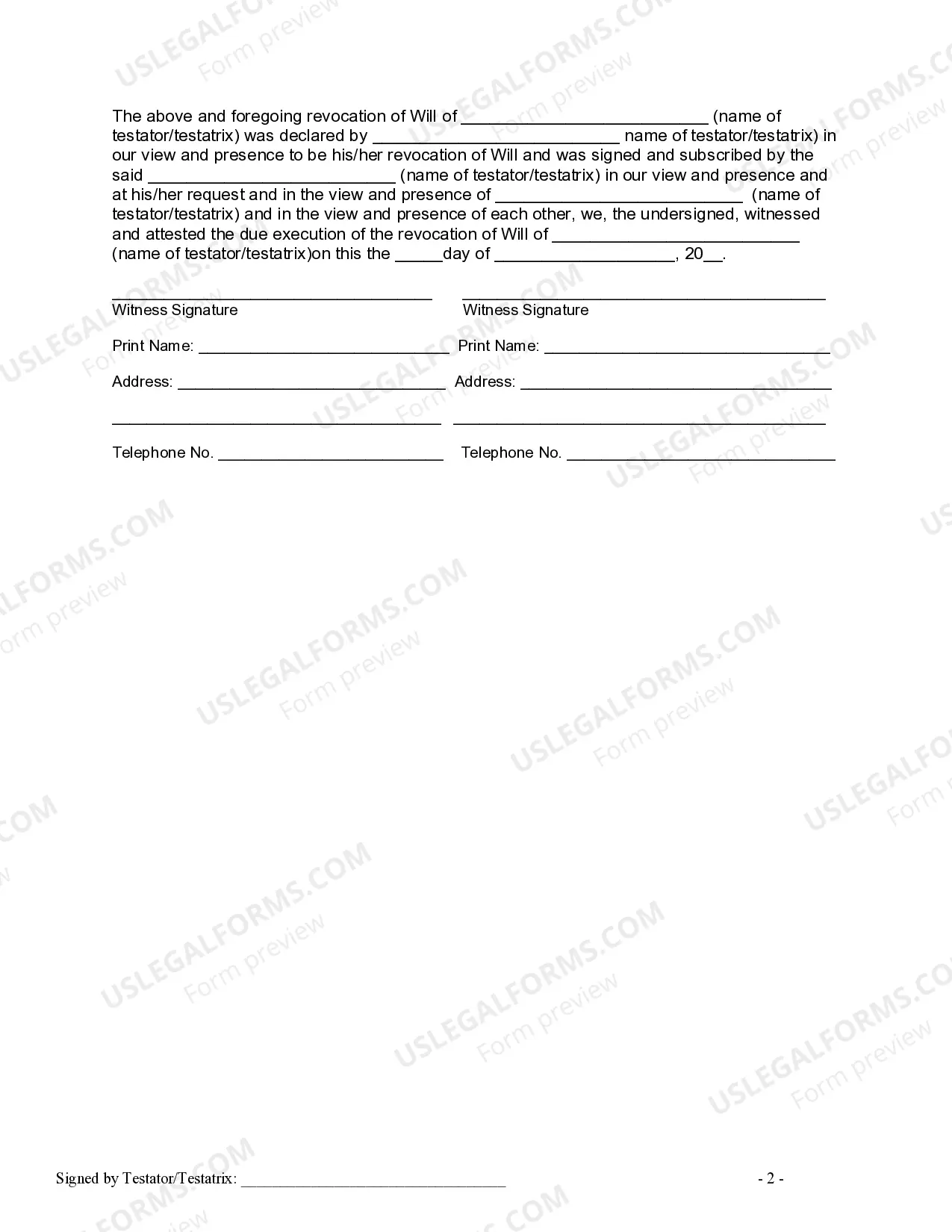
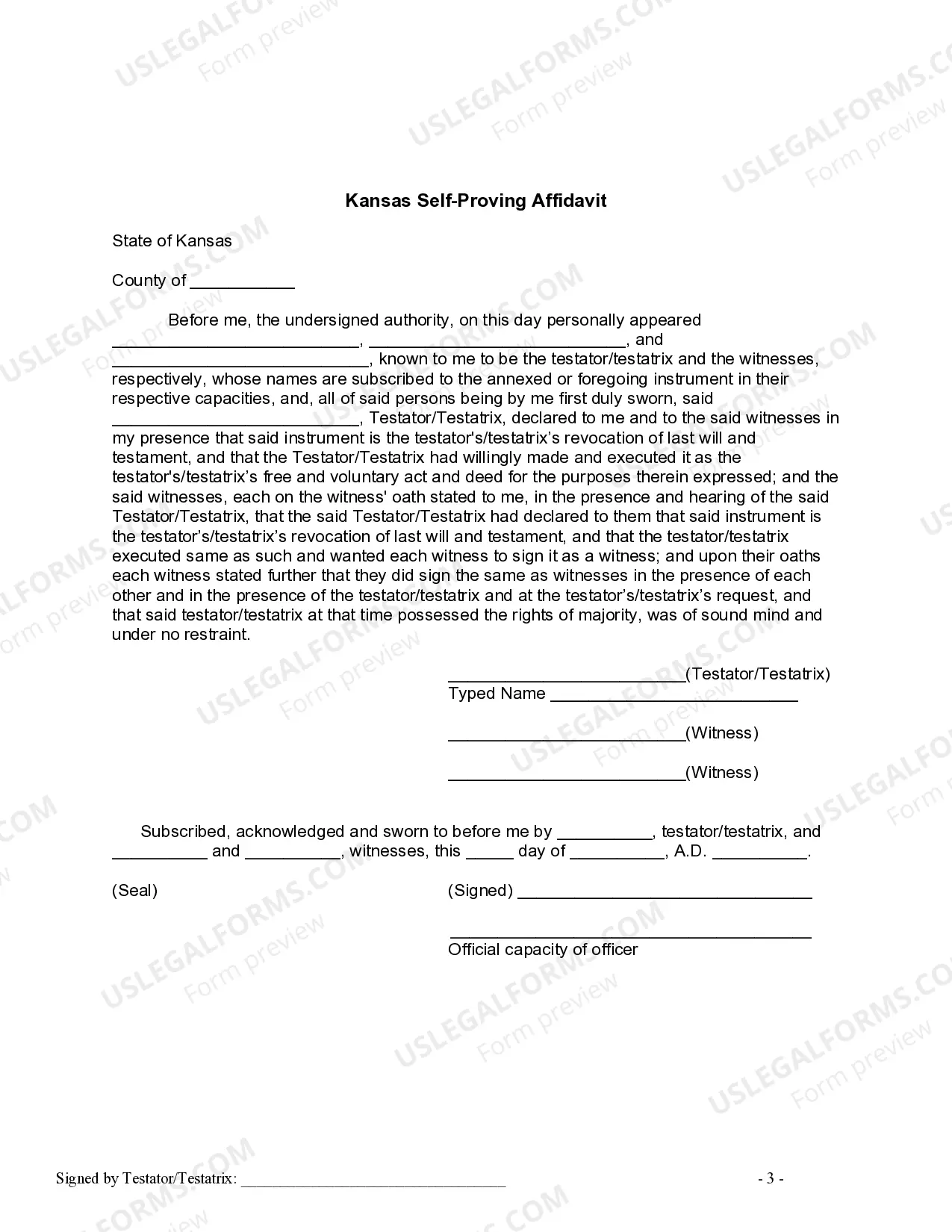
- Witness Statement: Requires signatures from witnesses confirming the revocation.
- Notarization Section: Provides a space for an official to notarize the document, affirming its validity.

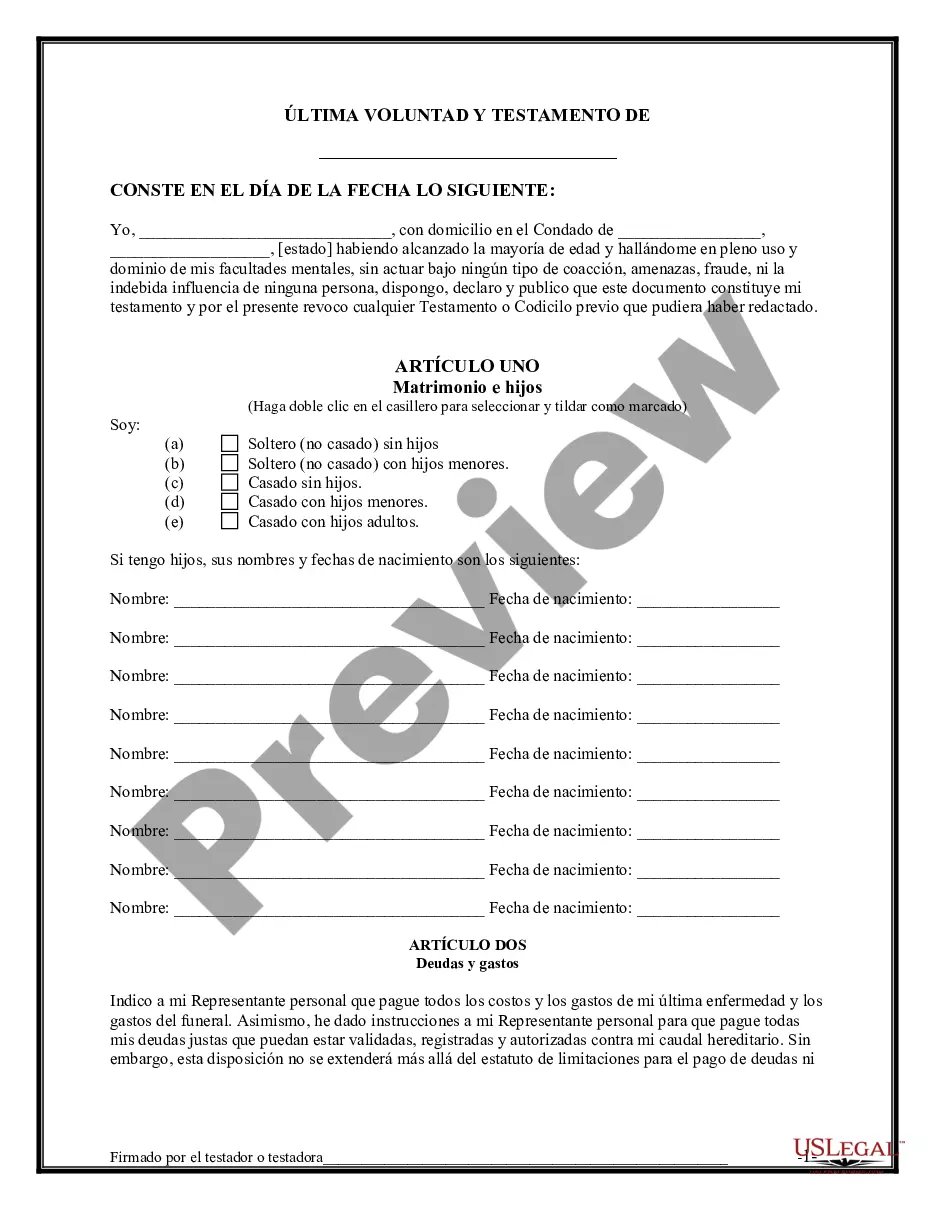
When to use this form
You should use the Written Revocation of Will when you have decided to nullify a previous will due to changes in your circumstances or wishes. For example, if you have created a new will that does not revoke your old will, or if you wish to ensure that a specific will is not probated by your heirs or other parties. This form helps prevent potential disputes or confusion regarding your testamentary intentions after your passing.
Who needs this form
- Individuals who have previously executed a will and want to revoke it.
- Those who are drafting a new will that may not adequately revoke older documents.
- Persons intending to clarify their estate plans to avoid judicial challenges.
- Anyone with heirs or beneficiaries who may contest the validity of old wills.
Steps to complete this form
- Identify yourself: Enter your name and address at the beginning of the document.
- Specify the prior will: Clearly mention the date of the will you are revoking.
- Sign the document: As the testator/testatrix, you must sign the form in the presence of witnesses.
- Ensure witness signatures: Have at least two witnesses sign the form, confirming they observed you signing the revocation.
- Complete notarization: If desired, take the document to a notary public to have it notarized, which can lend additional legal weight.
Notarization guidance
Notarization is required for this form to take effect. Our online notarization service, powered by Notarize, lets you verify and sign documents remotely through an encrypted video session, available 24/7.
Get your form ready online
Our built-in tools help you complete, sign, share, and store your documents in one place.
Make edits, fill in missing information, and update formatting in US Legal Forms—just like you would in MS Word.
Download a copy, print it, send it by email, or mail it via USPS—whatever works best for your next step.
Sign and collect signatures with our SignNow integration. Send to multiple recipients, set reminders, and more. Go Premium to unlock E-Sign.
If this form requires notarization, complete it online through a secure video call—no need to meet a notary in person or wait for an appointment.
We protect your documents and personal data by following strict security and privacy standards.

Make edits, fill in missing information, and update formatting in US Legal Forms—just like you would in MS Word.

Download a copy, print it, send it by email, or mail it via USPS—whatever works best for your next step.

Sign and collect signatures with our SignNow integration. Send to multiple recipients, set reminders, and more. Go Premium to unlock E-Sign.

If this form requires notarization, complete it online through a secure video call—no need to meet a notary in person or wait for an appointment.

We protect your documents and personal data by following strict security and privacy standards.
Mistakes to watch out for
- Failing to include the date of the will being revoked.
- Not obtaining the required number of witnesses.
- Inadequate proof of mental competency during the signing process.
- Not signing the document in front of witnesses.
- Forgetting to notarize if required by local law.
Advantages of online completion
- Convenience: Easily access and download the form from anywhere.
- Editability: Customize the form to fit your specific needs before printing.
- Reliability: Ensure that the document is drafted with proper legal language to meet formal requirements.
- Quick access to resources: Receive guidelines and assistance on completing the form correctly.
Summary of main points
- The Written Revocation of Will is essential for ensuring that previous wills are no longer in effect.
- Clear communication of testamentary intent helps avoid confusion among heirs.
- Completing the form in accordance with Kansas laws ensures legal validity.
Looking for another form?


Form popularity
FAQ
Alberta Wills can be changed at any time simply by visiting your lawyer.In some situations, wills are automatically revoked, such as when you get married. Consider making an entirely new will when you need to make major changes and using a codicil for small changes.
Generally, you can revoke a will by (1) destroying the old will, (2) creating a new will or (3) making changes to an existing will. In some circumstances, simply giving away all or your property and assets before you die can have the effect of revoking a will (subject to estate tax penalties).
It must be in writing. Generally, of course, wills are composed on a computer and printed out. The person who made it must have signed and dated it. A will must be signed and dated by the person who made it. Two adult witnesses must have signed it. Witnesses are crucial.
§ 59-601. In Kansas, your will affects the property you own at the time of your death, as well as any property your estate receives after your death.Kansas does not permit holographic (handwritten) wills.
Contrary to popular belief, you do not need to have an attorney draft a will for you. Anyone can write this document on their own, and as long as it meets all of the legal requirements of the state, courts will recognize one you wrote yourself.
Once the will is determined to be valid, the next step is the probate process. Probate proceedings are usually only required if the deceased person owned any assets in their name only.Kansas has not adopted the Uniform Probate Code.
Legal Requirements A will is valid in Kansas only if it is in writing and signed at the final draft by the testator, or by a proxy who has been directed by the testator to sign it. The will also needs to be signed by two witnesses who have seen the testator sign the will or have heard the acknowledgement of the will.
Generally, you can revoke a will by (1) destroying the old will, (2) creating a new will or (3) making changes to an existing will. In some circumstances, simply giving away all or your property and assets before you die can have the effect of revoking a will (subject to estate tax penalties).
Self-written wills are typically valid, even when handwritten, as long as they're properly witnessed and notarized, or proven in court. A handwritten will that is not witnessed or notarized is considered a holographic will. Not all states accept holographic wills .