Kansas Last Will and Testament for Divorced Person Not Remarried with No Children
Overview of this form
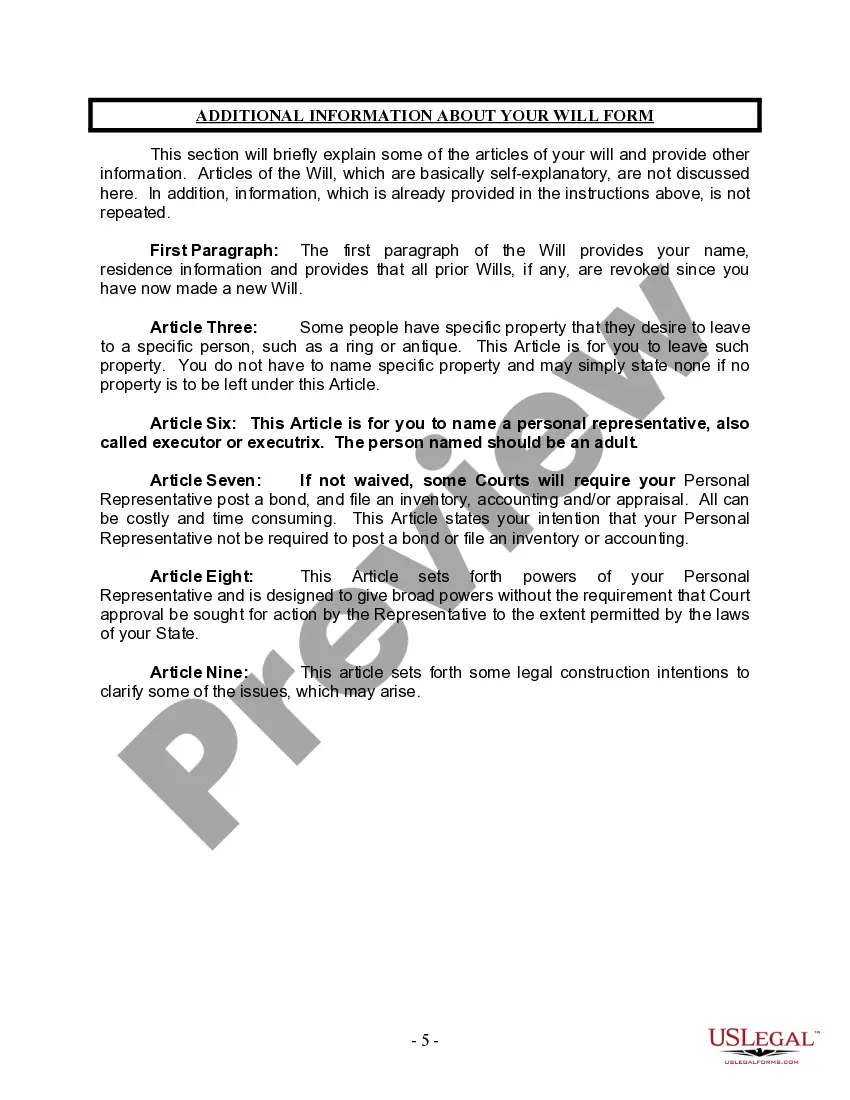
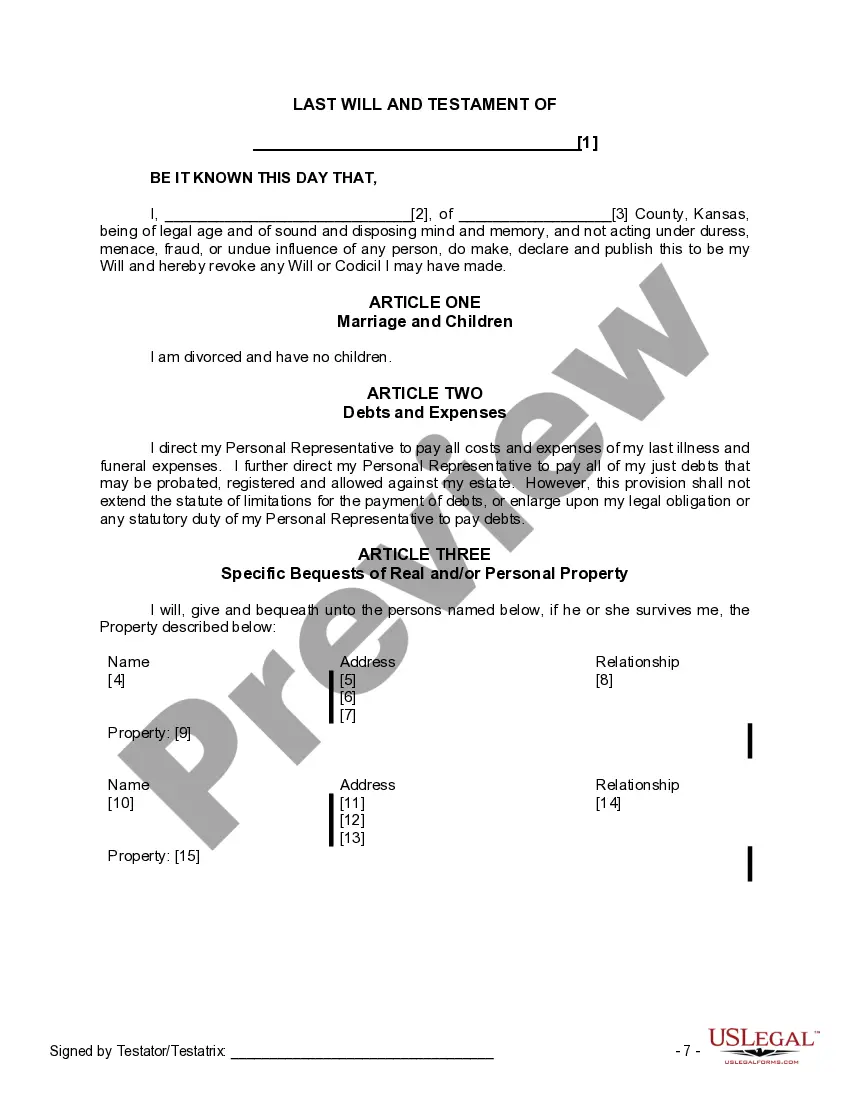
This Last Will and Testament is specifically designed for a divorced person who has not remarried and has no children. It serves to designate how your property will be distributed upon your death, appoint a personal representative to handle your estate, and revoke any previous wills. This form is tailored to address the unique circumstances of individuals without dependent children, simplifying the estate planning process while ensuring your final wishes are legally documented.
Key components of this form
- Appointment of a personal representative or executor.
- Designation of beneficiaries for specific property and the remaining estate.
- Instructions related to debts and funeral expenses.
- Optional clauses for personal preferences regarding burial or cremation.
- Self-proving affidavit for smoother probate processes.

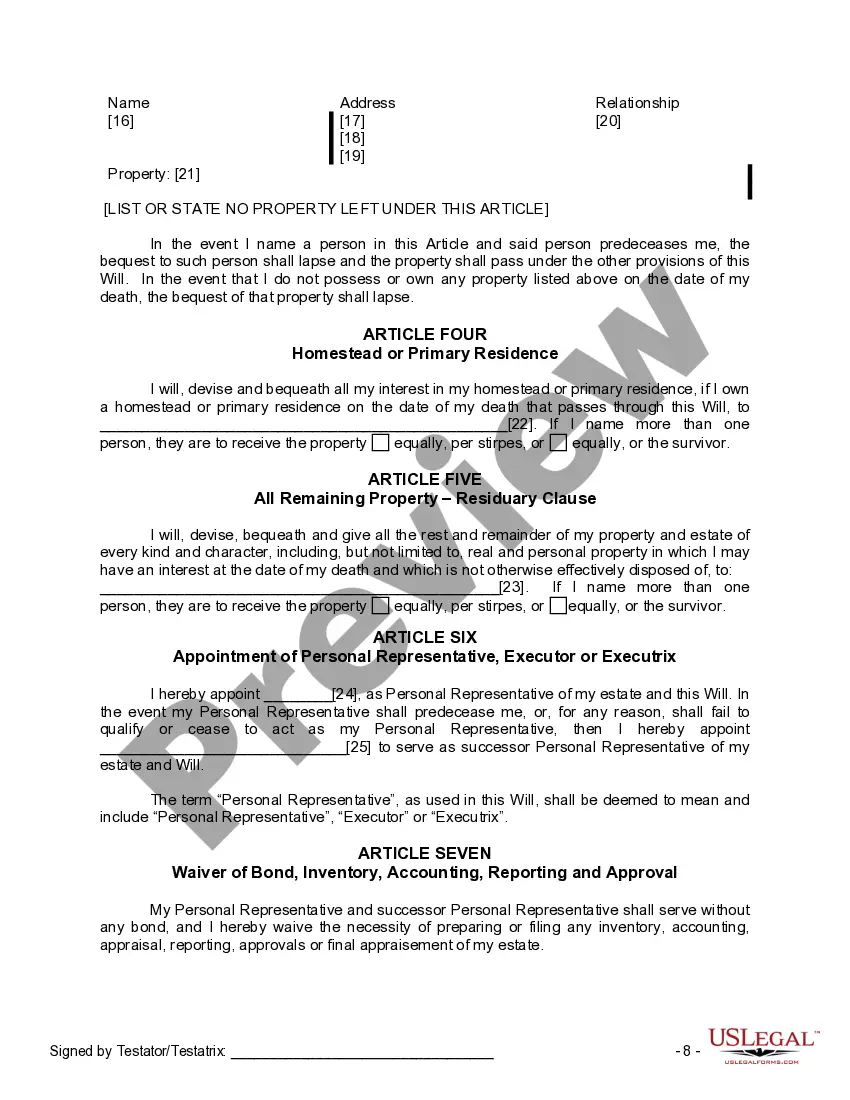
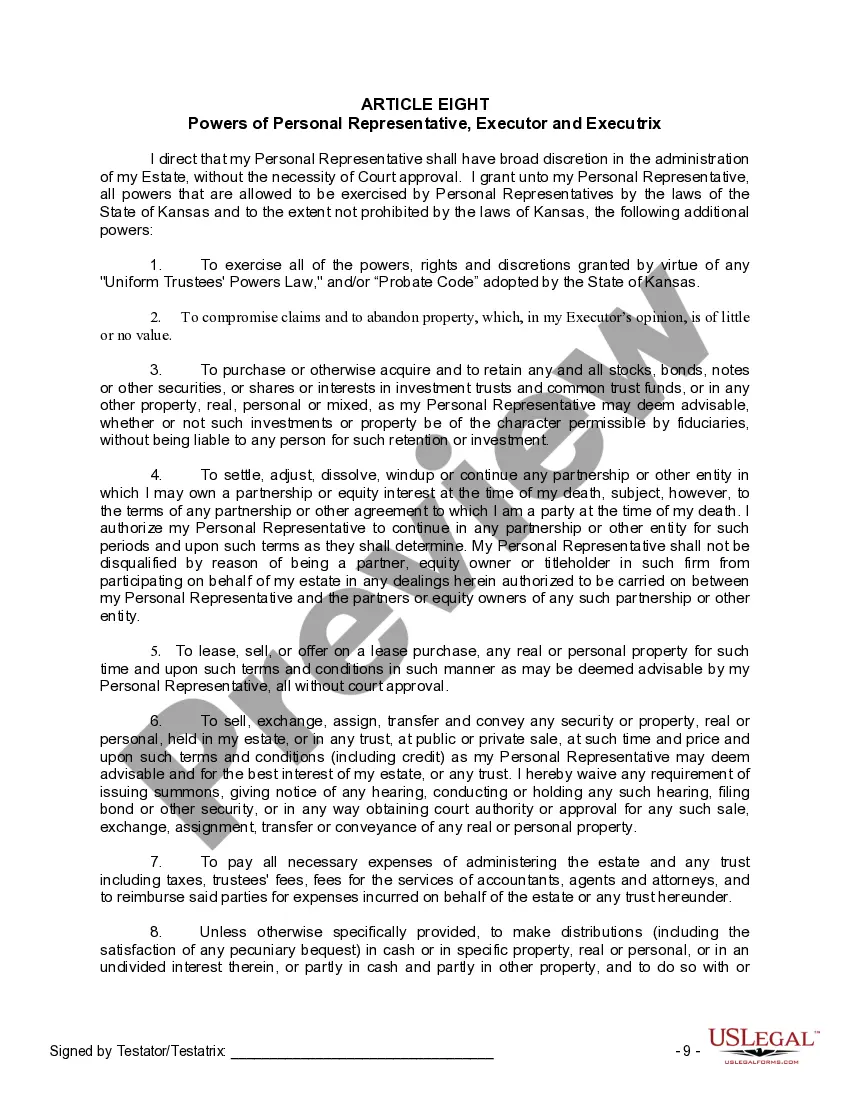

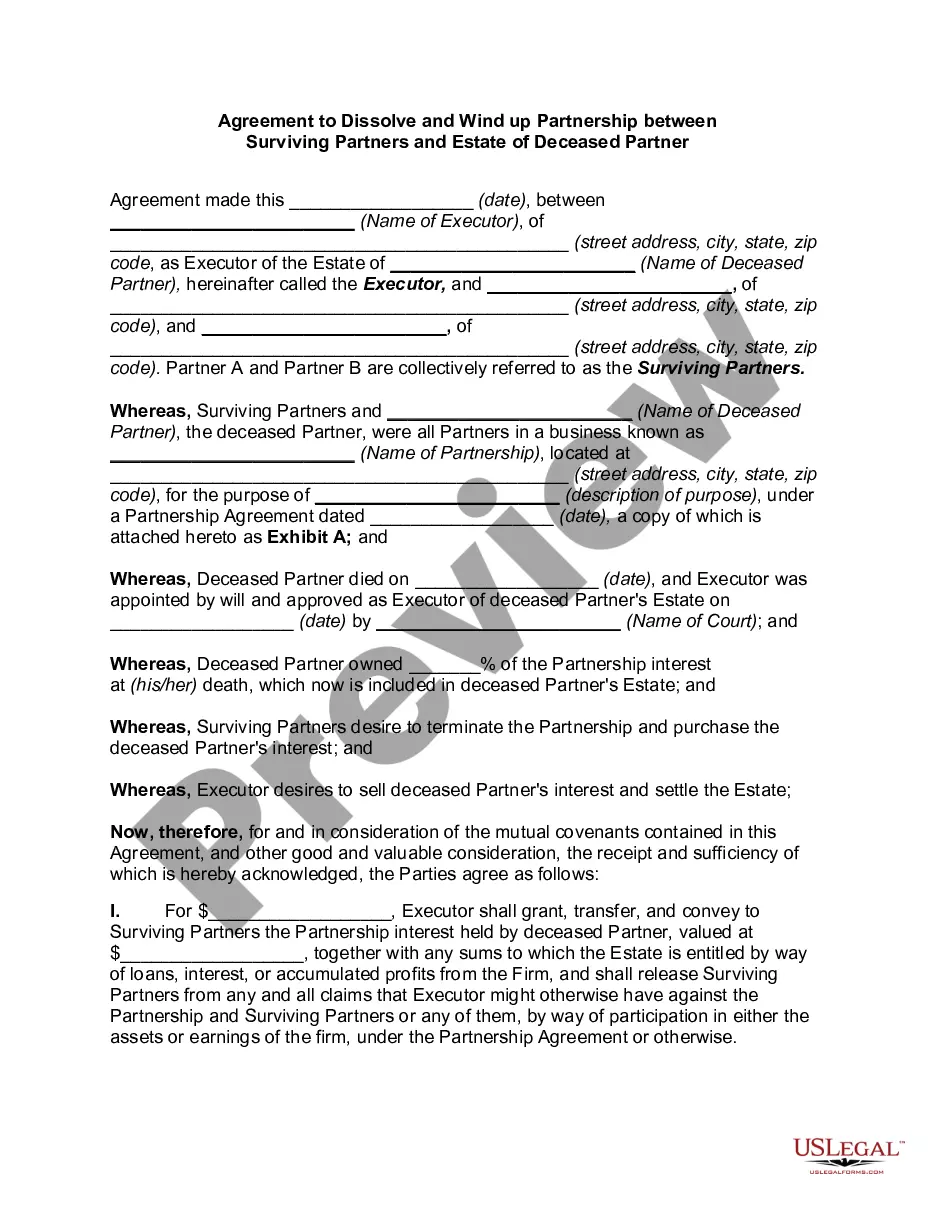
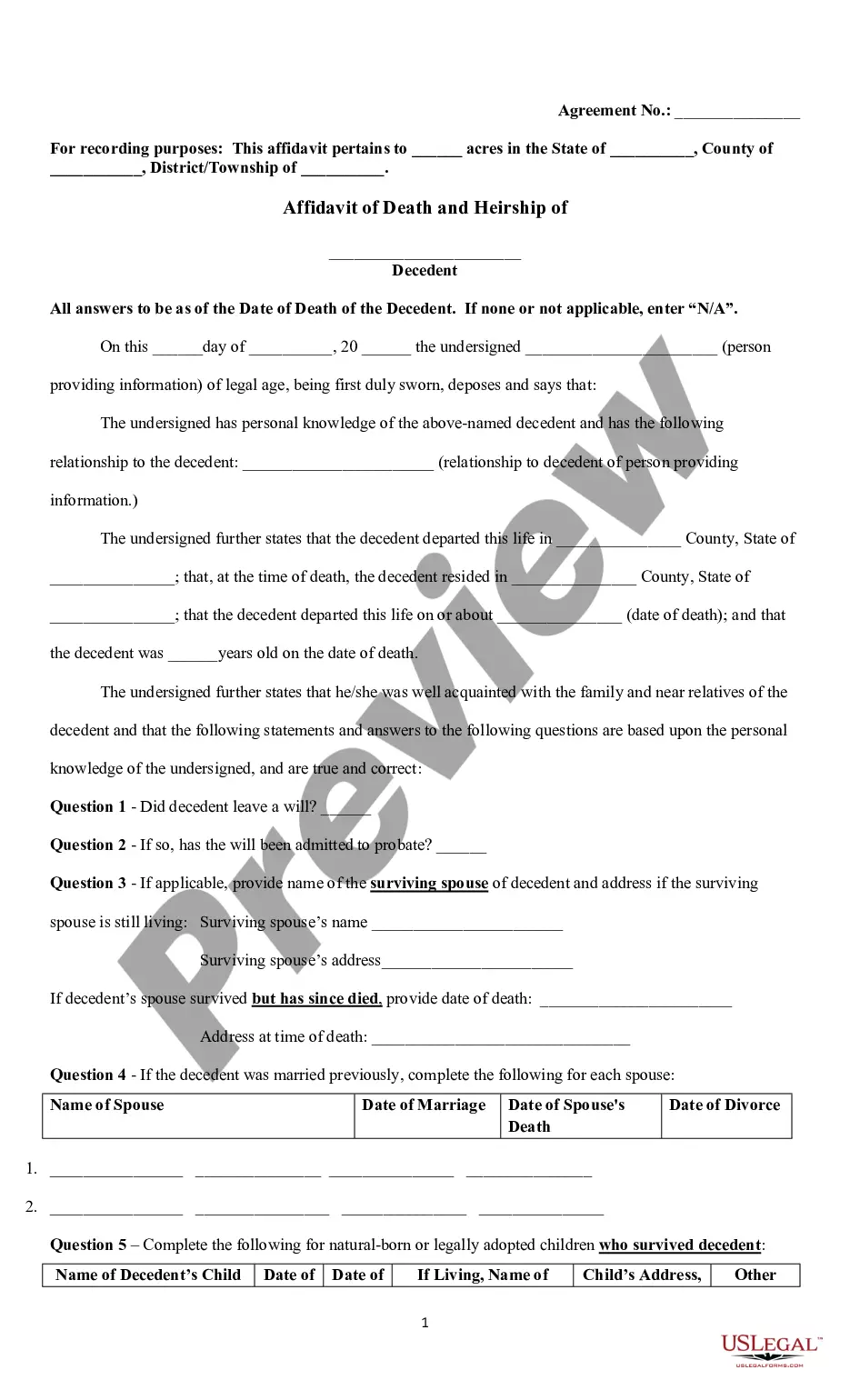

When this form is needed
This form is necessary when a divorced individual wishes to create a legally binding document detailing the distribution of their assets after death. Use this Will if you have no children and intend to leave your estate to specific individuals or organizations, or if you want to specify an executor to manage your affairs upon your passing.
Who can use this document
- Divorced individuals who have not remarried.
- Individuals without children looking to dictate the distribution of their estate.
- Those wanting to appoint an executor for their estate management.
- Residents of states allowing a Last Will and Testament for this scenario.
How to complete this form
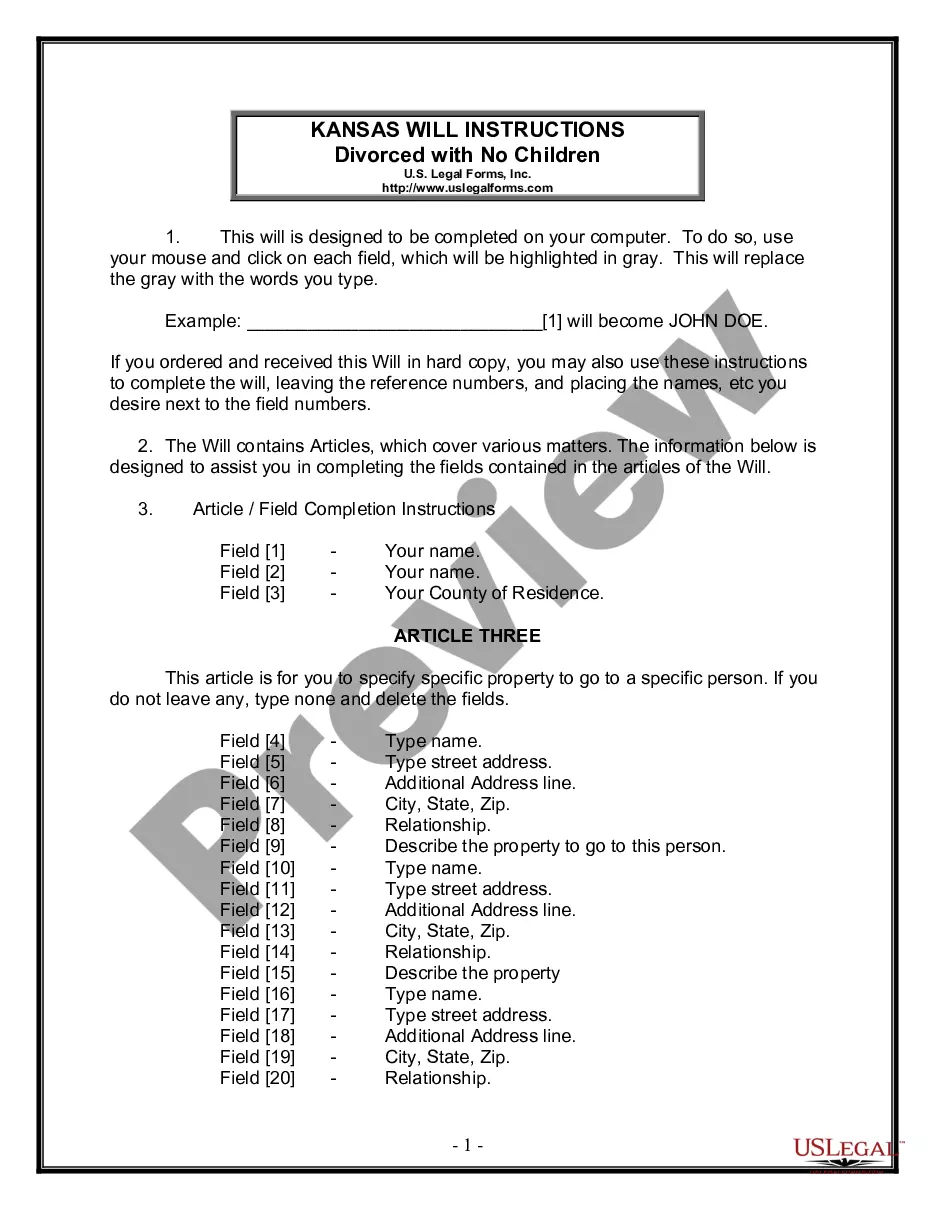
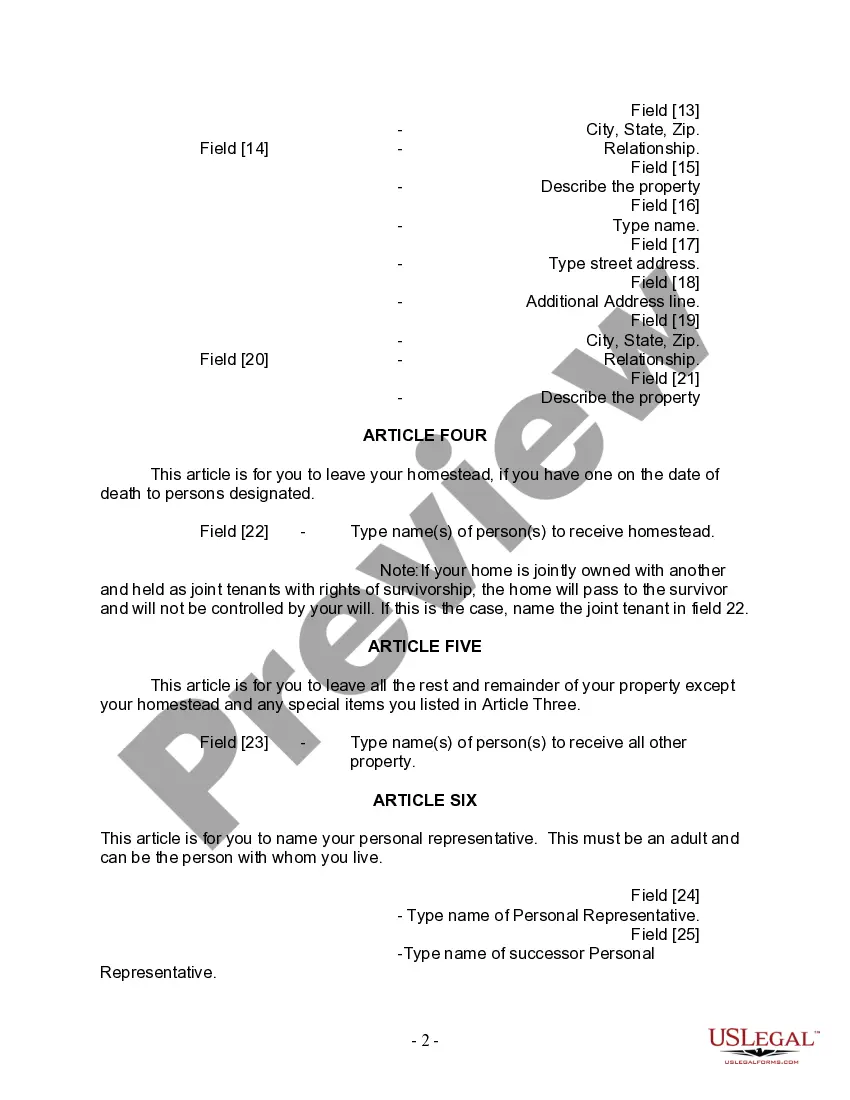
- Identify and enter your full legal name and county of residence.
- Appoint a personal representative and a successor to manage your estate.
- Designate specific property to individuals, or indicate "none" if there are no specific bequests.
- Include details of your homestead or primary residence, if applicable.
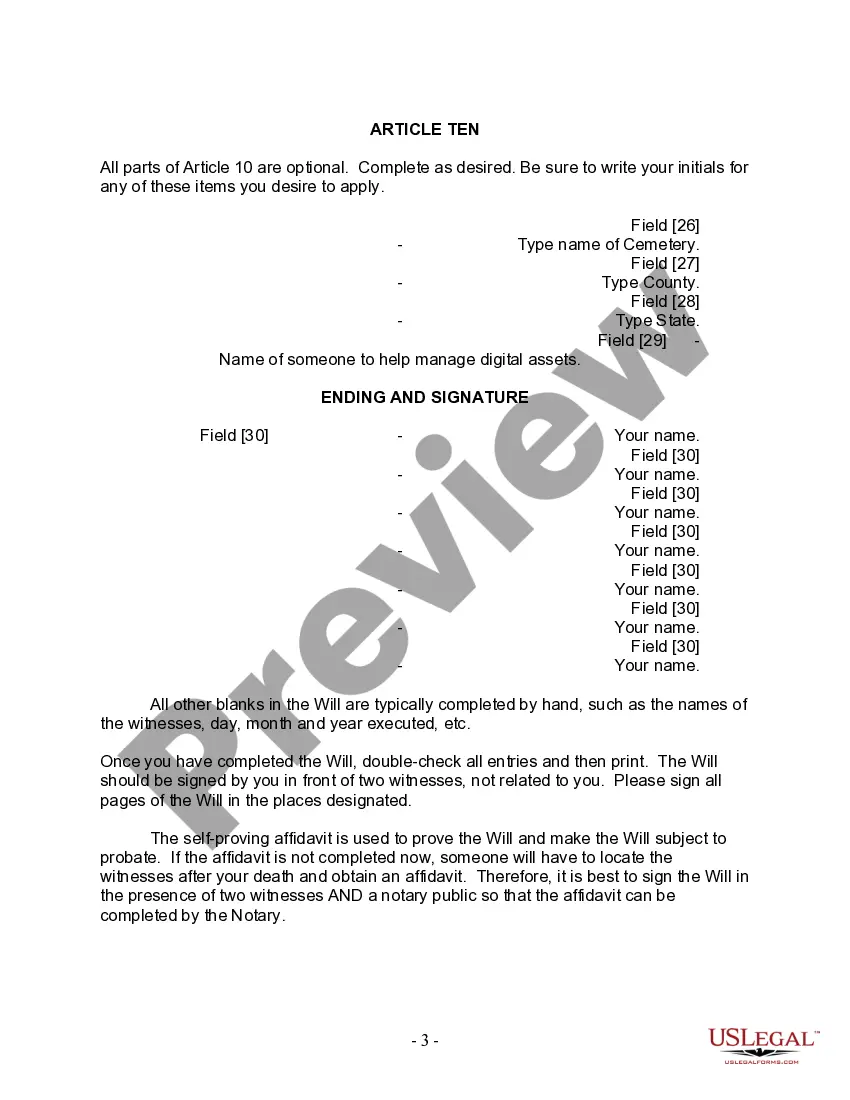
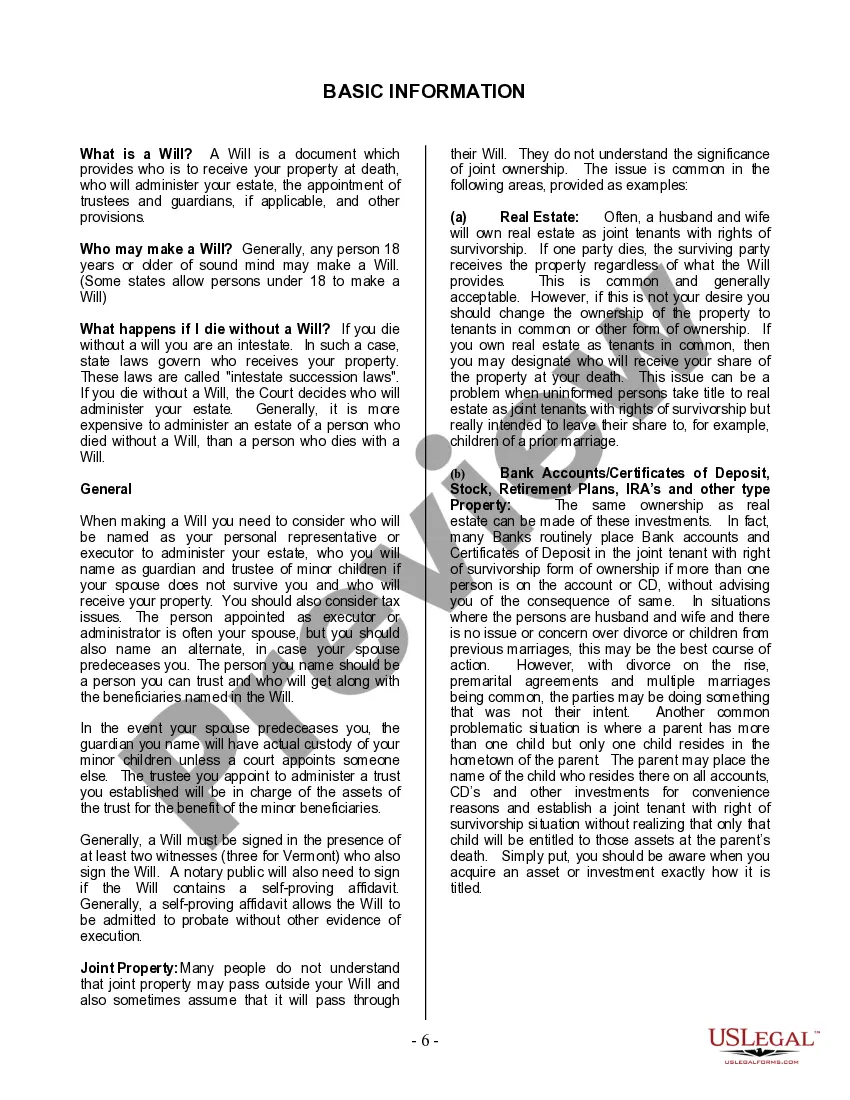
- Sign the document in the presence of two witnesses and, optionally, a notary public.
Does this form need to be notarized?
Yes, this form must be notarized to be legally valid. It is recommended to have the Will signed in front of a notary public, especially if you complete the self-proving affidavit, as this helps streamline the probate process by pre-establishing the authenticity of the signatures.
Get your form ready online
Our built-in tools help you complete, sign, share, and store your documents in one place.
Make edits, fill in missing information, and update formatting in US Legal Forms—just like you would in MS Word.
Download a copy, print it, send it by email, or mail it via USPS—whatever works best for your next step.
Sign and collect signatures with our SignNow integration. Send to multiple recipients, set reminders, and more. Go Premium to unlock E-Sign.
If this form requires notarization, complete it online through a secure video call—no need to meet a notary in person or wait for an appointment.
We protect your documents and personal data by following strict security and privacy standards.

Make edits, fill in missing information, and update formatting in US Legal Forms—just like you would in MS Word.

Download a copy, print it, send it by email, or mail it via USPS—whatever works best for your next step.

Sign and collect signatures with our SignNow integration. Send to multiple recipients, set reminders, and more. Go Premium to unlock E-Sign.

If this form requires notarization, complete it online through a secure video call—no need to meet a notary in person or wait for an appointment.

We protect your documents and personal data by following strict security and privacy standards.
Typical mistakes to avoid
- Failing to sign the Will in front of two witnesses.
- Not updating the Will after major life changes, such as divorce.
- Omitting important details such as the appointment of an executor.
- Not considering joint ownership of property that may bypass the Will.
Benefits of completing this form online
- Convenience of completing the form from anywhere at any time.
- Editability allows users to customize the document easily.
- Access to templates created by licensed attorneys, ensuring legal validity.
- Immediate download and access to your legal documents.
Looking for another form?

Form popularity
FAQ
Create the initial document. Start by titling the document Last Will and Testament" and including your full legal name and address. Designate an executor. Appoint a guardian. Name the beneficiaries. Designate the assets. Ask witnesses to sign your will. Store your will in a safe place.
Self-written wills are typically valid, even when handwritten, as long as they're properly witnessed and notarized, or proven in court. A handwritten will that is not witnessed or notarized is considered a holographic will. Not all states accept holographic wills .
Contrary to popular belief, you do not need to have an attorney draft a will for you. Anyone can write this document on their own, and as long as it meets all of the legal requirements of the state, courts will recognize one you wrote yourself.
In most situations, a will template is an easy and inexpensive way to make sure your wishes are known and carried out. Most people can get everything they need by using a will template, with little cost or hassle.
It must be in writing. Generally, of course, wills are composed on a computer and printed out. The person who made it must have signed and dated it. A will must be signed and dated by the person who made it. Two adult witnesses must have signed it. Witnesses are crucial.
Fraud or Undue Influence A nonfamily caregiver forcing the testator to leave them an inheritance. A family member getting the testator to sign a will by pretending it is just a general legal document that needs a signature.
Once the will is determined to be valid, the next step is the probate process. Probate proceedings are usually only required if the deceased person owned any assets in their name only.Kansas has not adopted the Uniform Probate Code.
The Free Last Will and Testament Template for Word is compatible with Word 2003 or later versions.
§ 59-601. In Kansas, your will affects the property you own at the time of your death, as well as any property your estate receives after your death.Kansas does not permit holographic (handwritten) wills.