Kansas Quitclaim Deed by Two Individuals to LLC
About this form
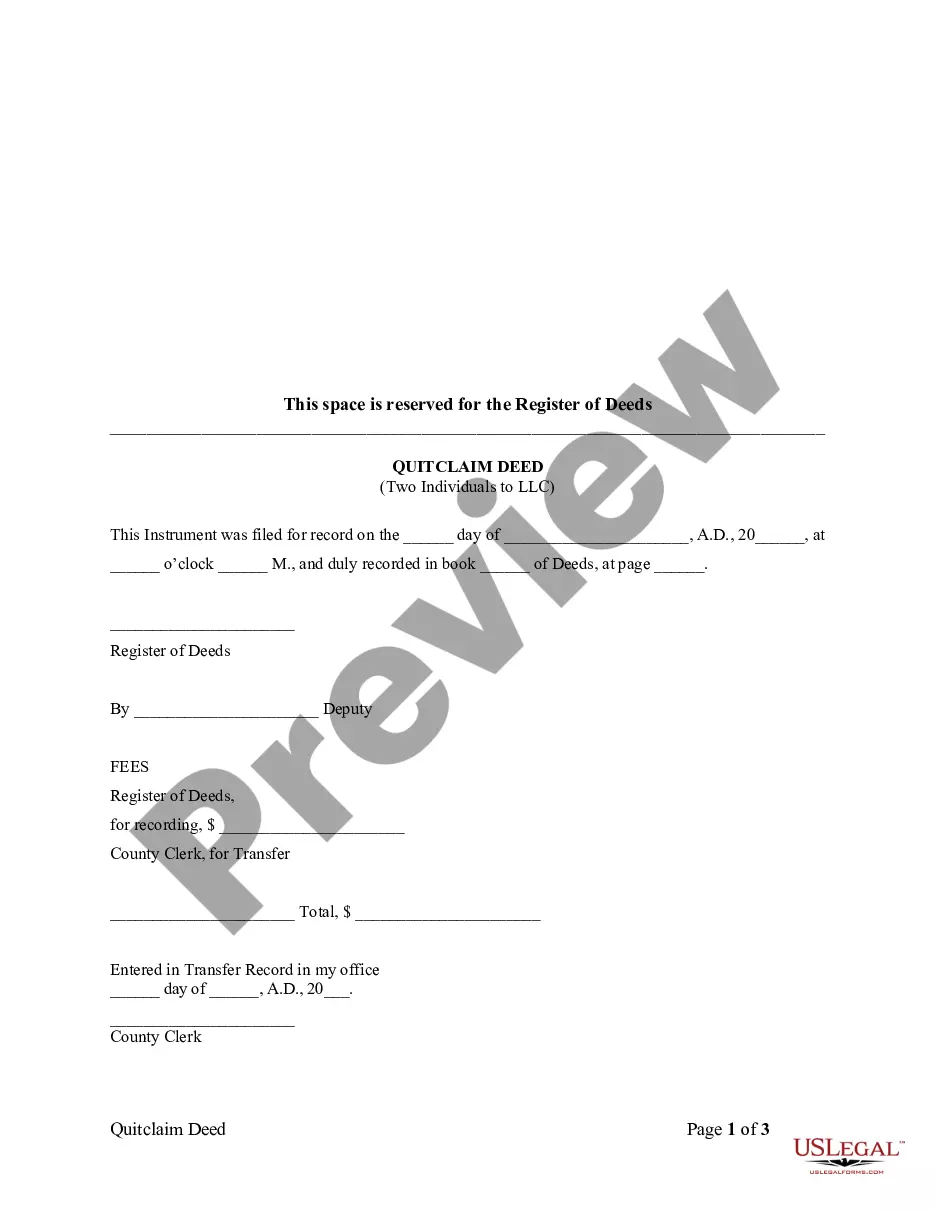
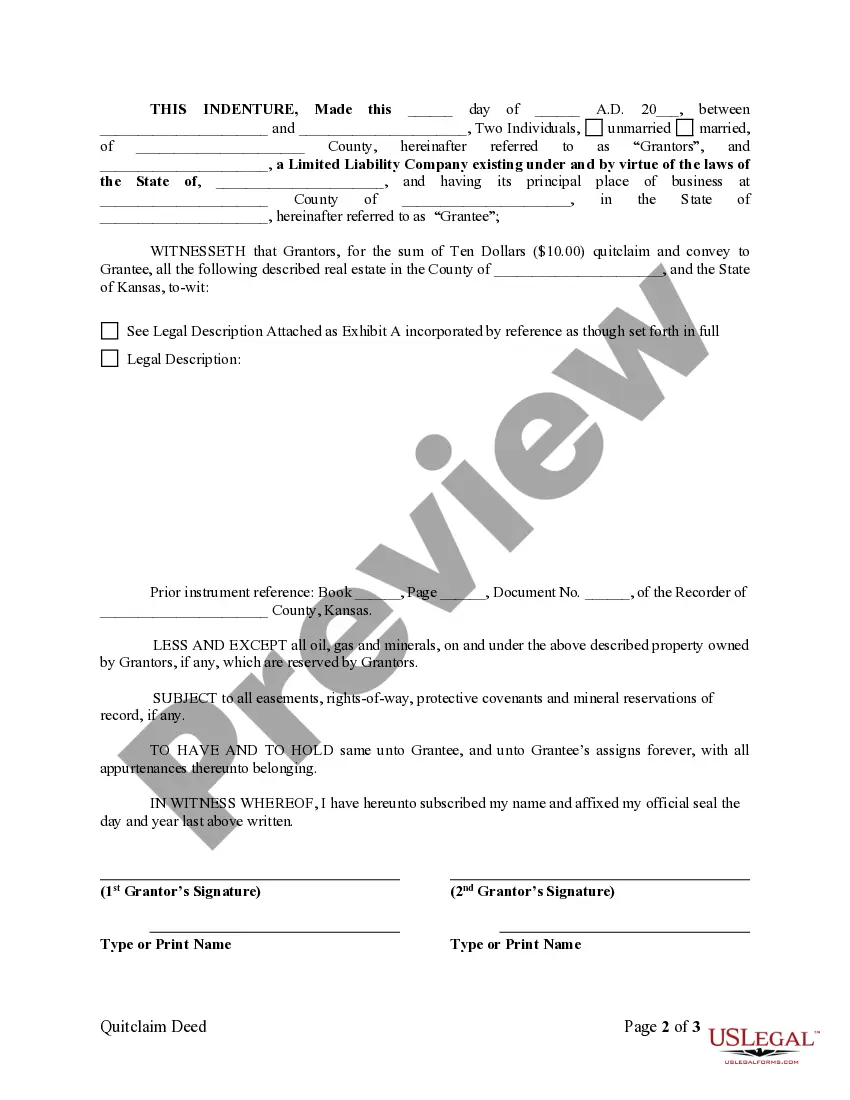
The Quitclaim Deed by Two Individuals to LLC is a legal document used when two individuals (the Grantors) transfer property ownership to a limited liability company (the Grantee). This form is distinct from other types of deeds because it provides no guarantee of title and conveys any interest the Grantors may have in the property, while explicitly reserving rights to any minerals beneath the land. It is essential for ensuring a clear transfer of property rights in business transactions involving real estate.
Form components explained
- Identification of parties: Names and addresses of the Grantors and Grantee.
- Property description: Detailed description of the real estate being transferred.
- Consideration: A nominal amount (often ten dollars) to signify the transaction.
- Reservation of rights: Statement regarding the retention of oil, gas, and mineral rights by Grantors.
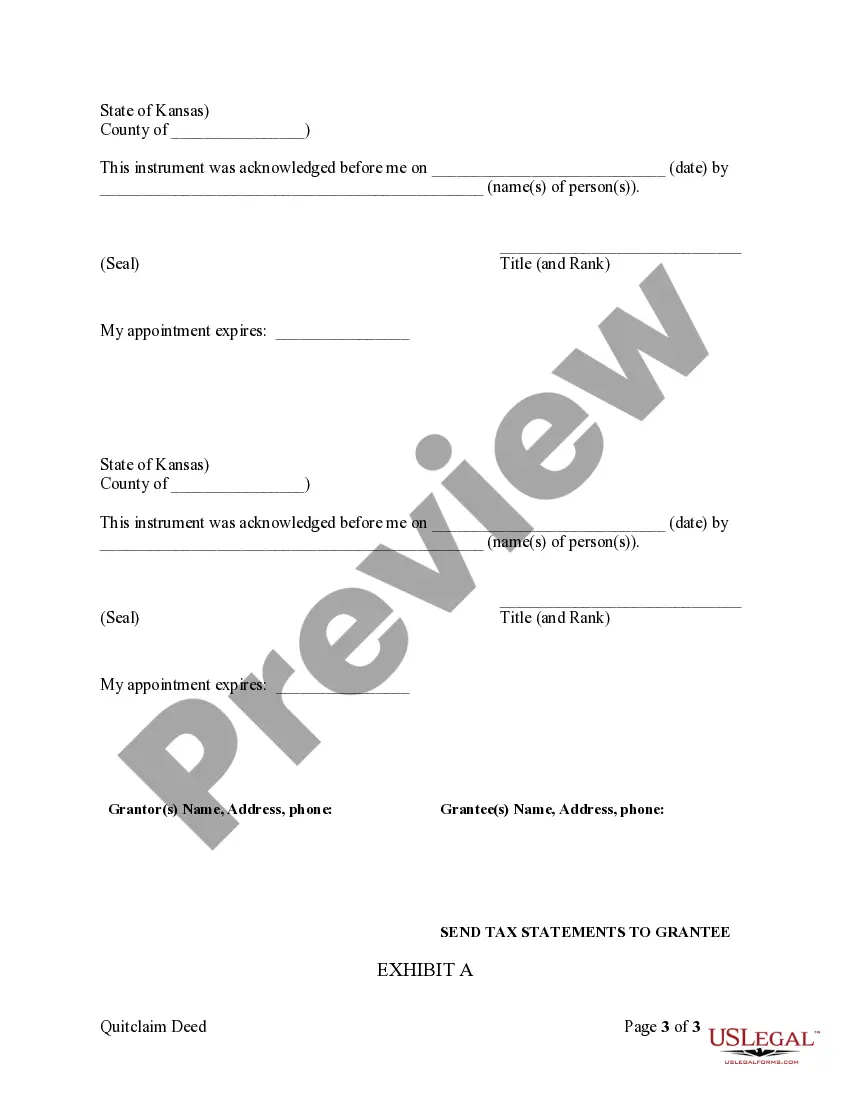
- Notarization section: Space for the Notary Public to validate the deed.





When to use this form
This form is appropriate in situations where two individuals own property and wish to transfer it to a limited liability company. Common scenarios include business partners needing to consolidate property under the LLC for liability protection and tax advantages, or individuals wanting to formalize property agreements as part of their business structure.
Who can use this document
- Individuals who jointly own real estate and want to transfer it to an LLC.
- Business owners transitioning personal property into a corporate structure.
- Real estate investors looking to manage properties under a limited liability entity.
How to complete this form
- Identify the parties: Fill in the names and addresses of the Grantors and the Grantee.
- Specify the property: Insert a detailed legal description of the property being transferred.
- Complete the consideration amount: Enter the agreed nominal amount, typically ten dollars.
- Review and sign: All parties involved should sign the document in the presence of a Notary Public.
- Record the deed: Submit the completed deed to the Register of Deeds in the appropriate county for official recording.
Does this document require notarization?
This form needs to be notarized to ensure legal validity. US Legal Forms provides secure online notarization powered by Notarize, allowing you to complete the process through a verified video call, available anytime.
Get your form ready online
Our built-in tools help you complete, sign, share, and store your documents in one place.
Make edits, fill in missing information, and update formatting in US Legal Forms—just like you would in MS Word.
Download a copy, print it, send it by email, or mail it via USPS—whatever works best for your next step.
Sign and collect signatures with our SignNow integration. Send to multiple recipients, set reminders, and more. Go Premium to unlock E-Sign.
If this form requires notarization, complete it online through a secure video call—no need to meet a notary in person or wait for an appointment.
We protect your documents and personal data by following strict security and privacy standards.

Make edits, fill in missing information, and update formatting in US Legal Forms—just like you would in MS Word.

Download a copy, print it, send it by email, or mail it via USPS—whatever works best for your next step.

Sign and collect signatures with our SignNow integration. Send to multiple recipients, set reminders, and more. Go Premium to unlock E-Sign.

If this form requires notarization, complete it online through a secure video call—no need to meet a notary in person or wait for an appointment.

We protect your documents and personal data by following strict security and privacy standards.
Typical mistakes to avoid
- Failing to include a detailed property description, which can lead to disputes.
- Not signing in front of a Notary Public, making the deed invalid.
- Overlooking local recording requirements, which may prevent the deed from being properly filed.
Benefits of using this form online
- Convenience: Access and complete the form 24/7 without needing to visit a law office.
- Editability: Customize the form fields based on specific property and party information.
- Cost-effective: Save on legal fees by using a professionally drafted template.
Looking for another form?

Form popularity
FAQ
The best way to obtain a Kansas Quitclaim Deed by Two Individuals to LLC is to source it through a reliable platform like US Legal Forms. This ensures you receive a properly formatted and legally compliant document. Alternatively, you can draft one with the help of an attorney to ensure it meets all local requirements. Using trusted resources streamlines the process and minimizes errors.
Fill out the quit claim deed form, which can be obtained online, or write your own using the form as a guide. The person giving up the interest in the property is the grantor, and the person receiving the interest is the grantee.
Quitclaim deeds are most often used to transfer property between family members. Examples include when an owner gets married and wants to add a spouse's name to the title or deed, or when the owners get divorced and one spouse's name is removed from the title or deed.
The drawback, quite simply, is that quitclaim deeds offer the grantee/recipient no protection or guarantees whatsoever about the property or their ownership of it. Maybe the grantor did not own the property at all, or maybe they only had partial ownership.
Recording A quitclaim deed must be filed with the County Recorder's Office where the real estate is located. Go to your County Website to locate the office nearest you. Signing (§ 58-2205) A quitclaim deed is required to be authorized with a notary public present.
Once you sign a quitclaim deed and it has been filed and recorded with the County Clerks Office, the title has been officially transferred and cannot be easily reversed. In order to reverse this type of transfer, it would require your spouse to cooperate and assist in adding your name back to the title.
But you might be wondering if an owner can transfer a deed to another person without a real estate lawyer. The answer is yes. Parties to a transaction are always free to prepare their own deeds.A quitclaim deed, for example, is far simpler than a warranty deed.
If you own your own home, you are free to gift or sell an interest in the real property to someone else.You'll need to transfer an interest by writing up another deed with the person's name on it. In California, you can use either a grant deed, a quitclaim deed or an interspousal deed, depending on your circumstances.
A person who signs a quitclaim deed to transfer property they do not own results in no title at all being transferred since there is no actual ownership interest. The quitclaim deed only transfers the type of title you own.
Yes, you can use a Quitclaim Deed to transfer a gift of property to someone. You must still include consideration when filing your Quitclaim Deed with the County Recorder's Office to show that title has been transferred, so you would use $10.00 as the consideration for the property.