What Is a Special Warranty Deed? Understanding Its Purpose and Use
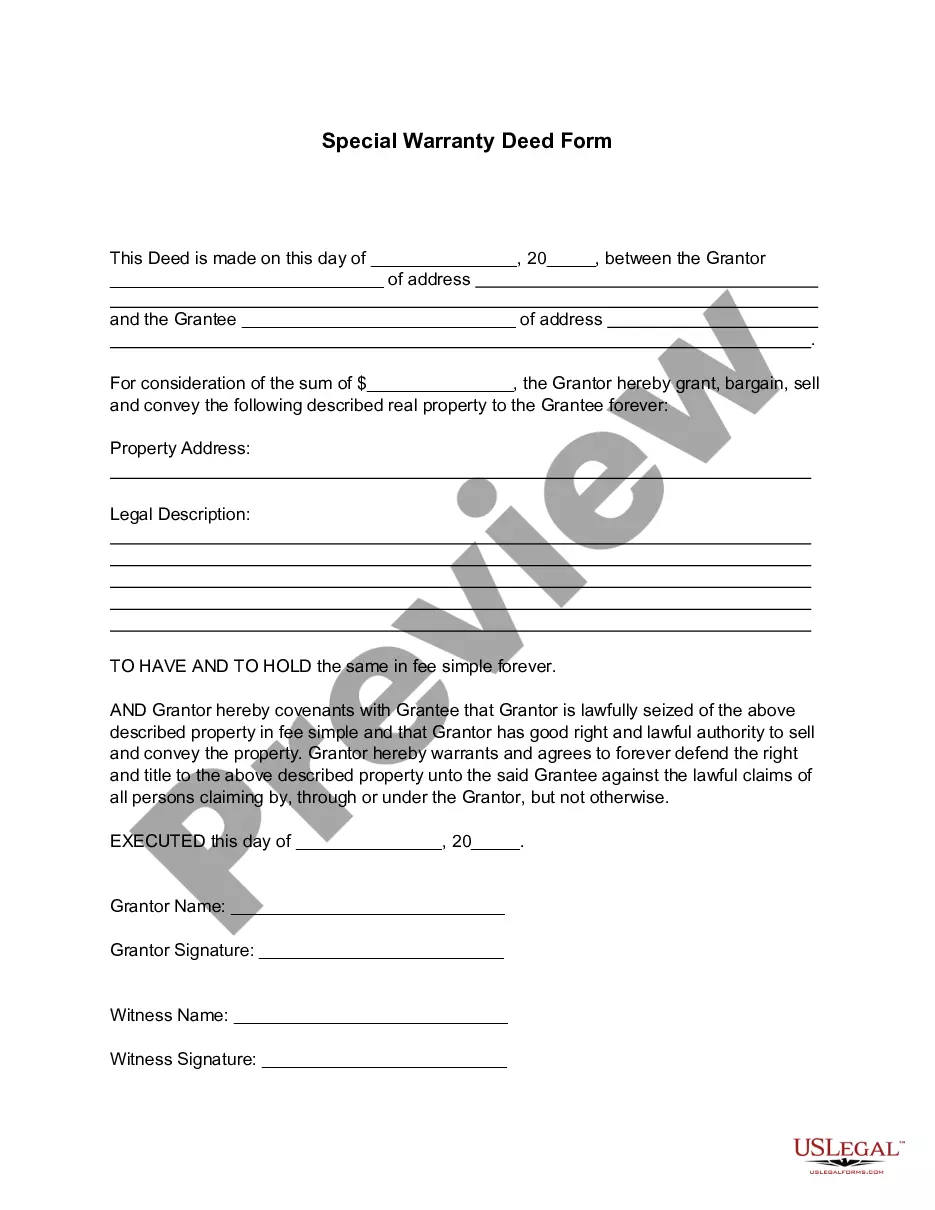
A special warranty deed is a legal document used in real estate transactions. It grants ownership of property from one party, known as the grantor, to another, called the grantee. This type of deed provides a limited warranty, meaning the grantor warrants only against claims or losses that arise from their ownership of the property, rather than guaranteeing against all potential claims. In other words, the grantor is only responsible for issues that occurred during their period of ownership, thus protecting them from liability for earlier claims.
Who should use this form
This form is ideal for property owners who want to sell their real estate while limiting their liability for any prior claims. It is commonly used in commercial real estate transactions or when the property has changed ownership several times. Individuals or entities involved in real estate sales, buyers looking to acquire property with specified rights, and legal professionals drafting documents related to such transactions would benefit from using a special warranty deed.
Key components of the form
A special warranty deed typically includes the following components:
- Grantor and Grantee Information: Names and addresses of the parties involved.
- Legal Description of the Property: A detailed account of the real estate being conveyed.
- Consideration: The amount being paid for the property.
- Warranties Given: A statement specifying that the warranty is limited to the period of the grantor's ownership.
- Notary Acknowledgment: A section for signature verification by a notary public.
How to complete a form
Filling out a special warranty deed involves the following steps:
- Identify the Parties: Fill in the names and addresses of the grantor and grantee.
- Enter Consideration: State the amount of money or other valuable consideration being exchanged for the property.
- Describe the Property: Provide a clear legal description of the property, including any relevant parcel numbers or locations.
- Sign the Document: The grantor must sign the deed in front of a notary public.
- Record the Deed: Finally, file the completed deed with the appropriate local government office for public record.
Common mistakes to avoid when using this form
When completing a special warranty deed, be mindful of these common pitfalls:
- Inaccurate Property Description: Ensure that the property description is detailed and correct to avoid future disputes.
- Missing Signatures: All required parties must sign the document; missing signatures may invalidate the deed.
- Notarization Issues: Ensure the deed is properly notarized to ensure its legality.
- Failure to Record: Not filing the deed with the county office can lead to issues with ownership disputes later on.
What to expect during notarization or witnessing
During the notarization process for a special warranty deed:
- Identification: The notary will request identification from the signers to verify their identity.
- Signature Proximity: Signers must sign the document in the presence of the notary.
- Notary Certification: The notary will complete the acknowledgment, sealing the document with their official stamp.
This process serves to authenticate that the document was signed voluntarily and that all parties were competent to sign.
Key takeaways
In summary, a special warranty deed is a useful legal instrument for transferring property with specific limitations on liability. Key points to remember include:
- It only guarantees protection against claims during the grantor's ownership.
- Proper completion and notarization of the form are crucial for validity.
- Avoid common mistakes such as inaccurate descriptions and missing signatures.
Understanding these elements ensures a smoother transaction process when dealing with real estate.