What Is a Summons for Forcible Entry and Detainer?
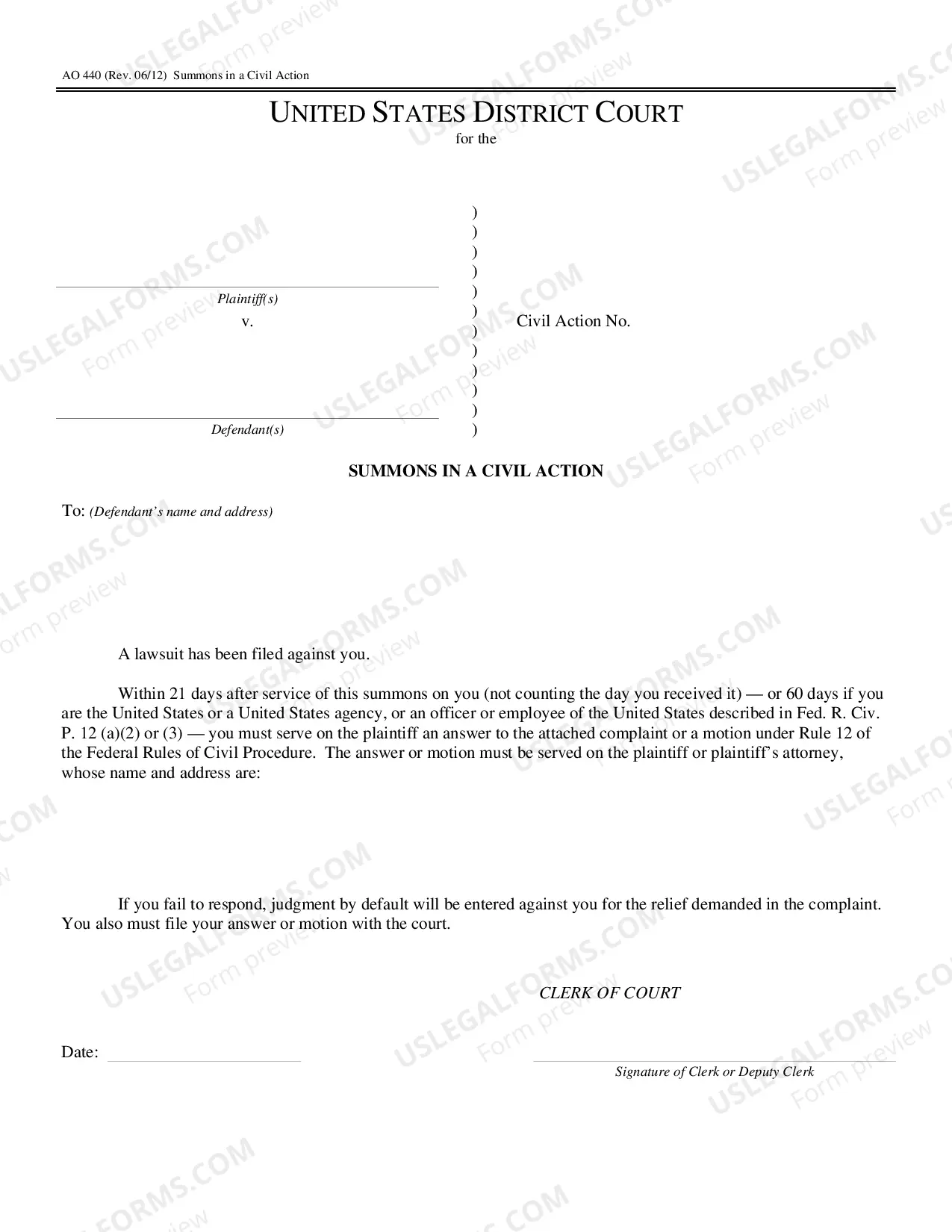
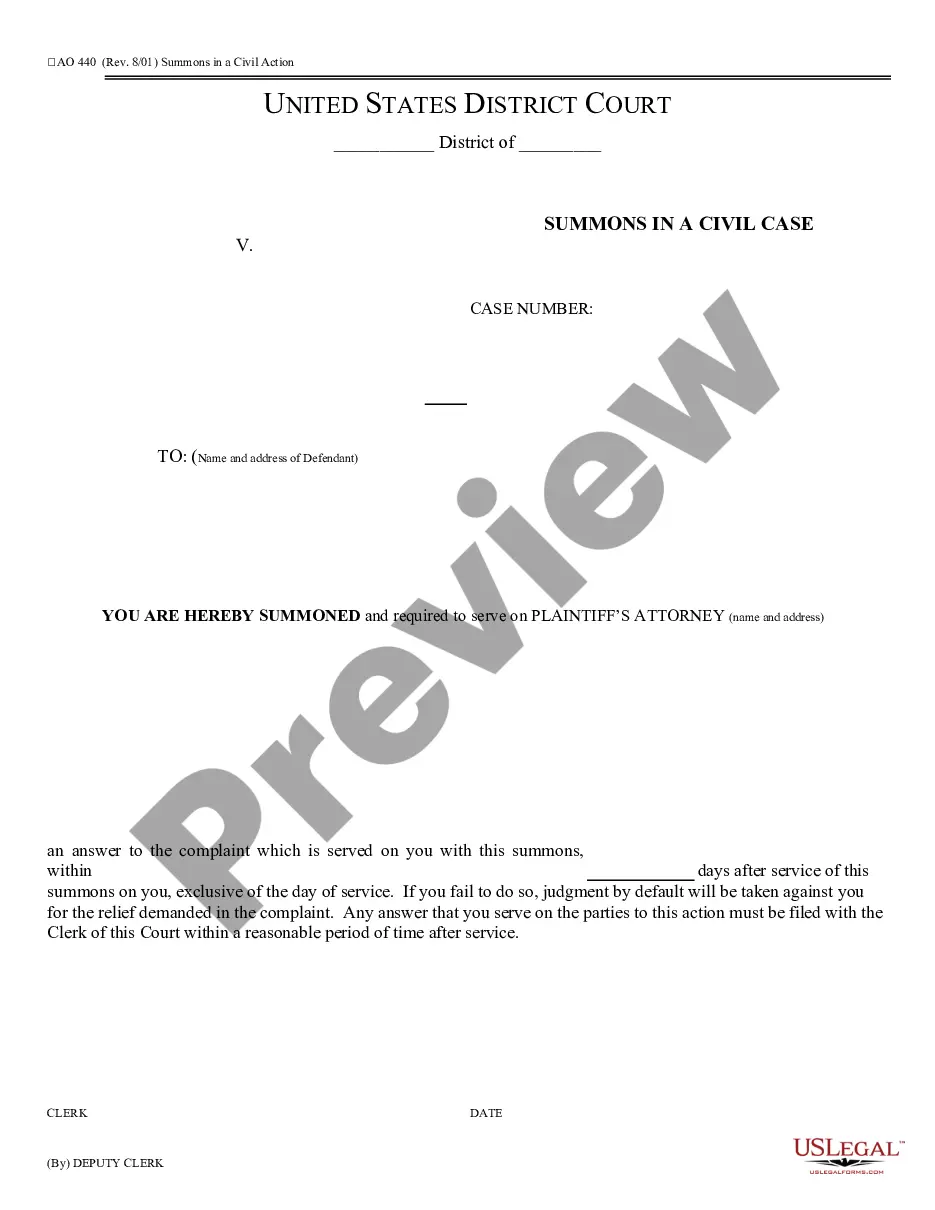
A summons for forcible entry and detainer is a legal document issued by a court to inform a defendant that they must appear before a judge to answer a complaint filed by a plaintiff regarding the possession of property. This type of summons is commonly used in eviction cases when a landlord seeks to regain possession of rental property from a tenant.
Who should use this form
This form is typically used by landlords or property owners who wish to initiate legal action to regain possession of their property from a tenant. Additionally, tenants may need to respond to this summons if they are being served with one. Understanding the summons is crucial for both parties involved to protect their legal rights.
Key components of the form
The summons for forcible entry and detainer contains several important components:
- Case Number: This number identifies the specific legal case.
- Plaintiff Information: Details about the person or entity filing the complaint.
- Defendant Information: Information about the person being summoned.
- Date, Time, and Place: The specifics of when and where the defendant must appear in court.
- Property Description: Brief details about the property in question.
How to complete a form
To complete the summons for forcible entry and detainer, you will need to follow these steps:
- Fill in the case number at the top of the form.
- Provide accurate plaintiff and defendant names and addresses.
- Indicate the date, time, and place for the court appearance.
- Describe the property involved, including any relevant details.
- Sign and date the form before submission to the court.
Common mistakes to avoid when using this form
When completing this form, be cautious of the following common mistakes:
- Omitting crucial information: Ensure all fields are filled out completely.
- Incorrect dates and times: Double-check that the court appearance details are accurate.
- Failure to serve the summons properly: Understand and follow local laws regarding service of process.
What to expect during the court proceedings
During the court hearing for a forcible entry and detainer case, the following may occur:
- Both parties present their arguments and evidence before the judge.
- The judge may ask questions to both parties for clarification.
- A decision will be rendered on whether the plaintiff is entitled to regain possession of the property.
Key takeaways
Understanding a summons for forcible entry and detainer is essential for landlords and tenants alike. Here are the key points to remember:
- This form notifies defendants of legal action regarding property possession.
- Accurate and complete information must be provided when filling it out.
- Both parties should prepare solid arguments for court proceedings.