How To Notify Seller About Rejected Goods Effectively
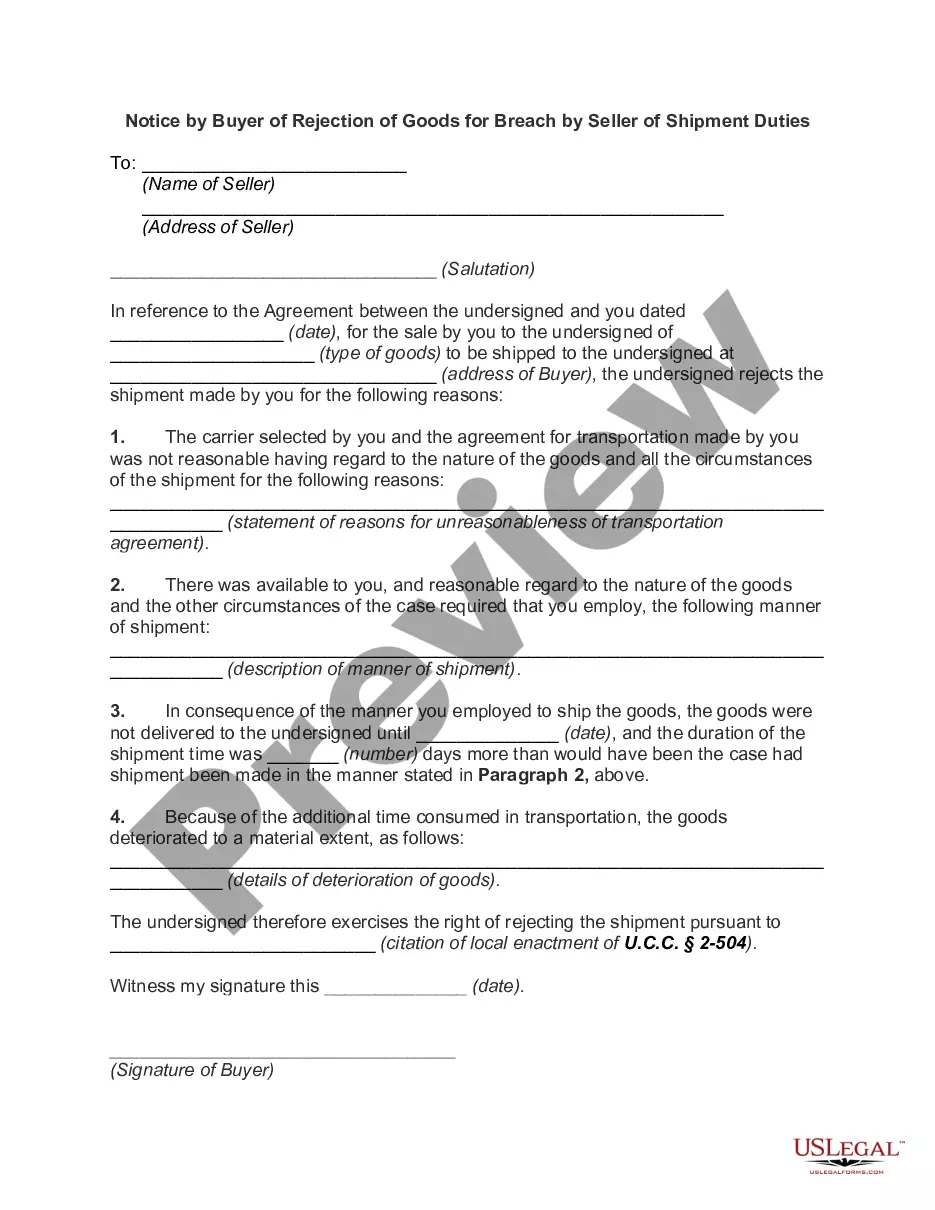
Notifying a seller about rejected goods is a formal process where a buyer informs the seller that the delivered items do not meet the agreed-upon standards or specifications. This notification is essential to initiate the return or disposal of the rejected goods and aids in resolving discrepancies in business transactions.
How to complete a form
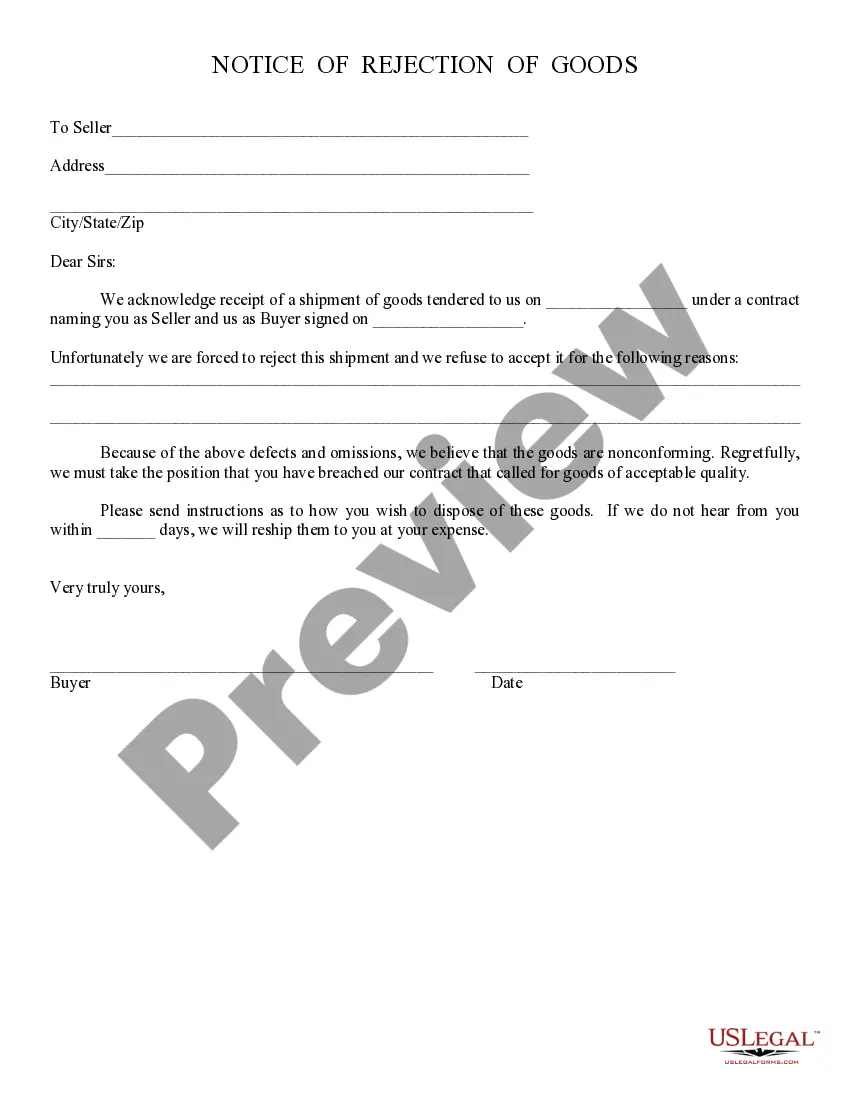
When completing a form to notify the seller about rejected goods, follow these steps:
- Specify your name and the seller's name.
- Clearly describe the goods that are being rejected.
- Include the reasons for the rejection, ensuring they align with the agreed terms.
- State your request for transportation arrangements for the rejected items.
- Sign and date the notification to validate the document.
Who should use this form
This form should be used by buyers who have received goods that are defective, not as described, or otherwise unacceptable. It is typically relevant in business-to-business transactions where formal documentation is required to protect the buyer’s rights.
Legal use and context
The notification of rejected goods is a critical element of the UCC (Uniform Commercial Code) that governs sales in the United States. This legal framework stipulates that buyers must notify sellers within a reasonable timeframe to preserve their rights regarding rejection and return of goods.
Common mistakes to avoid when using this form
When notifying a seller about rejected goods, avoid the following common mistakes:
- Failing to provide specific details about the goods and reasons for rejection.
- Not delivering the notification promptly, which can affect your legal rights.
- Neglecting to keep a copy of the notification for your records.
- Using informal language, which may lead to misunderstandings.
What documents you may need alongside this one
Along with the notification form, you may need the following documents:
- Copy of the original purchase agreement or invoice.
- Photographs or evidence of the defects in the goods.
- Any correspondence related to the delivery and condition of the goods.
Key takeaways
Notifying a seller about rejected goods is a vital process that ensures buyers protect their rights in a commercial transaction. To effectively communicate the rejection, be timely, clear, and detailed in your notification.