Arizona Rejection of Goods
About this form
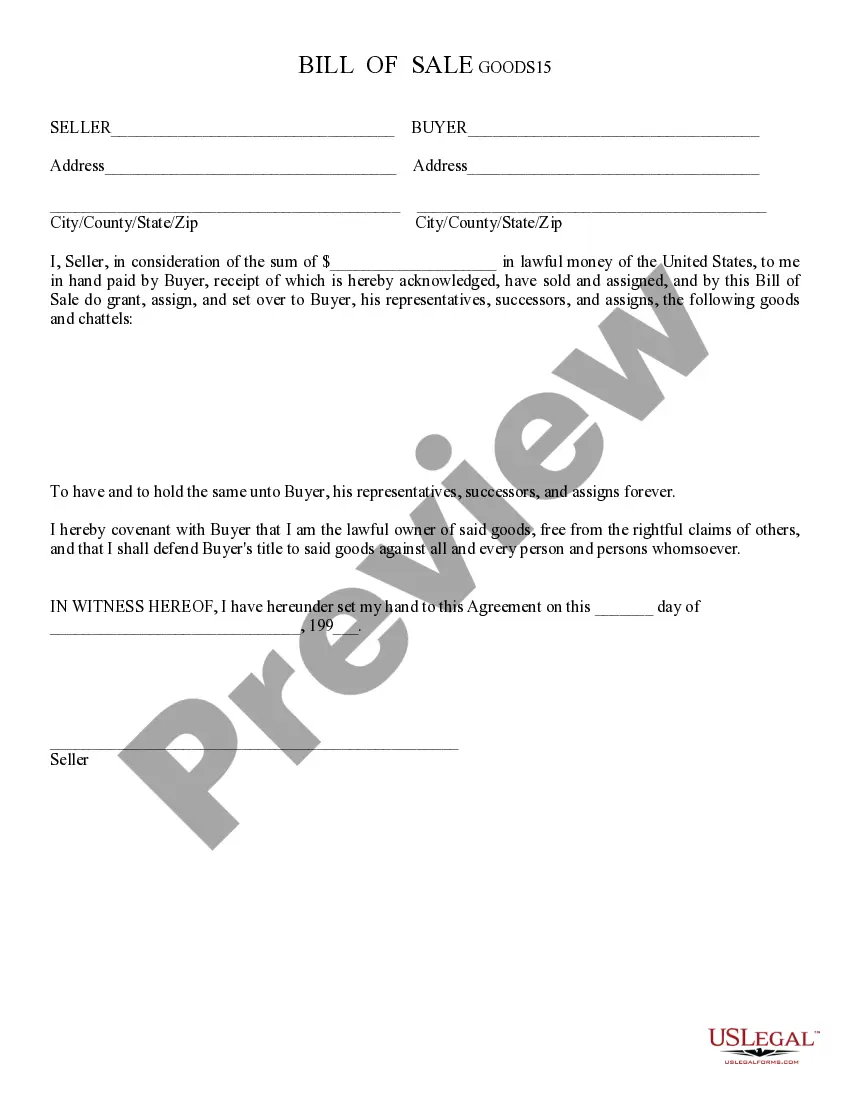
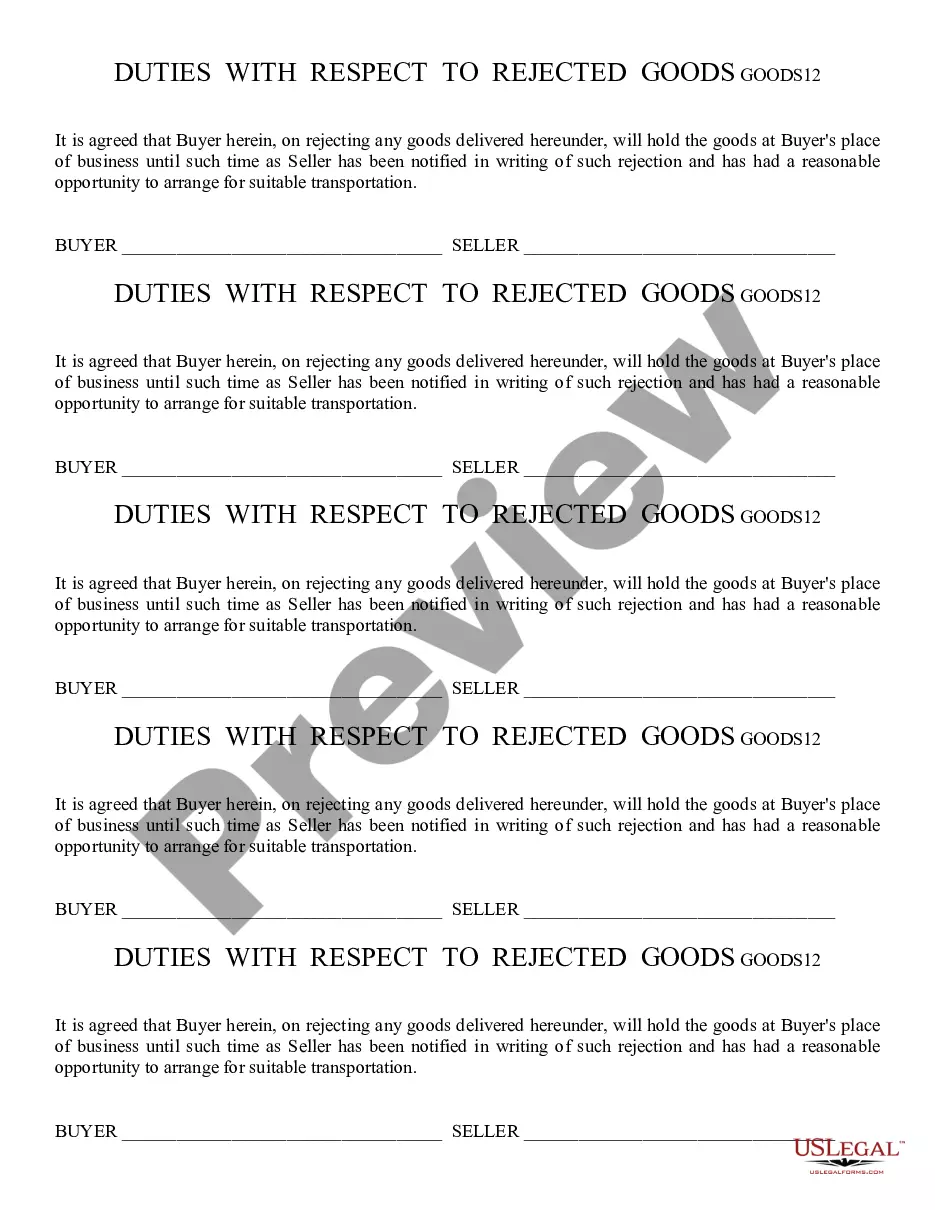
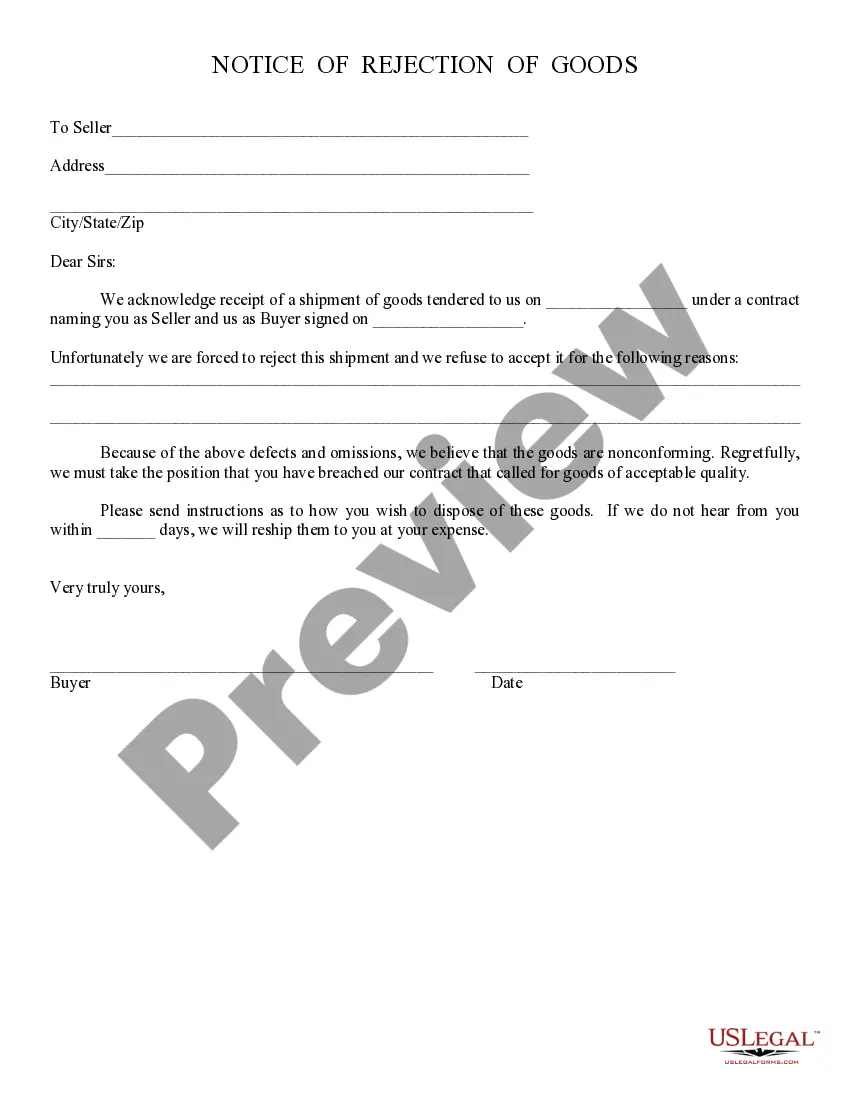
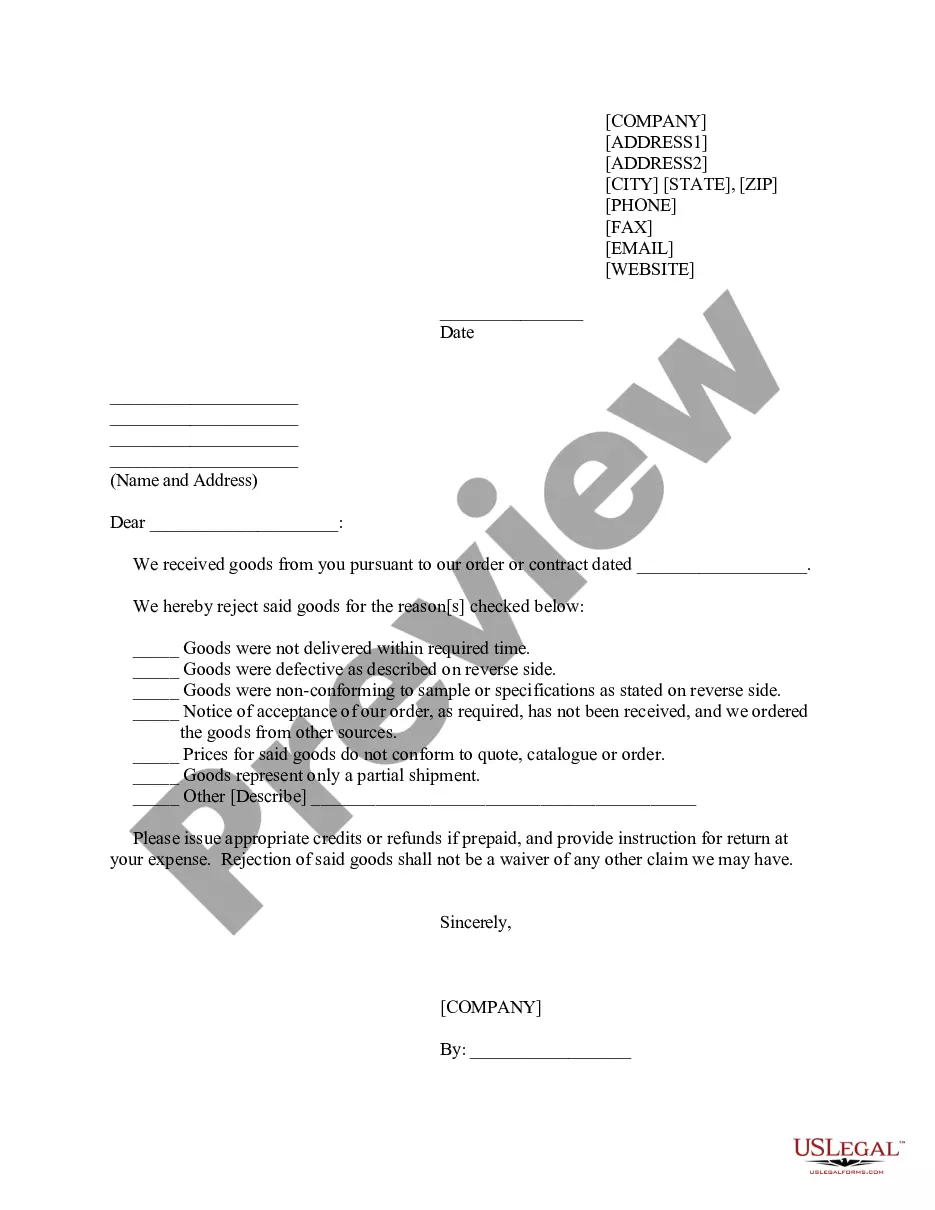
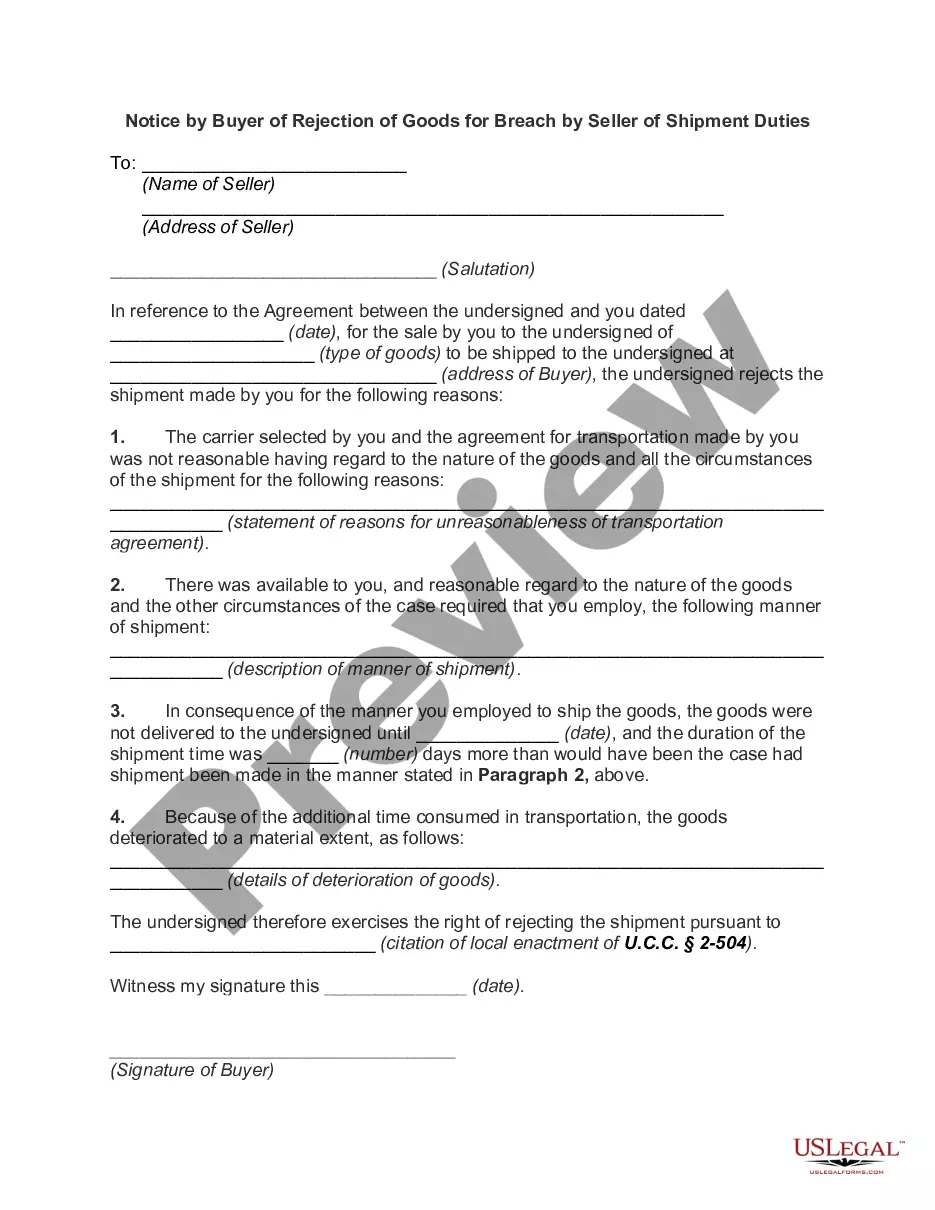
The Rejection of Goods form is a legal document that notifies a seller that the buyer has rejected the delivered goods due to discrepancies or defects. This form is crucial for maintaining clear communication and protecting the buyerâs rights. Unlike a Bill of Sale, which transfers ownership, this form establishes that the goods do not meet the agreed-upon terms, enabling the buyer to seek a remedy or return the items.
Key parts of this document
- Seller's information: Name and address of the seller.
- Buyer's information: Name and address of the buyer.
- Description of the goods: Detailed information about the rejected goods.
- Reason for rejection: Specific reasons why the goods are being rejected.
- Date of notice: The date when the rejection is communicated.
- Signatures: Signature of the buyer to validate the rejection.
When this form is needed
This form should be used when a buyer receives goods that are damaged, defective, or do not conform to the agreed specifications. It allows the buyer to formally communicate the rejection to the seller, ensuring there is a legal record of the complaint. This can be essential for resolving disputes, seeking a refund, or returning the goods without incurring additional liabilities.
Who should use this form
The following individuals or entities should consider using the Rejection of Goods form:
- Consumers who have received defective or unsatisfactory products.
- Businesses that purchase goods and need to reject items that do not meet contractual obligations.
- Merchants looking to formalize the return of goods in compliance with business agreements.
How to complete this form
- Identify the parties by filling in the seller's and buyer's names and addresses.
- Provide a detailed description of the goods being rejected.
- Clearly state the reason for rejection, citing any defects or discrepancies.
- Fill in the date when the rejection notice is being issued.
- Ensure the buyer signs the form to formalize the rejection.
Does this document require notarization?
This form does not typically require notarization to be legally valid. However, some jurisdictions or document types may still require it. US Legal Forms provides secure online notarization powered by Notarize, available 24/7 for added convenience.
Get your form ready online
Our built-in tools help you complete, sign, share, and store your documents in one place.
Make edits, fill in missing information, and update formatting in US Legal Forms—just like you would in MS Word.
Download a copy, print it, send it by email, or mail it via USPS—whatever works best for your next step.
Sign and collect signatures with our SignNow integration. Send to multiple recipients, set reminders, and more. Go Premium to unlock E-Sign.
If this form requires notarization, complete it online through a secure video call—no need to meet a notary in person or wait for an appointment.
We protect your documents and personal data by following strict security and privacy standards.

Make edits, fill in missing information, and update formatting in US Legal Forms—just like you would in MS Word.

Download a copy, print it, send it by email, or mail it via USPS—whatever works best for your next step.

Sign and collect signatures with our SignNow integration. Send to multiple recipients, set reminders, and more. Go Premium to unlock E-Sign.

If this form requires notarization, complete it online through a secure video call—no need to meet a notary in person or wait for an appointment.

We protect your documents and personal data by following strict security and privacy standards.
Typical mistakes to avoid
- Failing to provide a specific reason for the rejection.
- Not including complete seller and buyer information.
- Neglecting to sign the form before sending.
Advantages of online completion
- Convenient access to a professionally drafted template.
- Editability allows for customization to fit specific needs.
- Immediate download for quick submission to relevant parties.
Summary of main points
- The Rejection of Goods form is essential for formally notifying sellers of rejected products.
- Using this form protects the buyer's legal rights and provides a clear record of the rejection.
- Completing the form accurately ensures that all necessary information is communicated effectively.
Looking for another form?
Form popularity
FAQ
To file a lawsuit against a company in Arizona, start by drafting a complaint that outlines your grievance. You will need to file this document with the appropriate court and serve the company with notice. If your case relates to Arizona Rejection of Goods, clear presentation of your facts and supporting evidence will bolster your position in the lawsuit.
Filing a claim against the state of Arizona requires submitting a notice of claim to the Arizona Attorney General's Office within a specific timeframe. Your claim should detail the facts and legal grounds for your complaint. If your claim involves Arizona Rejection of Goods, outlining the specifics can leverage your argument effectively.
To complain about a business in Arizona, reach out to the state's consumer protection agency or file a complaint with the Better Business Bureau. Clearly articulate your complaint, supporting it with all relevant information and documentation. If your complaint relates to Arizona Rejection of Goods, make sure to specify this for proper handling.
The right of rescission in Arizona allows consumers to cancel a contract under certain circumstances, typically when it involves financing or door-to-door sales. This right ensures that you are not stuck with a decision made under pressure. When dealing with cases like Arizona Rejection of Goods, this aspect can help you protect your consumer rights effectively.
You can file a complaint against your employer in Arizona with the Arizona Industrial Commission or the Equal Employment Opportunity Commission. They handle various issues, including workplace discrimination and wage disputes. If you believe your employer has violated consumer rights, consider the implications of Arizona Rejection of Goods as you gather your documentation.
Filing a complaint against a local business in Arizona typically involves reaching out to your local consumer protection office or the Arizona Attorney General. Be sure to gather evidence to support your claim, such as receipts or communications. The Arizona Rejection of Goods policy can be vital in these cases, so understanding your rights is crucial.
To file a complaint against a business in Arizona, you should contact the Arizona Attorney General's Office or the Better Business Bureau. Provide detailed information about the issue, including relevant documentation and the nature of the complaint. If your situation involves the Arizona Rejection of Goods, indicating this can strengthen your case and assist in the investigation.
Unfair business practices in Arizona include deceptive advertising, false representation of goods, and other actions that mislead consumers. These practices violate Arizona's consumer protection laws and can lead to significant penalties for the business. If you believe you have experienced unfair treatment, consider this in the context of Arizona Rejection of Goods, as understanding your rights is essential for protecting your interests.
The time limit for pursuing a breach of fiduciary duty claim in Arizona is generally two years. This period starts once the harmed individual discovers the breach. For those dealing with cases related to Arizona Rejection of Goods, it is essential to act swiftly. Engaging with a knowledgeable legal service like US Legal Forms can provide you with the support needed to navigate these complex issues.
In Arizona, the statute of limitations varies by the type of action. For most tort claims, it is two years, while for contract claims, it can be six years. When dealing with Arizona Rejection of Goods, knowing the appropriate limitations is key to protecting your interests. Stay informed and act promptly to avoid losing your rights.