Arizona Duties With Respect to Rejected Goods
What is this form?
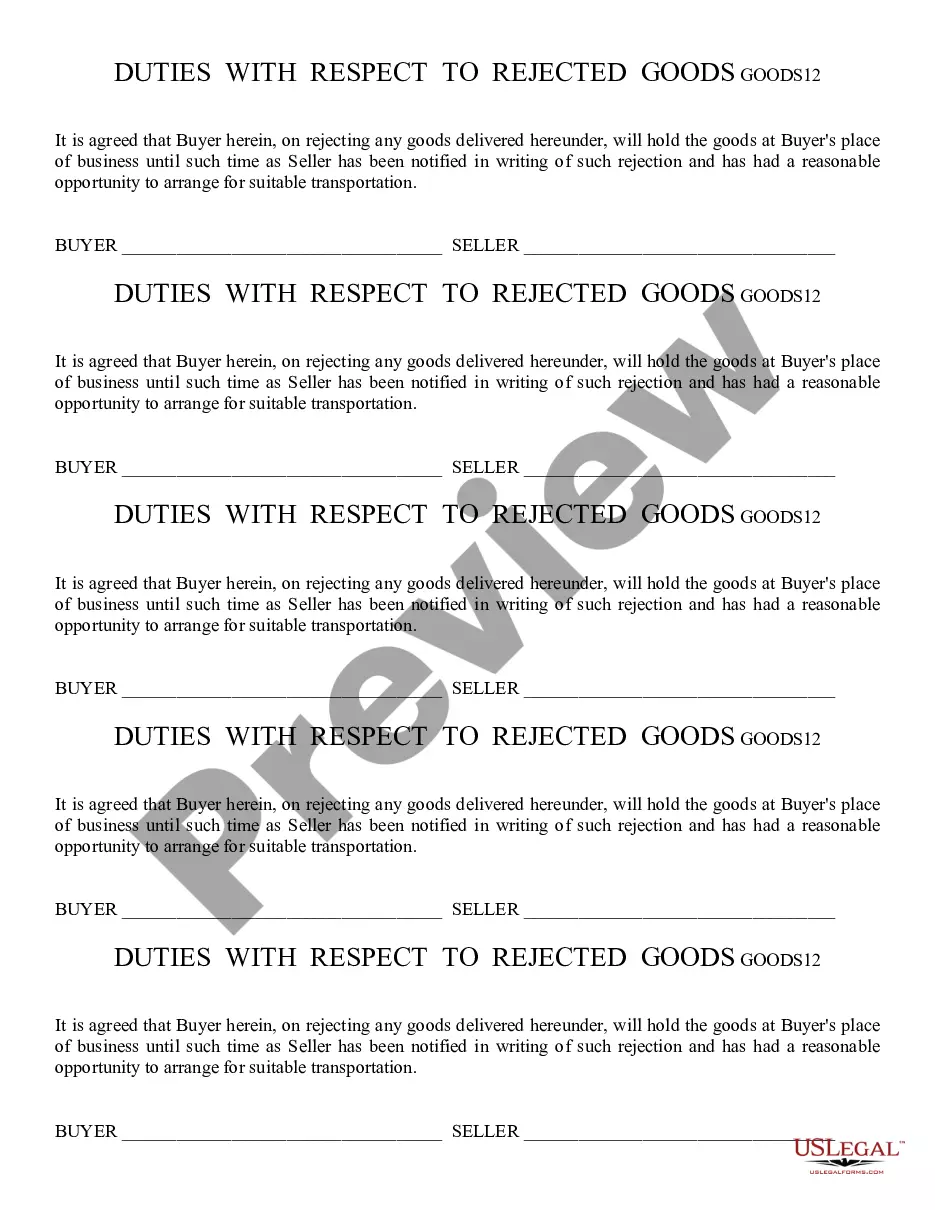
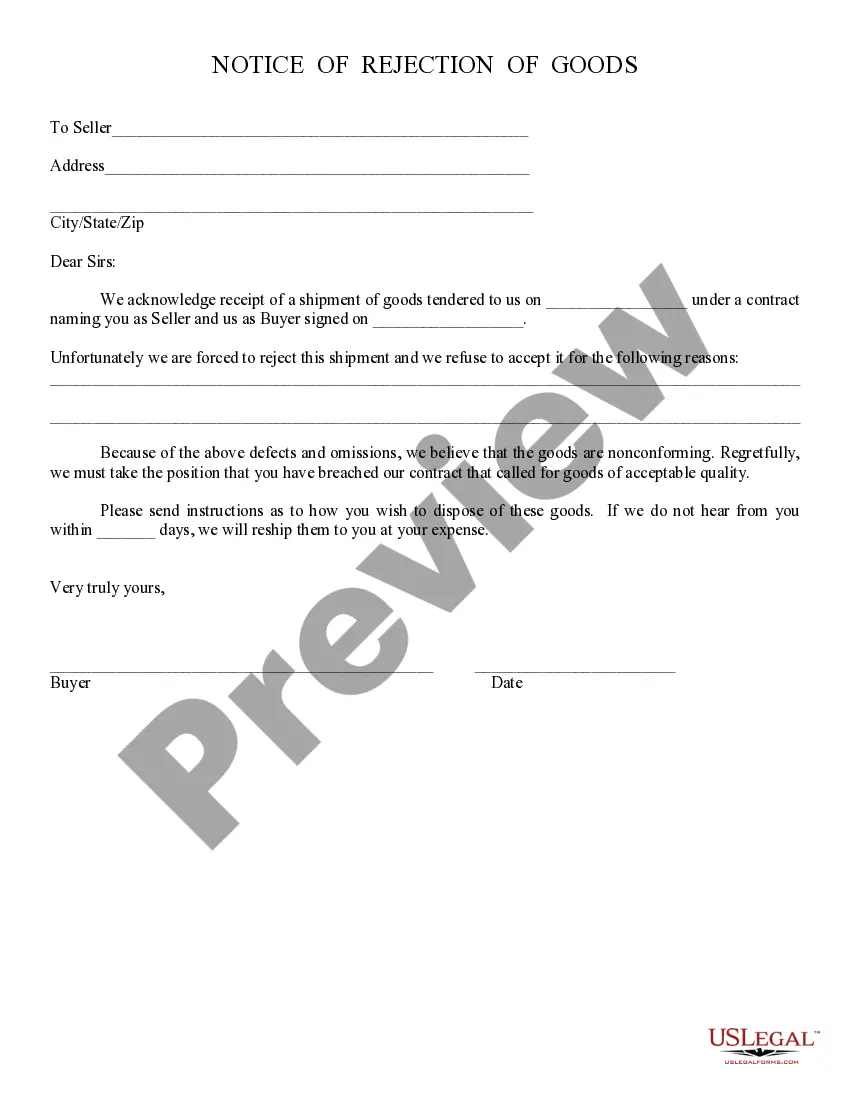
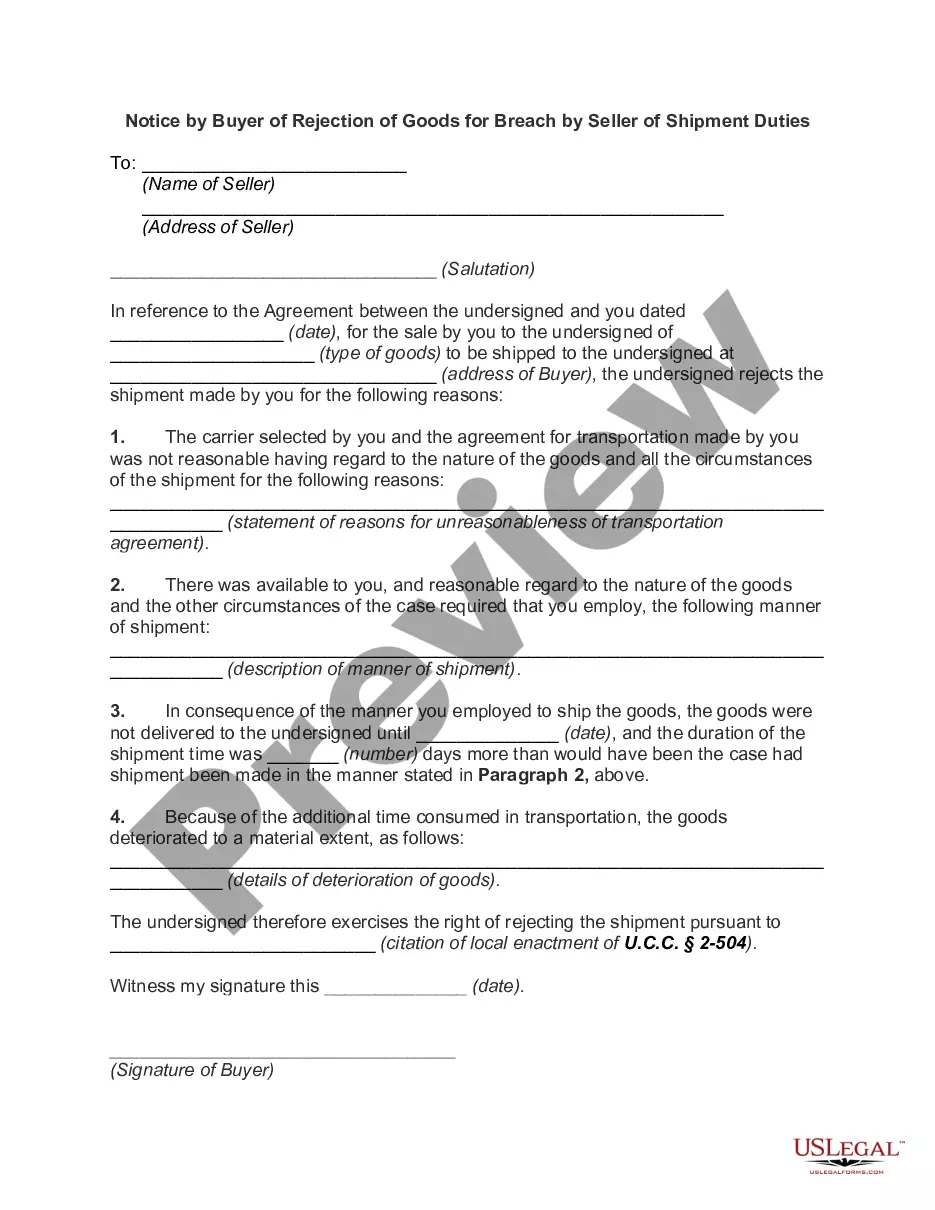
The Duties With Respect to Rejected Goods form is a legal document that outlines the obligations of a buyer when they reject a shipment of goods. This form ensures clear communication between the buyer and seller regarding the rejection, requiring the buyer to notify the seller in writing about the issues with the goods. This process protects the rights of both parties and differs from other forms designed for different types of contract disputes or sales agreements.
Form components explained
- Notification requirement: The buyer must inform the seller in writing about the rejection of goods.
- Retention of goods: The buyer agrees to keep the rejected goods until the seller arranges for pickup.
- Opportunity for transportation: The seller is granted a reasonable time to arrange suitable transportation for the rejected goods.
- Signature fields: Spaces for the buyer's and seller's signatures to validate the agreement.
Situations where this form applies
This form should be used when a buyer receives goods that do not meet the agreed-upon standards or specifications. If the buyer finds defects or issues in the shipment and decides to reject the goods, this form will facilitate the necessary communication with the seller. It is essential in scenarios involving defective merchandise, incorrect shipments, or any situation where the products do not comply with the purchase agreement.
Who needs this form
- Buyers who need to reject goods due to defects or discrepancies.
- Sellers looking for a clear process and documentation related to the rejection of goods.
- Businesses involved in purchasing goods on a contractual basis.
Steps to complete this form
- Identify the buyer and seller by entering their names in the designated fields.
- Clearly outline the reasons for rejecting the goods in writing, detailing any defects or issues.
- Specify the location where the rejected goods will be held until pickup.
- Enter the date of rejection and the date when notice is provided to the seller.
- Both buyer and seller must sign the form to validate the agreement.
Notarization guidance
This form does not typically require notarization to be legally valid. However, some jurisdictions or document types may still require it. US Legal Forms provides secure online notarization powered by Notarize, available 24/7 for added convenience.
Get your form ready online
Our built-in tools help you complete, sign, share, and store your documents in one place.
Make edits, fill in missing information, and update formatting in US Legal Forms—just like you would in MS Word.
Download a copy, print it, send it by email, or mail it via USPS—whatever works best for your next step.
Sign and collect signatures with our SignNow integration. Send to multiple recipients, set reminders, and more. Go Premium to unlock E-Sign.
If this form requires notarization, complete it online through a secure video call—no need to meet a notary in person or wait for an appointment.
We protect your documents and personal data by following strict security and privacy standards.

Make edits, fill in missing information, and update formatting in US Legal Forms—just like you would in MS Word.

Download a copy, print it, send it by email, or mail it via USPS—whatever works best for your next step.

Sign and collect signatures with our SignNow integration. Send to multiple recipients, set reminders, and more. Go Premium to unlock E-Sign.

If this form requires notarization, complete it online through a secure video call—no need to meet a notary in person or wait for an appointment.

We protect your documents and personal data by following strict security and privacy standards.
Common mistakes
- Failing to notify the seller in writing about the rejection.
- Not keeping the rejected goods at the specified place as agreed.
- Leaving out details about the issues with the goods in the written notice.
- Not obtaining signatures from both parties to formalize the rejection.
Benefits of using this form online
- Convenience of downloading and completing the form from anywhere.
- Editability allows for customization based on specific circumstances.
- Reliability from using a template drafted by licensed attorneys for accuracy.
Looking for another form?
Form popularity
FAQ
Rejected goods must be returned to the seller unless otherwise agreed upon. Under the Arizona Duties With Respect to Rejected Goods, the seller usually bears the responsibility for retrieving the goods. It is essential to document the rejection and maintain communication with the seller for clarity. When in doubt, platforms like USLegalForms can provide guidance on handling rejected goods appropriately.
Yes, an offer can be rejected multiple times. In real estate transactions, it is common for buyers and sellers to negotiate terms until both parties agree. The flexibility in rejecting offers allows you to pursue an outcome that meets your goals. Familiarity with Arizona Duties With Respect to Rejected Goods can clarify the process and legal implications.
The basic obligations involve clear communication and adherence to contract terms. Buyers must examine goods and inform sellers of any issues; sellers must deliver goods that meet agreed specifications. Both parties should be aware of the Arizona Duties With Respect to Rejected Goods, which guide these interactions. Effective communication is crucial to maintaining a smooth transaction.
Once a buyer rejects goods, their obligations to the seller depend on the terms of the contract. Generally, the Arizona Duties With Respect to Rejected Goods stipulate that buyers must communicate their rejection clearly. Additionally, the buyer may be required to return the goods if applicable. The specifics can vary, so it's advisable to refer to your contract or seek legal advice.
You are not obligated to accept offers that do not align with your expectations. In Arizona, you have the right to reject any offer that doesn't meet your standards. Understanding the Arizona Duties With Respect to Rejected Goods can empower you to make informed decisions. Always evaluate offers carefully and consult with a real estate professional when necessary.
When you encounter rejected goods, it is crucial to understand your Arizona Duties With Respect to Rejected Goods. First, you should notify the seller promptly about the rejection and provide a detailed explanation regarding the reasons. Next, take appropriate steps to dispose of, return, or store the goods, always documenting the process. Additionally, utilizing legal resources like US Legal Forms can help you navigate these responsibilities and ensure compliance.
Which of the following is true regarding the rights of a buyer who has rightfully rejected goods? The buyer may cancel the contract and recover as much of the purchase price as has been paid and may recover damages.The seller may cancel the contract only if the goods are not in transit from the seller to the buyer.
In some cases, your rejected products could end up being sold in the local marketplace. It's one way for the supplier to turn a profit from what otherwise might be wasted goods. And stores in the country where your product is manufactured might welcome the inventory if they can buy it at a low price.
If the buyer is a merchant, then the buyer has a special duty to follow reasonable instructions from the seller for disposing of the rejected goods; if no instructions are forthcoming and the goods are perishable, then he must try to sell the goods for the seller's account and is entitled to a commission for his
Quick Reference. The refusal of an offer by the offeree. Once an offer has been rejected, it cannot subsequently be accepted by the offeree. A counter-offer ranks as a rejection, but a mere inquiry as to the possibility of varying some term does not. See also lapse of offer; revocation of offer.