What Is Consent and Acknowledgment of Subordinate Mortgagee?
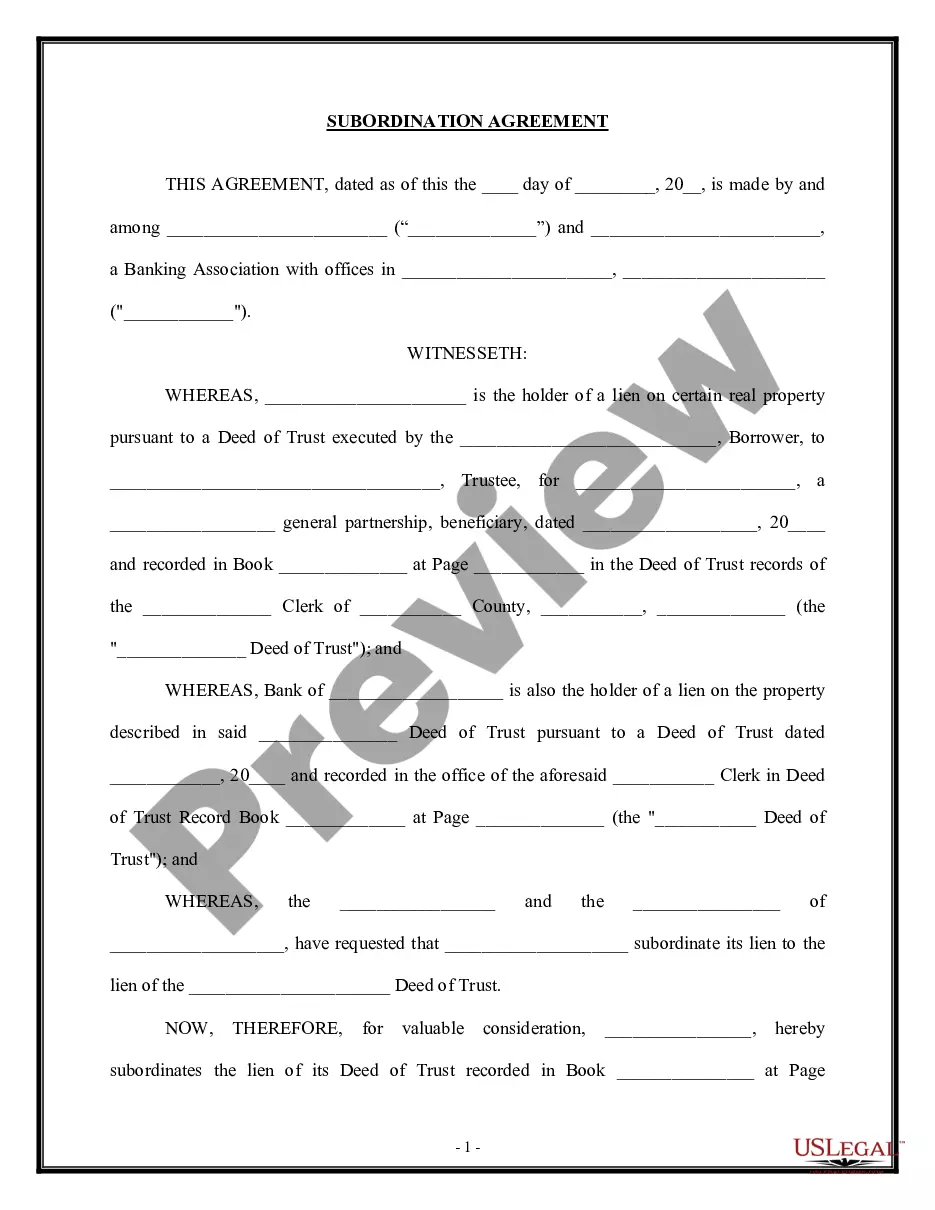
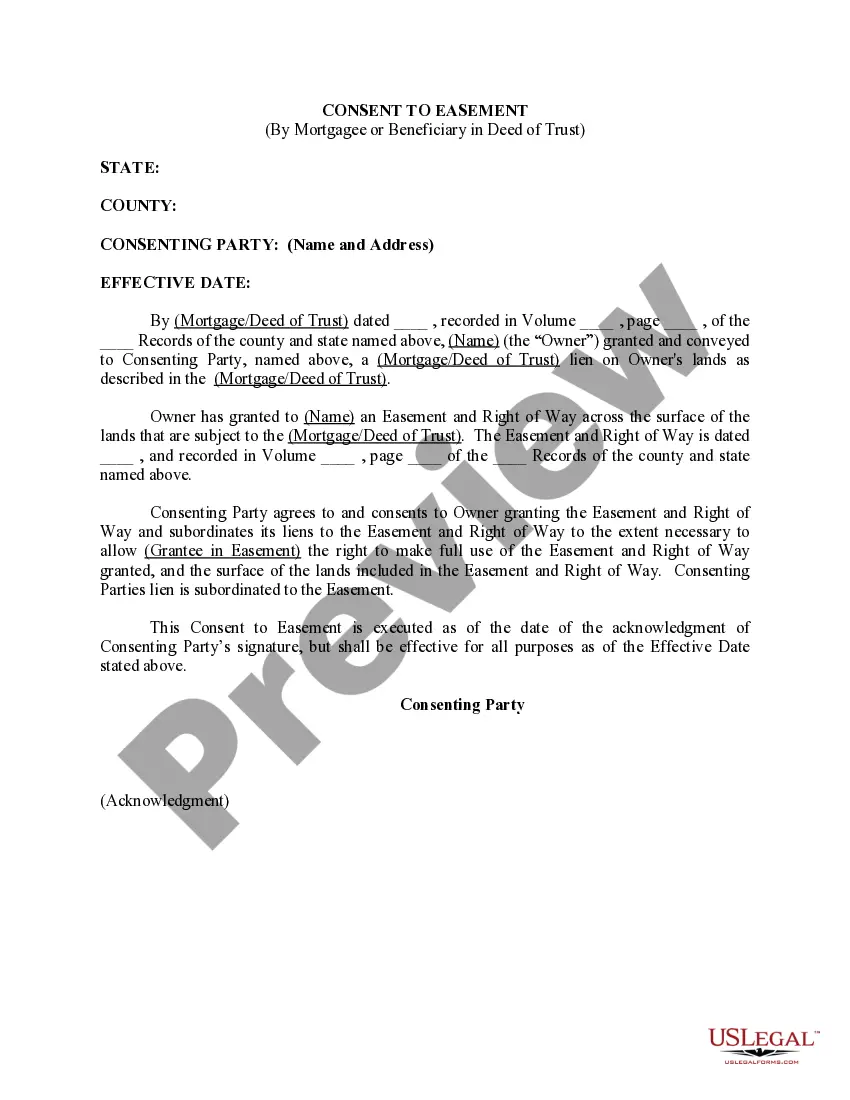
The Consent and Acknowledgment of Subordinate Mortgagee is a legal document that indicates a subordinate mortgagee's agreement to certain terms concerning a property mortgage. This agreement outlines the subordination of the subordinate mortgage to a senior mortgage, ensuring that the senior lender's rights come before those of the subordinate lender in the event of default.
Who should use this form
This form is essential for borrowers who are obtaining financing secured by real property where multiple mortgages are involved. It is particularly useful for:
- Borrowers looking to refinance or restructure existing loans.
- Subordinate mortgagees who need to acknowledge their position relative to the senior mortgage.
- Lenders who want to ensure their interests are clearly defined and protected in the lending process.
Legal use and context
The Consent and Acknowledgment of Subordinate Mortgagee is typically used in real estate transactions where there are multiple mortgages on a single property. It is crucial in situations involving:
- Subordination agreements that establish the order of mortgage claims.
- Loan modifications or refinancing arrangements.
- Transactions where the senior lender requires consent from the subordinate mortgagee before proceeding.
This form ensures legal clarity and protects the rights of all parties involved.
Key components of the form
This form includes several important sections that clarify the agreement between the parties involved. Key components typically include:
- Identification of Parties: Names and addresses of the subordinate mortgagee, borrower, and any related lenders.
- Description of Mortgages: Details regarding the senior and subordinate mortgages, including loan numbers, amounts, and interest rates.
- Consent Terms: Specific conditions under which the subordinate mortgagee consents to the agreements, often pointing out limitations related to future actions.
- Notary Acknowledgment: A section where a notary public verifies the identities and signatures of the individuals executing the form.
Common mistakes to avoid when using this form
When completing the Consent and Acknowledgment of Subordinate Mortgagee, individuals should be cautious to avoid the following pitfalls:
- Failing to accurately identify all parties involved.
- Not providing complete and correct property descriptions.
- Overlooking the need for notarization, which can invalidate the document.
- Signing the document without fully understanding the terms and implications of the agreement.
What documents you may need alongside this one
To complete the Consent and Acknowledgment of Subordinate Mortgagee efficiently, you may require the following documents:
- Copies of the senior and subordinate mortgage agreements.
- The loan agreements associated with both mortgages.
- Property deed or title documents to verify ownership.
- Any existing subordination agreements relevant to the current transaction.
What to expect during notarization or witnessing
The notarization process for the Consent and Acknowledgment of Subordinate Mortgagee is straightforward. Here’s what to anticipate:
- All parties must be present for the notarization.
- Government-issued identification is typically required to verify identities.
- The notary will witness the signing of the document and may ask questions to ensure voluntary consent.
- Upon successful notarization, the document will be stamped and signed by the notary, completing the process.