Indiana Warranty Deed to Child Reserving a Life Estate in the Parents
Overview of this form
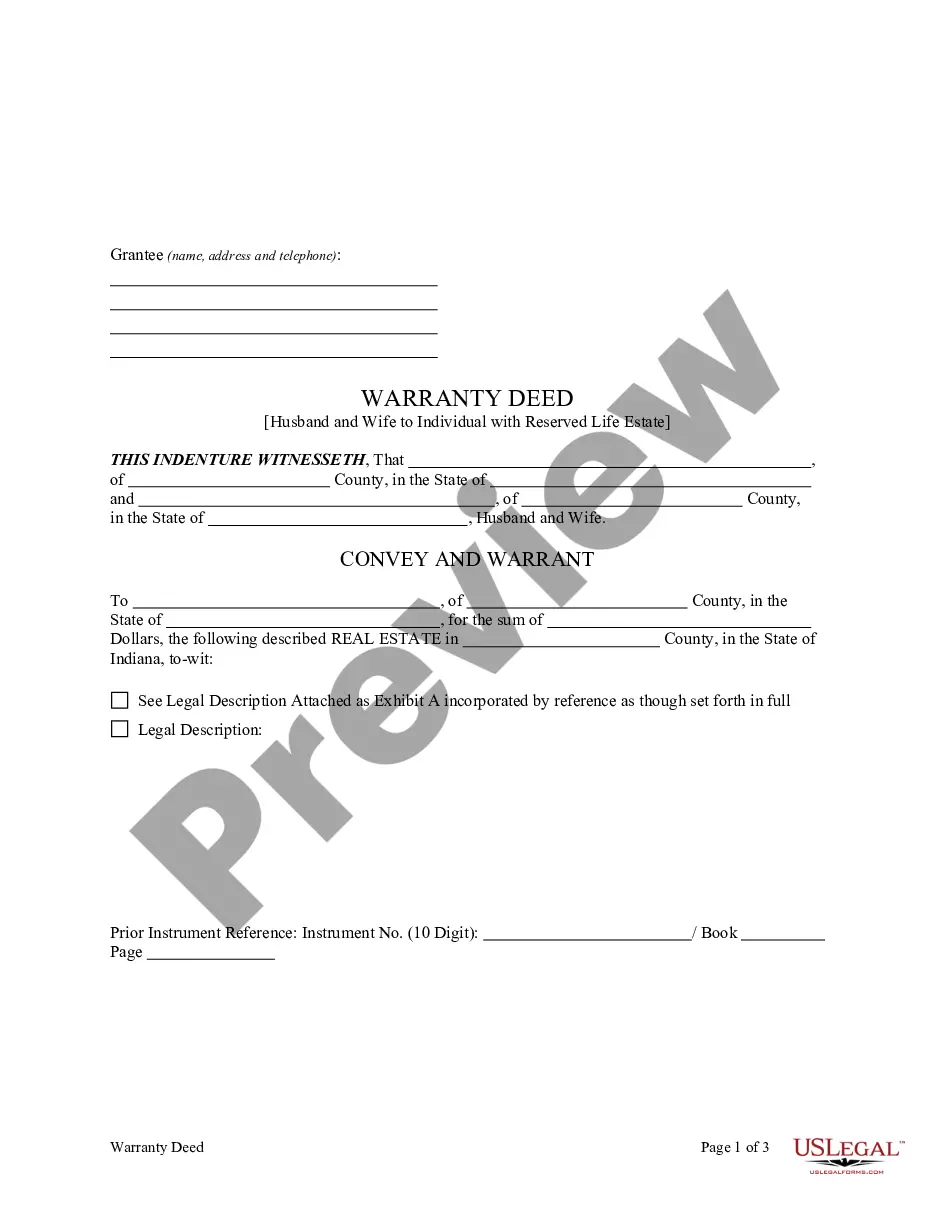
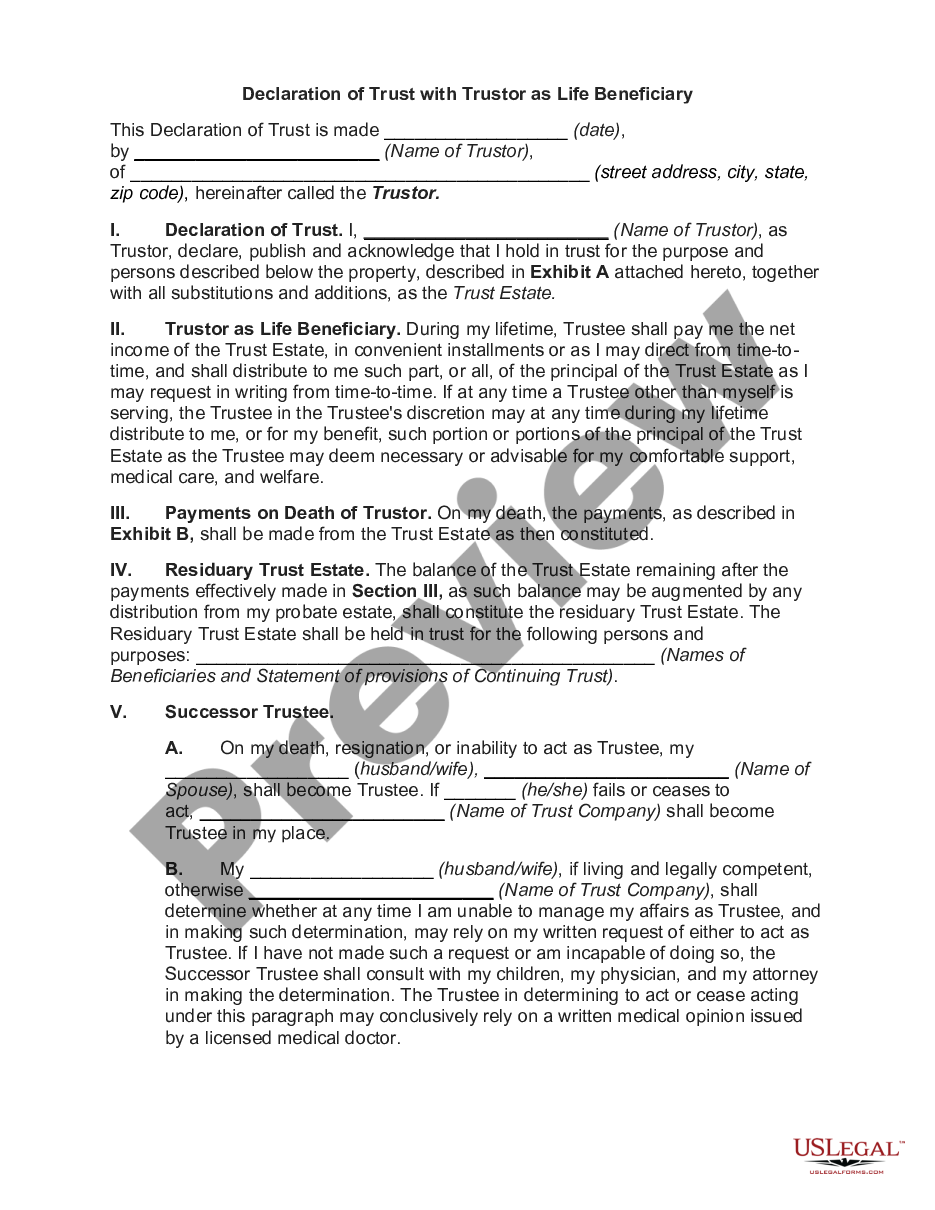
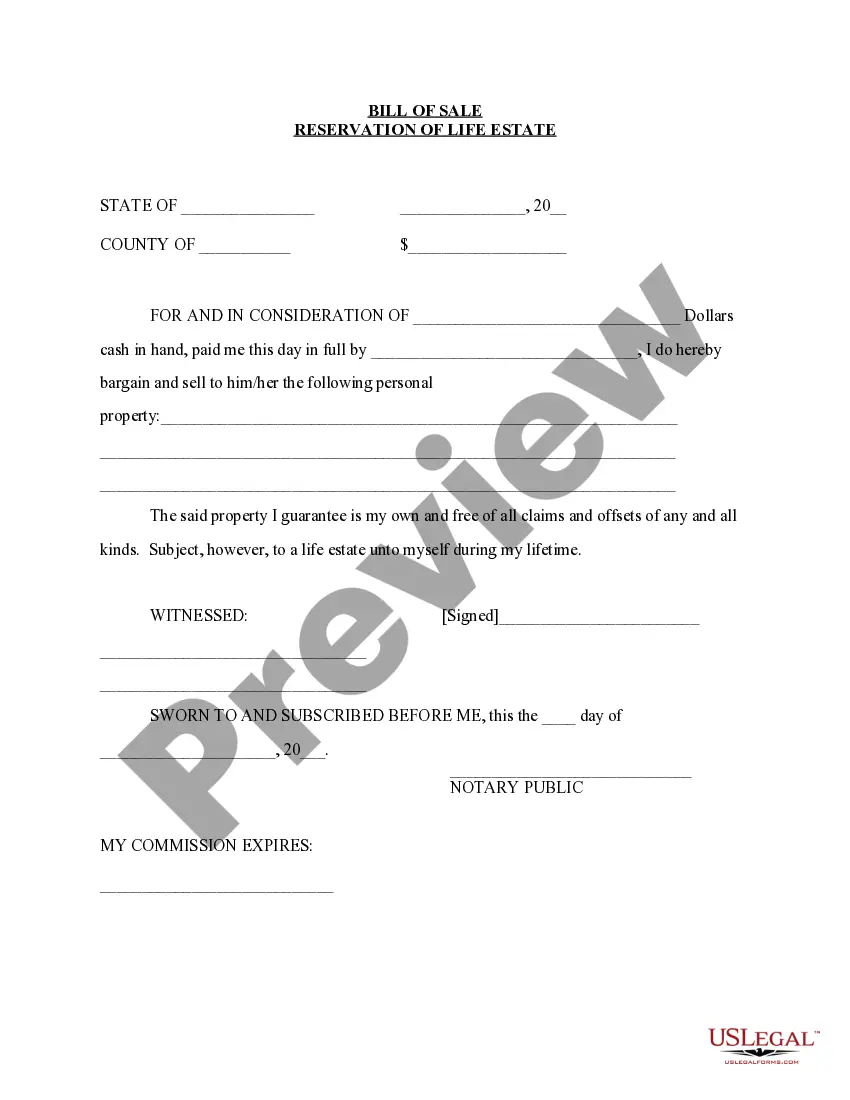
The Warranty Deed to Child Reserving a Life Estate in the Parents is a legal document that allows parents to transfer property ownership to their child while retaining the right to use and benefit from the property for the rest of their lives. This form is different from traditional warranty deeds, as it ensures that the parents maintain a life estate, giving them continued access to the property even after the transfer has been made.
What’s included in this form
- Names of the grantor(s) and grantee.
- Legal description of the property being transferred.
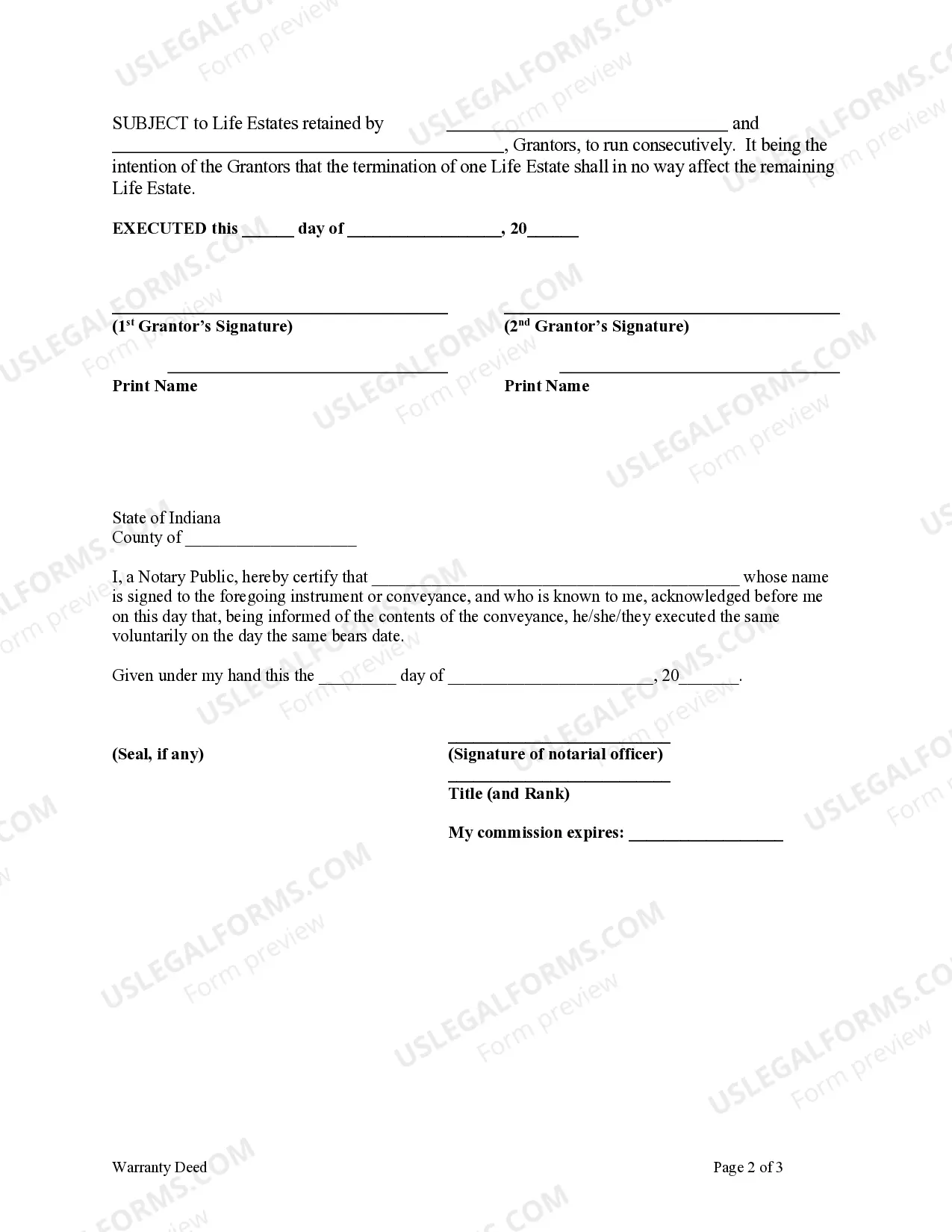
- Details of the life estate retained by the grantor(s).
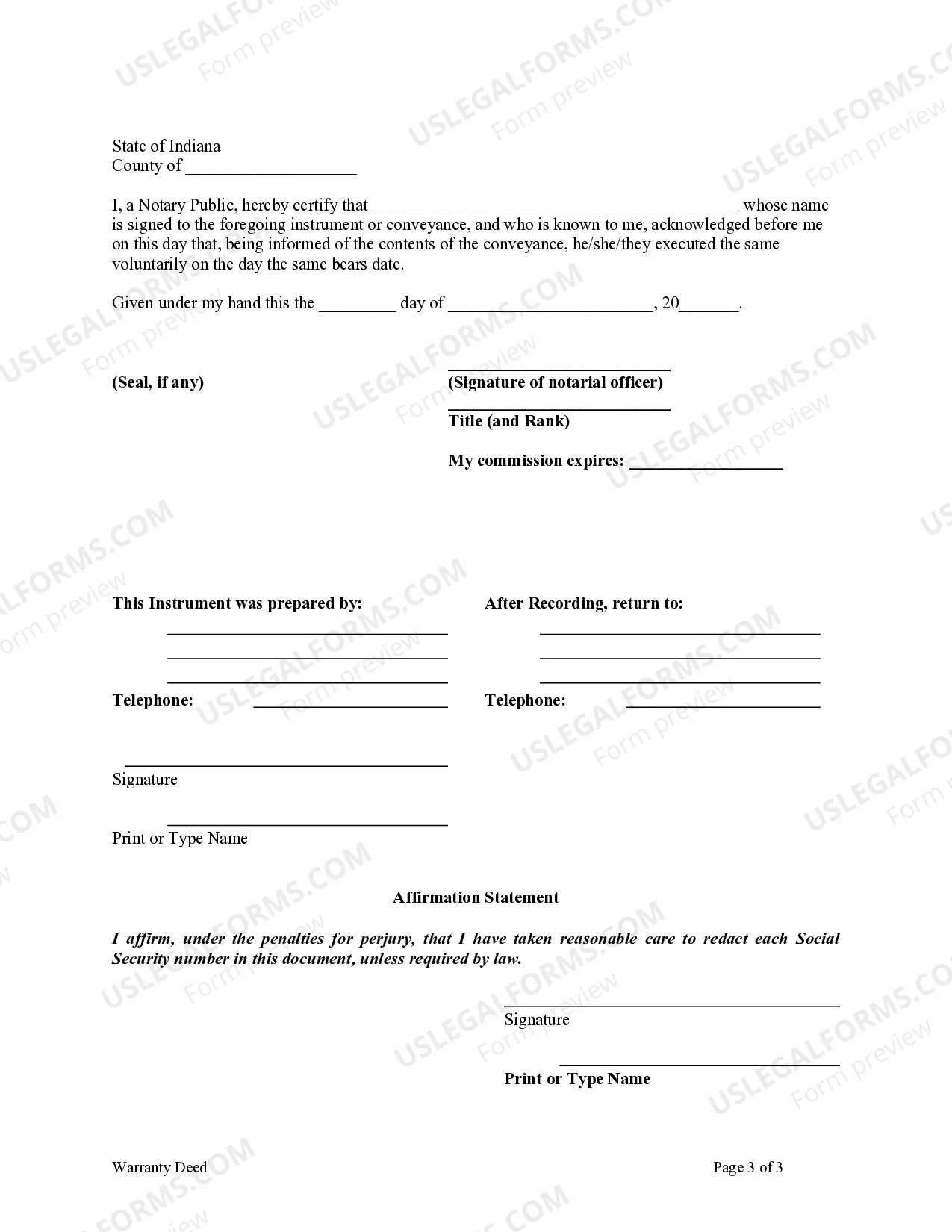
- Notary acknowledgment section for legal validation.





Common use cases
This warranty deed is useful when parents wish to gift property to their child while retaining the ability to live on or use the property for the duration of their lives. It is particularly relevant in estate planning situations where parents want to avoid probate and ensure that their child inherits the property without complications.
Who this form is for
- Parents looking to transfer property ownership to their child.
- Individuals involved in estate planning who want to retain beneficial use of their property.
- Anyone needing to simplify the transfer of property to family members.
Instructions for completing this form
- Identify the parties involved: the grantor(s) and the grantee.
- Provide a detailed legal description of the property being transferred.
- Clearly state the life estate reservation by the grantor(s).
- Sign the document in the presence of a notary public.
- Ensure all fields are filled out accurately and completely before filing.
Does this document require notarization?
Yes, this form must be notarized to be legally valid. Having the document notarized adds a layer of credibility and is required in the state of Indiana to enforce the warranty deed. US Legal Forms offers integrated online notarization, making it easy to complete this step without needing to travel.
Get your form ready online
Our built-in tools help you complete, sign, share, and store your documents in one place.
Make edits, fill in missing information, and update formatting in US Legal Forms—just like you would in MS Word.
Download a copy, print it, send it by email, or mail it via USPS—whatever works best for your next step.
Sign and collect signatures with our SignNow integration. Send to multiple recipients, set reminders, and more. Go Premium to unlock E-Sign.
If this form requires notarization, complete it online through a secure video call—no need to meet a notary in person or wait for an appointment.
We protect your documents and personal data by following strict security and privacy standards.

Make edits, fill in missing information, and update formatting in US Legal Forms—just like you would in MS Word.

Download a copy, print it, send it by email, or mail it via USPS—whatever works best for your next step.

Sign and collect signatures with our SignNow integration. Send to multiple recipients, set reminders, and more. Go Premium to unlock E-Sign.

If this form requires notarization, complete it online through a secure video call—no need to meet a notary in person or wait for an appointment.

We protect your documents and personal data by following strict security and privacy standards.
Common mistakes to avoid
- Failing to provide an accurate legal description of the property.
- Not having the document properly notarized, if required.
- Leaving fields blank, which could lead to ambiguity.
Benefits of using this form online
- Convenience of completing the form from home without needing to visit a lawyer.
- Editability to ensure all information is correct before finalizing.
- Access to forms drafted by licensed attorneys, ensuring legal compliance.
Key takeaways
- The Warranty Deed to Child Reserving a Life Estate allows parents to transfer property while retaining use of it during their lifetimes.
- Understanding state-specific requirements is crucial for the validity of the deed.
- Completing the form accurately ensures a smooth transfer and avoids possible legal complications.
Looking for another form?


Form popularity
FAQ
Reservation of the present interest allows the owner to retain ownership for a period of time measured by the life of one or more individuals, by a term of years, or by a combination of the two.
A life estate deed permits the property owner to have full use of their property until their death, at which point the ownership of the property is automatically transferred to the beneficiary.In the right situations, it can be a streamlined and easy way to transfer ownership.
A person owns property in a life estate only throughout their lifetime. Beneficiaries cannot sell property in a life estate before the beneficiary's death. One benefit of a life estate is that property can pass when the life tenant dies without being part of the tenant's estate.
Can a life estate deed be changed? It is challenging to modify or change a life estate deed. The grantor cannot change the life estate as he or she has no power to do so after creating the life estate deed unless all of the future tenants agree. It requires the permission or consent of every one of the beneficiaries.
This life estate deed is a document that transfers ownership of real property, while reserving access and use of the property for the duration of the grantor's life. It allows the original owner (grantor) to remain on the premises with full access to and benefits from the property.
What happens to a life estate after someone dies? Upon the life tenant's death, the property passes to the remainder owner outside of probate.They can sell the property or move into and claim it as their primary residence (homestead). Property taxes will not be reassessed.
This life estate deed is a document that transfers ownership of real property, while reserving access and use of the property for the duration of the grantor's life. It allows the original owner (grantor) to remain on the premises with full access to and benefits from the property.
A life estate is usually property that has been acquired during the lifetime of a person with his or her ownership only lasting through the time he or she lives.This also means he or she cannot sell it, rent it or alter it until the life tenant passes on or leaves permanently.
A transfer on death deed allows you to retain full ownership during your lifetime and conveys your full interest to the Grantee upon your death.Ultimately, the decision between a life estate and transfer on death deed is dependent on why you want to transfer the property.