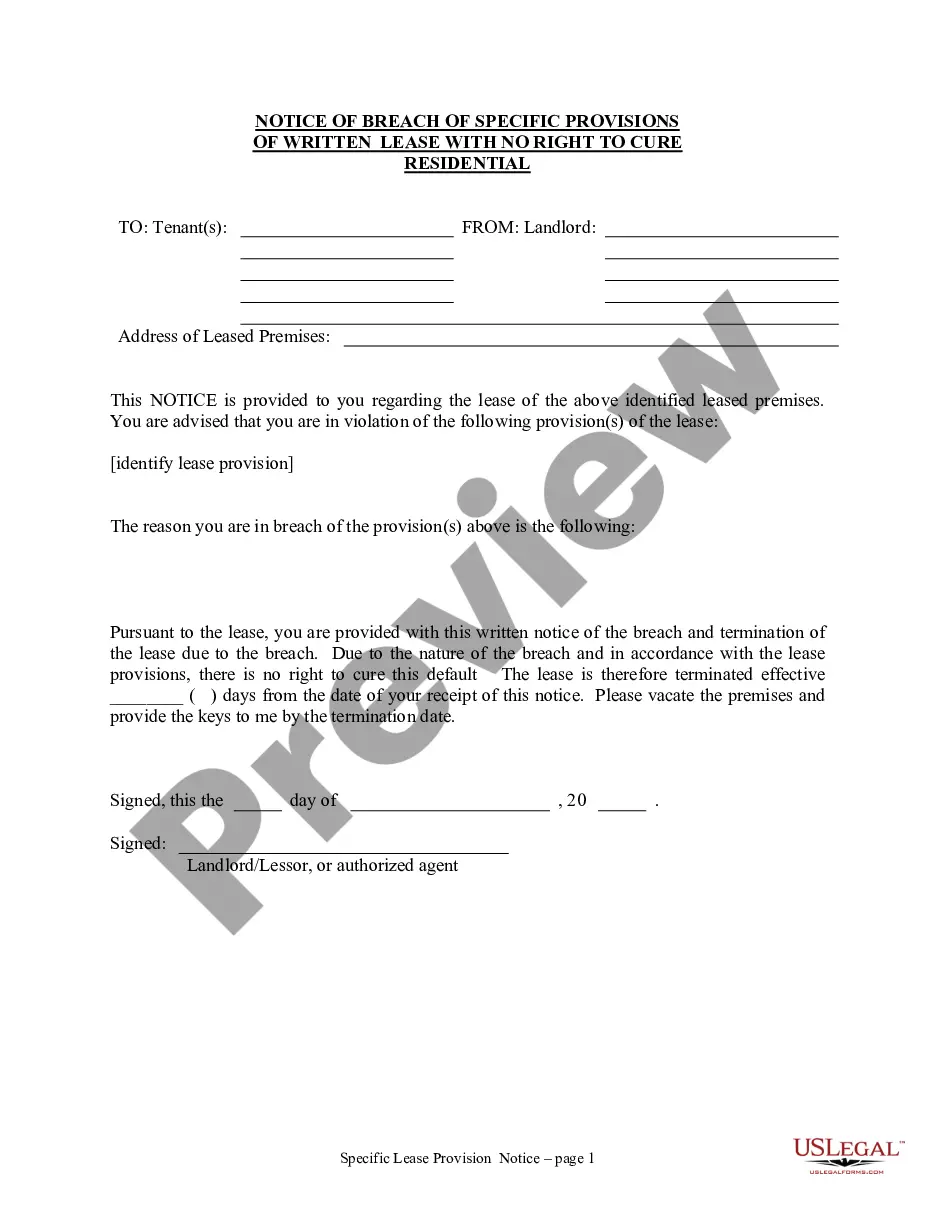
Indiana Living Will
What this document covers
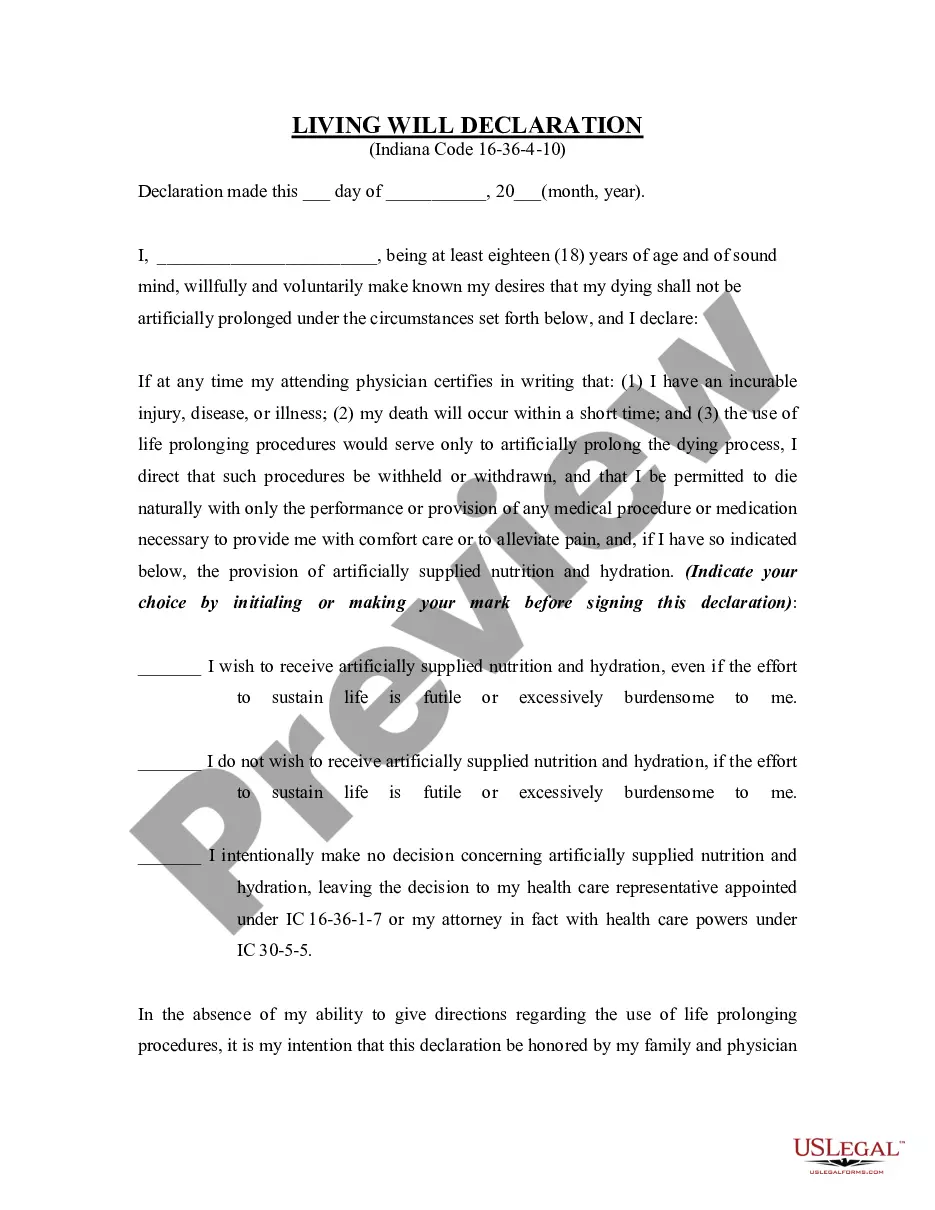
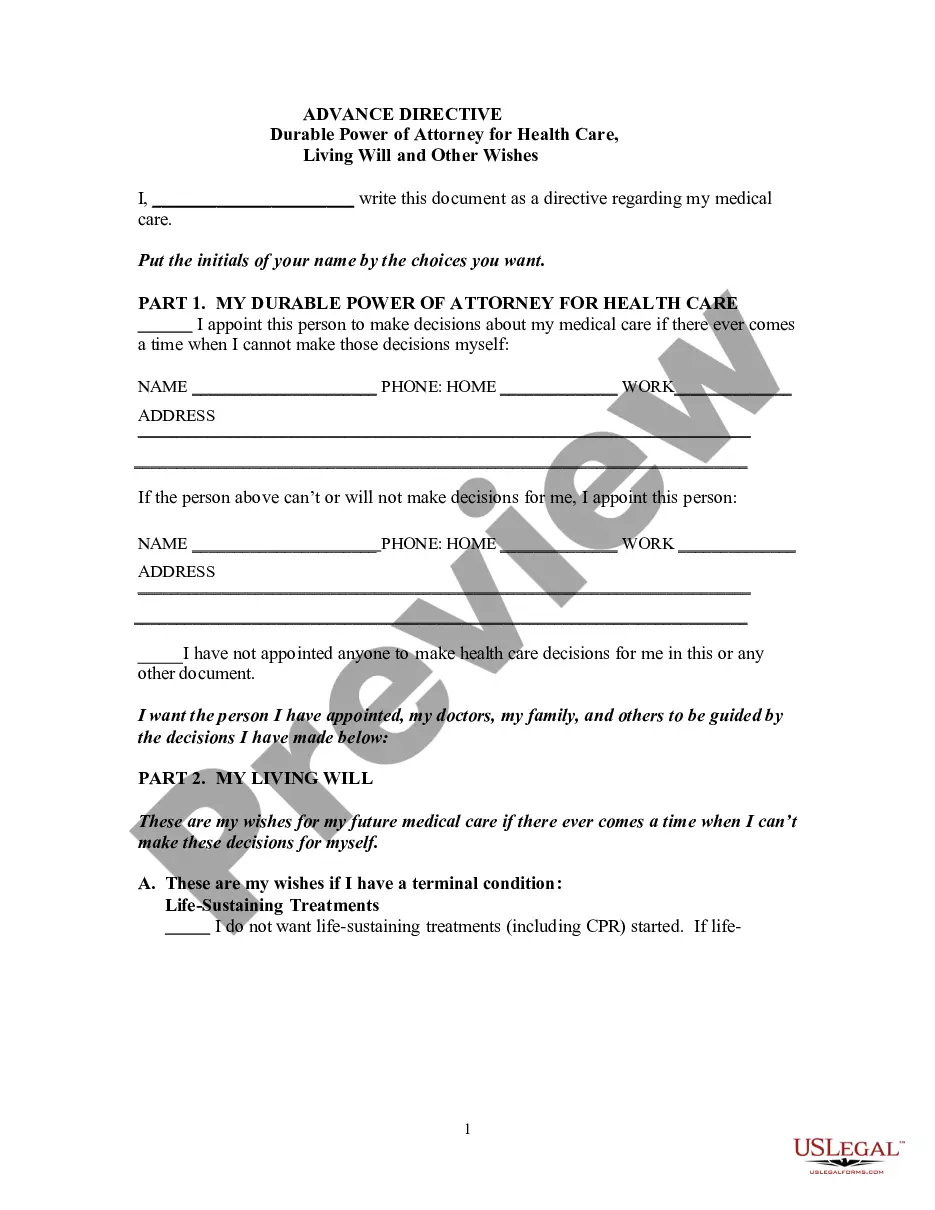
The Living Will is a legal document that outlines an individual's wishes regarding medical treatment in the event of a terminal illness or a persistent vegetative state. This declaration specifies whether to withhold or withdraw life-prolonging procedures, setting forth clear instructions to family members and medical professionals about the individual's preferences for end-of-life care. Unlike a standard will, which addresses the distribution of assets after death, a Living Will focuses solely on health care decisions while the individual is still alive.
Form components explained
- Date of declaration
- Declarantâs personal information
- Conditions for withholding or withdrawing life-prolonging procedures
- Options for receiving or refusing nutrition and hydration
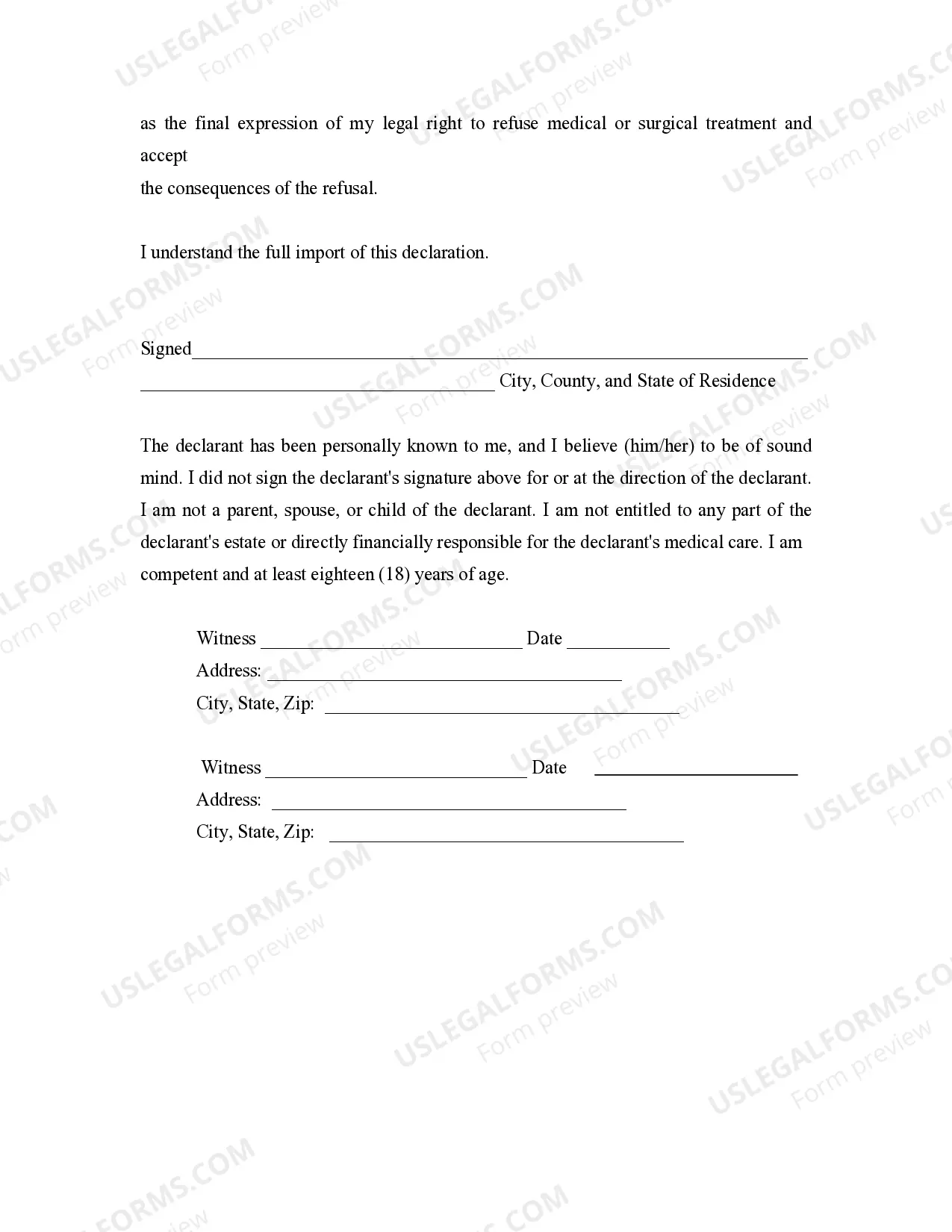
- Signatures of the declarant and witnesses
When this form is needed
This Living Will should be used when an individual wants to ensure their health care preferences are known and respected in situations where they cannot communicate their wishes. It is particularly important for those facing serious health conditions, elderly individuals, or anyone who wants to plan for potential future medical crises.
Who should use this form
- Adults who are at least eighteen (18) years old
- Individuals who wish to dictate their medical care preferences
- People diagnosed with terminal illnesses
- Anyone planning for future health care decisions
Completing this form step by step
- Enter the date of declaration in the specified field.
- Provide your full name and confirm that you are at least eighteen years old and of sound mind.
- Initial your preference regarding artificially supplied nutrition and hydration.
- Sign the form to confirm your wishes.
- Have at least two witnesses sign, ensuring they meet the necessary criteria.
Notarization guidance
This form does not typically require notarization unless specified by local law. Instead, it must be signed by two witnesses who meet specific eligibility criteria as described above.
Get your form ready online
Our built-in tools help you complete, sign, share, and store your documents in one place.
Make edits, fill in missing information, and update formatting in US Legal Forms—just like you would in MS Word.
Download a copy, print it, send it by email, or mail it via USPS—whatever works best for your next step.
Sign and collect signatures with our SignNow integration. Send to multiple recipients, set reminders, and more. Go Premium to unlock E-Sign.
If this form requires notarization, complete it online through a secure video call—no need to meet a notary in person or wait for an appointment.
We protect your documents and personal data by following strict security and privacy standards.

Make edits, fill in missing information, and update formatting in US Legal Forms—just like you would in MS Word.

Download a copy, print it, send it by email, or mail it via USPS—whatever works best for your next step.

Sign and collect signatures with our SignNow integration. Send to multiple recipients, set reminders, and more. Go Premium to unlock E-Sign.

If this form requires notarization, complete it online through a secure video call—no need to meet a notary in person or wait for an appointment.

We protect your documents and personal data by following strict security and privacy standards.
Typical mistakes to avoid
- Not having the necessary witnesses present at the time of signing.
- Failing to initial the chosen options regarding nutrition and hydration.
- Leaving the date of declaration blank.
- Having a witness who is not eligible (e.g., related to the declarant).
Why use this form online
- Easy access to the form for personalized completion at your convenience.
- Editable templates allow you to customize your preferences.
- Secure download ensures your information is kept private and protected.
Legal use & context
- A Living Will is legally binding and should be honored by healthcare providers.
- It serves as a clear statement of the declarant's wishes regarding medical care.
- Understanding the implications of this document can help individuals make informed decisions about their health care preferences.
Looking for another form?
Form popularity
FAQ
The living will does not need to be notarized in Indiana. The living will should have language that states your physician has stated in writing that you have a disease, injury, or illness that will cause your death in a short period of time, and life support will only prolong the death process.
Does Indiana allow electronic wills? Yes, the state of Indiana does allow electronic wills. To create your electronic will, it's recommended that you use an online will creation service such as the one provided by Trust & Will.
The general requirements for a valid Will are usually as follows: (a) the document must be written (meaning typed or printed), (b) signed by the person making the Will (usually called the ?testator? or ?testatrix?, and (c) signed by two witnesses who were present to witness the execution of the document by the maker
Indiana code requires the will to be filed with the court. This allows the court to verify the will as valid or to handle disputes if anyone contests the will. Even if the estate doesn't need to go through formal probate, the will must be presented to the court.
Indiana will laws are similar to will laws in other states, but have no statutory provisions when it comes to holographic, or handwritten, wills.
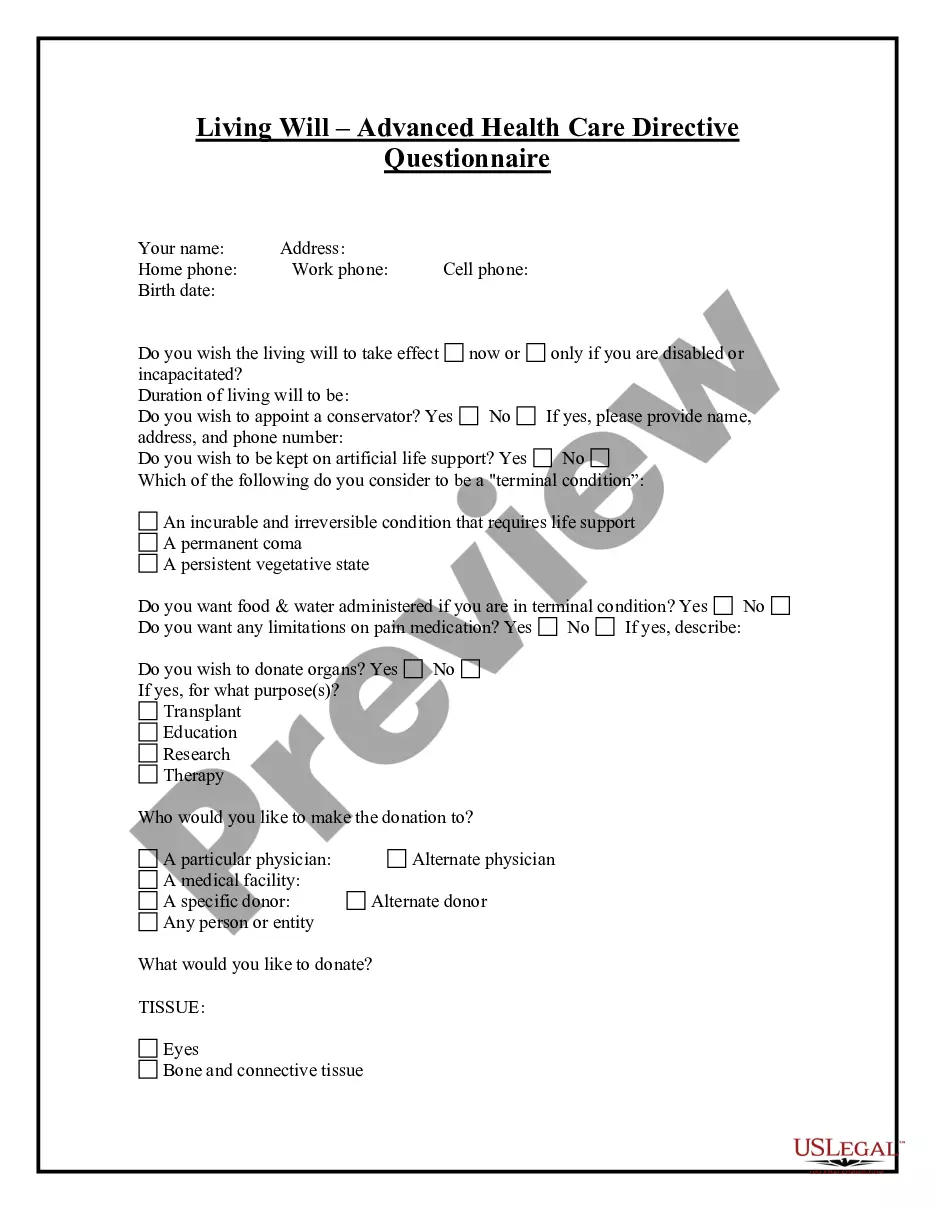
A living will is an advance directive that lists the specific care or treatment you want or do not want during a terminal illness. A living will often includes directions for CPR, artificial nutrition, maintenance on a respirator, and blood transfusions. The Indiana Living Will Act is found at Indiana Code § 16-36-4.
Indiana Living Wills Statutes (1) Person of sound mind, 18 yrs. old; (2) voluntary; (3) in writing; (4) dated; (5) signed in presence of 2 adult witnesses; (6) notice to declarant's attending physician; (7) is presumptive evidence of declarant's intent; (8) not enforced if pregnant (sample form §16-36-4-10).