Indiana Quitclaim Deed from Husband and Wife to an Individual

About this form
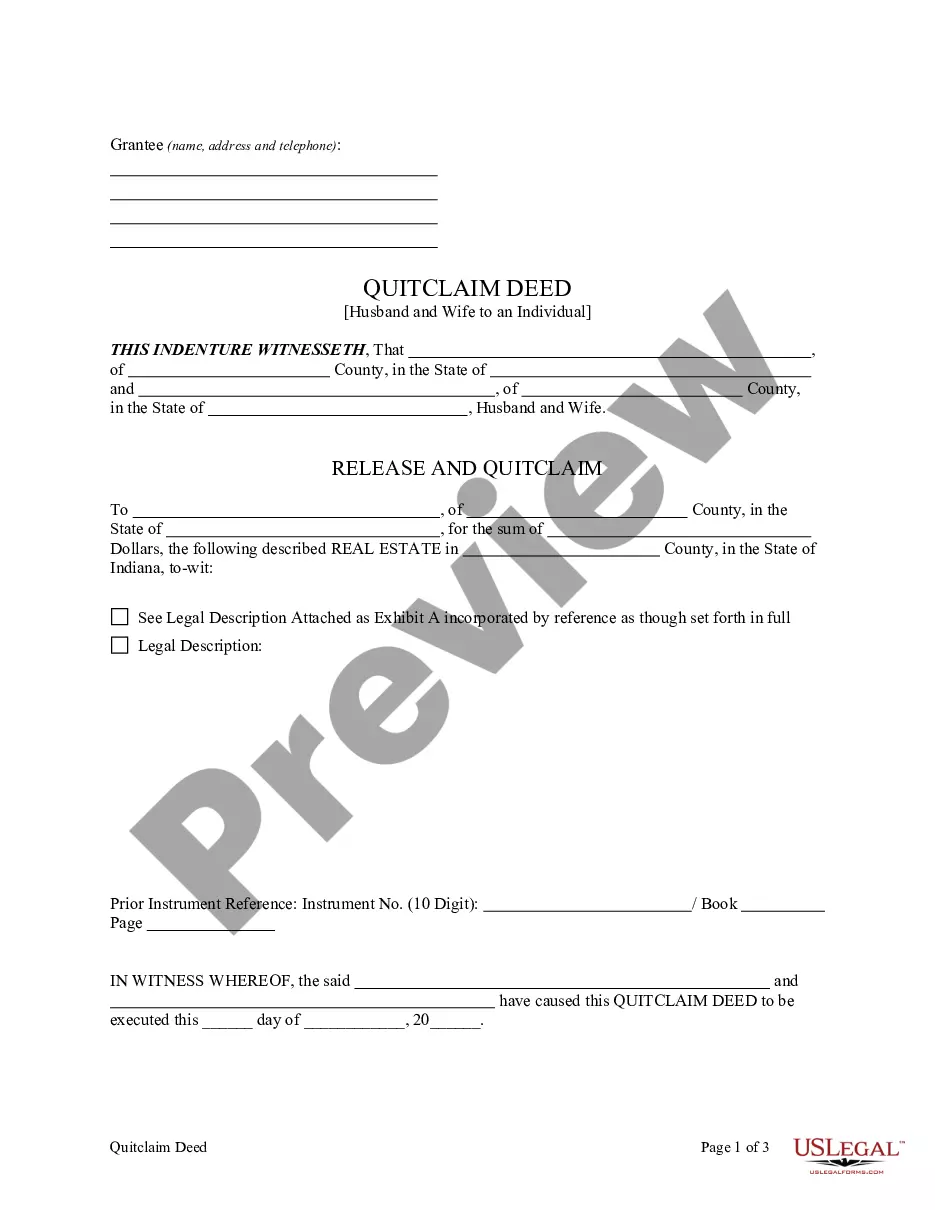
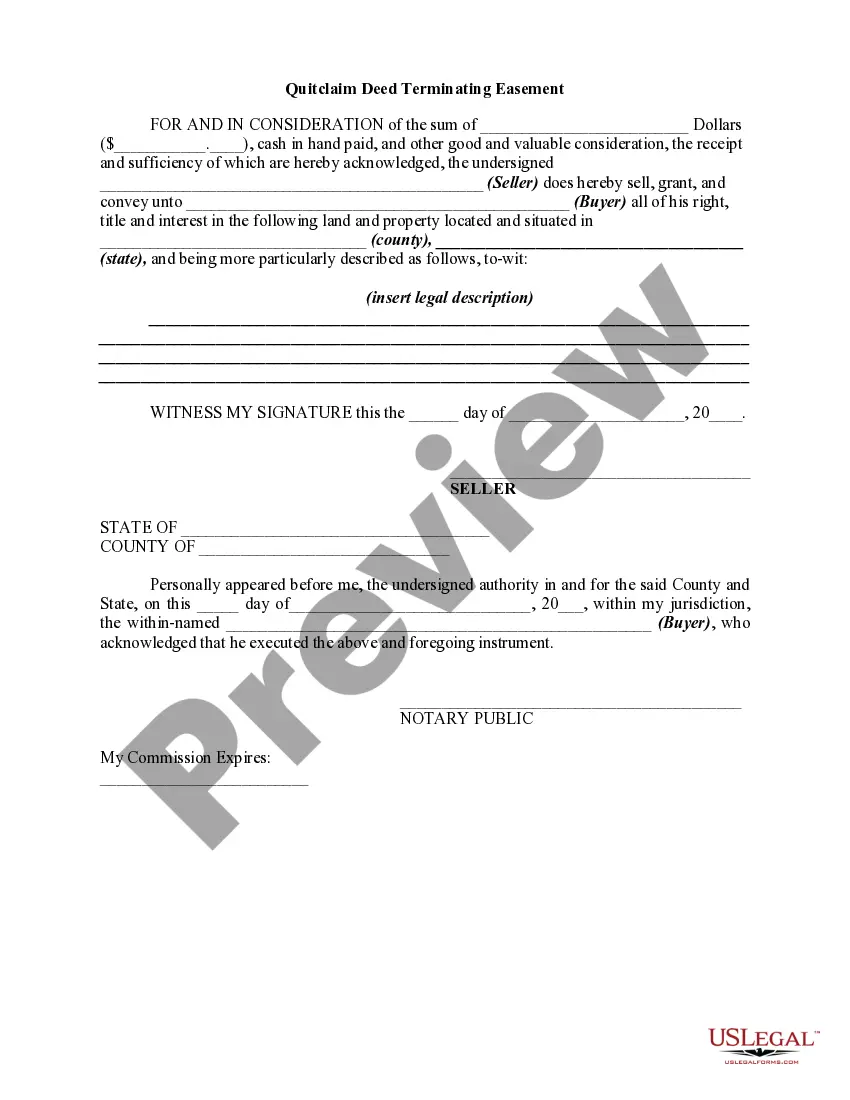
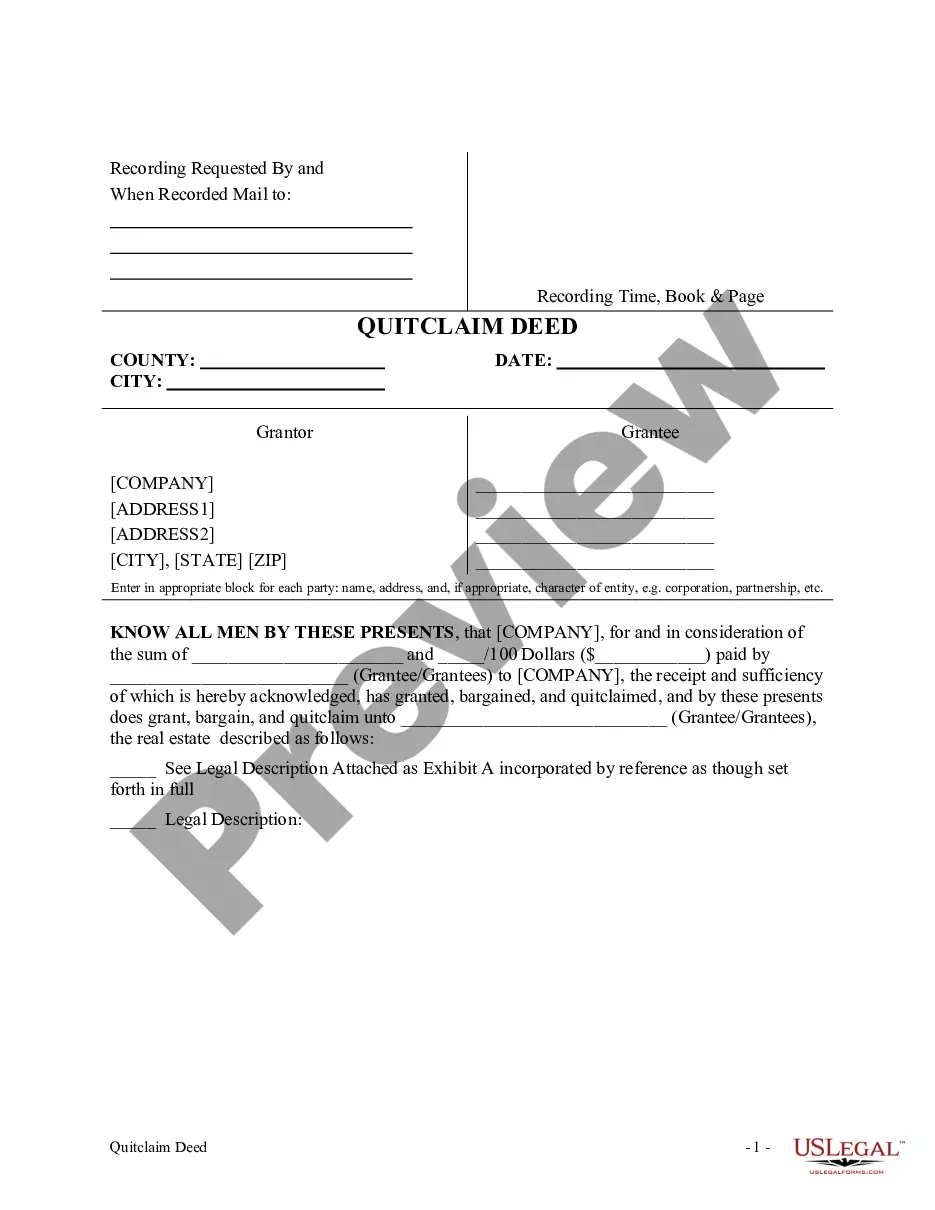
A Quitclaim Deed from Husband and Wife to an Individual is a legal document that transfers ownership of property from married individuals (the grantors) to a single individual (the grantee). Unlike a warranty deed, a quitclaim deed offers no guarantees regarding the property title. It simply conveys whatever interest the grantors have in the property at the time of transfer. This makes it a common choice in situations where the parties know each other and want to avoid the complexities of a warranty deed.
Key parts of this document
- Names and contact information of the grantors (Husband and Wife)
- Name of the grantee (the individual receiving the property)
- Description of the property being transferred, including legal descriptions and address
- Execution date of the document
- Signatures of the parties involved and a notary acknowledgment


When to use this document
This form is typically used when a husband and wife wish to transfer their interest in real estate to an individual, which may occur during personal transactions such as selling property, gifting property, or resolving estate matters. It is especially useful in informal transfers where the parties trust each other and don't require the assurances typically provided by a warranty deed.
Who needs this form
- Husbands and wives who own property together and want to transfer their interest to another individual.
- Individuals who are receiving property from spouses or partners in a simple transfer.
- Those negotiating property transfers in informal, non-commercial contexts, such as family arrangements.
Instructions for completing this form
- Identify the grantors by providing their full names and contact information.
- Specify the grantee's full name to whom the property is being transferred.
- Enter the legal description of the property, including its physical address.
- Fill in the execution date, marking when the deed will take effect.
- Ensure all parties sign the document in the presence of a notary public for validation.
Does this form need to be notarized?
Yes, this form must be notarized to be legally valid. This ensures that the signatures are authenticated and the document is recognized by local jurisdictions. US Legal Forms provides online notarization options available twenty-four seven through secure video calls, offering the convenience of completing the notarization without the need for physical travel.
Get your form ready online
Our built-in tools help you complete, sign, share, and store your documents in one place.
Make edits, fill in missing information, and update formatting in US Legal Forms—just like you would in MS Word.
Download a copy, print it, send it by email, or mail it via USPS—whatever works best for your next step.
Sign and collect signatures with our SignNow integration. Send to multiple recipients, set reminders, and more. Go Premium to unlock E-Sign.
If this form requires notarization, complete it online through a secure video call—no need to meet a notary in person or wait for an appointment.
We protect your documents and personal data by following strict security and privacy standards.

Make edits, fill in missing information, and update formatting in US Legal Forms—just like you would in MS Word.

Download a copy, print it, send it by email, or mail it via USPS—whatever works best for your next step.

Sign and collect signatures with our SignNow integration. Send to multiple recipients, set reminders, and more. Go Premium to unlock E-Sign.

If this form requires notarization, complete it online through a secure video call—no need to meet a notary in person or wait for an appointment.

We protect your documents and personal data by following strict security and privacy standards.
Avoid these common issues
- Failing to include a complete legal description of the property.
- Not having the deed notarized, if required by state law.
- Leaving out or incorrectly entering the grantorsâ or granteeâs names.
- Not checking state-specific requirements before completing the form.
Benefits of completing this form online
- Immediate access to professionally drafted templates saves time.
- Convenience of downloading forms in various formats compatible with different devices.
- Editability allows for customization to fit individual circumstances.
- Accessible legal forms ensure compliance with legal standards.
- This form is enforceable as long as it is properly executed and complies with state laws.
- Quitclaim deeds do not provide any guarantee of ownership, making them suitable for transfers where the parties know each other well.
Looking for another form?

Form popularity
FAQ
But you might be wondering if an owner can transfer a deed to another person without a real estate lawyer. The answer is yes. Parties to a transaction are always free to prepare their own deeds.A quitclaim deed, for example, is far simpler than a warranty deed.
To use a Quitclaim Deed to add someone to a property deed or title, you would need to create a Quitclaim Deed and list all of the current owners in the grantor section. In the grantee section, you would list all of the current owners as well as the person you would like to add.
A person who signs a quitclaim deed to transfer property they do not own results in no title at all being transferred since there is no actual ownership interest. The quitclaim deed only transfers the type of title you own.
Write the Deed Fill out the quit claim deed form, which can be obtained online, or write your own using the form as a guide. The person giving up the interest in the property is the grantor, and the person receiving the interest is the grantee.
Adding someone to your house deed requires the filing of a legal form known as a quitclaim deed. When executed and notarized, the quitclaim deed legally overrides the current deed to your home. By filing the quitclaim deed, you can add someone to the title of your home, in effect transferring a share of ownership.
Step 1: Find your IN quitclaim deed form. Step 2: Gather the information you need. Step 3: Enter the information about the parties. Step 4: Enter the legal description of the property. Step 5: Have the grantor sign the document in the presence of a Notary Public.
The Quit Claim Deed form uses the terms of Grantor (Seller or Owner of said property) and Grantee (Buyer of said property) for the two parties involved. First, the parties must fill in the date. Then, write in the name of the county and state in which the property is located.
Documents must be notarized. Documents executed or acknowledged in Indiana must include a statement that includes: The names of all those signing or serving as a witness on the document must be identical throughout the document and must be printed or typewritten under each signature.