Illinois Revocation of Statutory Equivalent of Living Will or Declaration
About this form
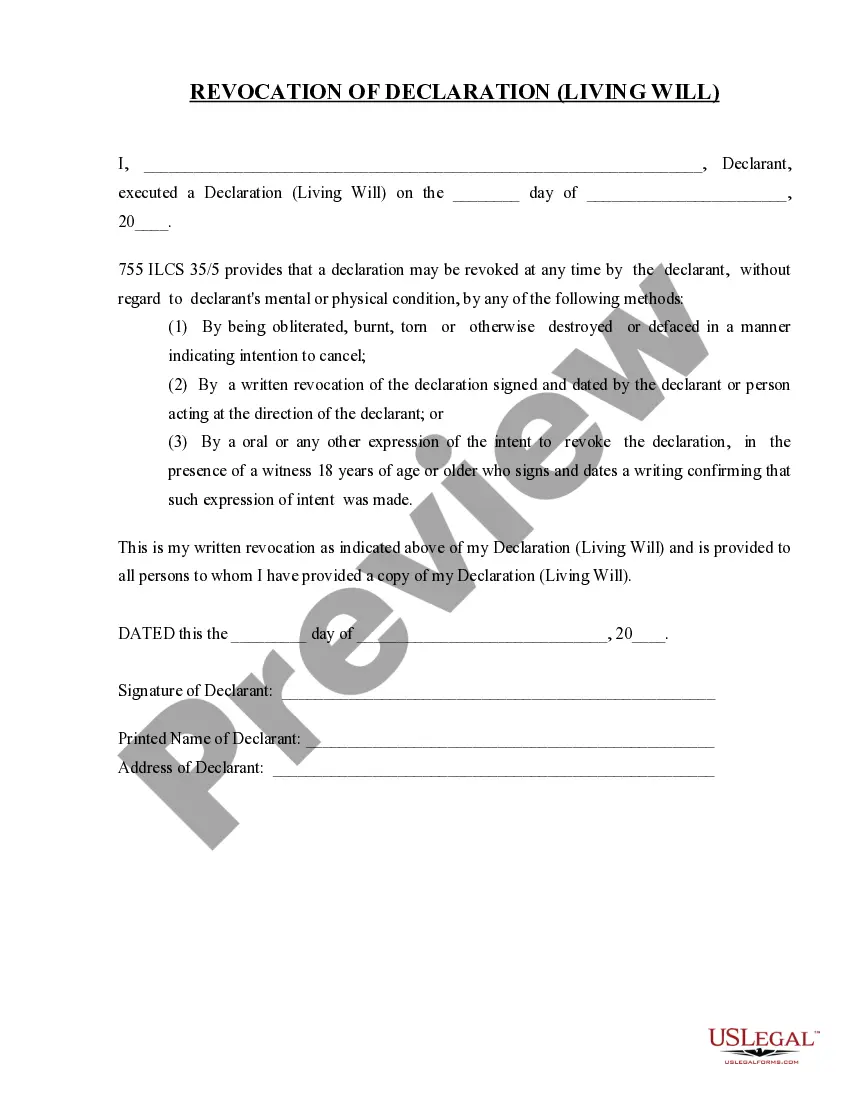
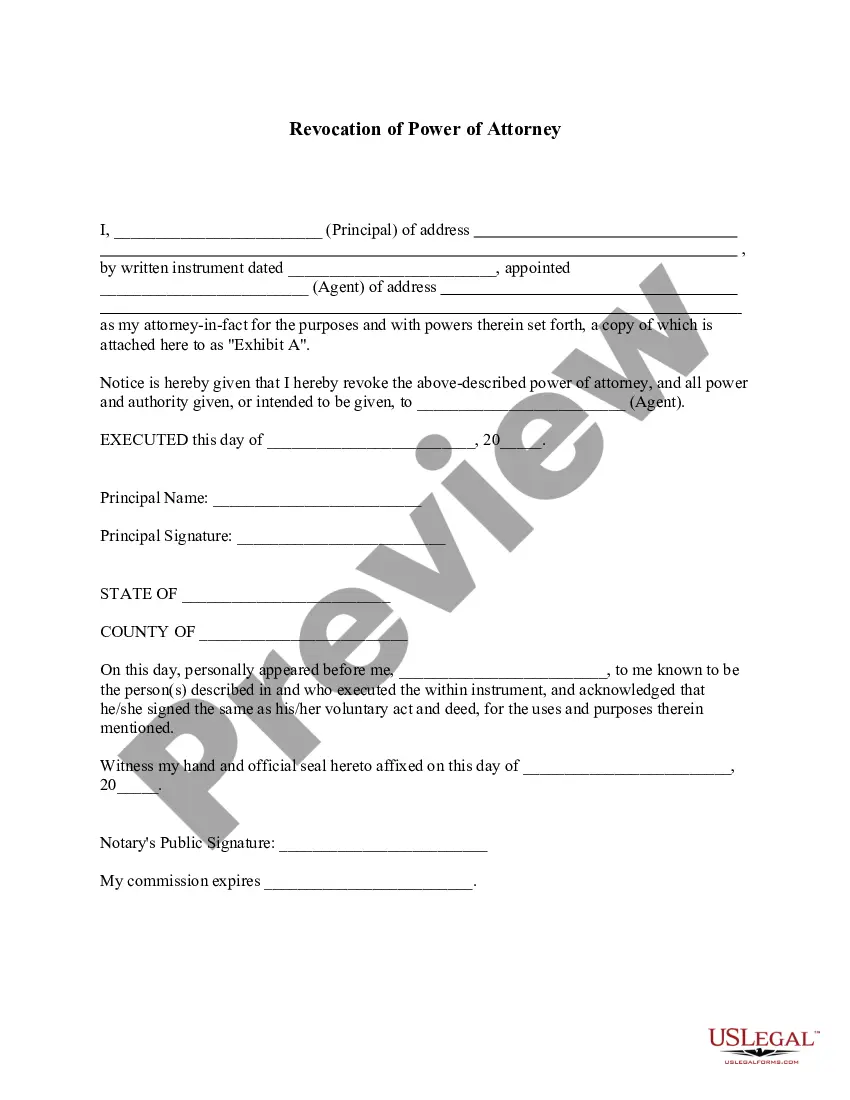
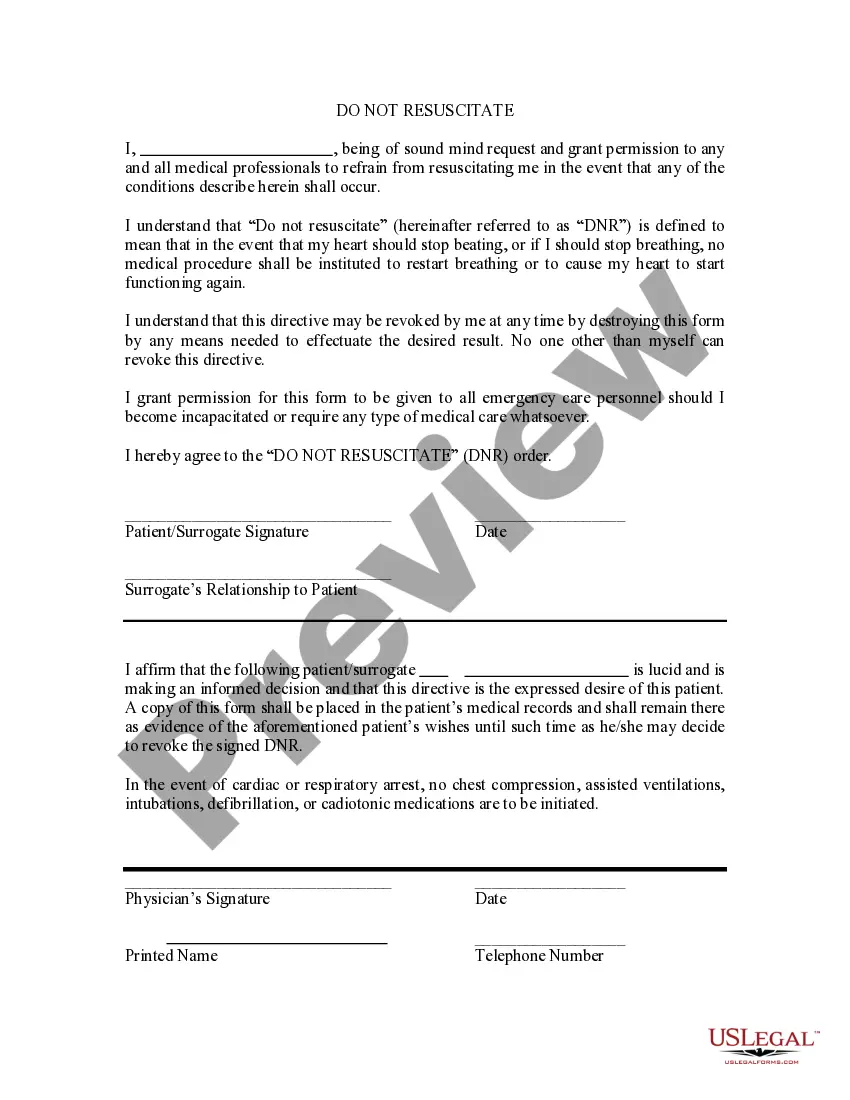
The Revocation of Statutory Equivalent of Living Will or Declaration is a legal document that allows individuals to formally revoke a previously executed living will or declaration. This form specifically references a prior declaration, reflecting a person's wishes about the prolongation of life through artificial means. This revocation form is essential for ensuring that one's current healthcare preferences are accurately communicated and legally acknowledged, differentiating it from simply discarding or verbally expressing a change of intent regarding a living will.
What’s included in this form
- Name and signature of the declarant, confirming the revocation.
- Date the original declaration was executed.
- Explicit statement of intent to revoke the previous living will.
- Methods of revocation outlined, including written, verbal, or destruction of the document.
- Date of the revocation.
- Witness signature to corroborate the intent if revocation is expressed orally.
Situations where this form applies
This form is necessary when an individual who previously executed a living will or declaration decides to change their healthcare preferences. Scenarios for using this revocation include instances when a person's health condition changes, relationships evolve, or they want to ensure that their current wishes are clearly articulated and respected by healthcare providers.
Who should use this form
- Individuals who have previously signed a living will or declaration.
- Those who wish to update or revoke their prior healthcare decisions.
- Persons seeking clarity and legal confirmation of their current healthcare preferences.
Steps to complete this form
- Enter your full name as the declarant.
- Specify the date when your original living will was executed.
- Clearly state your intent to revoke your living will.
- Date the revocation to reflect when it takes effect.
- Sign the document to validate your revocation.
- If applicable, arrange for a witness to sign, confirming your intent if expressed orally.
Notarization requirements for this form
Notarization is not commonly needed for this form. However, certain documents or local rules may make it necessary. Our notarization service, powered by Notarize, allows you to finalize it securely online anytime, day or night.
Get your form ready online
Our built-in tools help you complete, sign, share, and store your documents in one place.
Make edits, fill in missing information, and update formatting in US Legal Forms—just like you would in MS Word.
Download a copy, print it, send it by email, or mail it via USPS—whatever works best for your next step.
Sign and collect signatures with our SignNow integration. Send to multiple recipients, set reminders, and more. Go Premium to unlock E-Sign.
If this form requires notarization, complete it online through a secure video call—no need to meet a notary in person or wait for an appointment.
We protect your documents and personal data by following strict security and privacy standards.

Make edits, fill in missing information, and update formatting in US Legal Forms—just like you would in MS Word.

Download a copy, print it, send it by email, or mail it via USPS—whatever works best for your next step.

Sign and collect signatures with our SignNow integration. Send to multiple recipients, set reminders, and more. Go Premium to unlock E-Sign.

If this form requires notarization, complete it online through a secure video call—no need to meet a notary in person or wait for an appointment.

We protect your documents and personal data by following strict security and privacy standards.
Common mistakes to avoid
- Failing to include your name or date of the original declaration.
- Not signing the form, leading to a lack of legal validity.
- Overlooking the need for a witness if the revocation is expressed verbally.
- Assuming that verbal revocation is sufficient without formal documentation.
Advantages of online completion
- Convenience of downloading and filling out the form at your own pace.
- Editable templates to ensure accurate information entry.
- Access to reliable legal language drafted by licensed attorneys.
- Ensured legal validity following state-specific guidelines.
Legal use & context
- The form complies with Illinois state laws regarding Living Wills.
- It is advisable to keep copies of the revocation on hand and distribute them to healthcare providers.
- Understand that laws may vary in different jurisdictions, impacting the enforceability of this resolution.
What to keep in mind
- This form allows for the revocation of a previously made Living Will.
- Proper completion and distribution are crucial for ensuring your current healthcare wishes are respected.
- Utilizing a legally recognized template can provide peace of mind and clarity regarding your medical preferences.
Looking for another form?
Form popularity
FAQ
In Illinois, to have a valid will it is required that two or more credible witnesses validate or attest the will. This means each witness must watch the testator (person making his or her will) sign or acknowledge the will, determine the testator is of sound mind, and sign the will in front of the testator.
The basic difference between a will and a living will is the time when it is executed. A will takes legal effect upon death. A living will, on the other hand, gives instructions to your family and doctors about what medical treatment you do and don't wish to have, should you become incapacitated.
Do I Need to Have My Will Notarized? No, in Illinois, you do not need to notarize your will to make it legal.However, Illinois allows your will to be self-proved without a self-proving affidavit, as long as you sign and witness it correctly.
Section 11a-2 defines a person with disability (or "a disabled person") as a person 18 years or older who: 1) because of mental deterioration or physical incapacity is not fully able to manage his or her person or estate, or 2) is a person with mental illness or developmental disability and who because of mental
You do not need a lawyer to make a living will, although you can get one from a lawyer if you prefer to. Every state has its own requirements for making a living will, so if you make one on your own, make sure you find a form that meets your state's requirements.
A living will becomes effective when your primary physician decides that you can no longer make your own healthcare decisions. If you are ill or injured and cannot express your healthcare wishes, and your doctor certifies this fact in writing, your living will takes effect.
A living will is a written, legal document that spells out medical treatments you would and would not want to be used to keep you alive, as well as your preferences for other medical decisions, such as pain management or organ donation. In determining your wishes, think about your values.
A living will is a document that explains whether or not you want to be kept on life support if you become terminally ill and will die shortly without life support, or fall into a persistent vegetative state.A living will becomes effective only when you cannot communicate your desires on your own.
An Illinois living will is a legal document used during the estate planning process. The purpose of an Illinois living will is to document your wishes related to medical care in the event that you are unable to make your own medical decisions for any reason.