Illinois Southern District Bankruptcy Guide and Forms Package for Chapters 7 or 13
About this form
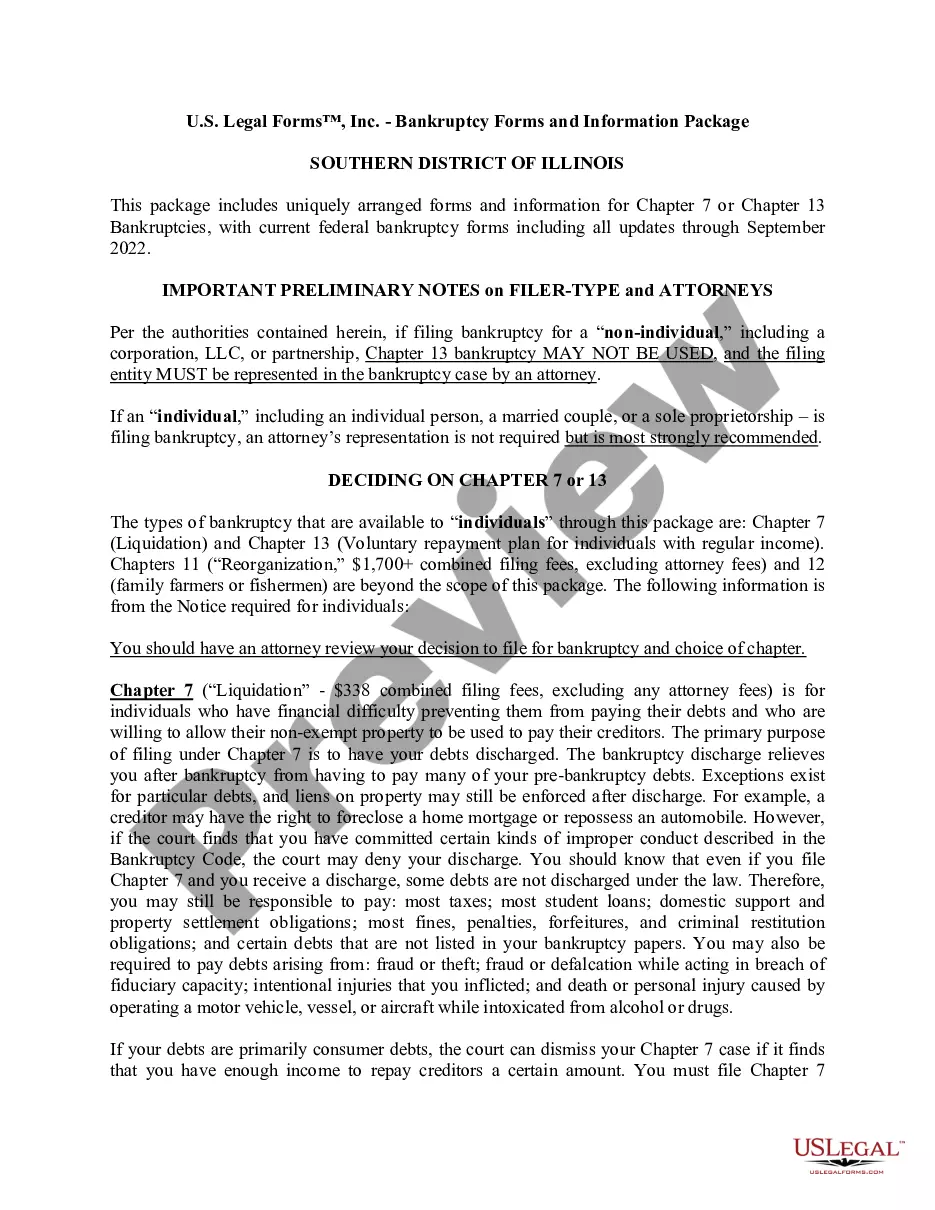
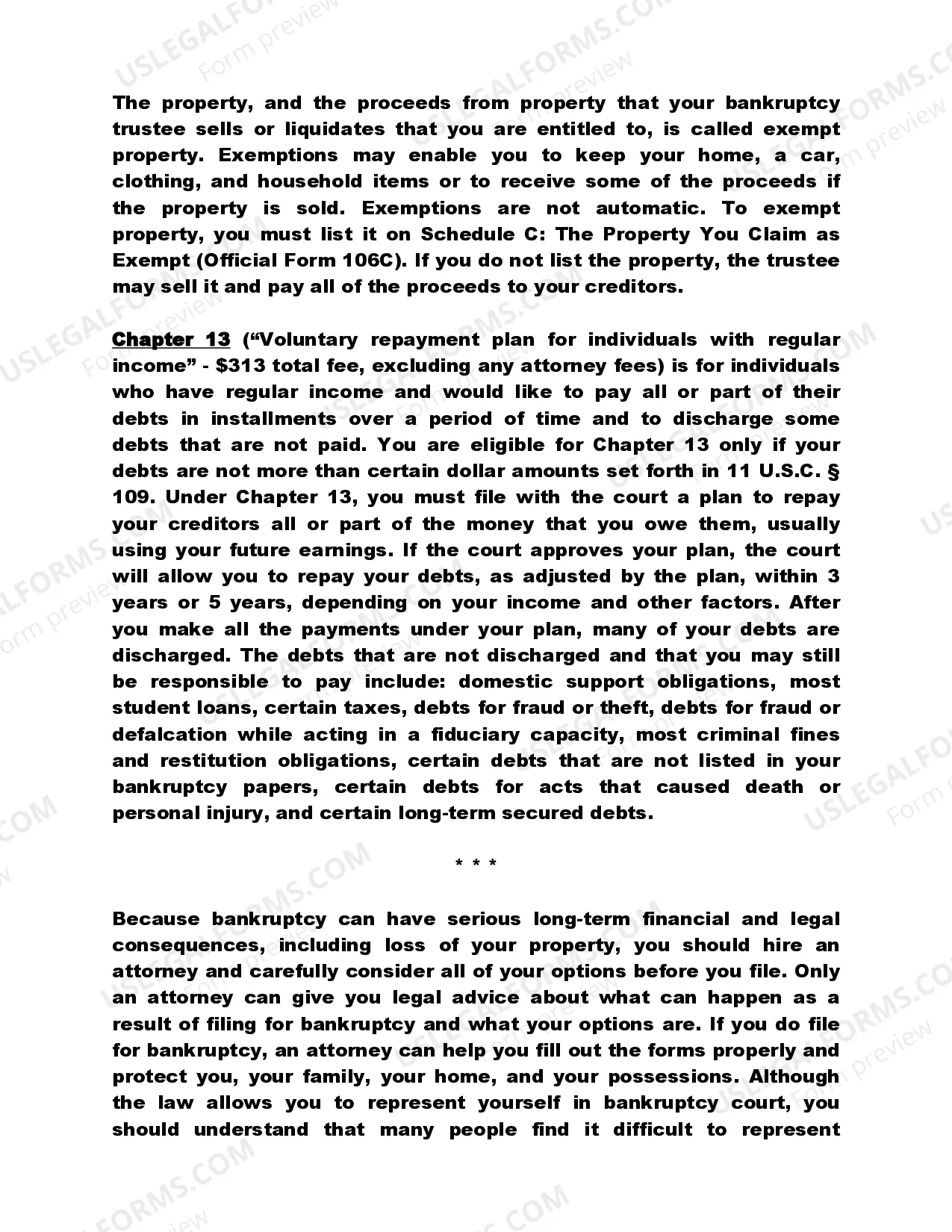
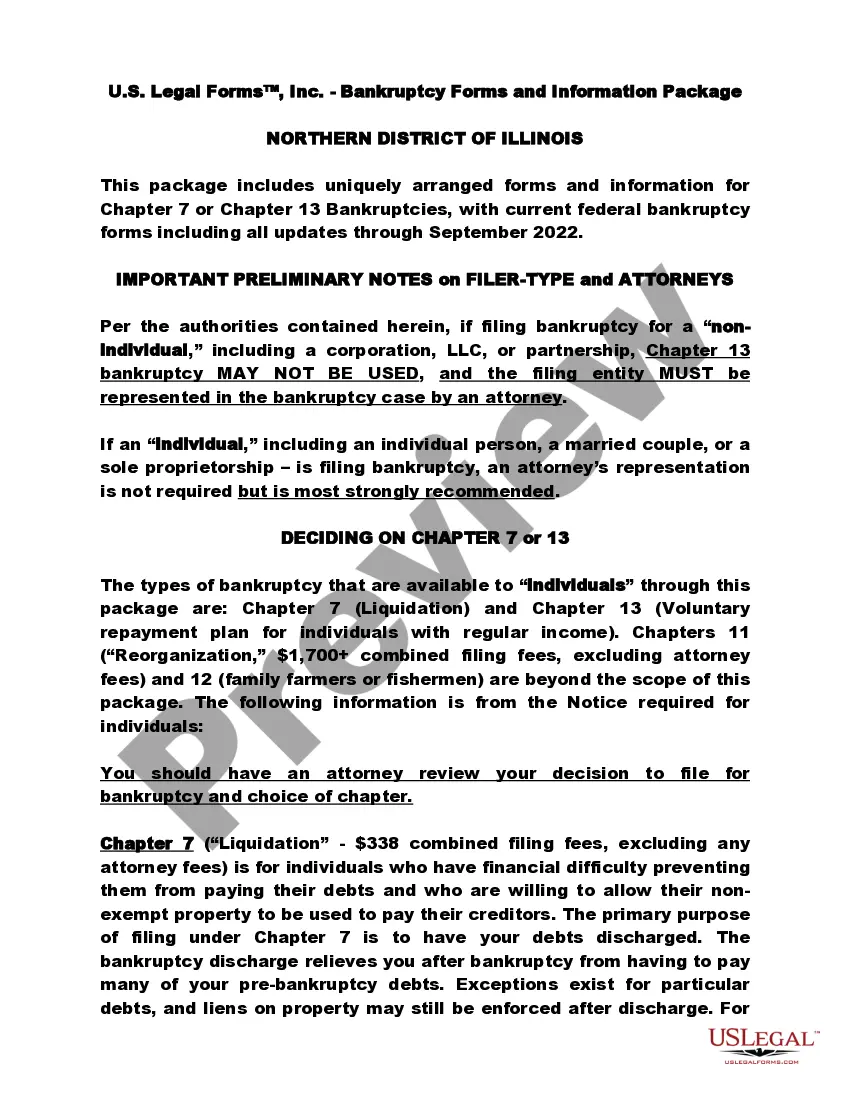
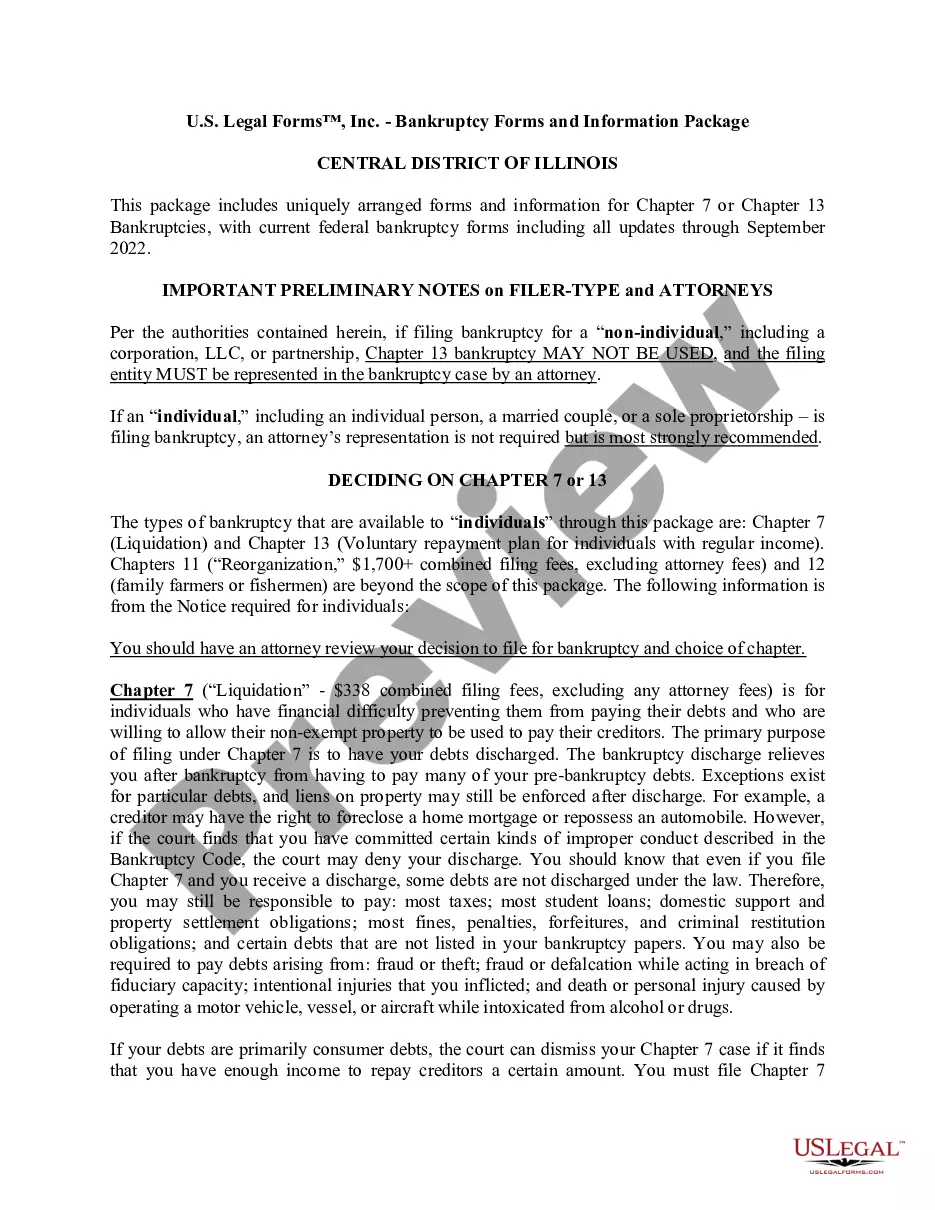
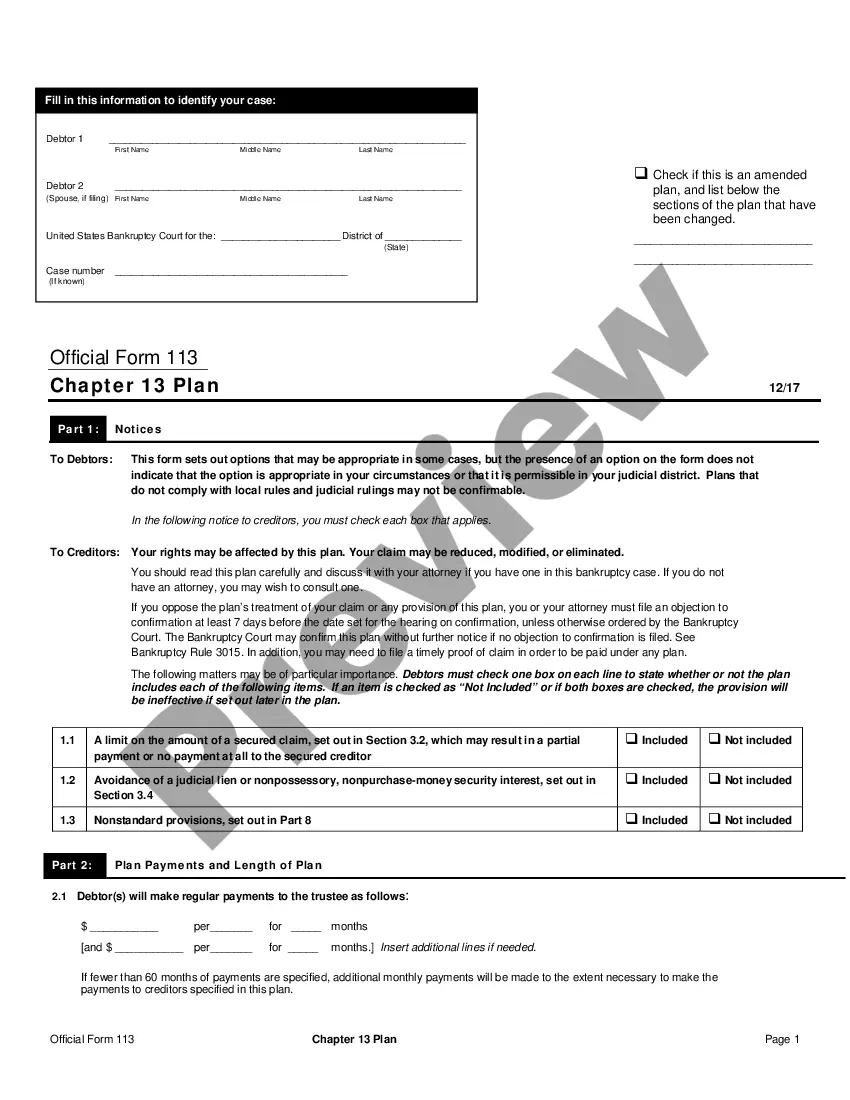
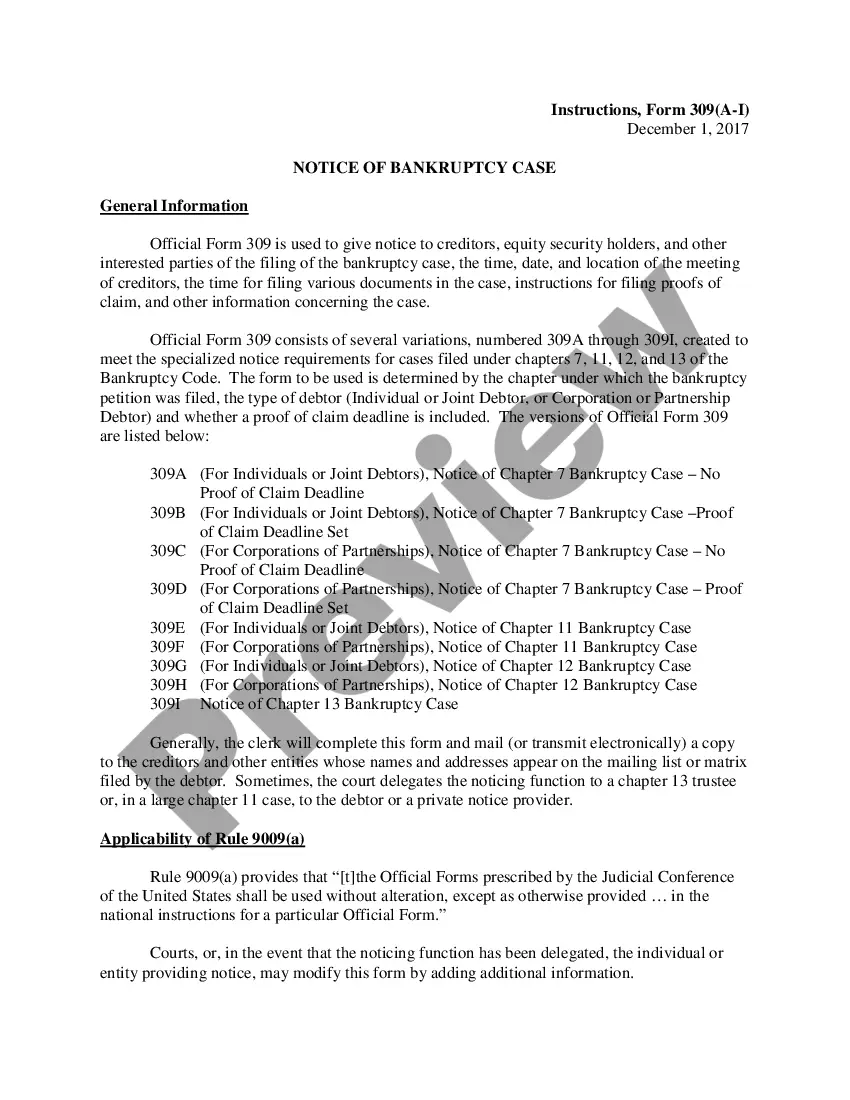
The Illinois Southern District Bankruptcy Guide and Forms Package for Chapters 7 or 13 provides individuals and couples with essential legal documents and instructions for filing for bankruptcy under Chapter 7 (Liquidation) or Chapter 13 (Voluntary repayment plan). This package is specifically tailored to ensure that users can navigate the bankruptcy process, which includes discharging debts or creating repayment plans, and it differs from other bankruptcy forms by including detailed guidance and state-specific resources.
Form components explained
- Detailed instructions for filing under Chapter 7 or Chapter 13.
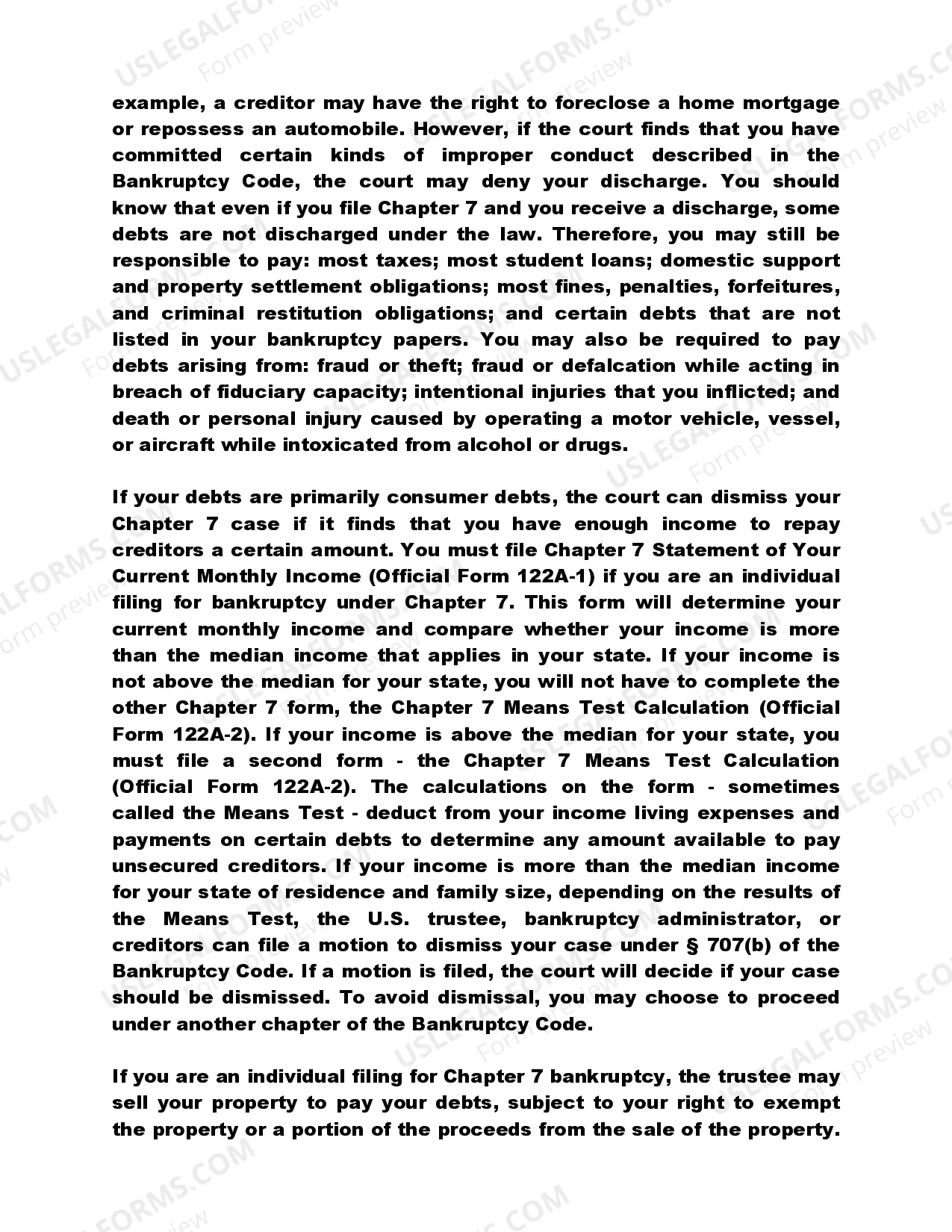
- Forms for Statement of Current Monthly Income (Official Form 122A-1).
- Means Test Calculation form (Official Form 122A-2) for evaluating income eligibility.
- Schedule C for listing exempt property you wish to keep during bankruptcy.
- Repayment plan structure and requirements for Chapter 13 filers.

When this form is needed
This form package is necessary for individuals or couples considering bankruptcy in Illinois. You should use this package if you face financial difficulties, cannot meet debt obligations, and are looking to either discharge your debts through a Chapter 7 filing or establish a manageable repayment plan through a Chapter 13 filing. It helps clarify the appropriate chapter based on your financial situation and needs.
Who can use this document
The following individuals may find this bankruptcy package useful:
- Individuals or couples seeking debt relief.
- People with a regular income aiming to set up a repayment plan.
- Individuals needing detailed instructions on filing processes.
- Those represented by an attorney or filing without legal representation.
Instructions for completing this form
- Determine whether to file under Chapter 7 or Chapter 13 based on your financial situation.
- Complete the Statement of Current Monthly Income (Official Form 122A-1) to assess your eligibility.
- If required, fill out the Means Test Calculation (Official Form 122A-2) to show income and expenses.
- Document any property you wish to exempt using Schedule C (Official Form 106C).
- Create and submit a repayment plan if filing under Chapter 13.
Notarization guidance
This form usually doesn’t need to be notarized. However, local laws or specific transactions may require it. Our online notarization service, powered by Notarize, lets you complete it remotely through a secure video session, available 24/7.
Get your form ready online
Our built-in tools help you complete, sign, share, and store your documents in one place.
Make edits, fill in missing information, and update formatting in US Legal Forms—just like you would in MS Word.
Download a copy, print it, send it by email, or mail it via USPS—whatever works best for your next step.
Sign and collect signatures with our SignNow integration. Send to multiple recipients, set reminders, and more. Go Premium to unlock E-Sign.
If this form requires notarization, complete it online through a secure video call—no need to meet a notary in person or wait for an appointment.
We protect your documents and personal data by following strict security and privacy standards.

Make edits, fill in missing information, and update formatting in US Legal Forms—just like you would in MS Word.

Download a copy, print it, send it by email, or mail it via USPS—whatever works best for your next step.

Sign and collect signatures with our SignNow integration. Send to multiple recipients, set reminders, and more. Go Premium to unlock E-Sign.

If this form requires notarization, complete it online through a secure video call—no need to meet a notary in person or wait for an appointment.

We protect your documents and personal data by following strict security and privacy standards.
Avoid these common issues
- Failing to include all debts in the bankruptcy petition.
- Not listing exempt property correctly on Schedule C.
- Missing deadlines or failing to file required forms on time.
- Underestimating income when completing the means test.
Why complete this form online
- Convenient access to essential legal forms anytime and anywhere.
- Forms are drafted by licensed attorneys, ensuring legal validity.
- Ability to edit forms to suit individual needs before submission.
- Comprehensive guidance provided within the package to help navigate bankruptcy.
Looking for another form?


Form popularity
FAQ
Eligible filers are able to file Chapter 7 for free. If your household income is less than 150% of the federal poverty level, you can ask the bankruptcy judge to waive your court fees with a simple application submitted along with your bankruptcy petition.
How much does it cost to file bankruptcy in Illinois depends on whether you file Chapter 7 bankruptcy or Chapter 13 bankruptcy, and also on how complicated your case is. There is a filing fee for a Chapter 7 of $306 and the filing fee for Chapter 13 is $281. The filing fee goes to the Clerk of the court.
Even if you make too much money to automatically pass the Chapter 7 means test, you may still be able to qualify for Chapter 7 bankruptcy. This is because you can deduct certain expenses in full to help you reduce your disposable income on the means test.
If your annual income, as calculated on line 12b, is less than $84,952, you may qualify to file Chapter 7 bankruptcy. If it's greater than $84,952, you'll have to continue to Form 122A-2, which we'll review in the next section. It should be noted that every state has different median income calculations.
In general, attorney fees for a Chapter 7 bankruptcy range from $1,000 to $3,500 depending on the complexity of the case. Larger firms with more advertising and overhead costs sometimes charge more than a solo practitioner, but not always.
In the Chicago area, bankruptcies are processed by the United States Bankruptcy Court for the Northern District of Illinois.Most parts of a bankruptcy file are considered public record, so the court makes them available for viewing and copying to the general public.
If your total monthly income over the course of the next 60 months is less than $7,475 then you pass the means test and you may file a Chapter 7 bankruptcy. If it is over $12,475 then you fail the means test and don't have the option of filing Chapter 7.