Illinois Inventory and Condition of Leased Premises for Pre Lease and Post Lease
Understanding this form
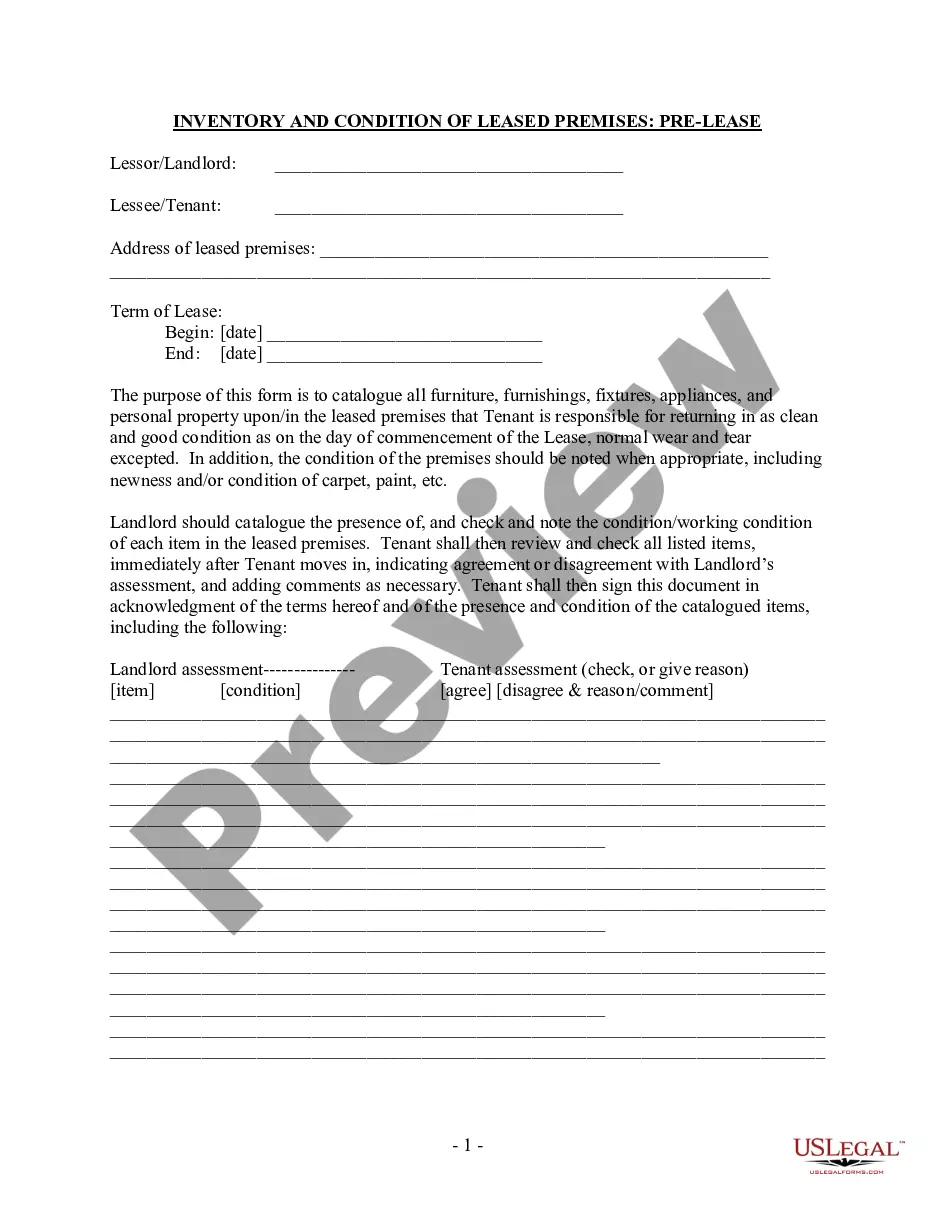
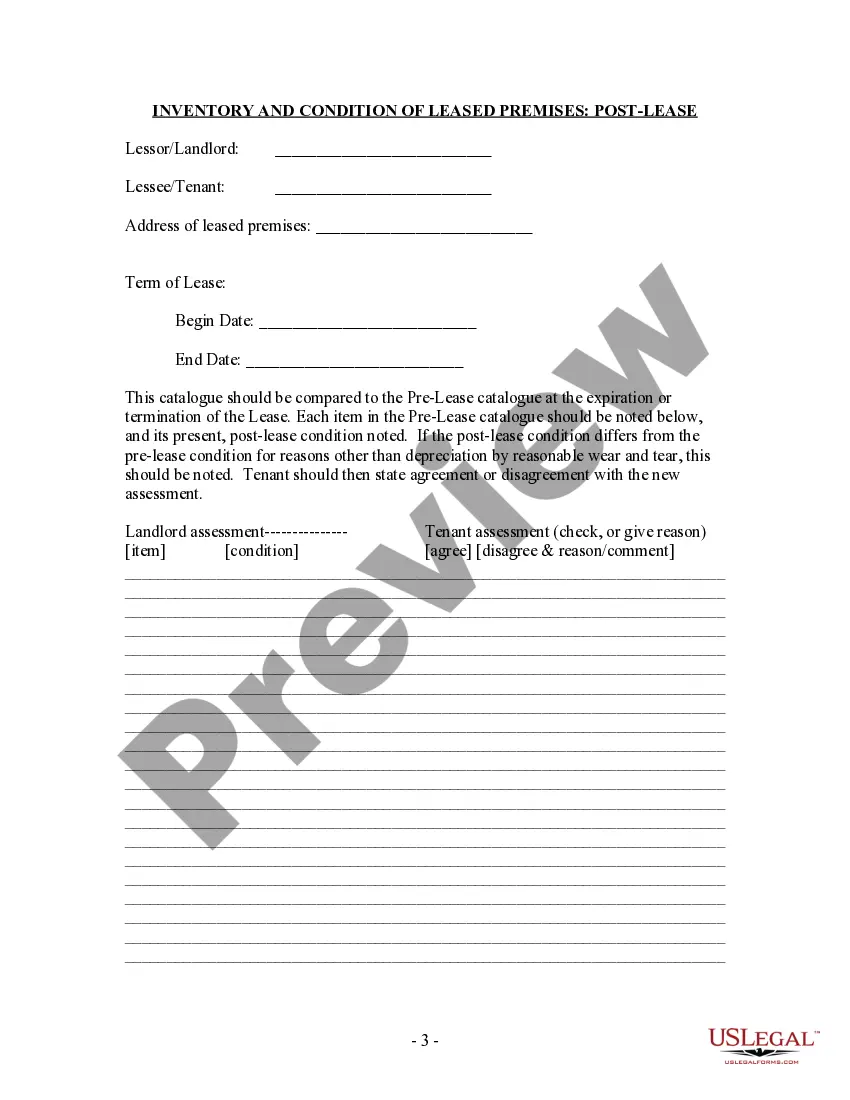
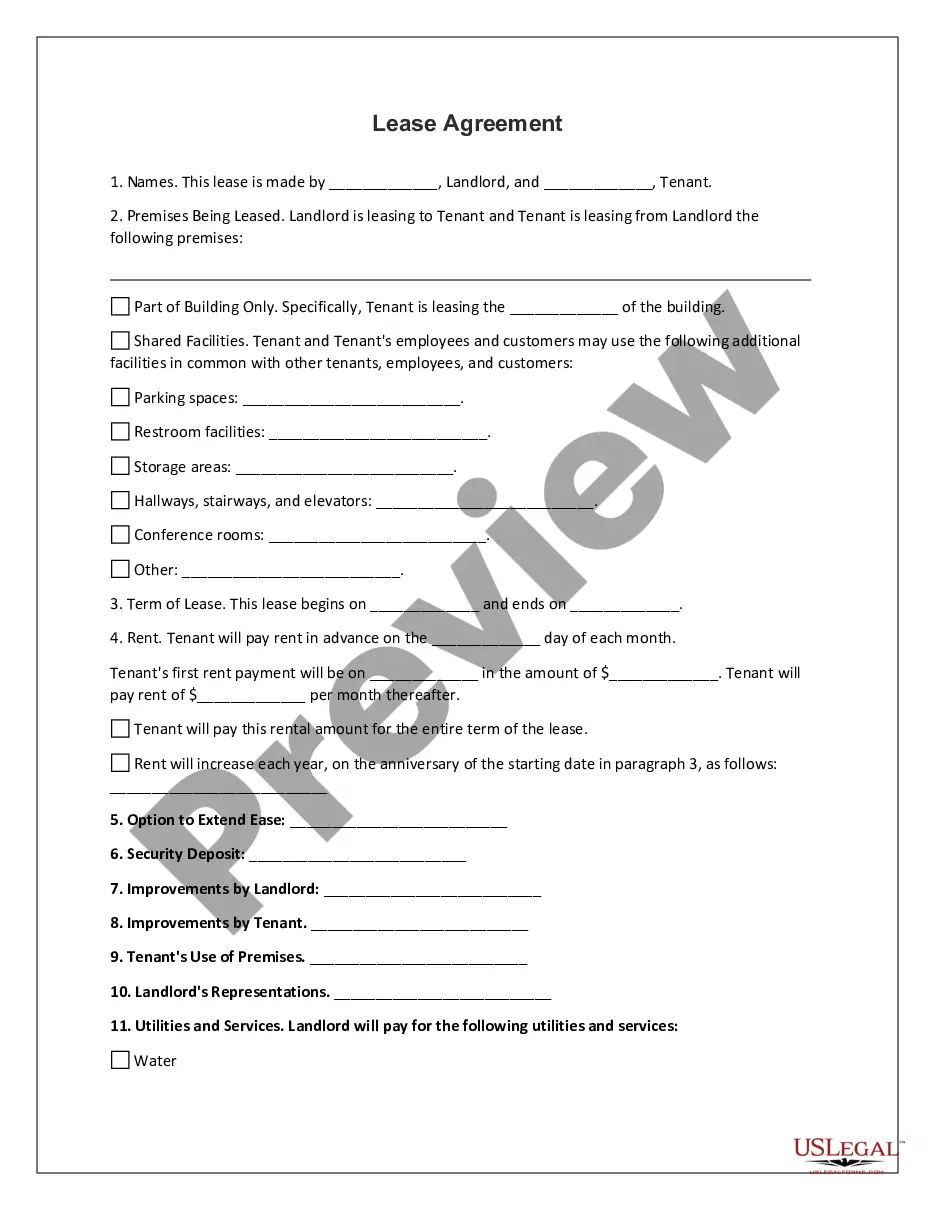
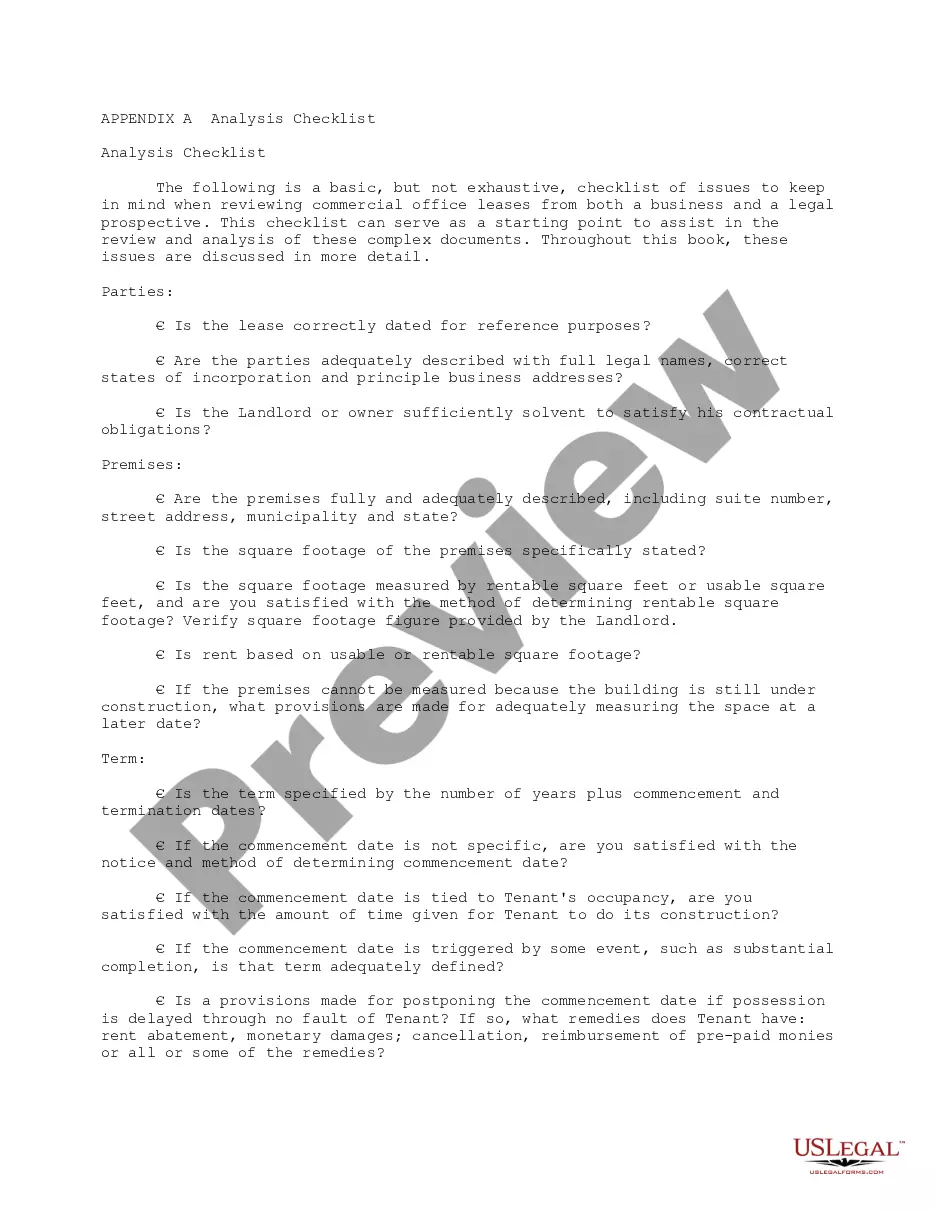
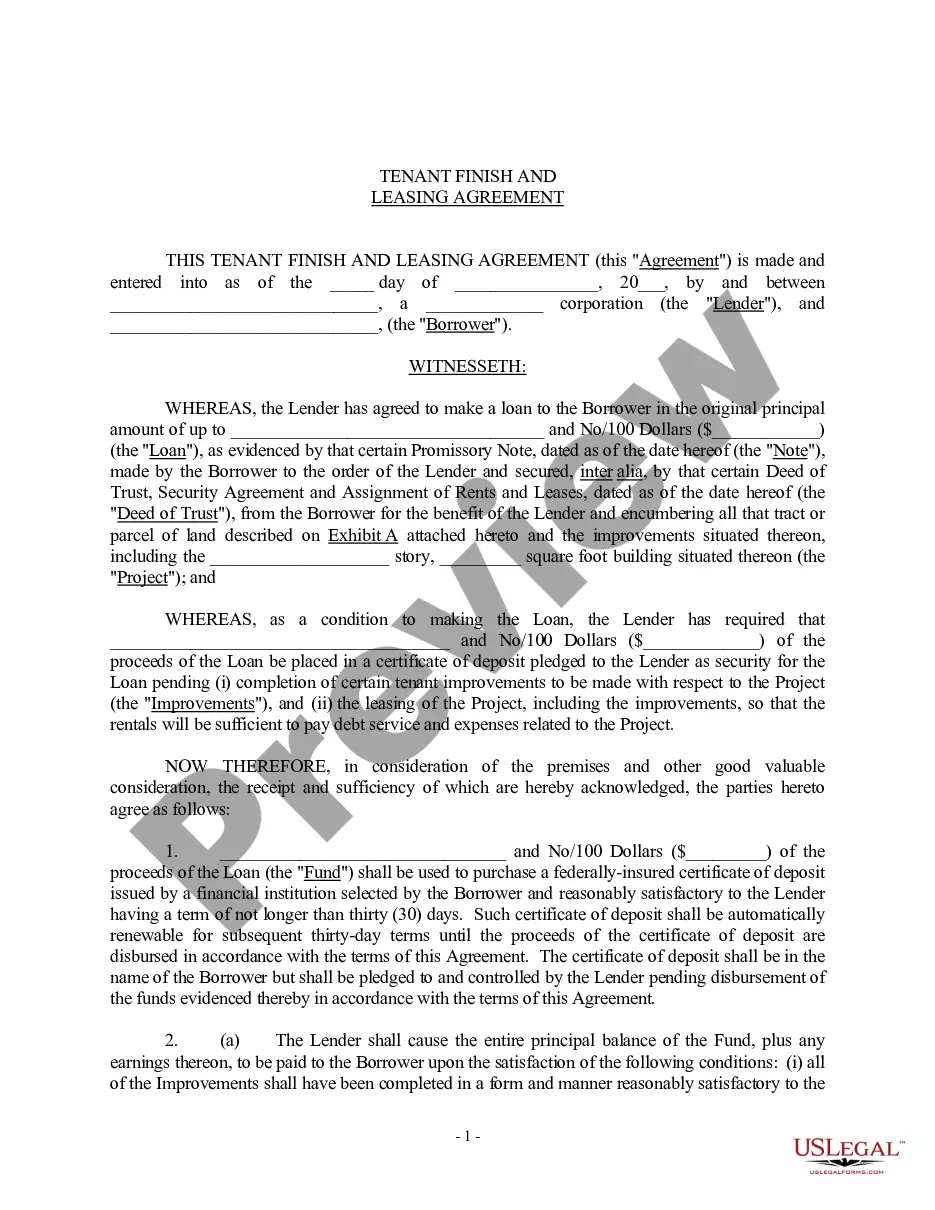
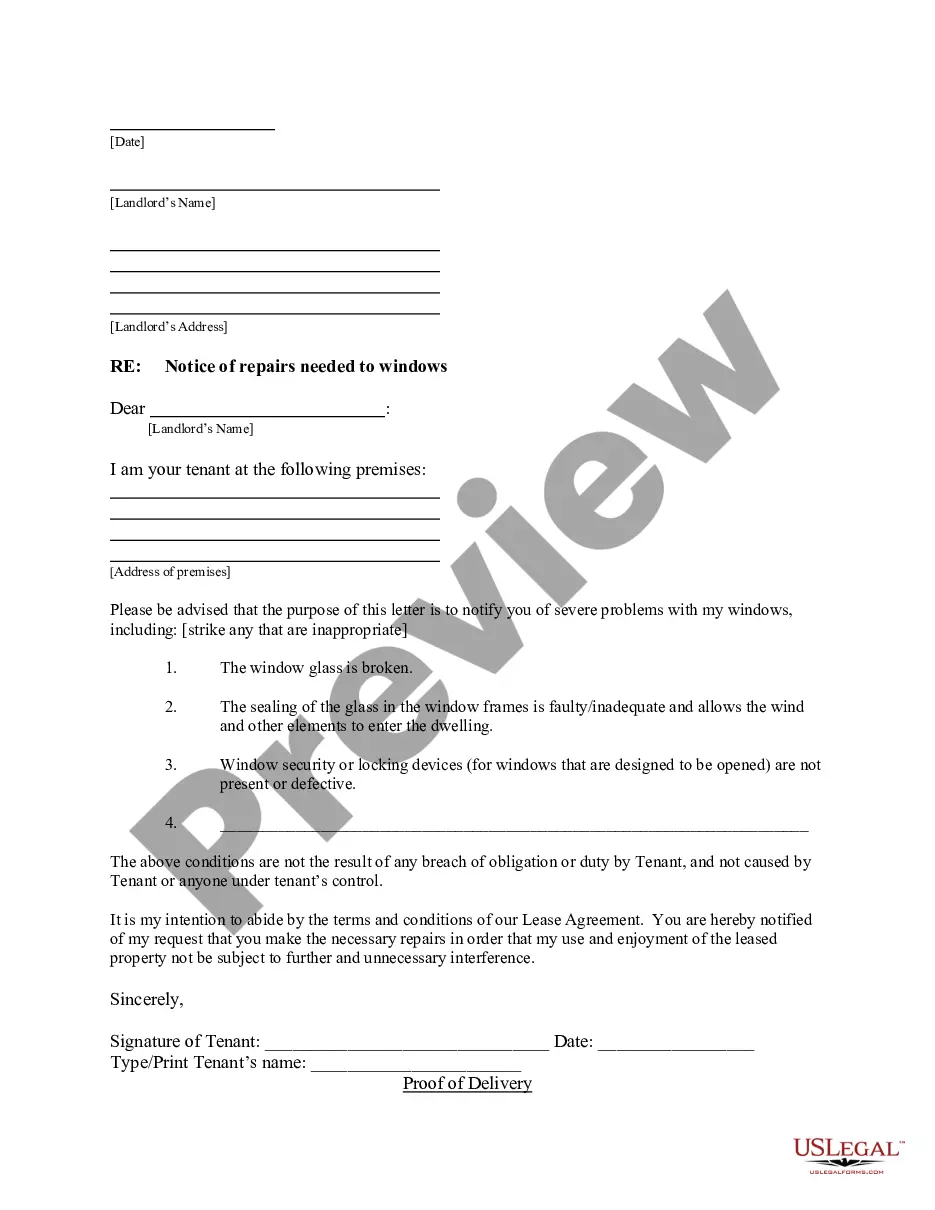
The Inventory and Condition of Leased Premises for Pre Lease and Post Lease is a legal document that provides a detailed assessment of a rental property before a tenant moves in and after they move out. This form serves to document the condition of the premises and any included items, ensuring that both landlords and tenants agree on the state of the property at the beginning and end of the lease. This form helps prevent disputes over property damage or missing items, making it essential for both parties in a rental agreement.
What’s included in this form
- Identification of the lessor/landlord and lessee/tenant.
- Detailed address and term of the lease, including start and end dates.
- Inventory list of all furniture, appliances, and personal property in the leased premises.
- Condition assessments of each item from both landlord and tenant.
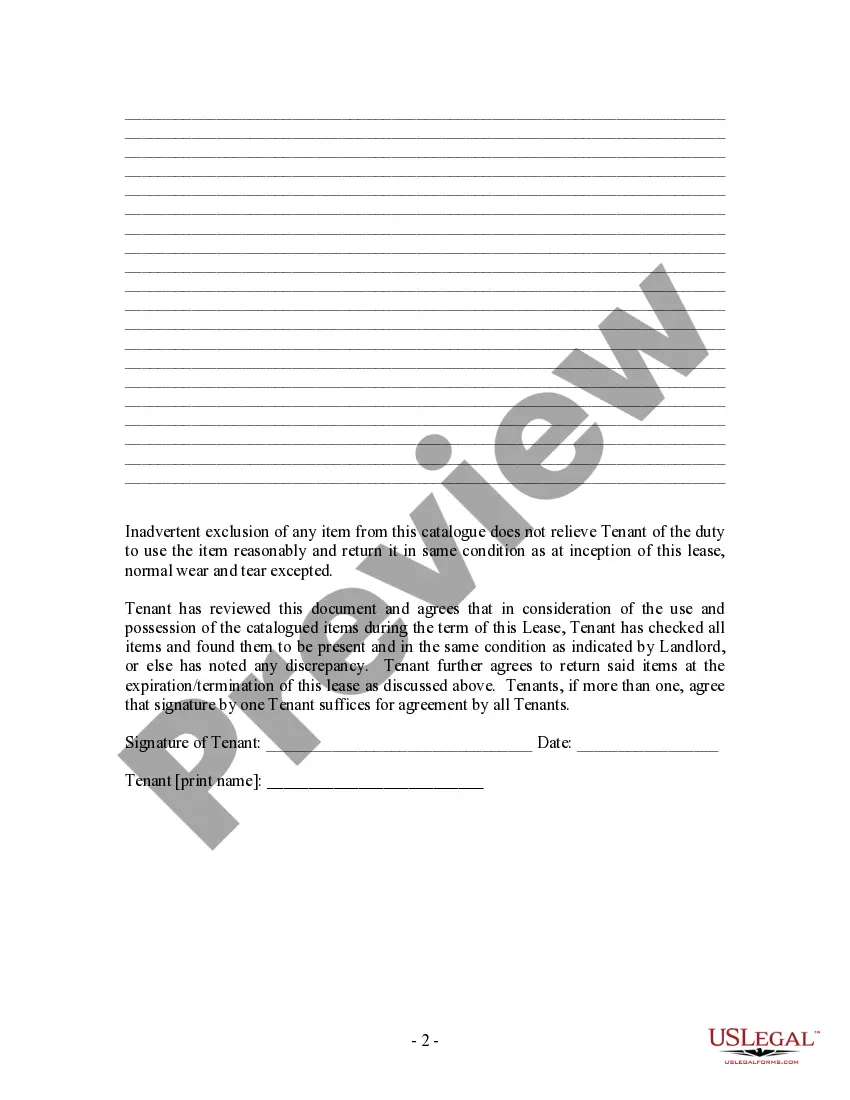
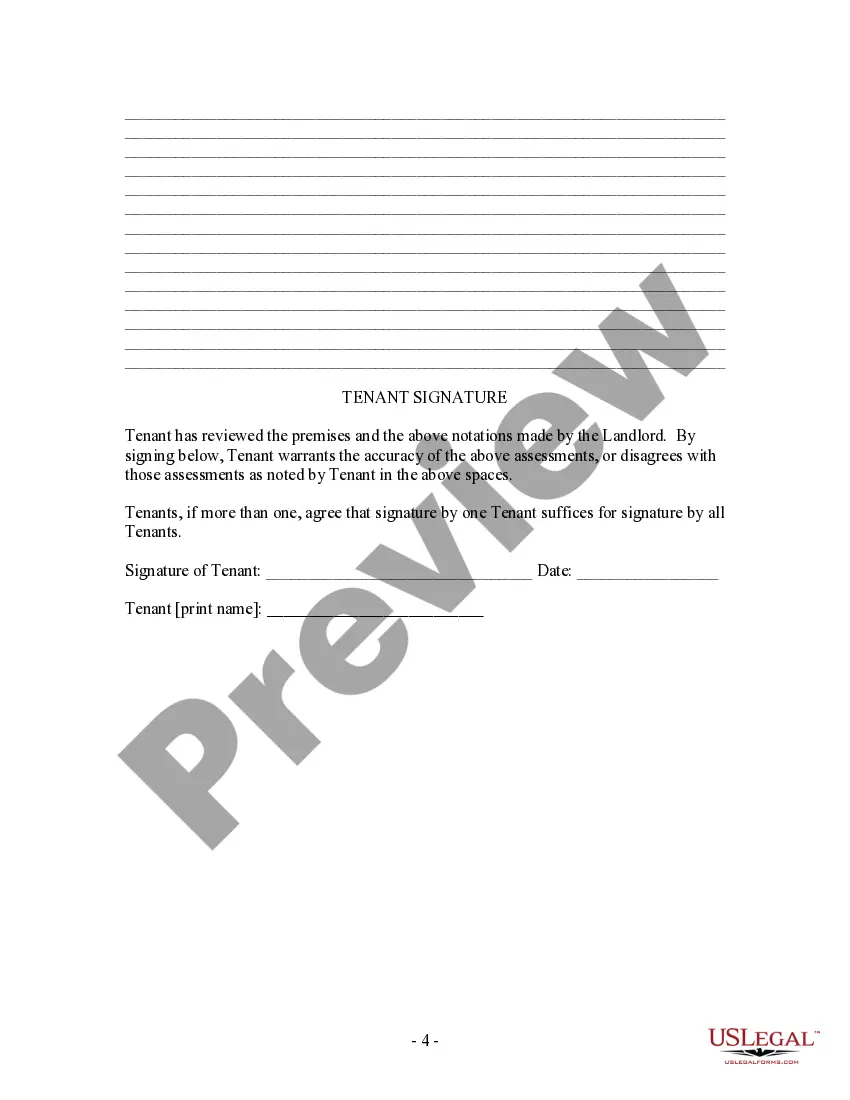
- Agreement section for both parties to acknowledge the condition of the property.
- Post-lease assessments that compare the condition at the end of the lease to the initial assessment.
Common use cases
This form should be used when entering into a lease agreement for rental property. It is particularly important for landlords and tenants to complete the inventory both before the tenant moves in and after they vacate the property. Using this form ensures that any damages or discrepancies are documented, protecting both parties from potential disputes regarding the property's condition.
Who should use this form
- Landlords managing rental properties.
- Tenants entering into a lease agreement.
- Property managers responsible for conducting tenant inspections.
How to prepare this document
- Identify the parties involved by filling in the names of the landlord and tenant.
- Specify the address of the leased premises and the term of the lease, including start and end dates.
- List all items included in the rental along with their condition according to the landlord's assessment.
- Have the tenant review the inventory and record any agreements or disagreements about the condition of the items.
- Both parties should sign and date the document to acknowledge their agreement.
Notarization requirements for this form
This form does not typically require notarization unless specified by local law. It is important for the landlord and tenant to retain copies of the completed inventory for personal records.
Get your form ready online
Our built-in tools help you complete, sign, share, and store your documents in one place.
Make edits, fill in missing information, and update formatting in US Legal Forms—just like you would in MS Word.
Download a copy, print it, send it by email, or mail it via USPS—whatever works best for your next step.
Sign and collect signatures with our SignNow integration. Send to multiple recipients, set reminders, and more. Go Premium to unlock E-Sign.
If this form requires notarization, complete it online through a secure video call—no need to meet a notary in person or wait for an appointment.
We protect your documents and personal data by following strict security and privacy standards.

Make edits, fill in missing information, and update formatting in US Legal Forms—just like you would in MS Word.

Download a copy, print it, send it by email, or mail it via USPS—whatever works best for your next step.

Sign and collect signatures with our SignNow integration. Send to multiple recipients, set reminders, and more. Go Premium to unlock E-Sign.

If this form requires notarization, complete it online through a secure video call—no need to meet a notary in person or wait for an appointment.

We protect your documents and personal data by following strict security and privacy standards.
Mistakes to watch out for
- Failing to document all items accurately in the inventory list.
- Not recording the condition of each item clearly.
- Ignoring to compare the pre-lease and post-lease inventory for discrepancies.
Benefits of completing this form online
- Convenience of accessing and completing the form from any location.
- Editability allows users to customize the inventory according to specific lease agreements.
- Reliable templates drafted by licensed attorneys ensure legal compliance.
Legal use & context
- Establishes a clear record of property condition, reducing the risk of disputes over damages.
- Serves as evidence in case of any disagreements regarding the property's state.
- Helps in ensuring the return of security deposits, as it demonstrates the initial condition of the property.
Quick recap
- The Inventory and Condition of Leased Premises is essential for documenting property condition.
- Clear documentation protects both landlords and tenants throughout the leasing process.
- Ensure accuracy and agreement on property conditions pre- and post-lease.
- Utilizing this form online enhances convenience and reliability.
Looking for another form?
Form popularity
FAQ
State law regulates several rent-related issues, including the amount of notice (at least 30 days in Illinois) landlords must give tenants to raise the rent and how much time (five days in Illinois) a tenant has to pay rent or move before a landlord can file for eviction.
If it's vacant, it still has an owner, and it's illegal to enter without permission. For truly abandoned property, you can enter and actually occupy it over time via the old rule of adverse possession.
In Illinois, property is generally presumed abandoned after five years of inactivity by the presumed owner. However, this time limit varies depending on the type of property involved. Once abandoned property is turned over to the state by a business, an individual then has the burden of reclaiming it from the state.
Normally, neither the tenant nor the landlord can change their mind and get out of the lease before it ends, unless the other side agrees. But both parties can agree to end the lease early by a written agreement. If no agreement is reached, the tenant must pay rent for the full lease term, even if they move out.
In California, habitability includes the following specific warranties: A dwelling also may be considered uninhabitable (unlivable) if it substantially lacks any of the following: Effective waterproofing and weather protection of roof and exterior walls, including unbroken windows and doors.
Generally, the Illinois Revised Uniform Unclaimed Property Act (IRUUPA) changes the dormancy periods from five years to three years for most property types.
Uninhabitable conditions can include dangerous ones, such as holes in the floor, unsafe or exposed wiring, or non-working air conditioning in dangerously hot summer months. Gross infestations of roaches, fleas or other pests are also uninhabitable conditions.
If you are unsure about claiming that a tenant has surrendered the property you can place an Abandonment Notice on the door of the property. This Notice needs to advise that the property has been deemed as abandoned and give a time say five days after which the locks will be changed if no contact is received.
If you personally deliver the notice to the tenant, then you must store the abandoned property for at least 15 days. If you mail the notice to the tenant (including email), then you must store the property for at least 18 days from the date the notice was mailed (see Cal.