Idaho Mutual Wills Package with Last Wills and Testaments for Married Couple with Adult Children

Understanding this form
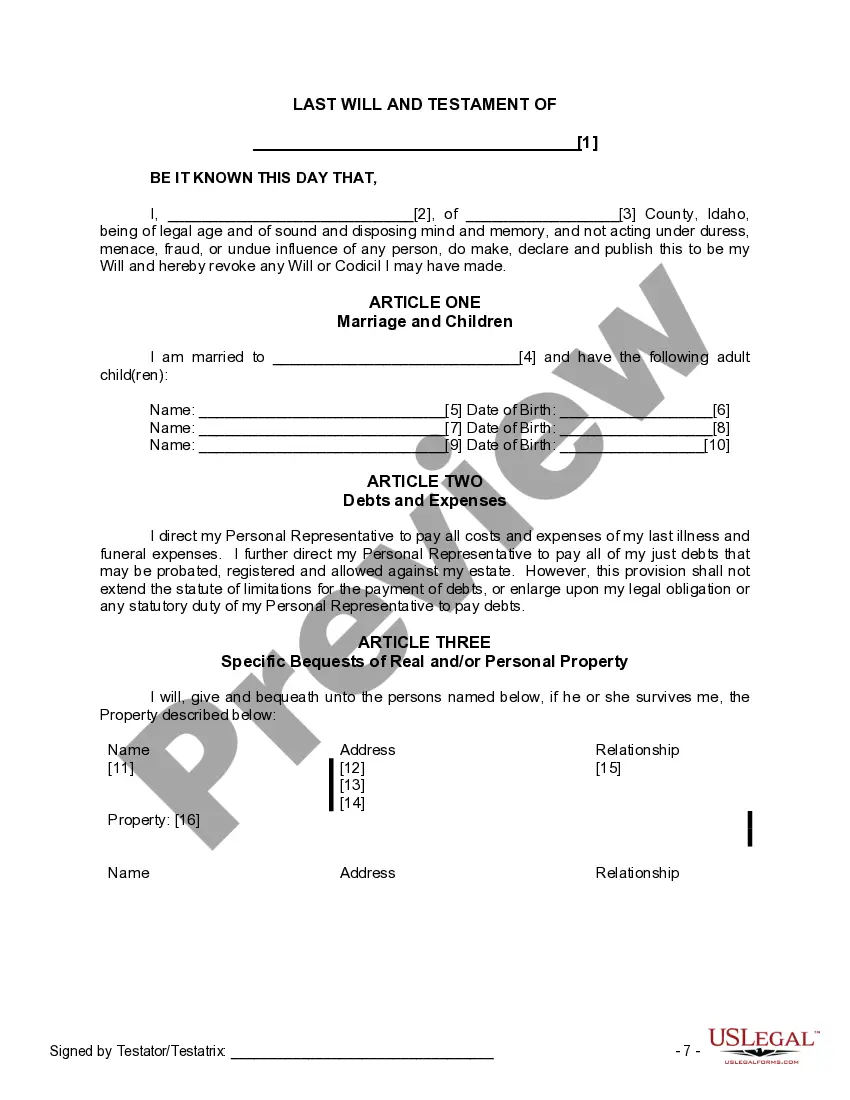
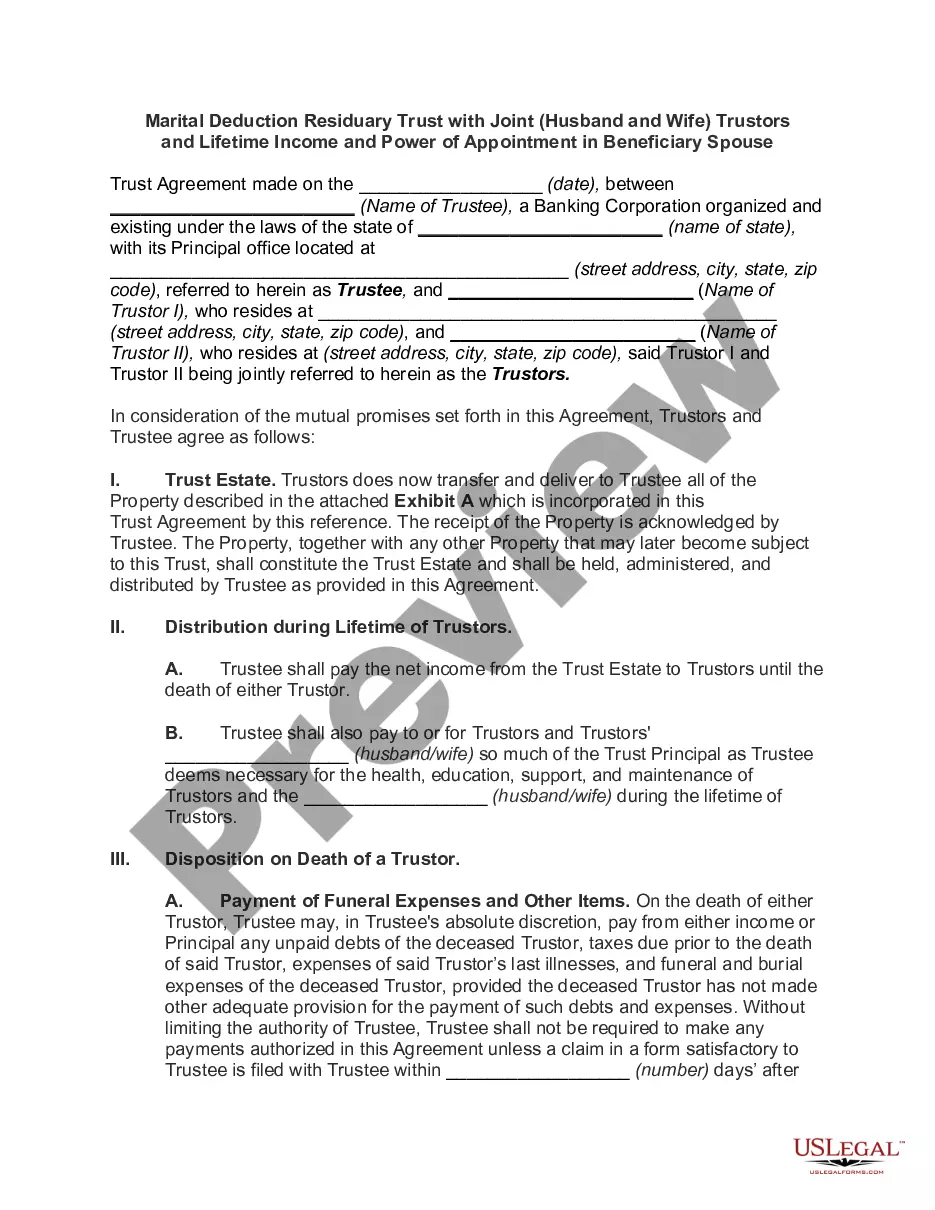
The Mutual Wills Package with Last Wills and Testaments is a specialized legal document designed for married couples with adult children. This package includes two individual wills, one for each spouse, allowing them to outline their wishes regarding the distribution of their property upon death. Unlike standard wills, mutual wills often contain provisions that ensure that one spouse cannot change the terms without the other's consent, thereby providing security for each party's intentions. This forms an essential part of estate planning, especially for couples wishing to ensure that their assets are passed on to their children in line with their collective wishes.
Key components of this form
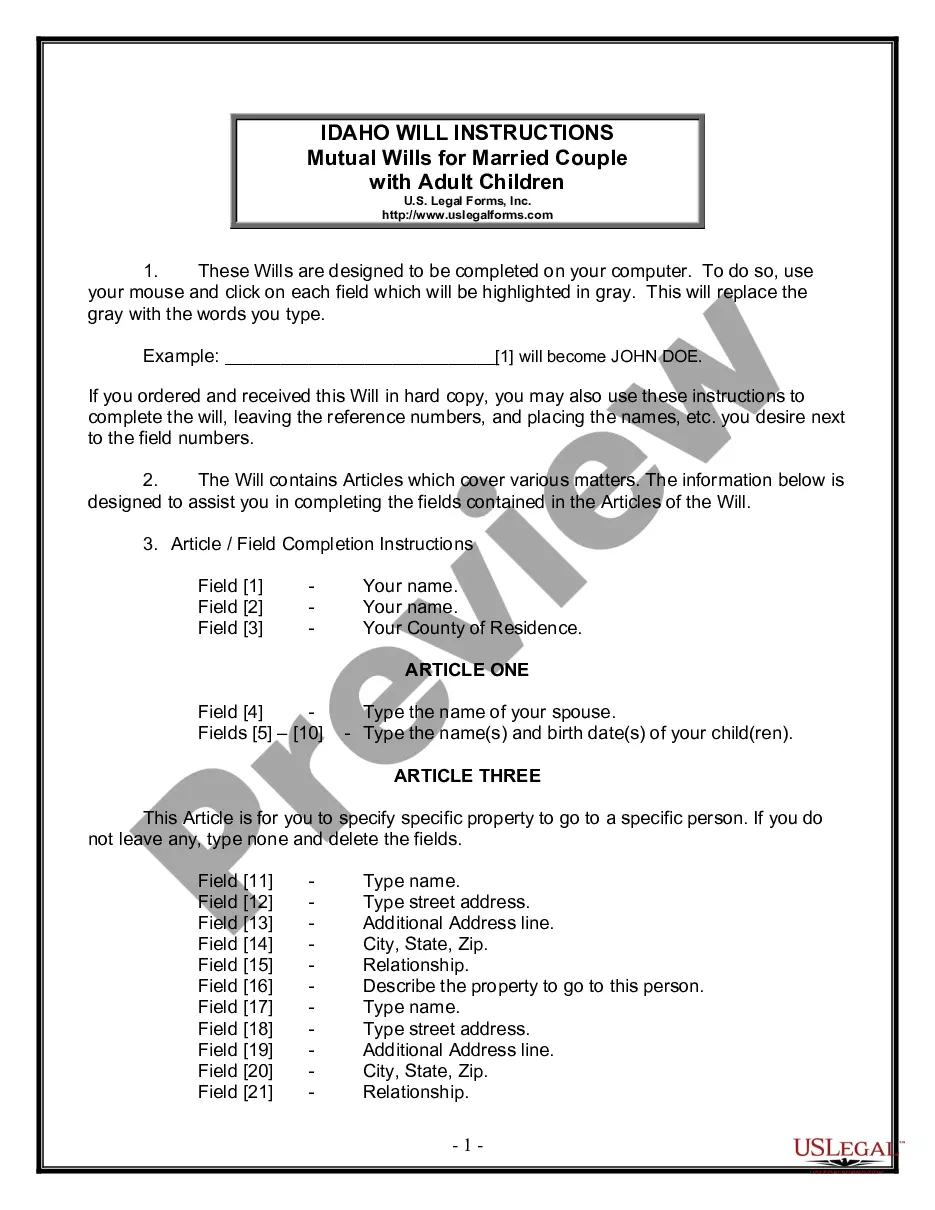
- Personal information for both spouses, including names and county of residence.
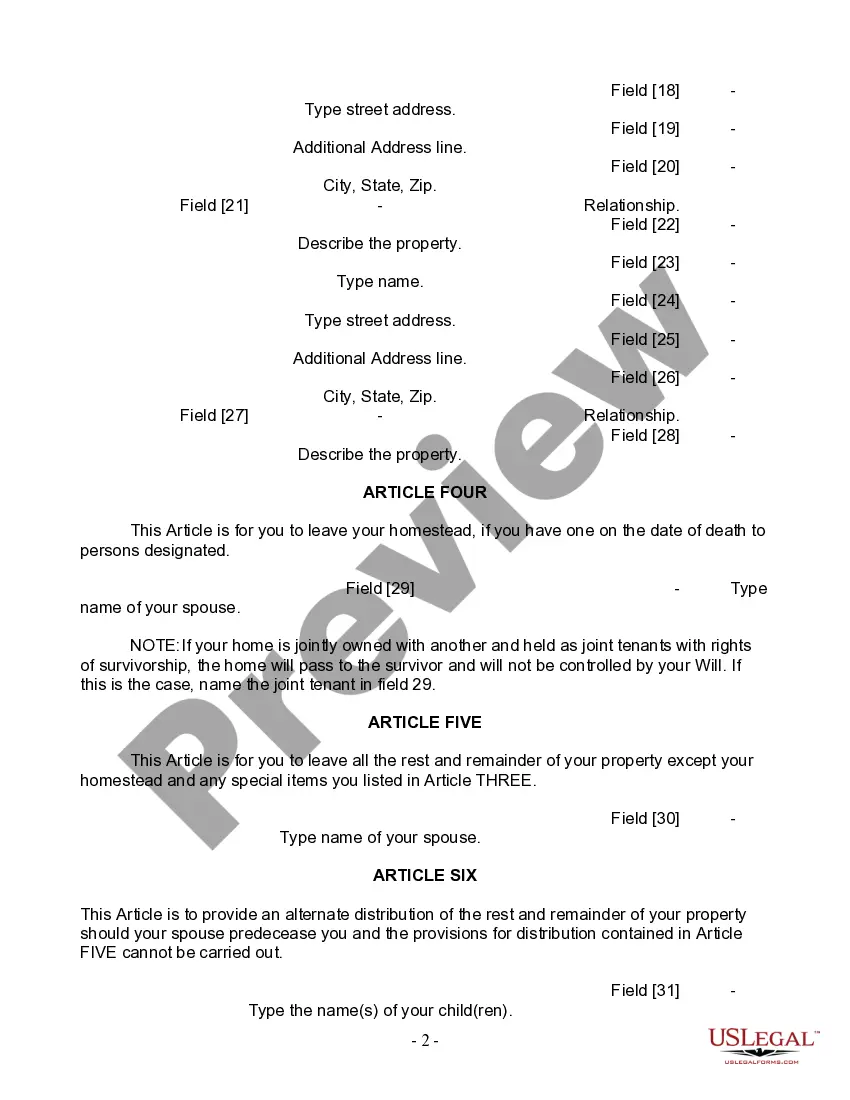
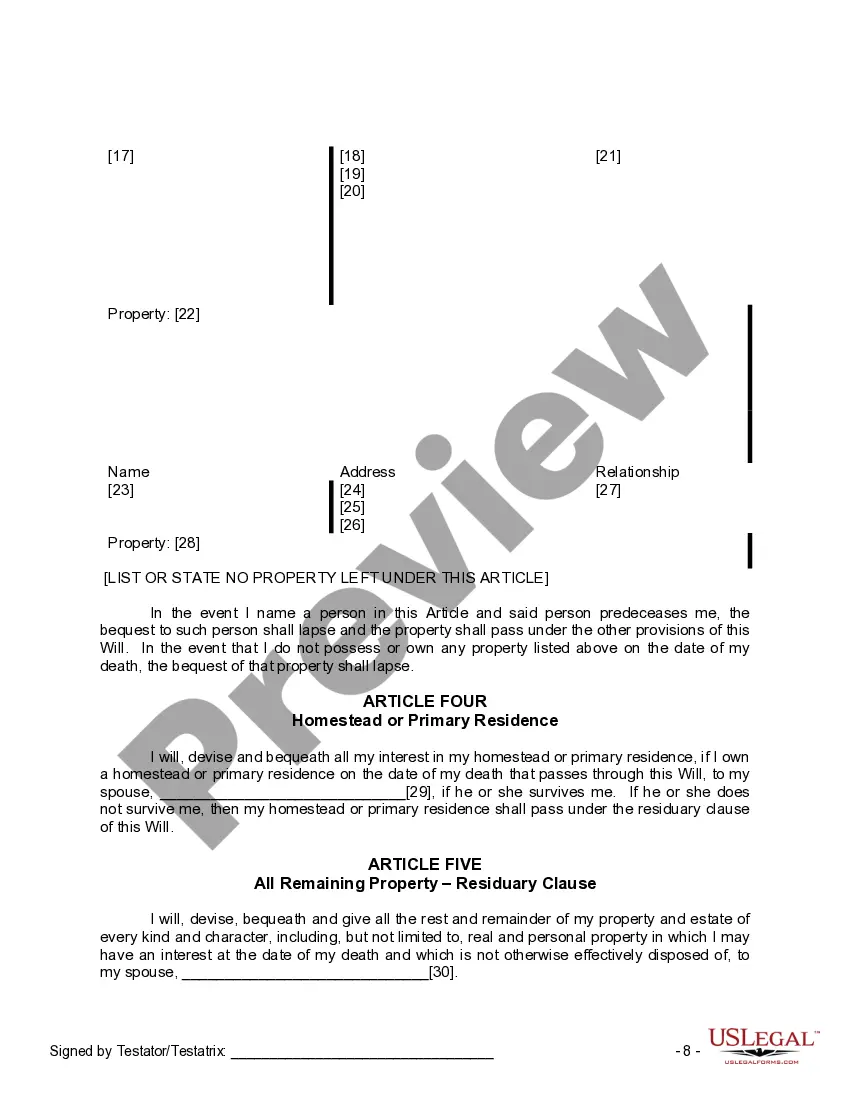
- Specific bequests for property, allowing spouses to designate who receives particular assets.
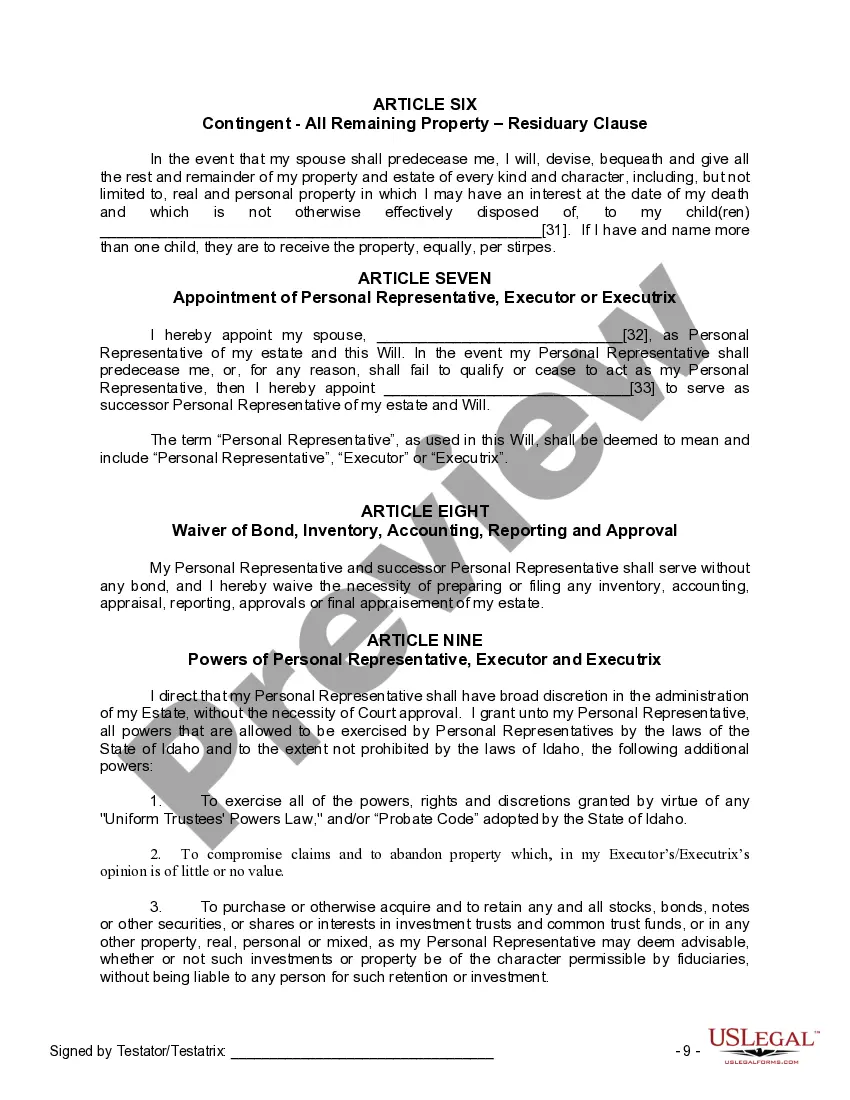
- Provisions for homesteads, detailing who inherits the primary residence.
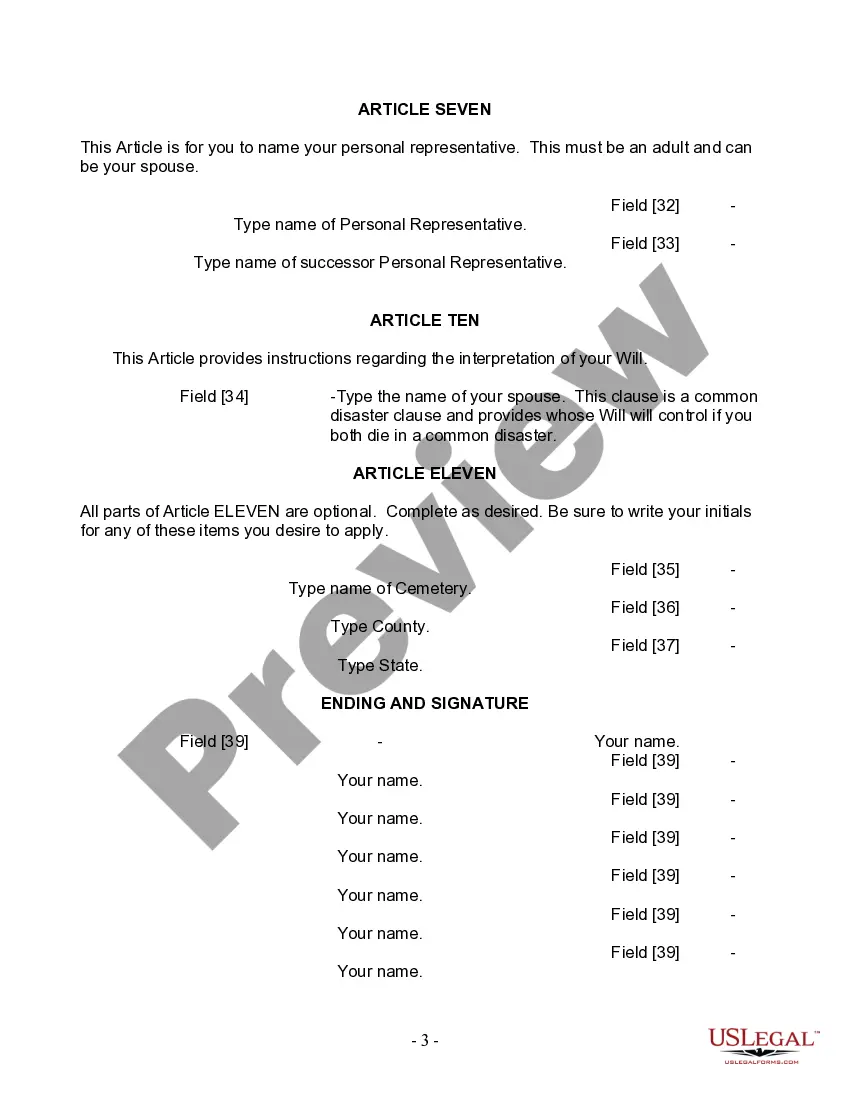
- Appointment of a personal representative or executor to administer the estate.
- Instructions for signing and executing the wills in the presence of witnesses.




When to use this document
You should use the Mutual Wills Package when you and your spouse wish to create a legal agreement regarding your estate distribution that protects both your interests and those of your adult children. This form is ideal in situations where couples want to ensure their assets are managed consistent with their shared wishes, particularly in the event of the death of either spouse. It is also useful when couples have specific items they wish to leave to certain individuals and want to avoid conflicts that can arise from traditional wills.
Intended users of this form
- Married couples with adult children who want a clear and mutual estate plan.
- Individuals looking for a legally binding way to express their wishes for property distribution post-death.
- Couples who wish to prevent any unilateral changes to their wills that one spouse might make without the other's agreement.
Steps to complete this form
- Provide personal information for each spouse, including names and counties of residence.
- Specify any bequests in Article Three, identifying who will receive particular properties.
- Designate your spouse as the primary beneficiary for your homestead and the remainder of your property.
- Appoint a personal representative or executor to manage your estate after death.
- Ensure the wills are signed in the presence of two witnesses, who are not related to either party.
Does this document require notarization?
This form needs to be notarized to ensure legal validity. US Legal Forms provides secure online notarization powered by Notarize, allowing you to complete the process through a verified video call, available anytime.
Get your form ready online
Our built-in tools help you complete, sign, share, and store your documents in one place.
Make edits, fill in missing information, and update formatting in US Legal Forms—just like you would in MS Word.
Download a copy, print it, send it by email, or mail it via USPS—whatever works best for your next step.
Sign and collect signatures with our SignNow integration. Send to multiple recipients, set reminders, and more. Go Premium to unlock E-Sign.
If this form requires notarization, complete it online through a secure video call—no need to meet a notary in person or wait for an appointment.
We protect your documents and personal data by following strict security and privacy standards.

Make edits, fill in missing information, and update formatting in US Legal Forms—just like you would in MS Word.

Download a copy, print it, send it by email, or mail it via USPS—whatever works best for your next step.

Sign and collect signatures with our SignNow integration. Send to multiple recipients, set reminders, and more. Go Premium to unlock E-Sign.

If this form requires notarization, complete it online through a secure video call—no need to meet a notary in person or wait for an appointment.

We protect your documents and personal data by following strict security and privacy standards.
Avoid these common issues
- Failing to sign the wills in front of the required witnesses, which can render the wills invalid.
- Not specifying particular bequests, leading to confusion and potential disputes among heirs.
- Neglecting to update the wills after major life changes, such as the birth of additional children or changes in property ownership.
Benefits of completing this form online
- Convenient access to legal document templates from anywhere, anytime.
- Edit and tailor the documents according to your specific wishes.
- Secure storage of your legal forms and easy access for future updates or reviews.
Legal use & context
- The form creates a legally binding agreement on asset distribution for both spouses.
- Enforces the decedent's wishes regarding property allocation and personal representatives.
- Can help avoid family disputes and provide clarity regarding the deceased's intent.
- Must comply with relevant state laws to remain enforceable.
Main things to remember
- The Mutual Wills Package is essential for married couples with adult children seeking to establish a legally binding estate plan.
- Proper execution, including witness signatures and notarization, is crucial for legal validity.
- Using this form can reduce the likelihood of conflicts among heirs and ensure your wishes are respected.
Looking for another form?
Form popularity
FAQ
When one spouse dies, the will typically remains valid, governing the distribution of assets as stated within its terms. The surviving spouse may either continue executing the terms of the will or choose to create a new will that reflects any updated wishes. Utilizing the Idaho Mutual Wills Package with Last Wills and Testaments for Married Couple with Adult Children can streamline this process, providing a clearer framework for couples during difficult times.
A joint will is a single will that's signed by two people, usually a married couple, leaving all their assets to each other.If you're an executor, the good news is that you're unlikely to have to deal with a joint will, because these days they're very seldom used.
As mutual wills are binding, the key purpose of such wills is to ensure that property flows to intended, agreed, beneficiaries. They are generally used to ensure that a testator's property can be enjoyed by another during his or her lifetime, but then passes to a third party, the 'ultimate beneficiary.
As soon as one of the parties to that agreement dies, it becomes impossible for the remaining parties to alter their mutual Wills.
The mutual wills can be revoked during the lifetimes of both testators, but, on the first death, the survivor is prevented from making a new will in the future.
Mutual wills are a common estate planning tool. Typically, a couple agrees to leave all or most of their estate to the surviving spouse, who then agrees to provide irrevocable gifts over to children.it must include an agreement not to revoke the wills.
The doctrine of mutual Wills does not theoretically take away the ability to make a new Will revoking the mutual Will.So the practical effect is that a mutual Will is only revocable in accordance with the agreement (if at all).
The court recognises that all Wills can be revoked but in the case of mutual Wills, equity will protect and enforce the interests created by the agreement for the benefit of the beneficiaries.