Idaho Last Will and Testament for a Married Person with No Children
What this document covers
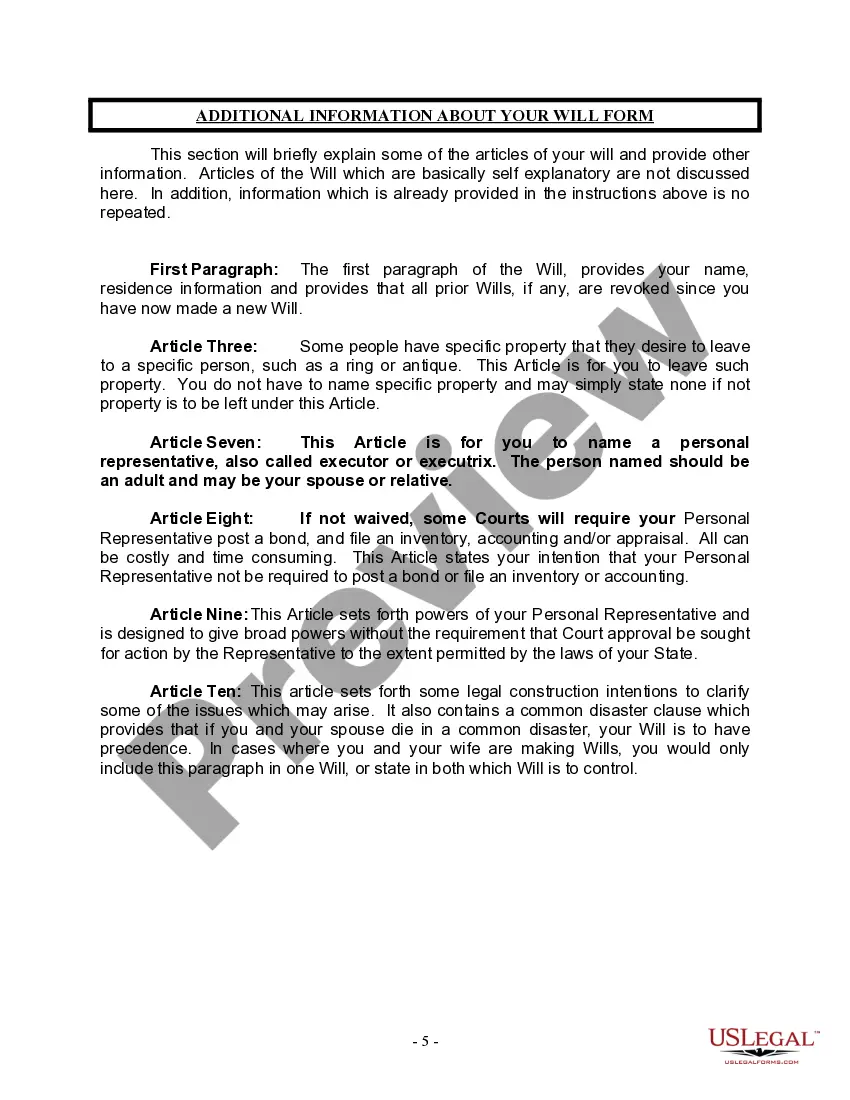
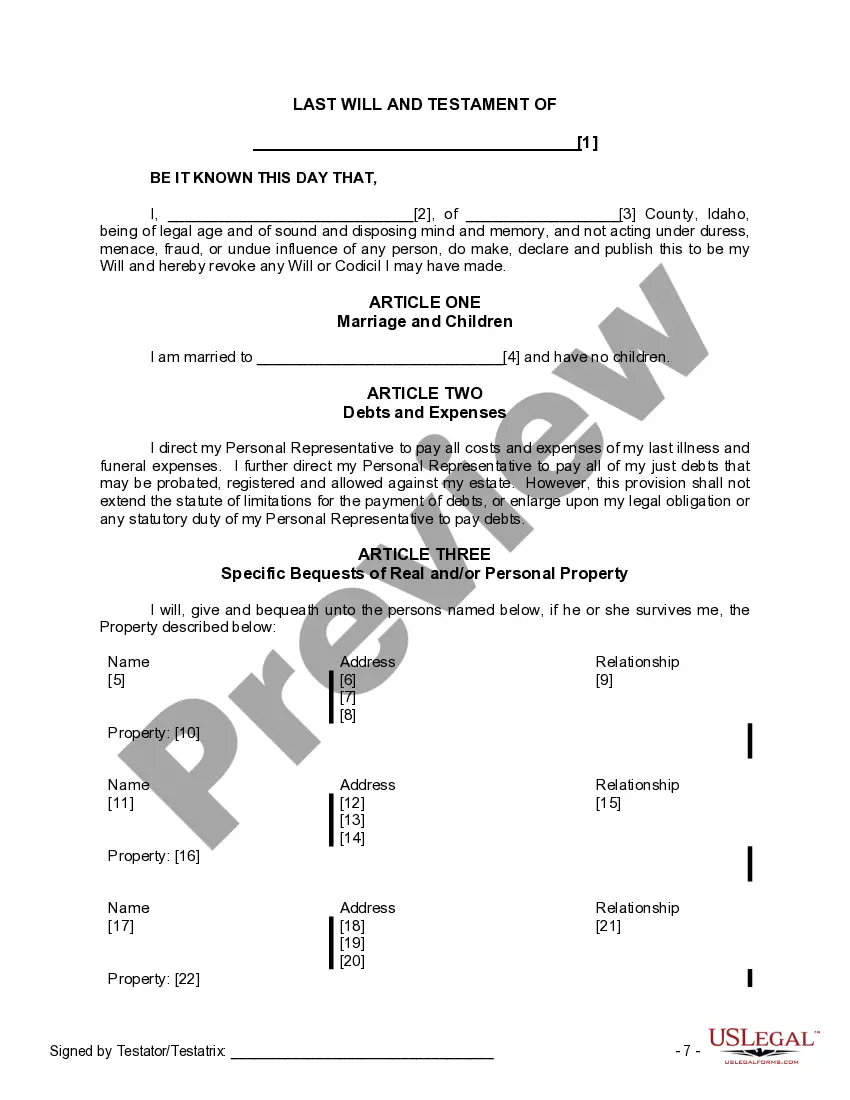
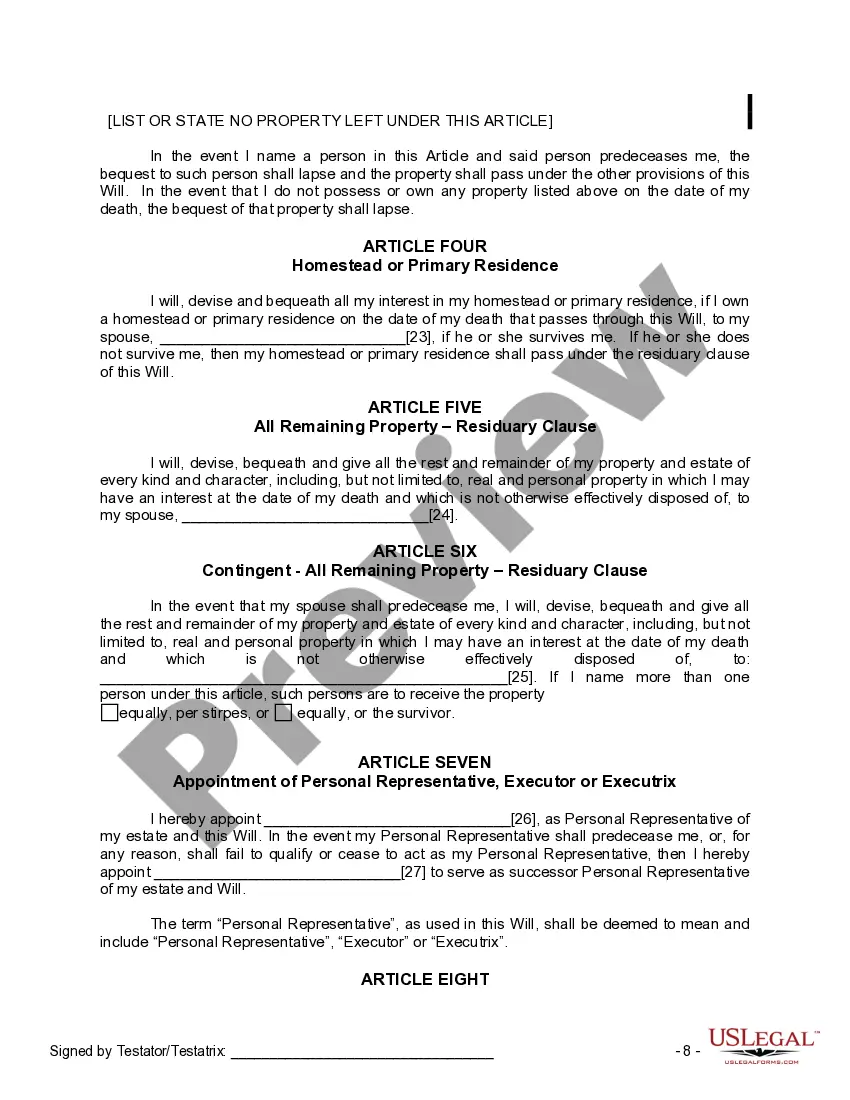
The Last Will and Testament for a Married Person with No Children is a legal document that outlines how a married individual wishes to distribute their assets upon passing. Unlike other wills, this form is specifically tailored for individuals who are married and do not have children. It appoints a personal representative, details property distribution, and ensures that the spouse is provided for, addressing unique circumstances of childless couples.
Main sections of this form
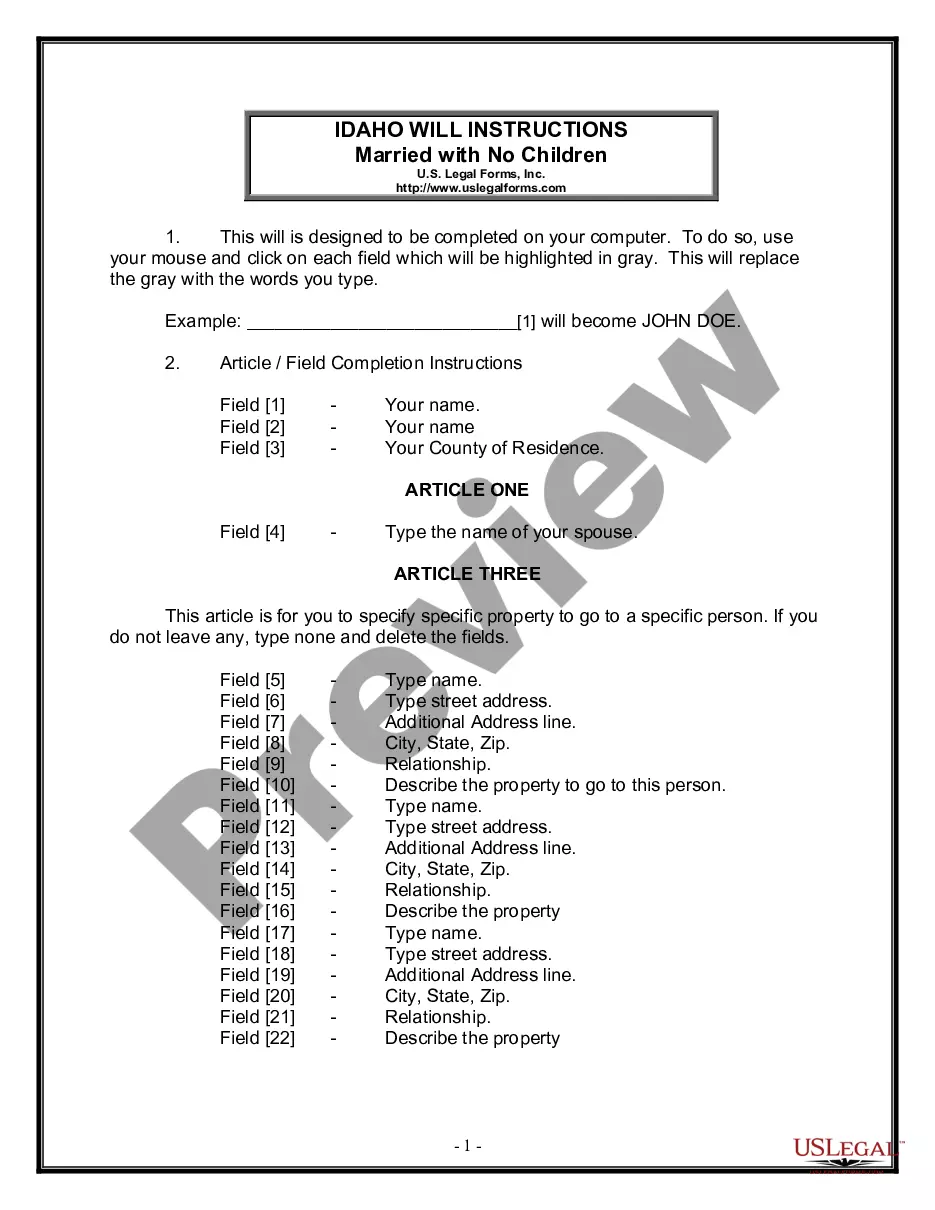
- Personal details: The will requires your full name and county of residence.
- Designation of spouse: It includes a section to name your spouse explicitly.
- Specific bequests: You can allocate specific property to designated individuals if desired.
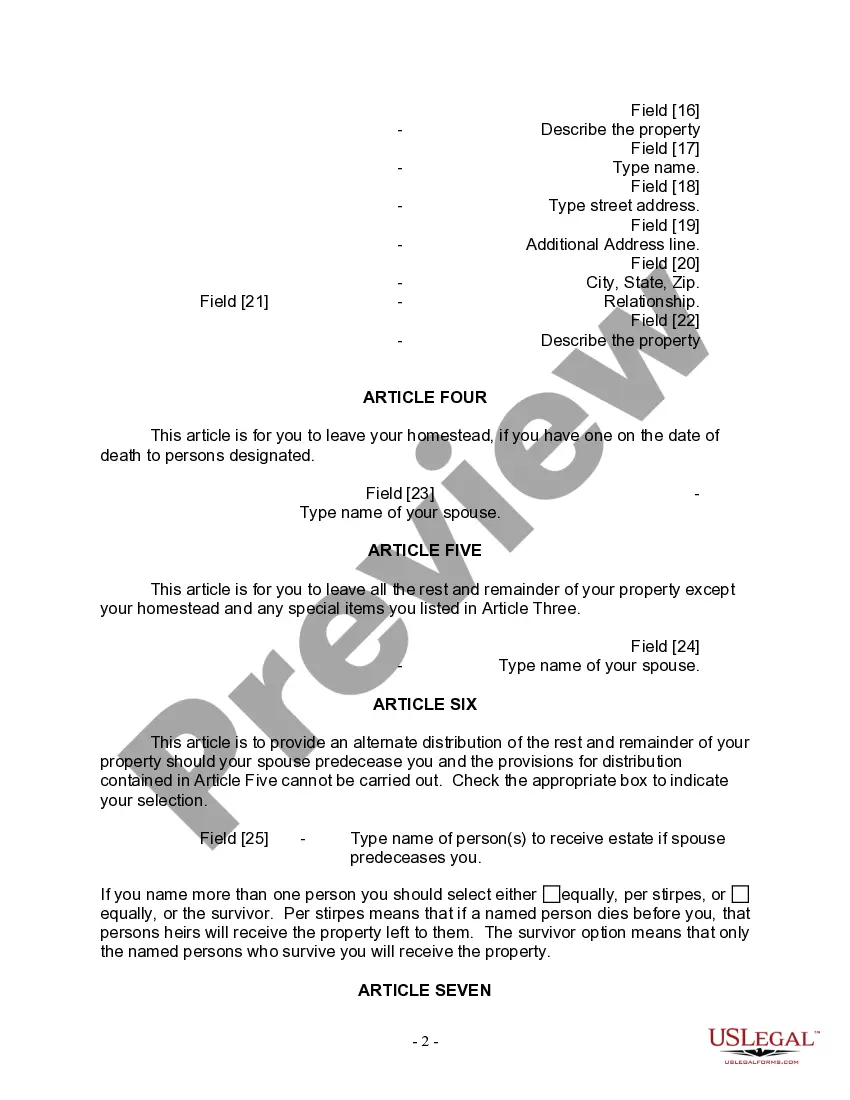
- Disposal of homestead: Provisions for passing your primary residence are included.
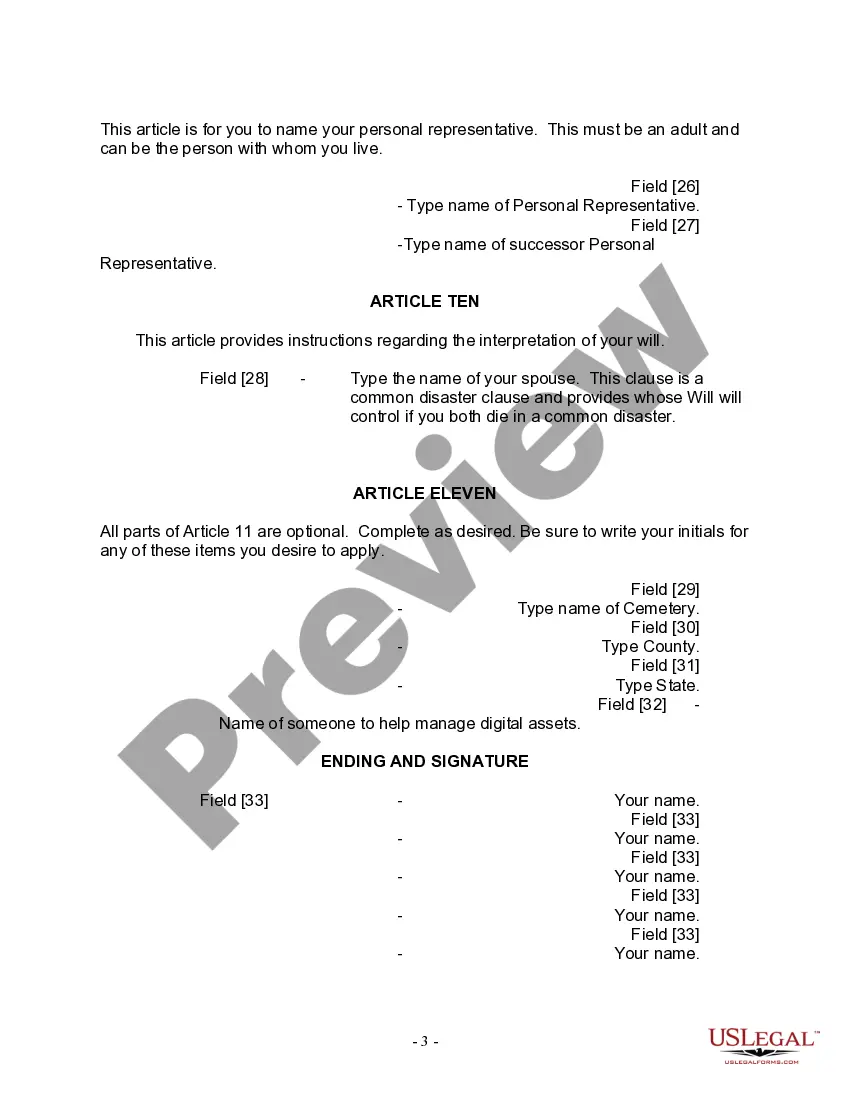
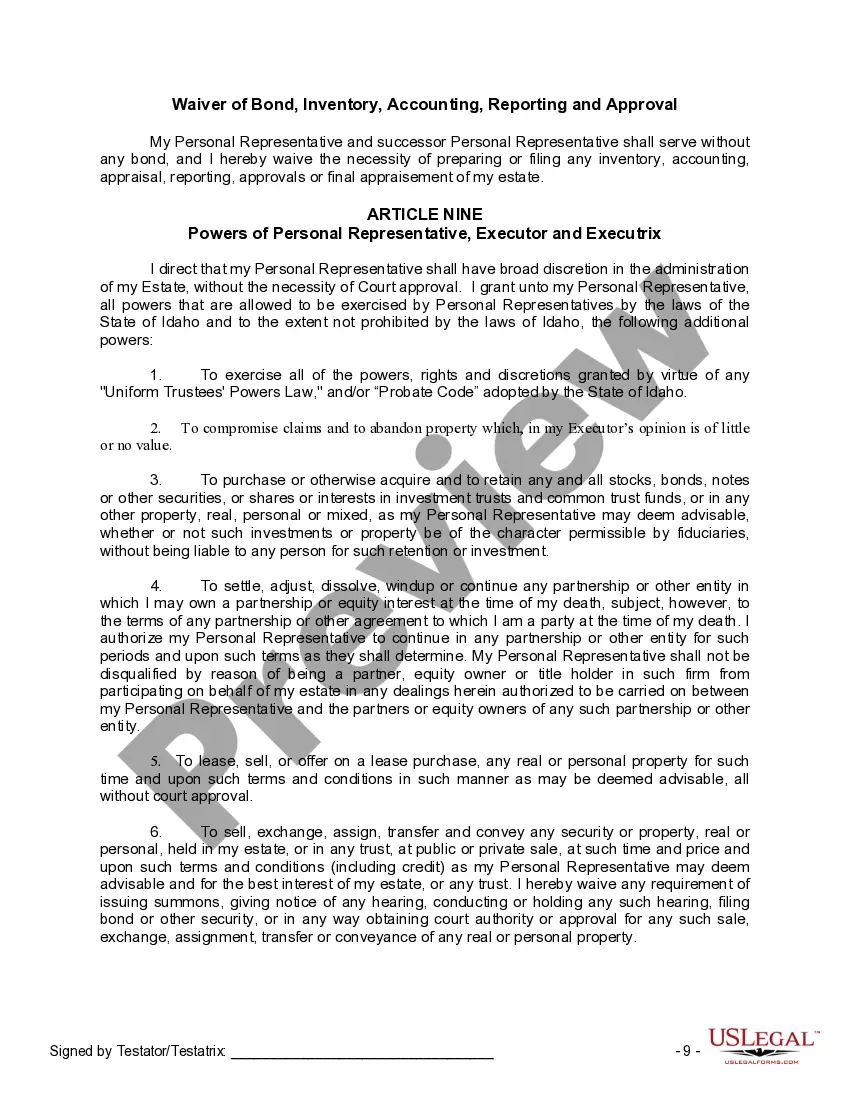
- Designation of personal representative: Appoint someone to manage your estate after death.
- Self-proving affidavit: Includes options for simplifying the probate process.






Common use cases
This form is essential when a married individual without children wishes to ensure their assets are properly distributed after death. It is particularly useful for those who want to clarify their wishes, avoid intestacy laws, and provide for their spouse after their passing. If you own significant assets or wish to specify certain property distributions, using this will is highly recommended.
Who should use this form
- Married individuals with no children.
- Persons wanting to designate specific bequests to family members or friends.
- Individuals interested in simplifying the probate process for their spouse.
- Anyone looking to revoke previous wills and create a new testament.
Instructions for completing this form
- Enter your full name and county of residence at the top of the document.
- Specify your spouse's name and indicate any specific property allocations in the designated sections.
- Complete sections that provide for your homestead and any additional property.
- Designate your personal representative who will manage your estate.
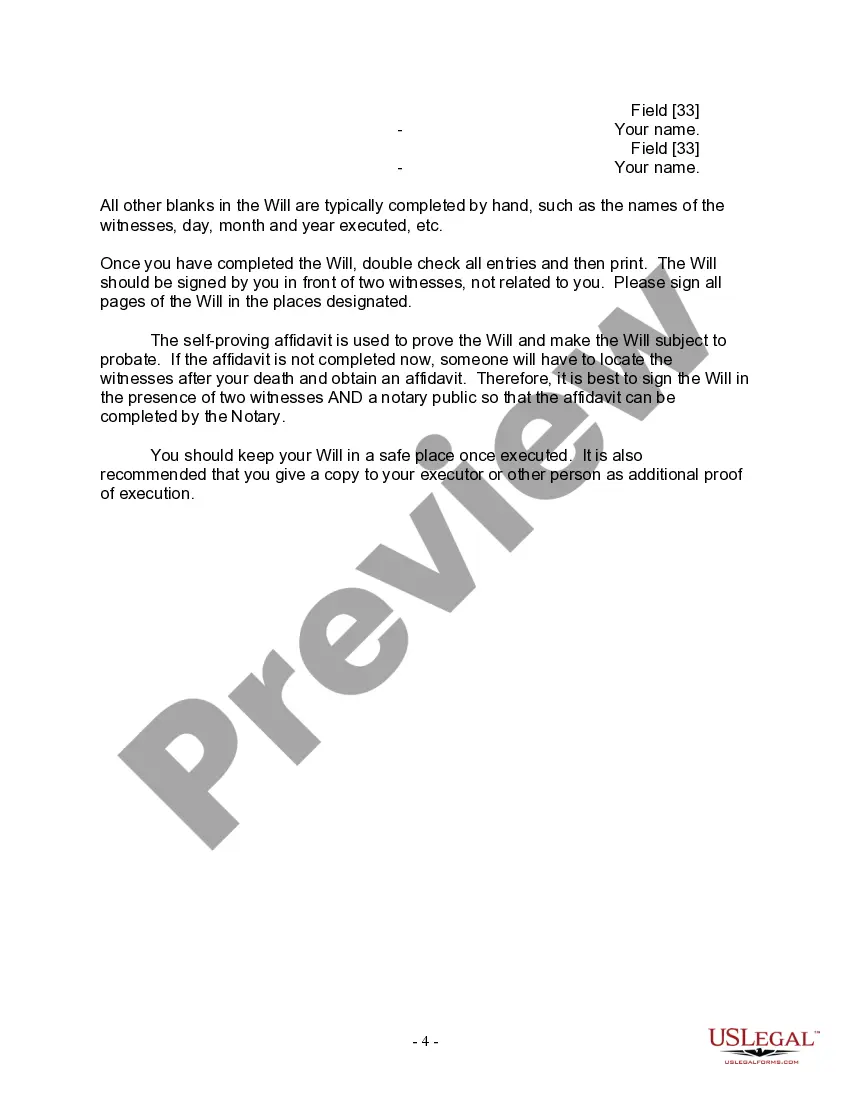
- Print the form and sign it in the presence of two witnesses, ensuring none are related to you or named in the will.
- If applicable, complete the self-proving affidavit to facilitate the probate process.
Notarization requirements for this form
This form must be notarized to be legally valid. US Legal Forms provides secure online notarization powered by Notarize, allowing you to complete the process through a verified video call.
Get your form ready online
Our built-in tools help you complete, sign, share, and store your documents in one place.
Make edits, fill in missing information, and update formatting in US Legal Forms—just like you would in MS Word.
Download a copy, print it, send it by email, or mail it via USPS—whatever works best for your next step.
Sign and collect signatures with our SignNow integration. Send to multiple recipients, set reminders, and more. Go Premium to unlock E-Sign.
If this form requires notarization, complete it online through a secure video call—no need to meet a notary in person or wait for an appointment.
We protect your documents and personal data by following strict security and privacy standards.

Make edits, fill in missing information, and update formatting in US Legal Forms—just like you would in MS Word.

Download a copy, print it, send it by email, or mail it via USPS—whatever works best for your next step.

Sign and collect signatures with our SignNow integration. Send to multiple recipients, set reminders, and more. Go Premium to unlock E-Sign.

If this form requires notarization, complete it online through a secure video call—no need to meet a notary in person or wait for an appointment.

We protect your documents and personal data by following strict security and privacy standards.
Common mistakes
- Failing to sign the will in the presence of two witnesses.
- Not specifying alternate beneficiaries if the primary beneficiary predeceases you.
- Overlooking the self-proving affidavit, which can complicate the probate process.
- Leaving out important personal details, such as your county of residence.
Why use this form online
- Convenient: Complete the form at your own pace from the comfort of home.
- Editability: Easily make changes and updates as your circumstances change.
- Reliable: Drafted by licensed attorneys to ensure compliance with legal standards.
Legal use & context
- This will functions as a formal declaration of your wishes regarding asset distribution.
- It is legally binding when executed properly, including the required witness signatures.
- The self-proving affidavit can simplify the probate process by eliminating the need to locate witnesses after your passing.
Main things to remember
- This form is specifically designed for married individuals with no children.
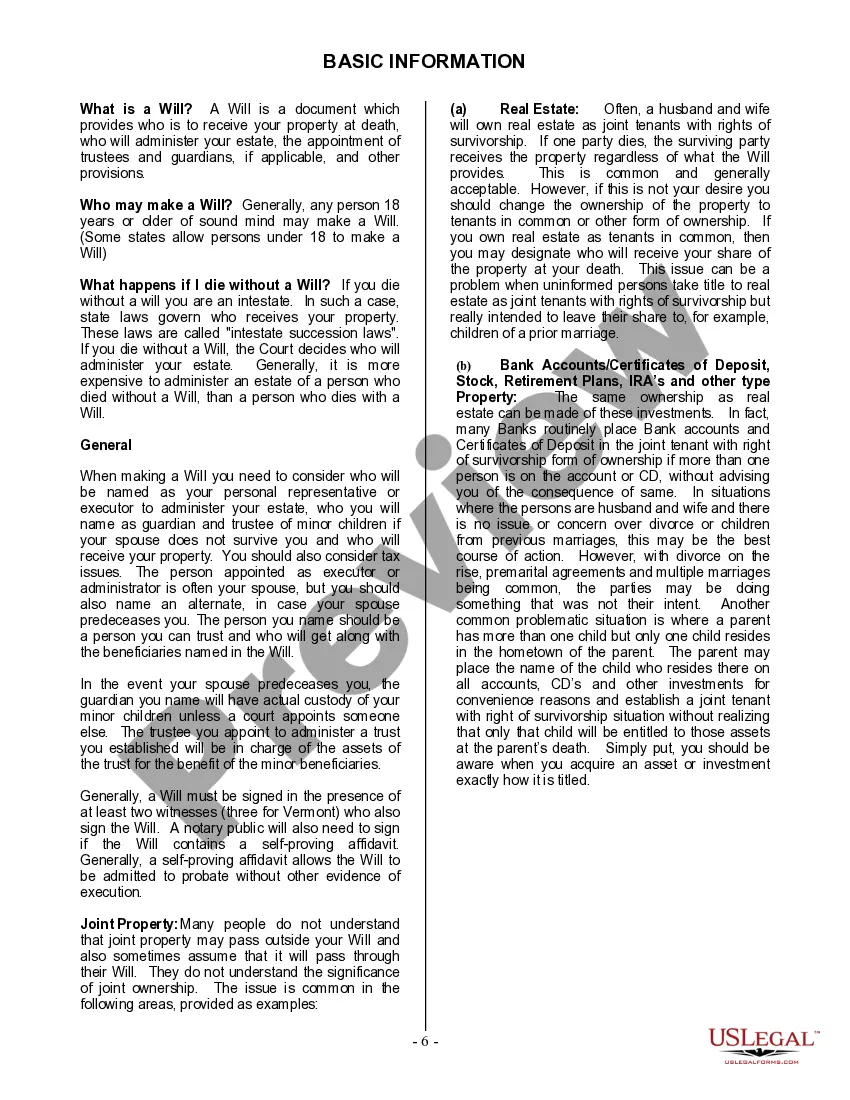
- Completing a Last Will and Testament is crucial to avoid intestacy laws.
- Follow the necessary steps for execution, including notarization, to ensure its validity.
- Utilizing an online service can provide convenience and reliability in drafting your will.
Looking for another form?
Form popularity
FAQ
If there is no surviving spouse and no descendants, then the intestacy law usually dictates that the property is to be distributed to the closest living relative, based upon the Table of Consanguinity.When a person dies intestate and without heirs, then the property could escheat to the state.
When creating a Will, you have the right to give your assets or property to whomever you choose. A person or organization you leave your assets to is known as a beneficiary. You can name any person, family member, friend, organization, or institution as a beneficiary.
Bank accounts. Brokerage or investment accounts. Retirement accounts and pension plans. A life insurance policy.
Making one will for two people is usually not advisable because it's irrevocable after the first spouse's death.Even though married couples often have the same goals in mind when making their estate plan, most attorneys advise against joint wills.