Idaho Last Will and Testament for Married person with Adult Children
About this form
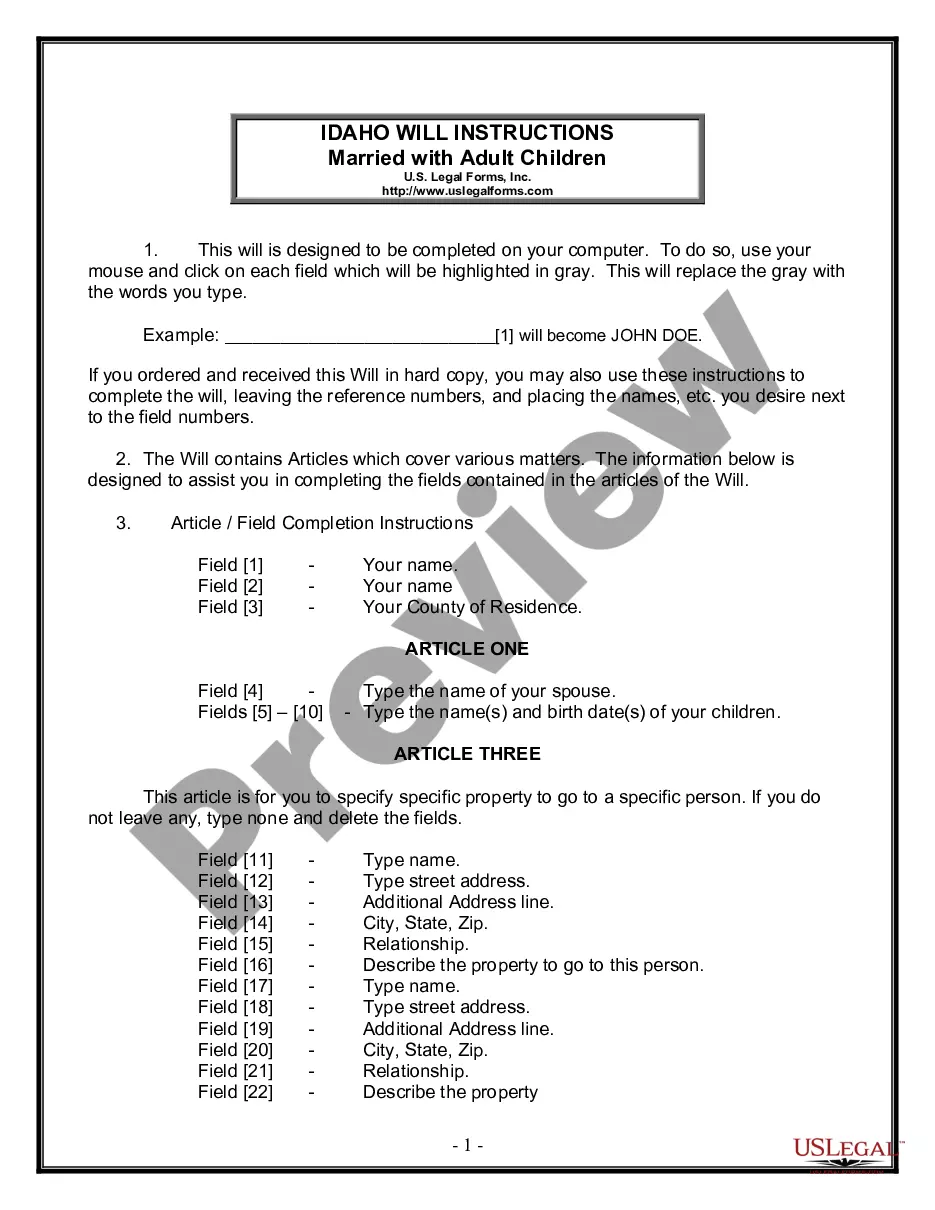
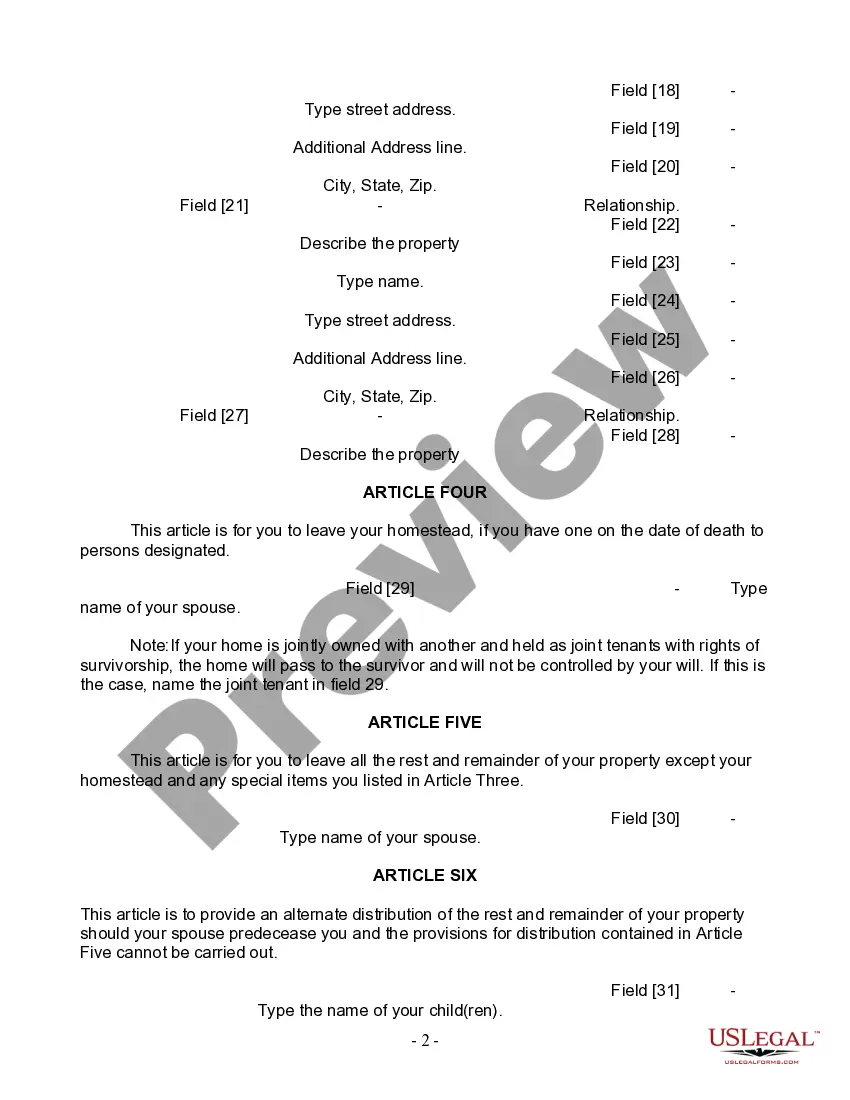
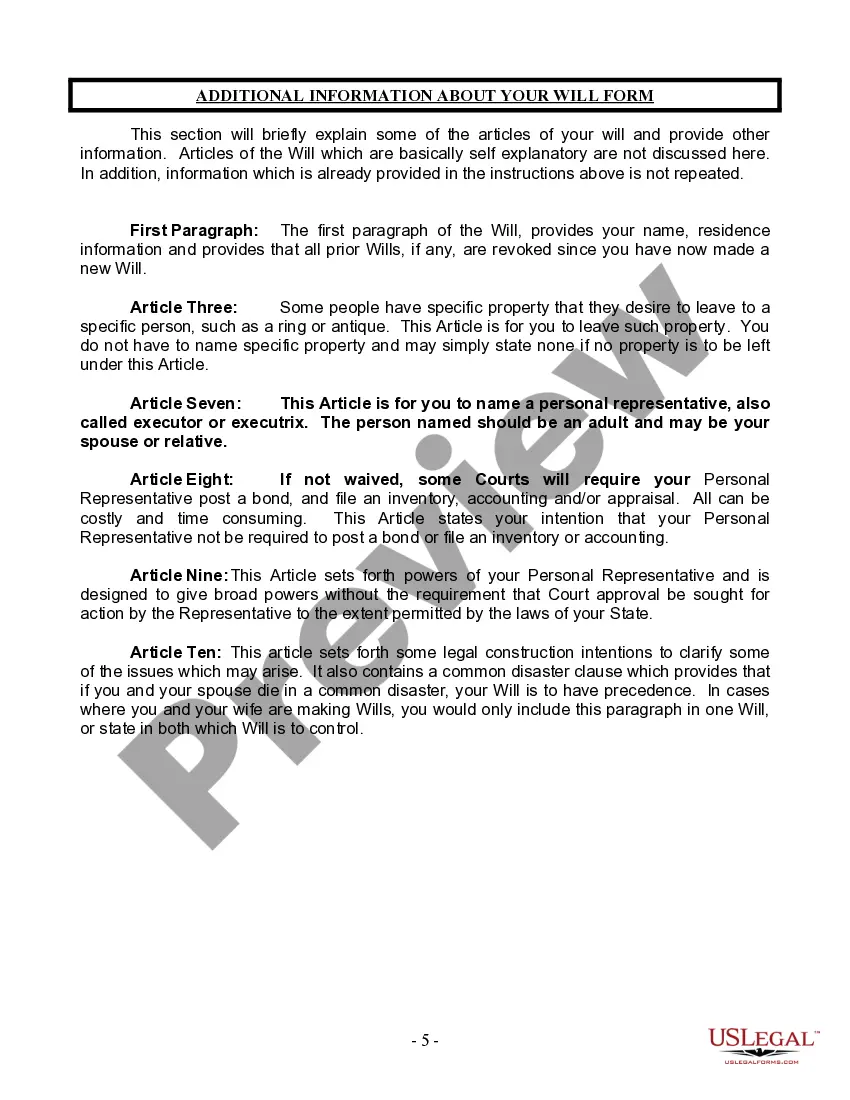
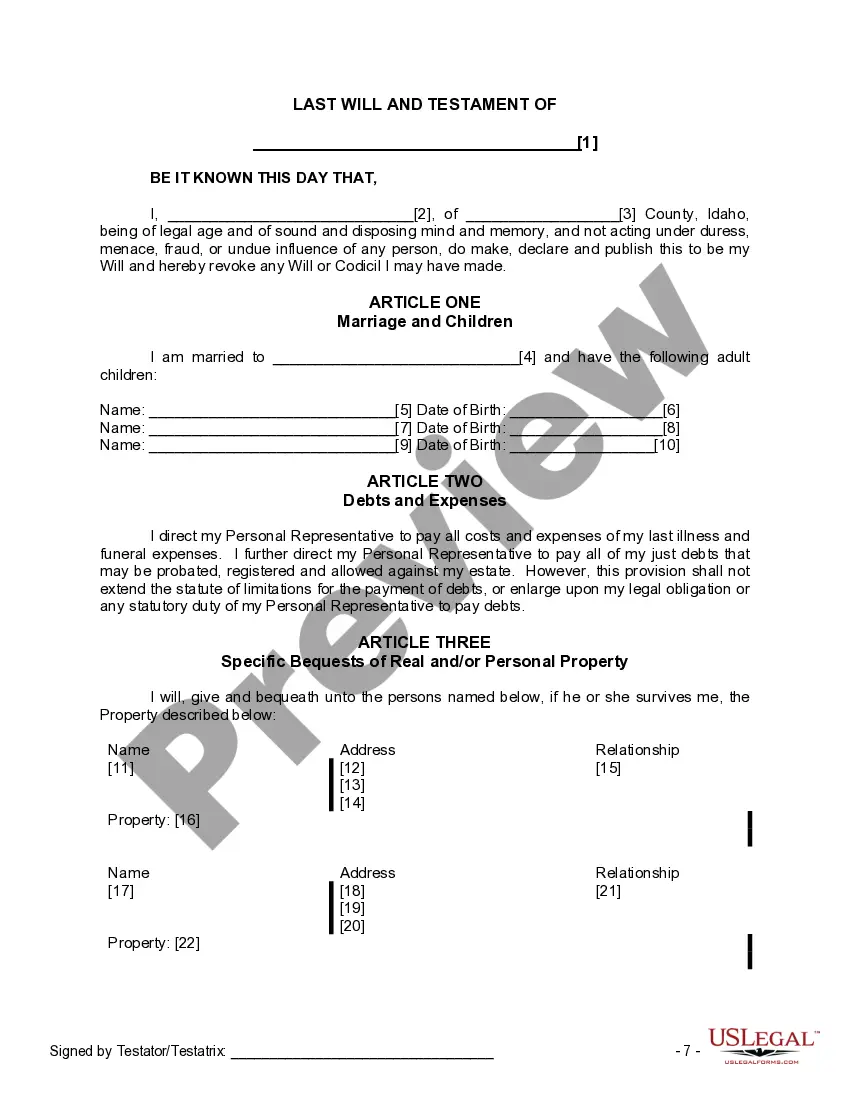
This Last Will and Testament for a married person with adult children is a legal document that specifies how you want your assets to be distributed after your death. Unlike other wills, this document takes into account your marriage and existing adult children, ensuring their interests are clearly addressed. It provides structure for appointing a personal representative, designating beneficiaries, and addressing specific bequests, making it distinct from general wills.
Form components explained
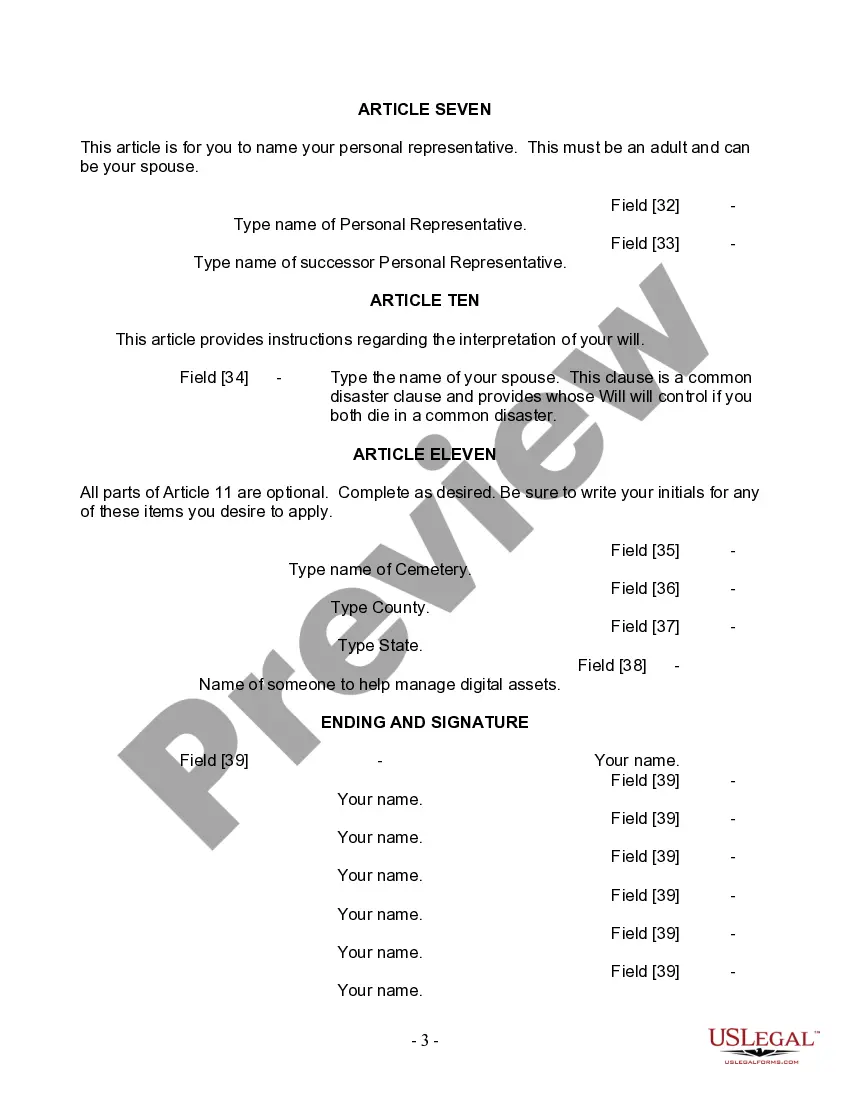
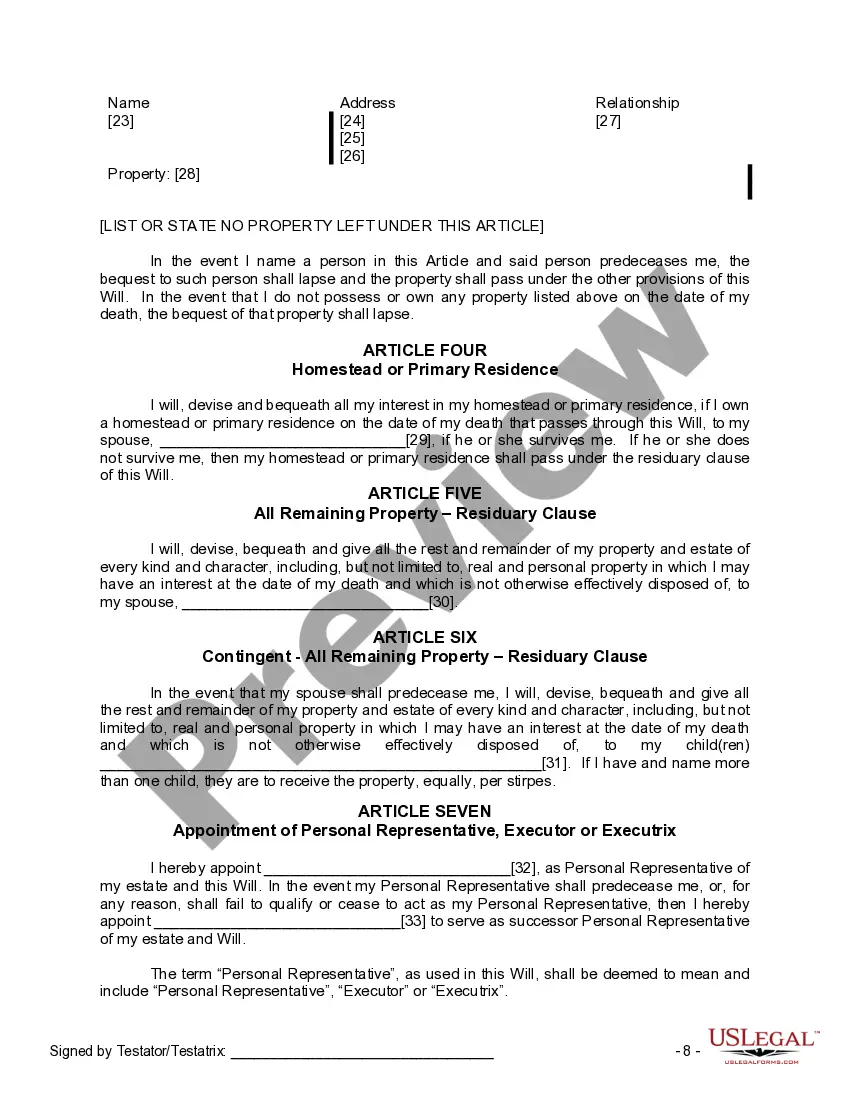
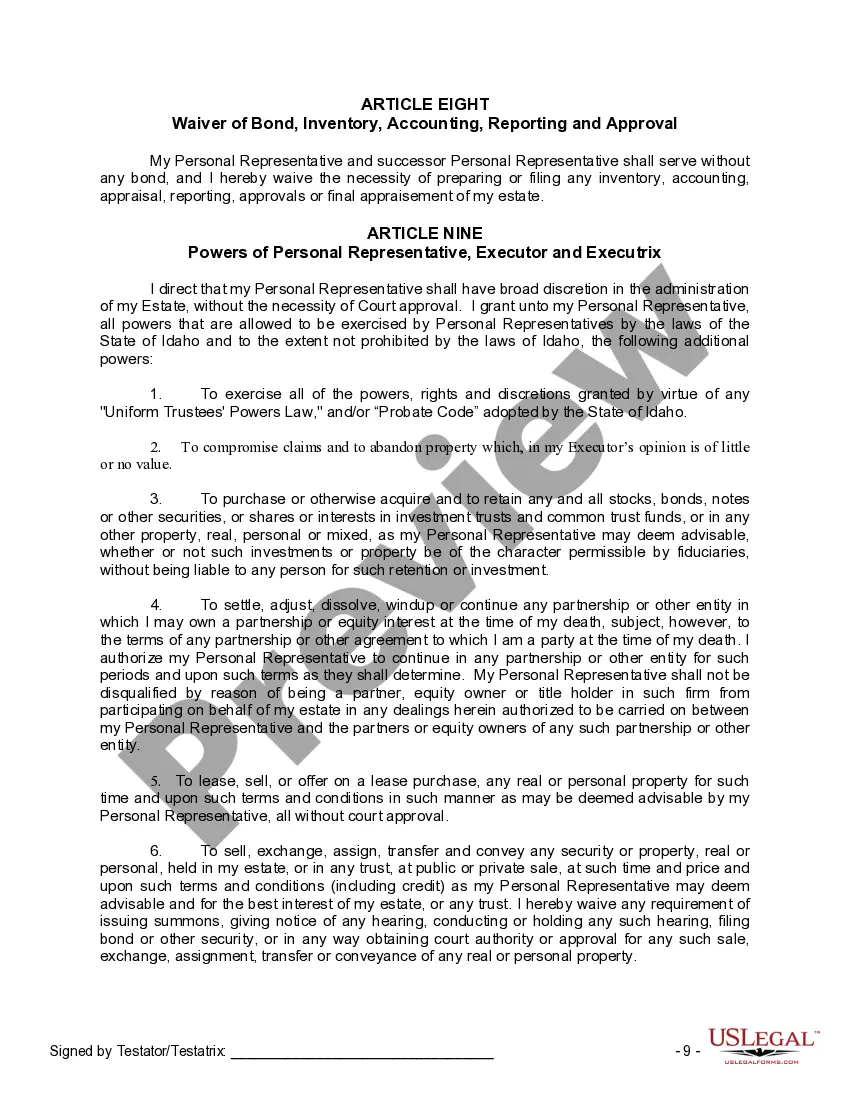
- Appointment of a personal representative to manage the estate.
- Specification of beneficiaries, including your spouse and adult children.
- Provisions for specific property bequests to designated individuals.
- Details on the distribution of your homestead or primary residence.
- Clauses addressing debts, expenses, and the executor's powers.
- Optional provisions for funeral arrangements and other personal wishes.





When to use this form
This form should be used when a married individual with adult children wants to ensure that their wishes regarding asset distribution are clearly documented. It's important when you want to avoid intestate succession laws, where the state decides how your assets are distributed if you die without a will. Additionally, this form is suited for those who wish to make special provisions for their spouse and adult children, protecting their interests in estate matters.
Who can use this document
- Married individuals with adult children.
- Persons seeking to clearly define asset distribution after death.
- Those who wish to appoint a personal representative for their estate.
- Anyone wanting to specify particular bequests for family or friends.
Steps to complete this form
- Enter your full name and contact information at the beginning of the document.
- Fill in the names and birth dates of your spouse and adult children.
- Designate specific individuals or organizations for any particular bequests of property.
- Clearly state your wishes regarding your homestead or primary residence.
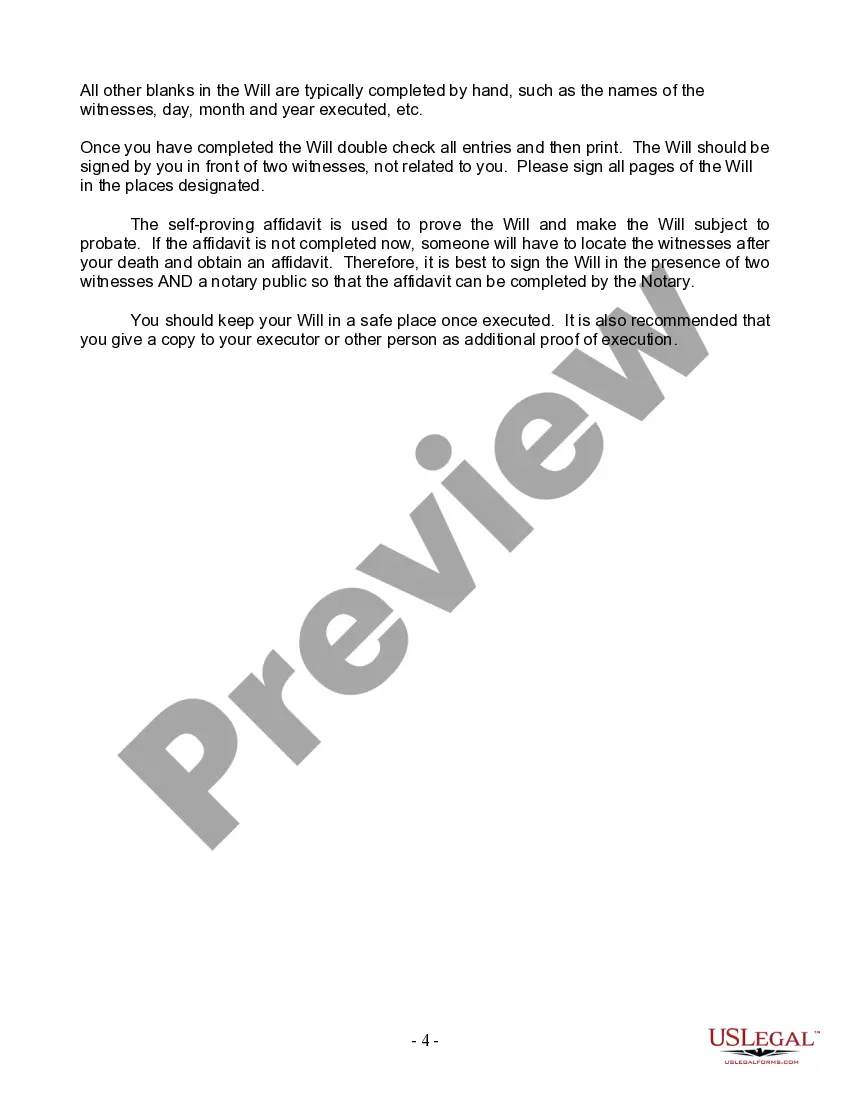
- Sign the will in front of two witnesses who are not named in the document.
- If applicable, have the document notarized to fulfill self-proving requirements.
Notarization requirements for this form
This document requires notarization to meet legal standards. US Legal Forms provides secure online notarization powered by Notarize, allowing you to complete the process through a verified video call, available 24/7.
Get your form ready online
Our built-in tools help you complete, sign, share, and store your documents in one place.
Make edits, fill in missing information, and update formatting in US Legal Forms—just like you would in MS Word.
Download a copy, print it, send it by email, or mail it via USPS—whatever works best for your next step.
Sign and collect signatures with our SignNow integration. Send to multiple recipients, set reminders, and more. Go Premium to unlock E-Sign.
If this form requires notarization, complete it online through a secure video call—no need to meet a notary in person or wait for an appointment.
We protect your documents and personal data by following strict security and privacy standards.

Make edits, fill in missing information, and update formatting in US Legal Forms—just like you would in MS Word.

Download a copy, print it, send it by email, or mail it via USPS—whatever works best for your next step.

Sign and collect signatures with our SignNow integration. Send to multiple recipients, set reminders, and more. Go Premium to unlock E-Sign.

If this form requires notarization, complete it online through a secure video call—no need to meet a notary in person or wait for an appointment.

We protect your documents and personal data by following strict security and privacy standards.
Typical mistakes to avoid
- Failing to sign the will in front of the required number of witnesses.
- Not specifying how debts and expenses will be paid, leading to confusion.
- Overlooking to name a backup personal representative in case the primary cannot serve.
- Leaving out the self-proving affidavit if allowed by state law, complicating probate.
Benefits of using this form online
- Convenience of filling out the form from home at your own pace.
- Editability to ensure all information is accurate and clear before finalizing.
- Easy access to a comprehensive legal document that can help prevent disputes.
Key takeaways
- This Last Will and Testament form is tailored for married individuals with adult children.
- It outlines asset distribution, appoints an executor, and includes provisions for specific properties.
- Completing the form correctly is crucial to avoid disputes and ensure your wishes are honored.
Looking for another form?

Form popularity
FAQ
An adult can make a valid will without notifying their wife or husband. Not telling a spouse would be unusual, but not illegal.
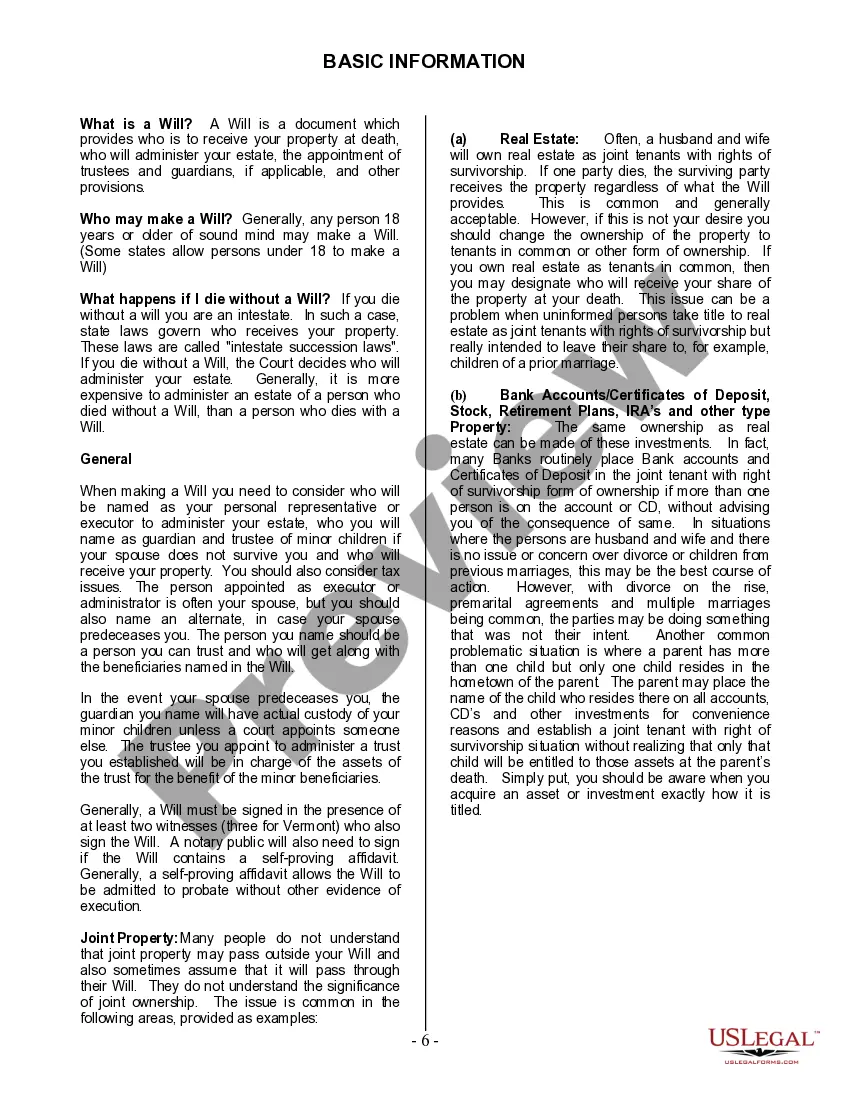
Many married couples own most of their assets jointly with the right of survivorship. When one spouse dies, the surviving spouse automatically receives complete ownership of the property.Since one never knows which spouse will survive the other, it is important that both have a Will.
The decision to draft your own will should be made hesitantly and only after careful consideration. Idaho law recognizes handwritten wills, referred to as holographic wills. Material provisions of the will and the signature must be in the handwriting of the person making the will.
Effect of marriage on your will When you marry, any existing will is automatically revoked (cancelled) and becomes no longer valid. If you do not make a new one, then when you die the law of intestacy decides how your assets are divided. Usually, your entire estate would go to your wife, husband or civil partner.
It is a customary estate planning practice for each spouse to have his or her own will. While some practitioners may draft a joint will for a married couple, it is not recommended. Here are a few reasons why.
If each spouse has their own Will, California law allows them to make new Wills after the divorce has been filed and creating the new Will does not violate the Automatic Temporary Restraining Order (ATRO) against changing beneficiaries, selling assets, etc.
Include personal identifying information. Include a statement about your age and mental status. Designate an executor. Decide who will take care of your children. Choose your beneficiaries. List your funeral details. Sign and date your Last Will and Testament.
No, in Idaho, you do not need to notarize your will to make it legal. However, Idaho allows you to make your will "self-proving" and you'll need to go to a notary if you want to do that. A self-proving will speeds up probate because the court can accept the will without contacting the witnesses who signed it.
No, in Idaho, you do not need to notarize your will to make it legal. However, Idaho allows you to make your will "self-proving" and you'll need to go to a notary if you want to do that. A self-proving will speeds up probate because the court can accept the will without contacting the witnesses who signed it.