Idaho Warranty Deed to Separate Property of One Spouse to Both Spouses as Joint Tenants
About this form
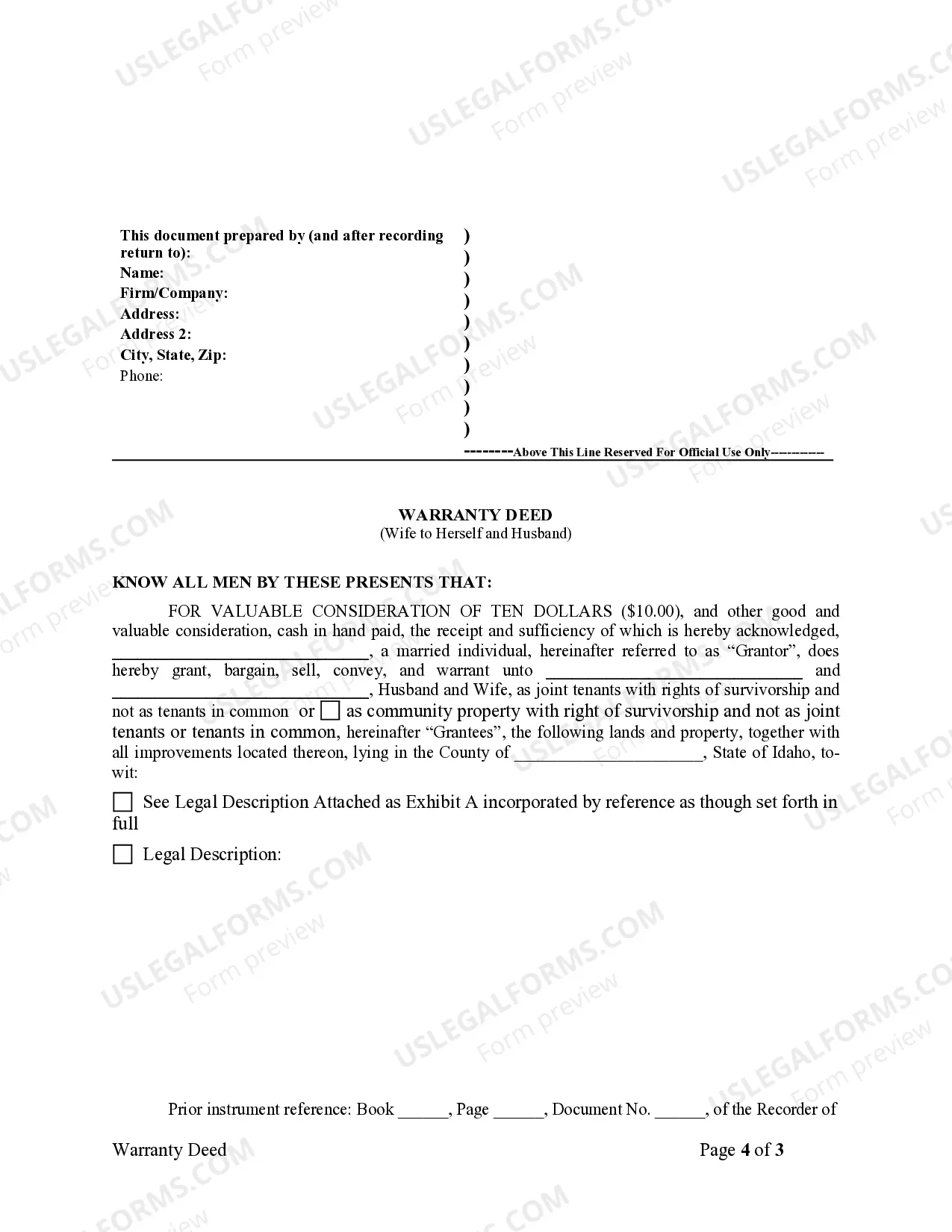
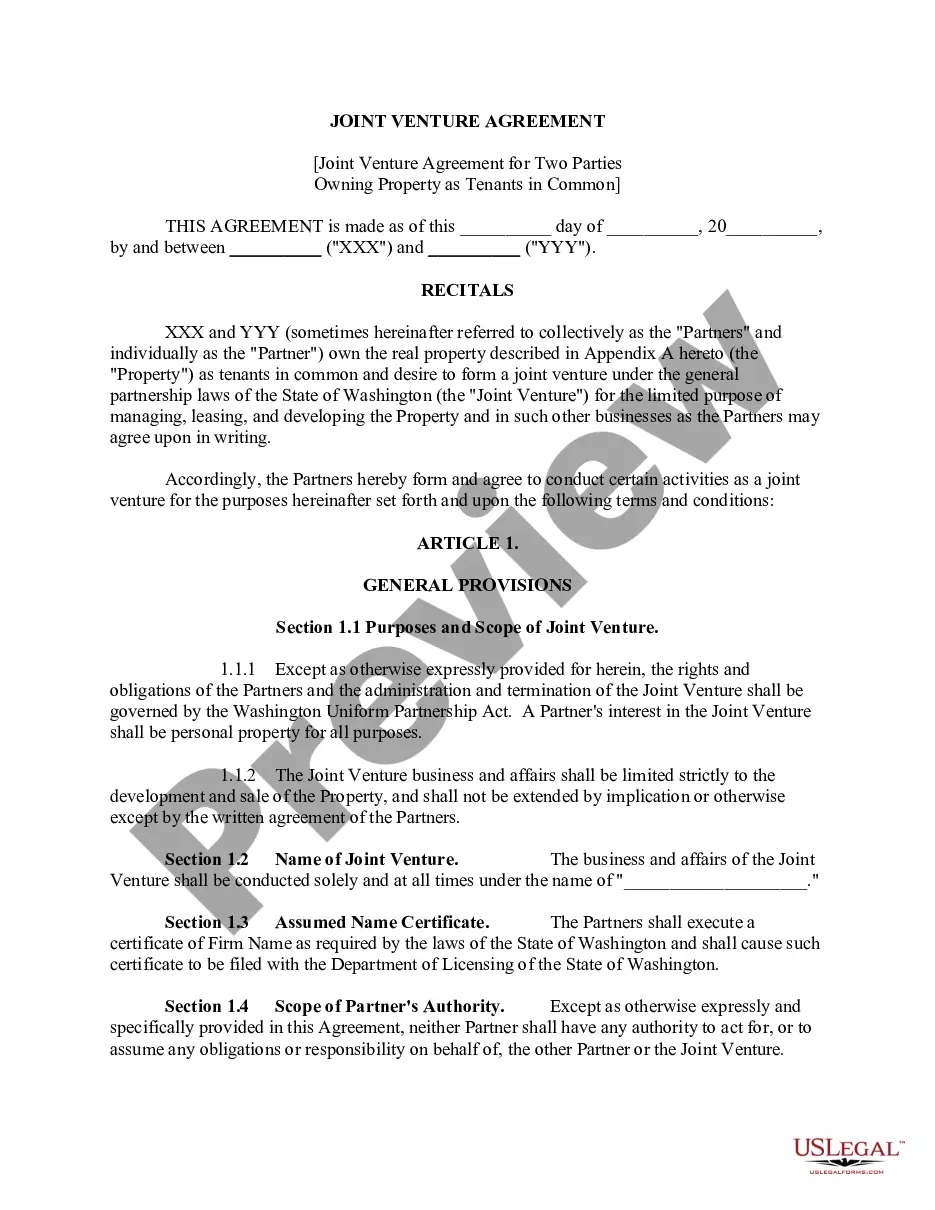
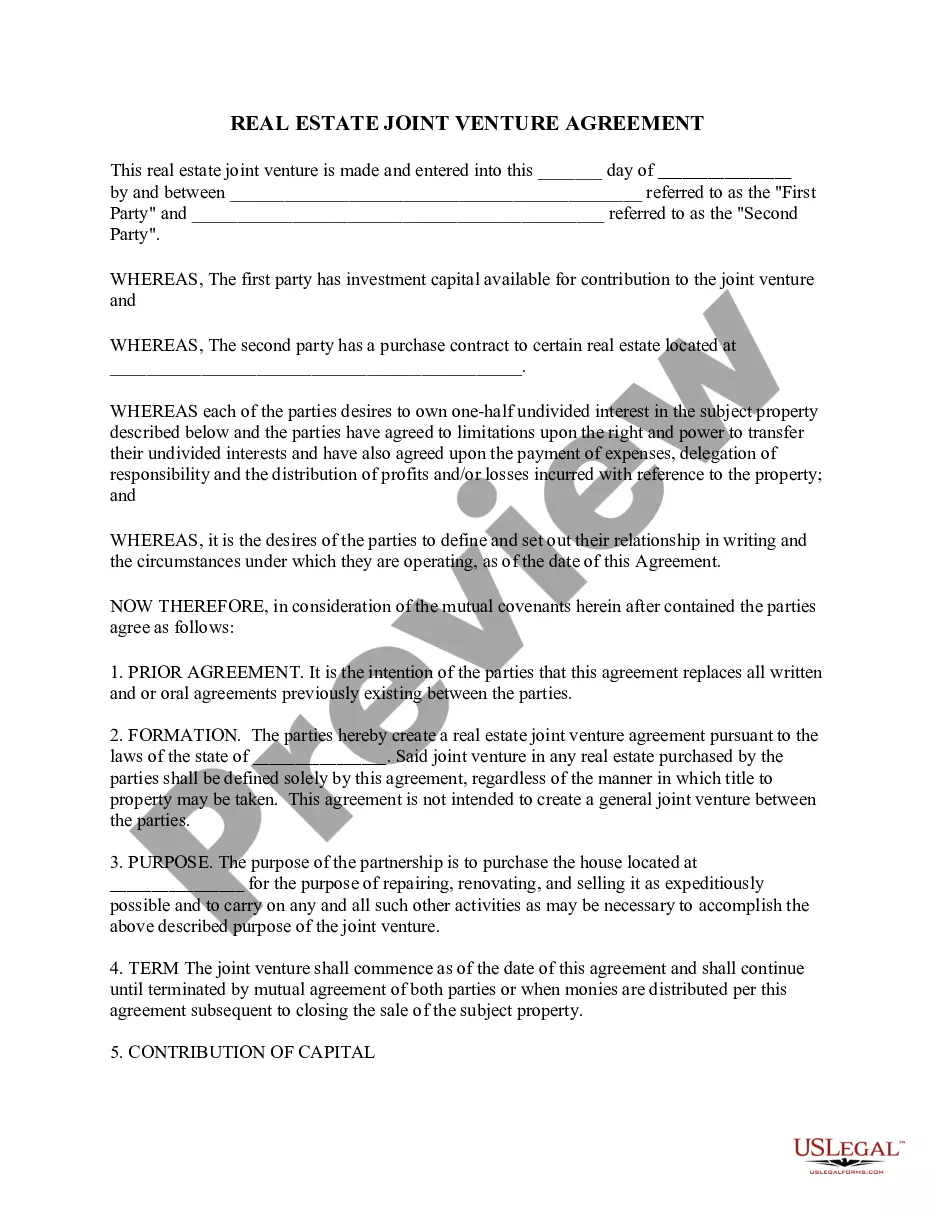
The Warranty Deed to Separate Property of One Spouse to Both Spouses as Joint Tenants is a legal document used to transfer ownership of property from one spouse to both spouses together. This form establishes that both spouses hold the property as joint tenants, allowing for rights of survivorship. This means that if one spouse passes away, the other automatically inherits the entire property. Unlike other types of deeds, this form is specifically designed for transferring a spouse's separate property into joint ownership without affecting any prior ownership rights.
What’s included in this form
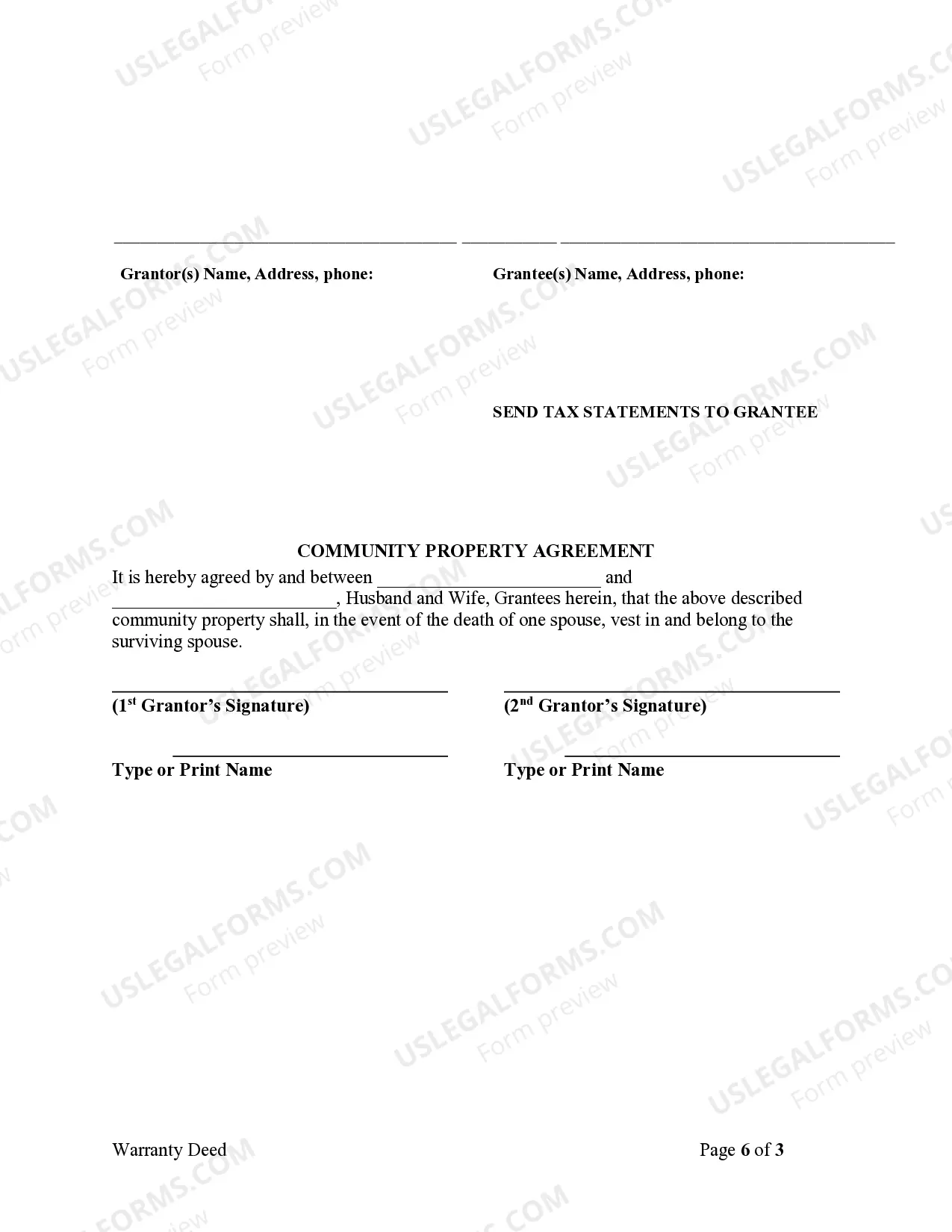
- Grantor and Grantee details: Information about the spouse transferring ownership and both spouses receiving it.
- Description of the property: Includes a clear legal description of the property being transferred.
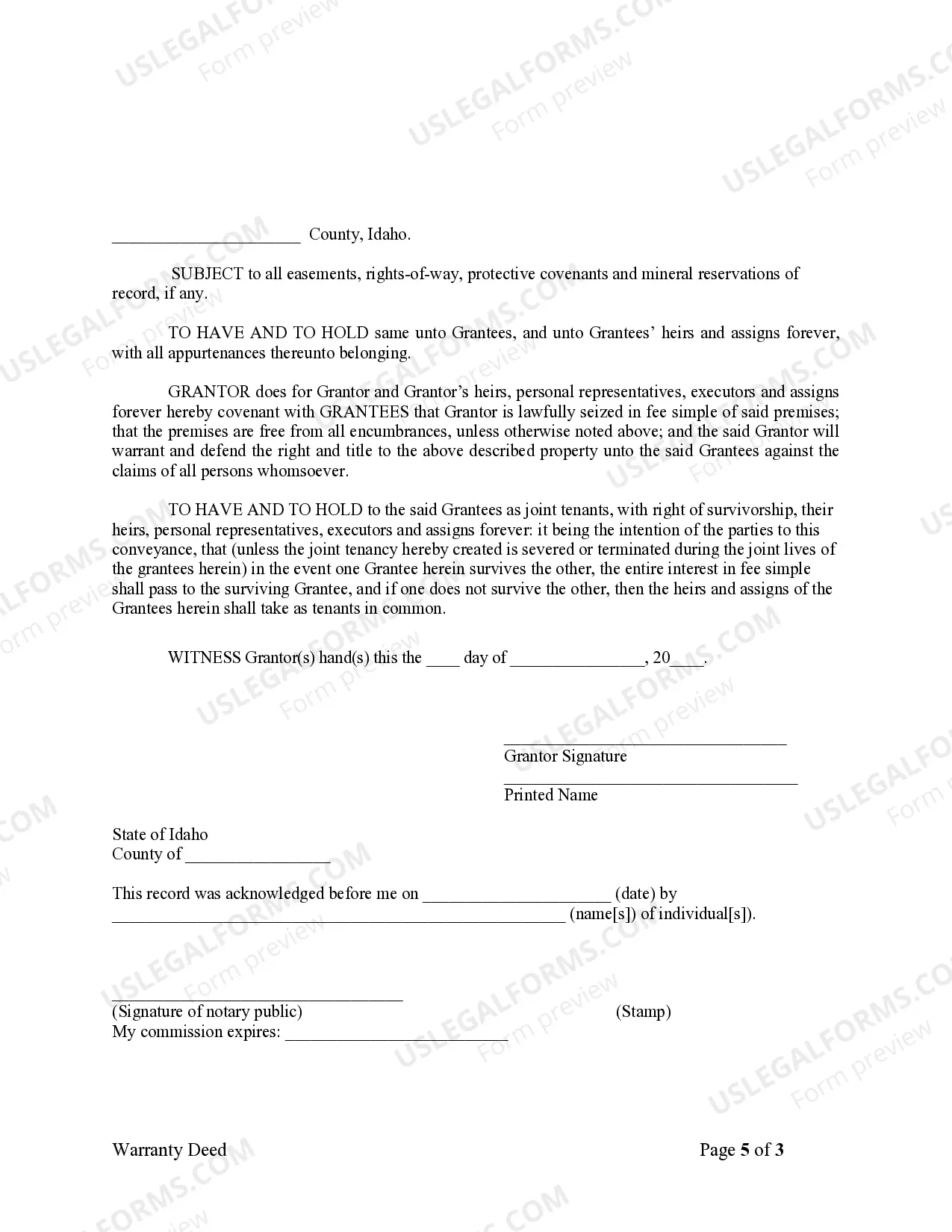
- Joint tenancy clause: Specifies that the property is to be held as joint tenants with rights of survivorship.
- Notary acknowledgment section: Requires notarization to verify the identity of the signers and the authenticity of the document.



When to use this document
This form is ideal for situations where one spouse wishes to transfer their separate property to both spouses as joint tenants. It is commonly used in marriage contexts to ensure that property is held jointly, which can simplify inheritance issues and provide protection in cases of one spouse's death. Use this form if you want to establish joint ownership on specific property you own individually before marriage or during marriage.
Who needs this form
- Married couples wanting to convert separate property into joint property.
- Spouses looking to establish rights of survivorship in their property ownership.
- Individuals seeking clarity in property ownership within a marriage.
How to prepare this document
- Identify the parties involved: Enter the name of the spouse transferring the property (Grantor) and both spouses (Grantees).
- Specify the property: Provide a detailed legal description of the property being transferred.
- Complete the joint tenancy clause: Ensure the language reflects your intention for joint ownership with rights of survivorship.
- Sign the document: Both spouses must sign the deed, indicating their acceptance of the transfer.
- Obtain notarization: Have the document notarized to validate its legality and the identity of the signers.
Notarization requirements for this form
Yes, this form must be notarized to be legally valid. Notarization ensures that the identity of the signers is verified, providing an additional layer of security during the transfer of property ownership. US Legal Forms offers integrated online notarization, making it easy and secure to complete this process from home, with 24/7 availability.
Get your form ready online
Our built-in tools help you complete, sign, share, and store your documents in one place.
Make edits, fill in missing information, and update formatting in US Legal Forms—just like you would in MS Word.
Download a copy, print it, send it by email, or mail it via USPS—whatever works best for your next step.
Sign and collect signatures with our SignNow integration. Send to multiple recipients, set reminders, and more. Go Premium to unlock E-Sign.
If this form requires notarization, complete it online through a secure video call—no need to meet a notary in person or wait for an appointment.
We protect your documents and personal data by following strict security and privacy standards.

Make edits, fill in missing information, and update formatting in US Legal Forms—just like you would in MS Word.

Download a copy, print it, send it by email, or mail it via USPS—whatever works best for your next step.

Sign and collect signatures with our SignNow integration. Send to multiple recipients, set reminders, and more. Go Premium to unlock E-Sign.

If this form requires notarization, complete it online through a secure video call—no need to meet a notary in person or wait for an appointment.

We protect your documents and personal data by following strict security and privacy standards.
Avoid these common issues
- Failing to provide a complete legal description of the property.
- Not obtaining notarization, which can render the deed ineffective.
- Leaving out the joint tenancy clause, leading to confusion about ownership rights.
- Incorrectly identifying the parties involved, which can cause legal issues later.
Benefits of completing this form online
- Convenient access to a legally vetted template that ensures compliance with state laws.
- Easily editable fields allow for quick completion from any device.
- Peace of mind knowing the form is drafted by licensed attorneys.
Looking for another form?
Form popularity
FAQ
Wives : A wife is entitled to an equal share of her husband's property like other entitled heirs. If there are no sharers, she has full right to the entire property.She is also entitled to maintenance, support and shelter from husband, and if staying in a joint family, from the family.
Marital property includes real estate and other property a couple buys together during their marriage, such as a home or investment property, cars, boats, furniture, or artwork, when not acquired by either as separate property.
Separate property belongs to the spouse who owns it and is not generally divided in a divorce. California law also provides that property spouses acquire before a divorce, but after the date of separation, is separate property.
In estate law, joint tenancy is a special form of ownership by two or more persons of the same property. The individuals, who are called joint tenants, share equal ownership of the property and have the equal, undivided right to keep or dispose of the property. Joint tenancy creates a Right of Survivorship.
California's separate property laws apply to a house owned before marriage.(b) A married person may, without the consent of the person's spouse, convey the person's separate property." Therefore, you should have a separate property interest during the divorce in that premarital asset which is your house.
Joint tenancy has what is called right of survivorship, where, if one owner dies, the surviving owner takes all of the property, immediately upon the other owner's death. No court action is necessary for the surviving owner to take the property.X gives property to A & B as joint tenants with right of survivorship.
Separate property can become marital property if it is mixed with marital property. For example, if one of the spouses uses money they had before the marriage to buy a house for the couple, that money might become marital property.
In California, most married couples hold real property (such as land and buildings) as joint tenants with right of survivorship.For instance, many married couples share real property as joint tenants. This way, upon the death of a spouse, the surviving spouse will own 100% share of the property.
In California, all property bought during the marriage with income that was earned during the marriage is deemed "community property." The law implies that both spouses own this property equally, regardless of which name is on the title deed.