Idaho Legal Documents for the Guardian of a Minor Package

About this form package
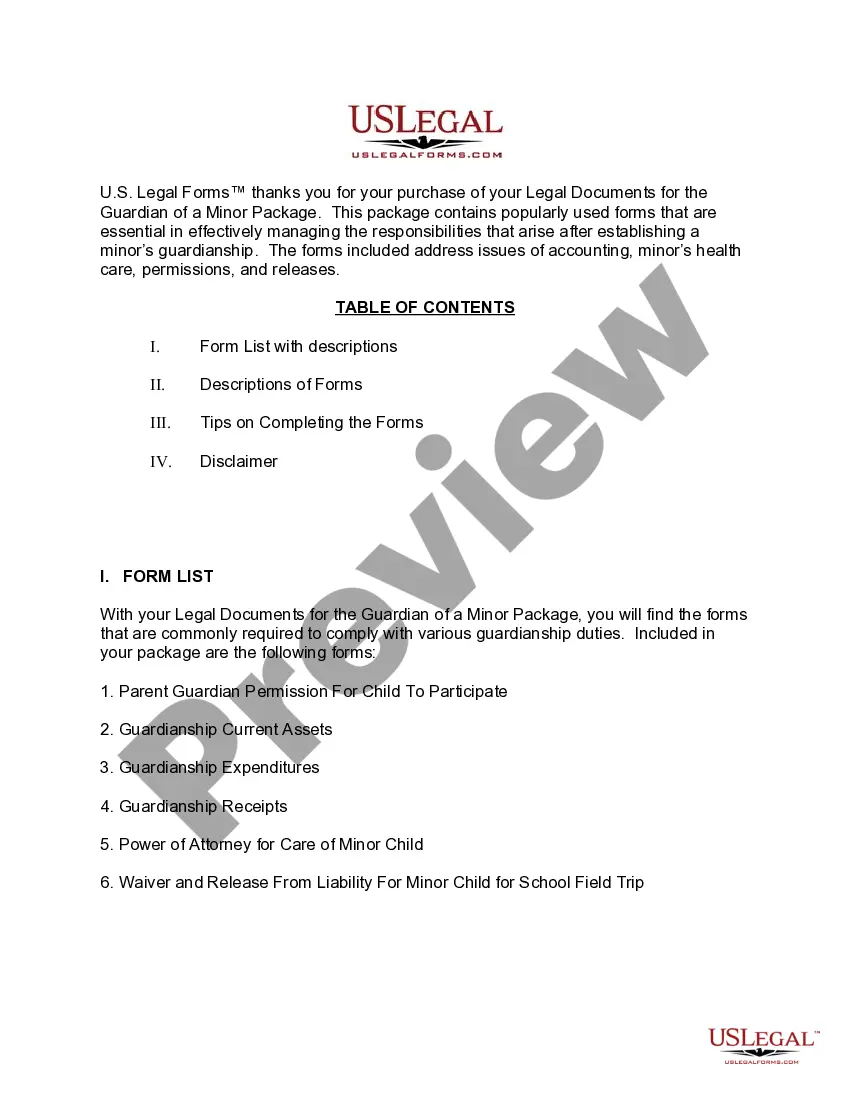
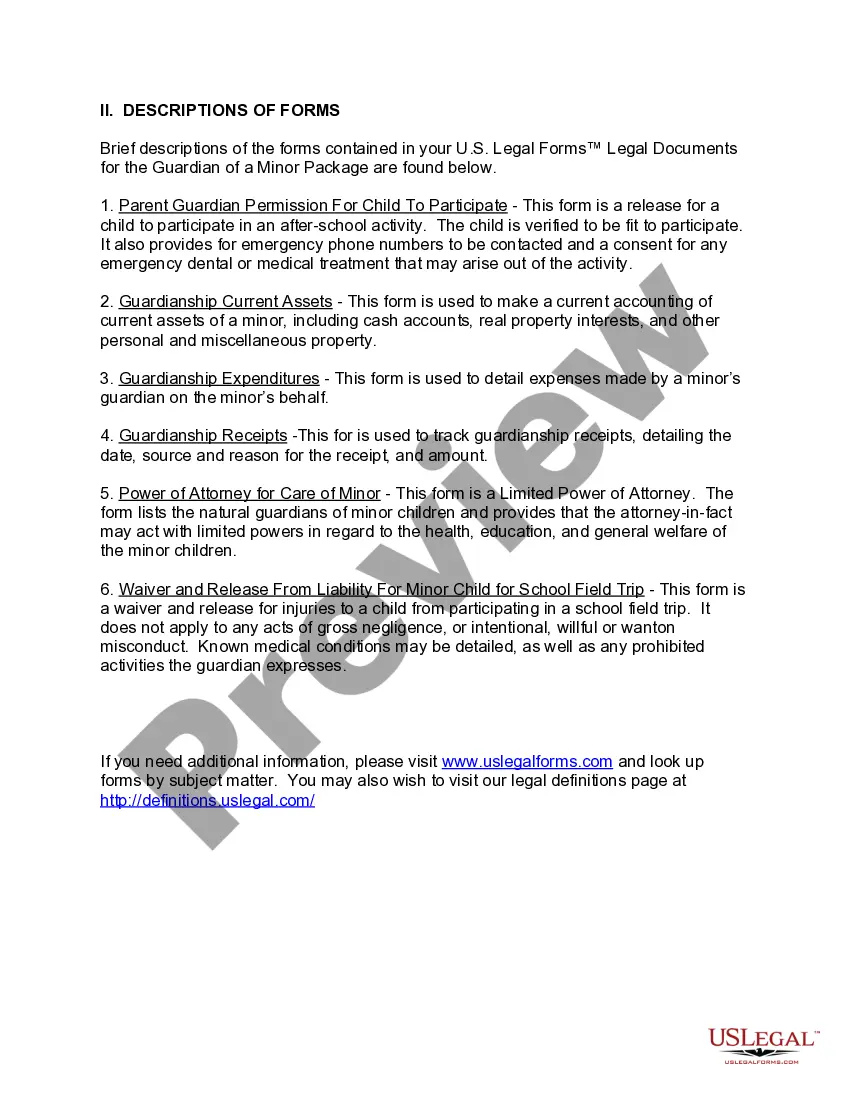
The Idaho Legal Documents for the Guardian of a Minor Package is designed to provide guardians with essential legal forms necessary for fulfilling their responsibilities in caring for a minor. This package includes vital documentation that helps ensure compliance with guardianship laws in Idaho, addressing key issues such as health care, permissions, and financial accountings. Unlike other generic forms, this package is specifically tailored to meet the unique needs of guardians and the legal requirements in Idaho.
What’s included in this form package


When to use this document
This form package is necessary in various situations, including:
- Establishing permissions for a minor to participate in activities or events.
- Documenting the current assets and expenditures related to a minor's welfare.
- Providing legal authority through a Power of Attorney for decisions regarding a minor's health and education.
- Releasing liability for minor participation in school events or field trips.
Who this form package is for
- Guardians who have legal custody of a minor.
- Parents seeking to grant guardianship rights for specific situations.
- Individuals involved in temporary or permanent guardianship arrangements.
- Anyone responsible for the care and welfare of a minor under guardianship.
How to complete these forms
- Review the included forms thoroughly to understand their purpose.
- Identify the specific information required for each form, such as the minor's personal details.
- Fill out the forms using clear and accurate information, either digitally or by hand.
- Ensure all required dates and signatures are included where necessary.
- Make copies of the completed forms for your records before submission or filing.
Do forms in this package need to be notarized?
Forms in this package typically do not require notarization unless required by local law. It is recommended to check specific requirements for certain forms within your jurisdiction to ensure compliance.
Get your form ready online
Our built-in tools help you complete, sign, share, and store your documents in one place.
Make edits, fill in missing information, and update formatting in US Legal Forms—just like you would in MS Word.
Download a copy, print it, send it by email, or mail it via USPS—whatever works best for your next step.
Sign and collect signatures with our SignNow integration. Send to multiple recipients, set reminders, and more. Go Premium to unlock E-Sign.
If this form requires notarization, complete it online through a secure video call—no need to meet a notary in person or wait for an appointment.
We protect your documents and personal data by following strict security and privacy standards.

Make edits, fill in missing information, and update formatting in US Legal Forms—just like you would in MS Word.

Download a copy, print it, send it by email, or mail it via USPS—whatever works best for your next step.

Sign and collect signatures with our SignNow integration. Send to multiple recipients, set reminders, and more. Go Premium to unlock E-Sign.

If this form requires notarization, complete it online through a secure video call—no need to meet a notary in person or wait for an appointment.

We protect your documents and personal data by following strict security and privacy standards.
Typical mistakes to avoid
- Failing to complete all mandatory fields on each form.
- Not providing accurate information regarding the minorâs assets and expenditures.
- Omitting signatures or dates where required.
- Using outdated forms that do not reflect current legal requirements.
Benefits of using this package online
- Convenient access to essential legal forms anytime and anywhere.
- Edit and customize the forms easily to meet specific needs.
- Forms drafted by licensed attorneys ensuring legal compliance and reliability.
- Instant downloads allow you to complete and submit forms without delays.
Legal use & context
- These documents provide the necessary consent and liability releases for guardians, protecting both the guardian and the minor.
- Accurate and timely completion of these forms ensures accountability and transparency in the guardianship process.
- Failure to use these forms may lead to legal complications or misunderstandings regarding guardianship responsibilities.
Main things to remember
- This package contains essential forms for guardians of minors in Idaho.
- Understand when and how to use each form for effective guardianship management.
- Complete all forms accurately to avoid common mistakes and legal issues.
Looking for another form?

Form popularity
FAQ
Two lines beneath the guardian's address, you should insert the subject heading of the letter. For example, type RE: Temporary Guardianship of Minor Child, Elizabeth Bennett. Draft the body of the letter. The first paragraph of the body of the letter should name your children and state that you have custody of them.
A guardian is also prohibited from making gifts from the ward's estate. Generally, a guardian cannot tie up the ward's money by purchasing real estate, but can lend the money to someone else buying real estate if the property is sufficient security for the loan.
The names of the forms are usually: Petition for Appointment of Guardian (or Petition for Appointment of Guardian of Minor) Petition for Conservatorship (when dealing with an incompetent adult) Order Appointing Guardian.
You can establish guardianship of a child by filing papers in court. Initially, file a petition stating your interest in obtaining guardianship along with a filing fee. You'll also want to file a letter of consent from the child's parents.
The main difference between custody and guardianship is the child's parents - custody is provided to the child's biological parents while guardianship is given to a non-biological parent.
You will have to send notices to the child's parents that you are petitioning for a guardianship. The court will likely appoint a Guardian ad litem (an attorney) to speak for the child during the process. If you are appointed guardian, you will have to file an Annual Report with the court.
A Guardian usually signs legal documents on behalf of the Ward, chooses an appropriate living situation for the Ward, and grants, withholds, and withdraws consent to medical treatment. In most situations, it is necessary to disclose the Guardian/Ward relationship.
The legal guardianship document is a formal declaration to the court system that another party is responsible for the well-being of the minors. No one can predict when an accident or other disaster may occur. Some include a legal guardianship document in their wills to determine who will raise their children.