Idaho Statutory Form of General Power of Attorney
Overview of this form
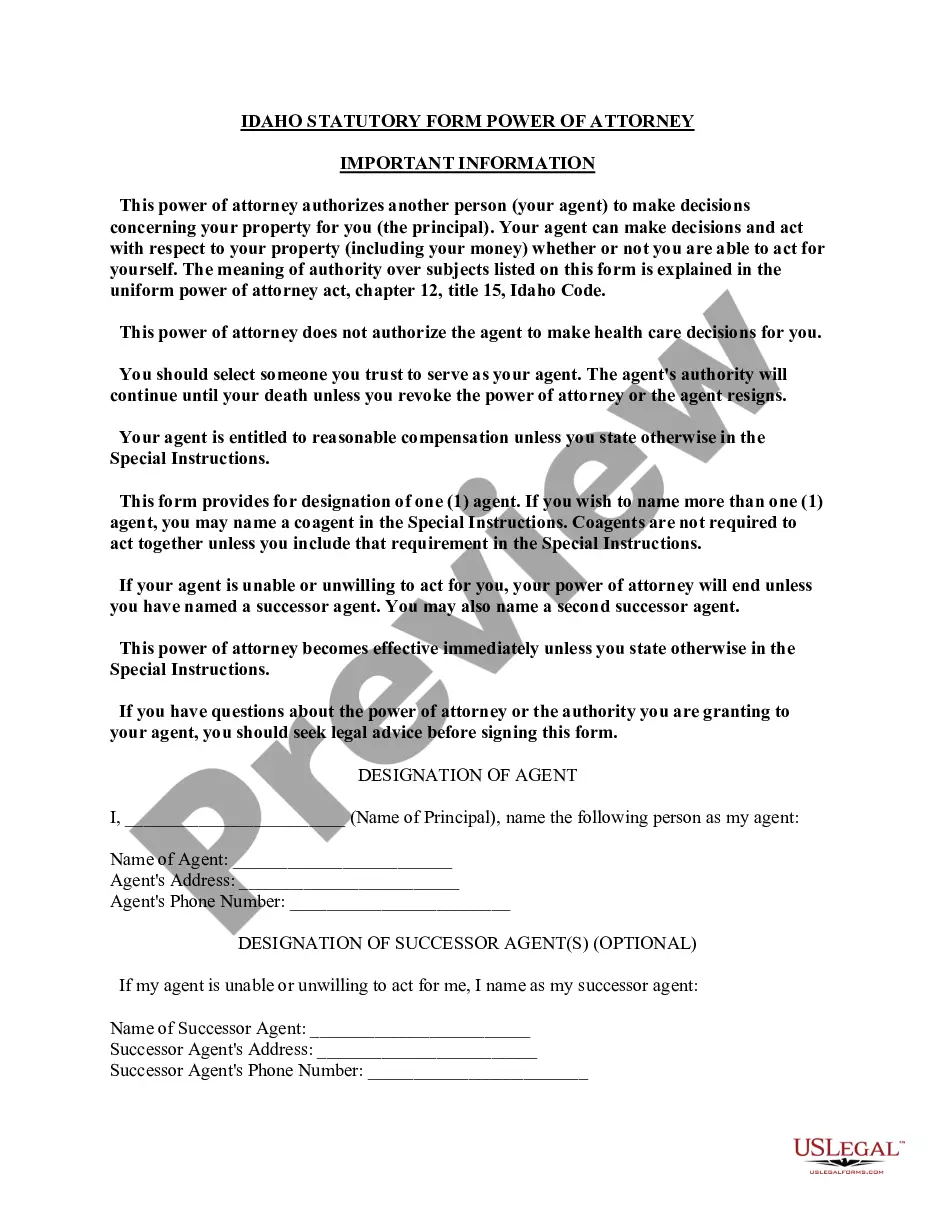
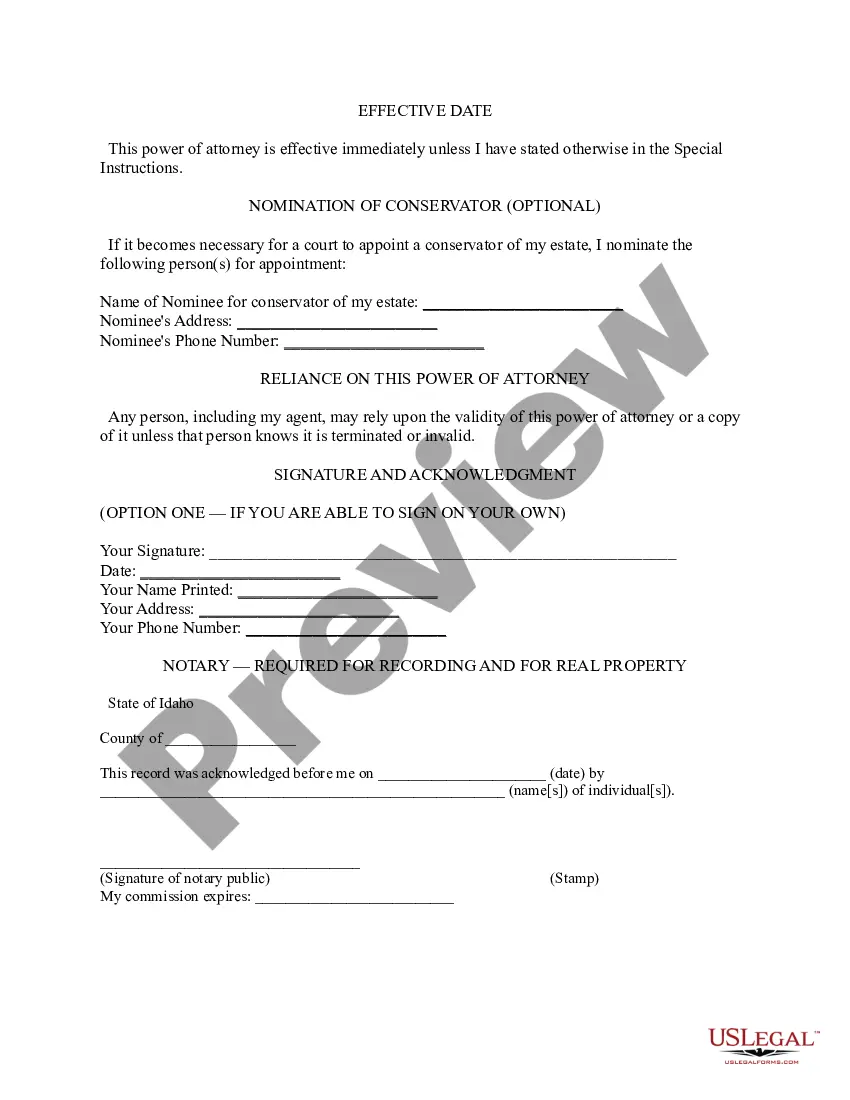
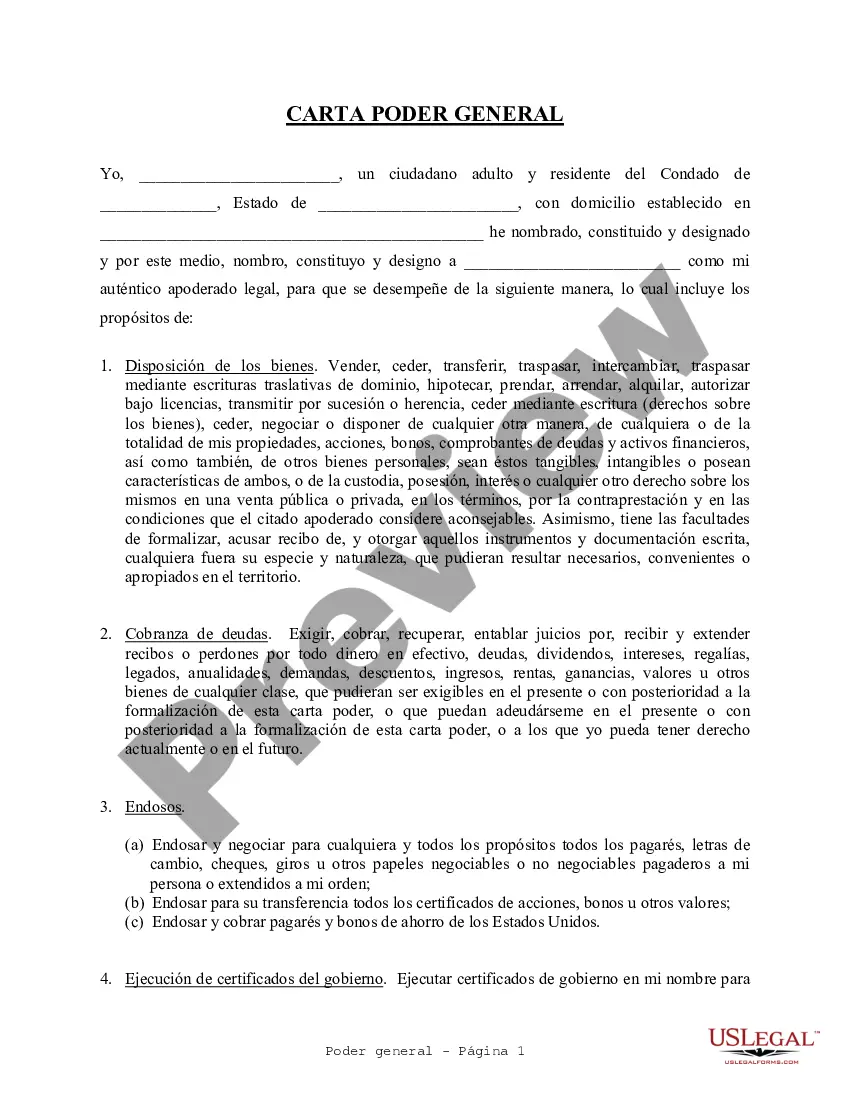
The Idaho Statutory Form of General Power of Attorney is a legal document that empowers an agent to make decisions regarding your property, finances, and other affairs on your behalf. This form takes effect immediately unless specified otherwise and grants a broad range of powers, differentiating it from limited power of attorney forms, which may restrict the agent's authority to specific tasks or time periods.
Main sections of this form
- Designation of an agent to manage your affairs.
- Optional designation of successor agents if the primary agent is unable to act.
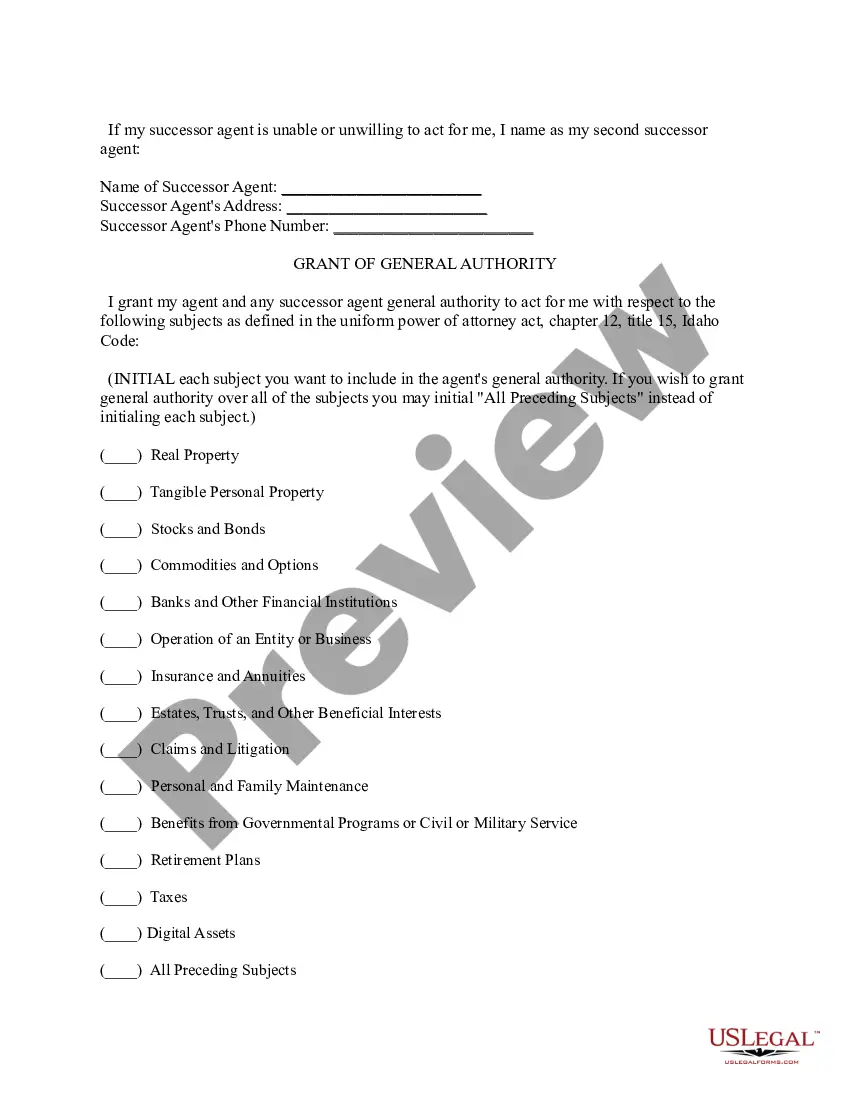
- Grant of general authority covering various subjects such as real estate, finances, and personal upkeep.
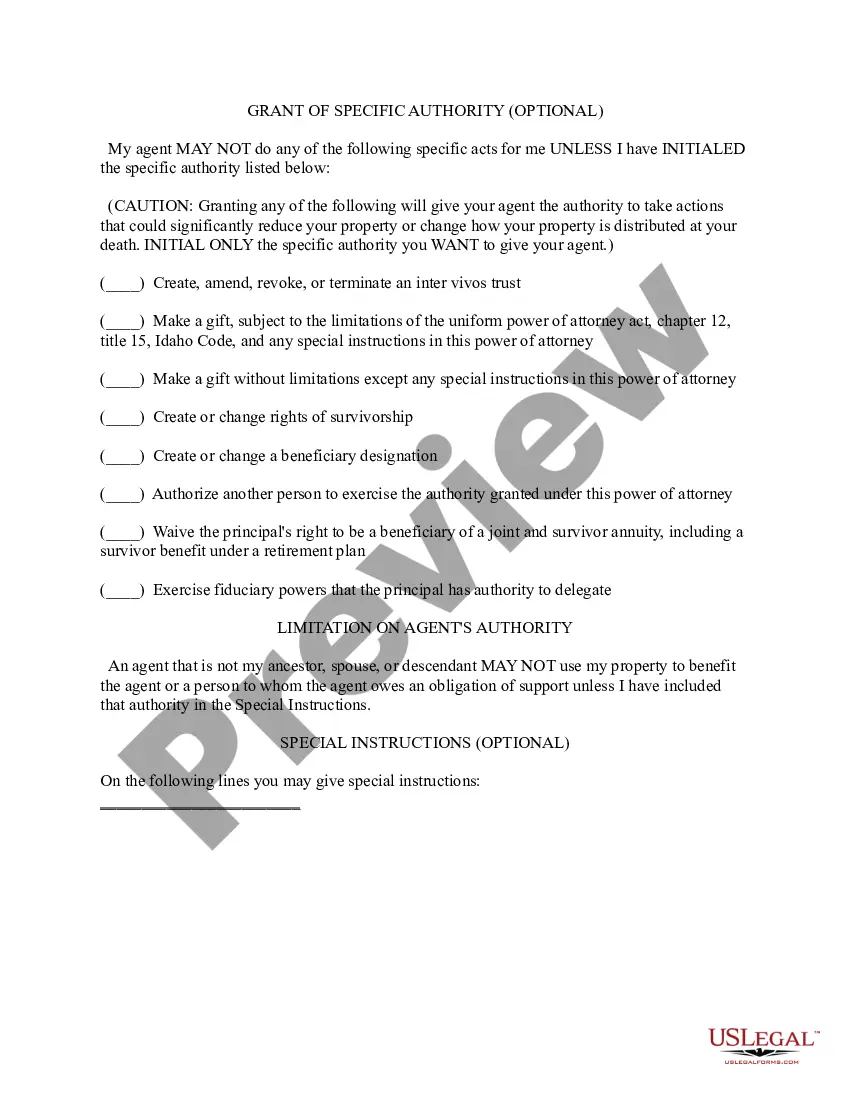
- Ability to outline specific powers that the agent may or may not possess.
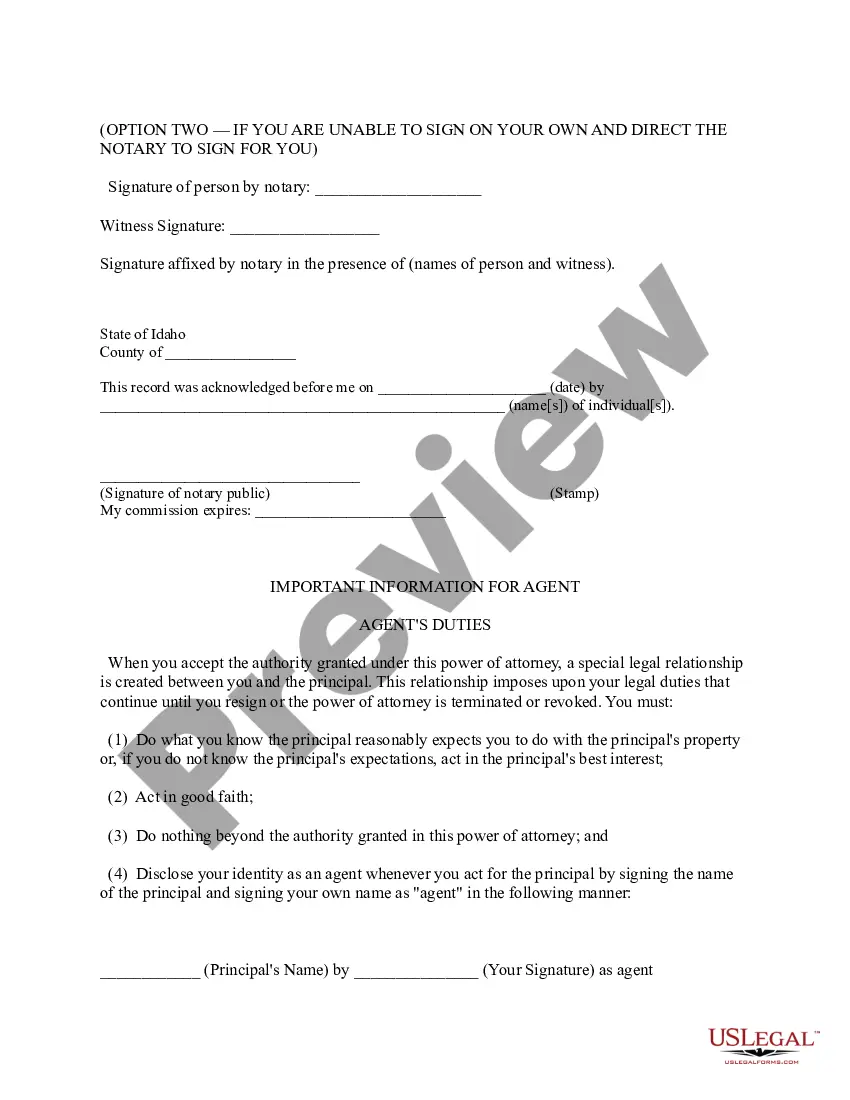
- Signature and acknowledgment requirements, including possible notarization.
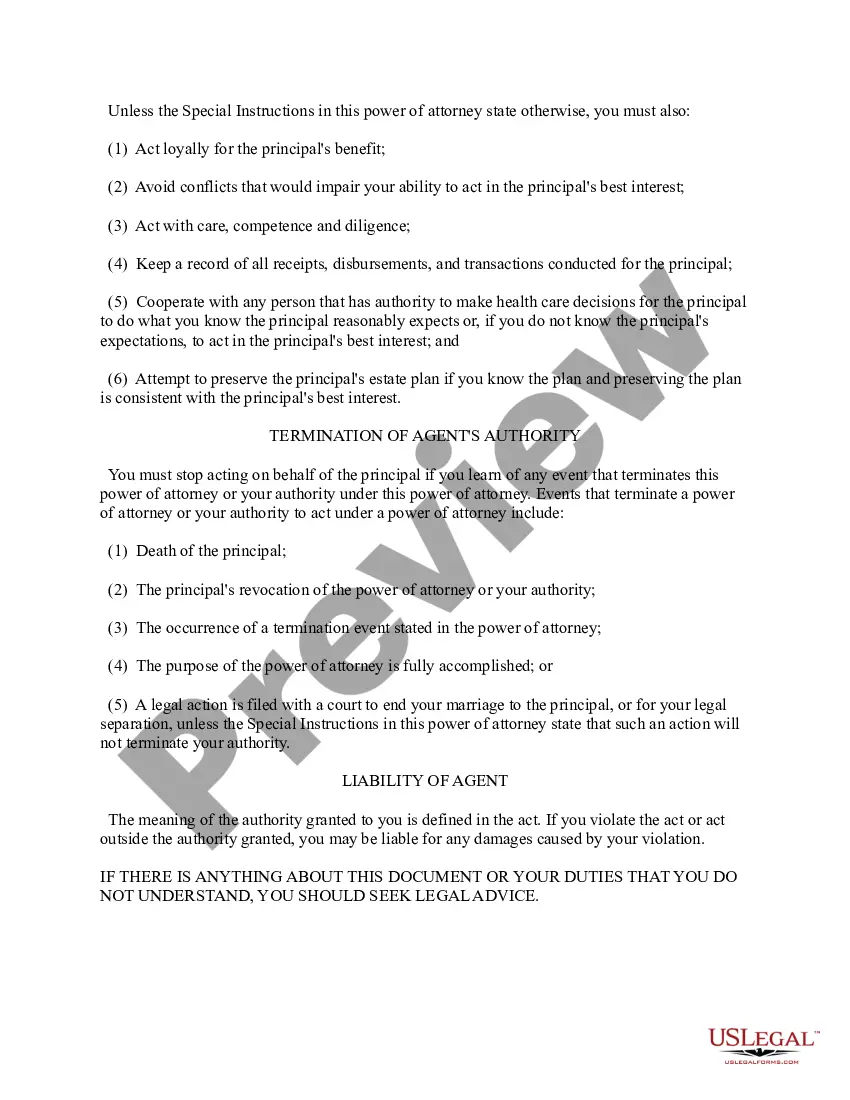
- Instructions for agent responsibilities and termination of authority.
When to use this form
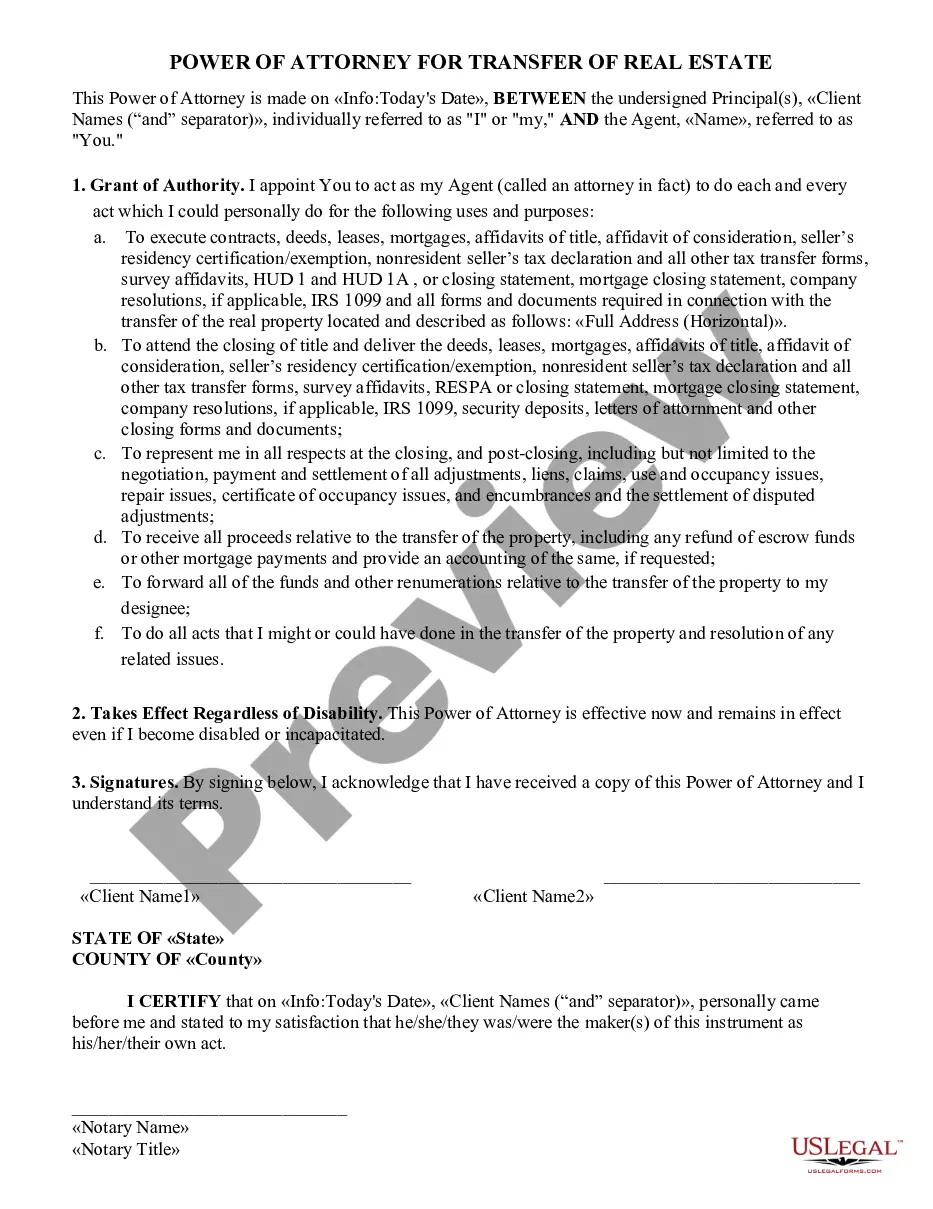
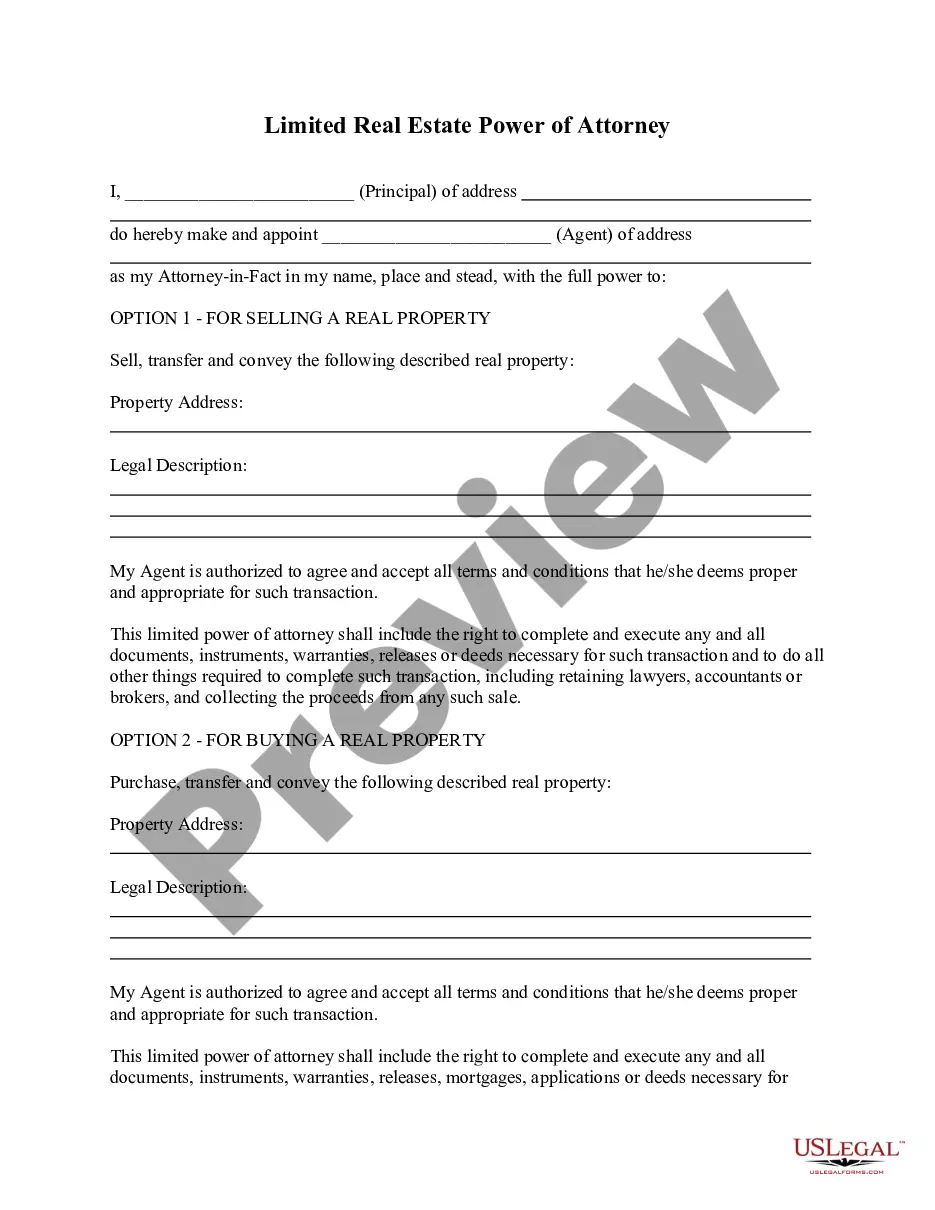
This form is ideal for situations where you need someone to act on your behalf regarding your financial and property matters. Common scenarios include managing property investments, handling banking transactions, or making financial decisions if you become incapacitated or unavailable to manage your own affairs.
Who this form is for
- Individuals who wish to designate a trusted person to handle their financial matters.
- Anyone needing to manage property or finances when they are unable to do so themselves.
- People looking to prepare in advance for potential incapacitation.
- Those wanting to ensure that specific financial responsibilities are handled according to their wishes.
How to complete this form
- Identify the principal by writing your name and contact details.
- Designate your agent by entering their name and contact information.
- Initial the general authority subjects you wish to grant your agent.
- Include any specific limitations or special instructions for the agent's authority.
- Sign and date the document, and ensure it is acknowledged before a notary if required.
Notarization requirements for this form
Yes, this form must be notarized to be legally valid when used for real property matters. US Legal Forms offers integrated online notarization, allowing you to complete the notarization process securely via video call, at your convenience, without the need for travel.
Get your form ready online
Our built-in tools help you complete, sign, share, and store your documents in one place.
Make edits, fill in missing information, and update formatting in US Legal Forms—just like you would in MS Word.
Download a copy, print it, send it by email, or mail it via USPS—whatever works best for your next step.
Sign and collect signatures with our SignNow integration. Send to multiple recipients, set reminders, and more. Go Premium to unlock E-Sign.
If this form requires notarization, complete it online through a secure video call—no need to meet a notary in person or wait for an appointment.
We protect your documents and personal data by following strict security and privacy standards.

Make edits, fill in missing information, and update formatting in US Legal Forms—just like you would in MS Word.

Download a copy, print it, send it by email, or mail it via USPS—whatever works best for your next step.

Sign and collect signatures with our SignNow integration. Send to multiple recipients, set reminders, and more. Go Premium to unlock E-Sign.

If this form requires notarization, complete it online through a secure video call—no need to meet a notary in person or wait for an appointment.

We protect your documents and personal data by following strict security and privacy standards.
Common mistakes
- Not fully understanding the powers being granted to the agent.
- Failing to include a successor agent or properly documenting special instructions.
- Not having the form notarized when required, especially for real estate transactions.
- Overlooking the need to regularly review and possibly update the document as circumstances change.
Why use this form online
- Convenience of completing the form from anywhere at your own pace.
- Editable templates that allow for customization based on your specific needs.
- Access to professionally drafted forms, ensuring compliance with Idaho laws.
- Immediate download availability for quick use and implementation.
What to keep in mind
- The Idaho Statutory Form of General Power of Attorney allows for immediate delegation of authority over property and financial matters.
- Careful selection of a trusted agent is essential for effective management of your affairs.
- The document must be notarized to ensure its validity in Idaho.
Looking for another form?



Form popularity
FAQ
A general power of attorney ends the moment you become incapacitated.A durable power of attorney stays effective until the principle dies or until they act to revoke the power they've granted to their agent. But there are a handful of circumstances where courts will end durable power of attorney.
A power of attorney (POA) is a legal document that gives someone else the authority to handle business or financial matters on your behalf.You can create a POA yourself as long as it fulfills your state's requirements, or you can use an online service to create the document.
Draft the Durable Power of Attorney The durable power of attorney must be typed or in writing, and it must include the date and your full name. It must clearly state that the document is your durable power of attorney and that you understand that the powers given apply if you are incapacitated.
Determine if one is needed. Under a few circumstances, a power of attorney isn't necessary. Identify an agent. Take a look at the standard forms. Notarize the written POA, keep it stored safely, and provide copies to important people. Review the POA periodically.
Generally, a power of attorney allows you to designate an agent to perform specific functions on your behalf. Under the Texas Estates Code, statutory durable power of attorney can be used to appoint an agent to make certain financial decisions for you should you be unable to do so.
In Idaho, a durable power of attorney may not necessarily need to be signed in front of a notary public when executed by the principal. A power of attorney does not need to be recorded unless it is being used in connection with a real estate transaction.
Choose an agent. Before you begin to fill out the form, you have some decisions to make. Decide on the type of authority. You can choose whether you want your POA to be broad or narrow. Identify the length of time the POA will be in effect. Fill out the form. Execute the document.
Clearly identify the principal (the person who is granting the power) Clearly identify the agent (the person who will have the specified powers) Specify exactly what legal acts the agent is entitled to perform.
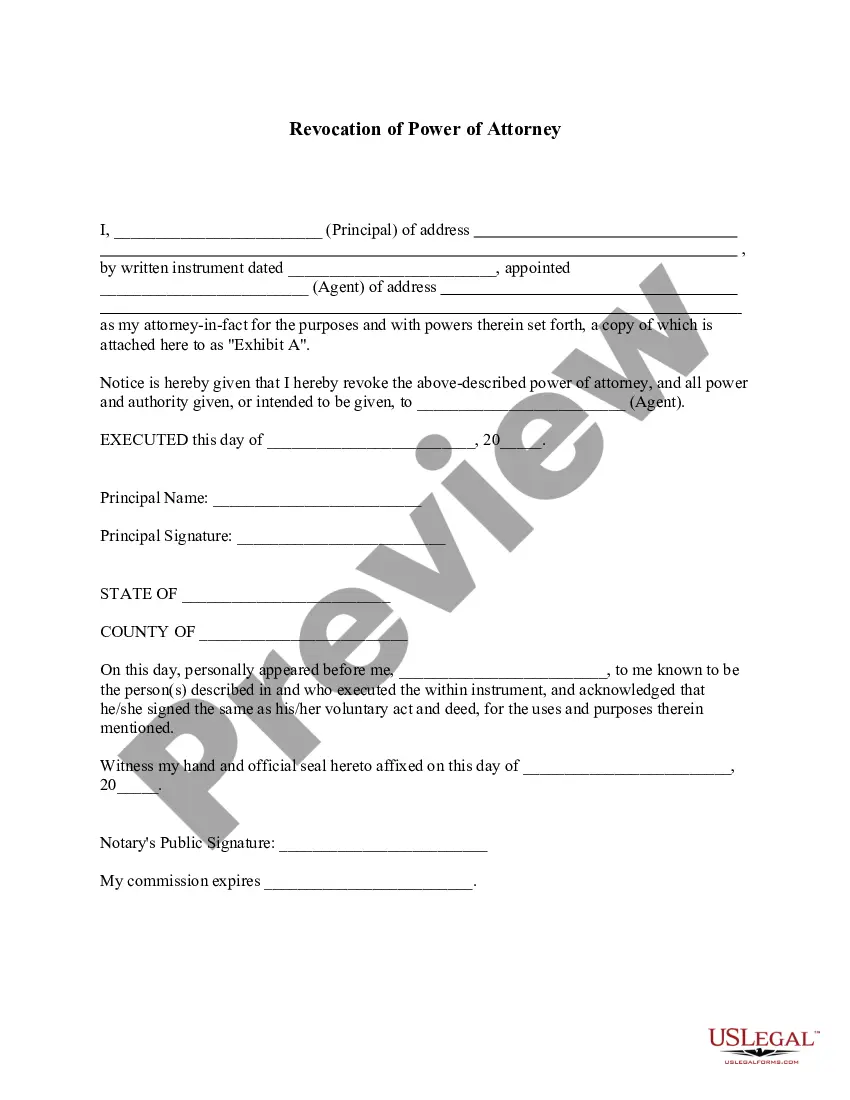
Generally, the document must be signed, witnessed and notarized by an adult. If your agent will have to deal with real estate assets, some states require you to put the document on file in the local land records office. The power of attorney for finances is typically extinguished upon death, revocation, or divorce.