Idaho Mutual Wills or Last Will and Testaments for Man and Woman living together, not Married with Minor Children
Understanding this form
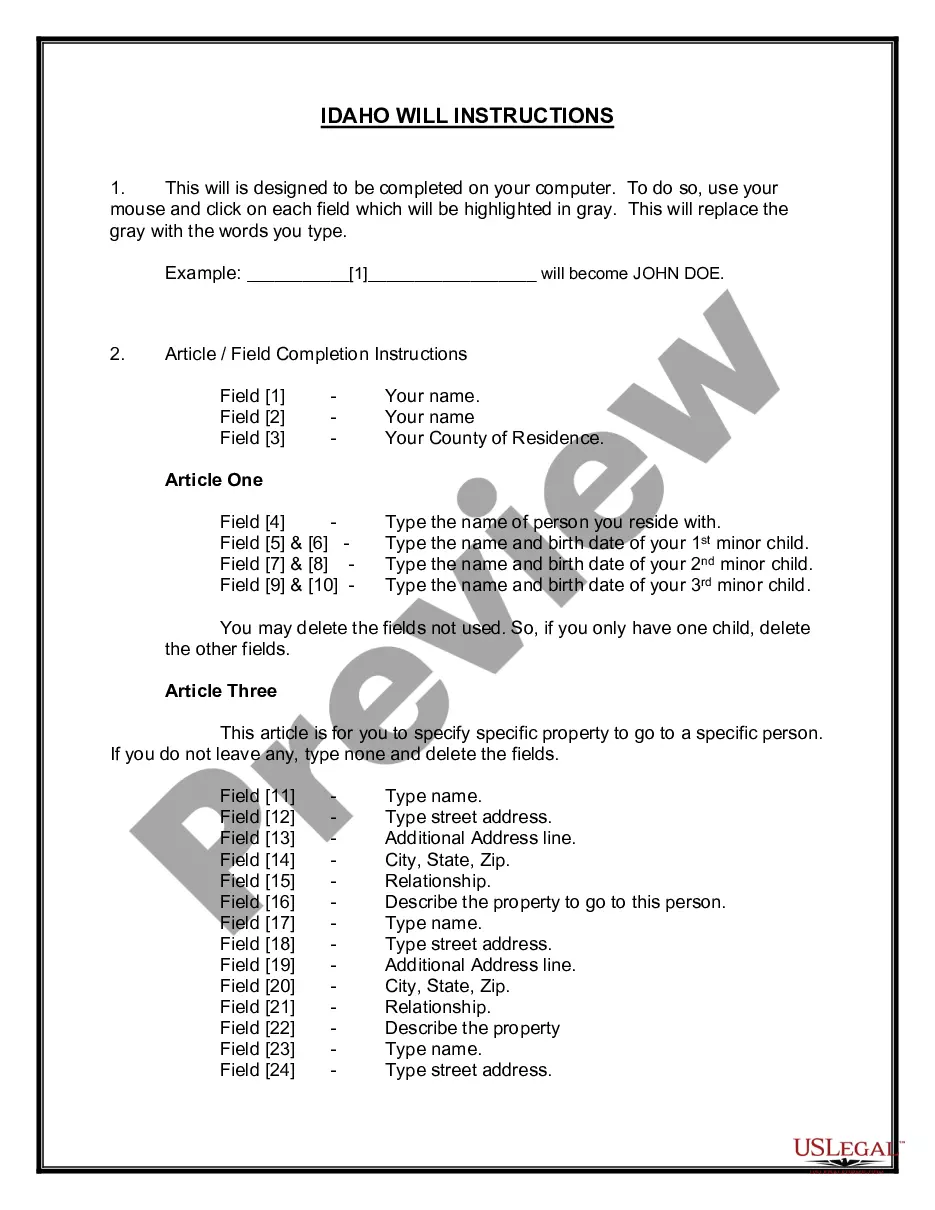
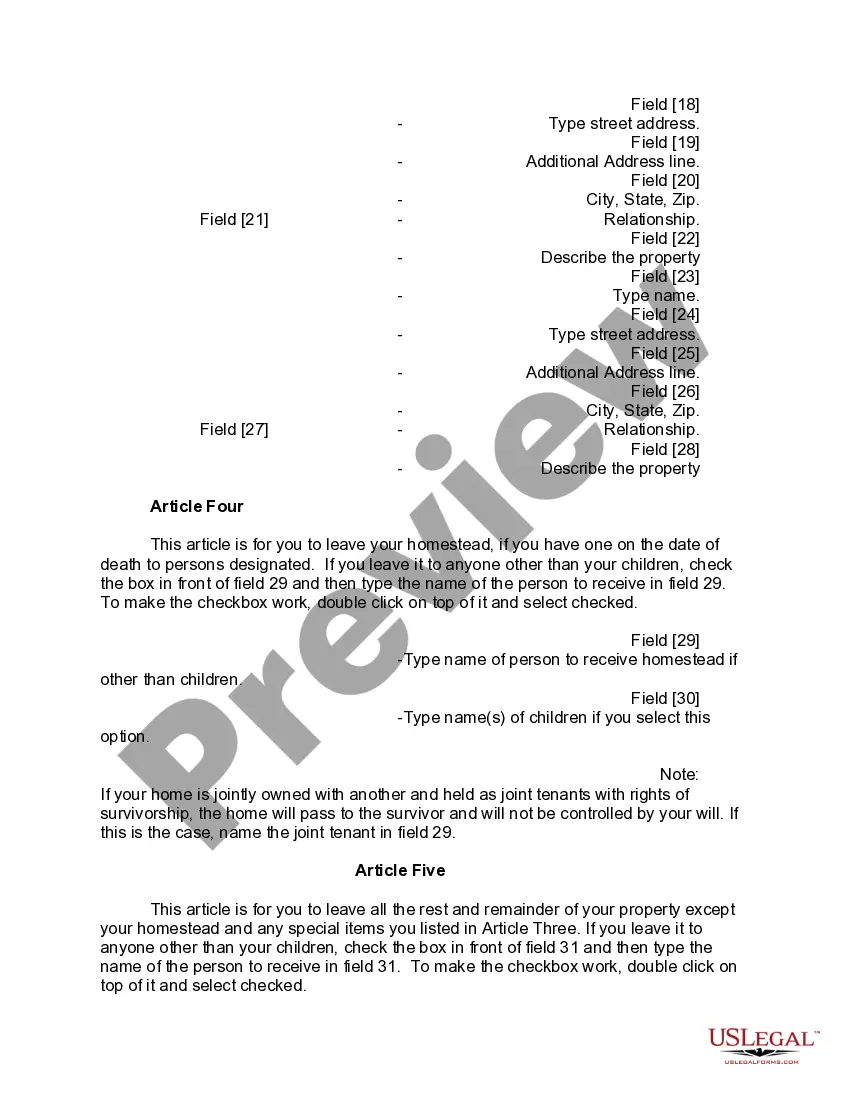
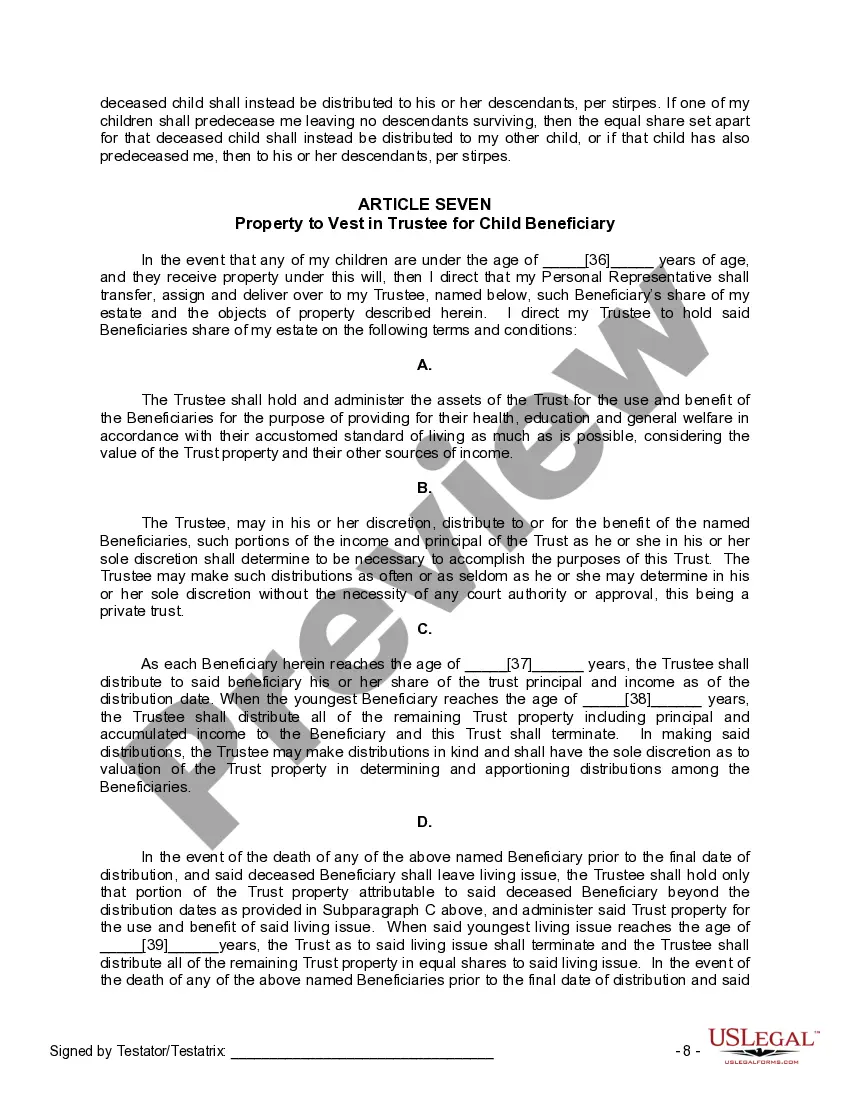
This Mutual Will form allows an unmarried couple living together to create two reciprocal Last Will and Testament documents. It is specially designed for individuals who have minor children and wish to ensure that their assets are bequeathed to each other and/or their children. This form helps clarify intentions regarding property distribution and guardianship, distinguishing it from standard wills typically used by married couples.
Main sections of this form
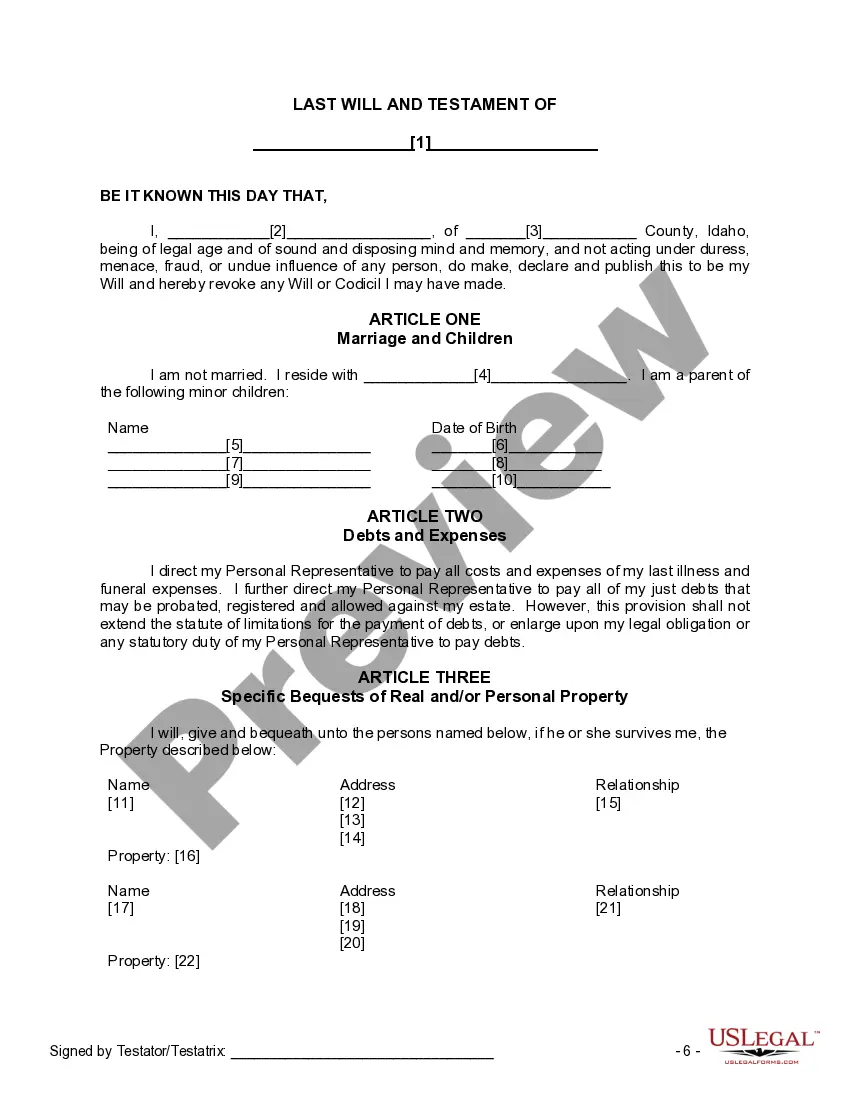
- Marriage and Children: Declares the relationship status and lists minor children.
- Debts and Expenses: Directs the payment of last illness and funeral expenses along with other debts.
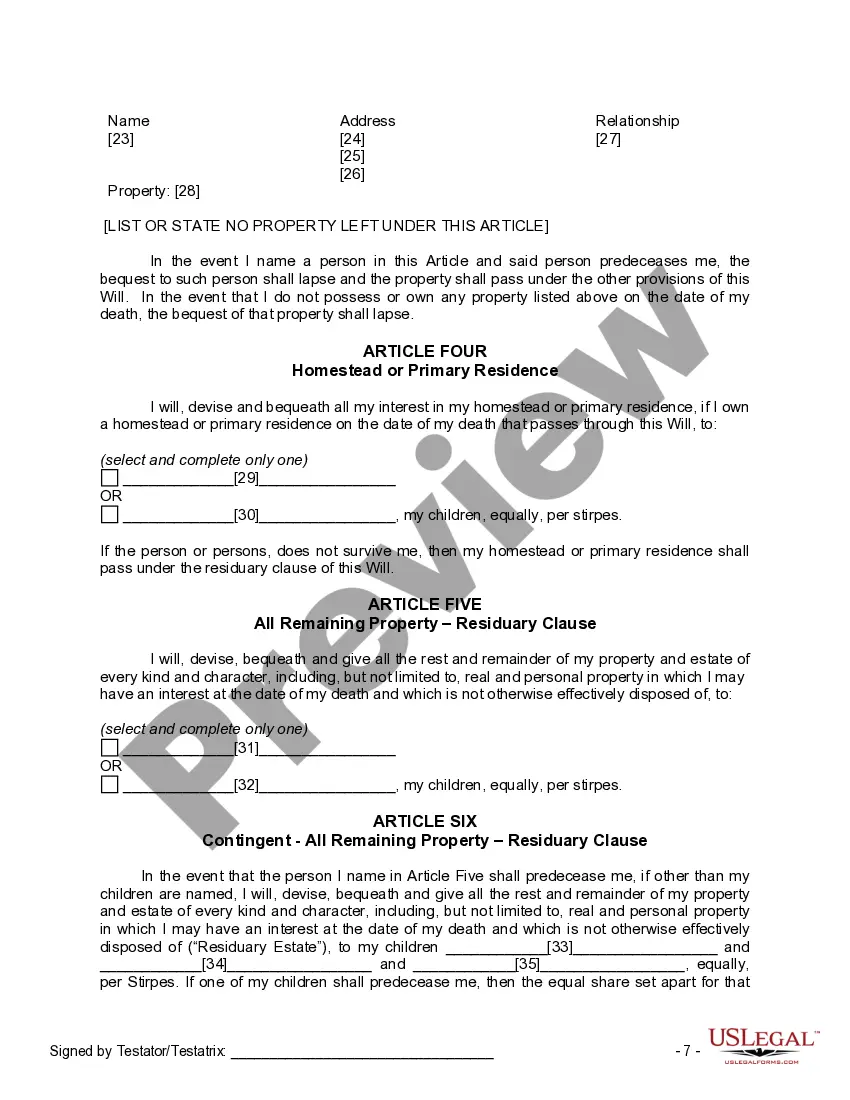
- Specific Bequests: Outlines particular gifts of property to designated individuals.
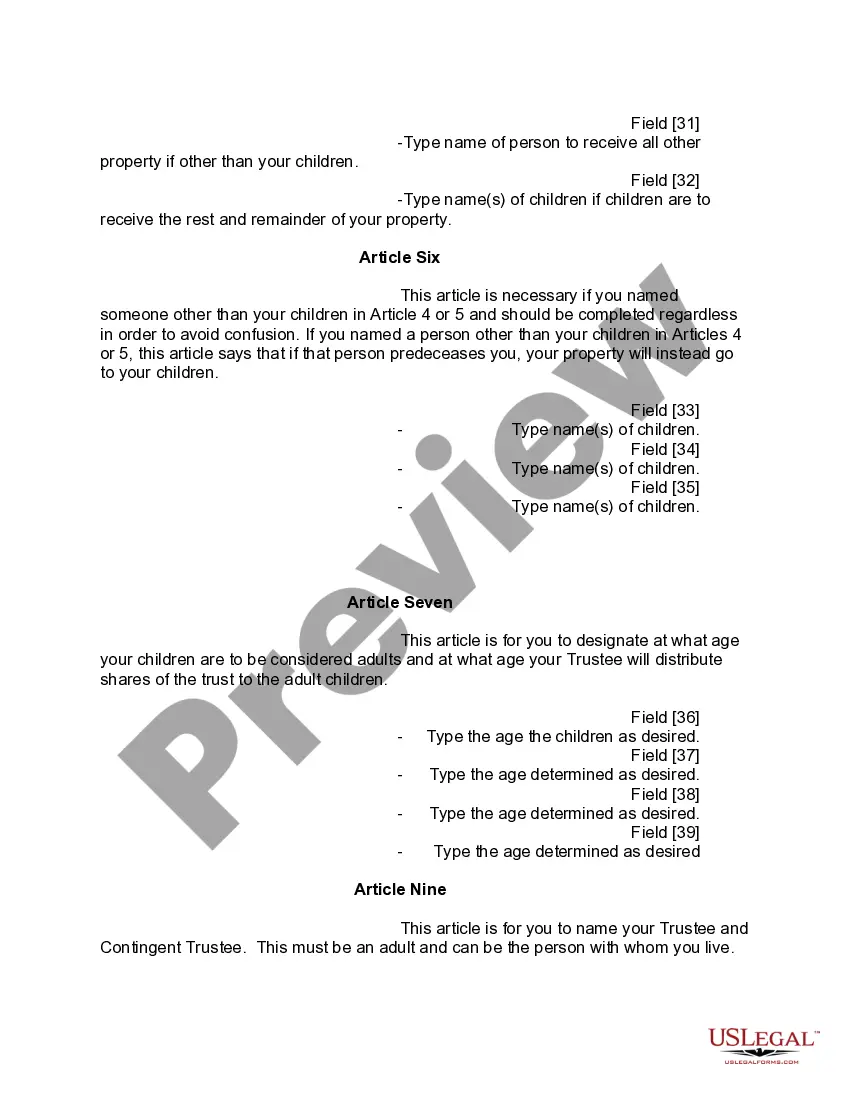
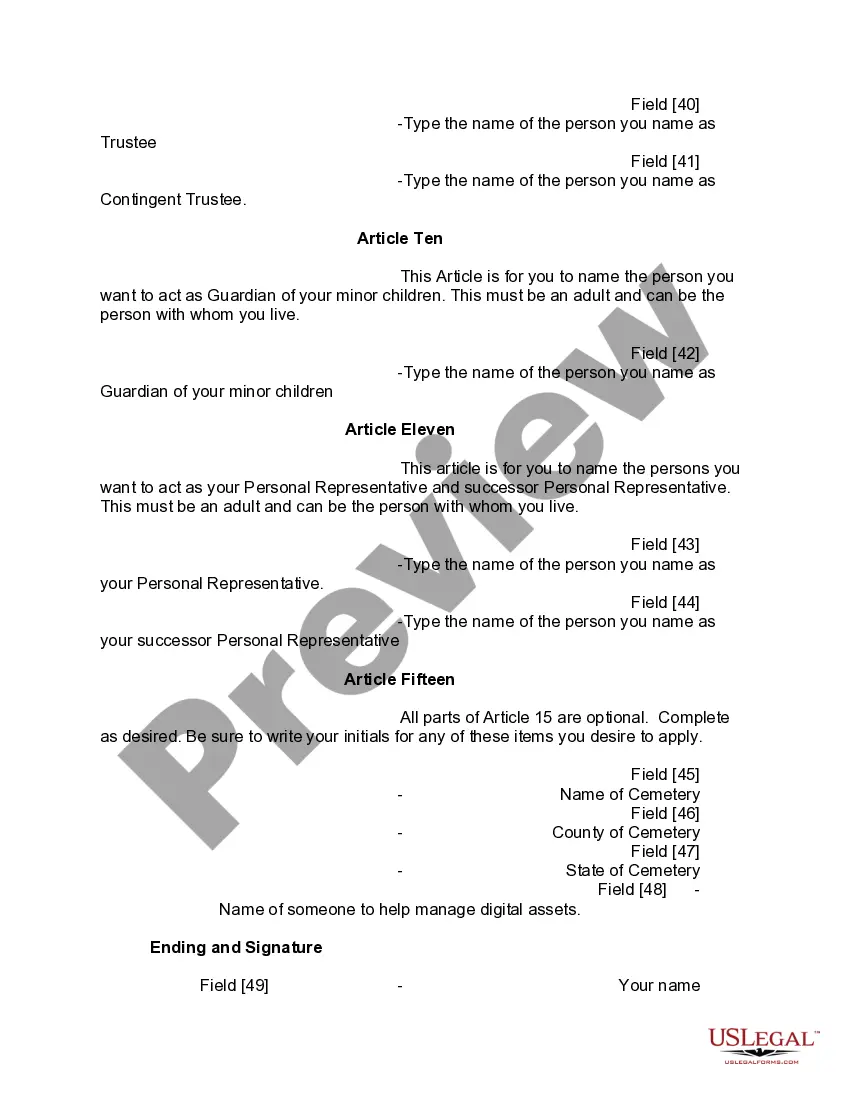
- Trustee Appointment: Allows for the appointment of a trustee to manage assets for minor children.
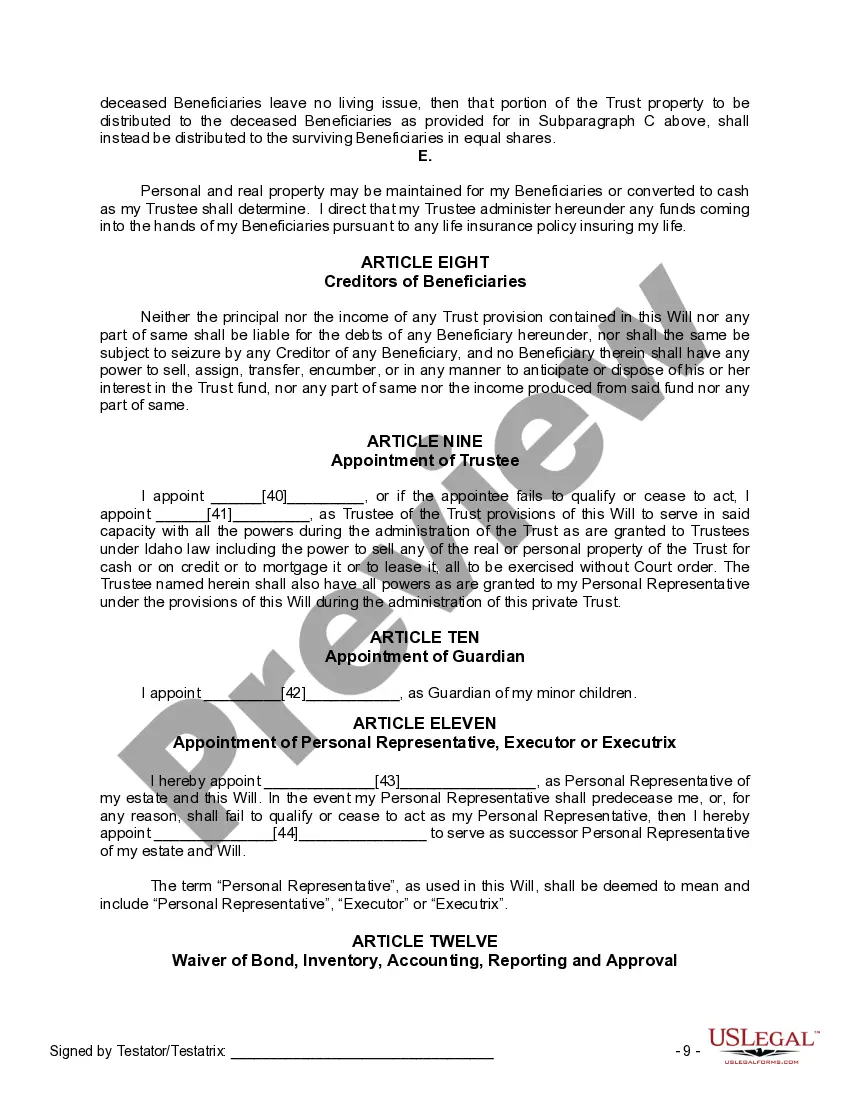
- Guardian Appointment: Names a guardian for minor children in case of the parentsâ death.
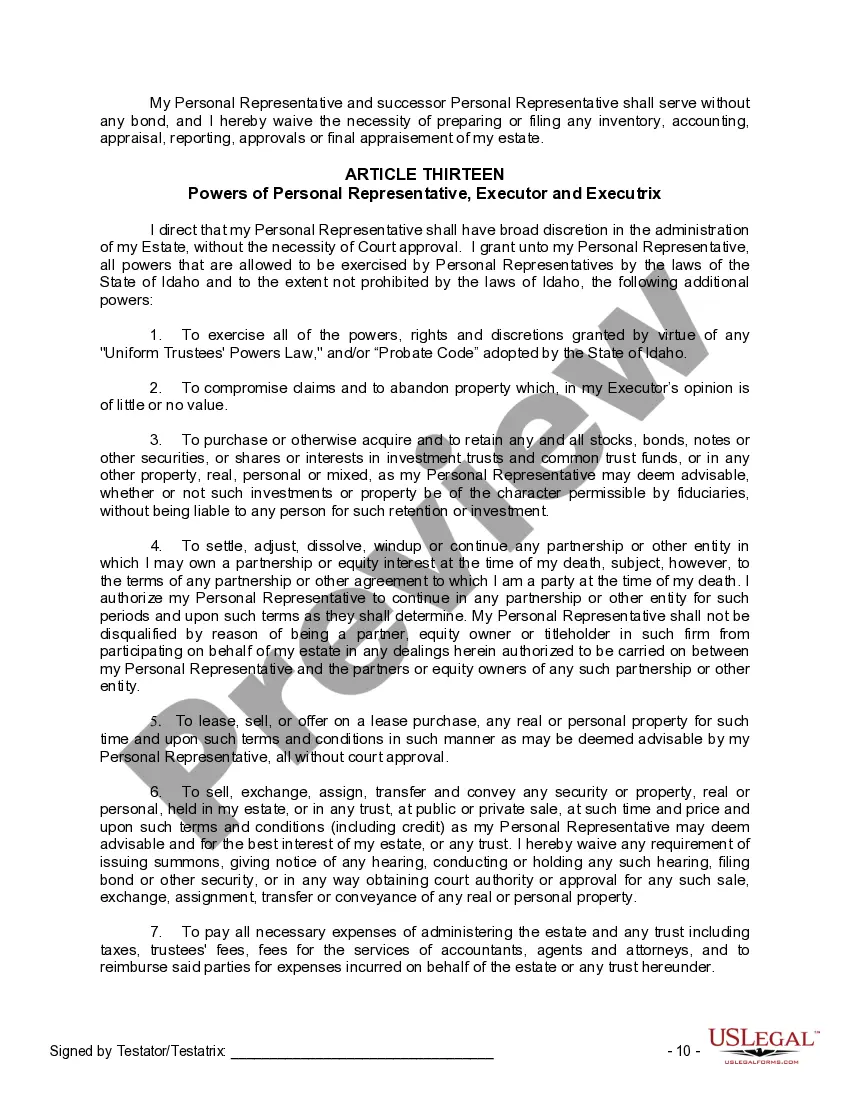
- Personal Representative: Designates someone to administer the estate.



When this form is needed
This Mutual Will is essential when an unmarried couple wishes to make legally binding decisions regarding their estate. It is particularly important when there are minor children involved, ensuring that both partners can provide for their children's future and have a clear plan for asset distribution upon their passing.
Who needs this form
- Unmarried couples living together with minor children.
- Individuals who want to ensure their partner is provided for upon their death.
- Parents who wish to establish a plan for their minor children's care and asset management.
Completing this form step by step
- Identify the parties involved, including both partners and their minor children.
- Fill out the specific directions regarding the allocation of property and assets.
- Designate a trustee to manage any assets intended for minor children.
- Choose a guardian for the minor children, ensuring their needs will be met if both parents pass away.
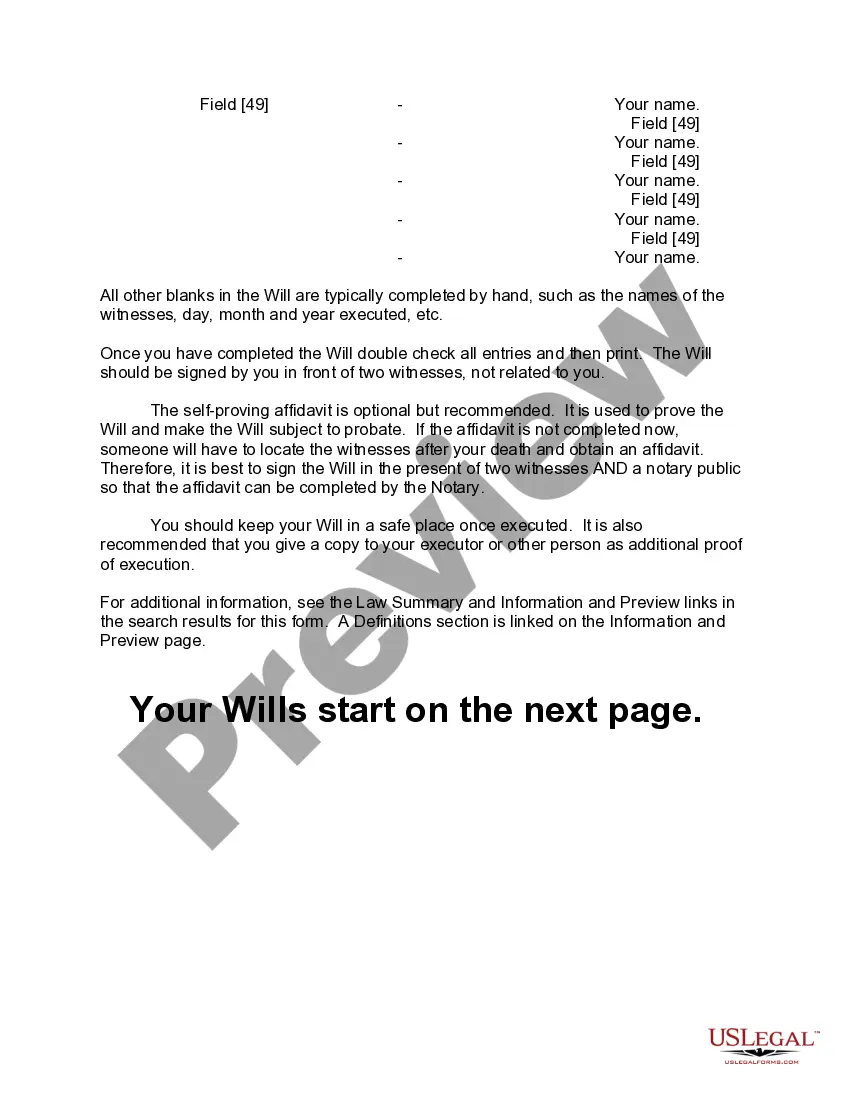
- Ensure the wills are signed in the presence of two witnesses and, if required, notarized.
Is notarization required?
Yes, this form must be notarized to be legally valid in Idaho. Having the wills notarized ensures they are self-proving, which simplifies the probate process. US Legal Forms offers integrated online notarization services, allowing for secure video calls at any time without the need for travel.
Get your form ready online
Our built-in tools help you complete, sign, share, and store your documents in one place.
Make edits, fill in missing information, and update formatting in US Legal Forms—just like you would in MS Word.
Download a copy, print it, send it by email, or mail it via USPS—whatever works best for your next step.
Sign and collect signatures with our SignNow integration. Send to multiple recipients, set reminders, and more. Go Premium to unlock E-Sign.
If this form requires notarization, complete it online through a secure video call—no need to meet a notary in person or wait for an appointment.
We protect your documents and personal data by following strict security and privacy standards.

Make edits, fill in missing information, and update formatting in US Legal Forms—just like you would in MS Word.

Download a copy, print it, send it by email, or mail it via USPS—whatever works best for your next step.

Sign and collect signatures with our SignNow integration. Send to multiple recipients, set reminders, and more. Go Premium to unlock E-Sign.

If this form requires notarization, complete it online through a secure video call—no need to meet a notary in person or wait for an appointment.

We protect your documents and personal data by following strict security and privacy standards.
Typical mistakes to avoid
- Neglecting to have the will signed by witnesses, which may lead to invalidation.
- Failing to update the wills after major life changes, such as a new child or change in financial status.
- Not clearly defining guardianship terms, which can cause confusion for the childrenâs caretaking in unforeseen circumstances.
Benefits of completing this form online
- Convenience of accessing and completing documents from home.
- Editability allows users to alter details in real time as family situations change.
- Reliable templates drafted by licensed attorneys, ensuring legal compliance.
Looking for another form?


Form popularity
FAQ
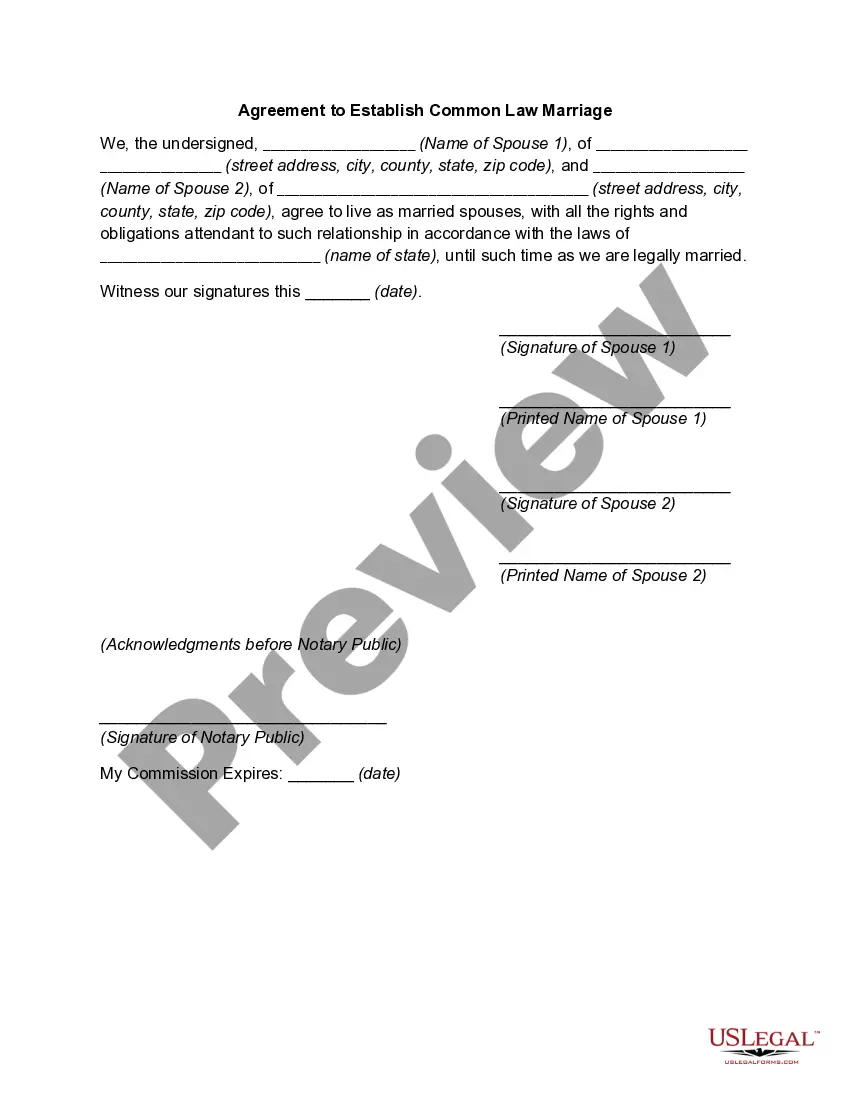
When you live with someone for seven years without being married, it is often referred to as a long-term cohabitation or a common-law relationship, depending on the jurisdiction. In Idaho, common law marriage is not recognized, so having legal documents like Idaho Mutual Wills becomes crucial for protecting each partner's interests. This legal framework ensures that both partners' rights, especially in relation to minor children, are safeguarded.
The reality is, however, that both you and your spouse should each have your own will, and it should be planned as soon as possible. Some couples think that they can have one joint will together, but this is not a sound approach.
Wills Law in Idaho: Overview In the state of Idaho, testators must have their wills signed by at least two witnesses who either witnessed the actual signing, or the testator's own acknowledgment of the signing.Valid if signature and material provisions are in handwriting of testator; does not need witnesses.
A surviving unmarried partner can make a claim against a deceased partner's estate under the Inheritance (Provision for Family and Dependants) Act 1975 if there is no Will.However, there are no guarantees to entitlement and the process can be time consuming and expensive it is much simpler to have a Will in place.
If one partner dies without leaving a will, the surviving partner will not automatically inherit anything unless the couple owned property jointly. As an unmarried couple, you need to make wills if you wish to make sure that the other partner inherits.
An adult can make a valid will without notifying their wife or husband. Not telling a spouse would be unusual, but not illegal.
"It would become part of the probate estate." One option is to make sure both of you are named as joint owners on the deed, "with rights of survivorship." In that case, generally speaking, you each equally own the house and are entitled to assume full ownership upon the death of the other.
Yes, and no. Yes, a spouse can be disinherited.The laws vary from state to state, but in a community property state like California, your spouse will have a legal right to one-half of the estate assets acquired during the marriage, otherwise known as community property.
Choose an online legal services provider or locate a will template. Carefully consider your distribution wishes. Identify a personal representative/executor. Understand the requirements to make your will legal. Make sure someone else knows about your will. Consult a lawyer if you have a more complicated estate.
If one partner dies without leaving a will, the surviving partner will not automatically inherit anything unless the couple owned property jointly.If you inherit money or property from an unmarried partner, you are not exempt from paying inheritance tax, as married couples are.