Idaho Mutual Wills containing Last Will and Testaments for Man and Woman living together not Married with No Children
What is this form?
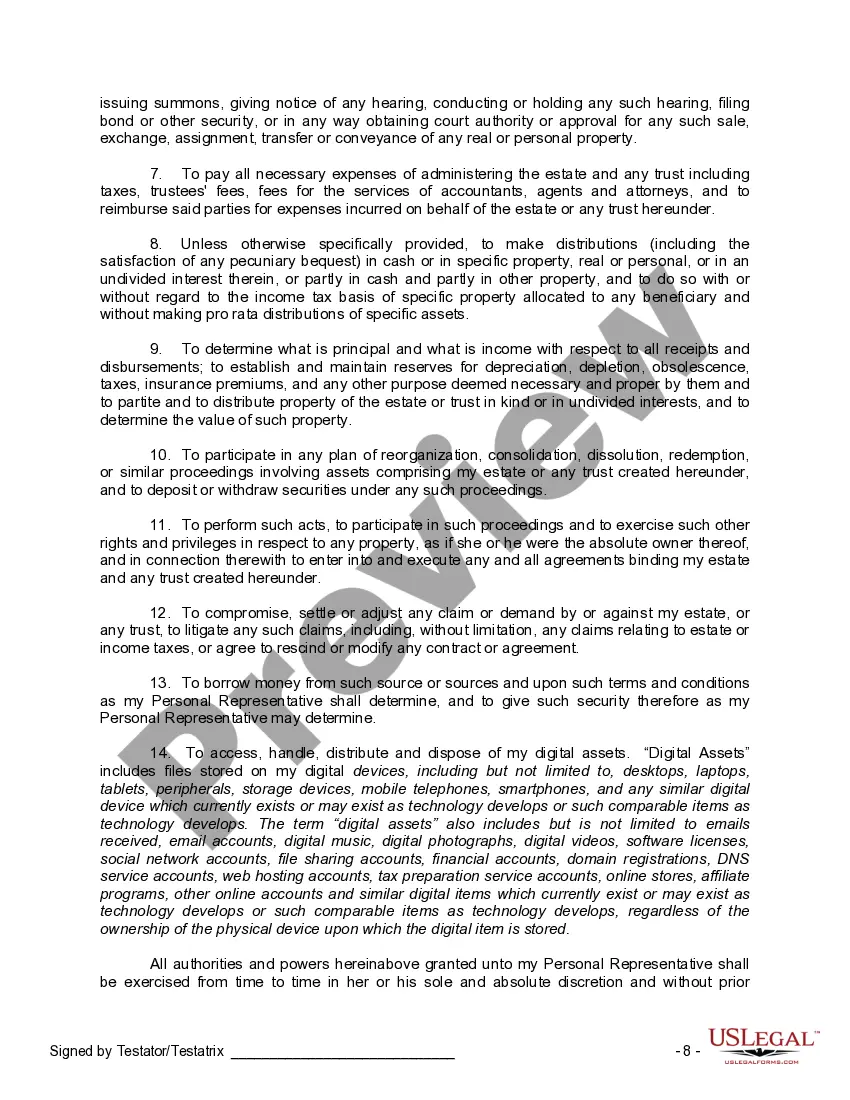
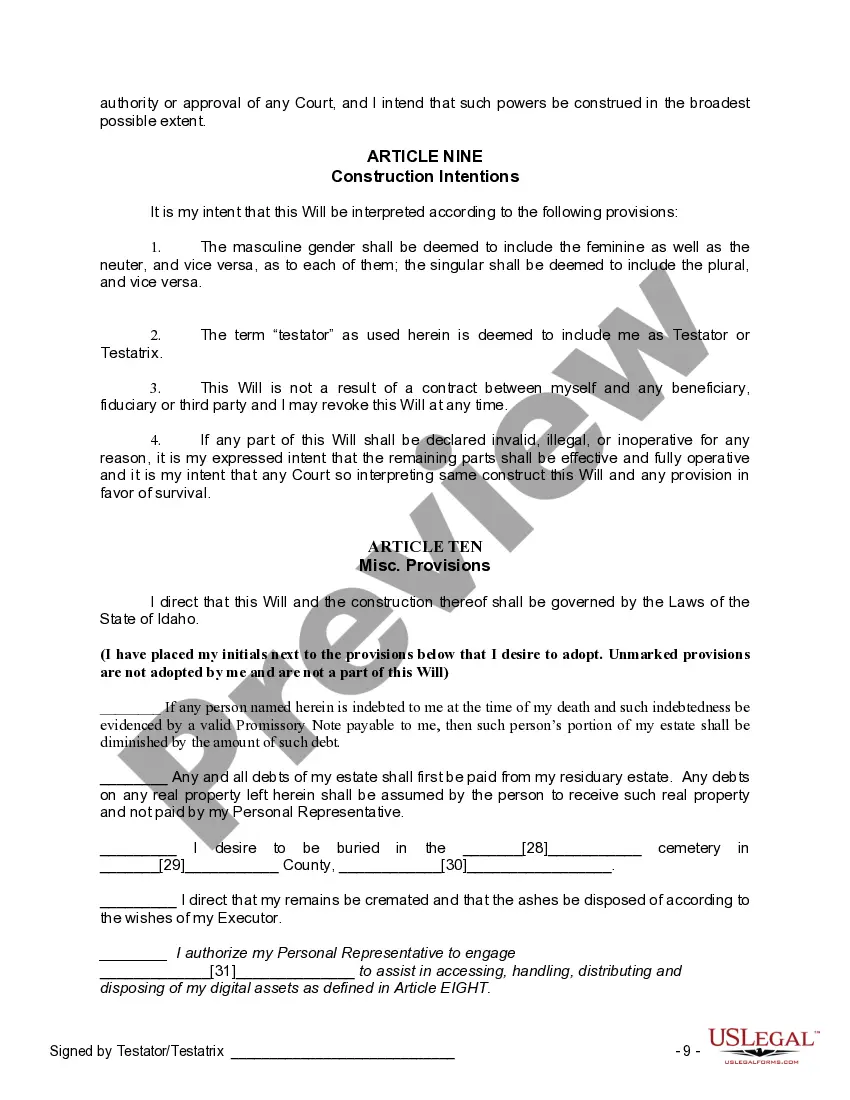
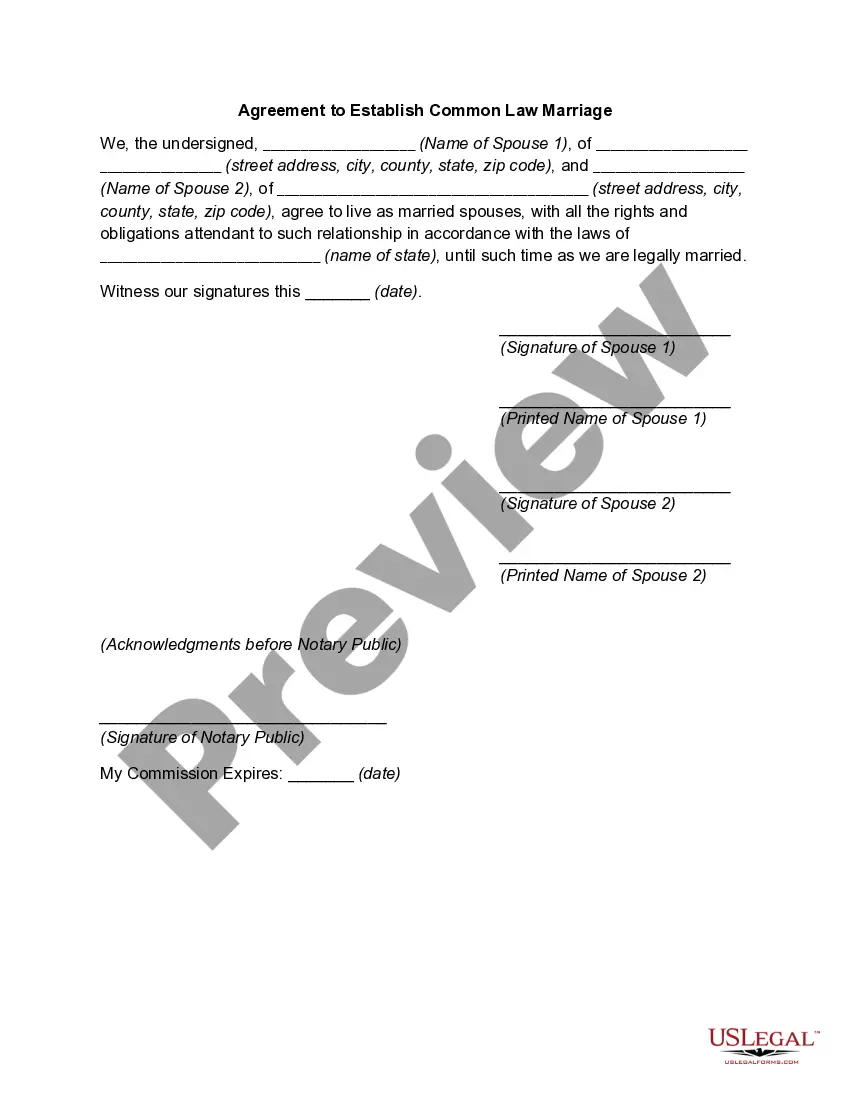
This Mutual Will package contains two Last Will and Testament documents designed specifically for a man and a woman living together but not married, with no children. These wills allow each partner to leave property to the other, ensuring that their wishes are clearly outlined and legally enforceable. This form is distinct from regular wills as it emphasizes mutual agreements between partners, acknowledging their relationship in terms of property distribution.
Main sections of this form
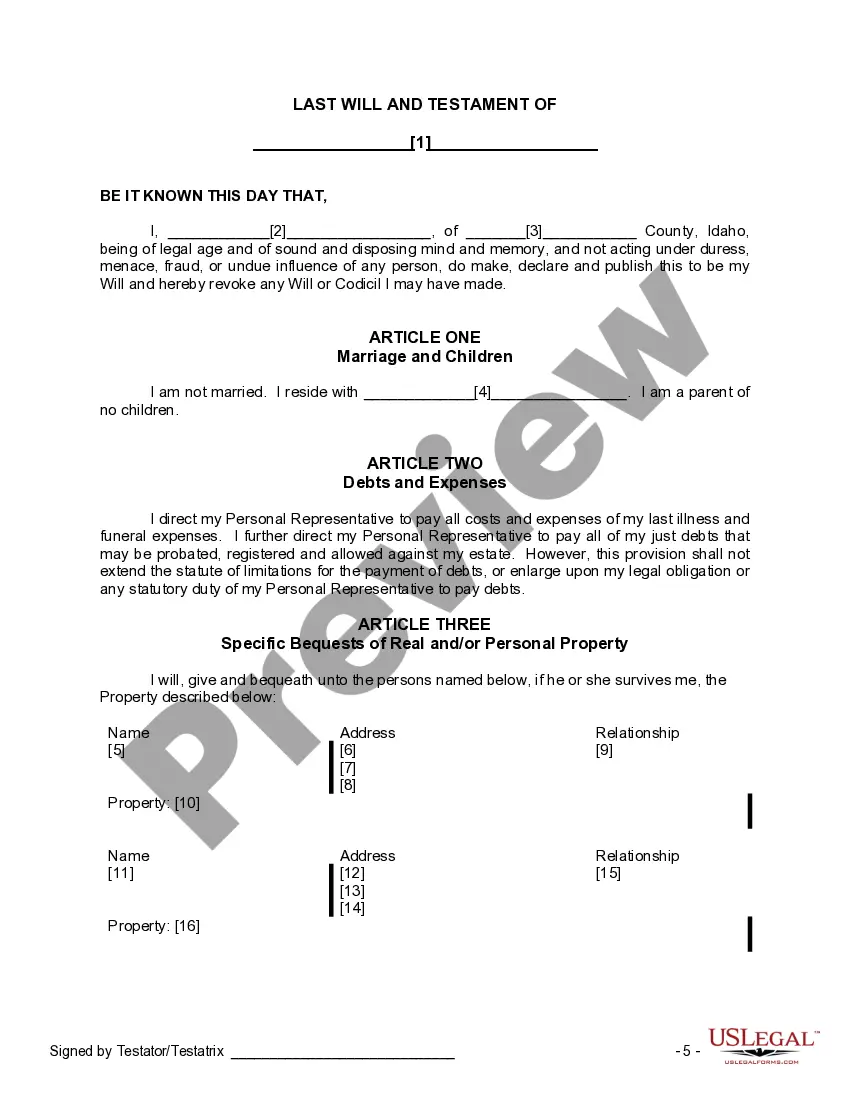
- Personal Information: Includes the names and addresses of the individuals creating the wills.
- Debts and Expenses: Outlines how debts and funeral costs should be settled by the personal representative.
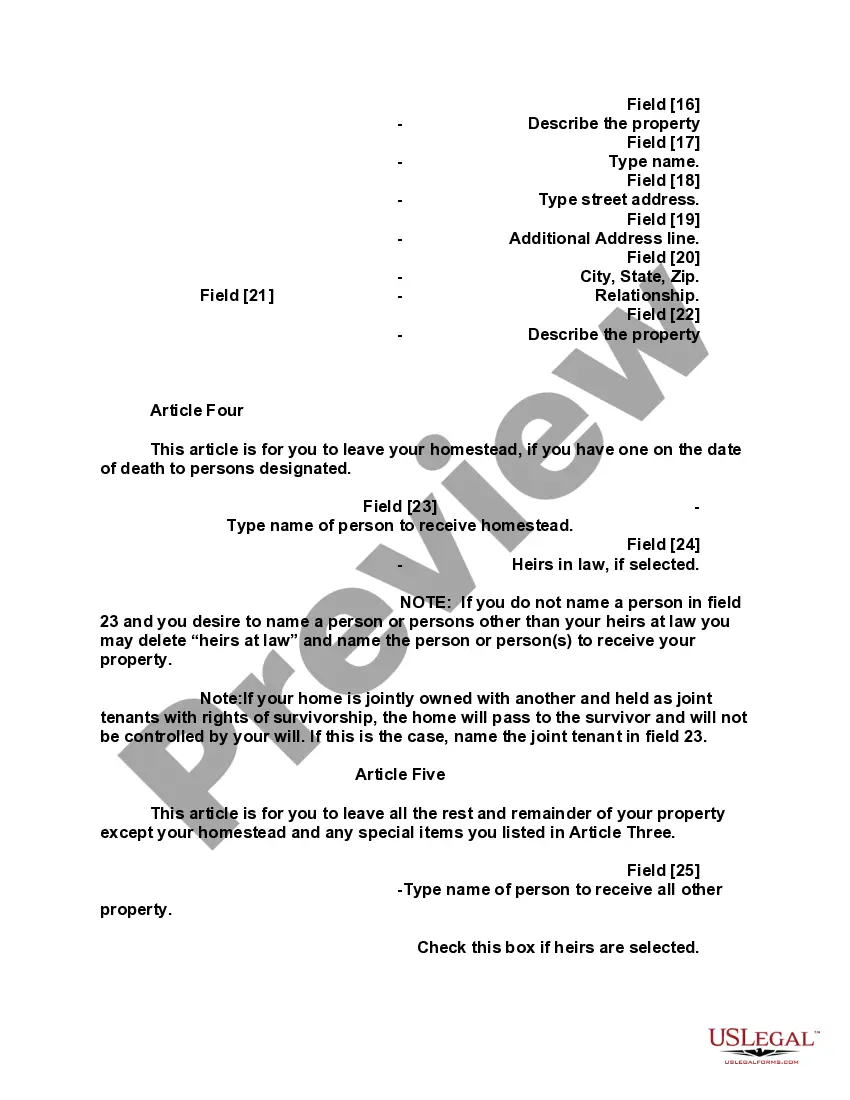
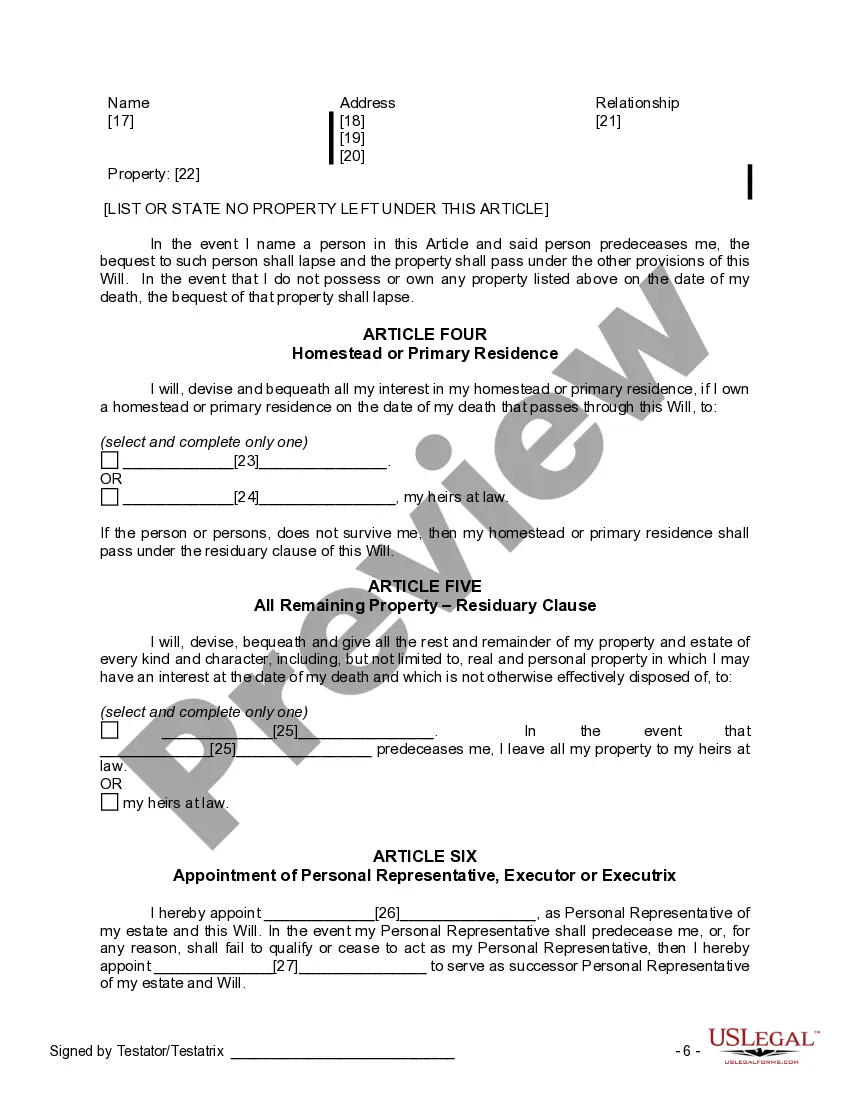
- Specific Bequests: Details any specific property or assets to be bequeathed to designated beneficiaries.
- Residuary Clause: Addresses how remaining property should be divided if not specifically mentioned in the will.
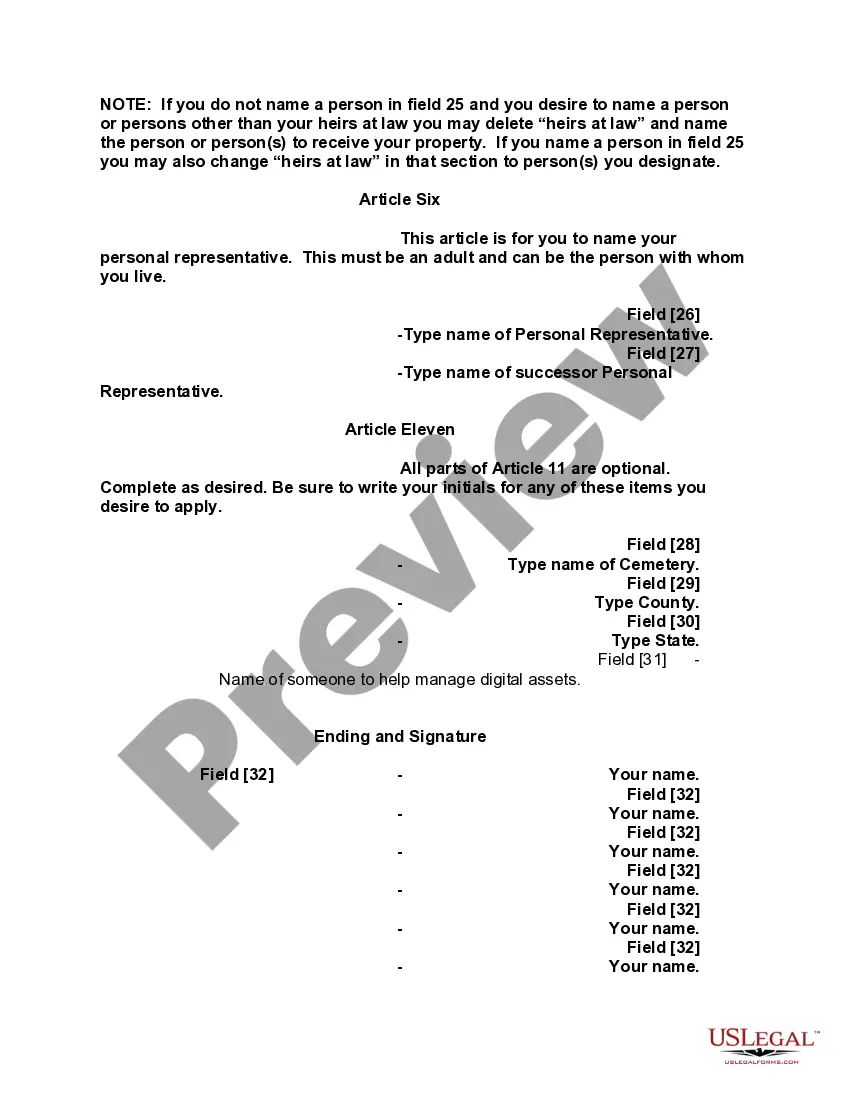
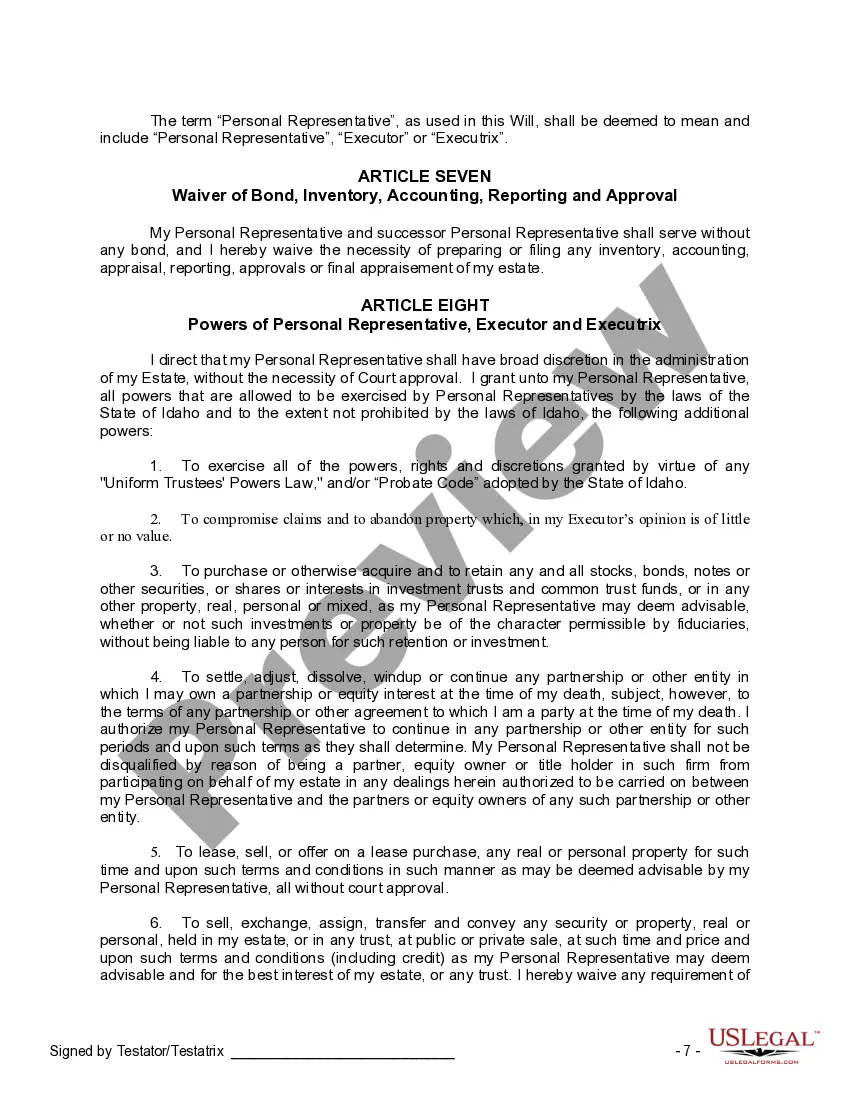
- Appointment of Personal Representative: Names the individual responsible for managing the estate and ensuring the will is executed according to the deceased's wishes.



When to use this document
This form should be used when two individuals, living together in a committed relationship but not legally married and without children, wish to formally outline their last wishes regarding their property. It's particularly useful for couples looking to ensure their assets are passed to one another or their chosen beneficiaries without the complexities often associated with estate distributions for unmarried partners.
Who can use this document
This form is intended for:
- Unmarried couples who wish to establish a mutual agreement about their assets.
- Couples living together in a long-term relationship without children.
- Individuals seeking clarity and legal documentation for their property distribution after death.
Completing this form step by step
- Identify the parties: Enter the names and addresses of both individuals creating the wills.
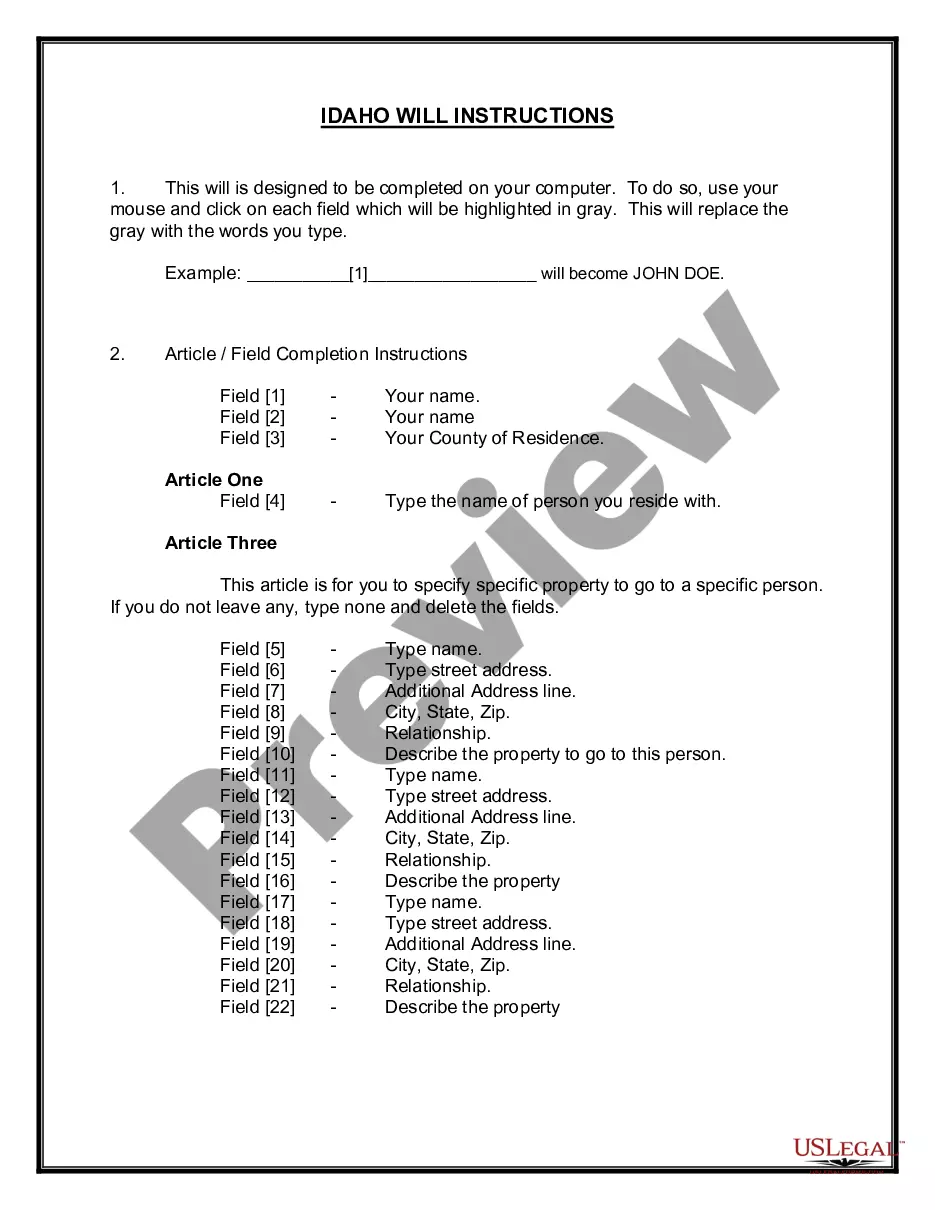
- Specify property: List the specific items or assets each partner wishes to bequeath to the other or third parties.
- Assign a personal representative: Choose and name the individual responsible for executing the will.
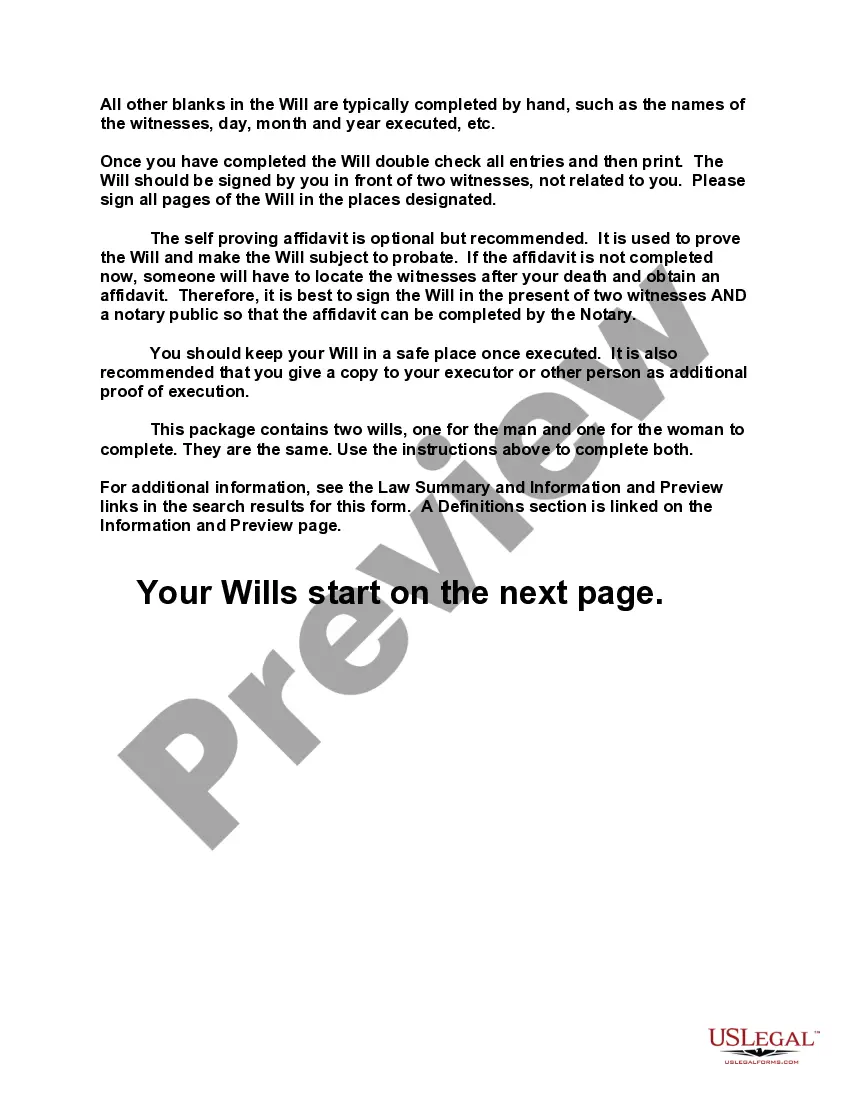
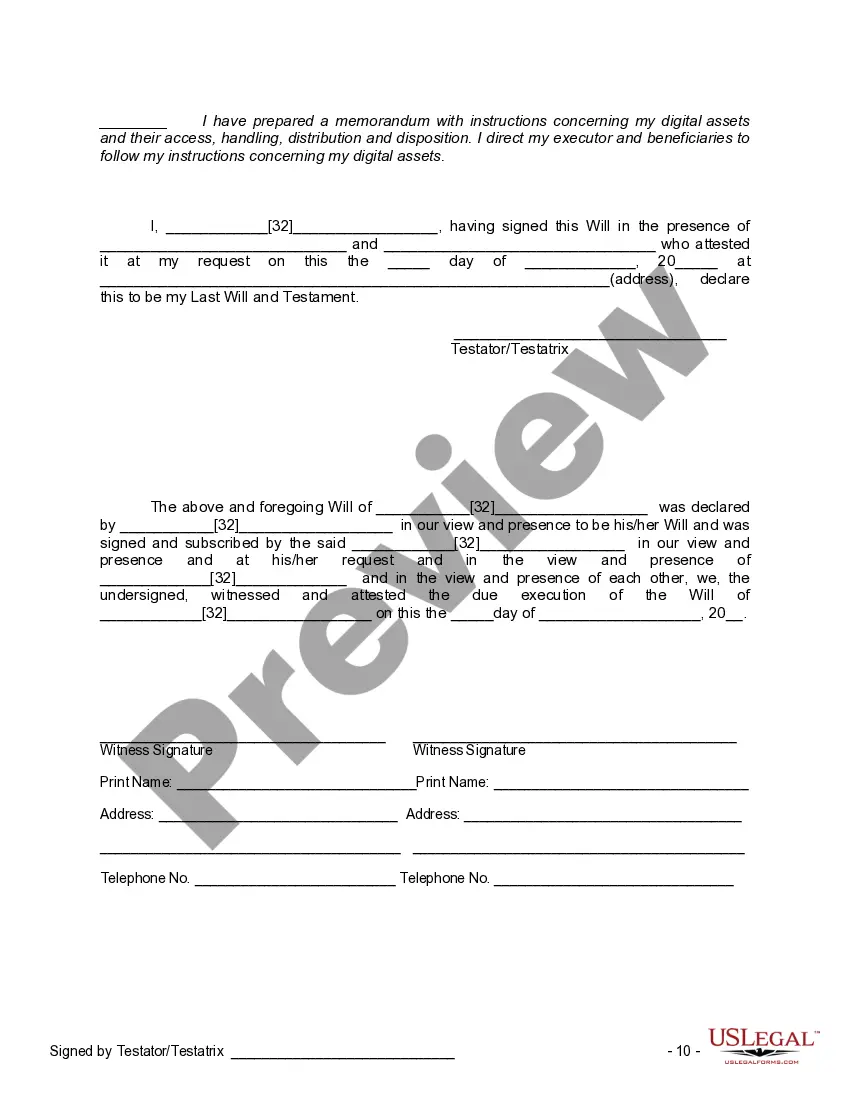
- Gather witnesses: Ensure that two individuals who do not have a stake in the will are present to witness the signing.
- Sign and date: Both partners must sign the wills, along with the witnesses, and include the date.
Notarization requirements for this form
Yes, this form must be notarized to be legally valid in Idaho. It requires the presence of a notary public to sign the wills, in addition to the witnesses. This process helps to affirm the authenticity of the signatures and intentions of the testators.
Get your form ready online
Our built-in tools help you complete, sign, share, and store your documents in one place.
Make edits, fill in missing information, and update formatting in US Legal Forms—just like you would in MS Word.
Download a copy, print it, send it by email, or mail it via USPS—whatever works best for your next step.
Sign and collect signatures with our SignNow integration. Send to multiple recipients, set reminders, and more. Go Premium to unlock E-Sign.
If this form requires notarization, complete it online through a secure video call—no need to meet a notary in person or wait for an appointment.
We protect your documents and personal data by following strict security and privacy standards.

Make edits, fill in missing information, and update formatting in US Legal Forms—just like you would in MS Word.

Download a copy, print it, send it by email, or mail it via USPS—whatever works best for your next step.

Sign and collect signatures with our SignNow integration. Send to multiple recipients, set reminders, and more. Go Premium to unlock E-Sign.

If this form requires notarization, complete it online through a secure video call—no need to meet a notary in person or wait for an appointment.

We protect your documents and personal data by following strict security and privacy standards.
Typical mistakes to avoid
- Failing to have both partners sign the wills in the presence of witnesses.
- Not clearly identifying all specific bequests or leaving out important assets.
- Not naming a personal representative to manage the estate.
- Not following state-specific laws on witnessing and notarization.
Benefits of using this form online
- Convenience: Download and complete the forms at your convenience.
- Editability: Easily customize the document to fit your unique situation.
- Reliability: Ensure the forms are drafted with legal standards in mind, reducing the risk of invalidation.
Legal use & context
- This form legally binds the wishes of both partners regarding property distribution.
- Using mutual wills ensures that the surviving partner's rights to inheritance are protected.
- The structure of this will helps avoid potential disputes that could arise from intestate succession laws.
What to keep in mind
- This form is essential for unmarried couples living together who wish to ensure their estate is managed according to their wishes.
- Each partner should have their own will within the mutual will package, emphasizing the importance of mutual agreements.
- Proper signing and notarization are crucial to uphold the legal validity of these wills.
Looking for another form?
Form popularity
FAQ
Value your estate. Get an idea of what your estate will be worth by drawing up a list of your assets and debts. Decide how you want to divide your estate. You may decide to leave a donation to a charity. Choose your executors. Write your will. Sign your will.
Property in a living trust. One of the ways to avoid probate is to set up a living trust. Retirement plan proceeds, including money from a pension, IRA, or 401(k) Stocks and bonds held in beneficiary. Proceeds from a payable-on-death bank account.
Include personal identifying information. Include a statement about your age and mental status. Designate an executor. Decide who will take care of your children. Choose your beneficiaries. List your funeral details. Sign and date your Last Will and Testament.
Contrary to popular belief, you do not need to have an attorney draft a will for you. Anyone can write this document on their own, and as long as it meets all of the legal requirements of the state, courts will recognize one you wrote yourself.
Bank accounts. Brokerage or investment accounts. Retirement accounts and pension plans. A life insurance policy.
Create the initial document. Start by titling the document Last Will and Testament" and including your full legal name and address. Designate an executor. Appoint a guardian. Name the beneficiaries. Designate the assets. Ask witnesses to sign your will. Store your will in a safe place.
An adult can make a valid will without notifying their wife or husband. Not telling a spouse would be unusual, but not illegal.
If one partner dies without leaving a will, the surviving partner will not automatically inherit anything unless the couple owned property jointly. As an unmarried couple, you need to make wills if you wish to make sure that the other partner inherits.