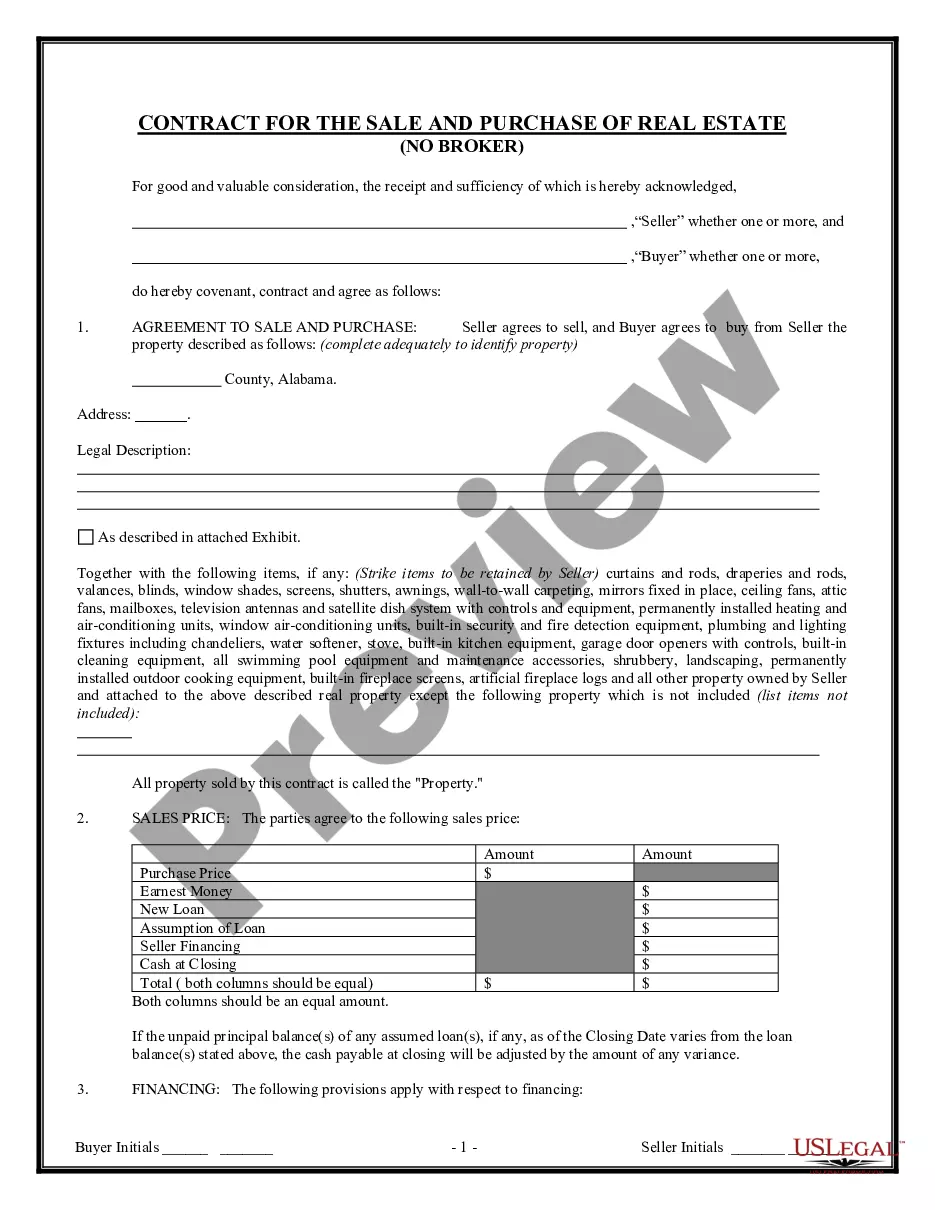
Iowa Last Will and Testament for other Persons
What is this form?
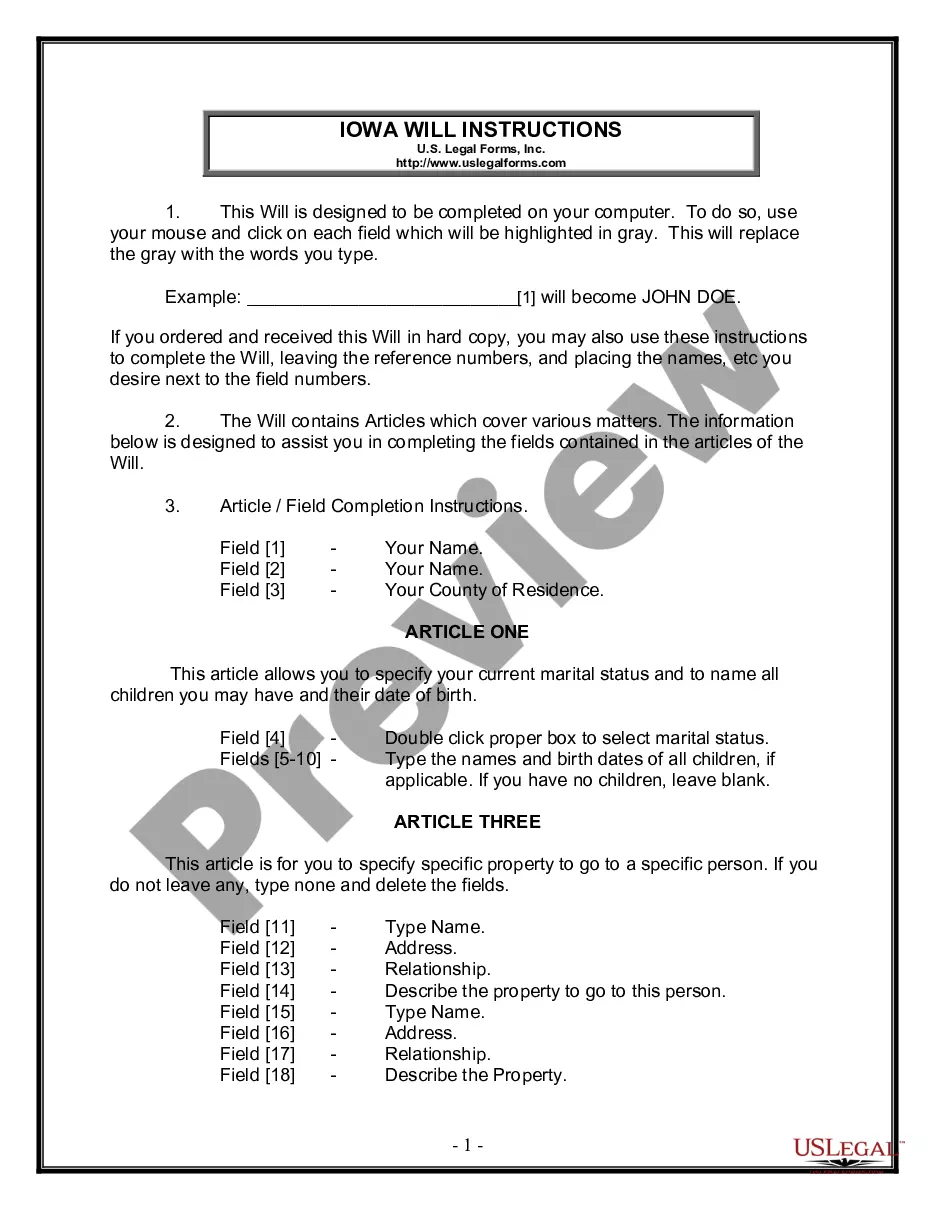
The Last Will and Testament for other Persons is a crucial legal document that specifies how your property and assets will be distributed upon your death. This will is suitable for individuals who may not find an existing will to suit their needs, and it outlines various provisions, including the appointment of executors, trustees, and guardians if necessary. Designed specifically for residents of Iowa, it allows users to complete the form conveniently on their computers.
What’s included in this form
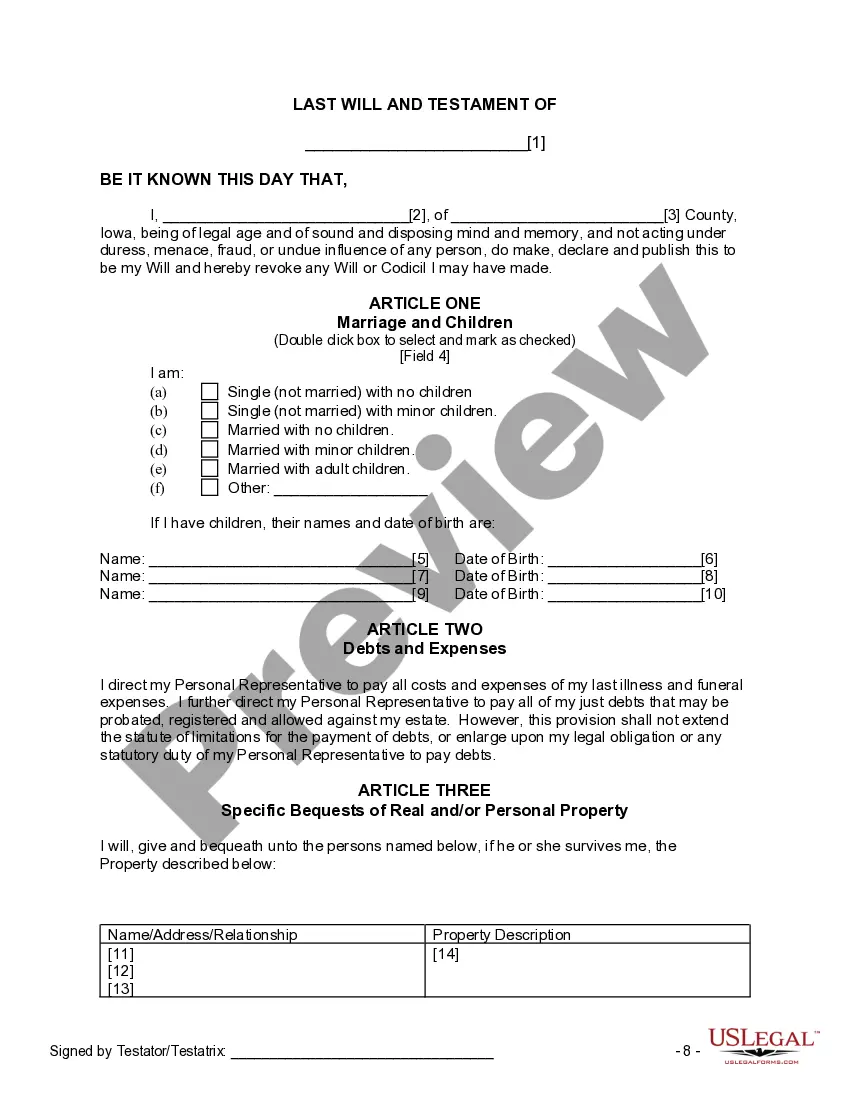
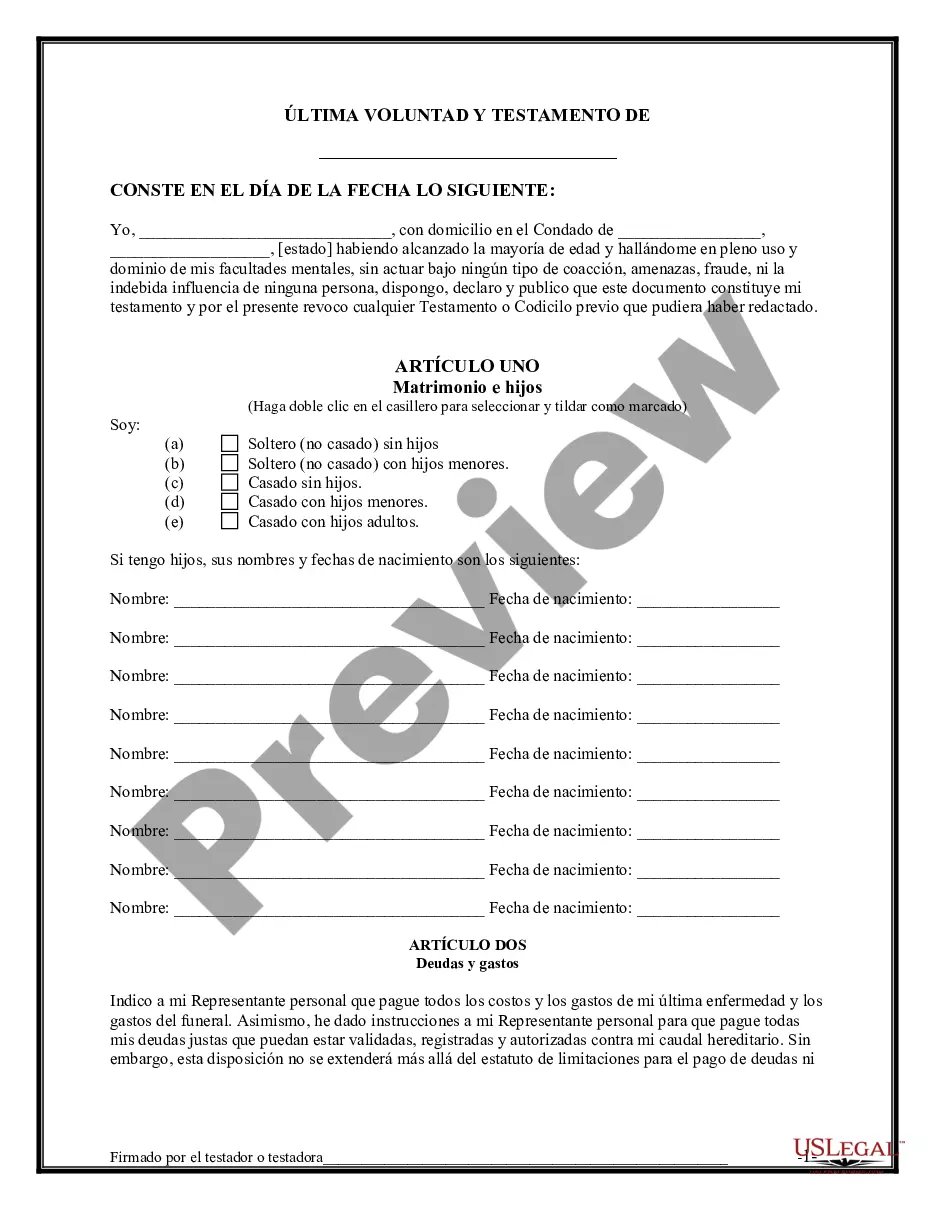
- Article One: Specifies marital status and names of children.
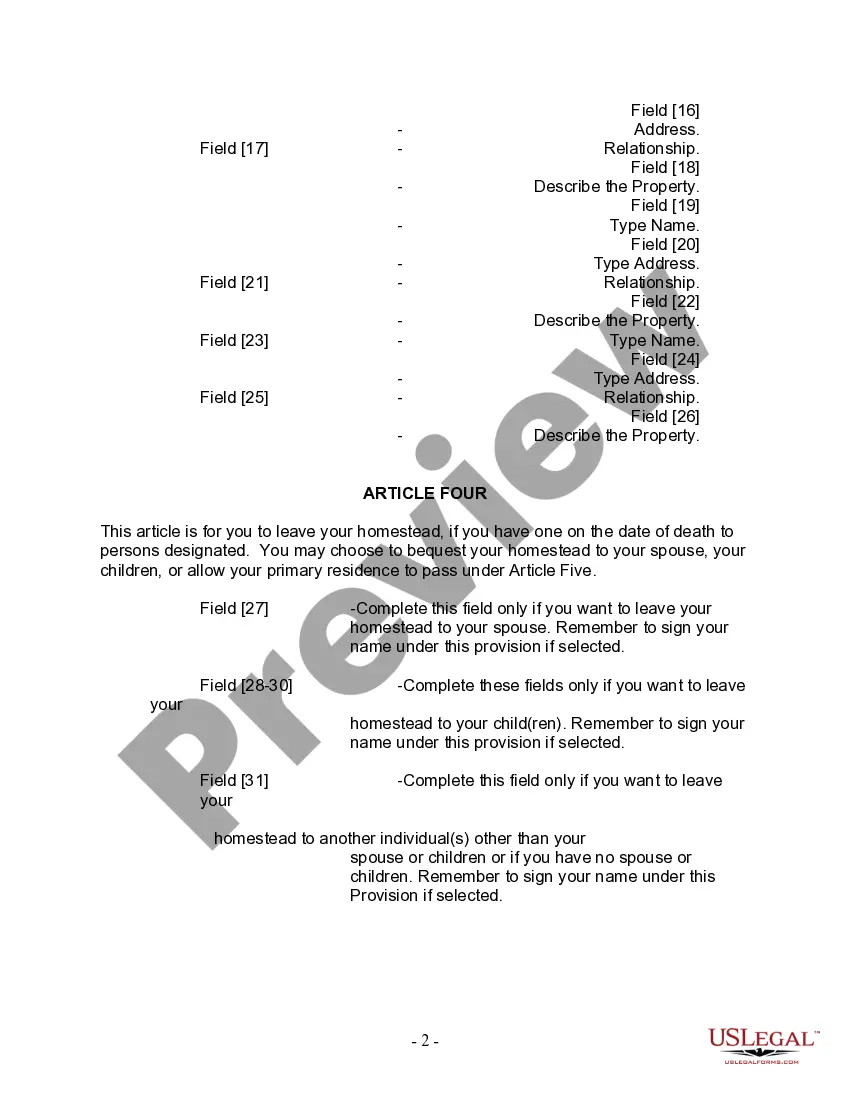
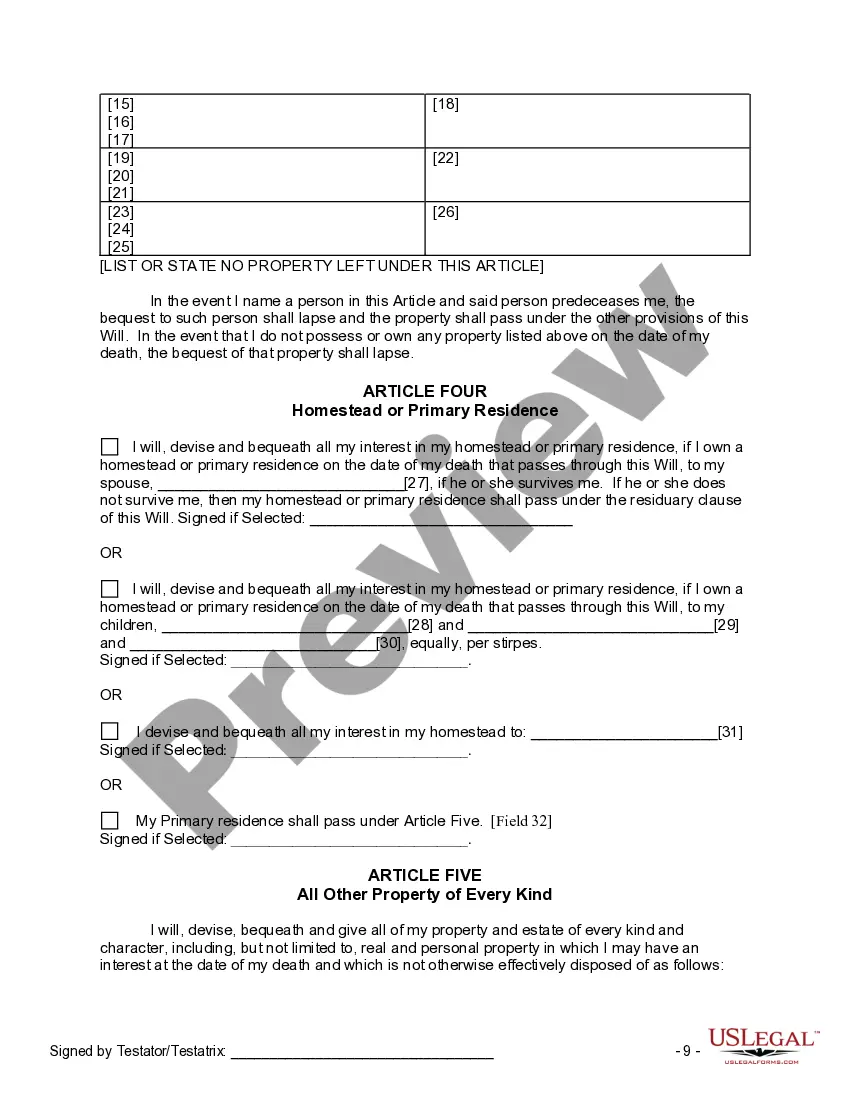
- Article Three: Lists specific bequests of property to named individuals.
- Article Four: Details the allocation of a homestead or primary residence.
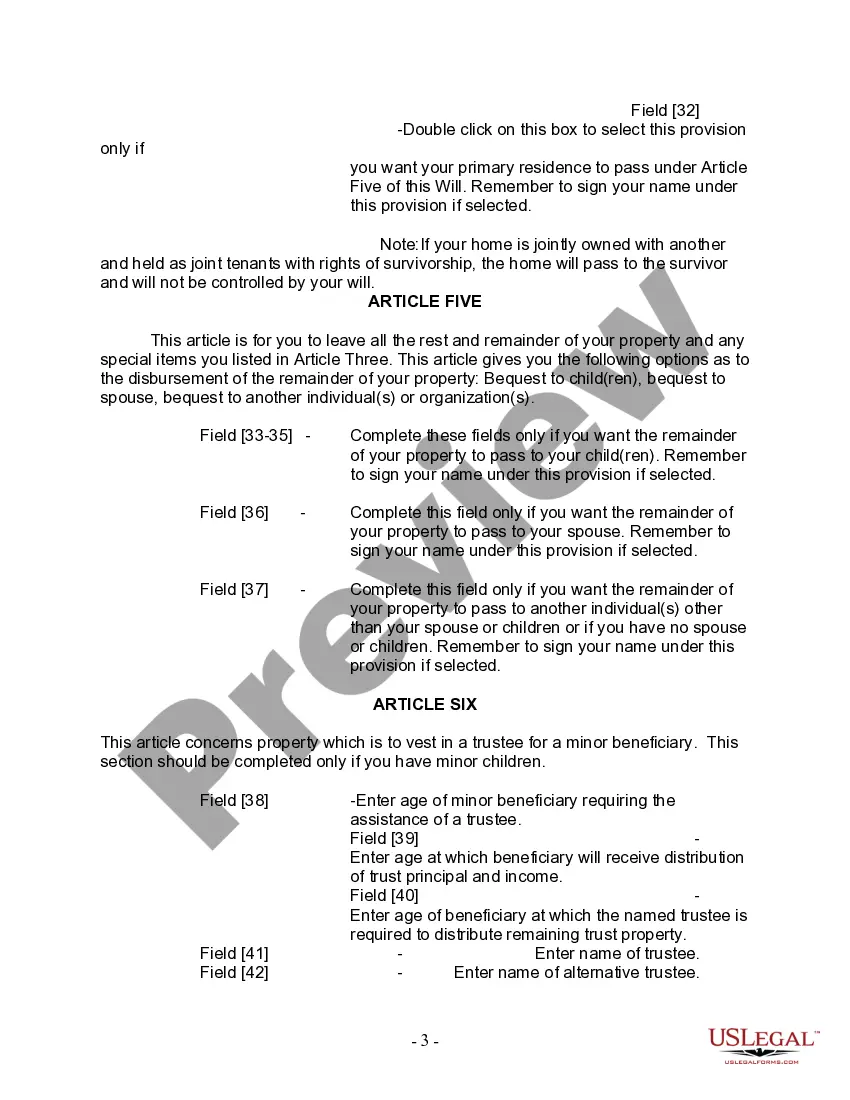
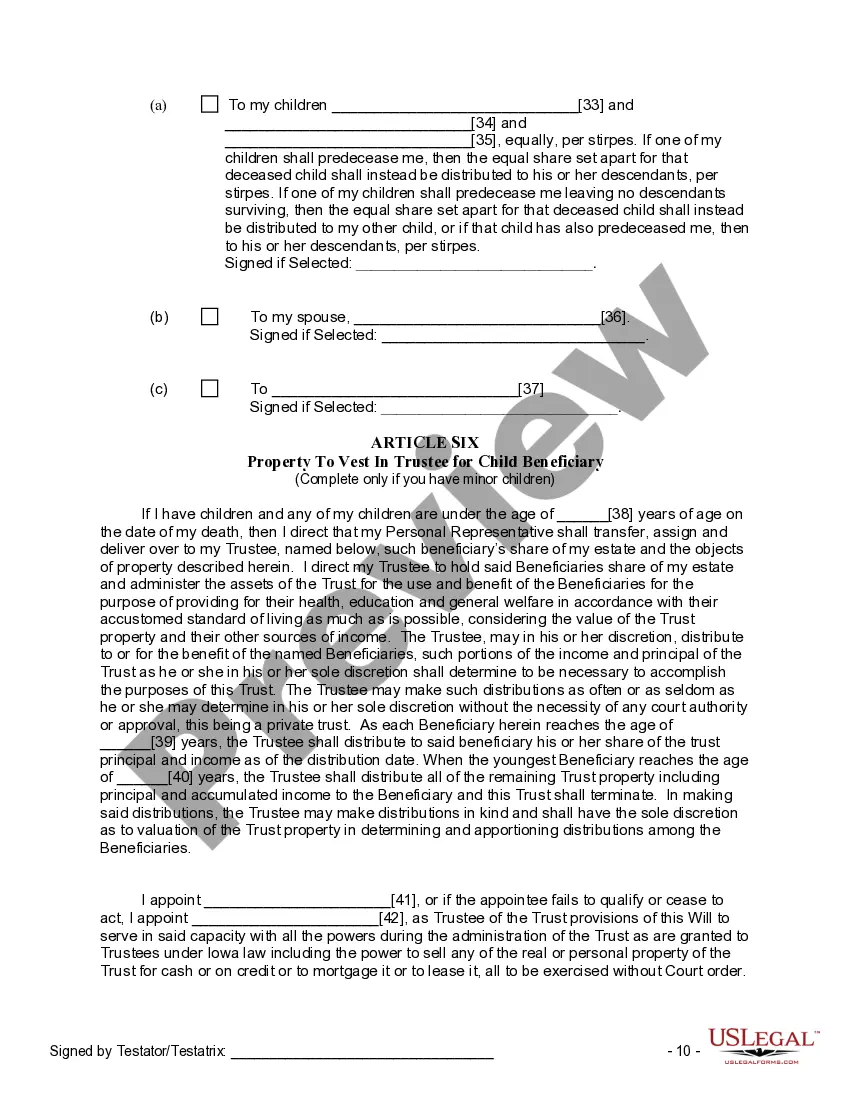
- Article Five: Distributes all other assets not specifically designated.
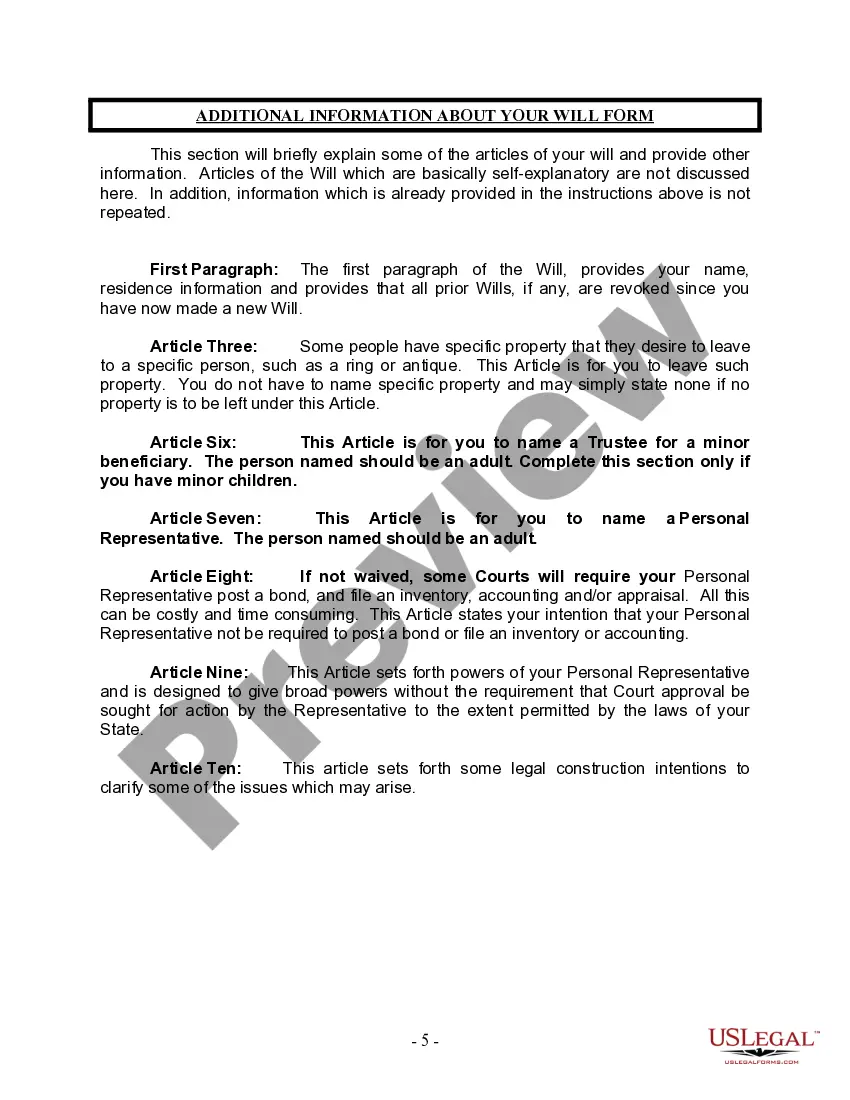
- Article Six: Addresses the creation of a trust for minor beneficiaries.
- Signature and witness requirements for legal validation.





When to use this form
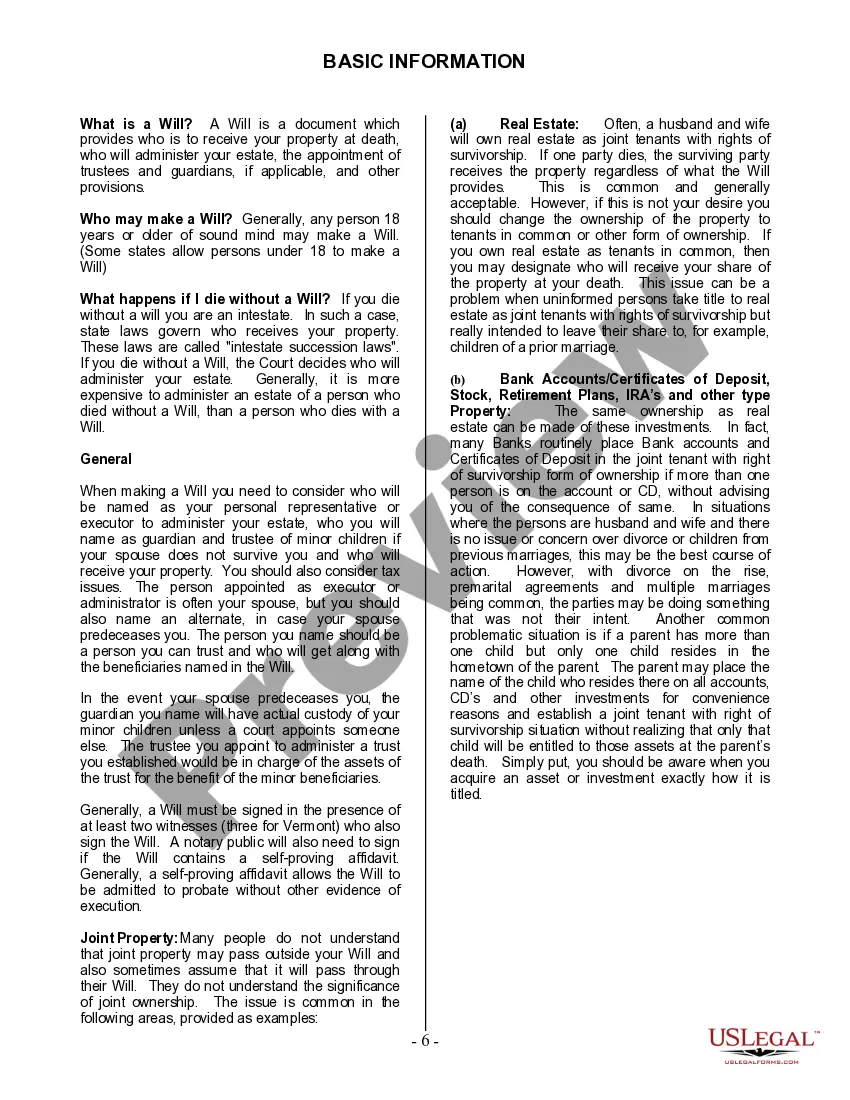
You should use this Last Will and Testament if you want to ensure that your wishes regarding property distribution are clear and legally binding. It is particularly useful in situations such as having children, wanting to specify particular assets for certain individuals, or outlining guardianship for minor children. This form is essential for anyone looking to avoid the complexities and costs associated with intestate succession laws.
Who this form is for
- Individuals aged 18 years or older who are of sound mind.
- Residents of Iowa who need a personalized will.
- Parents wanting to designate guardians for their children.
- Anyone with specific assets to bequeath to others.
How to prepare this document
- Enter your full name and county of residence in the designated fields.
- Specify your marital status and list any children along with their birth dates.
- Detail any specific property bequests in the appropriate sections.
- Indicate your wishes regarding the disposition of your homestead or primary residence.
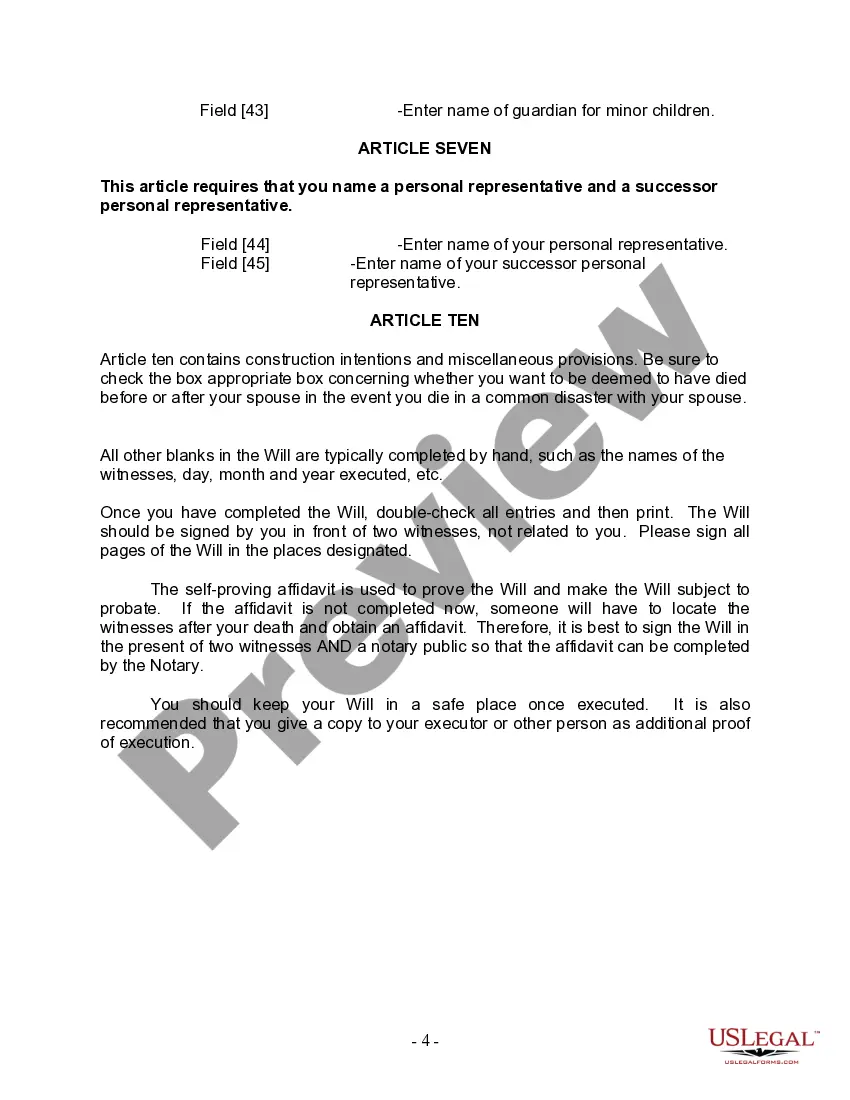
- Sign the will in the presence of two witnesses and, preferably, a notary public.
Is notarization required?
To make this form legally binding, it must be notarized. Our online notarization service, powered by Notarize, lets you verify and sign documents remotely through an encrypted video session.
Get your form ready online
Our built-in tools help you complete, sign, share, and store your documents in one place.
Make edits, fill in missing information, and update formatting in US Legal Forms—just like you would in MS Word.
Download a copy, print it, send it by email, or mail it via USPS—whatever works best for your next step.
Sign and collect signatures with our SignNow integration. Send to multiple recipients, set reminders, and more. Go Premium to unlock E-Sign.
If this form requires notarization, complete it online through a secure video call—no need to meet a notary in person or wait for an appointment.
We protect your documents and personal data by following strict security and privacy standards.

Make edits, fill in missing information, and update formatting in US Legal Forms—just like you would in MS Word.

Download a copy, print it, send it by email, or mail it via USPS—whatever works best for your next step.

Sign and collect signatures with our SignNow integration. Send to multiple recipients, set reminders, and more. Go Premium to unlock E-Sign.

If this form requires notarization, complete it online through a secure video call—no need to meet a notary in person or wait for an appointment.

We protect your documents and personal data by following strict security and privacy standards.
Avoid these common issues
- Failing to sign the document in front of required witnesses.
- Not specifying names or leaving fields blank where required.
- Assuming a will is valid without meeting state-specific signing requirements.
- Overlooking the importance of appointing a successor executor.
Why complete this form online
- Conveniently fill out the will using your computer.
- Edit the document easily to reflect any changes in circumstances.
- Ensure accuracy and comprehensiveness with guided fields.
- Access forms securely and save them for future reference.
What to keep in mind
- The Last Will and Testament is vital for ensuring your estate is managed according to your wishes.
- Proper execution by signing and witnessing is critical for the document's validity.
- Designating guardians for minor children is a key function of this will.
- This form is designed specifically for use in Iowa, adhering to state regulations.
Looking for another form?

Form popularity
FAQ
You can read, type, print, and staple at the will maker's direction. But you must not decide or even weigh in on the terms of the will. Do not sway the will maker in any way; you must be a neutral actor. Also, do not not use your own handwriting to fill in a fill-in-the-blanks will.
The most likely person to hold the document is the Executor selected in the Will. For example, a client names her adult daughter as the Executor of her Will. The client gives her adult daughter the original Will and tells her that she will need to bring this to the probate court upon her death.
Obtain a Will From Probate Court The best way to view the will is to get the probate court file number. The executor can give you this information. You may also be able to access the file number by phone, online, or in person at the courthouse by providing the deceased's name and date of death.
Obviously, the person who is named as executor or personal representative is entitled to a copy of the will. He or she is in charge of applying for probate, managing the decedent's property, and making sure the instructions in the will get carried out.
In general, in order for a will to be legally valid in Iowa, a will must be (1) in writing, (2) signed by the person making the will, (3) declared by the person making the will to be his or her will, and (4) witnessed by two competent witnesses who must sign in the presence of the person making the will.
Beneficiaries of a will must be notified after the will is accepted for probate. 3feff Moreover, probated wills are automatically placed in the public record. If the will is structured to avoid probate, there are no specific notification requirements.
If a beneficiary dies between the point when the Will was made and the death of the testator, under this scenario the beneficiary's estate will usually have no benefit from the Will. If the beneficiary has died before the testator, the benefit is said to have lapsed, although there are exceptions to this rule.
The person making the will must have signed it with the intention of creating a valid will. Two people must witness the will maker's signature. Those witnesses must either be present when the will maker signs or, the witness must be told by the will maker, that is his/her signature.
No, in Iowa, you do not need to notarize your will to make it legal. However, Iowa allows you to make your will "self-proving" and you'll need to go to a notary if you want to do that. A self-proving will speeds up probate because the court can accept the will without contacting the witnesses who signed it.