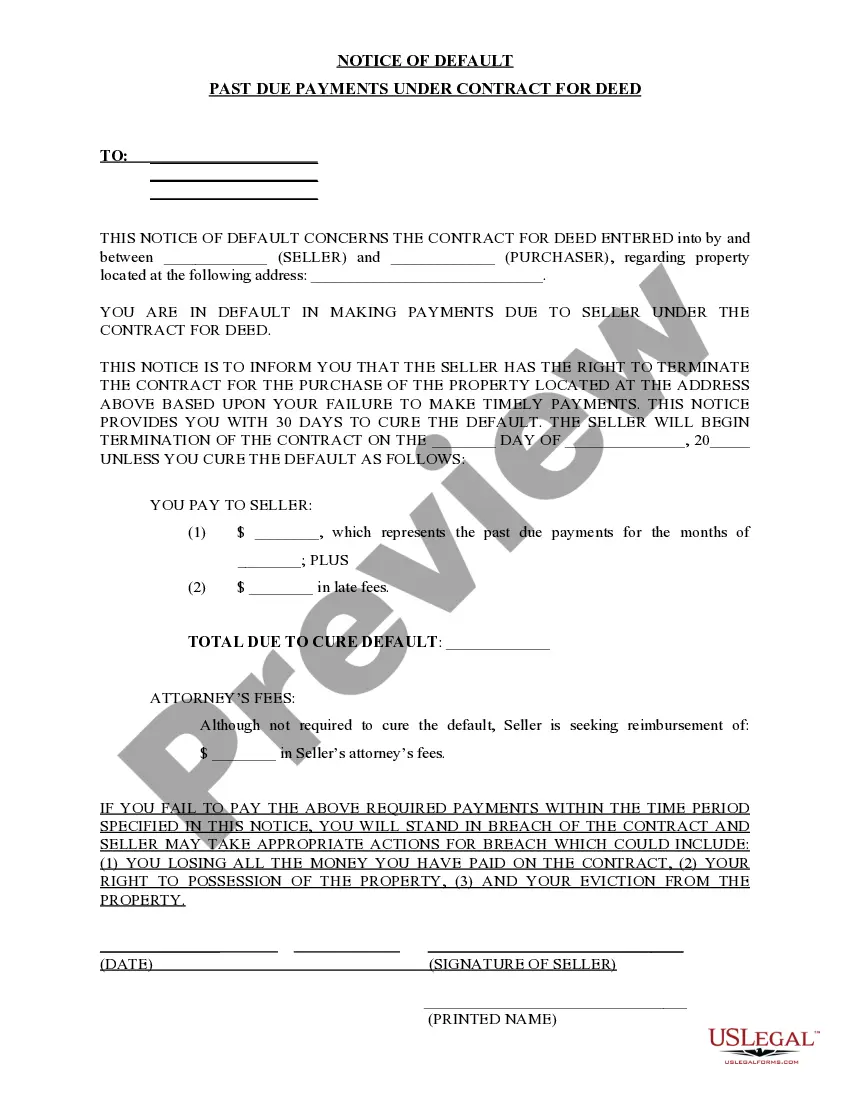
Iowa Notice of Default for Past Due Payments in connection with Contract for Deed
What is this form?
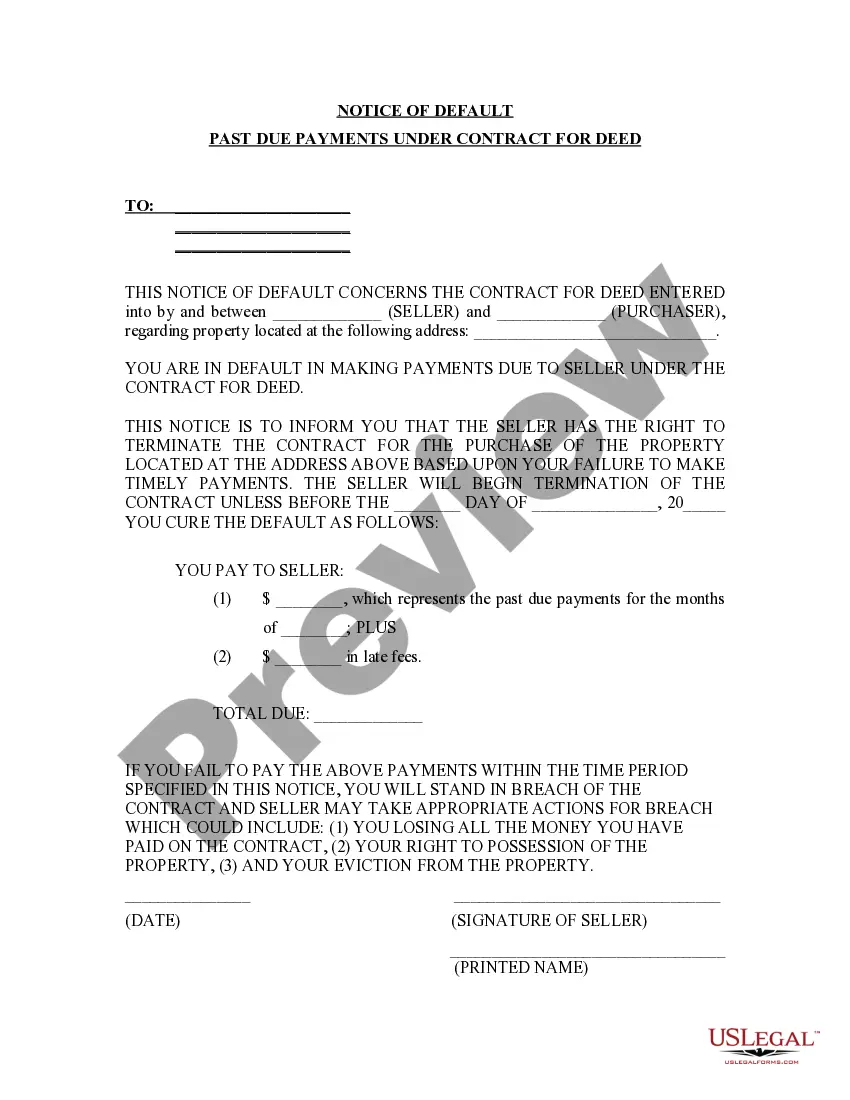
The Notice of Default for Past Due Payments in connection with Contract for Deed is a formal document used by sellers to notify purchasers about missed payments under a Contract for Deed arrangement. This form serves as the seller's warning that the terms of the contract have not been fulfilled, and it specifies the consequences of continued non-payment. It differs from other default notices by explicitly tying the notice to a Contract for Deed, ensuring that both parties understand the implications of late payments on the sale transaction.
Key parts of this document
- Identification of the seller and purchaser involved in the Contract for Deed.
- Details about the property being purchased under the contract.
- Specific amount of payment that is overdue and the original due date.
- A clear statement indicating the consequences of failing to remedy the default.
- Instructions on how to correct the payment delinquency.
Situations where this form applies
This form should be used when a purchaser has missed payments as specified in a Contract for Deed. It is essential for sellers to formally alert the purchasers of their default status and provide a chance to remedy the situation before escalation occurs. Using this notice can help prevent further complications or legal actions related to the contract.
Who needs this form
This form is intended for the following parties:
- Sellers of properties where a Contract for Deed is in use.
- Purchasers who are late on payments and need clarity on their obligations.
- Real estate agents or attorneys assisting in transactions involving Contract for Deed agreements.
How to prepare this document
To complete the Notice of Default for Past Due Payments in connection with Contract for Deed, follow these steps:
- Identify the full names and addresses of both the seller and purchaser.
- Clearly describe the property associated with the Contract for Deed.
- Enter the specific amount of the late payment and confirm the original payment due date.
- State the consequences for failing to resolve the late payment.
- Provide instructions on how the purchaser can correct the default.
Notarization guidance
This form does not typically require notarization unless specified by local law. However, it is advisable to consult local requirements to confirm whether notarization is necessary for your situation.
Get your form ready online
Our built-in tools help you complete, sign, share, and store your documents in one place.
Make edits, fill in missing information, and update formatting in US Legal Forms—just like you would in MS Word.
Download a copy, print it, send it by email, or mail it via USPS—whatever works best for your next step.
Sign and collect signatures with our SignNow integration. Send to multiple recipients, set reminders, and more. Go Premium to unlock E-Sign.
If this form requires notarization, complete it online through a secure video call—no need to meet a notary in person or wait for an appointment.
We protect your documents and personal data by following strict security and privacy standards.

Make edits, fill in missing information, and update formatting in US Legal Forms—just like you would in MS Word.

Download a copy, print it, send it by email, or mail it via USPS—whatever works best for your next step.

Sign and collect signatures with our SignNow integration. Send to multiple recipients, set reminders, and more. Go Premium to unlock E-Sign.

If this form requires notarization, complete it online through a secure video call—no need to meet a notary in person or wait for an appointment.

We protect your documents and personal data by following strict security and privacy standards.
Mistakes to watch out for
- Failing to include accurate details regarding payment amounts and due dates.
- Not providing clear instructions for how the purchaser can rectify the default.
- Using vague language that may lead to misunderstandings.
Advantages of online completion
- Convenient access to the form online, allowing for easy download and use.
- Editable formats that let sellers customize the document to fit their specific circumstances.
- Reliable templates drafted by licensed attorneys, ensuring legal compliance.
Key takeaways
- The Notice of Default informs purchasers of overdue payments under a Contract for Deed.
- It is a critical first step for sellers to address payment issues formally.
- Clear and accurate information is essential to avoid potential disputes and legal consequences.
Looking for another form?


Form popularity
FAQ
Typically, a bank can take anywhere from several months to over a year to complete the foreclosure on a house. This duration is often influenced by the homeowner’s response to the Iowa Notice of Default for Past Due Payments in connection with Contract for Deed. Factors such as court availability and any disputes from the borrower can extend this timeline. To navigate this process effectively, turning to platforms like USLegalForms can provide essential legal guidance and support.
A legal notice of default is an official communication sent by a lender when a borrower fails to make timely payments. This notice serves as a formal warning regarding the borrower’s Iowa Notice of Default for Past Due Payments in connection with Contract for Deed. It outlines the amount owed and the actions the lender may take if the situation is not rectified. Understanding this document is vital, as it marks the start of the foreclosure process.
In Iowa, a borrower generally faces foreclosure after missing three consecutive payments, which triggers the Minnesota Notice of Default for Past Due Payments in connection with Contract for Deed. However, the exact timeline can vary based on the terms outlined in the contract. It's crucial to address payment issues as soon as possible to avoid stepping into foreclosure territory. Consulting resources such as USLegalForms can help guide you through your options.
The foreclosure process in Iowa typically lasts between six months to a year, depending on various factors such as court schedules and lender practices. It starts with the issuance of an Iowa Notice of Default for Past Due Payments in connection with Contract for Deed. Once this notice is served, the borrower has a specific timeframe to respond and rectify the missed payments before the legal proceedings continue. Engaging with legal experts or platforms like USLegalForms can provide clarity during this crucial period.
A notice of default on a land contract is a formal notification indicating that the buyer has failed to make timely payments as agreed in the contract. This document initiates the process for the seller to potentially reclaim the property. When you receive an Iowa Notice of Default for Past Due Payments in connection with a Contract for Deed, it is essential to respond promptly. Understanding your rights and obligations can help protect your interests in the property.
Writing a contract for deed involves outlining specific terms between the buyer and seller. Start by including essential details such as payment schedule, interest rate, and property description. It is crucial to incorporate clauses regarding the Iowa Notice of Default for Past Due Payments in connection with Contract for Deed. Using a reliable platform like uslegalforms can simplify this process, helping you create a legally sound document that protects both parties.
Upon the default of a buyer under a land sales contract, the seller should issue an Iowa Notice of Default for Past Due Payments, informing the buyer of the situation. This notice outlines the default, and the actions required to remedy it. It is vital for sellers to document this process properly to protect their rights. Utilizing resources such as US Legal Forms can streamline this process and provide essential documents.
The timeframe to foreclose on a house in Iowa varies, but it typically takes several months to complete the process. Factors such as the type of foreclosure and potential delays in court can affect the duration. It is crucial for sellers to understand timeframes to effectively manage defaults under a Contract for Deed. An Iowa Notice of Default for Past Due Payments can help expedite the situation.
Yes, a seller can back out of a Contract for Deed under specific circumstances, particularly if the buyer defaults on payments. However, the seller must follow the appropriate legal procedures, such as issuing an Iowa Notice of Default for Past Due Payments. This process protects the seller's interests while ensuring compliance with Iowa law. Legal guidance can assist sellers in making informed decisions.
Iowa Code 654.20 addresses the provisions related to Contracts for Deed. This statute outlines the rights of sellers and buyers in cases of default, ensuring all parties understand their obligations. It also underscores the importance of issuing an Iowa Notice of Default for Past Due Payments when necessary. Familiarizing yourself with this code can help in navigating potential disputes effectively.