Hawaii Last Will and Testament for Divorced and Remarried Person with Mine, Yours and Ours Children
Overview of this form
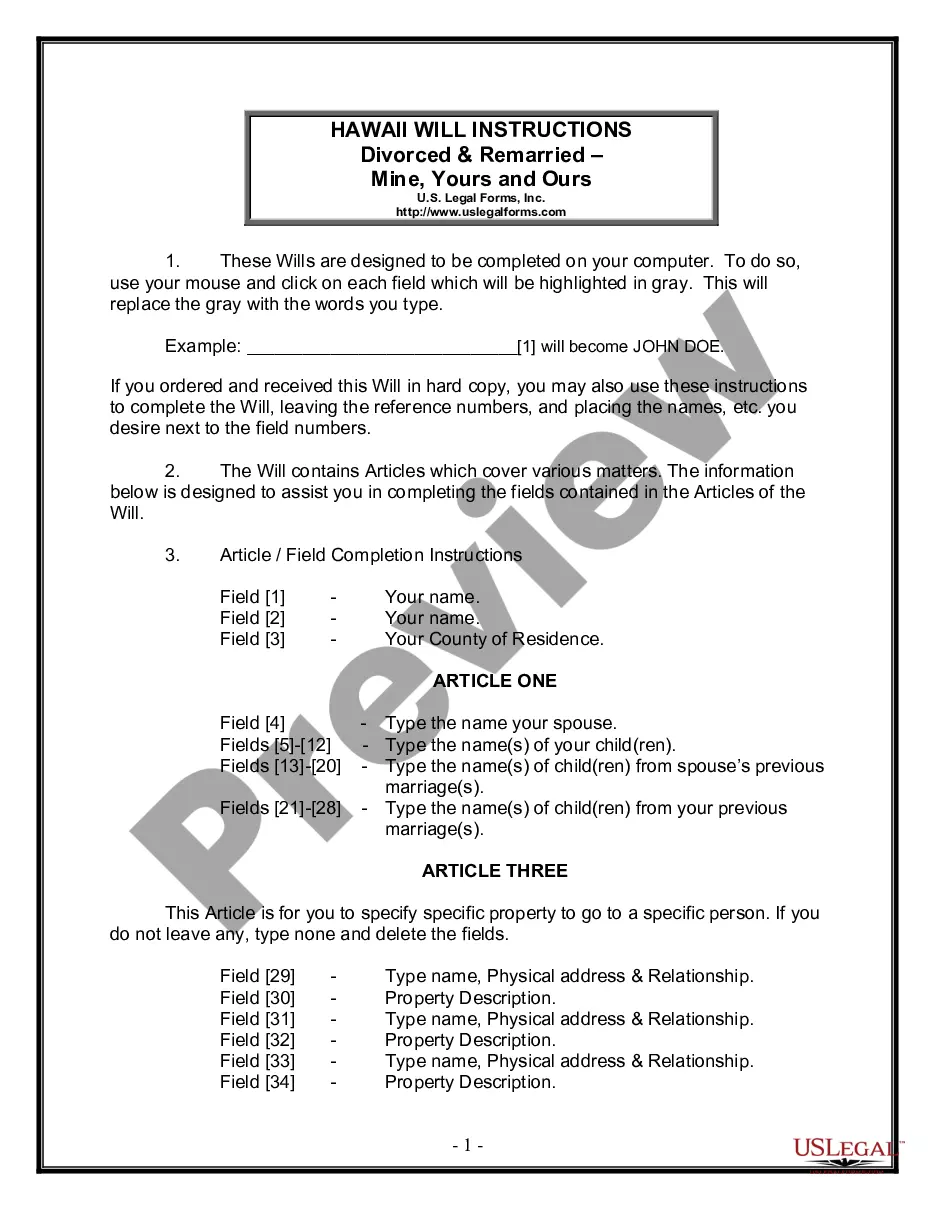
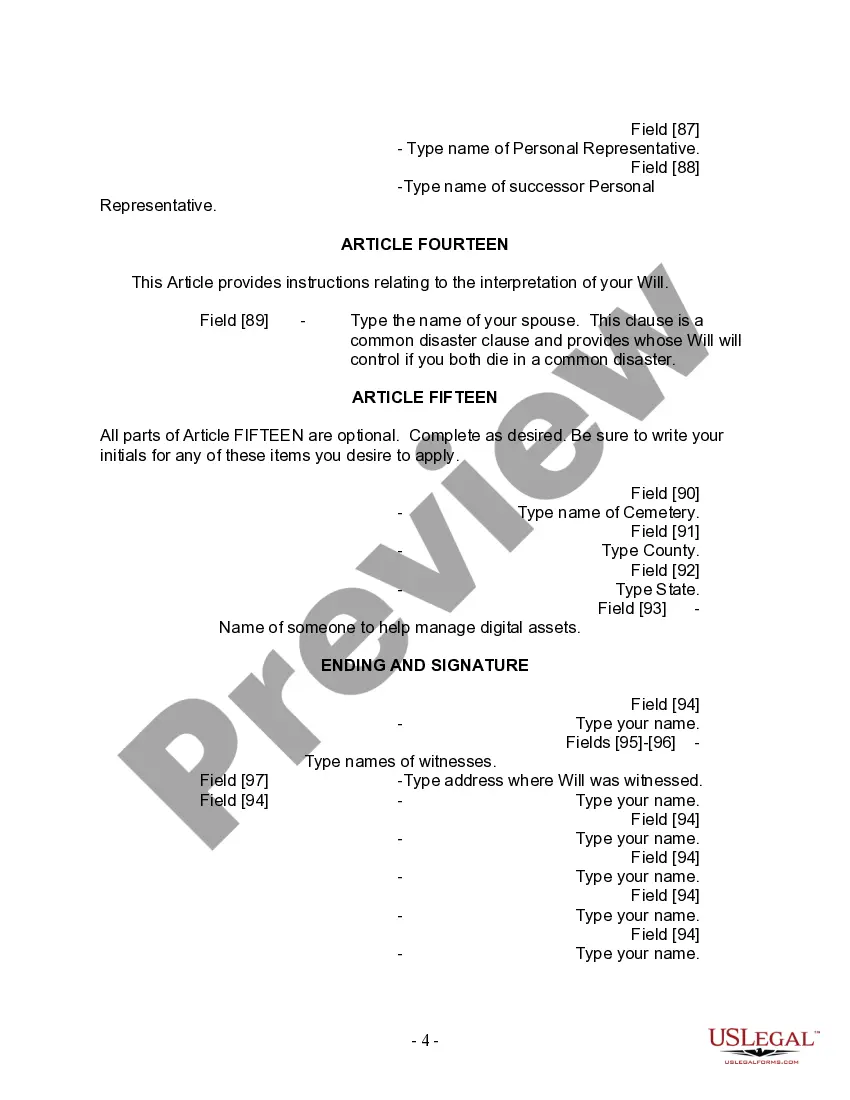
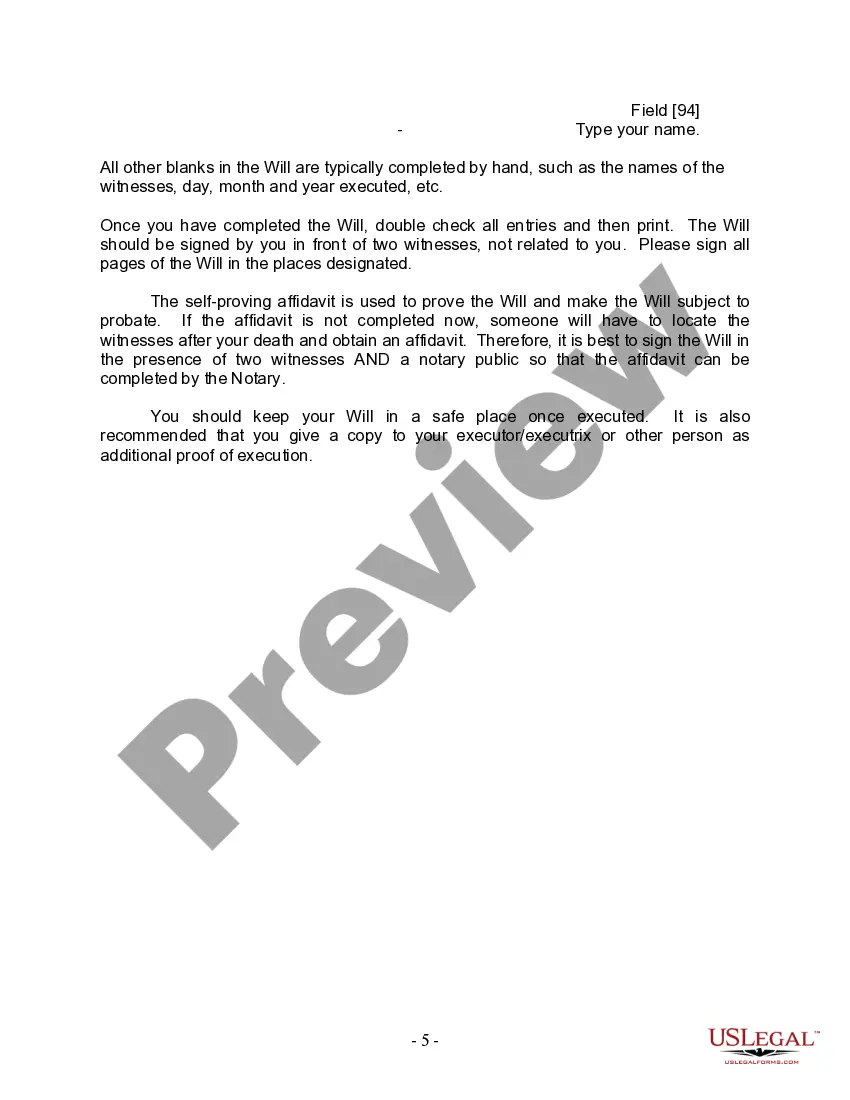
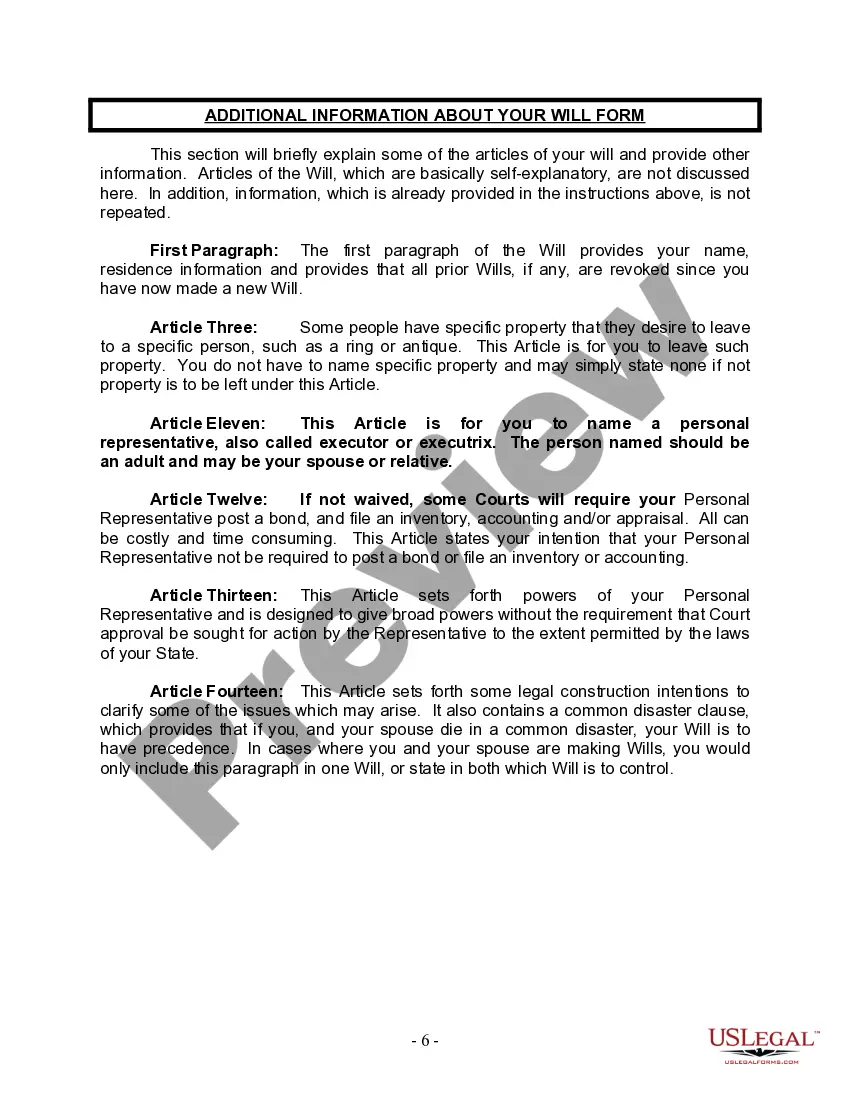
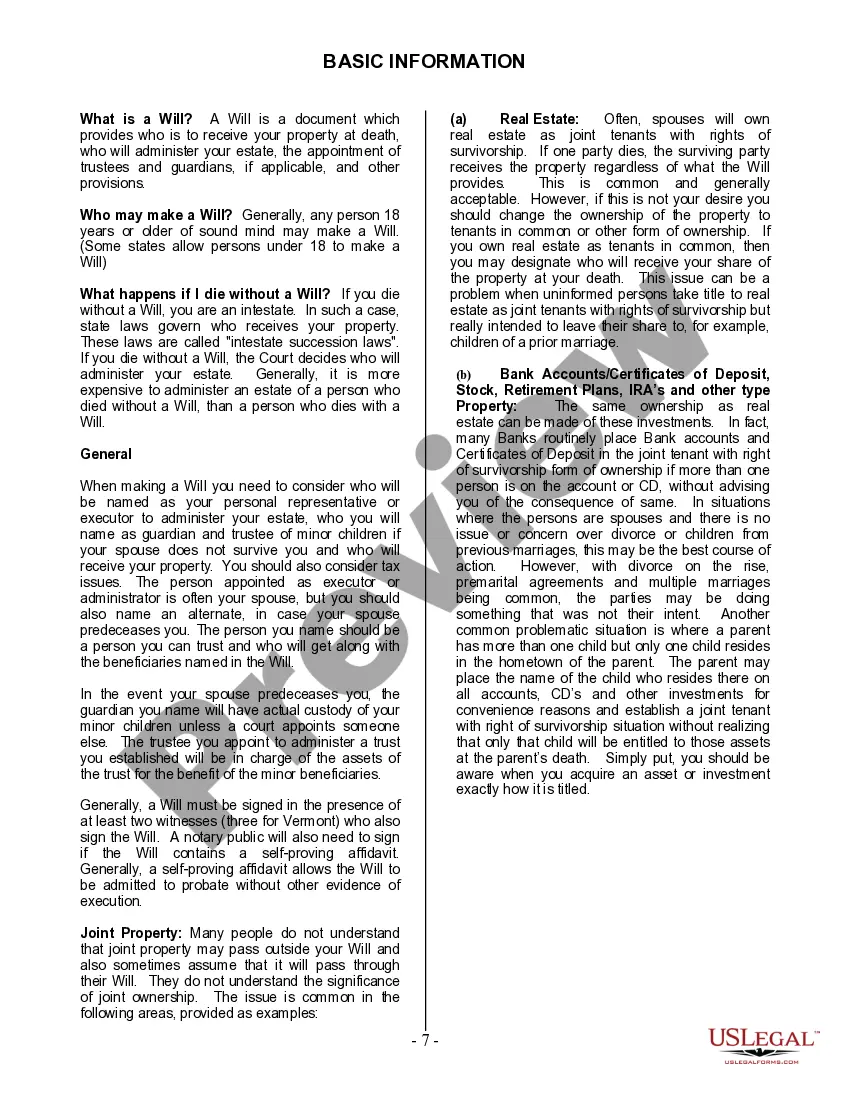
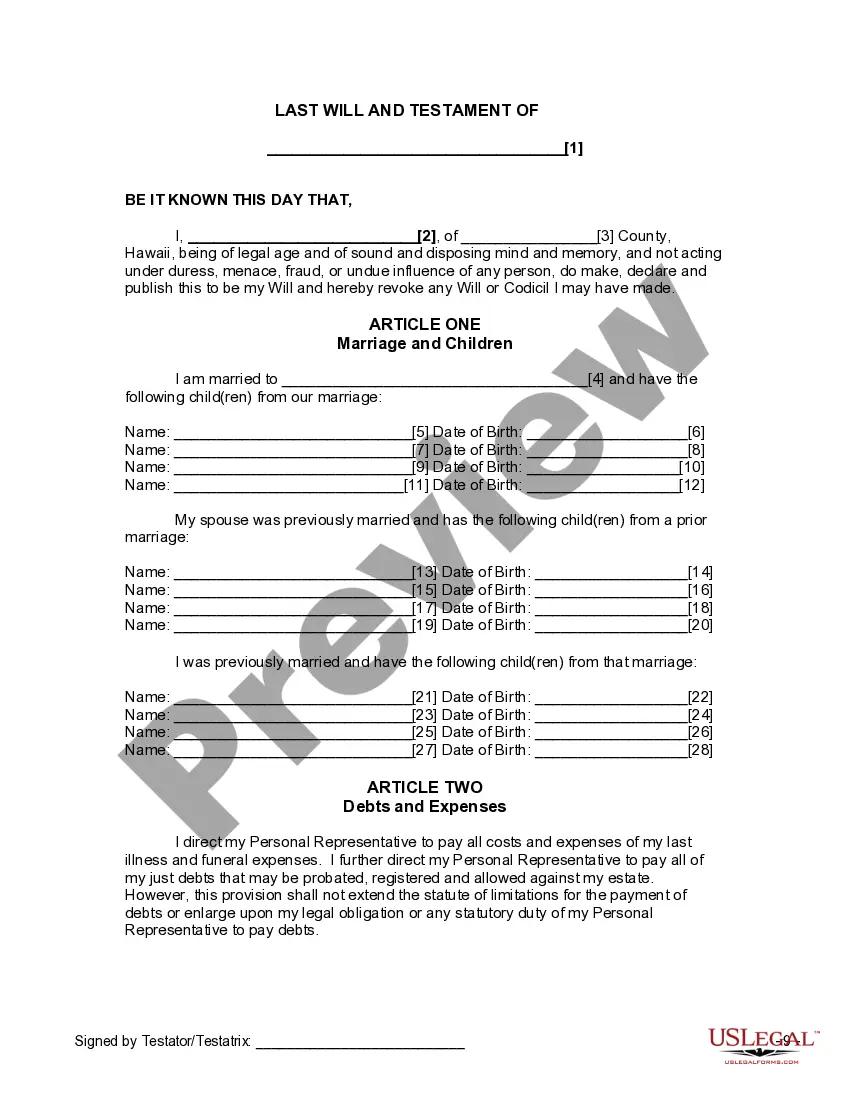
This form is a Last Will and Testament for a divorced and remarried person, specifically designed for individuals who have children from both their current and previous marriages. It allows you to appoint an executor, specify how your assets will be distributed, and establish provisions for minor children, ensuring that your wishes are clearly documented and legally binding. Unlike standard wills, this form addresses the complexities that arise when blending families, providing tailored options for every child involved.
Key parts of this document
- Personal Details: Include your name and residency information, as well as those of your spouse and children.
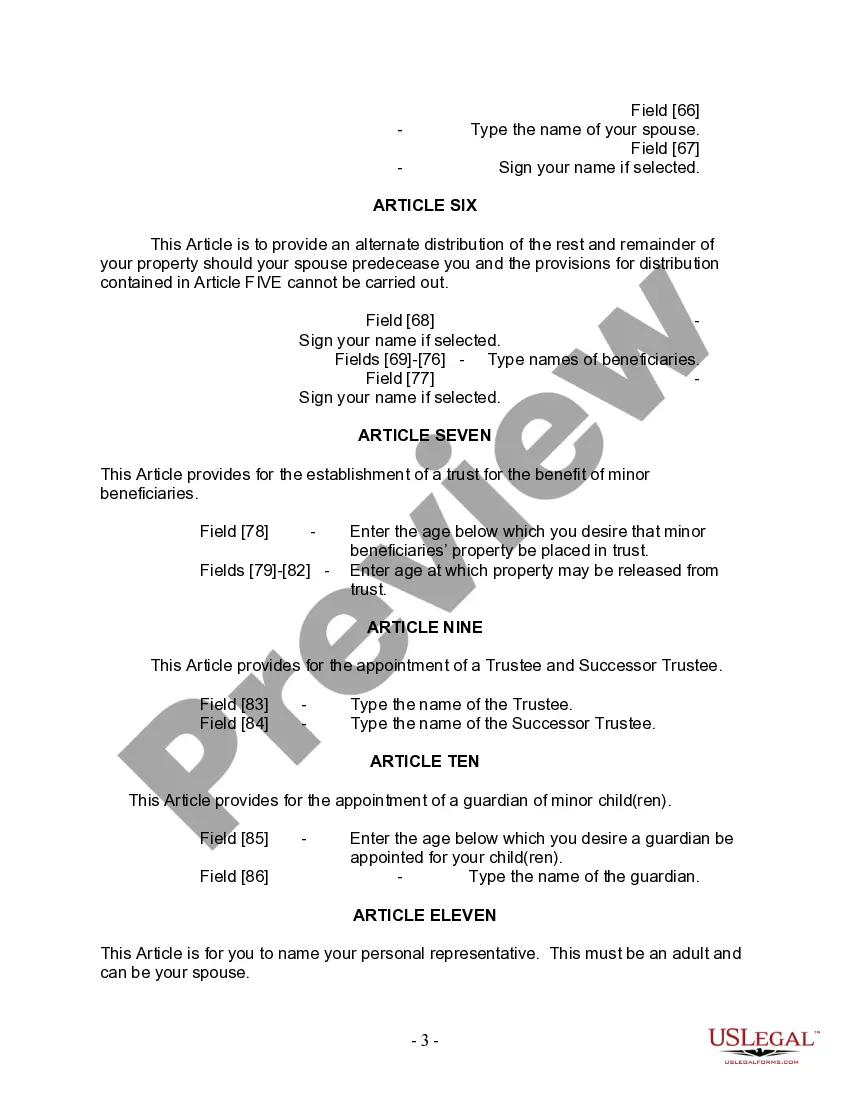
- Appointment of Executor: Designate a personal representative to handle your estate.
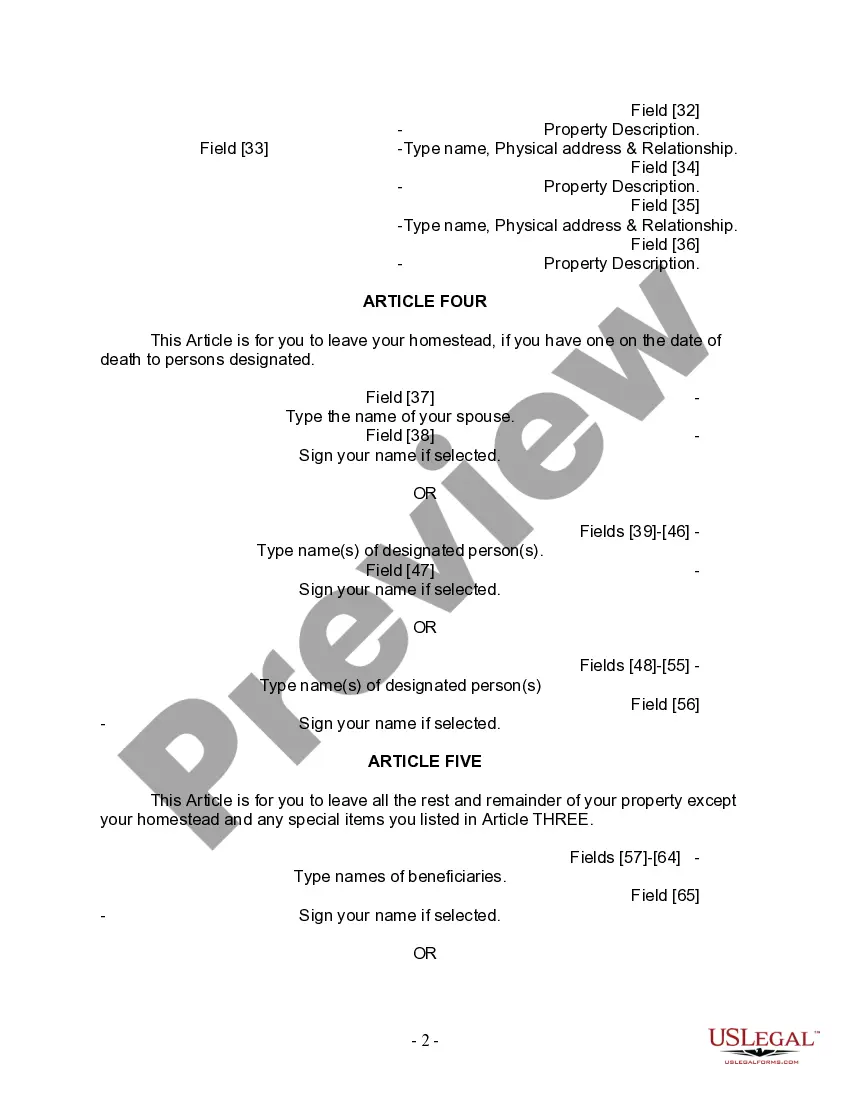
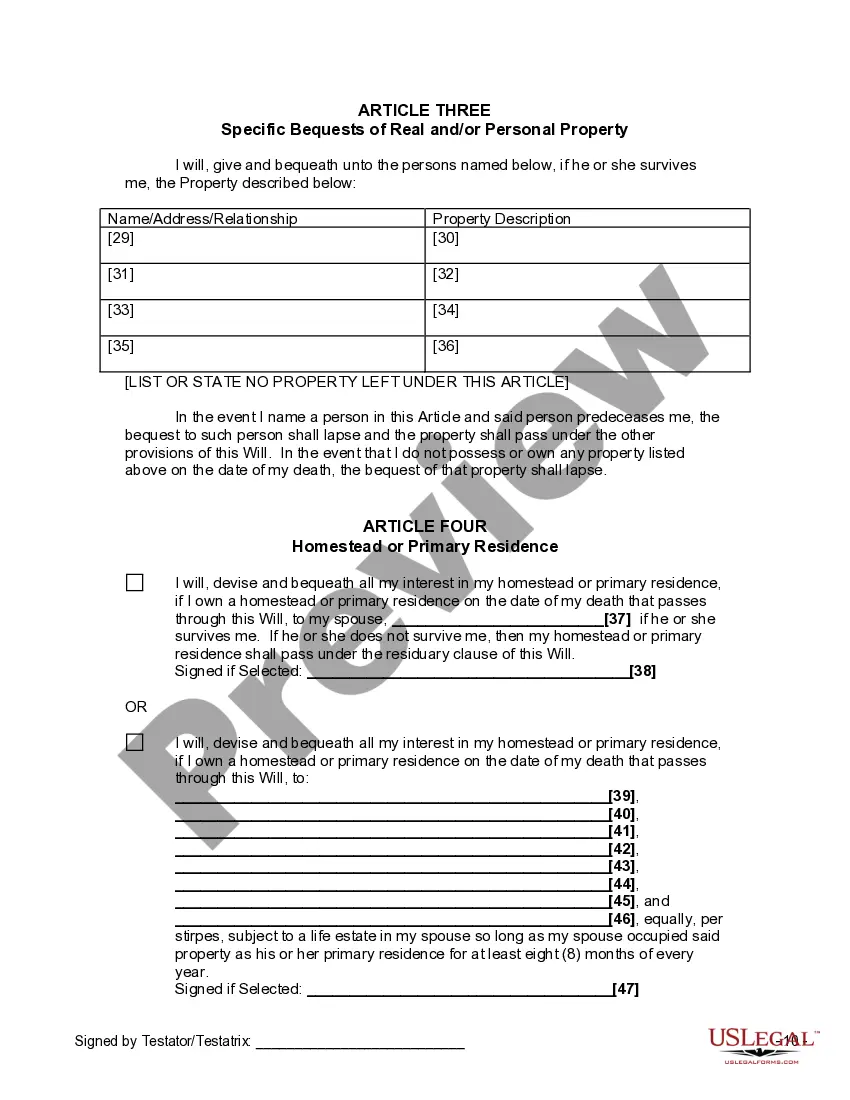
- Specific Bequests: Specify particular property bequests to named individuals.
- Trust Provisions for Minors: Create a trust to manage assets for minor children until they reach a specified age.
- Guardianship Arrangements: Appoint a guardian for any minor children in the event of your passing.
- Witness Requirement: The will must be signed in the presence of two unrelated witnesses.





Situations where this form applies
You should use this form when you are a divorced individual who has remarried and want to ensure that your assets are distributed according to your wishes. This form is particularly necessary if you have children from both your current marriage and previous relationships, as it provides a comprehensive plan to address the needs and rights of all eligible beneficiaries.
Intended users of this form
This form is intended for individuals who:
- Are divorced and have remarried.
- Have children from both current and previous marriages.
- Wish to clearly outline their estate distribution plans.
- Want to ensure proper guardianship for minor children.
Steps to complete this form
To complete this Last Will and Testament, follow these steps:
- Enter your personal information, including your name, residency, and details of your spouse and children.
- Designate a personal representative to execute your will.
- Detail specific bequests for property or possessions you wish to leave to named individuals.
- Establish trust provisions to protect the assets intended for your minor children.
- Sign the will in the presence of two witnesses who are not beneficiaries.
Does this form need to be notarized?
Yes, this form must be notarized to be legally valid. A notary public will verify your identity and ensure that the will is executed in compliance with state law, making the document easier to probate after your passing.
Get your form ready online
Our built-in tools help you complete, sign, share, and store your documents in one place.
Make edits, fill in missing information, and update formatting in US Legal Forms—just like you would in MS Word.
Download a copy, print it, send it by email, or mail it via USPS—whatever works best for your next step.
Sign and collect signatures with our SignNow integration. Send to multiple recipients, set reminders, and more. Go Premium to unlock E-Sign.
If this form requires notarization, complete it online through a secure video call—no need to meet a notary in person or wait for an appointment.
We protect your documents and personal data by following strict security and privacy standards.

Make edits, fill in missing information, and update formatting in US Legal Forms—just like you would in MS Word.

Download a copy, print it, send it by email, or mail it via USPS—whatever works best for your next step.

Sign and collect signatures with our SignNow integration. Send to multiple recipients, set reminders, and more. Go Premium to unlock E-Sign.

If this form requires notarization, complete it online through a secure video call—no need to meet a notary in person or wait for an appointment.

We protect your documents and personal data by following strict security and privacy standards.
Common mistakes
- Failing to sign the will and have it witnessed correctly.
- Not including all relevant children, which can lead to future disputes.
- Overlooking the need to update the will after significant personal changes.
- Leaving out crucial details about property distributions.
Advantages of online completion
- You can complete the form easily on your computer, allowing for quick edits and revisions.
- Digital forms are often more reliable, reducing the likelihood of errors.
- Having a clear and structured will can ease the burden on your loved ones when managing your estate.
Main things to remember
- This Last Will and Testament is tailored for individuals with complex family dynamics, such as those who are divorced and remarried.
- Proper completion and notarization of the will are crucial for its validity and to avoid disputes among heirs.
- It includes provisions to appoint a guardian for minor children, ensuring their care is maintained.
Looking for another form?

Form popularity
FAQ
A last will and testament can offer clear guidance on how your assets will be distributed after your passing, even if you are married. However, certain elements of your marriage may impact the distribution of your estate. In many cases, assets acquired during the marriage might be subject to state laws regarding marital property. It is important for individuals with complex family dynamics, such as a Hawaii Last Will and Testament for Divorced and Remarried Person with Mine, Yours and Ours Children, to consult legal professionals to ensure their wishes are clearly articulated.
Again, divorce affects a will, but it does not directly negate it. The effects of divorce often include revoking specific provisions for an ex-spouse, which may lead to unintended consequences. To avoid confusion, it is essential to revise your will after a divorce, particularly if you have children from previous marriages. A Hawaii Last Will and Testament for Divorced and Remarried Person with Mine, Yours and Ours Children can serve as a comprehensive solution to ensure your estate is handled according to your wishes.
Divorce does impact a will, but it does not automatically invalidate it. Generally, most states, including Hawaii, revoke any bequests to a former spouse upon divorce. It is vital to update your will after a divorce to reflect your current intentions, especially if you have children from different relationships. Creating a Hawaii Last Will and Testament for Divorced and Remarried Person with Mine, Yours and Ours Children ensures that your wishes are clear and legally binding.
Typically, a will does not override marital property laws. Marital property laws dictate how property is divided upon divorce, regardless of the content of a will. Therefore, it's crucial for individuals, especially divorced and remarried parents, to ensure their estate planning aligns with these laws. Utilizing a Hawaii Last Will and Testament for Divorced and Remarried Person with Mine, Yours and Ours Children can help clarify your wishes regarding property.
A divorce decree can affect the ownership of property, meaning it can change how property is held. In many cases, the decree may require one spouse to transfer their interest in a property to the other. However, it does not automatically alter the deed itself, unless specified. For those dealing with complex family structures, such as in a Hawaii Last Will and Testament for Divorced and Remarried Person with Mine, Yours and Ours Children, it is wise to consult with a legal expert.
For a will to be legal in Hawaii, it must be executed according to state laws. This includes being in writing, signed by the testator, and witnessed by two individuals. Moreover, the Hawaii Last Will and Testament for Divorced and Remarried Persons with Mine, Yours, and Ours Children should express your intentions clearly. To enhance compliance with legal standards, consider using services like uslegalforms, which can guide you in the process.
In Hawaii, you do not need to register a will for it to be valid. However, it should be securely stored and accessible upon your passing. A Hawaii Last Will and Testament for Divorced and Remarried Persons with Mine, Yours, and Ours Children must be presented to the probate court to be validated. Utilizing resources from uslegalforms can help ensure your will is properly completed and stored.
Yes, you can write your own will in Hawaii, and having it notarized can help ensure its authenticity. However, for a Hawaii Last Will and Testament for Divorced and Remarried Persons with Mine, Yours, and Ours Children, it’s crucial to follow the legal requirements for witness signatures. A notary does not take the place of witnesses; thus, it is wise to understand the full process. Consider using platforms like uslegalforms to simplify this task.
To create a valid will in Hawaii, it must meet three basic requirements. First, the testator must be at least 18 years old and of sound mind when creating the document. Second, the will must be in writing, clearly outline your intentions, and be signed by the testator. Lastly, the signing must be witnessed by at least two individuals who do not stand to gain from the Hawaii Last Will and Testament for Divorced and Remarried Persons with Mine, Yours, and Ours Children.
In Hawaii, a will does not automatically avoid probate. A Hawaii Last Will and Testament for Divorced and Remarried Persons with Mine, Yours, and Ours Children must go through the probate process to validate it and ensure that your wishes are honored. However, certain assets may be transferred outside of probate depending on how they are titled. It’s important to understand the probate process and how it can affect your estate.