Hawaii Last Will and Testament for Divorced person not Remarried with Adult Children
About this form
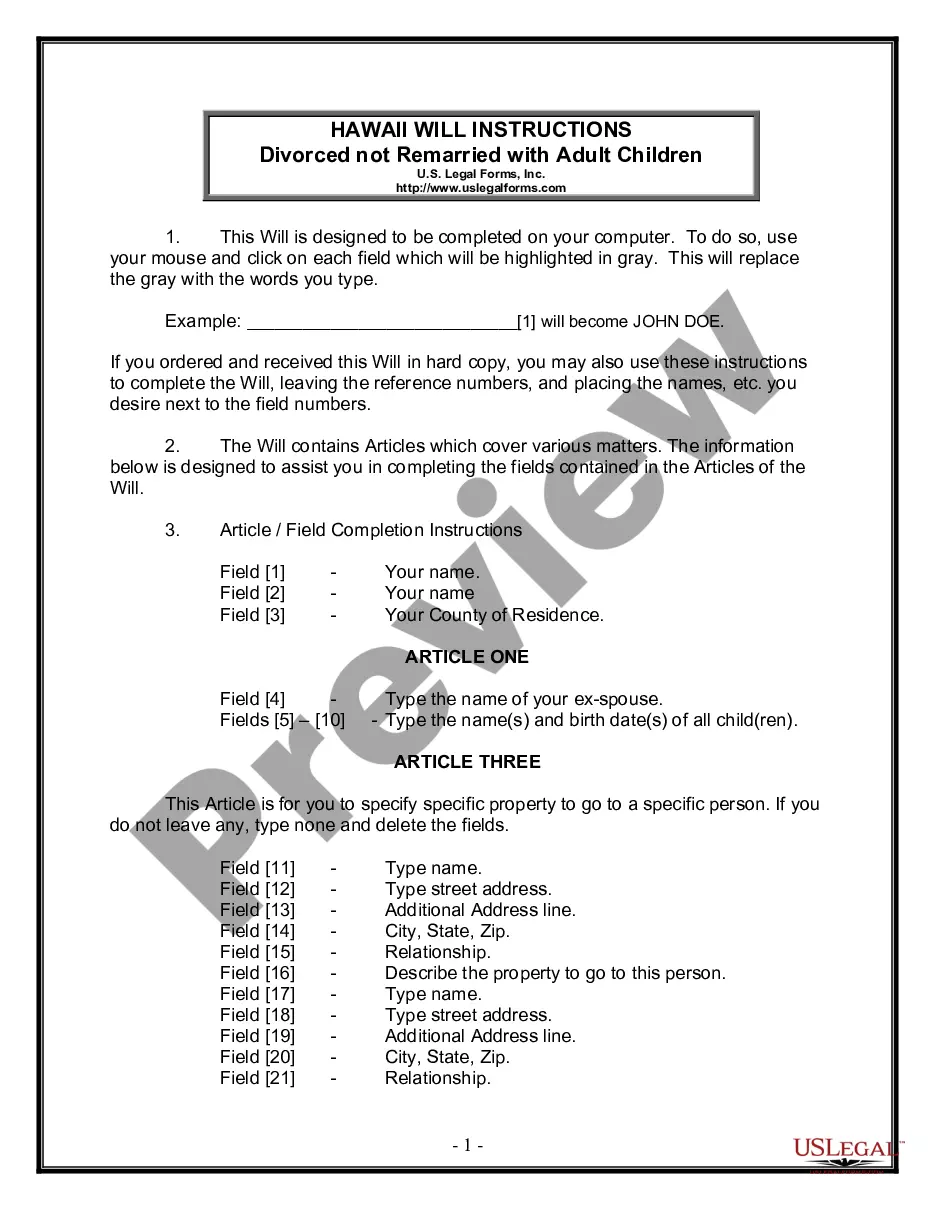
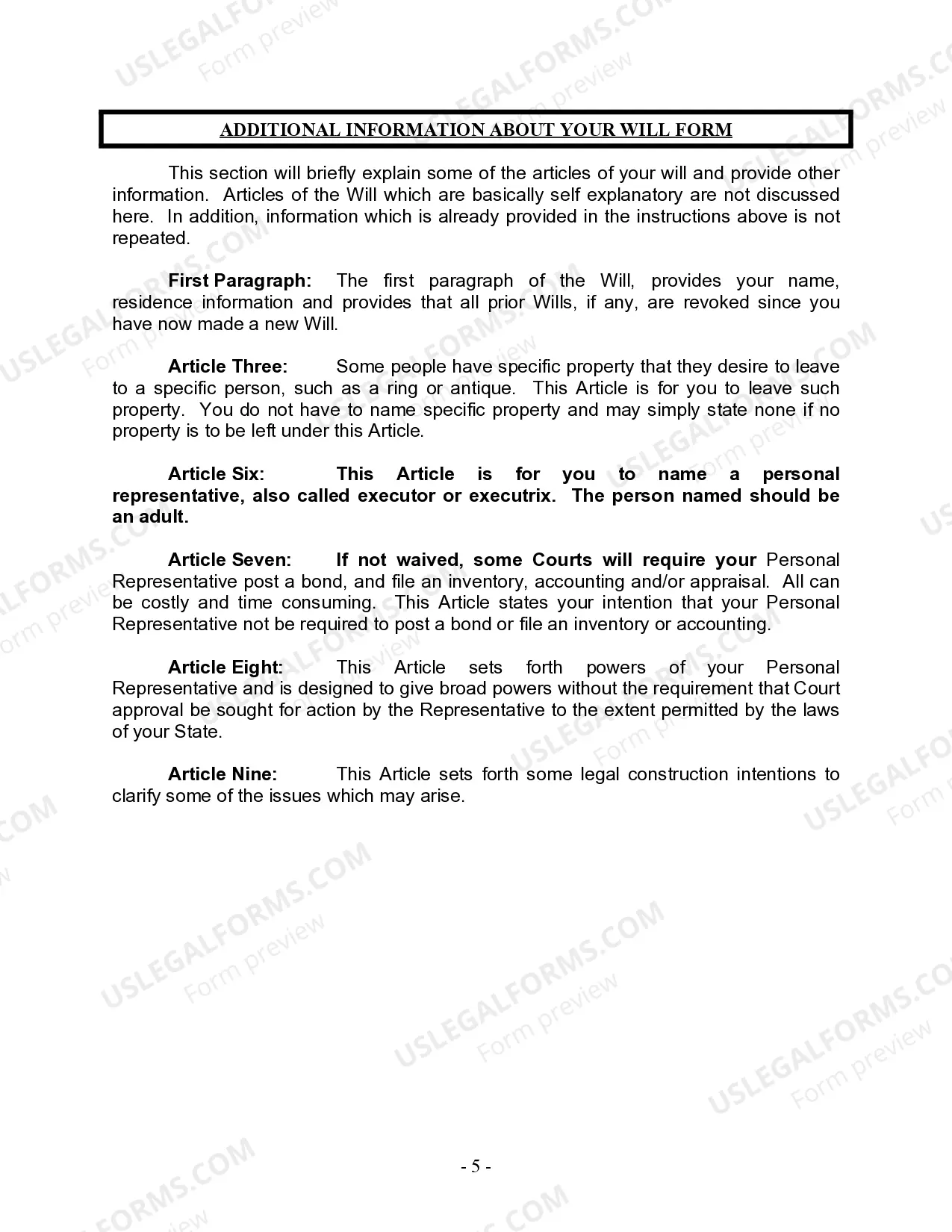
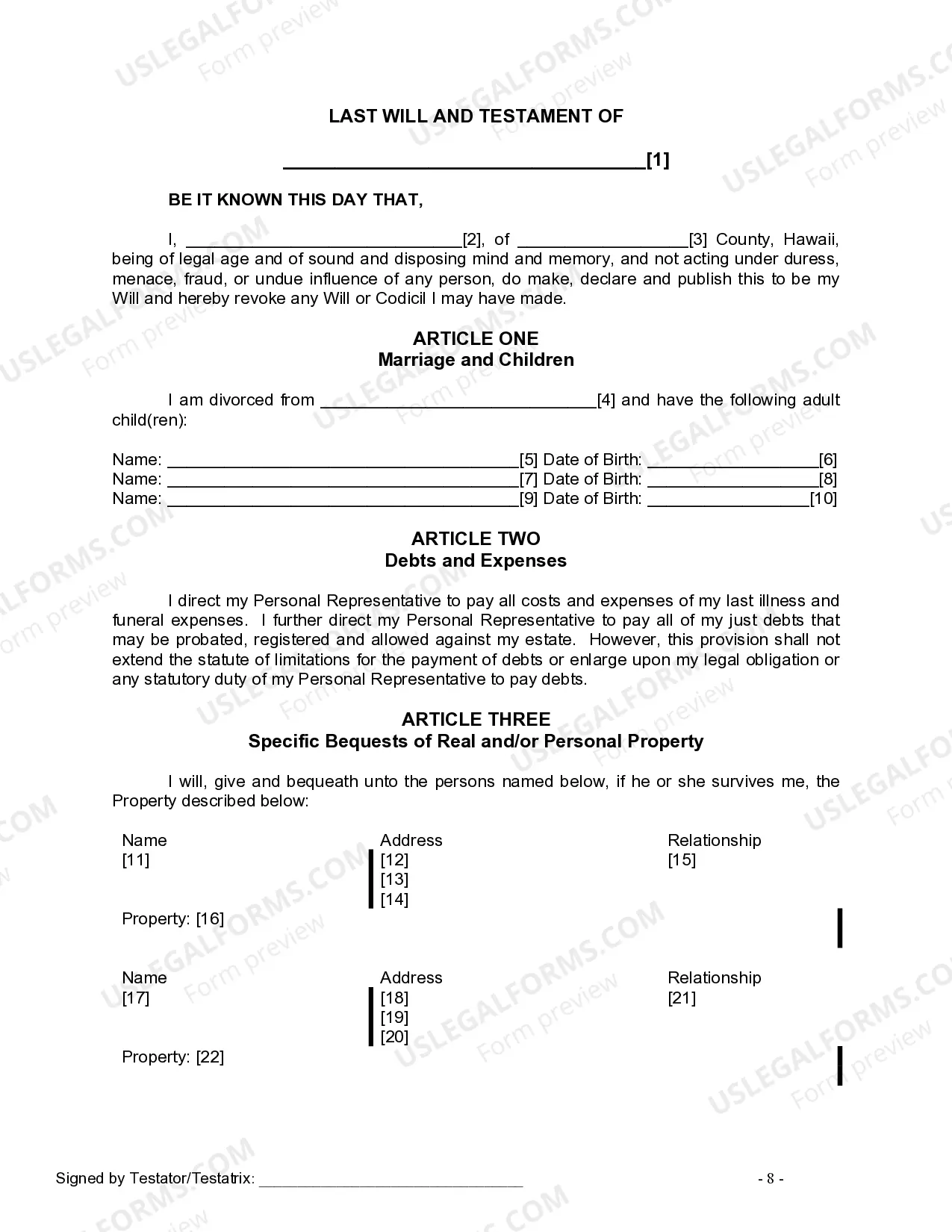
This Last Will and Testament form is specifically designed for individuals who are divorced, have not remarried, and have adult children. It serves to clearly outline the distribution of your assets, the appointment of an executor, and your final wishes regarding estate management. This form is tailored to reflect the unique situation of divorced persons, distinguishing it from standard wills that may not account for such personal circumstances.
Key components of this form
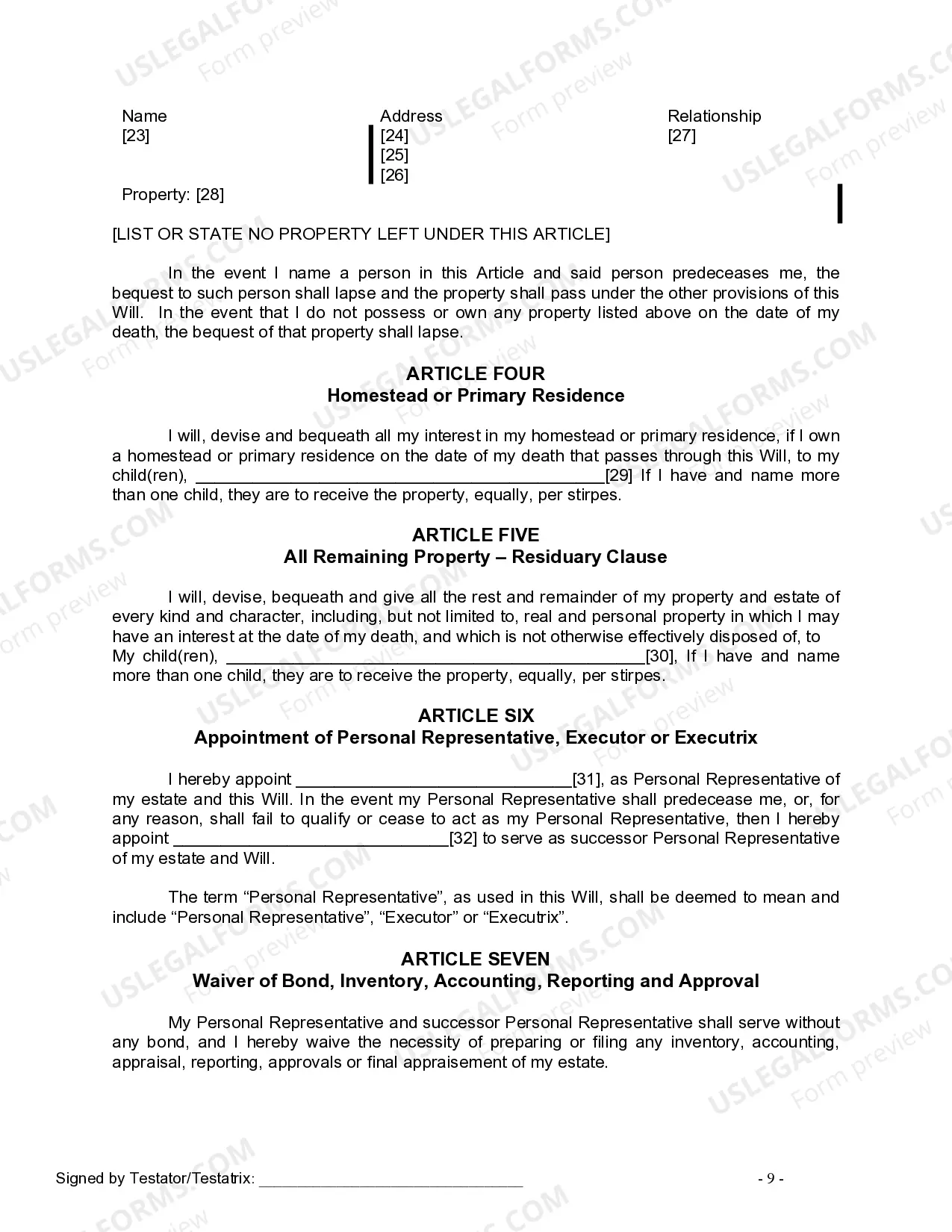
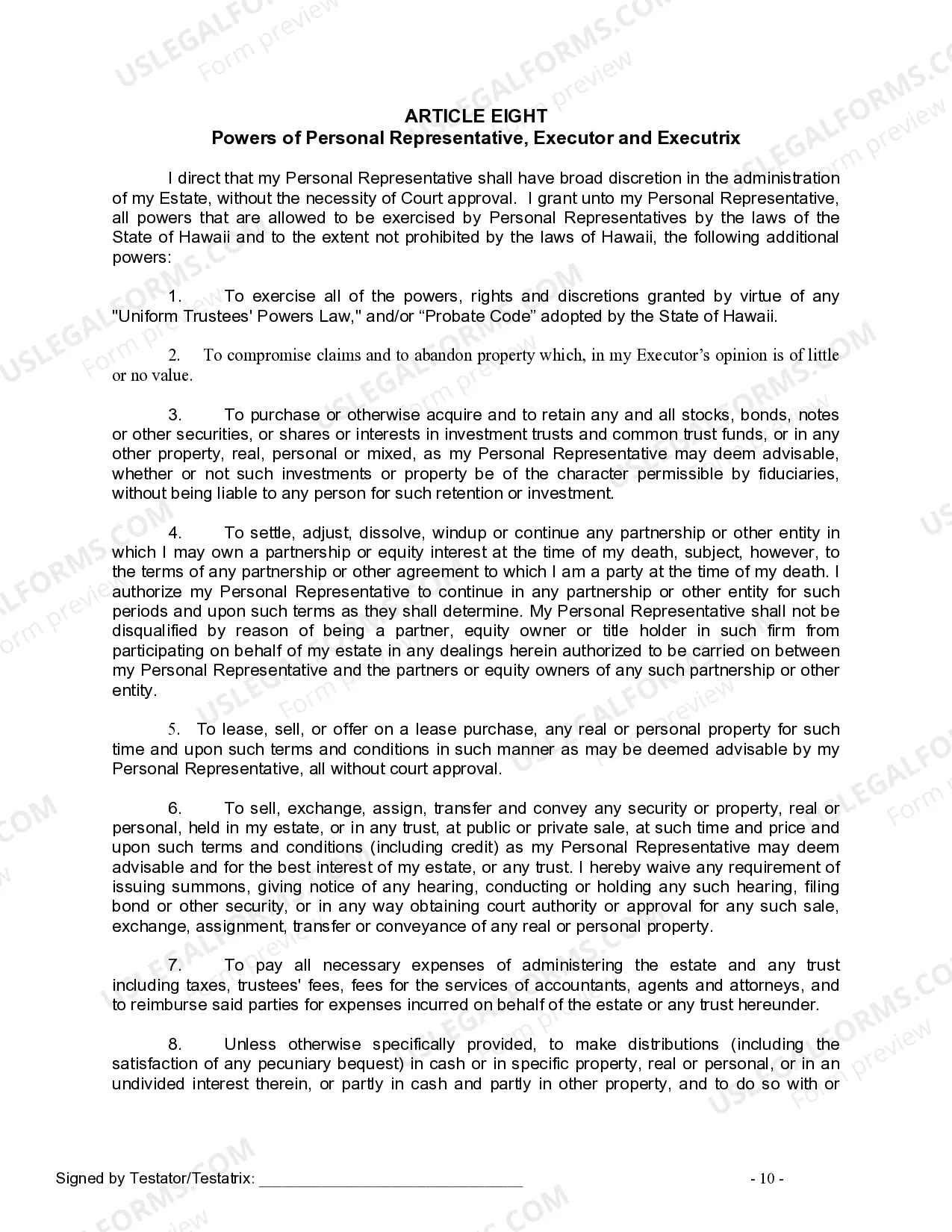
- Appointment of a personal representative (executor) to manage your estate.
- Designations of beneficiaries for specific property and assets.
- Instructions regarding your homestead or primary residence.
- Options to waive bond and accounting requirements for the executor.
- Provisions for debts and expenses to be paid from your estate.
- Self-proving affidavit to ease the probate process.





When this form is needed
You should use this Last Will and Testament form when you want to ensure that your estate is distributed according to your wishes after your death. This form is particularly suitable if you are a divorced individual with adult children and wish to specify how your property and assets will be managed and distributed. It can also be used to appoint an executor to carry out your wishes, ensuring that your affairs are managed smoothly without the complexity of intestate succession laws.
Who needs this form
This form is intended for:
- Divorced individuals who have not remarried.
- Parents with adult children who wish to designate their beneficiaries.
- Those looking to clarify the management of their assets after death.
- Anyone who wants to ensure their final wishes are met in accordance with their unique family structure.
How to complete this form
- Enter your full legal name and county of residence.
- Specify the name of your ex-spouse and list all your adult children with their birthdates.
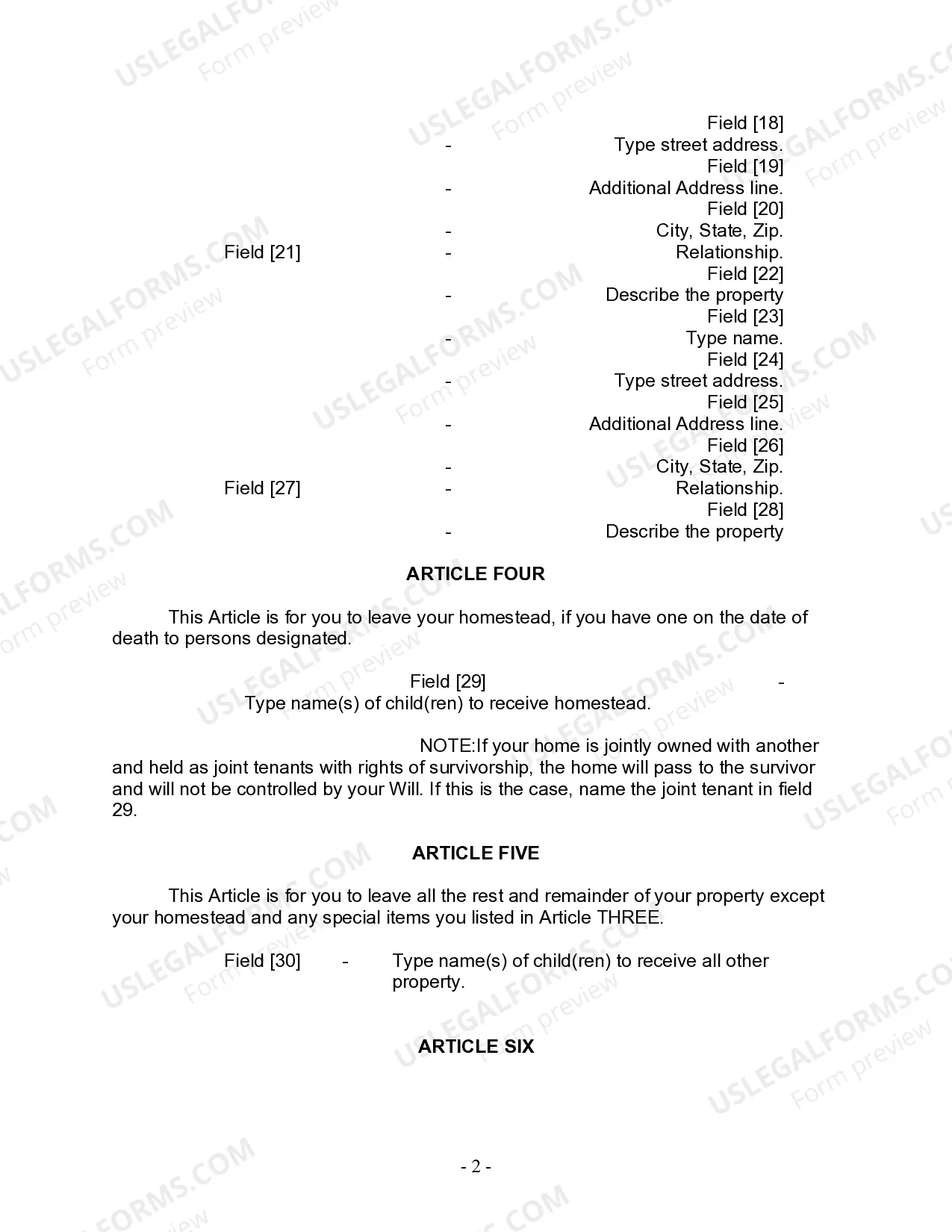
- Designate any specific property bequests to individuals and include their addresses and relationships to you.
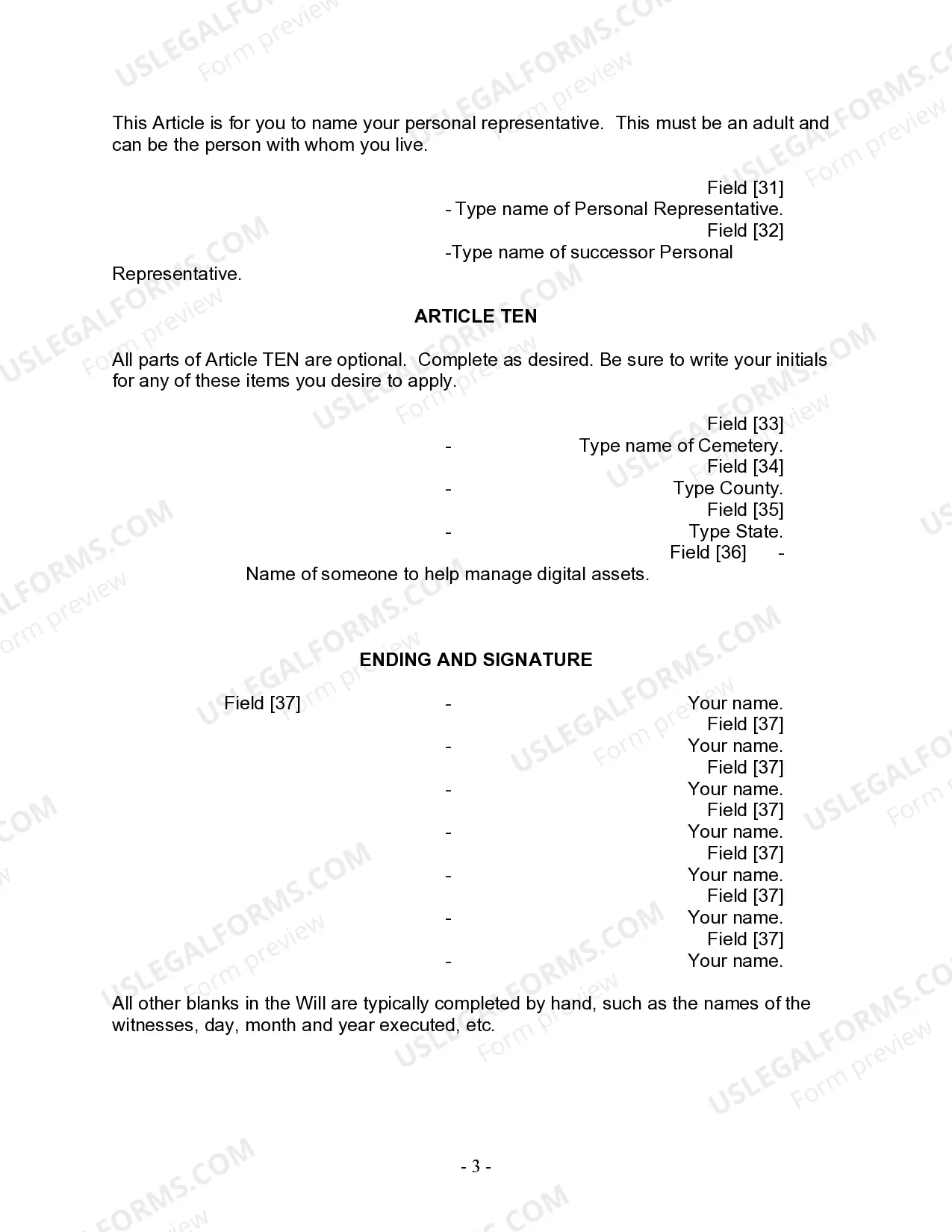
- Name a personal representative and a successor representative to manage your estate.
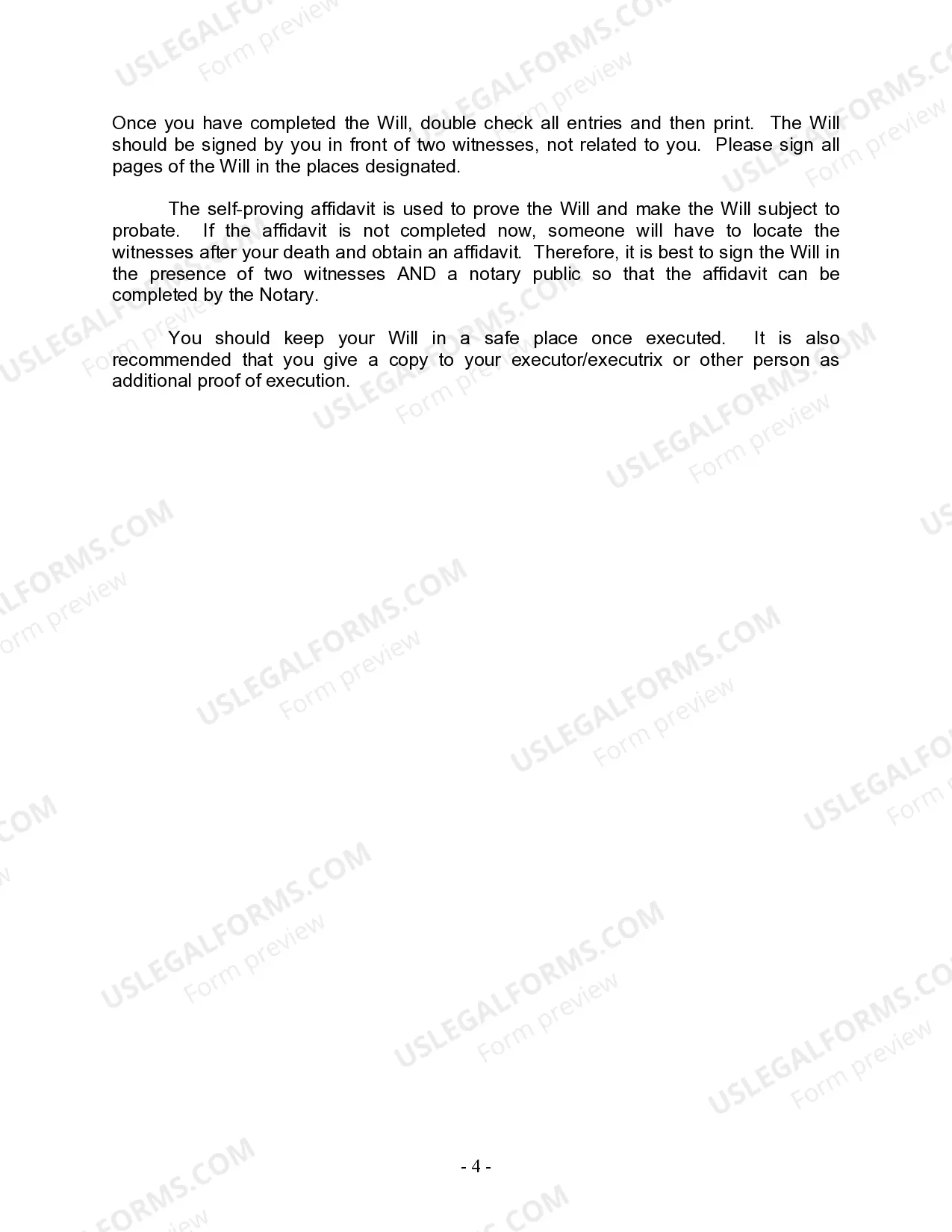
- Sign the document in front of two witnesses who are not beneficiaries or related to you.
- If applicable, complete the self-proving affidavit in the presence of a notary public.
Notarization requirements for this form
This form must be notarized to be legally valid. US Legal Forms provides secure online notarization powered by Notarize, allowing you to complete the process through a verified video call.
Get your form ready online
Our built-in tools help you complete, sign, share, and store your documents in one place.
Make edits, fill in missing information, and update formatting in US Legal Forms—just like you would in MS Word.
Download a copy, print it, send it by email, or mail it via USPS—whatever works best for your next step.
Sign and collect signatures with our SignNow integration. Send to multiple recipients, set reminders, and more. Go Premium to unlock E-Sign.
If this form requires notarization, complete it online through a secure video call—no need to meet a notary in person or wait for an appointment.
We protect your documents and personal data by following strict security and privacy standards.

Make edits, fill in missing information, and update formatting in US Legal Forms—just like you would in MS Word.

Download a copy, print it, send it by email, or mail it via USPS—whatever works best for your next step.

Sign and collect signatures with our SignNow integration. Send to multiple recipients, set reminders, and more. Go Premium to unlock E-Sign.

If this form requires notarization, complete it online through a secure video call—no need to meet a notary in person or wait for an appointment.

We protect your documents and personal data by following strict security and privacy standards.
Mistakes to watch out for
- Not signing the will in the presence of required witnesses.
- Failing to specify beneficiaries or omitting key details regarding property.
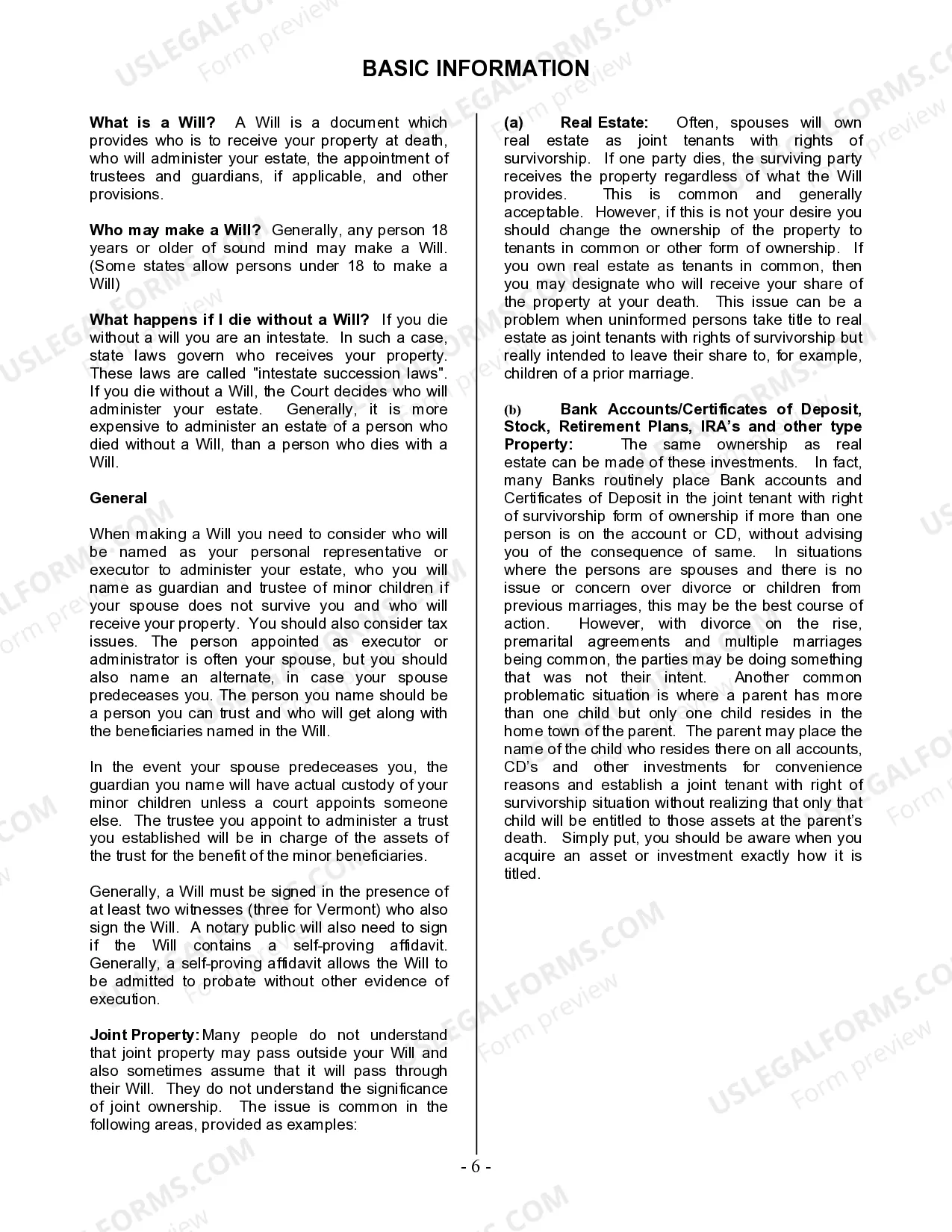
- Forgetting to mention joint property correctly, which may not pass through the will.
- Not updating the will after significant life changes, such as additional divorces or changes in relationship status.
Advantages of online completion
- Conveniently fill out the form from anywhere using your computer or device.
- Editable format allows easy adjustments and updates to your will as circumstances change.
- Access to legally compliant templates drafted by licensed attorneys.
- Time-efficient way to ensure your wishes are formally documented.
Looking for another form?
Form popularity
FAQ
Marriage can impact a living trust, particularly when it comes to joint assets and beneficiary designations. In Hawaii, properties held in a trust may not automatically transfer to a spouse upon marriage, depending on how the trust is structured. Thus, if you are crafting a Hawaii Last Will and Testament for Divorced person not Remarried with Adult Children, understanding how marriage affects your trust is essential for effective estate planning.
A living will can be overridden by specific legal documents like a power of attorney or court rulings. If a family member questions your wishes outlined in a living will, they may petition the court for a review. To safeguard your intentions, maintaining an updated Hawaii Last Will and Testament for Divorced person not Remarried with Adult Children along with your living will is crucial.
Generally, a will outlines your wishes after your passing, while marriage can introduce laws and rights that may alter those wishes. In Hawaii, a spouse may have certain rights to property regardless of what is stated in the will. Therefore, when creating a Hawaii Last Will and Testament for Divorced person not Remarried with Adult Children, it’s essential to clearly define your intentions to avoid potential conflicts.
Marriage can affect the provisions of a living will, especially concerning healthcare decisions. However, a living will specifically outlines your medical preferences, and these will generally remain valid regardless of marital status. If you're crafting a Hawaii Last Will and Testament for Divorced person not Remarried with Adult Children, it’s wise to review your living will to ensure that your wishes align with current laws.
In Hawaii, it is not a requirement for wills to be notarized; however, having a notarized will can provide additional legal protection. A Hawaii Last Will and Testament for Divorced person not Remarried with Adult Children will still be valid as long as it is signed and witnessed according to state laws. Notarization could also help reduce disputes among potential heirs in the future.
Yes, in many cases, a living spouse can supersede a will, especially if the spouse is left out or if community property laws apply. In Hawaii, the law provides protections for spouses, which may affect how a Hawaii Last Will and Testament for Divorced person not Remarried with Adult Children is executed. However, if you have specific wishes in your will, it's critical to consult a legal expert to ensure they are upheld.
For a will to be legal in Hawaii, it must be in writing, signed by you, and witnessed by at least two individuals who are not beneficiaries. This ensures that your Hawaii Last Will and Testament for Divorced person not Remarried with Adult Children meets all necessary legal requirements. Additionally, if it is a handwritten will, it may not need witnesses but should still conform to state laws. Utilize resources from platforms like USLegalForms to simplify the process of creating a legal will.
In Hawaii, you do not have to register your will for it to be valid. However, it is essential to ensure that your Hawaii Last Will and Testament for Divorced person not Remarried with Adult Children is stored in a safe place, where your executor can find it after your passing. When it comes time to settle your estate, your will must be submitted to probate. Using USLegalForms can provide clarity on these processes.
A will can influence the distribution of your assets, but it does not override marriage in every situation. If you are a divorced person not remarried, your Hawaii Last Will and Testament for Divorced person not Remarried with Adult Children will dictate how your assets are distributed based on your instructions. However, any community property laws may still apply to assets acquired during marriage. Always consult a legal professional for personalized advice.
Yes, you can write your own will in Hawaii. However, it is crucial to follow the specific requirements set by the state to ensure your Hawaii Last Will and Testament for Divorced person not Remarried with Adult Children is valid. Having your will notarized can help strengthen its legitimacy, but it is not mandatory. Consider using platforms like USLegalForms to access resources and templates that help you draft a will correctly.