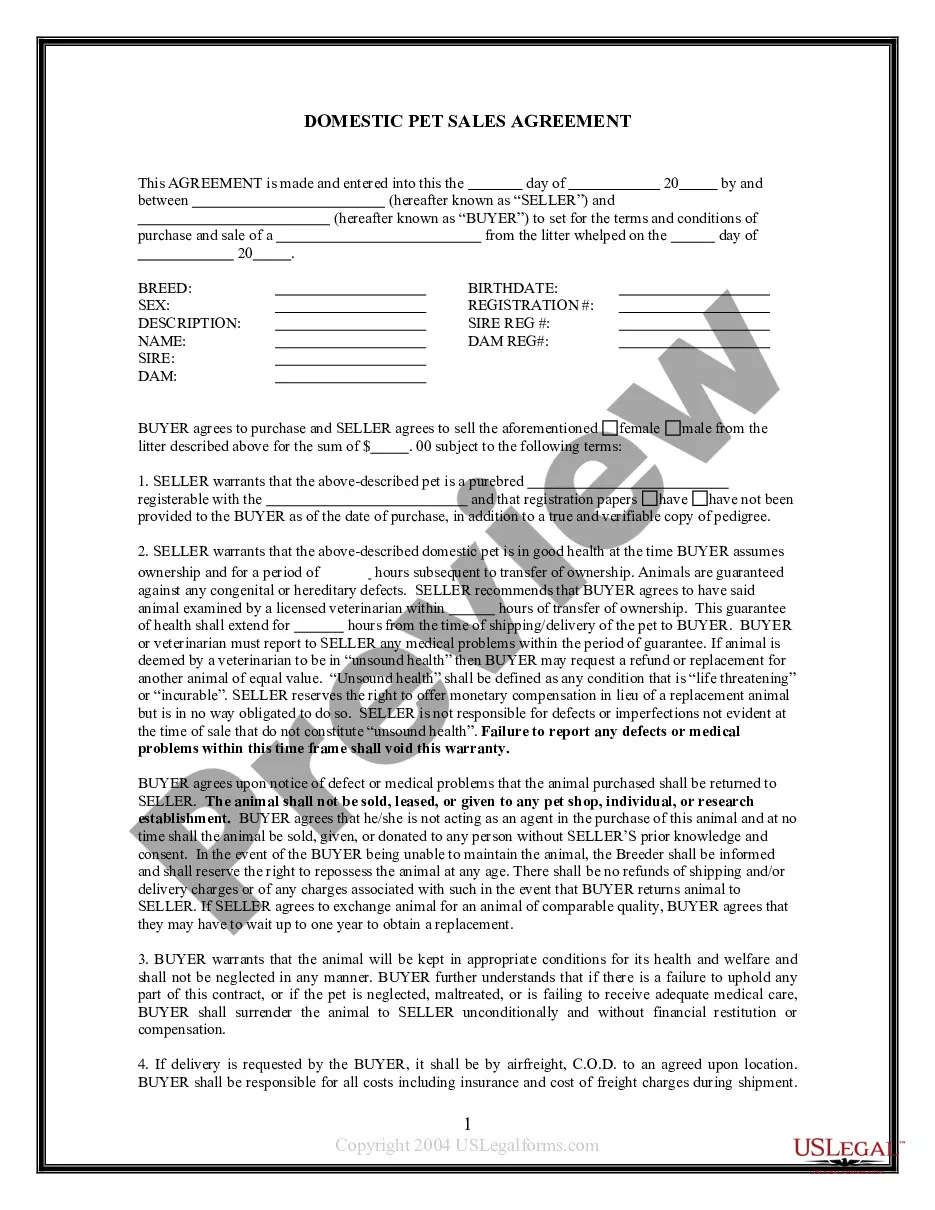
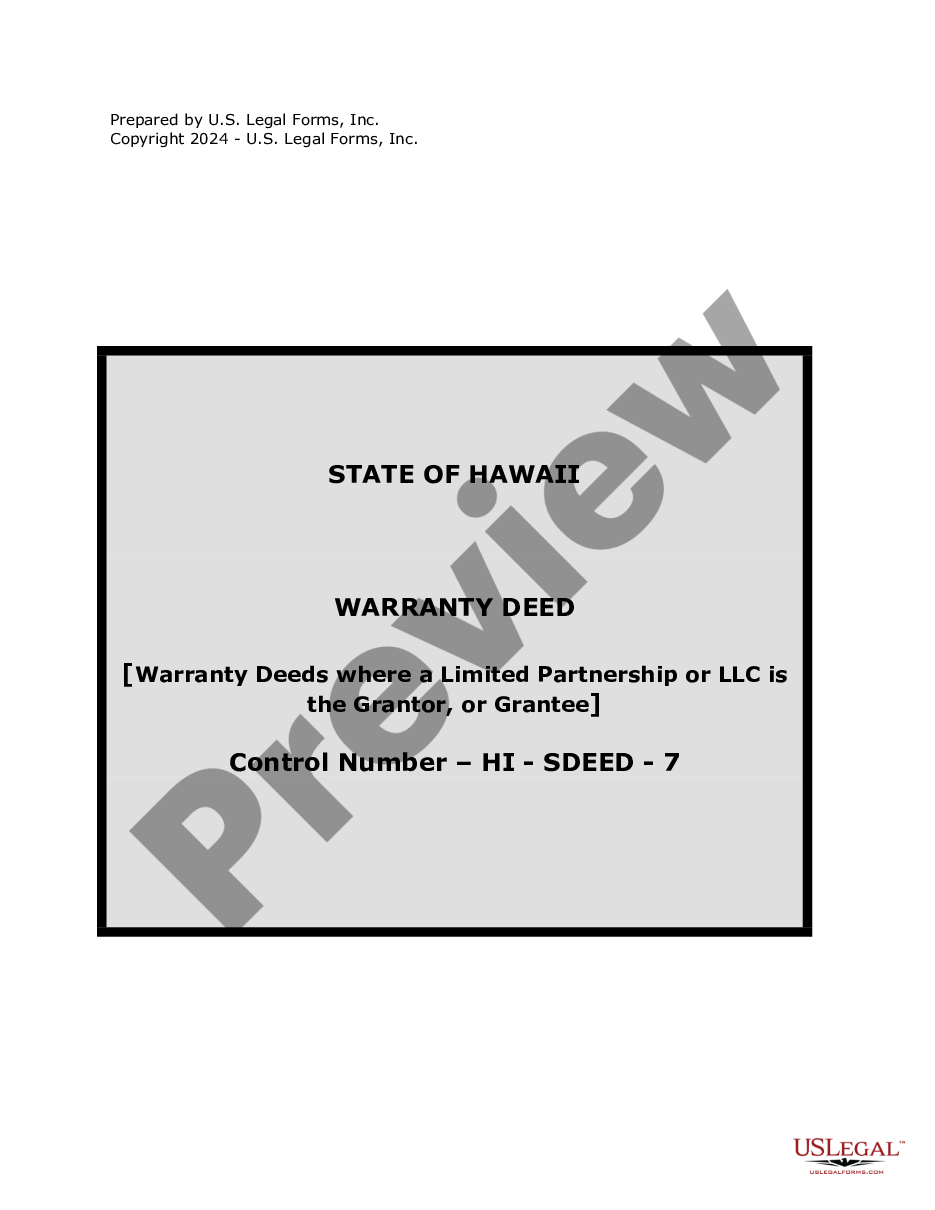
Hawaii Warranty Deed from Limited Partnership or LLC is the Grantor, or Grantee
Understanding this form
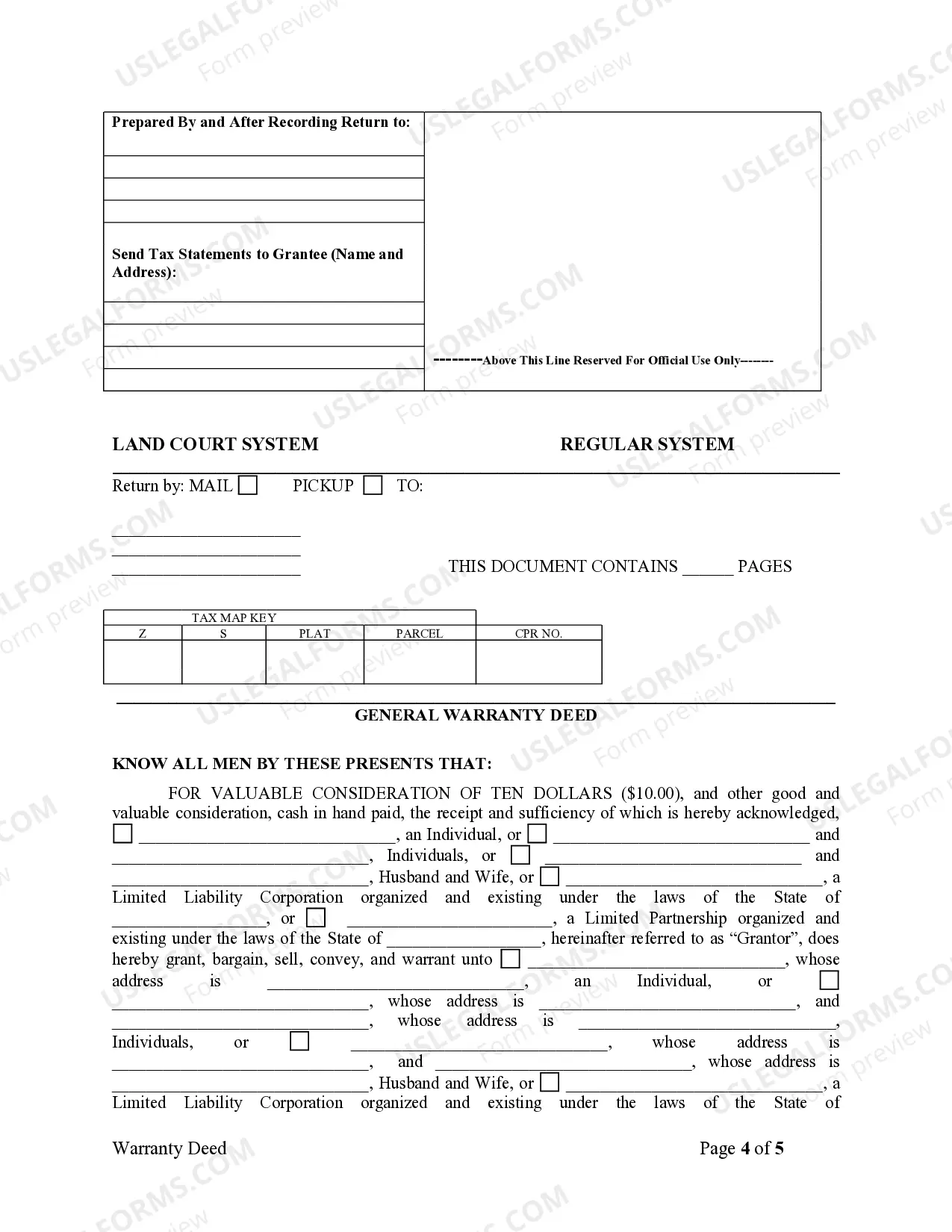
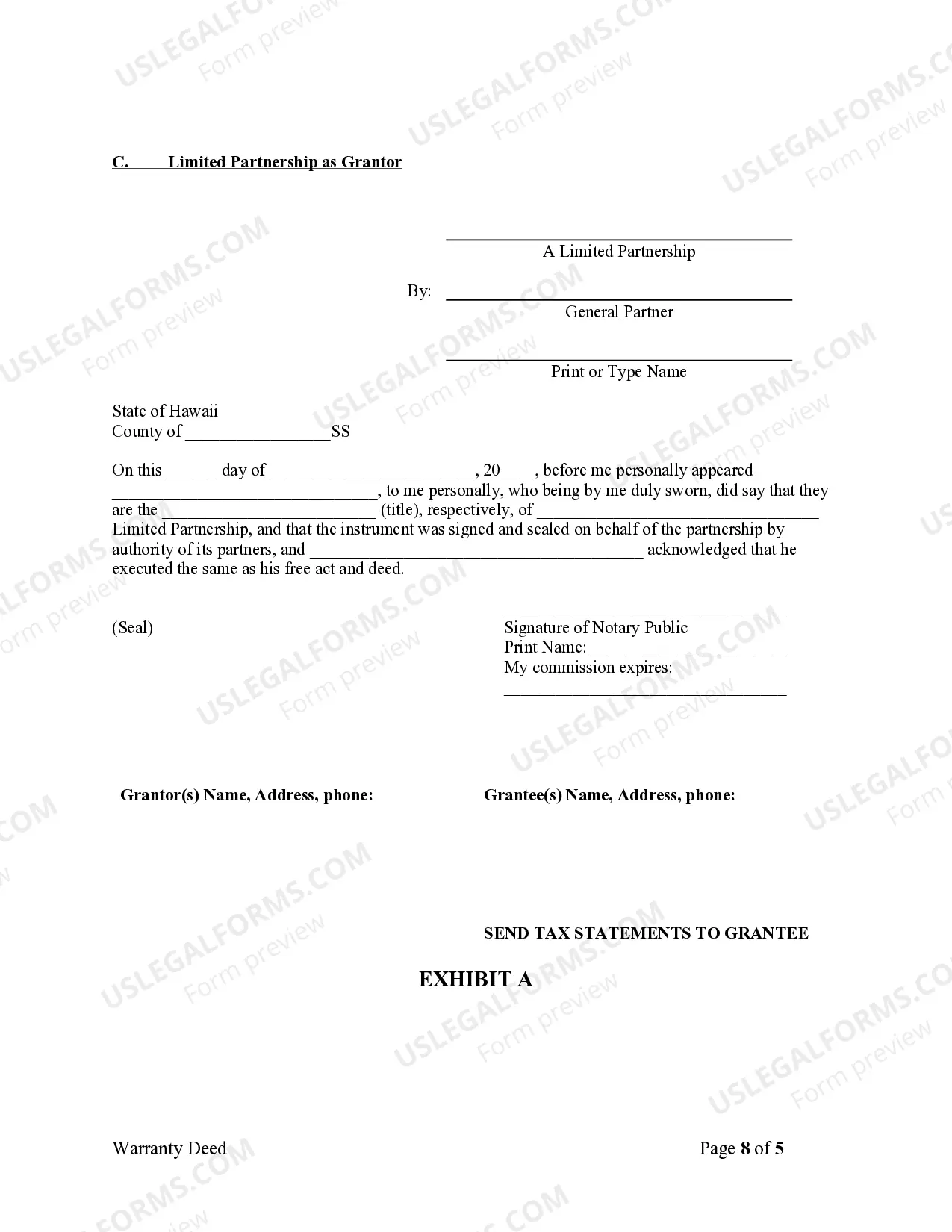
This Warranty Deed is a legal document that allows a Limited Partnership or LLC to transfer ownership of real property. Unlike other types of deeds, this form includes specific provisions that pertain to partnerships or limited liability companies acting as the grantor or grantee. It assures the buyer that the property title is clear of encumbrances and protects against claims from third parties.
Key components of this form
- Identification of the Grantor and Grantee, specifying whether they are a Limited Partnership or LLC.
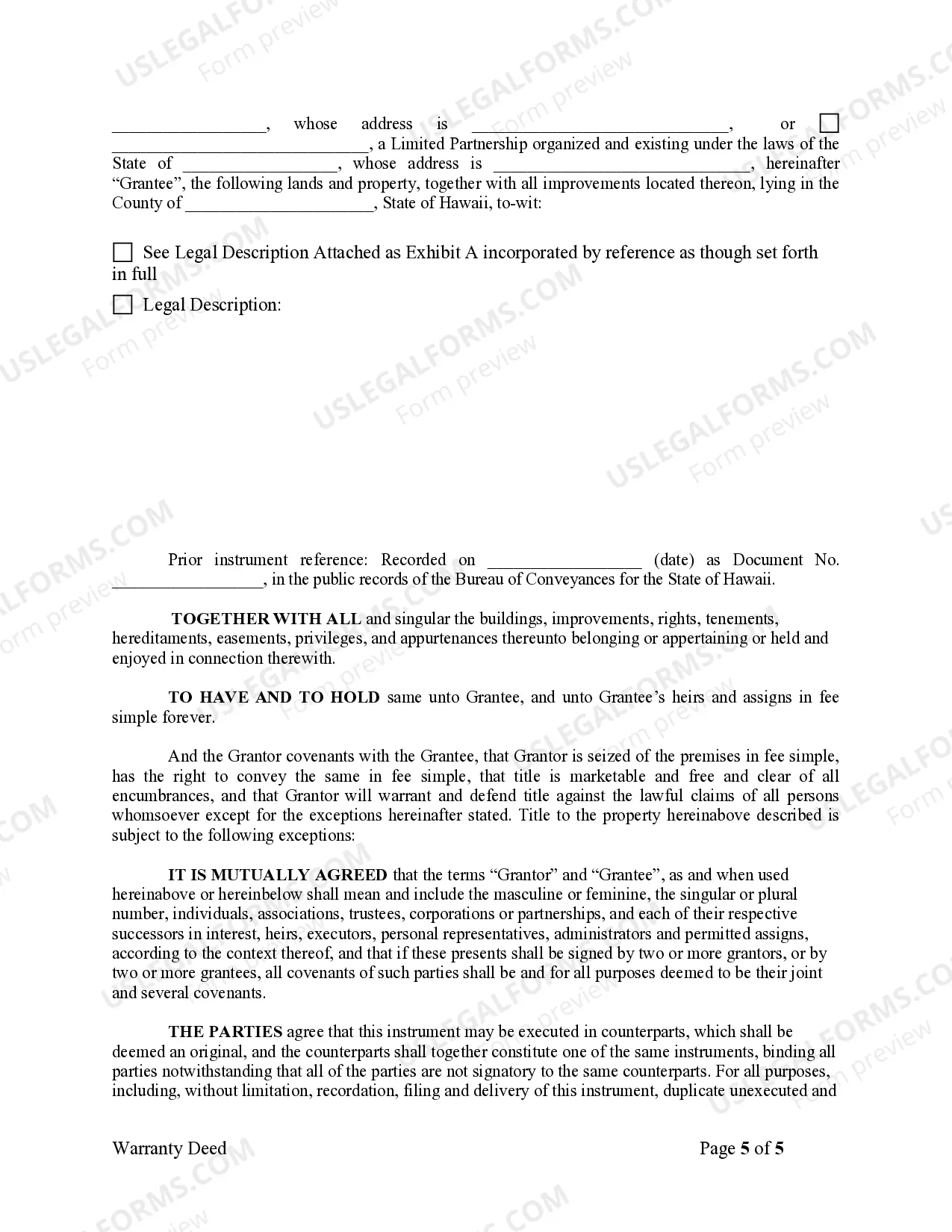
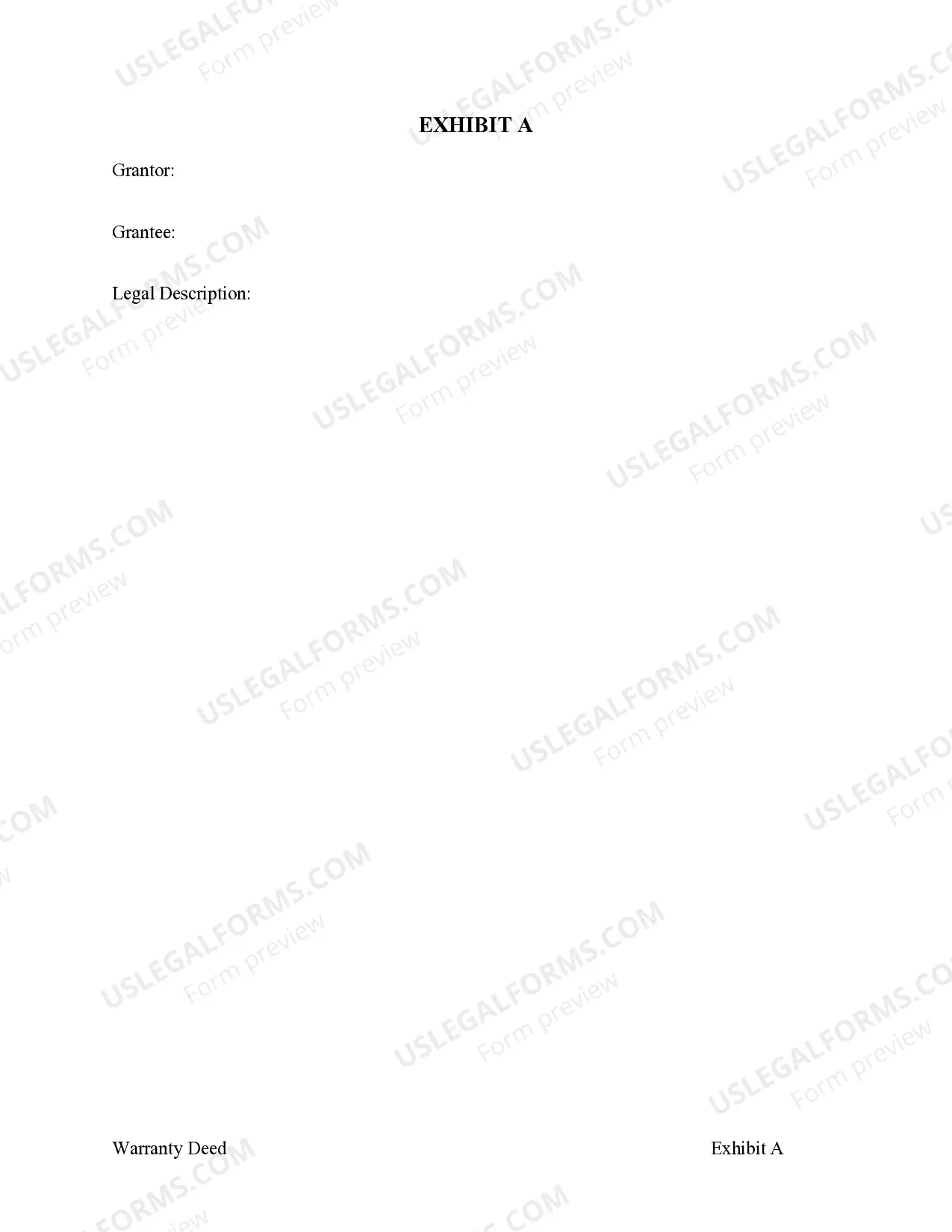
- A legal description of the transferred property.
- Covenants by the Grantor indicating they have clear title to the property and the right to transfer it.
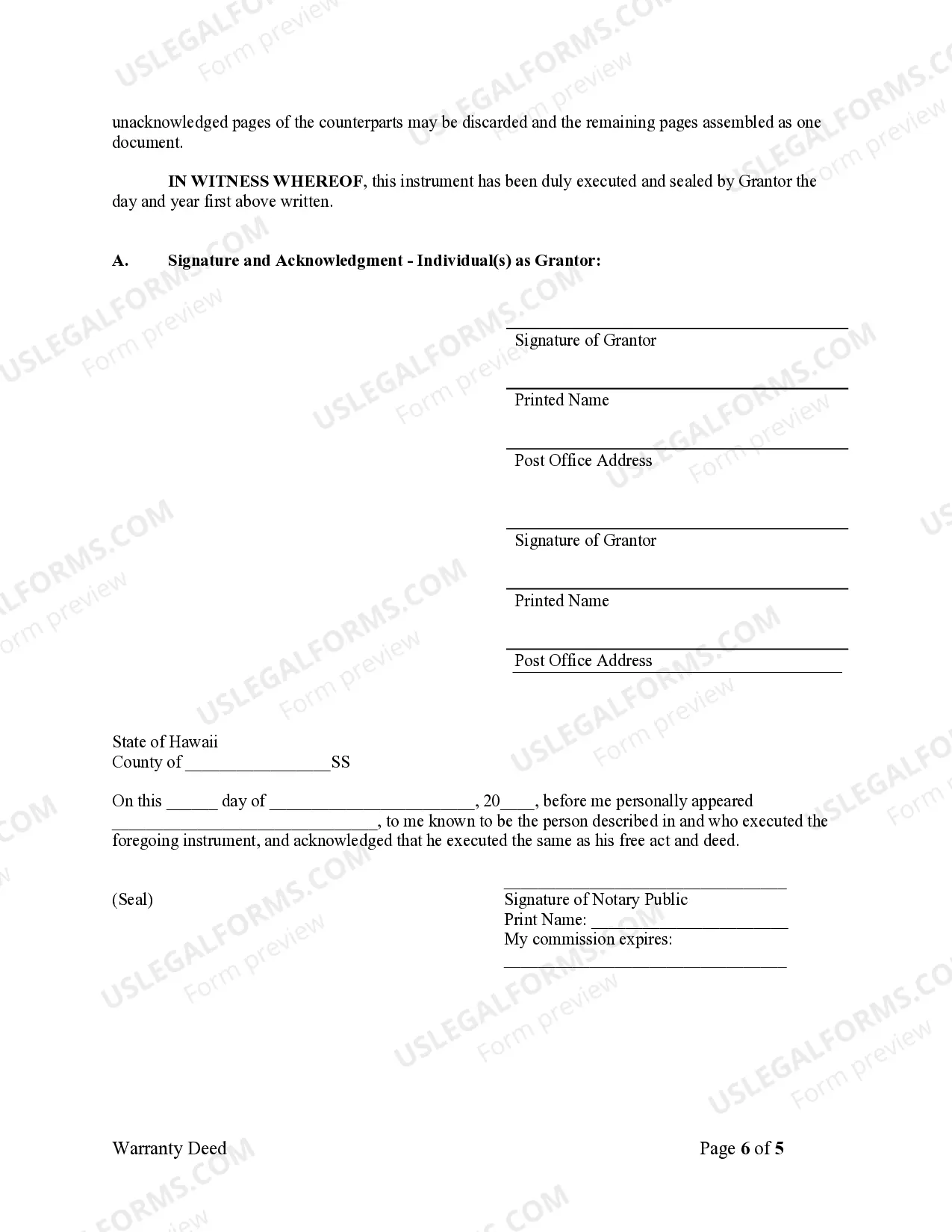
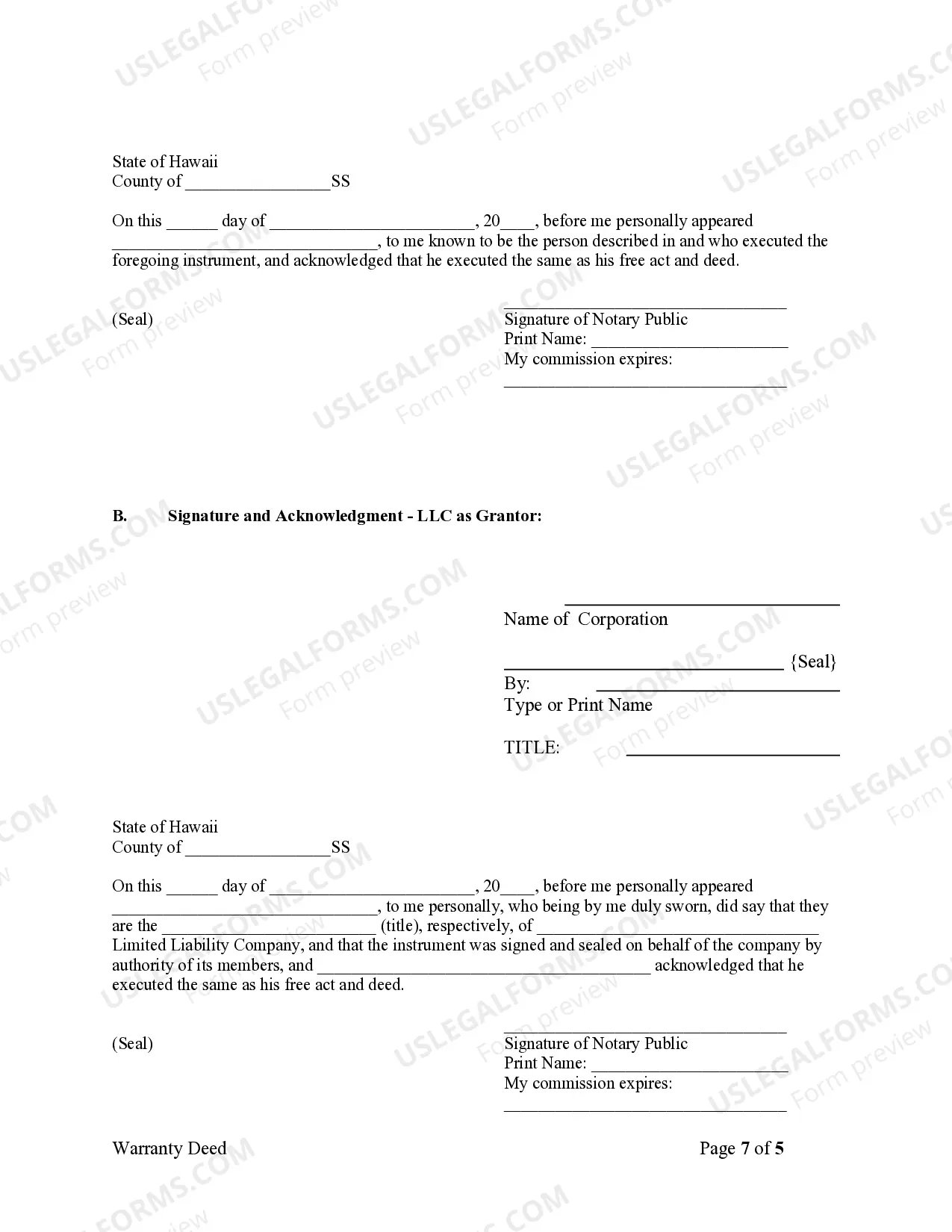
- Signature lines for both Grantor and Grantee.
- Notary acknowledgment section to validate the deed.




When to use this document
This form should be used when a Limited Partnership or an LLC is involved in the sale or transfer of real estate. It is particularly important in situations where the property ownership is not held by an individual but by a legal entity, ensuring proper legal transfer of rights and interests in the property.
Who should use this form
- Limited Partnerships or Limited Liability Companies that need to transfer real property.
- Individuals or entities acting on behalf of a Limited Partnership or LLC.
- Real estate professionals facilitating property transactions involving legal entities.
Completing this form step by step
- Identify the parties involved by entering the names of the Grantor and Grantee.
- Provide a complete legal description of the property being transferred.
- Include the date of the transaction.
- Have all parties sign where indicated and ensure signatures are properly witnessed.
- Complete the notary acknowledgment section to validate the deed.
Is notarization required?
Yes, this form must be notarized to be legally valid. The notary acknowledgment helps to verify the identities of the parties and ensures that the signing was done willingly. US Legal Forms offers integrated online notarization services, allowing you to complete this process through a secure video call at your convenience.
Get your form ready online
Our built-in tools help you complete, sign, share, and store your documents in one place.
Make edits, fill in missing information, and update formatting in US Legal Forms—just like you would in MS Word.
Download a copy, print it, send it by email, or mail it via USPS—whatever works best for your next step.
Sign and collect signatures with our SignNow integration. Send to multiple recipients, set reminders, and more. Go Premium to unlock E-Sign.
If this form requires notarization, complete it online through a secure video call—no need to meet a notary in person or wait for an appointment.
We protect your documents and personal data by following strict security and privacy standards.

Make edits, fill in missing information, and update formatting in US Legal Forms—just like you would in MS Word.

Download a copy, print it, send it by email, or mail it via USPS—whatever works best for your next step.

Sign and collect signatures with our SignNow integration. Send to multiple recipients, set reminders, and more. Go Premium to unlock E-Sign.

If this form requires notarization, complete it online through a secure video call—no need to meet a notary in person or wait for an appointment.

We protect your documents and personal data by following strict security and privacy standards.
Common mistakes to avoid
- Failing to accurately describe the property, which can lead to legal disputes.
- Not obtaining necessary signatures from all parties involved.
- Neglecting to complete the notary acknowledgment, risking the deed's legality.
- Using incorrect legal designations for the Grantor or Grantee.
Why use this form online
- Convenience of accessing and completing the form from anywhere with an internet connection.
- Editability allows for easy corrections before finalizing the document.
- Reliable templates created by licensed attorneys ensure that legal requirements are met.
- Immediate downloads provide quick access to the necessary forms.
Quick recap
- This warranty deed is essential for property transfers involving limited partnerships and LLCs.
- Ensure all necessary components, such as signatures and notarization, are properly completed.
- Be aware of state-specific legal requirements for your property transaction.
Looking for another form?








Form popularity
FAQ
The parties to a warranty deed include the Grantor and the Grantee. In a situation where a Hawaii Warranty Deed from Limited Partnership or LLC is the Grantor or Grantee, these entities are responsible for the transfer of property rights. The Grantor is the current owner, while the Grantee is the new owner receiving the property. Clearly identifying each party in the deed is crucial for a smooth property transfer.
You do not need to be an attorney to prepare a deed, including a warranty deed. Many individuals successfully complete this task themselves, especially when the Hawaii Warranty Deed from Limited Partnership or LLC is involved. However, it can be beneficial to consult legal resources or use platforms like USLegalForms to ensure the document meets all necessary legal requirements and is properly prepared.
To transfer ownership of a property in Hawaii, you need to execute a valid deed, such as a warranty deed. In this case, a Hawaii Warranty Deed from Limited Partnership or LLC is the Grantor, or Grantee, should be appropriately filled out and signed. Afterward, you should file the deed with the Bureau of Conveyances in Hawaii to make the transfer official. This step is crucial for ensuring legal recognition of the ownership change.
Yes, anyone can file a warranty deed, but it typically requires specific details about the property transfer. If your Hawaii Warranty Deed from Limited Partnership or LLC is the Grantor or Grantee, you should ensure that the deed complies with local regulations. It is advisable to check with your local recording office to understand their filing requirements. Using platforms like USLegalForms can guide you through the process to ensure accuracy.
Filling out a warranty deed requires specific information about the property and the parties involved. Start by including the names of the Grantor and Grantee, clearly stating whether the Hawaii Warranty Deed from Limited Partnership or LLC is the Grantor or Grantee. Next, describe the property in detail, including any legal descriptions, and specify the terms of the transfer. Lastly, ensure all signatures are notarized to validate the document.
The grantee, or the person receiving the property, benefits the most from a warranty deed. They gain assurance of clear title and protections against future claims. For those engaged in property transactions involving a Hawaii Warranty Deed from Limited Partnership or LLC, this deed provides peace of mind and legal security, making it an attractive option.
One potential disadvantage of a warranty deed is its comprehensive liability for the grantor. If any title defects arise, the grantor is responsible for resolving these issues, which can lead to significant costs. Additionally, it may not always be the best option depending on the relationship between the parties involved, so evaluating alternatives can be beneficial.
A warranty deed typically does not override a will, as a will dictates the distribution of assets upon death. However, if the property is transferred via warranty deed before the owner's death, it may bypass probate, complicating the will's terms. It’s wise to consult with a legal expert or use US Legal Forms to clarify your situation.
In Hawaii, a warranty deed is a legal document that guarantees clear ownership of real property. It provides the grantee with assurances from the grantor regarding the title's validity and freedom from claims. Remember, a Hawaii Warranty Deed from Limited Partnership or LLC ensures that the transaction is transparent and legally binding, protecting both parties involved.
A special warranty deed limits the grantor's warranties to the period during which the grantor owned the property. This means that the grantor only guarantees the title against defects that arose during their ownership. In contrast, a general warranty deed provides broader assurances, making it essential to choose the right type based on your situation.