Hawaii Letter from Landlord to Tenant for Failure to use electrical, plumbing, sanitary, heating, ventilating, air conditioning and other facilities in a reasonable manner
Overview of this form
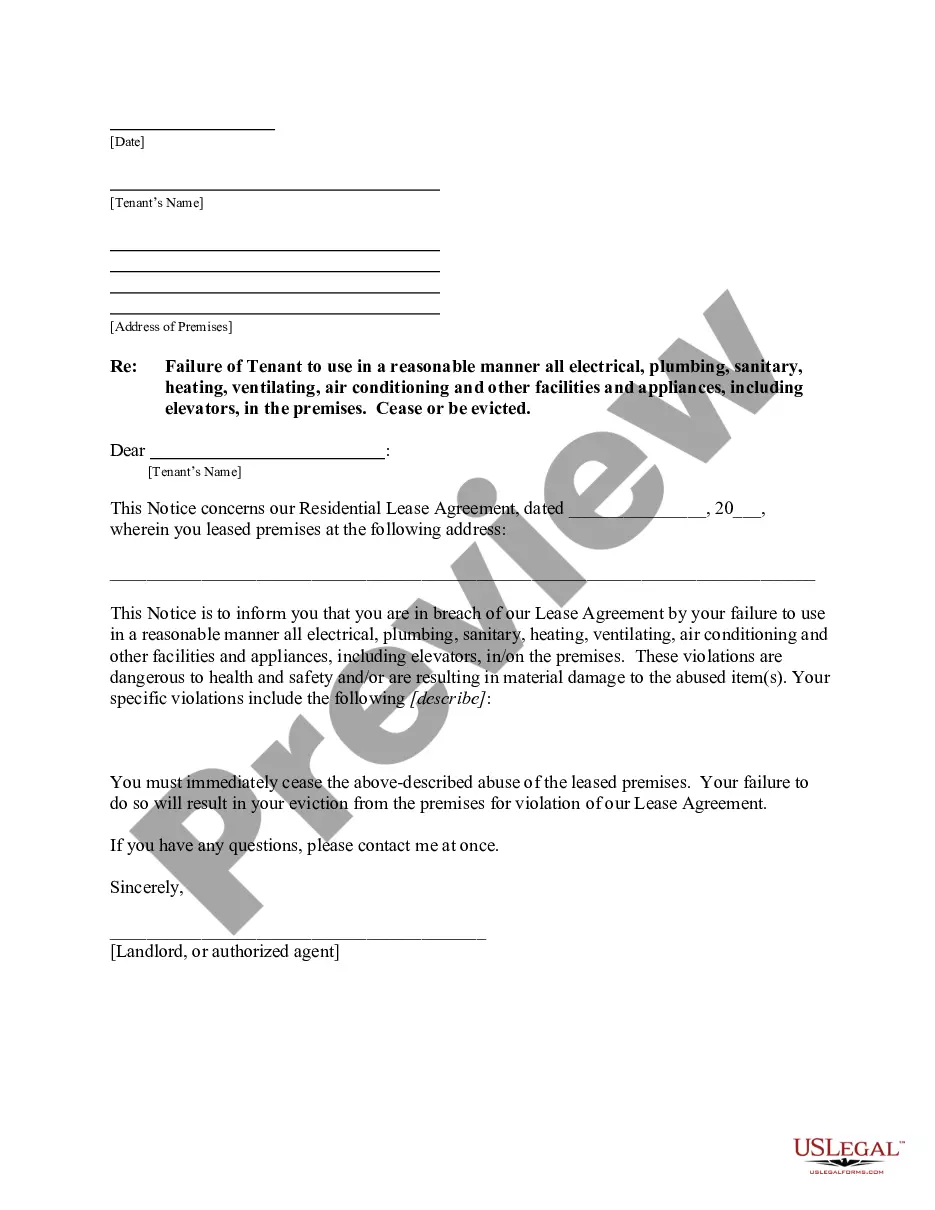
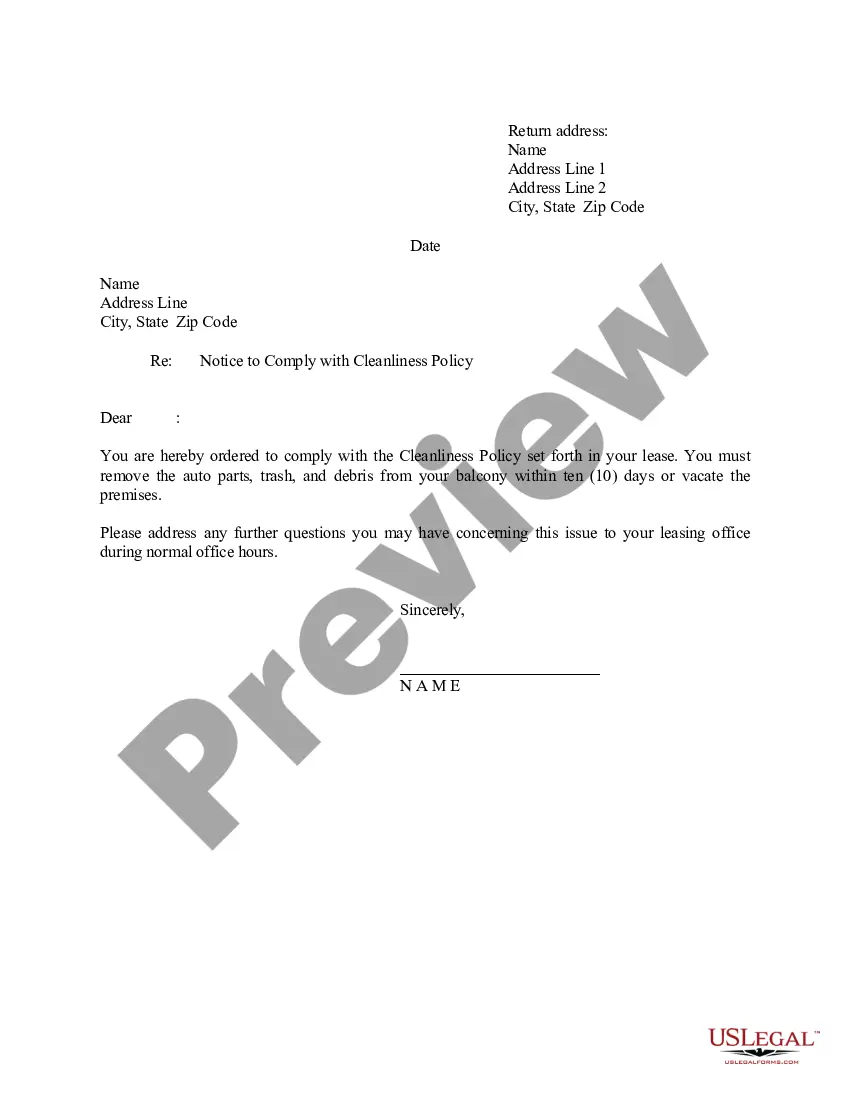
This form is a letter from a landlord to a tenant, addressing the tenant's failure to use electrical, plumbing, and other facilities in a reasonable manner. The purpose of this letter is to notify the tenant of their non-compliance with the rental agreement and to encourage them to rectify the issue to avoid potential lease termination. This letter is specifically tailored for situations where the landlord needs to formally communicate concerns regarding maintenance and usage of property facilities, distinguishing it from general notice forms.
Main sections of this form
- Identification of the parties: Landlord and tenant information.
- Details of the issue: Description of the unreasonable use of facilities.
- Call to action: Request for the tenant to correct their behavior.
- Consequence of inaction: Warning about potential lease termination.
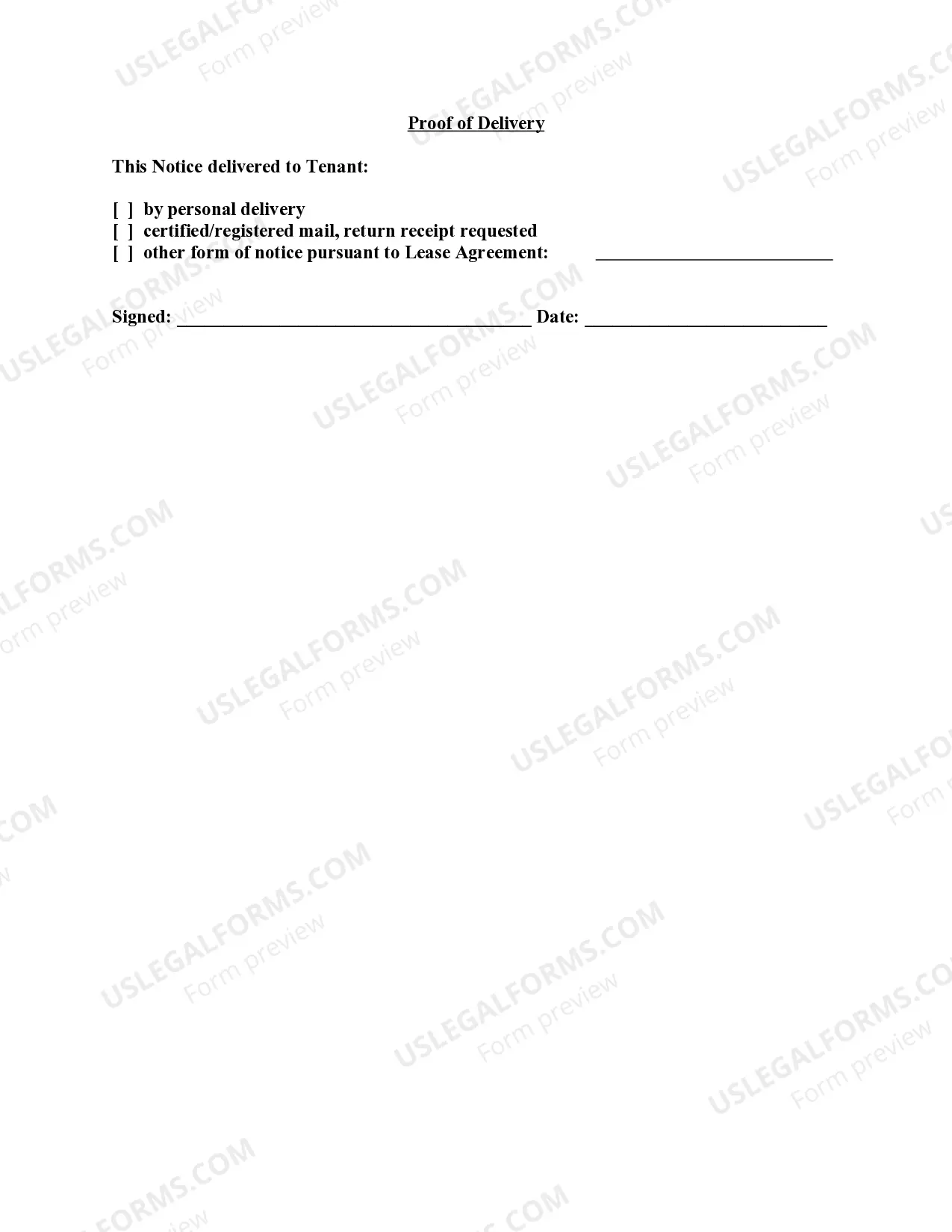
- Proof of delivery method: Options for delivering the notice to the tenant.



When this form is needed
This form should be used when a landlord identifies that a tenant is misusing or neglecting the proper functioning of electrical, plumbing, or heating facilities. It is suitable for situations where the lack of reasonable use could potentially lead to property damage or legal disputes. This letter serves as a formal warning to encourage the tenant to comply with the rental terms before more serious actions are necessary.
Who should use this form
- Landlords who need to address tenant complaints related to facility usage.
- Property managers representing landlords and seeking to maintain property standards.
- Tenants who need to understand their responsibilities regarding property facilities.
How to complete this form
- Identify the parties: Fill in the landlord's and tenant's names and addresses.
- Specify the issue: Describe the specific failure to use the facilities reasonably.
- Set a deadline: Indicate a reasonable timeframe for the tenant to rectify the situation.
- Include consequences: Clearly state the potential outcomes if the issue is not resolved.
- Choose delivery method: Select how the notice will be delivered to the tenant.
Is notarization required?
In most cases, this form does not require notarization. However, some jurisdictions or signing circumstances might. US Legal Forms offers online notarization powered by Notarize, accessible 24/7 for a quick, remote process.
Get your form ready online
Our built-in tools help you complete, sign, share, and store your documents in one place.
Make edits, fill in missing information, and update formatting in US Legal Forms—just like you would in MS Word.
Download a copy, print it, send it by email, or mail it via USPS—whatever works best for your next step.
Sign and collect signatures with our SignNow integration. Send to multiple recipients, set reminders, and more. Go Premium to unlock E-Sign.
If this form requires notarization, complete it online through a secure video call—no need to meet a notary in person or wait for an appointment.
We protect your documents and personal data by following strict security and privacy standards.

Make edits, fill in missing information, and update formatting in US Legal Forms—just like you would in MS Word.

Download a copy, print it, send it by email, or mail it via USPS—whatever works best for your next step.

Sign and collect signatures with our SignNow integration. Send to multiple recipients, set reminders, and more. Go Premium to unlock E-Sign.

If this form requires notarization, complete it online through a secure video call—no need to meet a notary in person or wait for an appointment.

We protect your documents and personal data by following strict security and privacy standards.
Common mistakes
- Failing to clearly identify the issue, leading to misunderstandings.
- Not providing a specific deadline for the tenant to respond or rectify the situation.
- Neglecting to keep a copy of the letter for personal records.
Benefits of completing this form online
- Convenience of filling out and downloading the form instantly.
- Easy customization of the letter to fit specific situations and needs.
- Access to reliable and legally reviewed templates to ensure compliance.
Legal use & context
- This letter serves as formal documentation of the landlord's concerns, which may be necessary in potential legal disputes.
- Sending this letter can provide a record that the landlord attempted to address the issue professionally.
Quick recap
- The letter is crucial for formal communications regarding tenant responsibilities.
- Timely delivery and clear communication are essential to prevent further issues.
- Documenting the situation helps in case of legal proceedings.
Looking for another form?






Form popularity
FAQ
In Hawaii, landlords are obligated to address repair requests in a timely manner, generally understanding that urgent issues like plumbing and heating require immediate attention. The specific timeline for repairs may depend on local law and the nature of the issue. Problems impacting tenant safety or habitability typically demand quicker resolutions. Should issues arise concerning facility usage, a tenant may invoke their rights through a Hawaii Letter from Landlord to Tenant for Failure to use electrical, plumbing, sanitary, heating, ventilating, air conditioning, and other facilities in a reasonable manner.
In Hawaii, landlords cannot discriminate against tenants based on race, religion, gender, or other protected categories. Additionally, landlords are prohibited from entering a tenant's unit without proper notice unless in emergencies. They also cannot retaliate against tenants for asserting their rights as renters. Understanding these rights can help tenants defend against issues related to facility usage, possibly resolving problems with a Hawaii Letter from Landlord to Tenant for Failure to use electrical, plumbing, sanitary, heating, ventilating, air conditioning, and other facilities in a reasonable manner.
Section 521 53 of the Hawaii Revised Statutes pertains to landlord-tenant relations specifically regarding the obligations of landlords to maintain rental properties. This section emphasizes the landlord's responsibility to ensure reasonable access and use of essential services such as plumbing, heating, and electrical systems. Violations of this section can give rise to tenant remedies, including potentially sending a Hawaii Letter from Landlord to Tenant for Failure to use electrical, plumbing, sanitary, heating, ventilating, air conditioning, and other facilities in a reasonable manner.
To report a landlord in Hawaii, tenants should first document the issues they encounter, including any failure to maintain facilities. They can then contact the Hawaii Department of Commerce and Consumer Affairs for guidance on filing a complaint. If the situation involves health or safety violations, contacting local health departments may also be necessary. A well-documented issue might also include a Hawaii Letter from Landlord to Tenant for Failure to use electrical, plumbing, sanitary, heating, ventilating, air conditioning, and other facilities in a reasonable manner.
In Hawaii, the notice period a landlord must provide varies based on the rental agreement's terms. Typically, for month-to-month leases, landlords must give at least 45 days' notice to tenants. For fixed-term leases, the lease usually ends automatically, but it's good practice for landlords to communicate plans clearly. If issues regarding facility usage prompt a request to move out, a Hawaii Letter from Landlord to Tenant for Failure to use electrical, plumbing, sanitary, heating, ventilating, air conditioning, and other facilities in a reasonable manner may be utilized.
In Hawaii, there are no statewide rent control laws. However, if a landlord includes a rent increase clause in the lease agreement, they can legally raise the rent after providing proper notice. It is vital for tenants to refer to their lease for specific terms related to rent increases, plus ensure any changes comply with local regulations. Always remember that a landlord can issue a Hawaii Letter from Landlord to Tenant for Failure to use electrical, plumbing, sanitary, heating, ventilating, air conditioning, and other facilities in a reasonable manner if issues arise.
Notice to terminate a week-to-week lease. 10 days (§521-71(d)). Notice to terminate a month-to-month lease. 28 days' notice in writing (A§521-71(b)).
Indiana. Indiana laws allow landlords to hold on to security deposits for 45 days to give them time to determine any damages caused by tenants. Colorado. Colorado is one of few states that allow landlords to access the rental property without an advance notice requirement. Georgia.
If the landlord waits longer than 60 days, then the tenant will become a month-to-month tenant. The landlord will then have to give the tenant a 45-day notice to move before being able to proceed with the eviction (see Haw.
Hawaii is not considered a very landlord friendly state. This is because tenants have several rights such as the right to extended periods of notice, and landlords cannot change rent without providing ample notice. Tenants can also withhold rent in some circumstances.