Georgia Last Will for a Widow or Widower with no Children
What is this form?
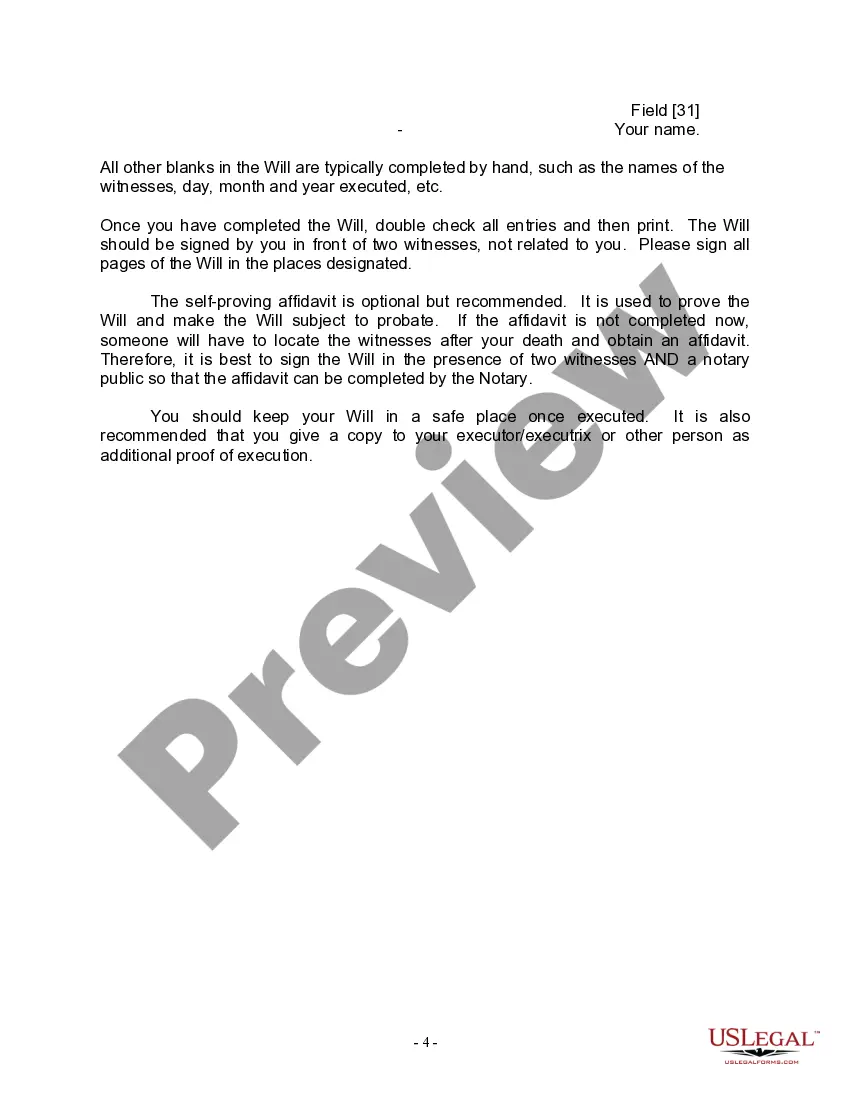
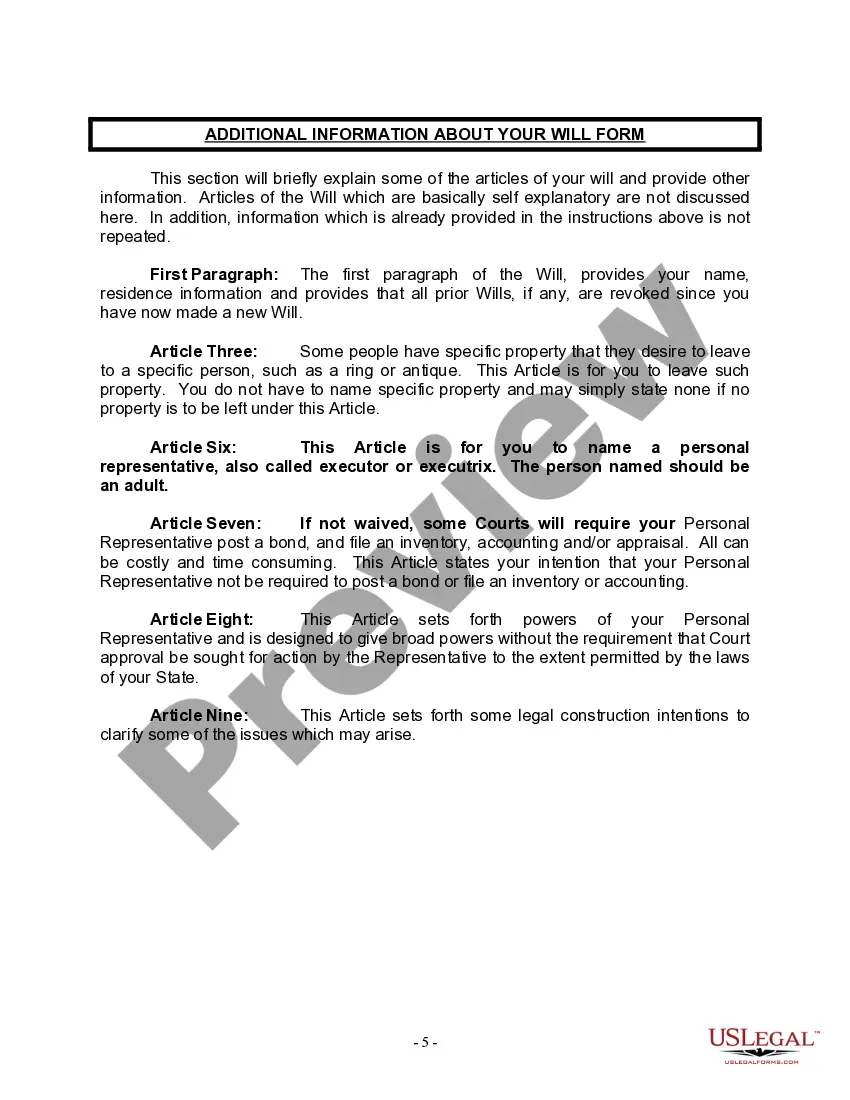
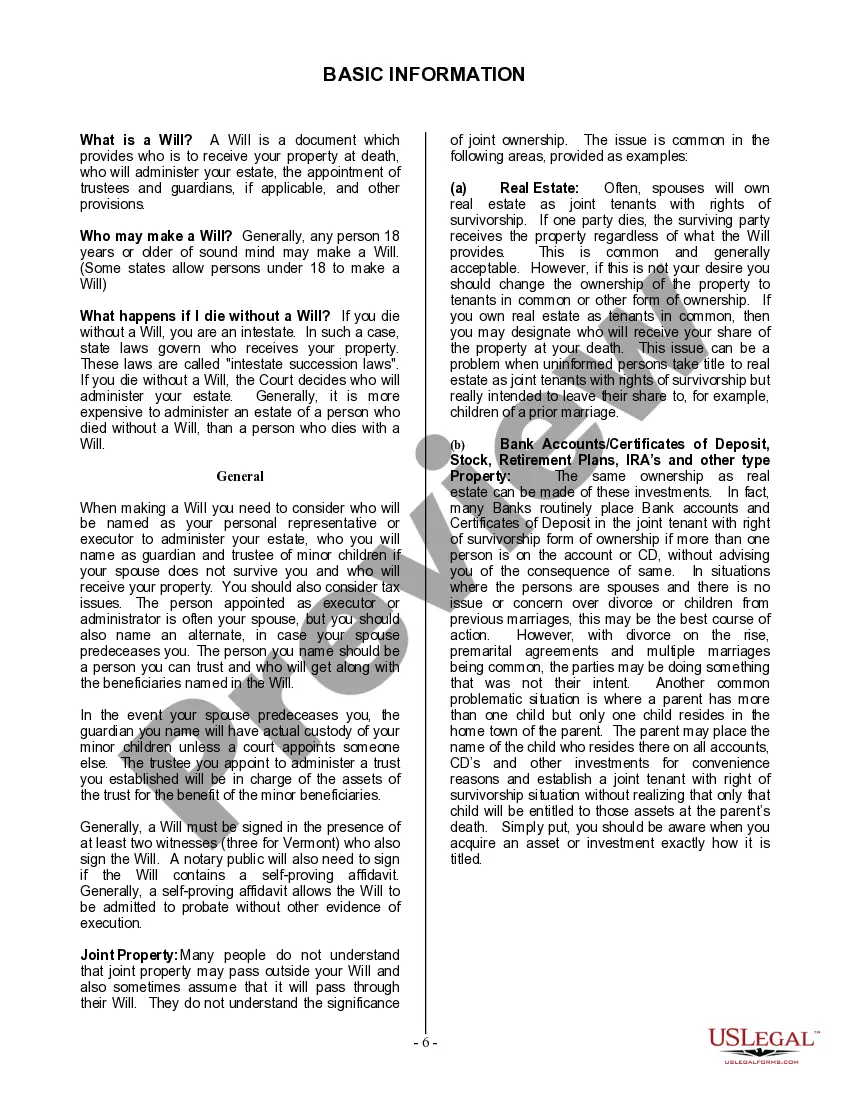
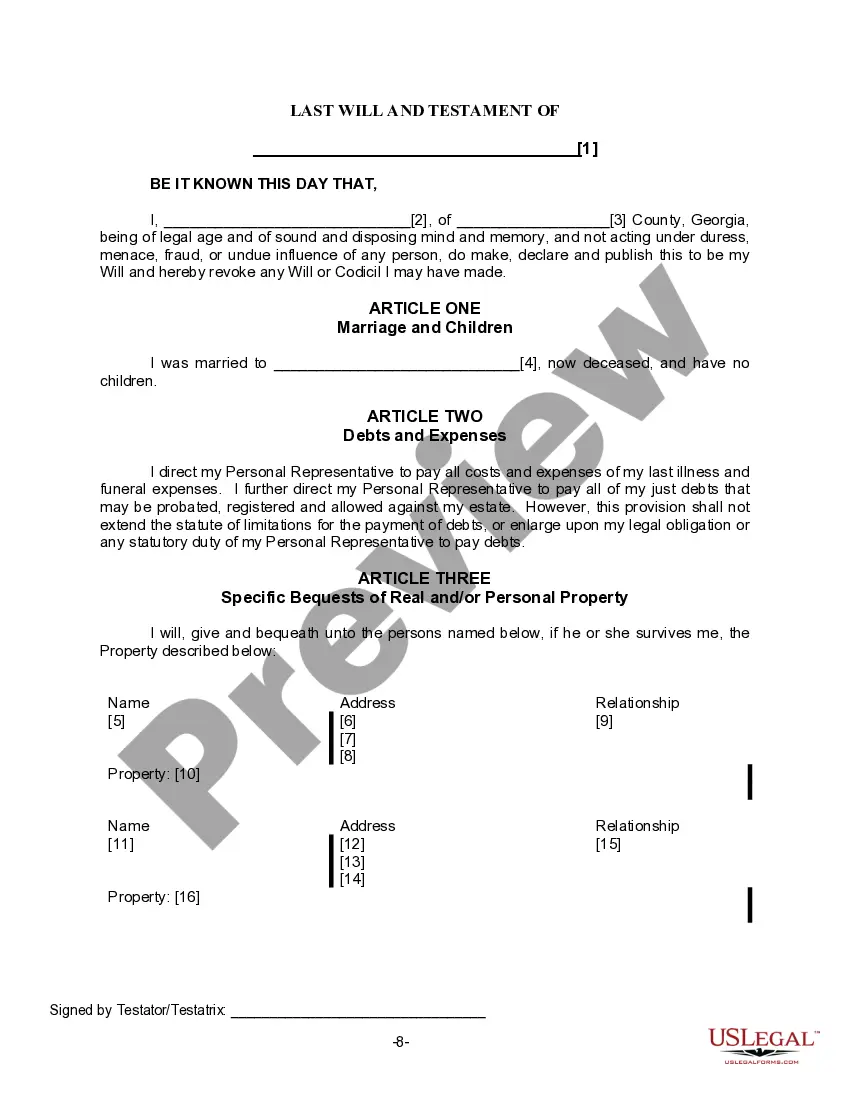
The Last Will for a Widow or Widower with No Children is a legal document that outlines how an individual wants their assets and property distributed after their death. This will is specifically designed for those who are widowed or widowered and do not have any children. It allows the testator to designate a personal representative to handle their estate, specify beneficiaries, and include various provisions tailored to their unique situation.
Main sections of this form
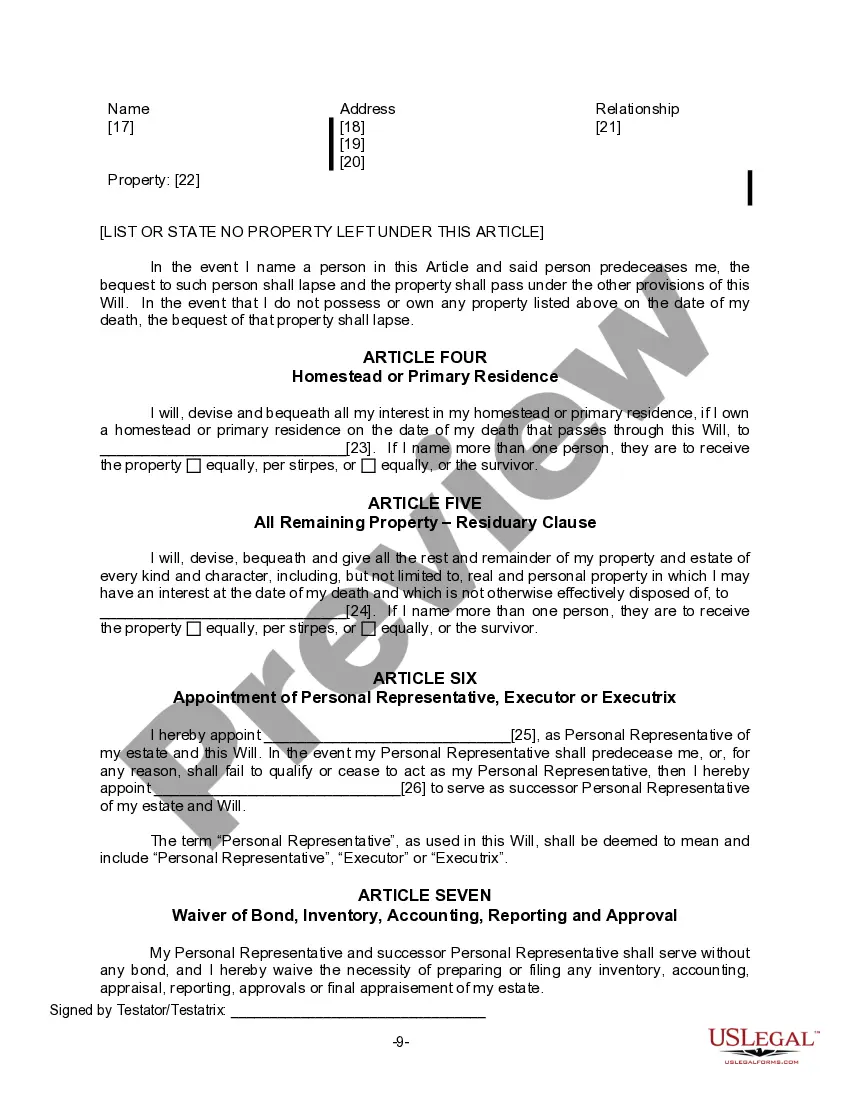
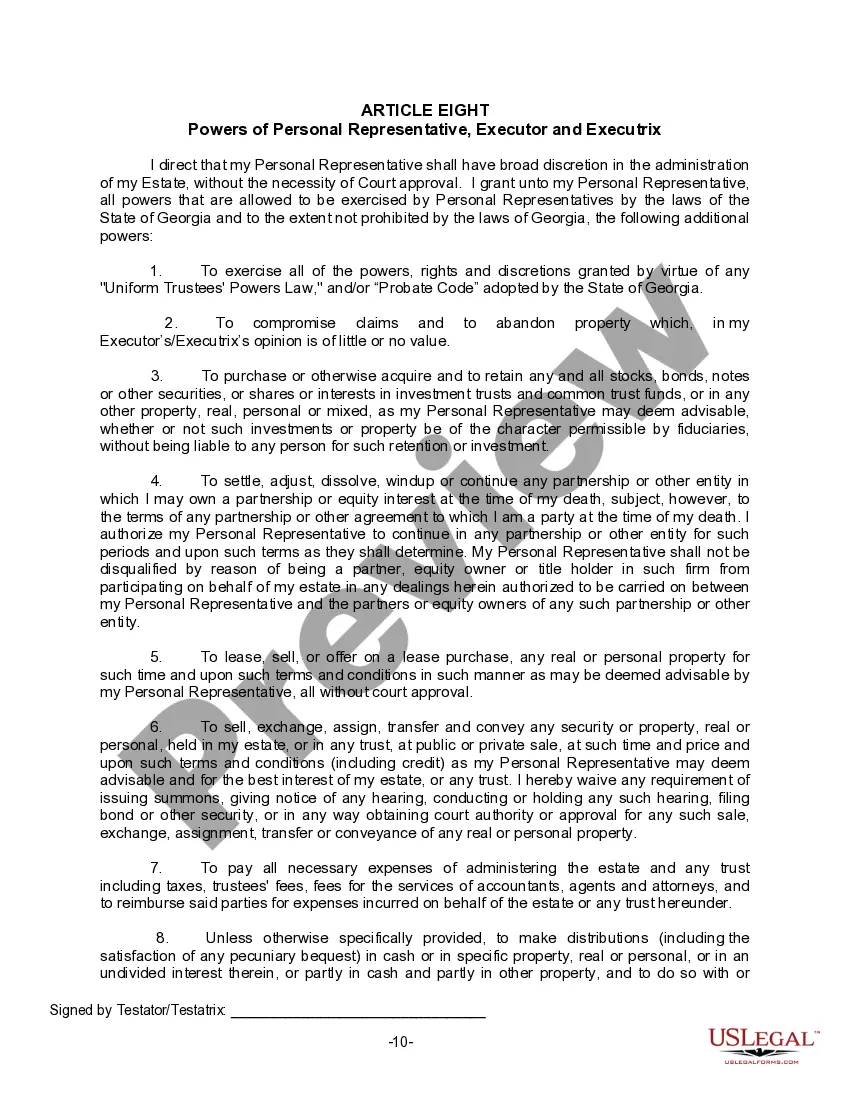
- Appointment of a personal representative or executor to manage the estate.
- Specific bequests of property, detailing who receives particular assets.
- Directions for the payment of debts and funeral expenses.
- Instructions regarding the distribution of the remaining property after specific bequests.
- Waiver of bond for the personal representative, simplifying administration of the estate.
- Provisions for the handling of digital assets.



When to use this form
This form should be used when a widow or widower wishes to ensure that their assets are distributed according to their wishes after their death. It is particularly important in situations where there are no children to inherit the estate, allowing the testator to specify their desired beneficiaries clearly. Additionally, this form is suitable for individuals wanting to appoint a personal representative to ease the administrative burden on their loved ones during an emotionally challenging time.
Who can use this document
- Individuals who are widowed or widowers.
- Those who do not have children or heirs to inherit their estate.
- People seeking to specify how they want their property distributed after their death.
- Anyone wanting to simplify the estate administration process for their personal representative.
Steps to complete this form
- Identify yourself as the testator and provide your location.
- Declare your marital status and mention your deceased spouse.
- List any debts and expenses you want your personal representative to pay from your estate.
- Designate beneficiaries for specific bequests of property and your primary residence.
- Appoint a personal representative and designate a successor if necessary.
- Ensure that the will is signed in the presence of two witnesses and a notary, if required.
Notarization requirements for this form
Yes, this form must be notarized to be legally valid in the State of Georgia. A notary public must witness the signing of the will to ensure its enforceability and to facilitate the probate process when necessary.
Get your form ready online
Our built-in tools help you complete, sign, share, and store your documents in one place.
Make edits, fill in missing information, and update formatting in US Legal Forms—just like you would in MS Word.
Download a copy, print it, send it by email, or mail it via USPS—whatever works best for your next step.
Sign and collect signatures with our SignNow integration. Send to multiple recipients, set reminders, and more. Go Premium to unlock E-Sign.
If this form requires notarization, complete it online through a secure video call—no need to meet a notary in person or wait for an appointment.
We protect your documents and personal data by following strict security and privacy standards.

Make edits, fill in missing information, and update formatting in US Legal Forms—just like you would in MS Word.

Download a copy, print it, send it by email, or mail it via USPS—whatever works best for your next step.

Sign and collect signatures with our SignNow integration. Send to multiple recipients, set reminders, and more. Go Premium to unlock E-Sign.

If this form requires notarization, complete it online through a secure video call—no need to meet a notary in person or wait for an appointment.

We protect your documents and personal data by following strict security and privacy standards.
Common mistakes to avoid
- Failing to sign the will in the presence of two witnesses.
- Not specifying a personal representative, leading to complications in estate administration.
- Overlooking the need for a notary if required for a self-proving affidavit.
- Not updating the will after significant life changes, such as remarriage or acquiring new assets.
Advantages of online completion
- Convenient access to legal templates that can be easily customized to fit personal needs.
- Editable forms allow users to input their specific information without starting from scratch.
- Reliability of legal guidance based on templates drafted by licensed attorneys.
- Immediate availability and affordability compared to hiring an attorney for basic will preparation.
Main things to remember
- This Last Will is tailored for widows and widowers without children.
- It provides a clear framework for distributing your assets according to your wishes.
- Ensure proper execution by signing in front of witnesses and a notary to validate your will.
Looking for another form?
Form popularity
FAQ
In Georgia, if you do not have a will, the state laws determine your heirs. Generally, if a widow or widower has no children, the surviving spouse inherits everything. If there are no surviving children, parents, or siblings, the estate may go to more distant relatives, based on Georgia's intestacy laws. It's recommended to create a Georgia Last Will for a Widow or Widower with no Children to ensure your wishes are honored and to avoid confusion.
The legal requirements for a will in Georgia include that it must be executed by a person who is at least 14 years old and of sound mind. The will must be in writing, signed by the testator, and witnessed by at least two individuals in the testator's presence. These formalities ensure that the will reflects the true intentions of the testator. When creating a Georgia Last Will for a Widow or Widower with no Children, adhering to these legal requirements protects your wishes effectively.
In Georgia, certain documents can supersede a will, including any revocation documents the testator may create. Additionally, trusts that dictate how assets should be handled can take precedence over a will. Life insurance policies and retirement accounts with designated beneficiaries also operate outside the will. It's beneficial to be aware of these aspects when preparing a Georgia Last Will for a Widow or Widower with no Children.
For a will to be valid in Georgia, it must meet five key requirements. First, it must be in writing. Second, it must be signed by the testator. Third, it should be signed by two witnesses in the presence of the testator. Fourth, the testator must be of sound mind and at least 14 years old. Lastly, it should clearly express the intent of the testator. These requirements are essential when drafting a Georgia Last Will for a Widow or Widower with no Children.
To avoid probate in Georgia, you can set up a revocable trust, which allows you to transfer assets without going through the court system. Another option is to designate beneficiaries on financial accounts and property titles. Additionally, certain assets, like joint properties, automatically transfer upon death, thus avoiding probate. Consulting with a legal expert can help you craft a Georgia Last Will for a Widow or Widower with no Children while minimizing the chances of probate.
In Georgia, several factors can void a will, including failure to meet legal formalities. If the will was not signed by the testator and two witnesses, it may not be valid. Additionally, if the testator was under duress or lacked the capacity to understand the document, the will could also be annulled. Understanding these factors is crucial when preparing a Georgia Last Will for a Widow or Widower with no Children.
Yes, you can write your own will in Georgia, and many choose to create a Georgia Last Will for a Widow or Widower with no Children to simplify the process. However, it's crucial to follow specific legal guidelines to ensure that your will is valid and enforceable. Using platforms like uslegalforms can guide you through the process, providing templates and information tailored for your needs. This way, you can confidently create a will that meets your requirements.
While a surviving spouse has significant rights in Georgia, they do not automatically inherit everything. The specifics can depend on whether there are surviving children or if there is a legitimate will present. In a situation without children, a Georgia Last Will for a Widow or Widower with no Children can help ensure your spouse receives the desired inheritance. It's essential to draft your will to clearly reflect your wishes.
In Georgia, the order of inheritance plays a vital role in estate planning, especially when creating a Georgia Last Will for a Widow or Widower with no Children. If a person dies without a will, the estate will be distributed according to state law. The surviving spouse typically receives the largest share, followed by parents and siblings if there are no children. Understanding this order helps clarify your choices when developing your will.
A surviving spouse in Georgia has certain rights under the law, which can significantly affect a Georgia Last Will for a Widow or Widower with no Children. Generally, they can inherit a portion of the estate, even if there is a will. Georgia law provides a surviving spouse with at least one-third of the estate, ensuring a fair share in absence of children. It's wise to consult legal resources or professionals to understand your specific situation.