Georgia Buyer's Notice of Intent to Vacate and Surrender Property to Seller under Contract for Deed
What this document covers
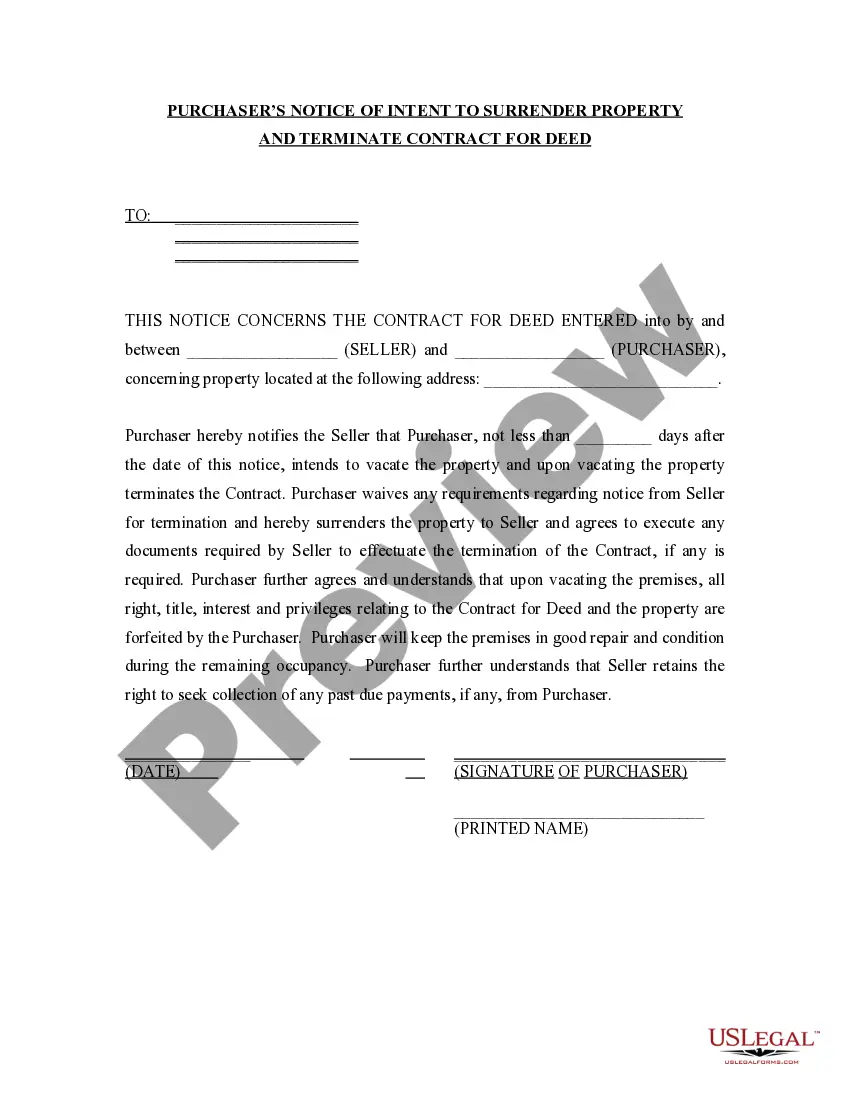
The Buyer's Notice of Intent to Vacate and Surrender Property to Seller under Contract for Deed is a legal document used by a buyer to formally notify the seller that they will vacate the property and relinquish all rights to it, as stipulated in the contract for deed. This form is essential for clearly outlining the buyer's intent to end their occupancy and their understanding of the consequences, which differ from standard lease termination notices or other eviction documents.
Form components explained
- Identification of the buyer and seller involved in the contract for deed.
- Details of the property being vacated.
- A declaration of the buyer's intent to surrender the property.
- Acceptance of the forfeiture of rights, titles, and interests in the property.
- Spaces for necessary dates and signatures.
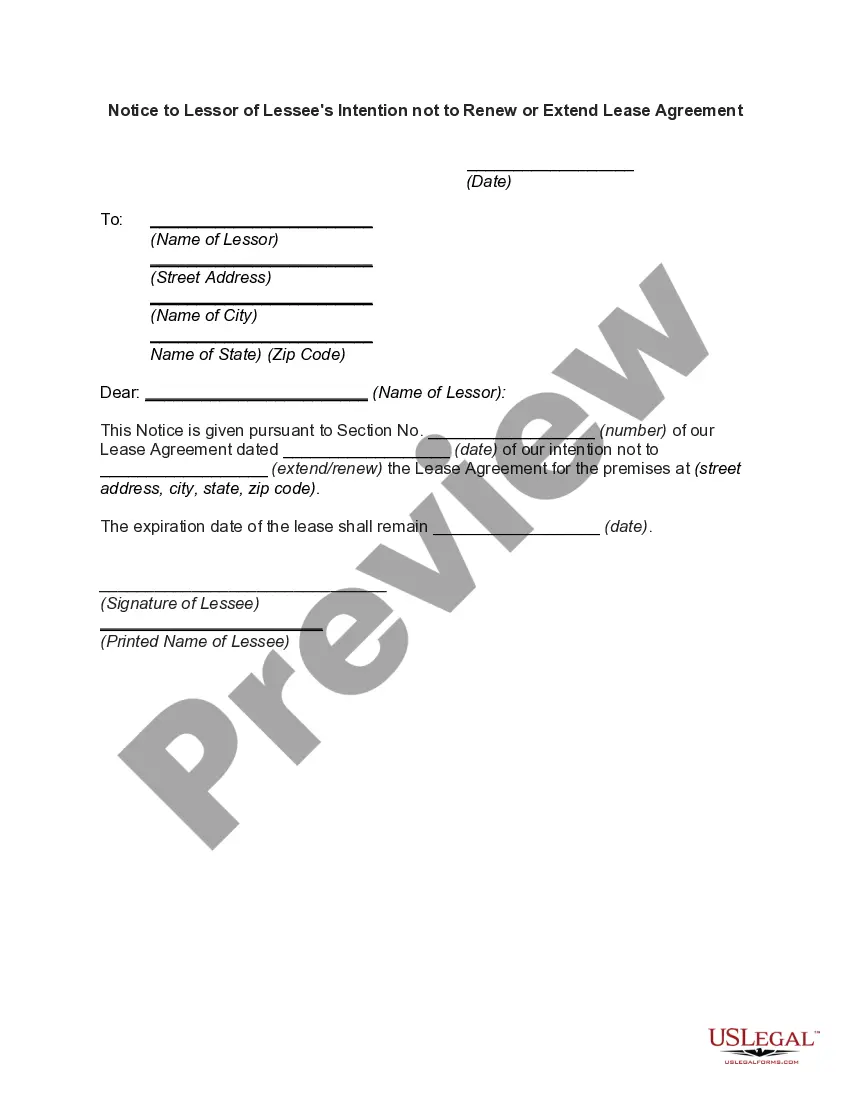
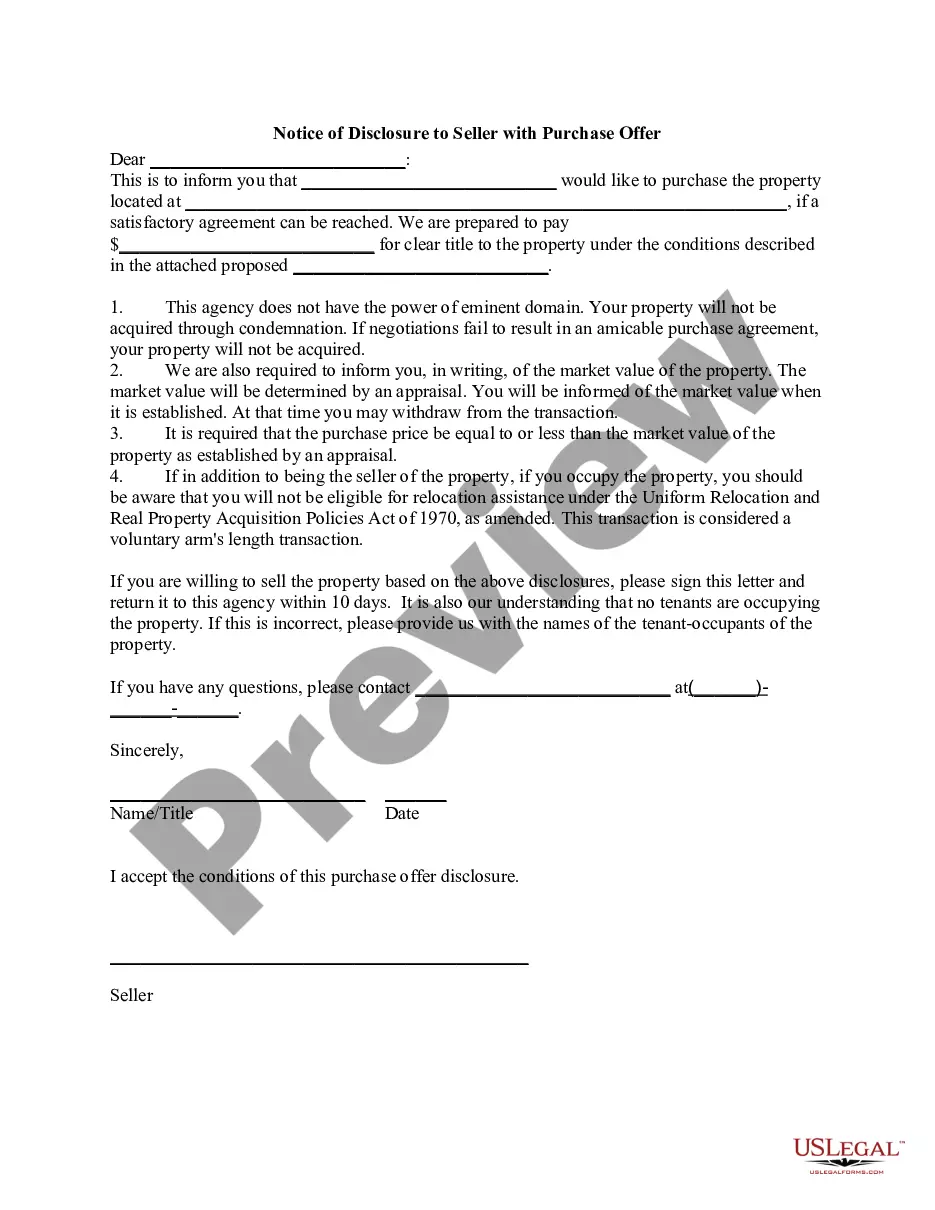
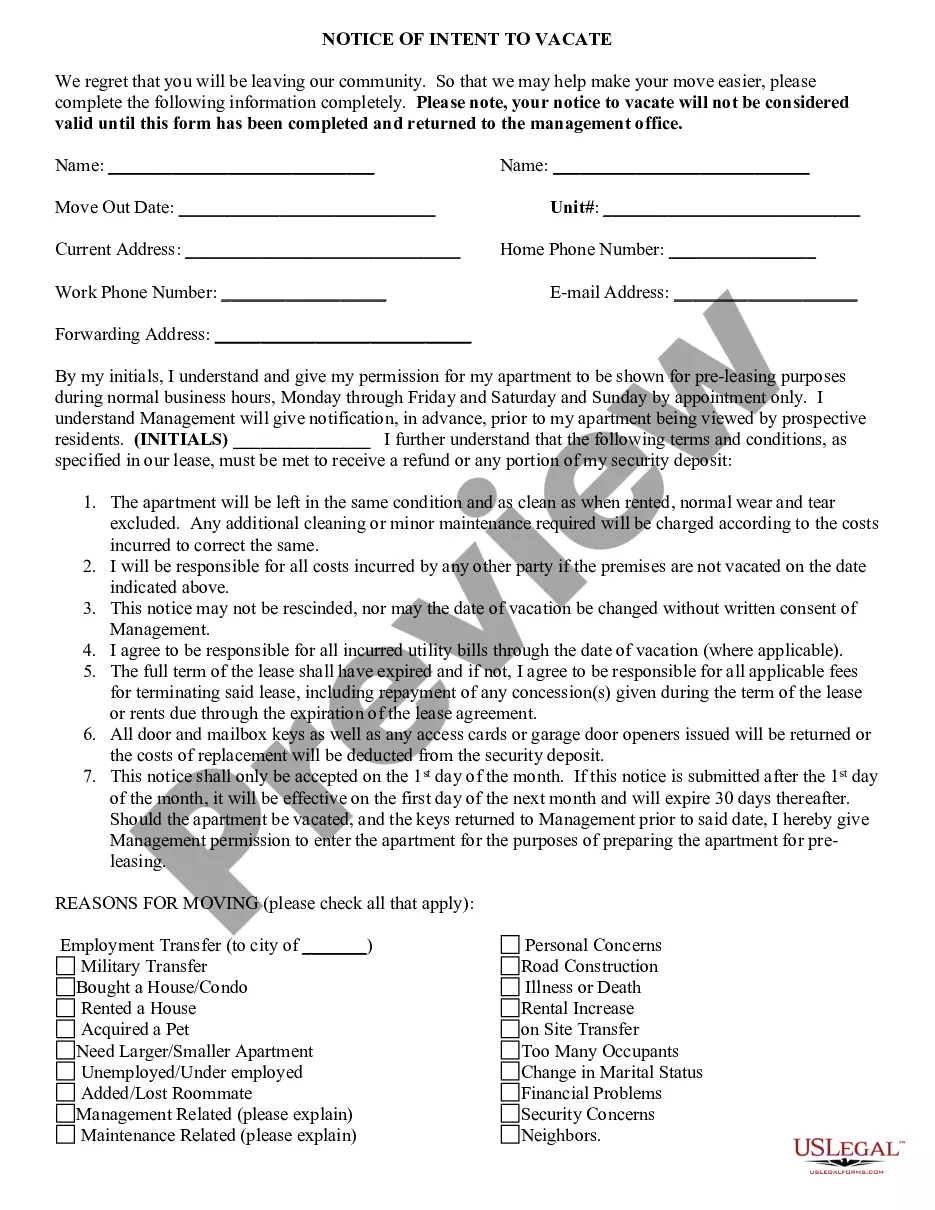
Common use cases
This form is useful in situations where a buyer under a contract for deed wishes to formally inform the seller that they will vacate the premises. Such instances may include the buyer's decision to default on the agreement, a desire to move to a different property, or the completion of the contract obligations that no longer require their occupancy. By providing this notice, the buyer protects themselves legally and ensures that all parties understand the terms of occupancy cessation.
Intended users of this form
This form is intended for:
- Buyers currently occupying a property under a contract for deed.
- Individuals seeking to surrender the property back to the seller.
- Parties needing a clear record of their intent to vacate.
Steps to complete this form
- Identify and enter the names and contact information of the buyer and seller.
- Specify the address and details of the property being surrendered.
- Clearly state the intent to vacate and surrender the property.
- Sign and date the form to validate the notice.
- Send a copy to the seller and retain a copy for your records.
Notarization requirements for this form
This form needs to be notarized to ensure legal validity. US Legal Forms provides secure online notarization powered by Notarize, allowing you to complete the process through a verified video call, available anytime.
Get your form ready online
Our built-in tools help you complete, sign, share, and store your documents in one place.
Make edits, fill in missing information, and update formatting in US Legal Forms—just like you would in MS Word.
Download a copy, print it, send it by email, or mail it via USPS—whatever works best for your next step.
Sign and collect signatures with our SignNow integration. Send to multiple recipients, set reminders, and more. Go Premium to unlock E-Sign.
If this form requires notarization, complete it online through a secure video call—no need to meet a notary in person or wait for an appointment.
We protect your documents and personal data by following strict security and privacy standards.

Make edits, fill in missing information, and update formatting in US Legal Forms—just like you would in MS Word.

Download a copy, print it, send it by email, or mail it via USPS—whatever works best for your next step.

Sign and collect signatures with our SignNow integration. Send to multiple recipients, set reminders, and more. Go Premium to unlock E-Sign.

If this form requires notarization, complete it online through a secure video call—no need to meet a notary in person or wait for an appointment.

We protect your documents and personal data by following strict security and privacy standards.
Common mistakes
- Failing to provide accurate property details.
- Not signing and dating the notice.
- Ignoring the need to follow up with the seller after submission.
Why complete this form online
- Convenience of downloading and filling out the form at your own pace.
- Editability allows for quick changes if needed.
- Reliable templates drafted by licensed attorneys ensure legal compliance.
Main things to remember
- This form is crucial for buyers wishing to officially vacate a property under a contract for deed.
- Clear communication of intent is essential to avoid future disputes.
- Completing this form accurately ensures legal protection and clarity for all parties involved.
Looking for another form?
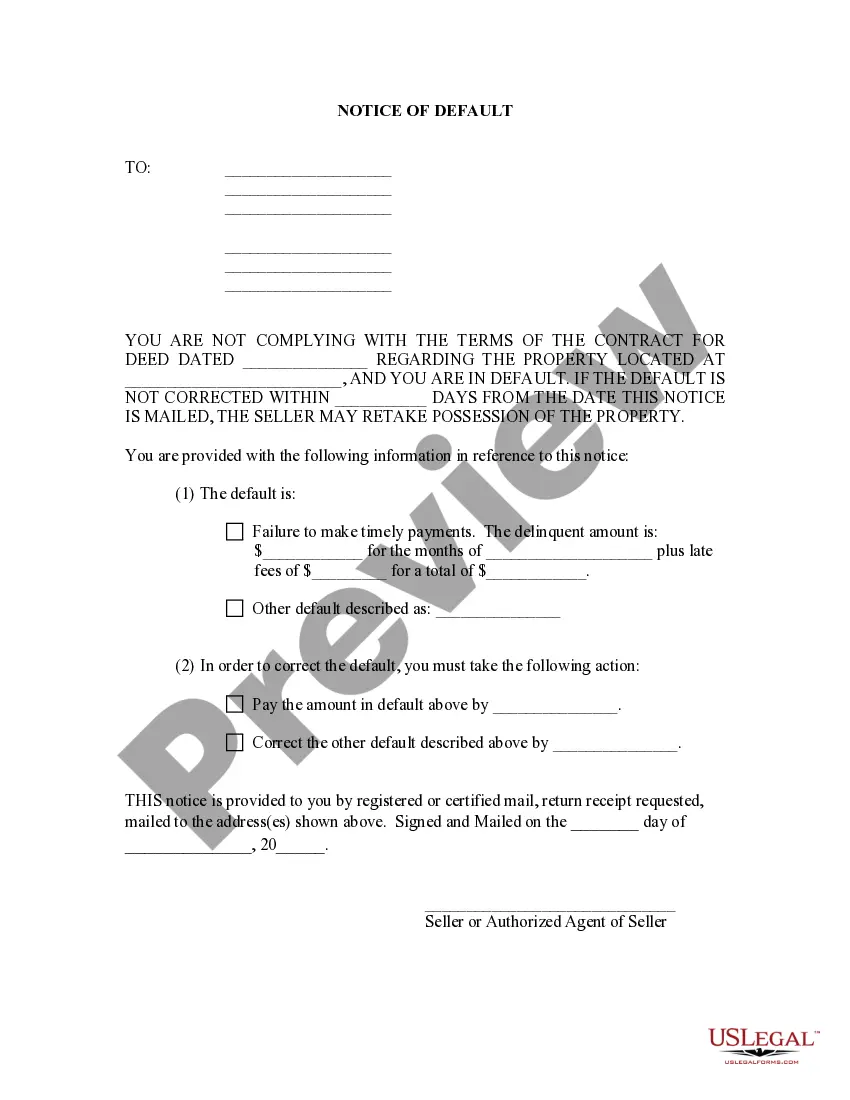

Form popularity
FAQ
This form is a formal notice by a buyer under a contract for deed that the buyer intends to vacate the property and relinquish all rights. It clearly documents occupancy cessation and the consequences under the contract, helping both parties understand the surrender of rights in Georgia.
The buyer signs and dates the notice, identifying both the buyer and seller as parties to the contract for deed. The form provides space for signatures and dates to formalize the surrender and show the parties' intent under the agreement.
Use this form when a buyer under a contract for deed intends to vacate and surrender the property to the seller. Common scenarios include default, deciding to move, or completing contract obligations that no longer require occupancy. The notice documents the intent and helps prevent misunderstandings about occupancy cessation.
The form requires identification of the buyer and seller; details of the property being vacated; a declaration of the buyer's intent to surrender the property; acceptance of the forfeiture of rights, titles, and interests; and spaces for the dates and signatures, creating a clear record of the surrender.
Once completed and delivered, the notice communicates the buyer's intent to vacate and relinquish all rights under the contract for deed, and records the surrender of occupancy with specified dates and signatures. It serves as a formal, enforceable record of cessation of occupancy under the agreement.
What makes this form different is that it is Georgia-specific and tailored to contracts for deed. It not only notes intent to vacate but also includes an explicit acceptance of forfeiture of rights, titles, and interests, addressing surrender under the contract rather than a generic lease or sale termination.