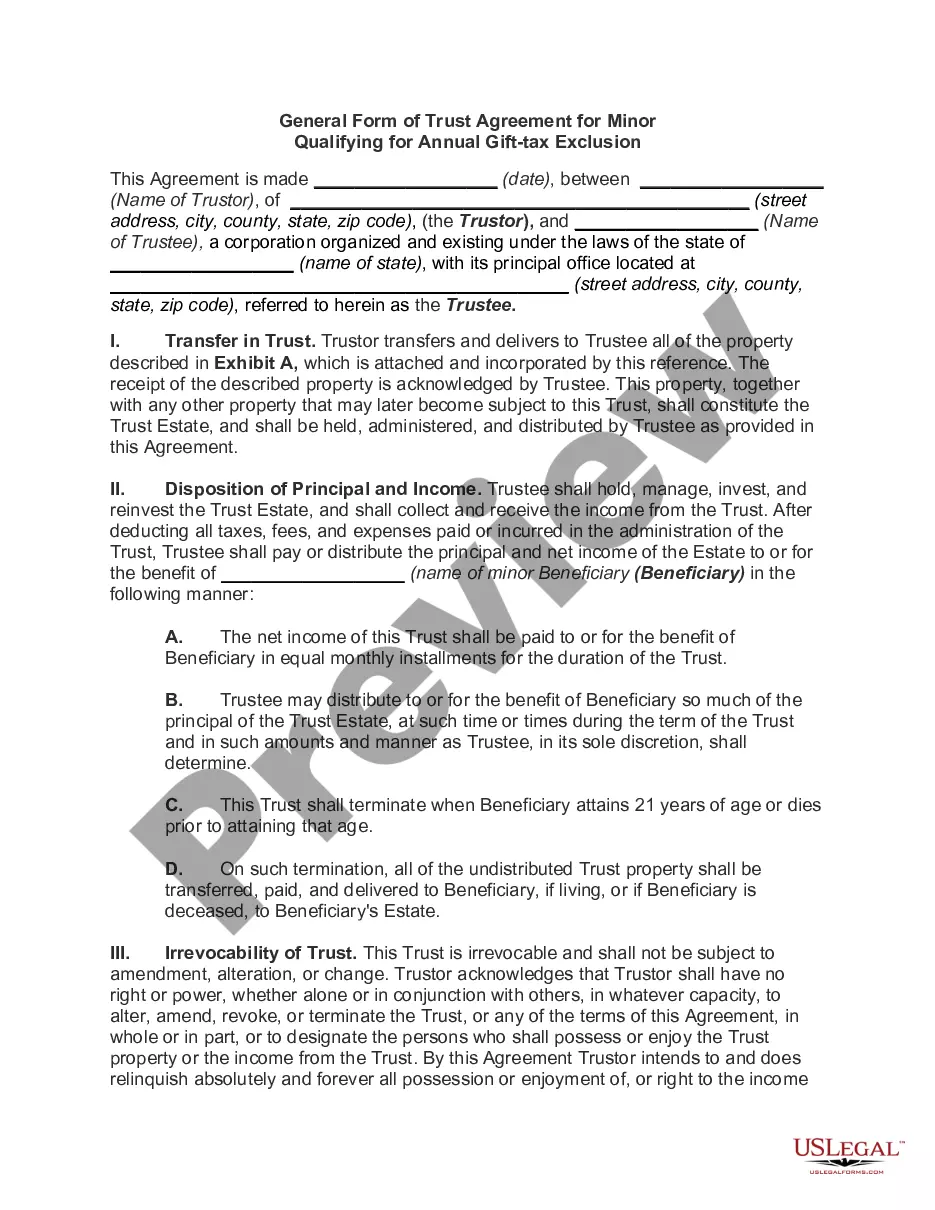
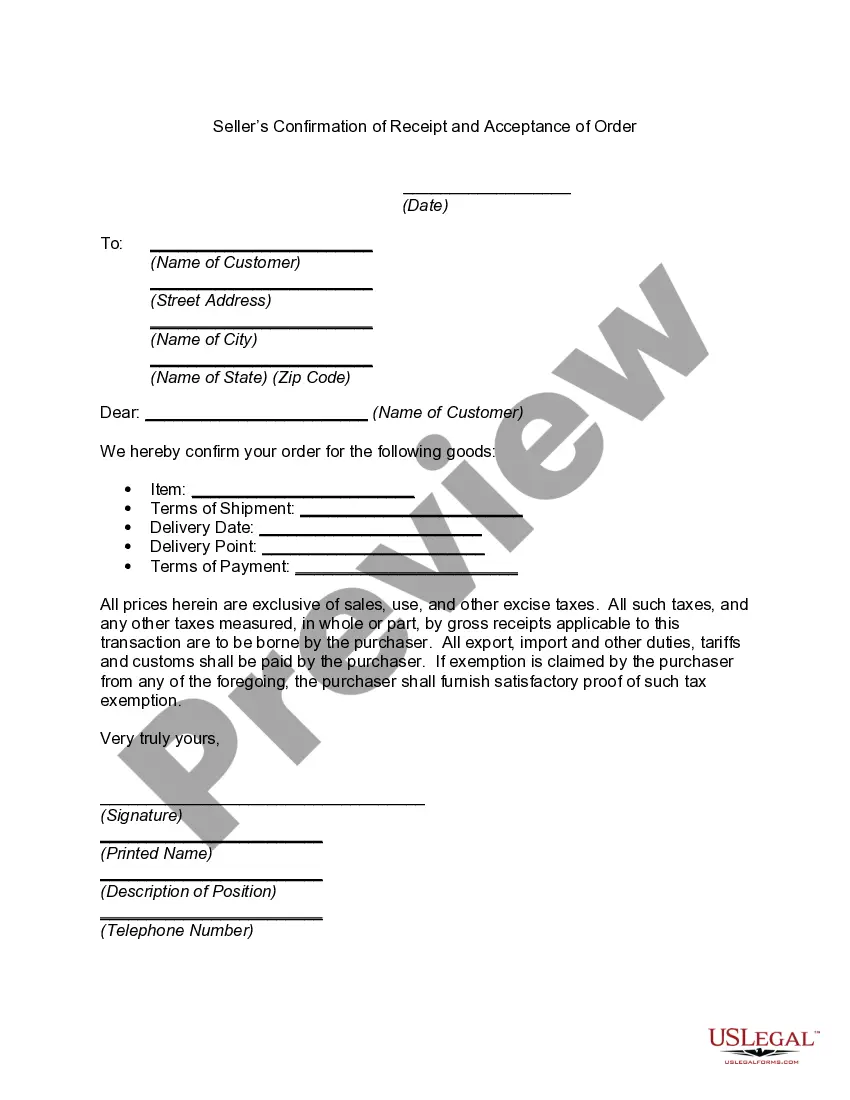
Wyoming Seller's Confirmation of Receipt and Acceptance of Order
Description
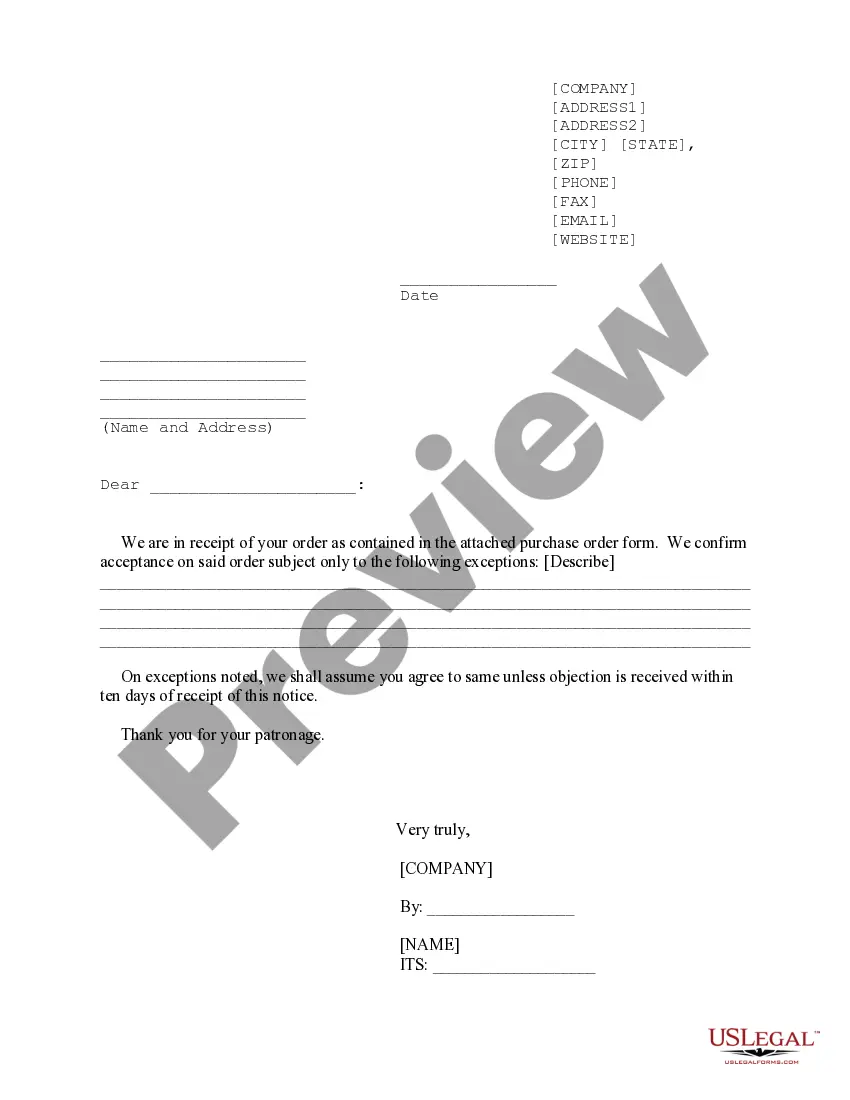
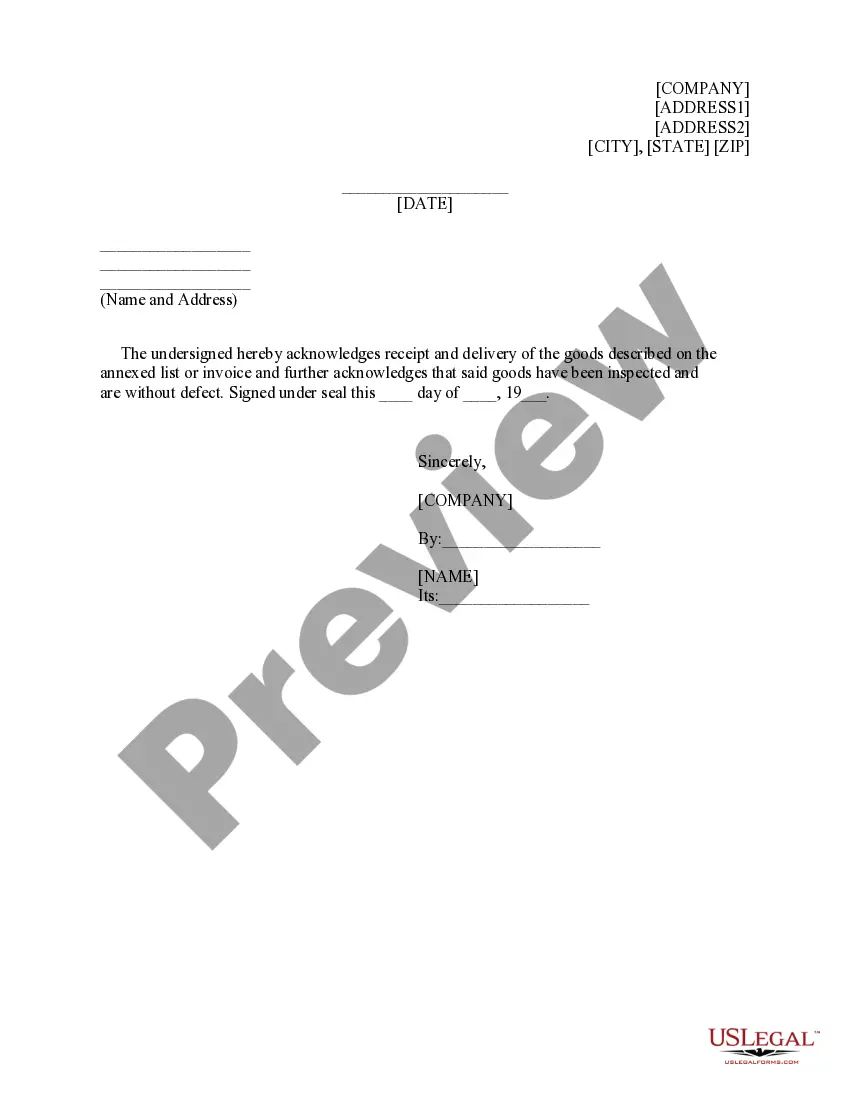
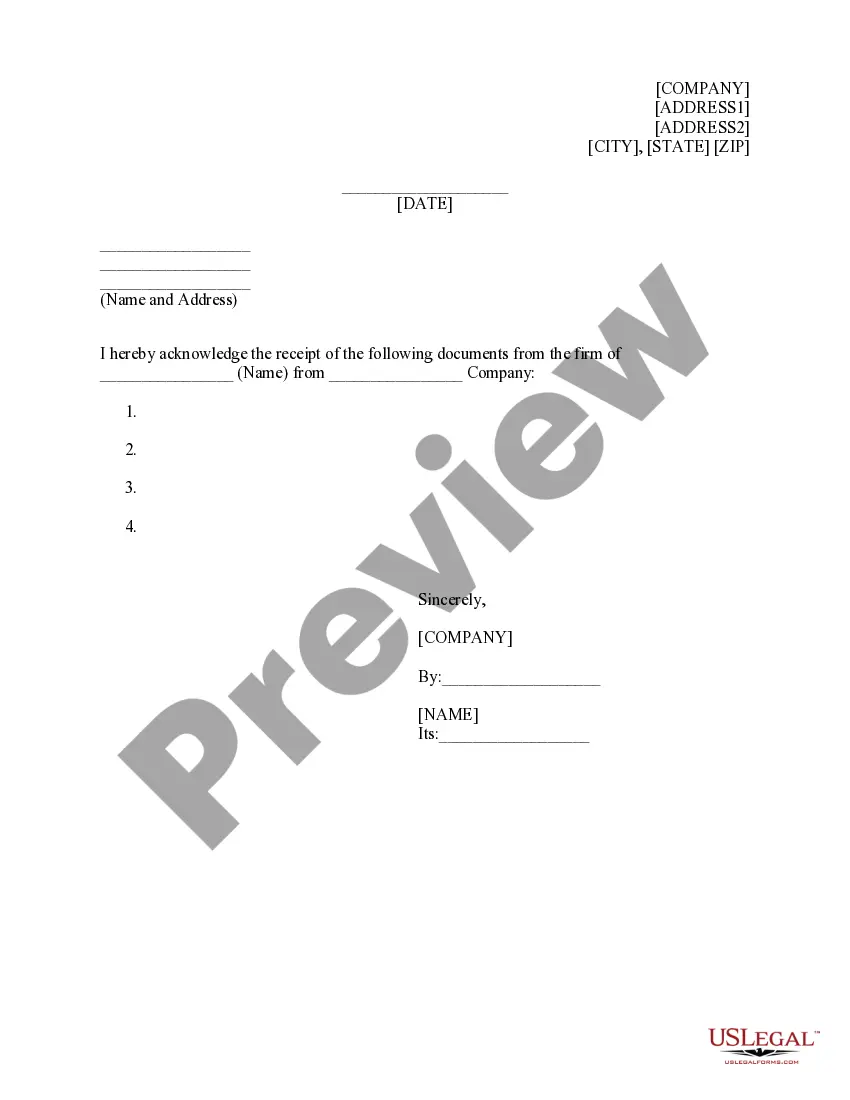

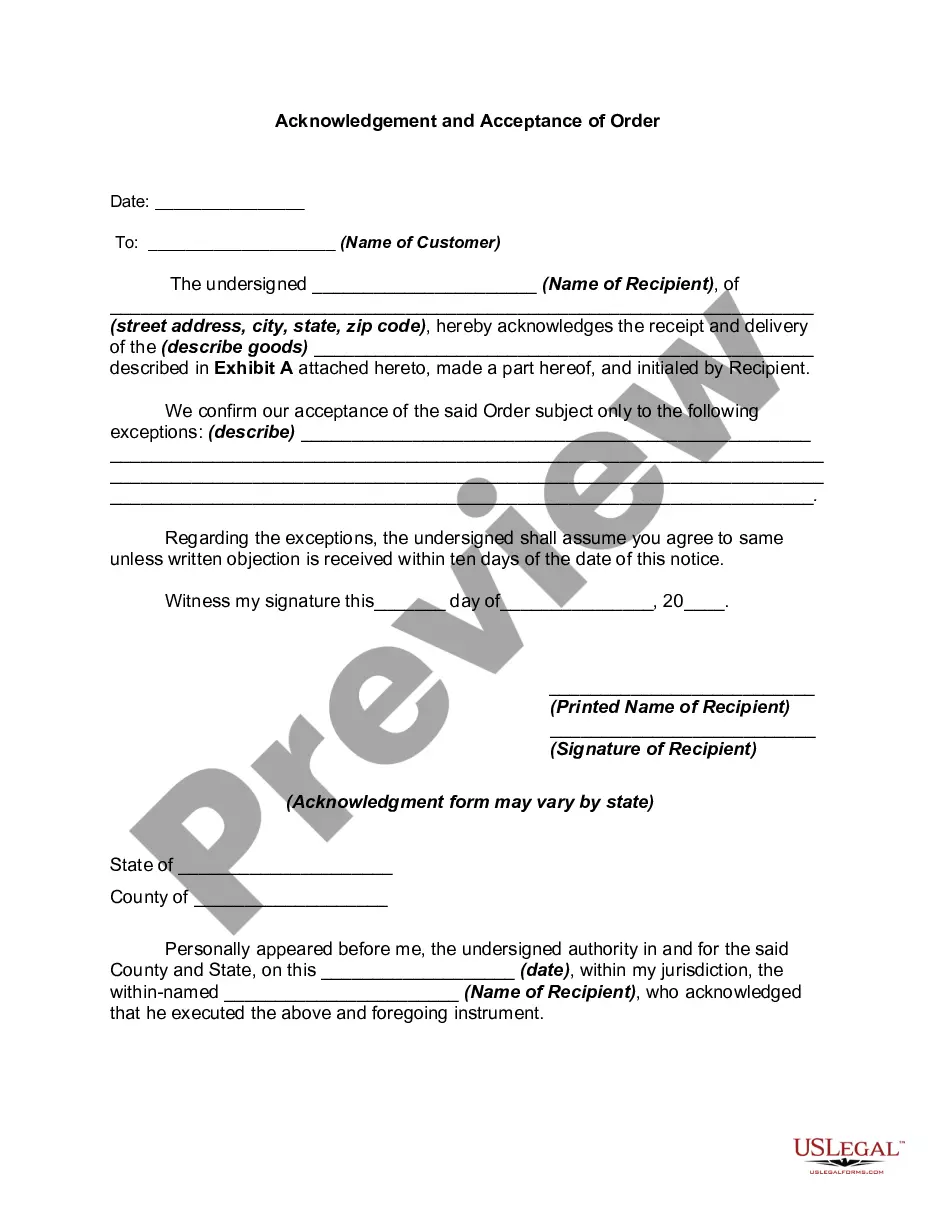
How to fill out Seller's Confirmation Of Receipt And Acceptance Of Order?
US Legal Forms - one of the largest collections of legal documents in the United States - provides a variety of legal document templates that you can purchase or generate.
By using the site, you can obtain thousands of forms for business and personal purposes, categorized by types, states, or keywords.
You can access the latest editions of documents such as the Wyoming Seller’s Confirmation of Receipt and Acceptance of Order within moments.
If the form doesn't meet your needs, utilize the Search box at the top of the page to find the one that fits.
Once you are satisfied with the form, confirm your choice by clicking the Purchase now button. Then select the payment plan you prefer and provide your credentials to create an account.
- If you already have a subscription, Log In and retrieve the Wyoming Seller’s Confirmation of Receipt and Acceptance of Order from your US Legal Forms library.
- The Download button will be visible on every template you encounter.
- You can access all previously saved documents from the My documents section of your account.
- If you are using US Legal Forms for the first time, here are simple steps to guide you.
- Ensure you have selected the correct form for your city/state. Click the Preview button to review the contents of the form.
- Examine the form details to verify you have chosen the appropriate document.
Form popularity
FAQ
Purchase Orders At the point the PO is sent, it is not a contract. There are two ways that a purchase order becomes a contract: One way is if the seller accepts the terms of the purchase order by signing the PO or otherwise expressing acceptance in writing. The other way is by the seller's providing the ordered goods.
A purchase order is a document sent from a buyer to a seller, with a request to order a product. When the seller accepts the document, it forms a legally binding contract between the buyer and the seller.
Under UCC, Section 2-601(a), rejection is allowed if the seller fails to make a perfect tender. The rejection must be made within a reasonable time after delivery or tender. Once it is made, the buyer may not act as the owner of the goods.
Is a purchase order a contract? Yes, when accepted by a vendor, a purchase order is a legally-binding contract. Vendors 'accept' a purchase order by telling the buyer that they can fulfill the order. Vendors can 'reject' a purchase order by telling the buyer that they cannot complete the order.
Here are the most common purchase order process steps:Create a purchase order.Send out multiple requests for quotation(RFQ)Analyze and select a vendor.Negotiate contract and send PO.Receive goods/services.Receive and check invoice (3-Way Matching)Authorize invoice and pay the vendor.Record keeping.More items...
The return by the buyer of the goods and the recovery of the price. Often it will be the best remedy, certainly better than the alternative, which is to allow damages to be recovered. This right is lost once the goods have been accepted.
If a buyer refuses to accept delivery of goods, the seller can store the goods for the buyer and sue to recover the sales price if the goods are not readily resalable to another customer. Stoppage in transit is the right of an unpaid seller to stop goods in transit and order the carrier to hold them for the seller.
What are purchase orders? A purchase order is where a purchaser creates and sends an order to a vendor for goods or services. In a standard purchase order, the purchaser will, at a minimum, specify what products are being ordered, the quantity, the agreed price and delivery and payment terms.
A purchase order is deemed legally valid only after the vendor approves it. The vendor typically examines the offer in one of two ways.
Once the buyer is satisfied with the order, the purchase order is sent for closure. The vendor raises an invoice that is approved by the buyer's finance team. After the payment is processed, the order is closed, bringing an end to the purchase order process.