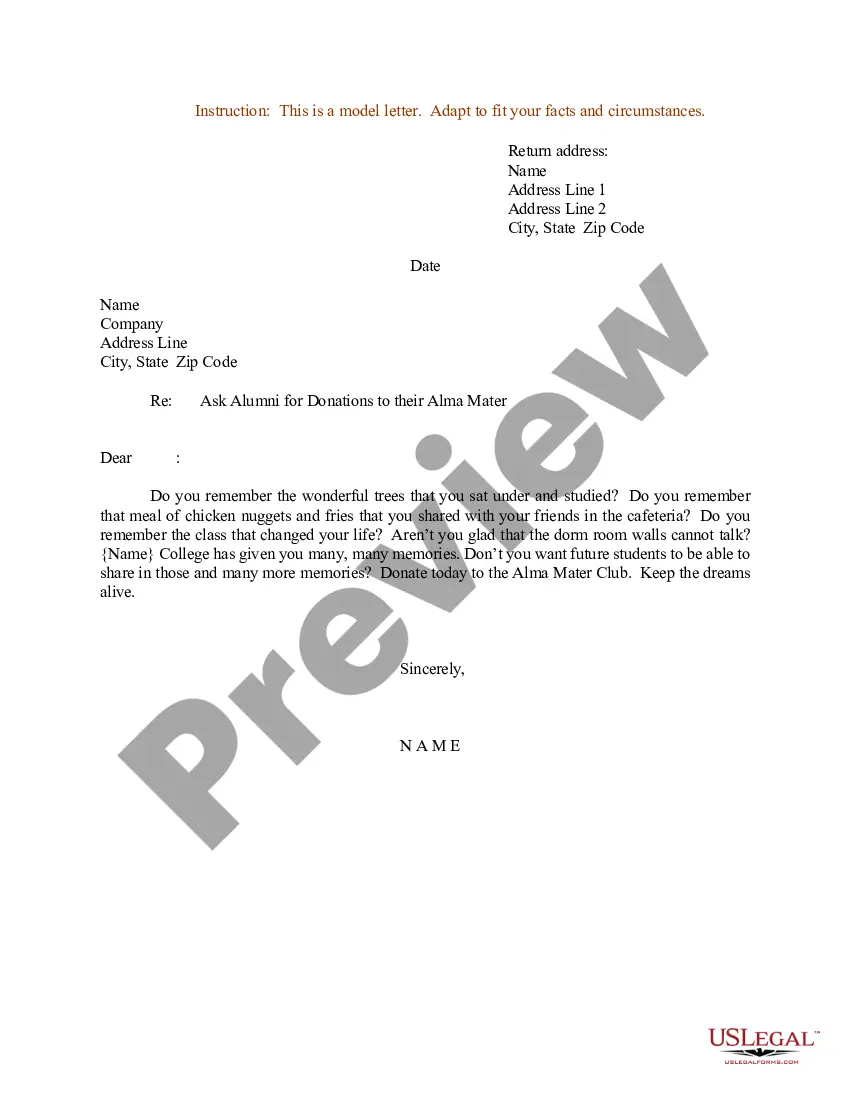
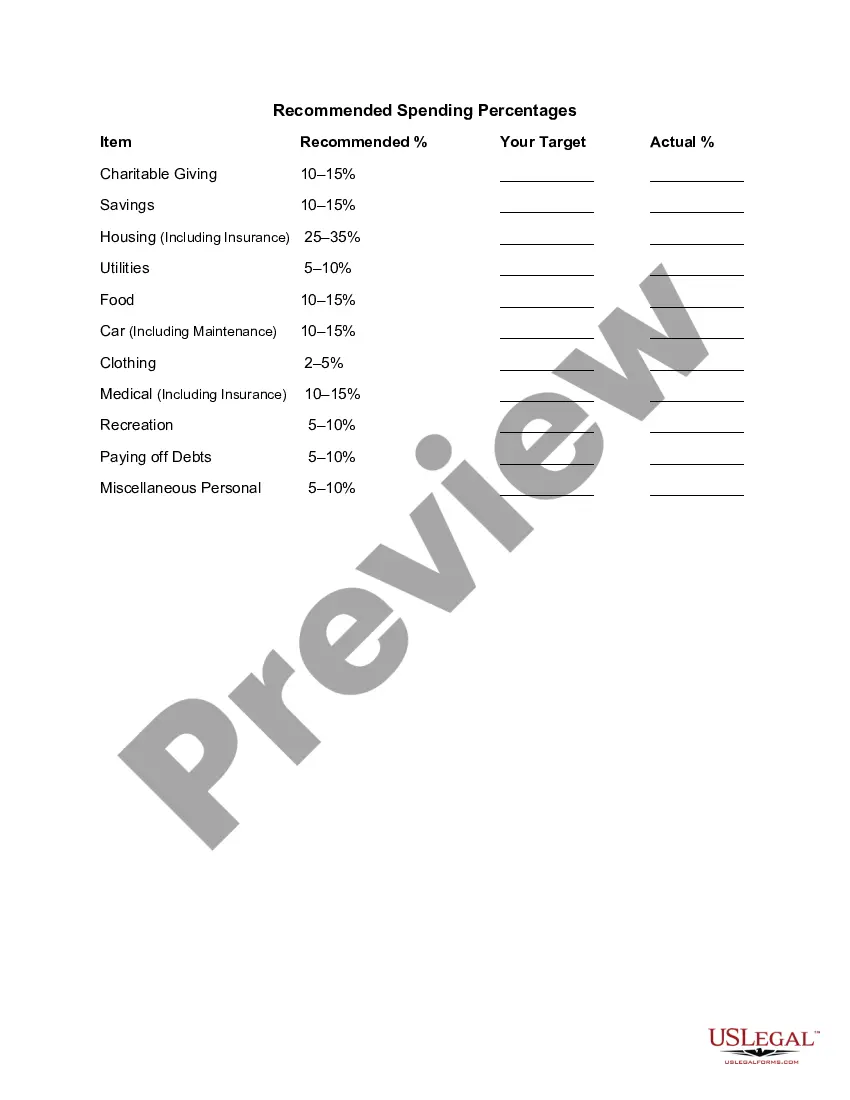
Wyoming Recommended Spending Percentages
Description
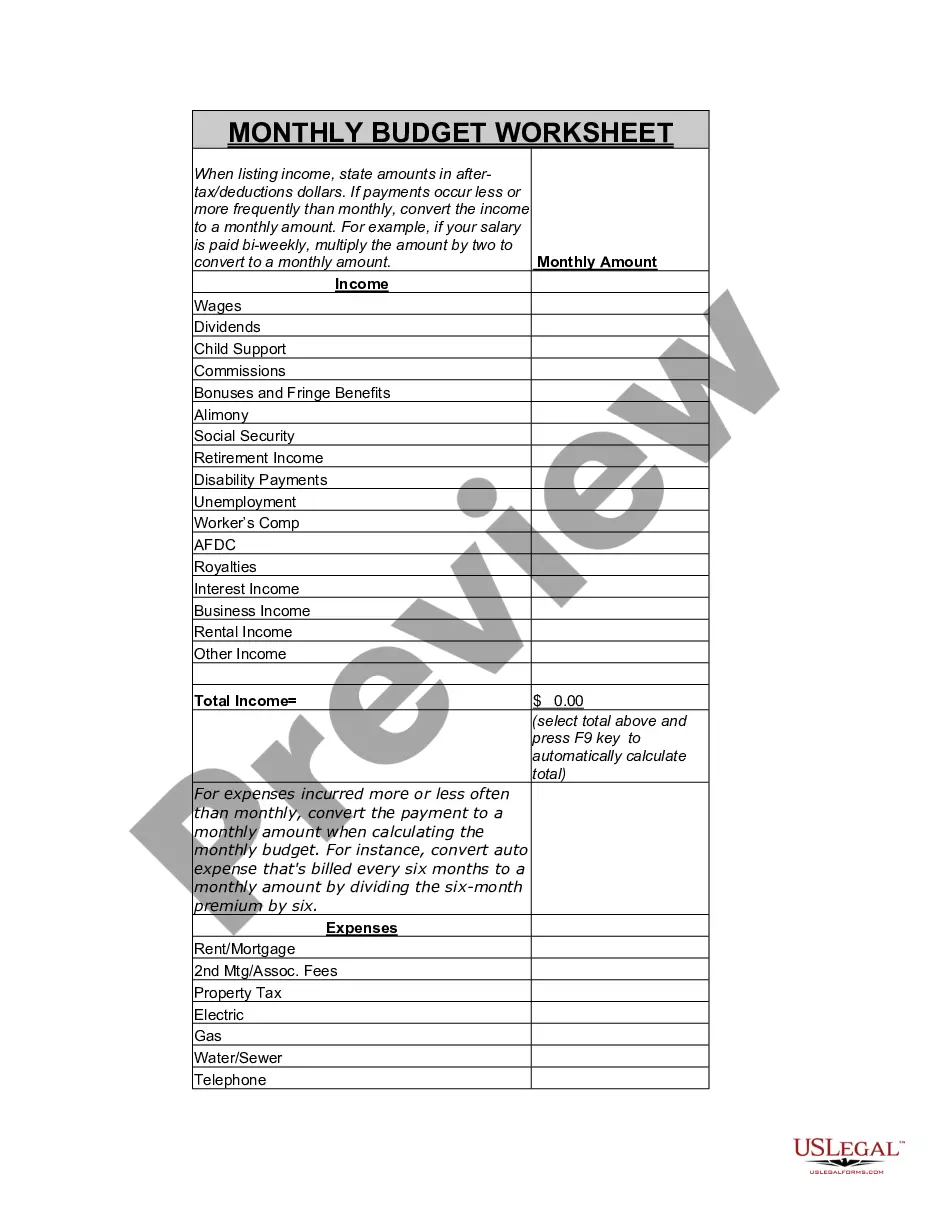
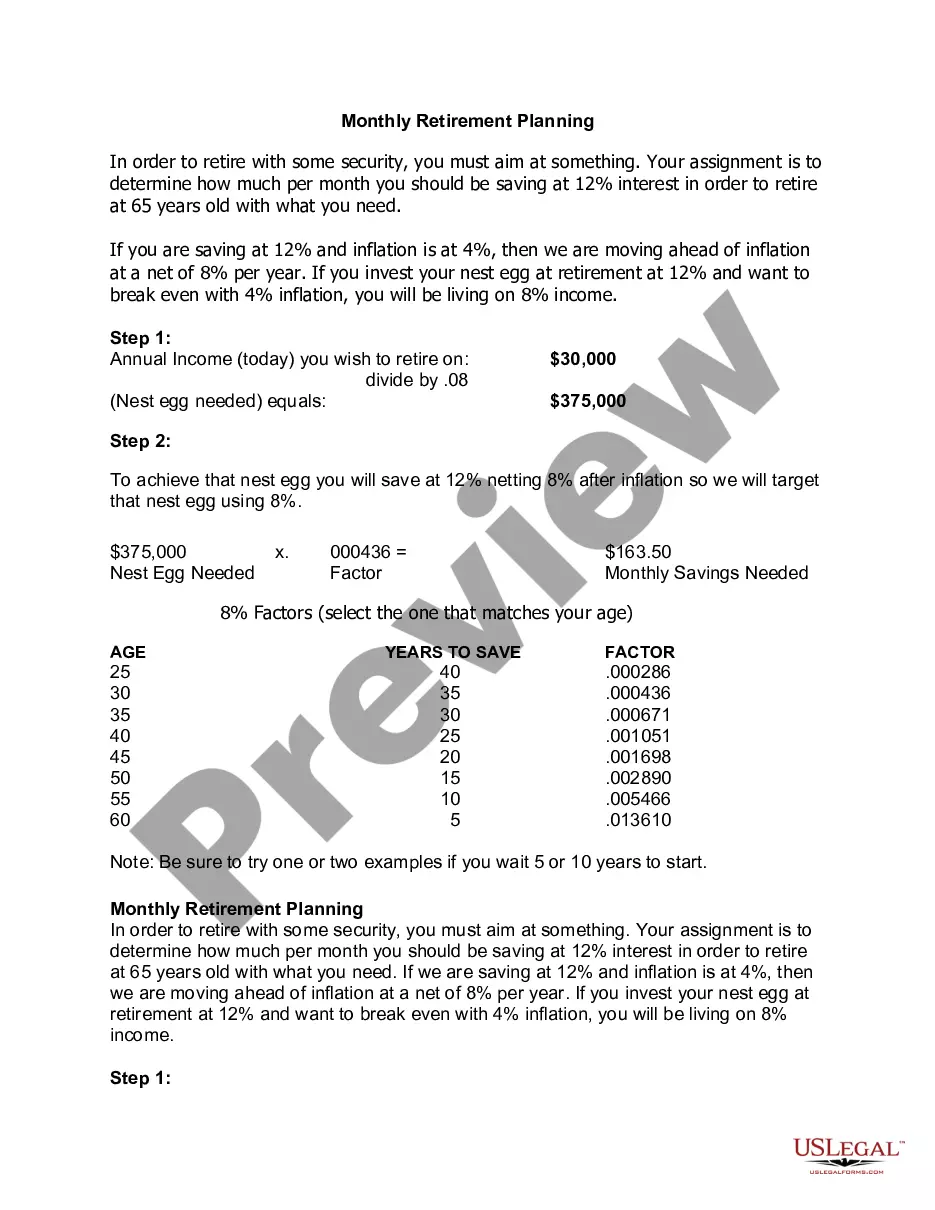
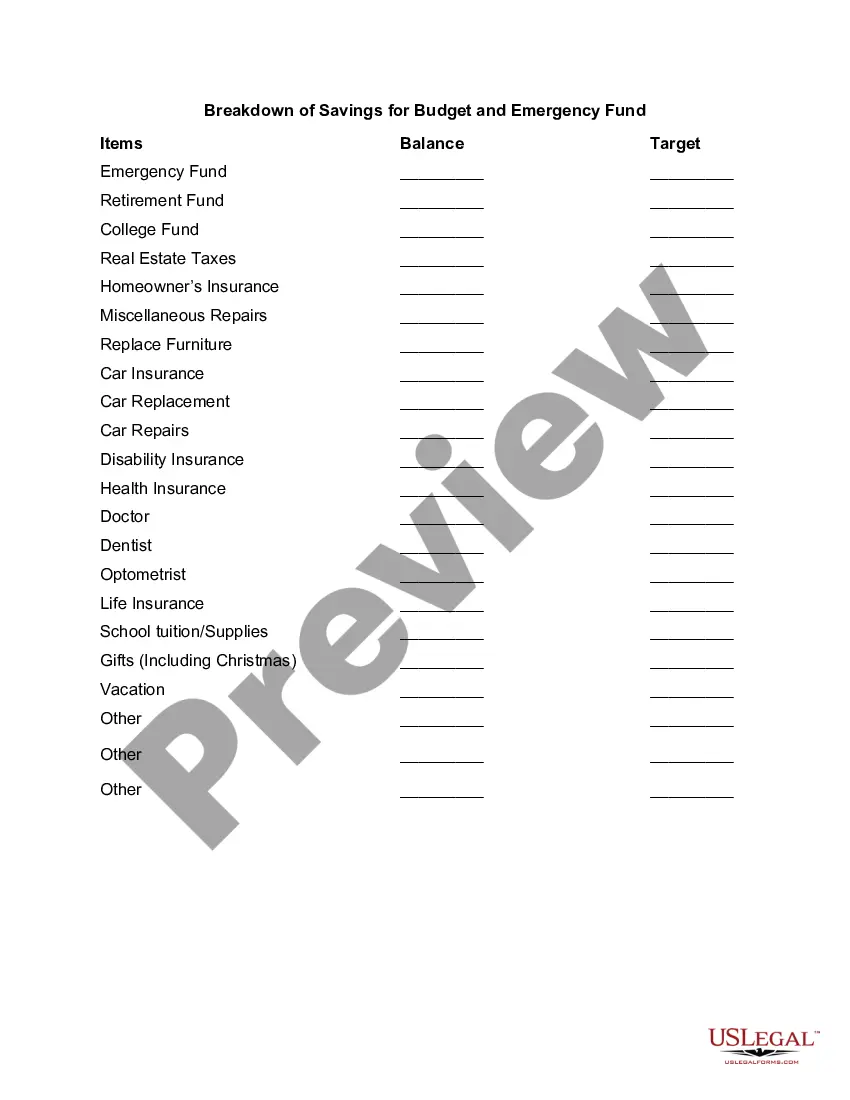
Get your form ready online
Our built-in tools help you complete, sign, share, and store your documents in one place.
Make edits, fill in missing information, and update formatting in US Legal Forms—just like you would in MS Word.
Download a copy, print it, send it by email, or mail it via USPS—whatever works best for your next step.
Sign and collect signatures with our SignNow integration. Send to multiple recipients, set reminders, and more. Go Premium to unlock E-Sign.
If this form requires notarization, complete it online through a secure video call—no need to meet a notary in person or wait for an appointment.
We protect your documents and personal data by following strict security and privacy standards.

Make edits, fill in missing information, and update formatting in US Legal Forms—just like you would in MS Word.

Download a copy, print it, send it by email, or mail it via USPS—whatever works best for your next step.

Sign and collect signatures with our SignNow integration. Send to multiple recipients, set reminders, and more. Go Premium to unlock E-Sign.

If this form requires notarization, complete it online through a secure video call—no need to meet a notary in person or wait for an appointment.

We protect your documents and personal data by following strict security and privacy standards.
Looking for another form?



How to fill out Recommended Spending Percentages?
You might spend hours online searching for the official document format that meets the state and federal requirements you need.
US Legal Forms offers thousands of legal templates that can be assessed by experts.
You can easily download or print the Wyoming Recommended Spending Percentages from my service.
Read the form description to ensure you've chosen the correct form. If available, use the Preview button to browse the document format as well.
- If you already have a US Legal Forms account, you may Log In and click on the Obtain button.
- Then, you can complete, modify, print, or sign the Wyoming Recommended Spending Percentages.
- Each legal document template you obtain belongs to you permanently.
- To acquire another copy of a purchased form, go to the My documents section and click the corresponding button.
- If you are using the US Legal Forms site for the first time, follow the simple instructions below.
- First, ensure you have selected the correct document format for your area/town of choice.
Form popularity
FAQ
What are the sources of revenue for state governments? State government revenue comes from income, sales, and other taxes; charges and fees; and transfers from the federal government. Taxes accounted for about half of all general revenue in 2017. State governments collected $2.0 trillion of general revenue in 2017.
This category includes entitlement programs such as Social Security, Medicare, and unemployment compensation. It also includes welfare programs such as Medicaid. Social Security will be the biggest expense, budgeted at $1.196 trillion. It's followed by Medicare at $766 billion and Medicaid at $571 billion.
Wyoming's spending compared to other states Unlike many other states, Wyoming does not have a personal income or corporate income tax. Instead, it mostly relies on sales tax, property tax and revenue from mineral production a formula that comes with its own set of pluses and minuses.
Wyoming has five major revenue sources: sales and use taxes, severance taxes, federal mineral royalties (FMRs), ad valorem taxes (property taxes) and investment income. The largest source of revenue for State general operations is sales and use tax.
Wyoming has five major revenue sources: sales and use taxes, severance taxes, federal mineral royalties (FMRs), ad valorem taxes (property taxes) and investment income. The largest source of revenue for State general operations is sales and use tax.
As Figure A suggests, Social Security is the single largest mandatory spending item, taking up 38% or nearly $1,050 billion of the $2,736 billion total. The next largest expenditures are Medicare and Income Security, with the remaining amount going to Medicaid, Veterans Benefits, and other programs.
Most of local government spending is on services like water, electricity, sewage, waste removal, roads and facilities.
Wyoming's budget basics According to the National Association of State Budget Officers (NASBO), Wyoming's total expenditures in fiscal year (FY) 2021 were $4.7 billion, including general funds, other state funds, bonds, and federal funds.
Military (Discretionary)Social Security, Unemployment, and Labor (Mandatory)Medicare and Health (Mandatory)Government (Discretionary)Education (Discretionary) Whether you owe money to the IRS or you have a State tax debt, our staff of Enrolled Agents and Tax Professionals can help you!
Illinois's budget basics According to the National Association of State Budget Officers (NASBO), Illinois's total expenditures in fiscal year (FY) 2021 were $87.5 billion, including general funds, other state funds, bonds, and federal funds.