Wyoming Interrogatories
Description
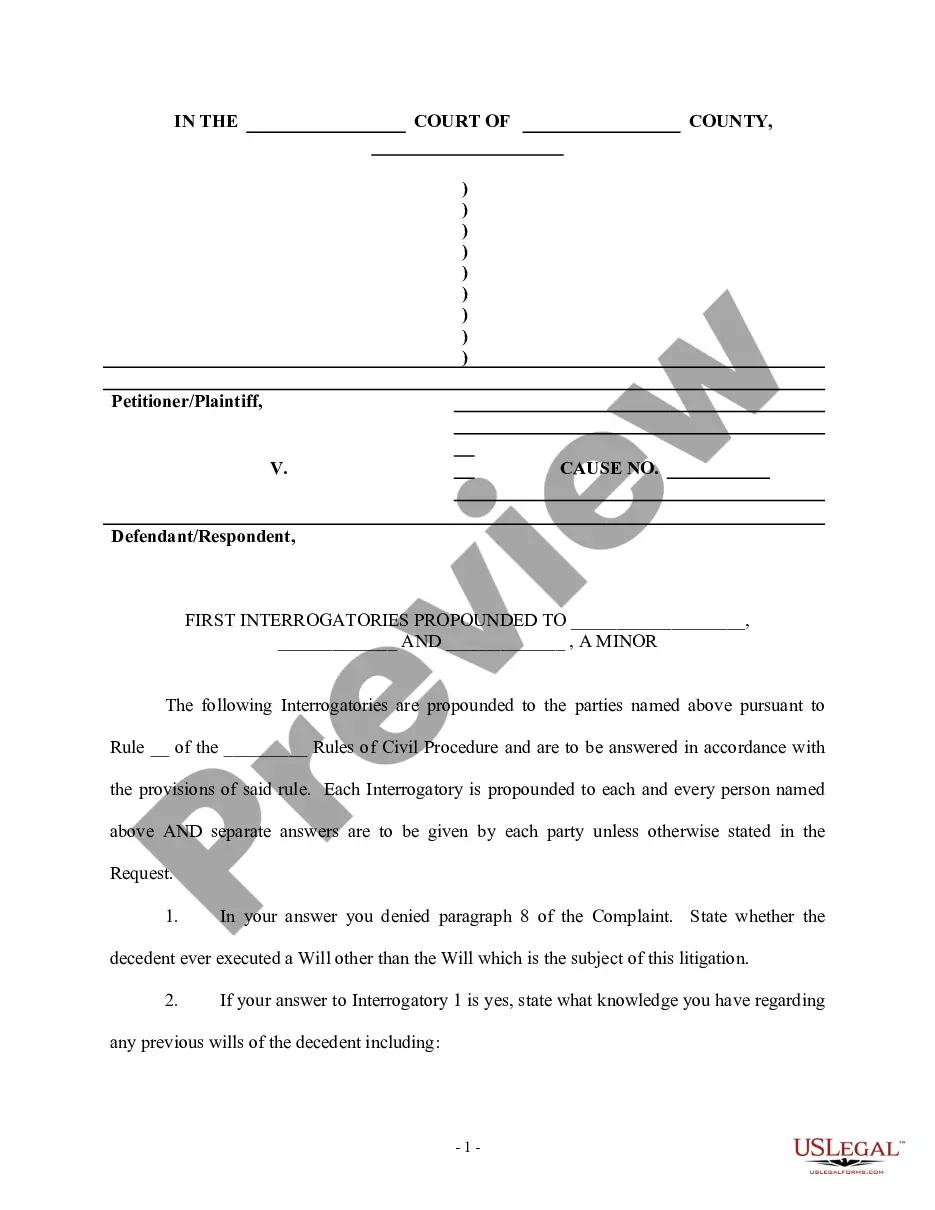
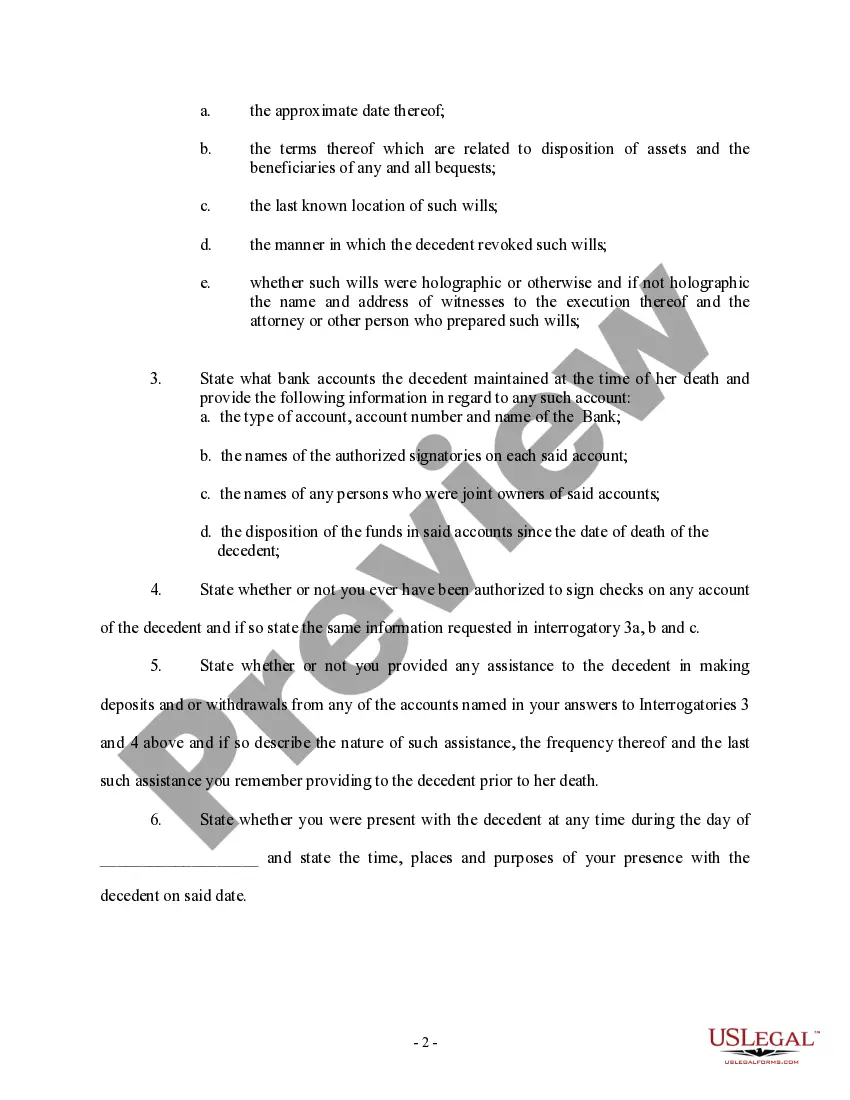
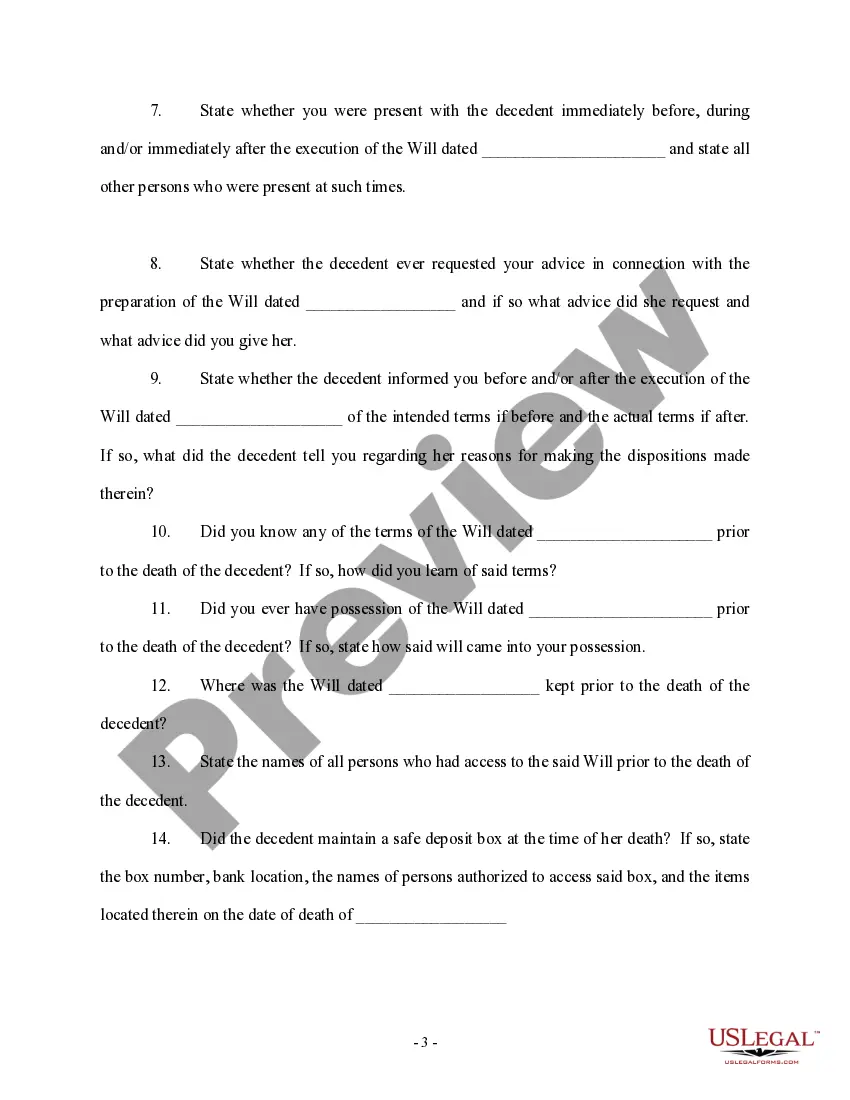
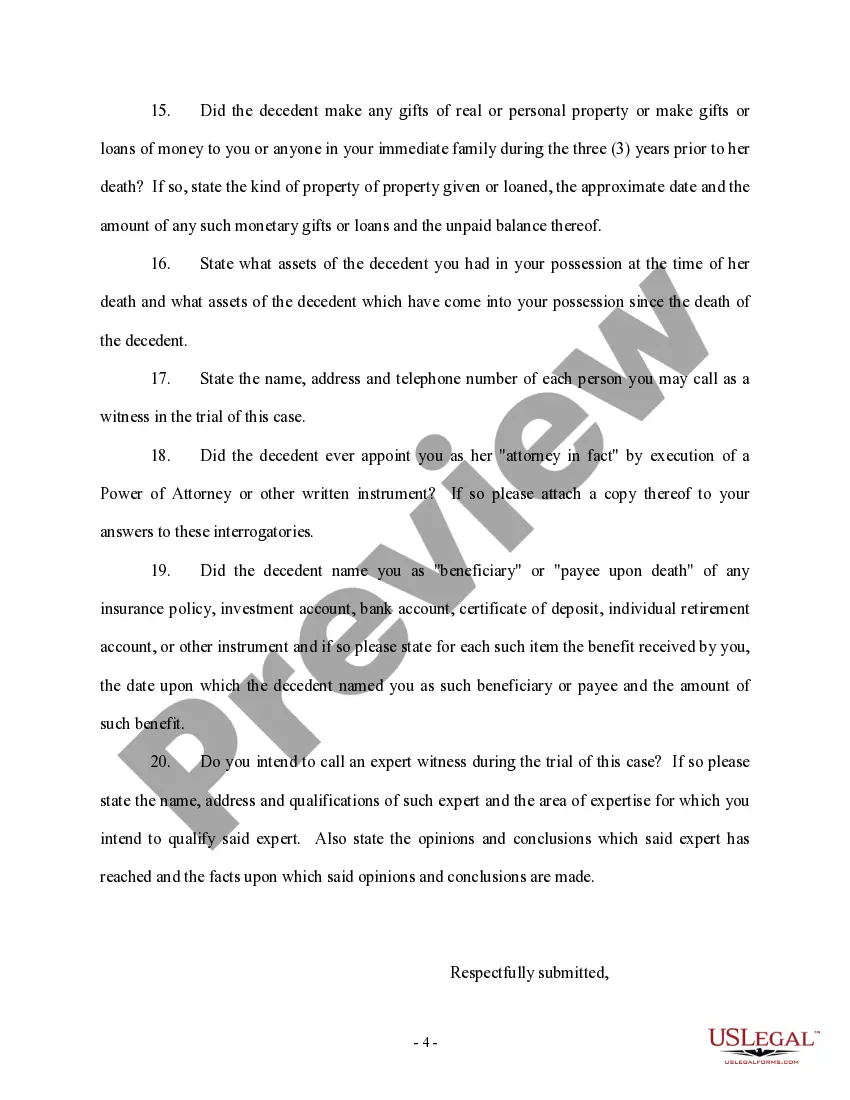
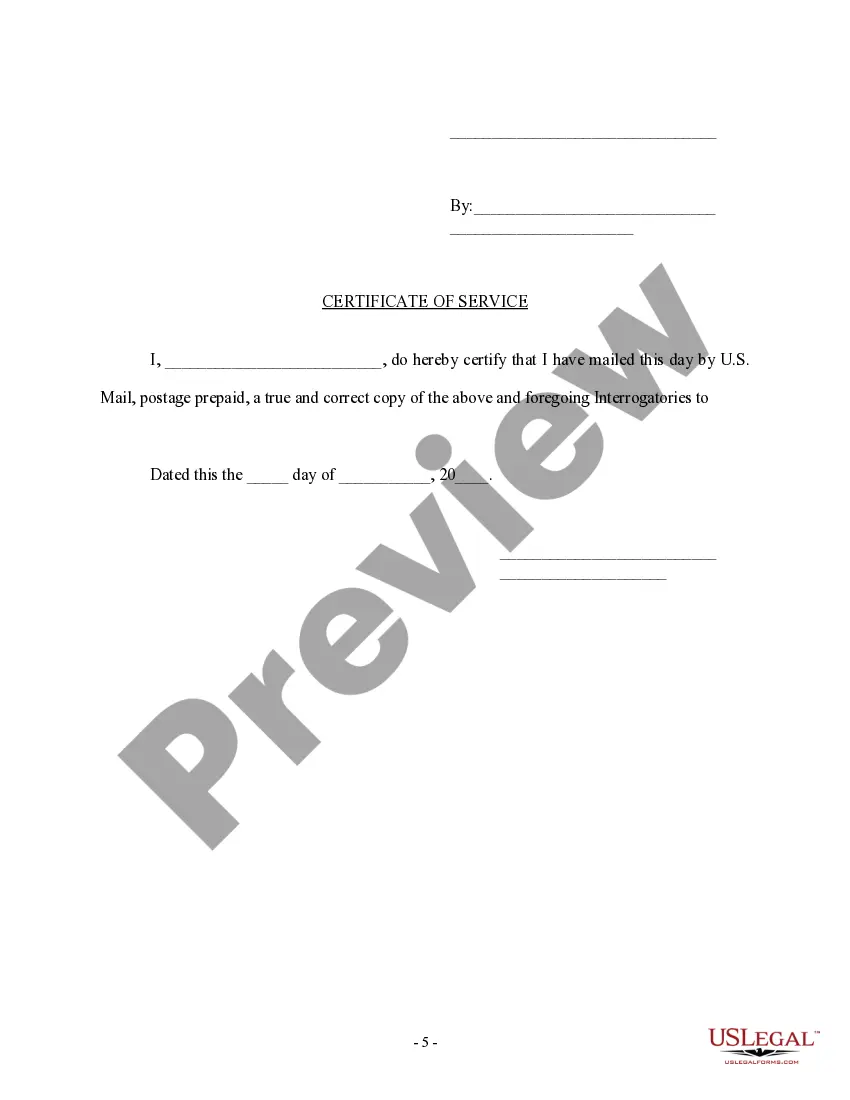
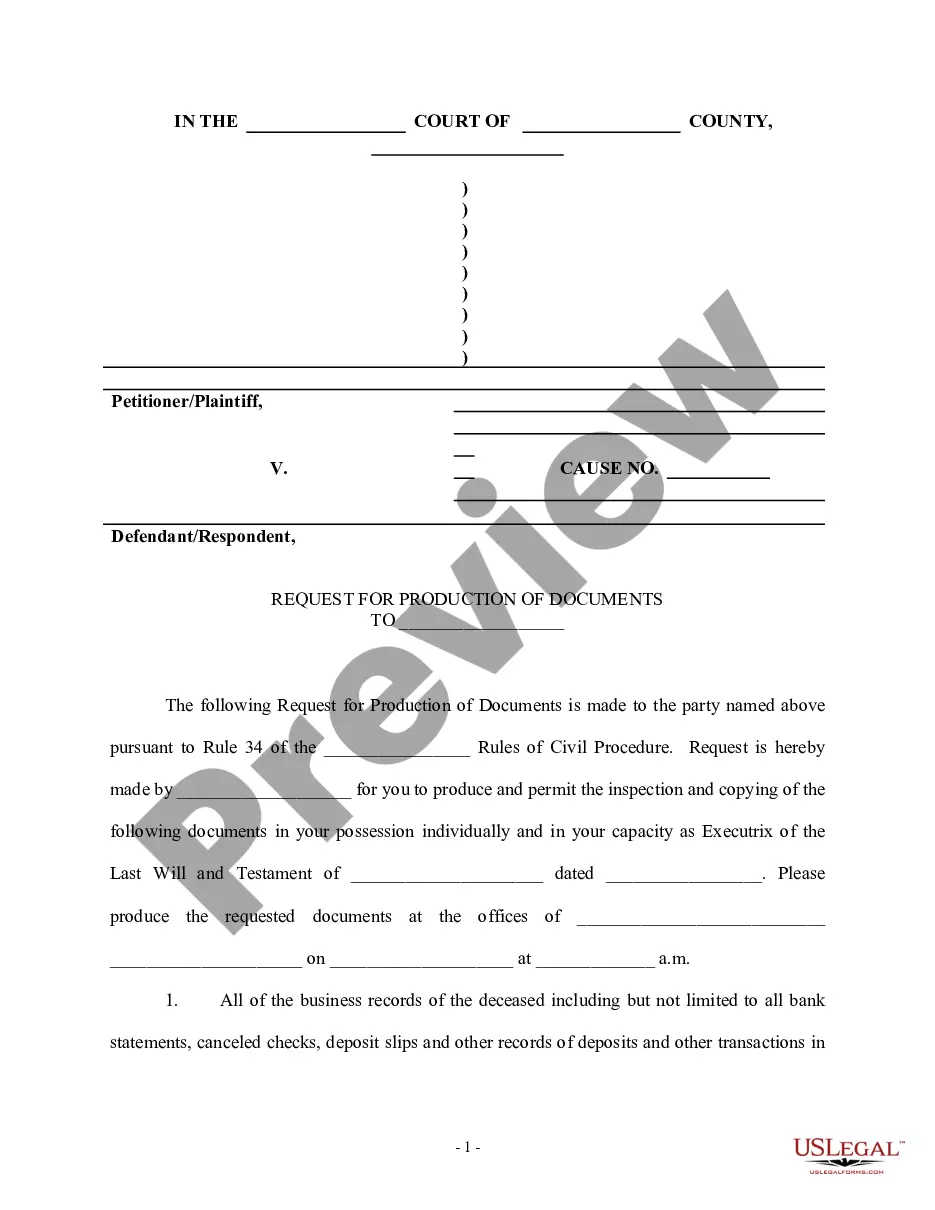
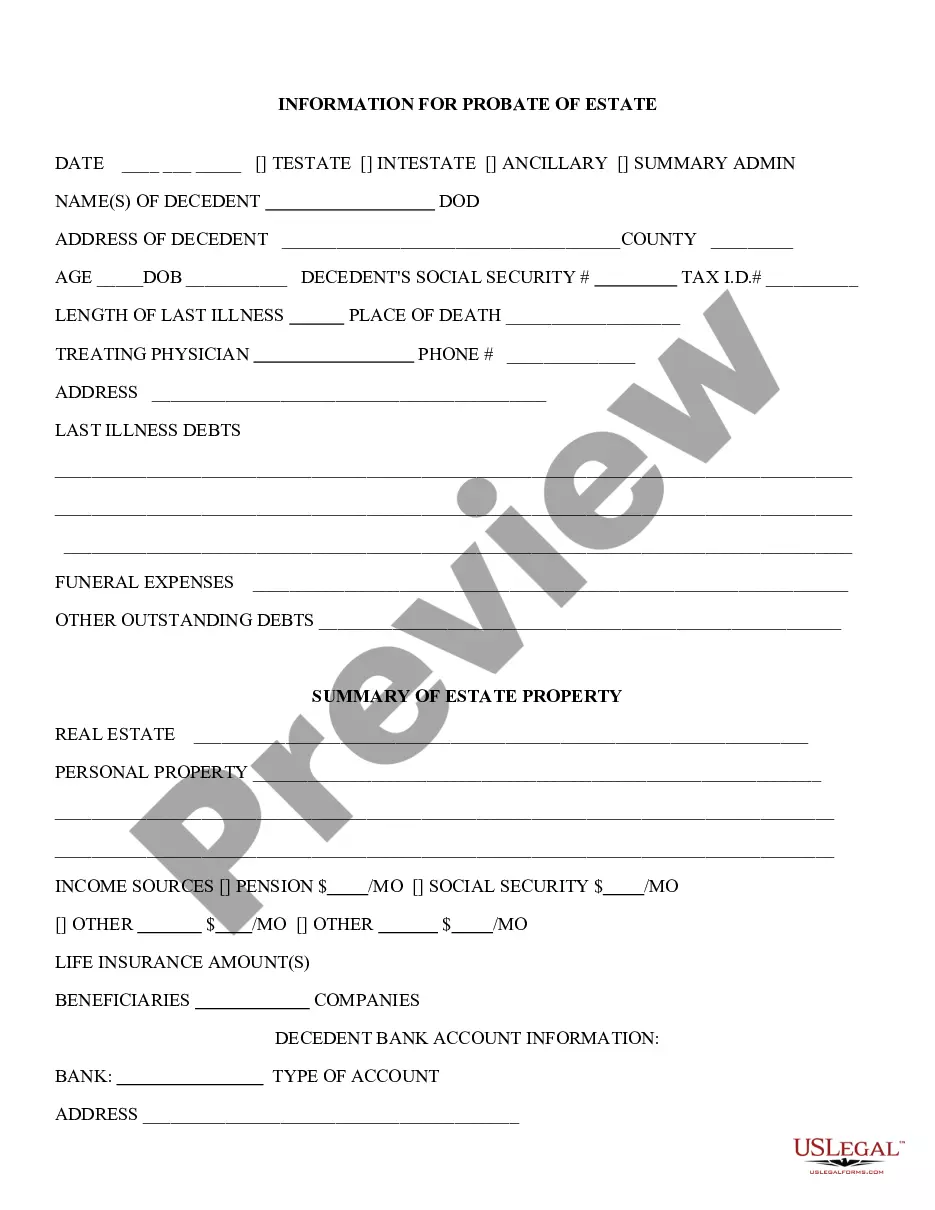
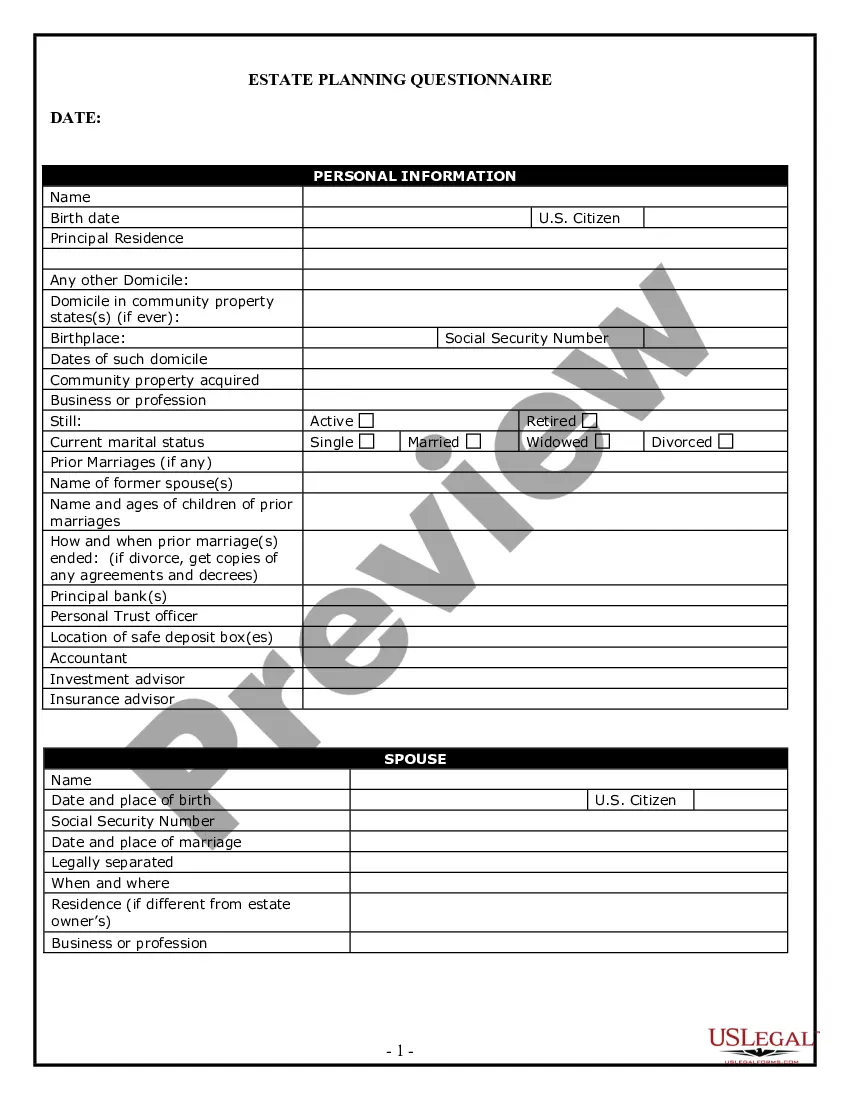
Get your form ready online
Our built-in tools help you complete, sign, share, and store your documents in one place.
Make edits, fill in missing information, and update formatting in US Legal Forms—just like you would in MS Word.
Download a copy, print it, send it by email, or mail it via USPS—whatever works best for your next step.
Sign and collect signatures with our SignNow integration. Send to multiple recipients, set reminders, and more. Go Premium to unlock E-Sign.
If this form requires notarization, complete it online through a secure video call—no need to meet a notary in person or wait for an appointment.
We protect your documents and personal data by following strict security and privacy standards.

Make edits, fill in missing information, and update formatting in US Legal Forms—just like you would in MS Word.

Download a copy, print it, send it by email, or mail it via USPS—whatever works best for your next step.

Sign and collect signatures with our SignNow integration. Send to multiple recipients, set reminders, and more. Go Premium to unlock E-Sign.

If this form requires notarization, complete it online through a secure video call—no need to meet a notary in person or wait for an appointment.

We protect your documents and personal data by following strict security and privacy standards.
Looking for another form?


How to fill out Interrogatories?
Are you currently in a situation where you will require documents for both business or individual purposes almost every time.
There is a range of legal document templates accessible online, but finding ones you can trust is not easy.
US Legal Forms offers thousands of form templates, such as the Wyoming Interrogatories, which are designed to meet federal and state requirements.
Utilize US Legal Forms, the largest collection of legal forms, to save time and avoid mistakes.
The service offers professionally crafted legal document templates that can be used for various purposes. Create an account on US Legal Forms and start making your life a bit easier.
- If you are already familiar with the US Legal Forms website and have an account, just sign in.
- Then, you can download the Wyoming Interrogatories template.
- If you do not have an account and wish to start using US Legal Forms, follow these steps.
- Find the form you need and ensure it is for the correct city/state.
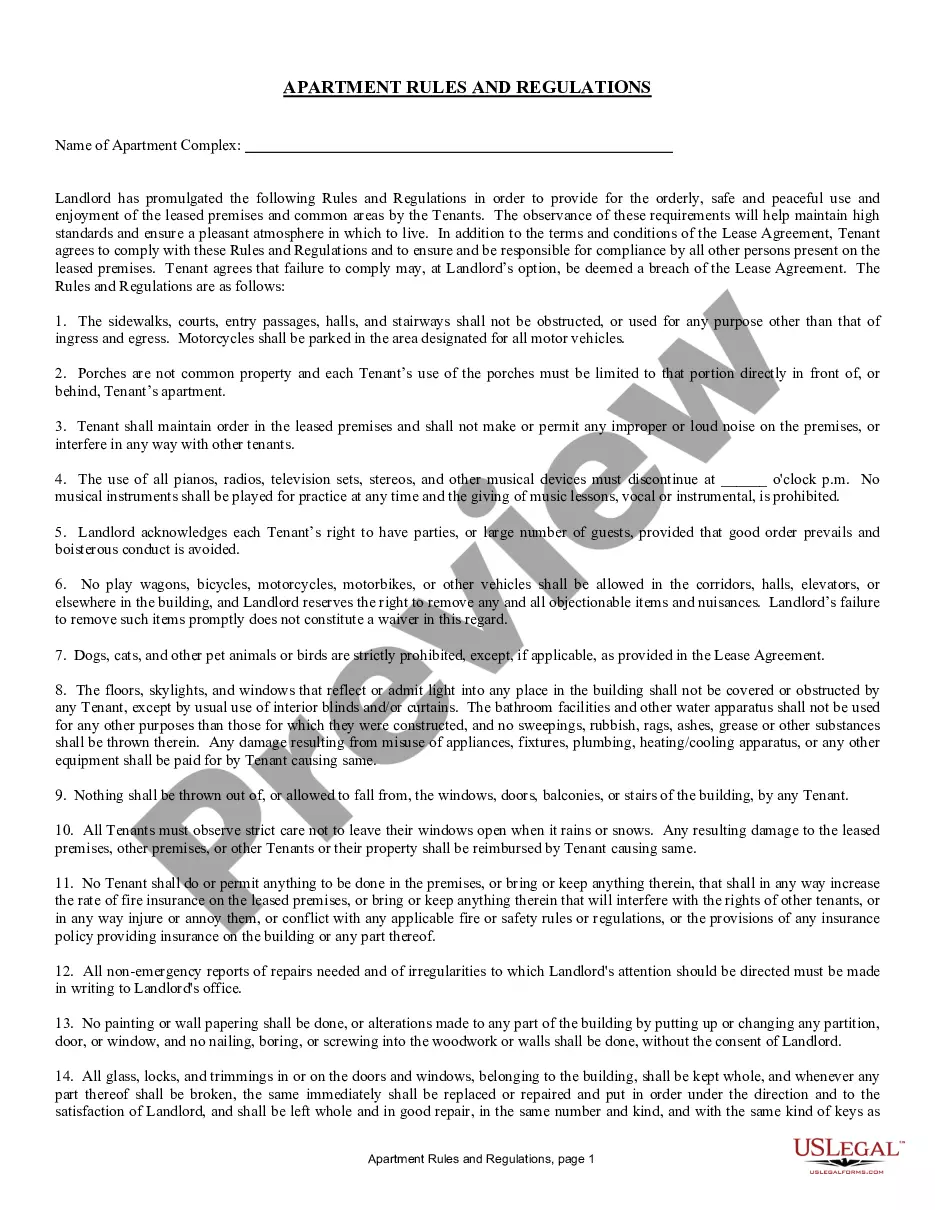
- Use the Review button to examine the form.
- Check the details to confirm that you have selected the right form.
- If the form is not what you are looking for, use the Search field to find the form that meets your needs and requirements.
- Once you locate the correct form, click Download now.
- Choose the pricing option you prefer, fill in the required information to create your account, and pay for the order with your PayPal or credit card.
- Select a convenient file format and download your copy.
- Access all the document templates you have purchased in the My documents menu. You can download an additional copy of Wyoming Interrogatories at any time, if needed. Click on the desired form to download or print the document template.
Form popularity
FAQ
On motion to compel discovery or to quash, the person from whom discovery is sought must show that the information sought is not reasonably accessible because of undue burden or cost.
You can use interrogatories to find out facts about a case but they cannot be used for questions that draw a legal conclusion.
A default judgment must not differ in kind from, or exceed in amount, what is demanded in the pleadings. Every other final judgment should grant the relief to which each party is entitled, even if the party has not demanded that relief in its pleadings.
The court on motion of a defendant may grant a new trial to that defendant if required in the interest of justice. If trial was by the court without a jury, the court, on motion of a defendant for a new trial, may vacate the judgment if entered, take additional testimony, and direct the entry of a new judgment.
In all trials, the testimony of witnesses shall be taken orally in open court, unless otherwise provided by statute, or by these rules, by the Wyoming Rules of Evidence, or by other rules adopted by the Supreme Court of Wyoming.
What types of questions can I ask in interrogatories? Questions about the other party's position or arguments in the case. Questions about the facts of the case. Questions about the other party's knowledge or understanding of relevant events or circumstances. Questions about the other party's witnesses or experts.
If, prior to or during trial, a party discovers additional evidence or material previously demanded or ordered, which is subject to discovery or inspection under this rule, such party shall promptly notify the other party or that other party's attorney or the court of the existence of the additional evidence or ...