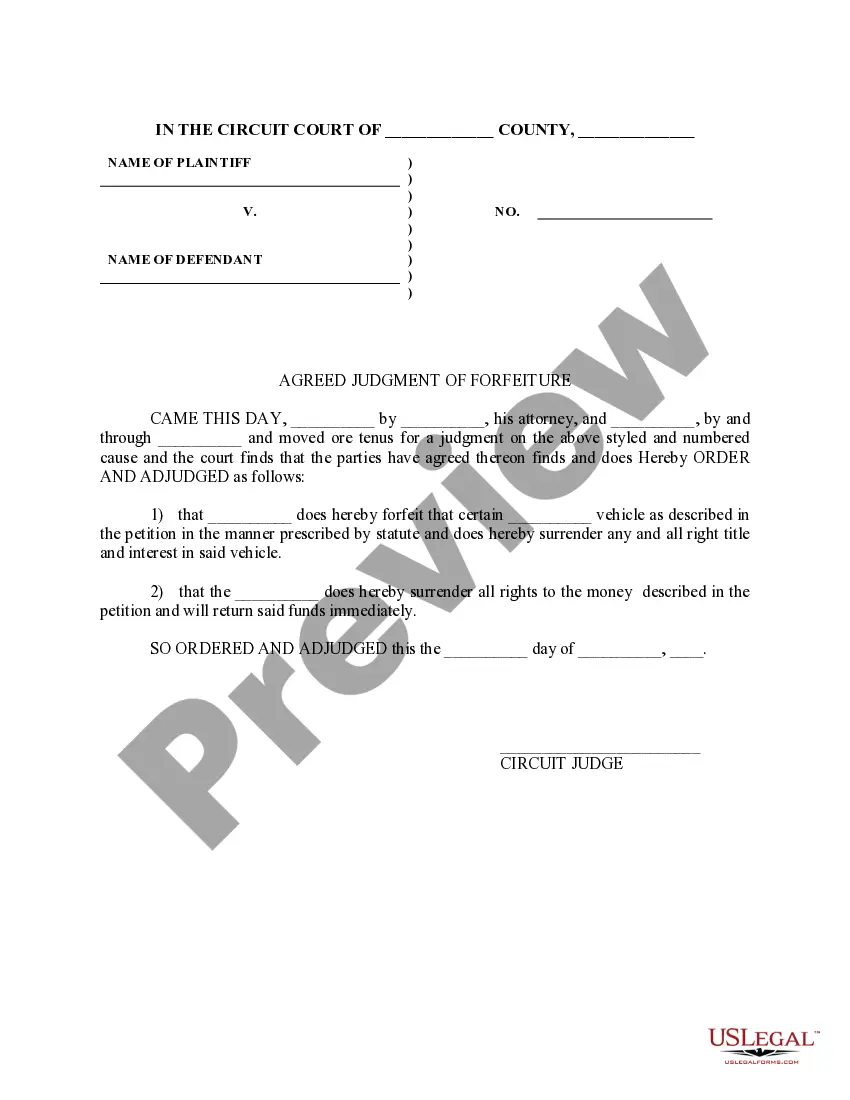
Wyoming Agreed Judgment
Description
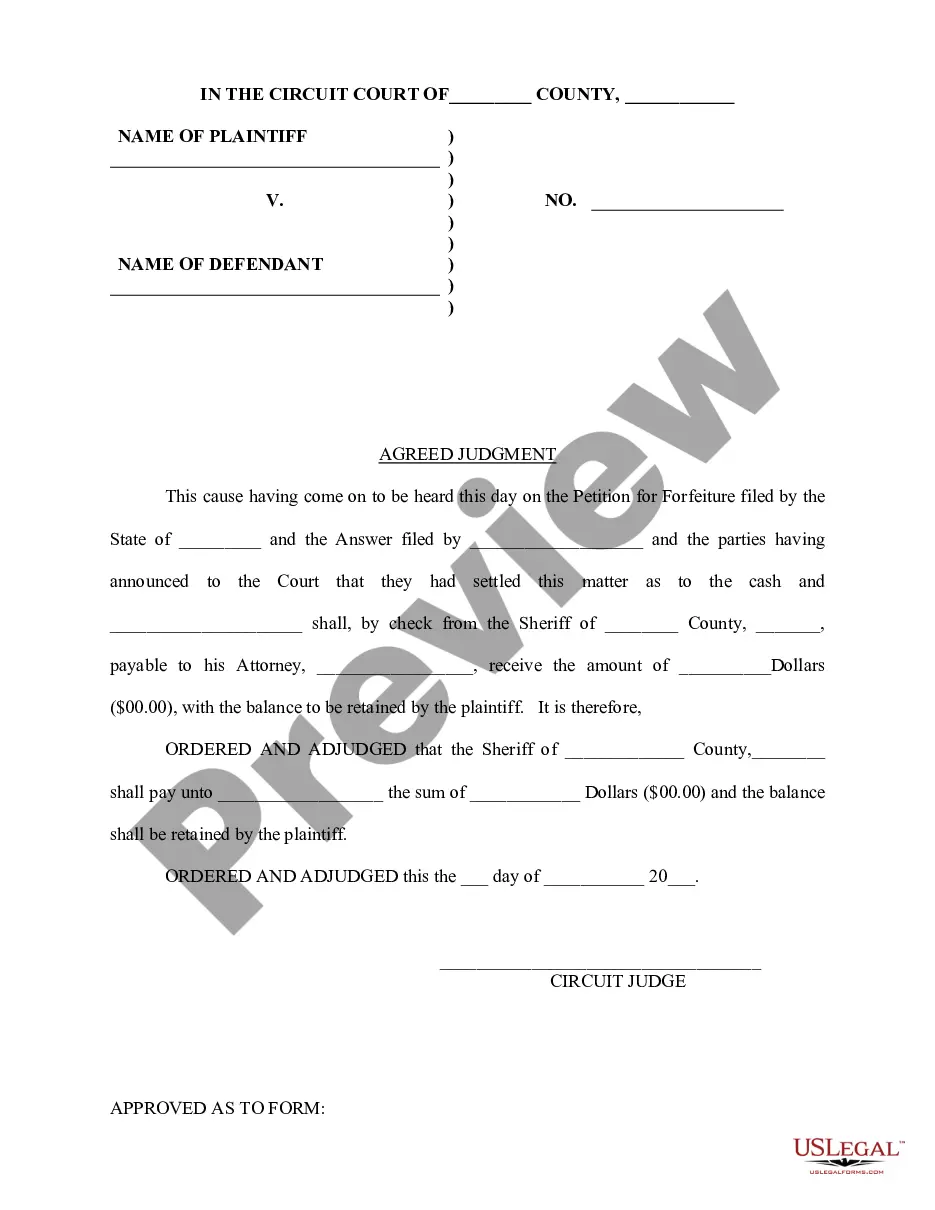
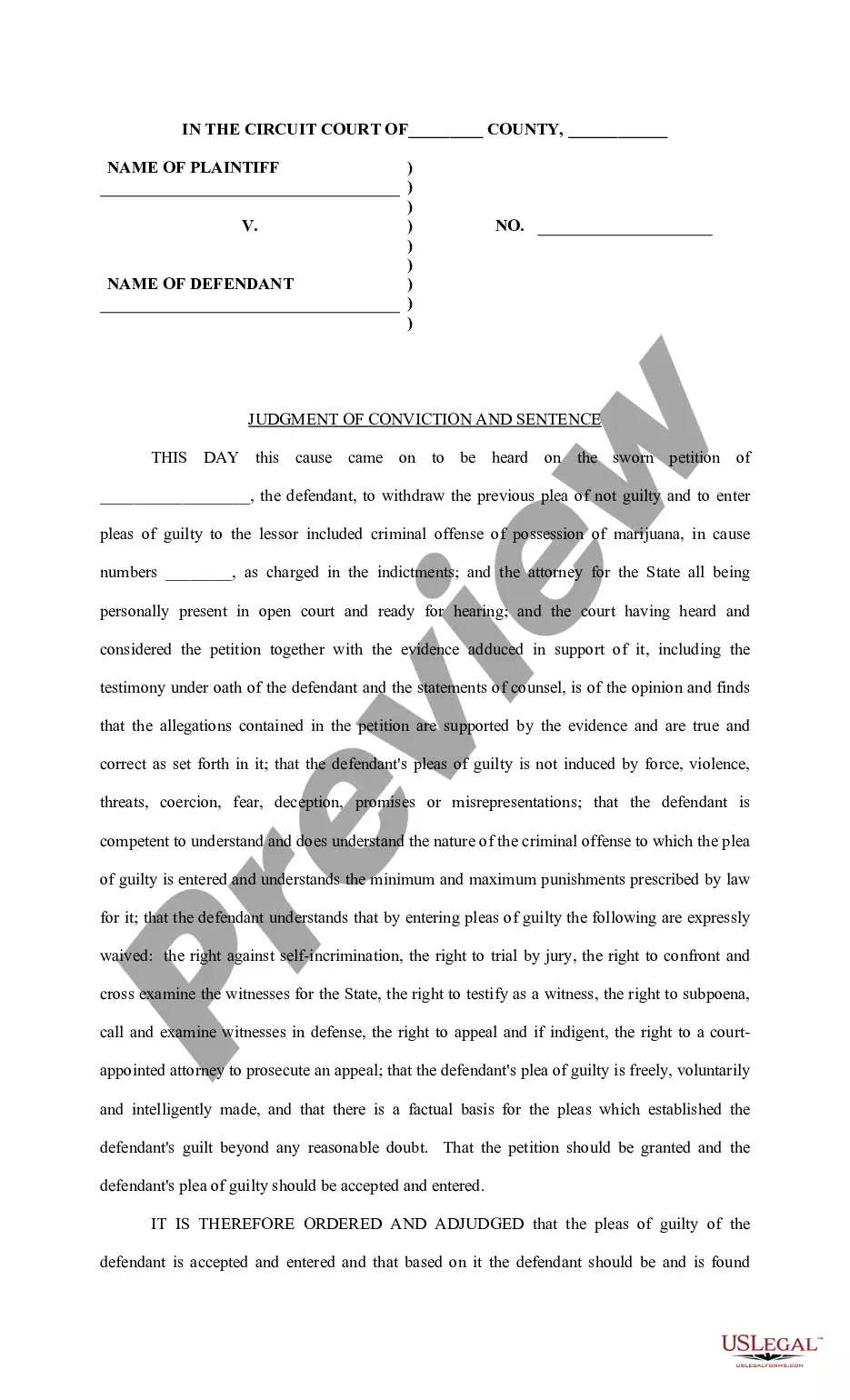
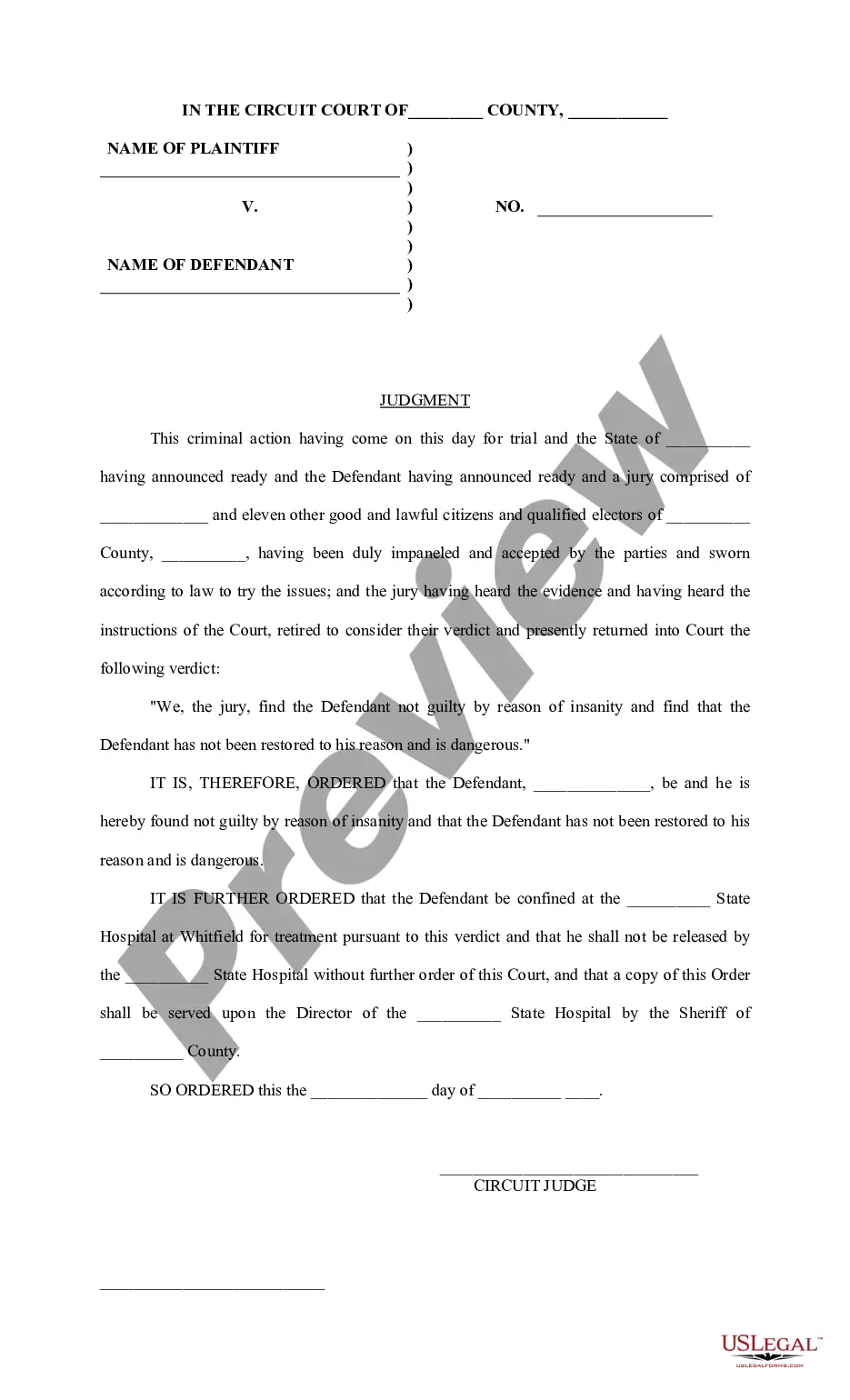
Get your form ready online
Our built-in tools help you complete, sign, share, and store your documents in one place.
Make edits, fill in missing information, and update formatting in US Legal Forms—just like you would in MS Word.
Download a copy, print it, send it by email, or mail it via USPS—whatever works best for your next step.
Sign and collect signatures with our SignNow integration. Send to multiple recipients, set reminders, and more. Go Premium to unlock E-Sign.
If this form requires notarization, complete it online through a secure video call—no need to meet a notary in person or wait for an appointment.
We protect your documents and personal data by following strict security and privacy standards.

Make edits, fill in missing information, and update formatting in US Legal Forms—just like you would in MS Word.

Download a copy, print it, send it by email, or mail it via USPS—whatever works best for your next step.

Sign and collect signatures with our SignNow integration. Send to multiple recipients, set reminders, and more. Go Premium to unlock E-Sign.

If this form requires notarization, complete it online through a secure video call—no need to meet a notary in person or wait for an appointment.

We protect your documents and personal data by following strict security and privacy standards.
Looking for another form?
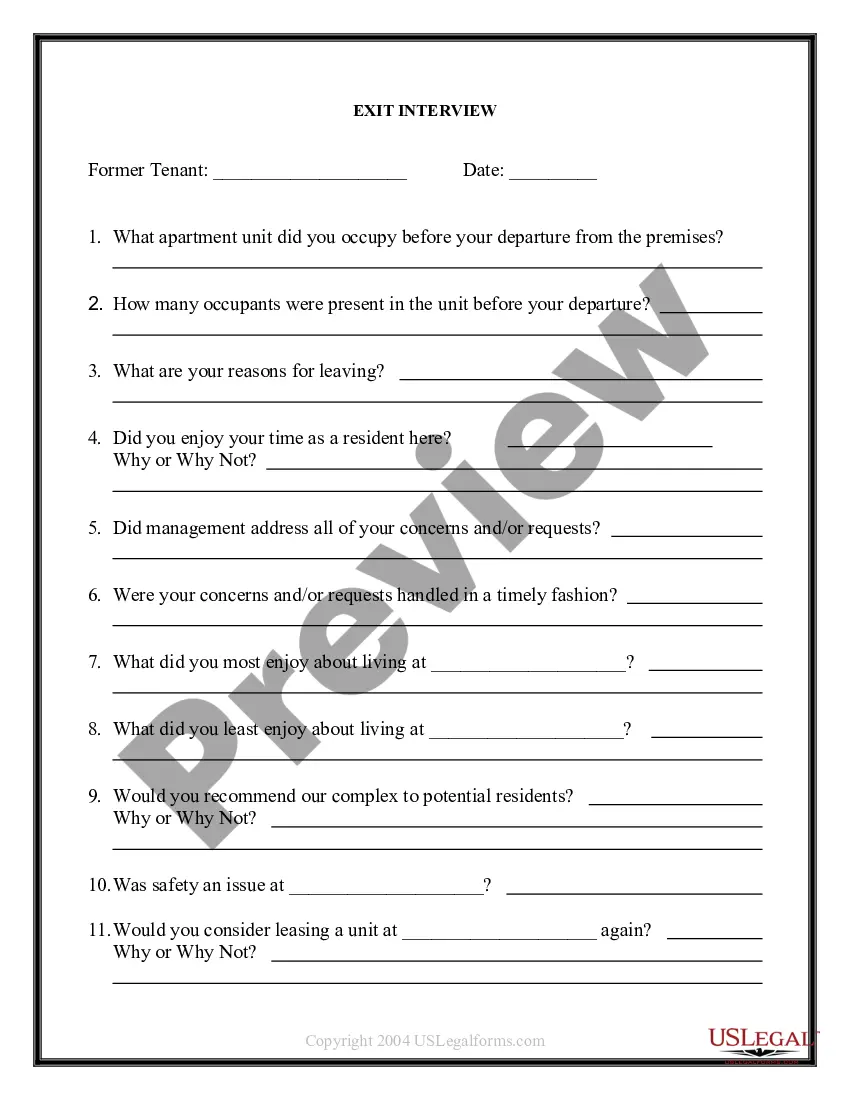





How to fill out Agreed Judgment?
Are you presently in a situation where you require documents for both business and personal reasons almost every day.
There are numerous valid document templates available online, but finding reliable versions is not straightforward.
US Legal Forms provides a vast array of form templates, including the Wyoming Agreed Judgment, designed to comply with state and federal regulations.
Once you find the correct form, click Buy now.
Choose the pricing plan you want, fill out the required information to create your account, and pay for the order using your PayPal or Visa or Mastercard.
- If you are already familiar with the US Legal Forms website and have an account, simply Log In.
- After that, you can download the Wyoming Agreed Judgment template.
- If you do not have an account and wish to start using US Legal Forms, follow these steps.
- Locate the form you need and ensure it is for your specific city/region.
- Utilize the Preview button to examine the form.
- Read the description to confirm that you have chosen the correct template.
- If the form isn’t what you are looking for, use the Search field to find the form that meets your needs and requirements.
Form popularity
FAQ
Service of a subpoena upon a person named therein shall be made by delivering a copy thereof to such person and, if the person's attendance is commanded, by tendering to that person the fees for one day's attendance and the mileage allowed by law.
Satisfaction of Judgment: The document stating the Judgment Debtor has satisfied the judgment. Wyoming Statute requires this to be filed by the Judgment Creditor with the Circuit Court Clerk in order to remove the judgment from credit reports as being unpaid by the Judgment Debtor.
After recording the certified copy of the judgment with the County Clerk, it becomes a lien against any real property then owned or thereafter acquired by the defendant in his/her name. A judgment has a lifetime of 5 years from the last date of execution or date of judgment.
Depending on the type of debt, the statute of limitations in Wyoming can be anywhere between three to eight years. The statute of limitation is the timeframe a debt collector is legally allowed to file a lawsuit against you for a delinquent debt.
How long does a judgment lien last in Montana? A judgment lien in Montana will remain attached to the debtor's property (even if the property changes hands) for ten years.
Key Takeaways. A judgment lien is a court ruling that gives a creditor the right to take possession of a debtor's property if the debtor fails to fulfill their contractual obligations. Judgment liens are nonconsensual because they are attached to property without the owner's consent or agreement.
Rule 60 - Relief from a judgment or order (a) Corrections Based on Clerical Mistakes; Oversights and Omissions. The court may correct a clerical mistake or a mistake arising from oversight or omission whenever one is found in a judgment, order, or other part of the record.
The court on motion of a defendant may grant a new trial to that defendant if required in the interest of justice. If trial was by the court without a jury, the court, on motion of a defendant for a new trial, may vacate the judgment if entered, take additional testimony, and direct the entry of a new judgment.