Wyoming Pre-Purchase Recommendations - Horse Equine Forms
About this form
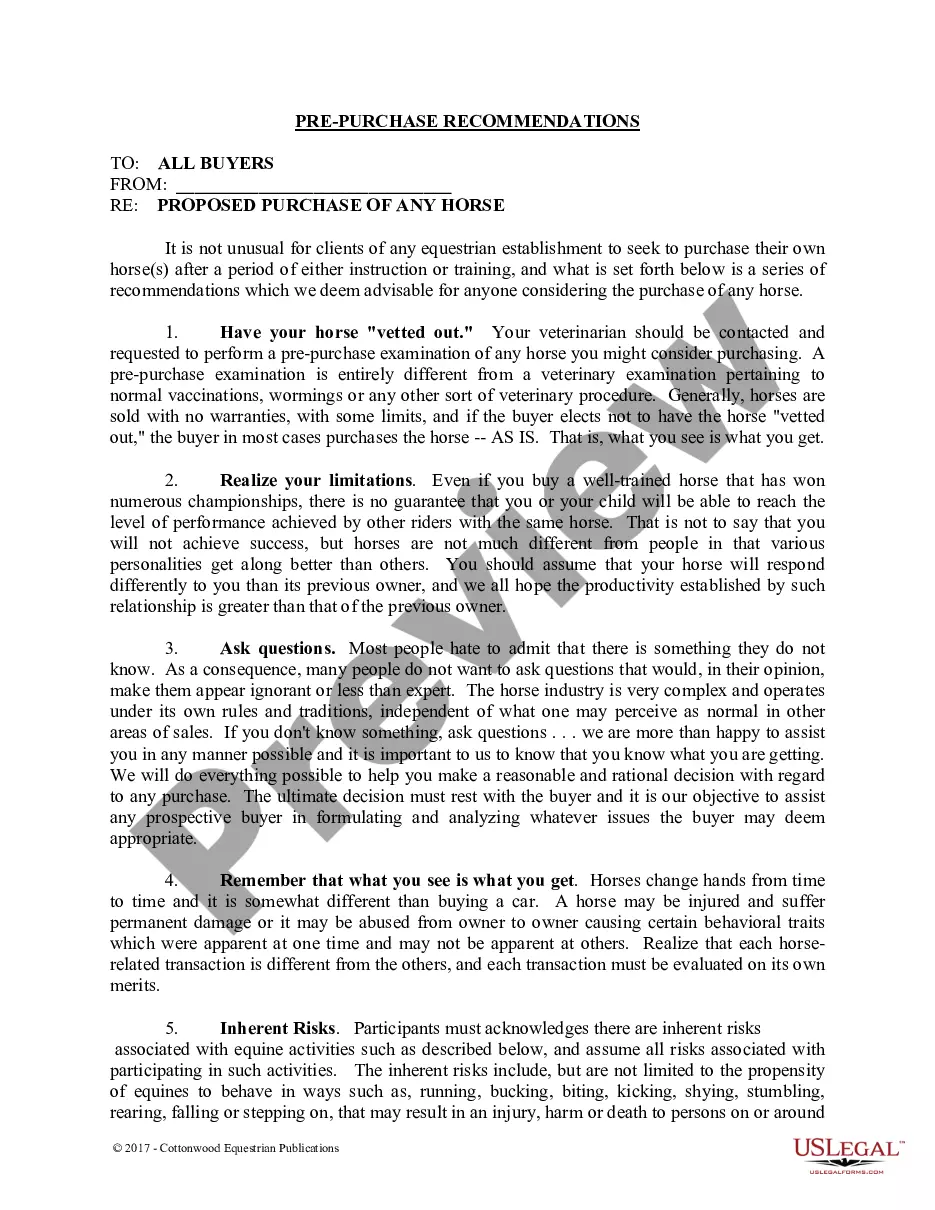
The Pre-Purchase Recommendations form is an essential document for anyone considering buying a horse. This informational form provides recommendations that guide potential buyers through the intricate process of purchasing a horse, ensuring informed decision-making and highlighting key considerations that differ from other equine forms.
Key components of this form
- Vetting recommendations: Importance of a pre-purchase vet examination.
- Limitations: Acknowledgment that previous performance does not guarantee future results.
- Inquiry encouragement: Encourages buyers to ask questions for clarity.
- Condition awareness: Highlights the significance of understanding the horse's condition and previous ownership.
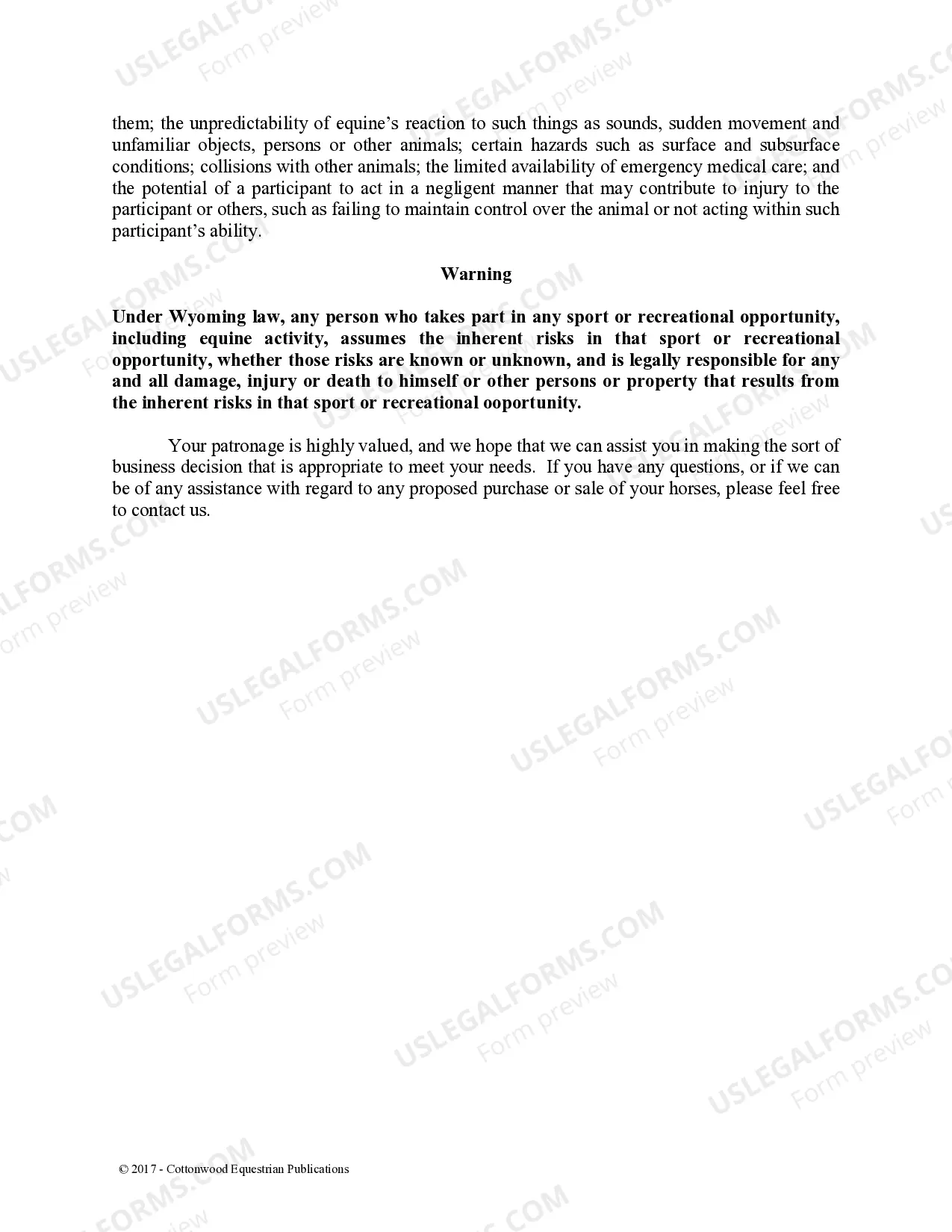
- Risk acknowledgment: Addresses inherent risks associated with equine activities.
When to use this document
This form is useful when you are contemplating the purchase of a horse, whether for personal use, competition, or recreational riding. It helps you gather essential information and make a well-informed decision before finalizing any transaction.
Intended users of this form
This form is intended for:
- Prospective horse buyers looking for guidance on the purchasing process.
- Individuals seeking advice on equine purchases from trainers or equestrian establishments.
- New horse owners needing clarity on what to consider before buying a horse.
Steps to complete this form
To complete this form, follow these steps:
- Identify the seller of the horse.
- Consult with a veterinarian to perform a pre-purchase examination.
- Consider your limitations regarding the horse's performance potential.
- Prepare a list of questions you have about the horse's history and behavior.
- Acknowledge and understand the inherent risks associated with owning and riding a horse.
Is notarization required?
Notarization is generally not required for this form. However, certain states or situations might demand it. You can complete notarization online through US Legal Forms, powered by Notarize, using a verified video call available anytime.
Get your form ready online
Our built-in tools help you complete, sign, share, and store your documents in one place.
Make edits, fill in missing information, and update formatting in US Legal Forms—just like you would in MS Word.
Download a copy, print it, send it by email, or mail it via USPS—whatever works best for your next step.
Sign and collect signatures with our SignNow integration. Send to multiple recipients, set reminders, and more. Go Premium to unlock E-Sign.
If this form requires notarization, complete it online through a secure video call—no need to meet a notary in person or wait for an appointment.
We protect your documents and personal data by following strict security and privacy standards.

Make edits, fill in missing information, and update formatting in US Legal Forms—just like you would in MS Word.

Download a copy, print it, send it by email, or mail it via USPS—whatever works best for your next step.

Sign and collect signatures with our SignNow integration. Send to multiple recipients, set reminders, and more. Go Premium to unlock E-Sign.

If this form requires notarization, complete it online through a secure video call—no need to meet a notary in person or wait for an appointment.

We protect your documents and personal data by following strict security and privacy standards.
Common mistakes to avoid
- Neglecting to have the horse vetted before purchase.
- Underestimating the horse's need for training and adjustment to a new rider.
- Failing to ask critical questions about the horseâs medical history or behavioral issues.
Benefits of completing this form online
- Convenience of accessing the form online with immediate download options.
- Editable format allowing personalized entries based on specific horse details.
- Reliable guidance crafted by licensed attorneys specializing in equine transactions.
- This form serves as a guideline for buyers to make informed decisions when purchasing a horse.
- While it helps buyers understand potential risks, it does not replace the necessity of professional veterinary advice.
- The recommendations provided are based on common industry practices and should be tailored to individual circumstances.
What to keep in mind
- The Pre-Purchase Recommendations form is vital for any prospective horse buyer.
- It emphasizes the importance of vetting and understanding horse behavior.
- Asking questions is essential for gaining clarity on the purchase.
Looking for another form?



Form popularity
FAQ
The Price Tag The price of a basic pre-purchase exam will vary from one veterinary practice to another, but in general you can expect to pay from $250 to $500. It's a good idea to ask the veterinarian the base cost up front.
The date of the sale. A description of the car, including its: Year, make and model. The selling price of the car. If the car is a gift or partial gift, you should still create a bill of sale. Warranty information. The full names, addresses and signatures of the buyer and seller.
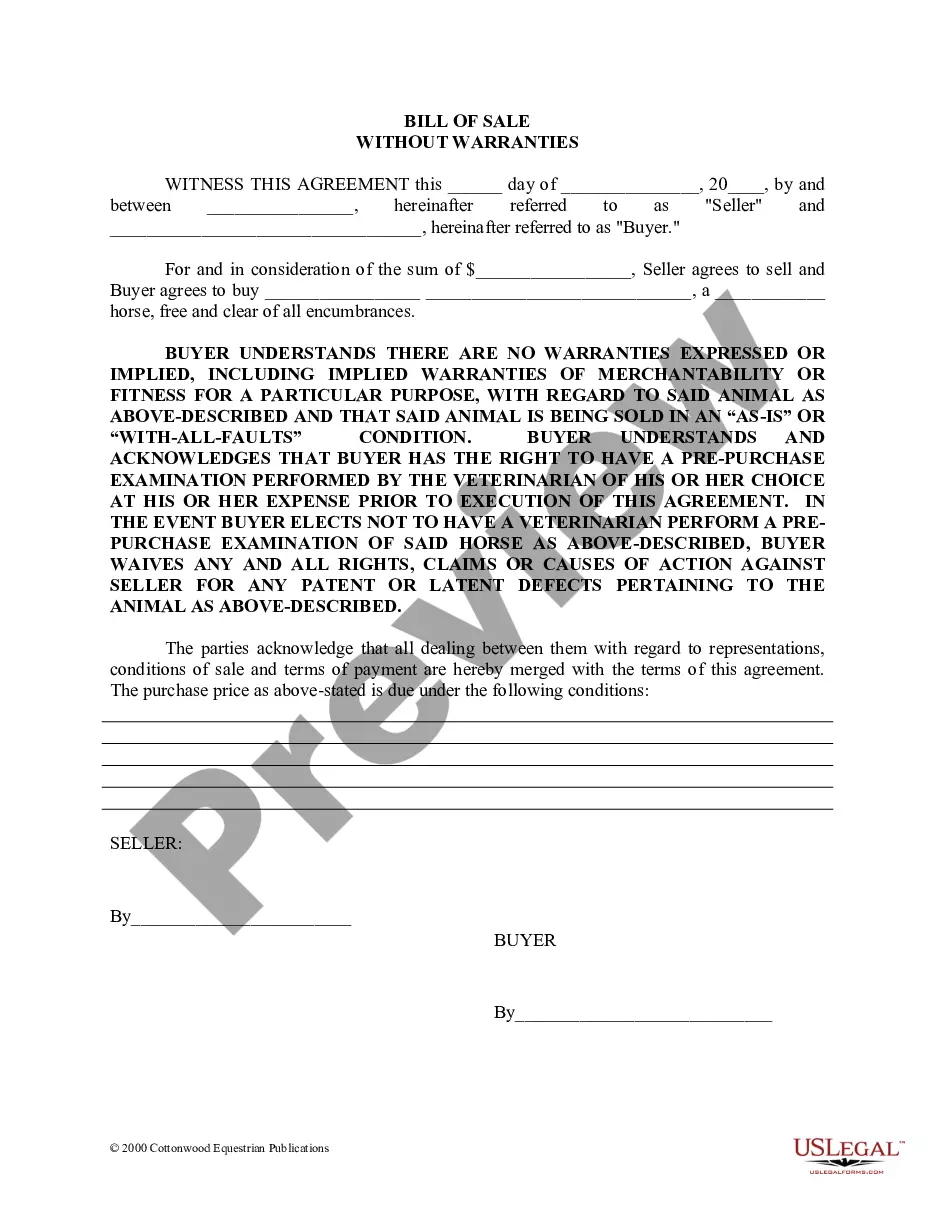
Date of the Sale. Seller's Name & Address. Buyer's Name & Address. Description of Livestock. Number. Color. Kind. Brand. Weight. Health. Vaccinations. Condition. Any other relevant information.
Name and address of the seller. Name and address of the buyer. Date& time of the purchase. The agreed price for the furniture. The location where the purchase is taking place. Form of payment (is it cash, check, credit card or debit card)
Step 1 Date and Parties. Enter the date in which the document is being created. Step 2 Horse Description. Horse's Name (if named) Step 3 Purchase Price Information. Step 4 Security Deposit. Step 5 Signatures. Step 6 Acknowledgement of Notary Public.
Typically the person who is going to be buying the horse pays for the pre-purchase exam. This means that all discoveries and medical findings discovered during this exam belong to that client.
A bill of sale is the most basic of documents.A bill of sale may also be necessary to prove title to the horse in order to obtain a passport for competition. An agreement of purchase and sale with a form of warranty is found in Appendix (C).
Together with your experienced advisor, look at the horse's teeth to check the age, do a thorough conformation check, feel the legs, look at the feet (ask the owner to pick up the feet), ask about the farrier, notice any lumps and bumps and query them. If the horse passes your inspection, ask to see it ridden.