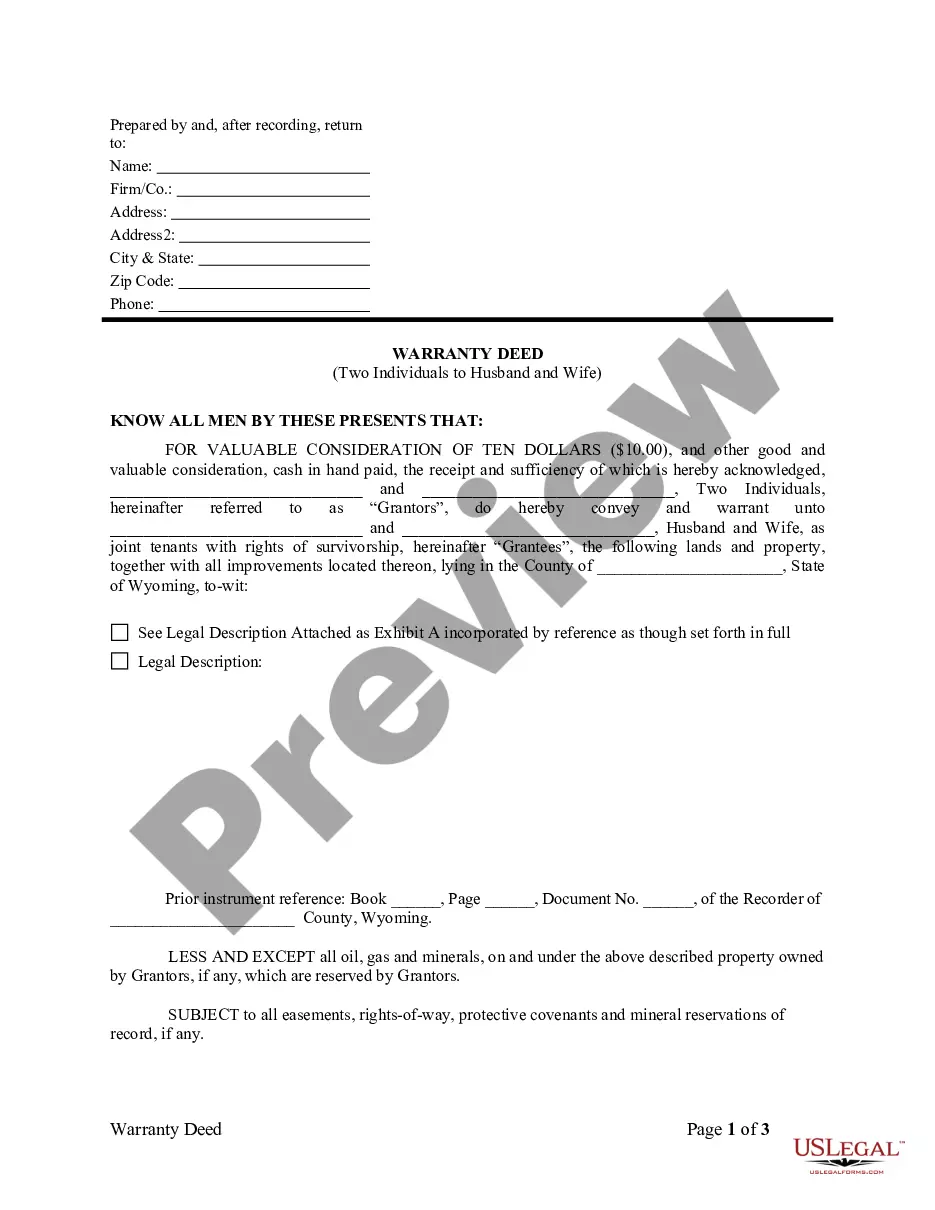
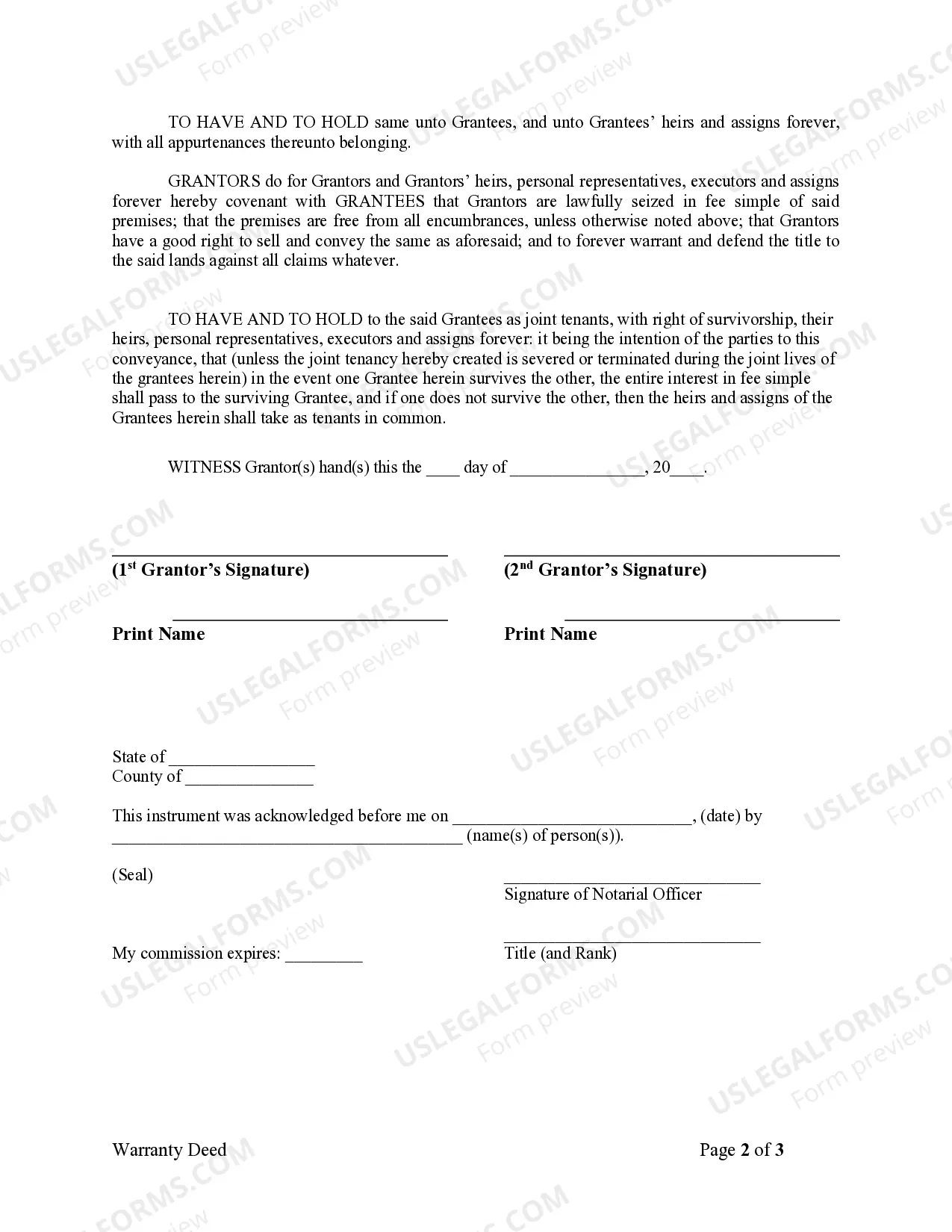
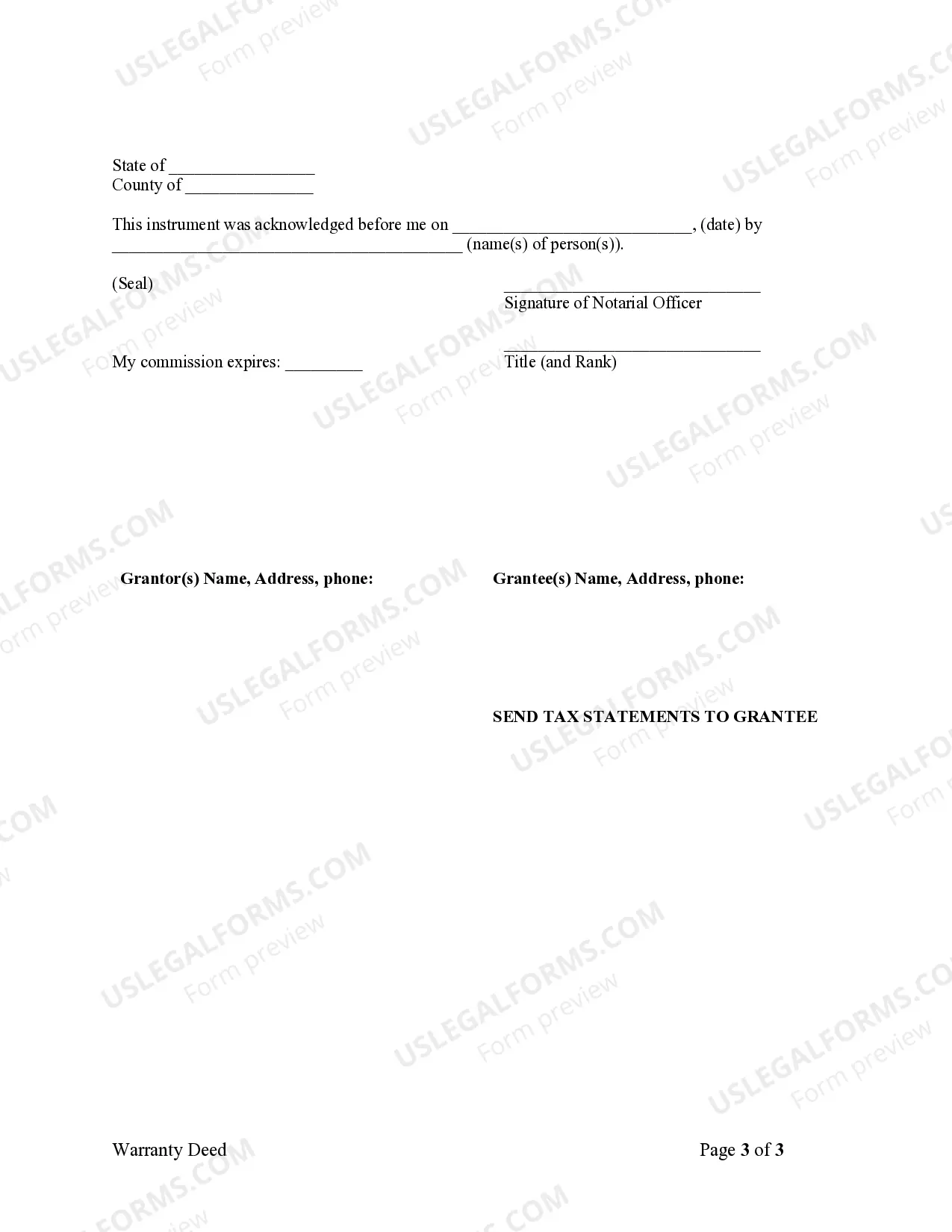
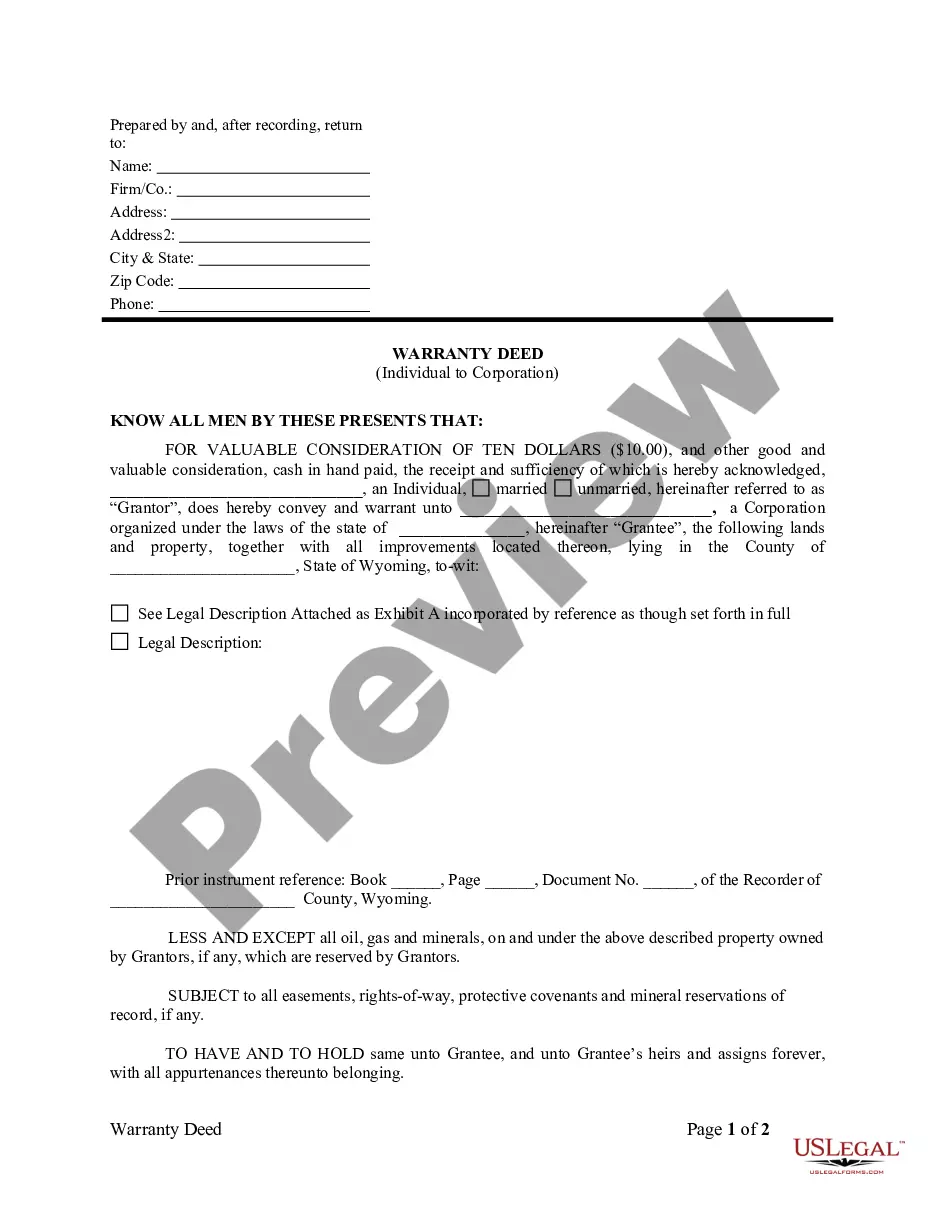
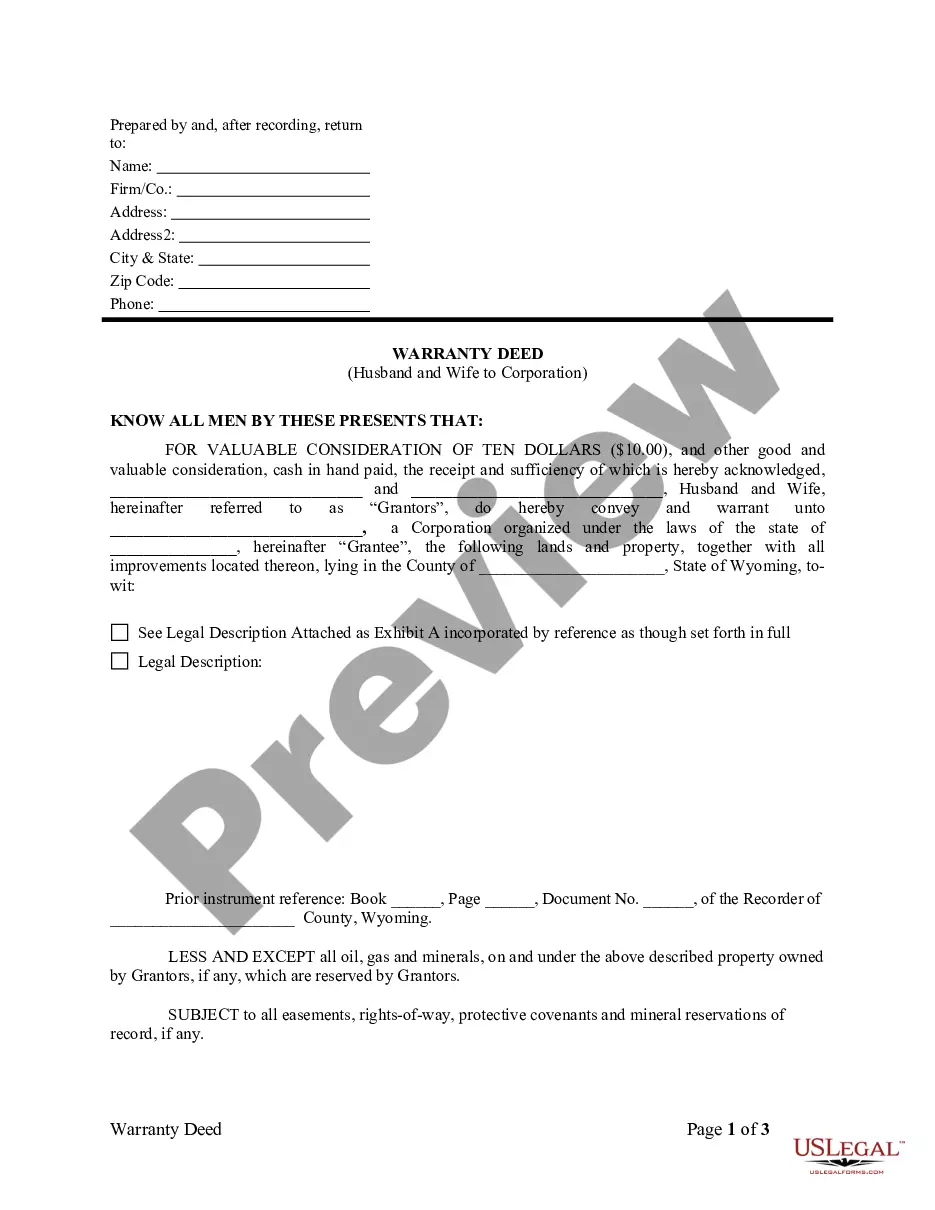
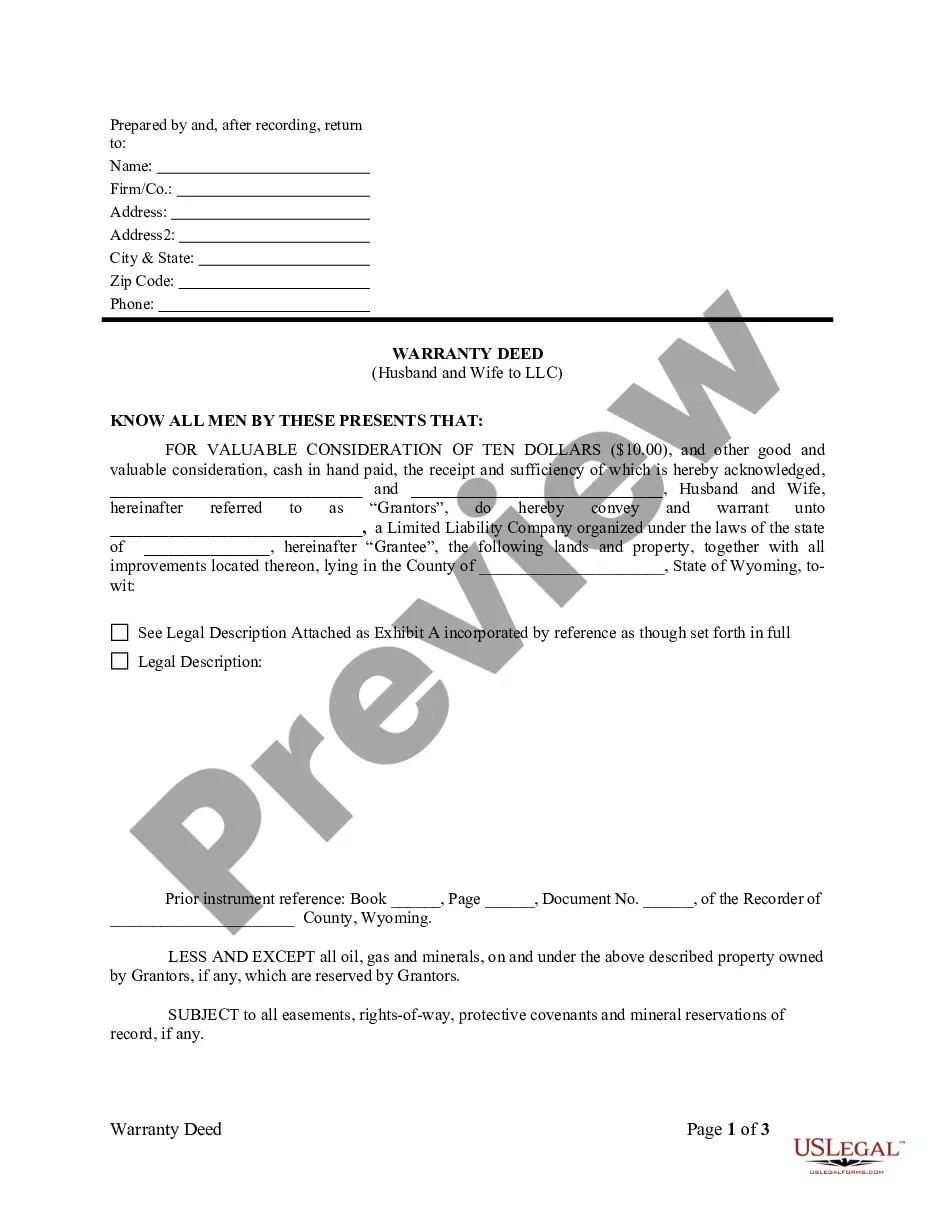
This Warranty Deed from two Individuals to Husband and Wife form is a Warranty Deed where the Grantors are two individuals and the Grantees are Husband and Wife. Grantors convey and warrant the described property to Grantees less and except all oil, gas and minerals, on and under the property owned by Grantors, if any, which are reserved by Grantors. This form complies with all state statutory laws.
Wyoming Warranty Deed from two Individuals to Husband and Wife
Instant download
Description
Free preview

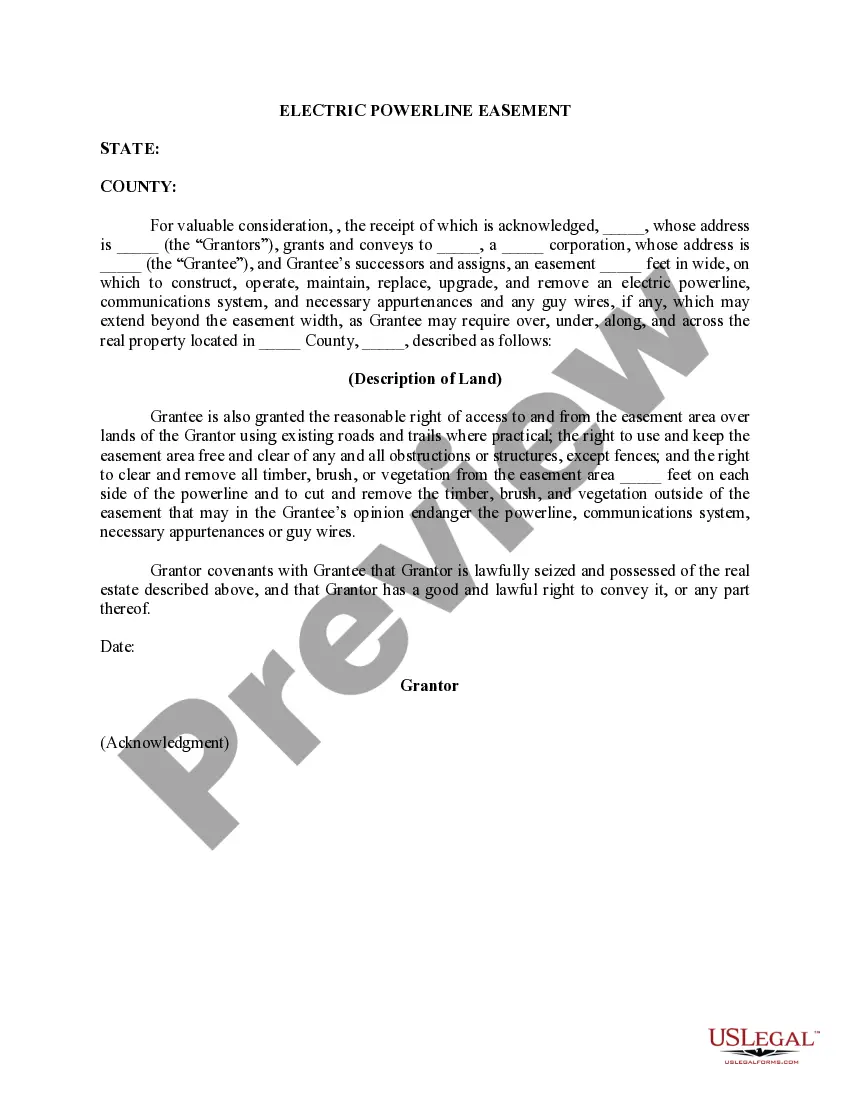
How to fill out Wyoming Warranty Deed From Two Individuals To Husband And Wife?
Out of the multitude of platforms that provide legal samples, US Legal Forms provides the most user-friendly experience and customer journey while previewing forms prior to buying them. Its complete library of 85,000 templates is categorized by state and use for efficiency. All of the forms on the service have been drafted to meet individual state requirements by qualified lawyers.
If you have a US Legal Forms subscription, just log in, look for the template, hit Download and gain access to your Form name in the My Forms; the My Forms tab keeps all of your saved documents.
Stick to the tips listed below to get the document:
- Once you see a Form name, make sure it is the one for the state you really need it to file in.
- Preview the template and read the document description prior to downloading the template.
- Search for a new template via the Search field if the one you have already found isn’t appropriate.
- Just click Buy Now and choose a subscription plan.
- Create your own account.
- Pay using a card or PayPal and download the document.
Once you’ve downloaded your Form name, you are able to edit it, fill it out and sign it in an online editor that you pick. Any document you add to your My Forms tab might be reused many times, or for as long as it continues to be the most updated version in your state. Our service provides fast and easy access to samples that suit both lawyers as well as their clients.
Form popularity
FAQ
Yes you can. This is called a transfer of equity but you will need the permission of your lender. If you are not married or in a civil partnership you may wish to consider creating a deed of trust and a living together agreement which we can explain to you.
Title the deed and list the amount given for the transfer. If it is a quitclaim deed, title the deed Quitclaim Deed; for warranty deeds, title the deed Warranty Deed. Write In consideration of dollar amount to list the amount given for the transfer. List the names of the parties involved.
Adding someone to your house deed requires the filing of a legal form known as a quitclaim deed. When executed and notarized, the quitclaim deed legally overrides the current deed to your home. By filing the quitclaim deed, you can add someone to the title of your home, in effect transferring a share of ownership.
To add a co-owner, the bank would have to create a new home loan agreement, which must be registered after paying the due stamp duty and registration charges. The bank would also insist on making the co-owner a co-borrower in the home loan applicable.
If you've recently married and already own a home or other real estate, you may want to add your new spouse to the deed for your property so the two of you own it jointly. To add a spouse to a deed, all you have to do is literally fill out, sign and record a new deed in your county recorder's office.
One of the simplest ways to add your wife to the home title is by using an interspousal deed. You can transfer the property from your sole and separate property to mutual tenancy, such as joint tenants with right of survivorship, with your wife.
Adding someone to your house deed requires the filing of a legal form known as a quitclaim deed. When executed and notarized, the quitclaim deed legally overrides the current deed to your home. By filing the quitclaim deed, you can add someone to the title of your home, in effect transferring a share of ownership.
It is possible to be named on the title deed of a home without being on the mortgage. However, doing so assumes risks of ownership because the title is not free and clear of liens and possible other encumbrances. Free and clear means that no one else has rights to the title above the owner.