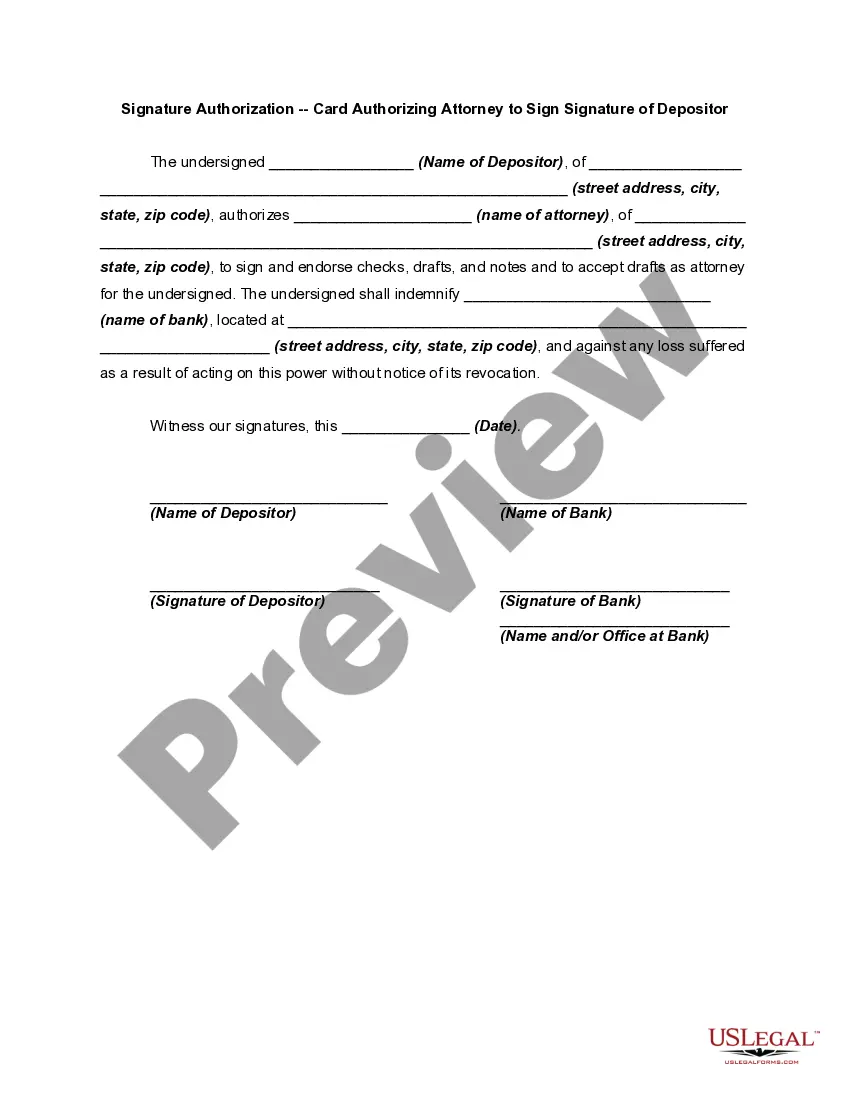
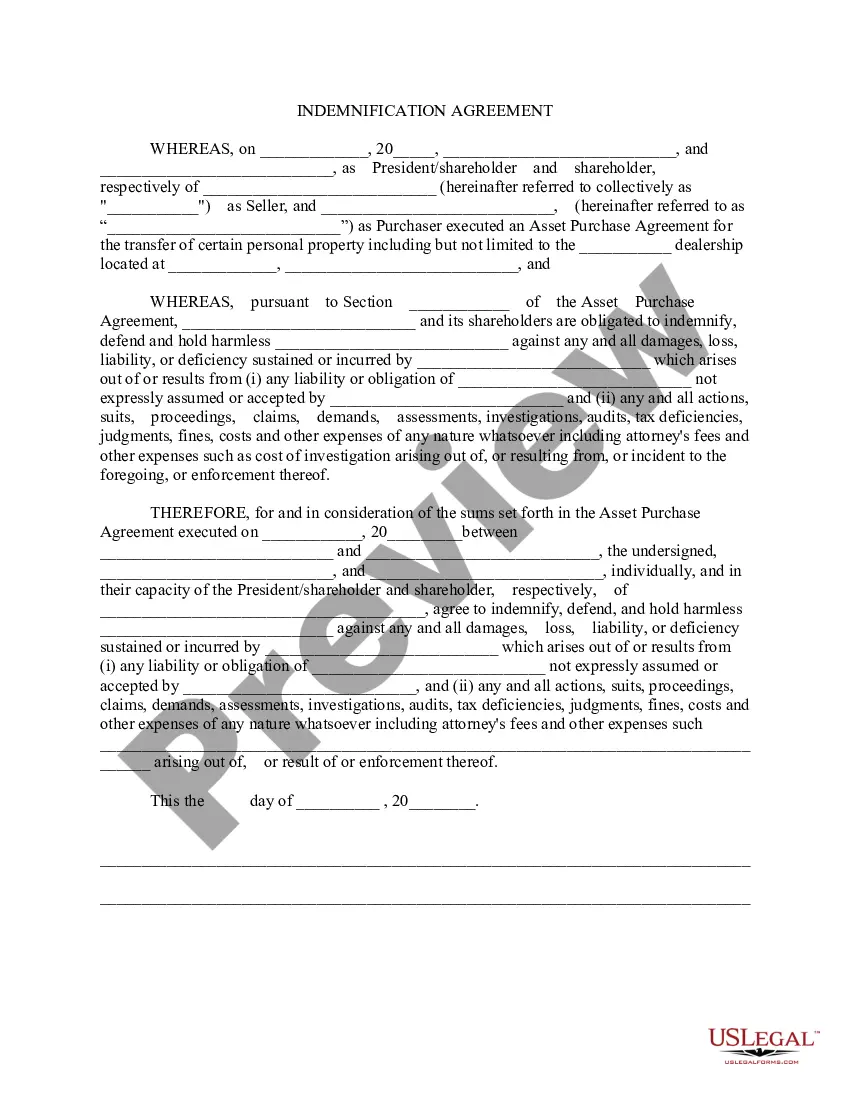
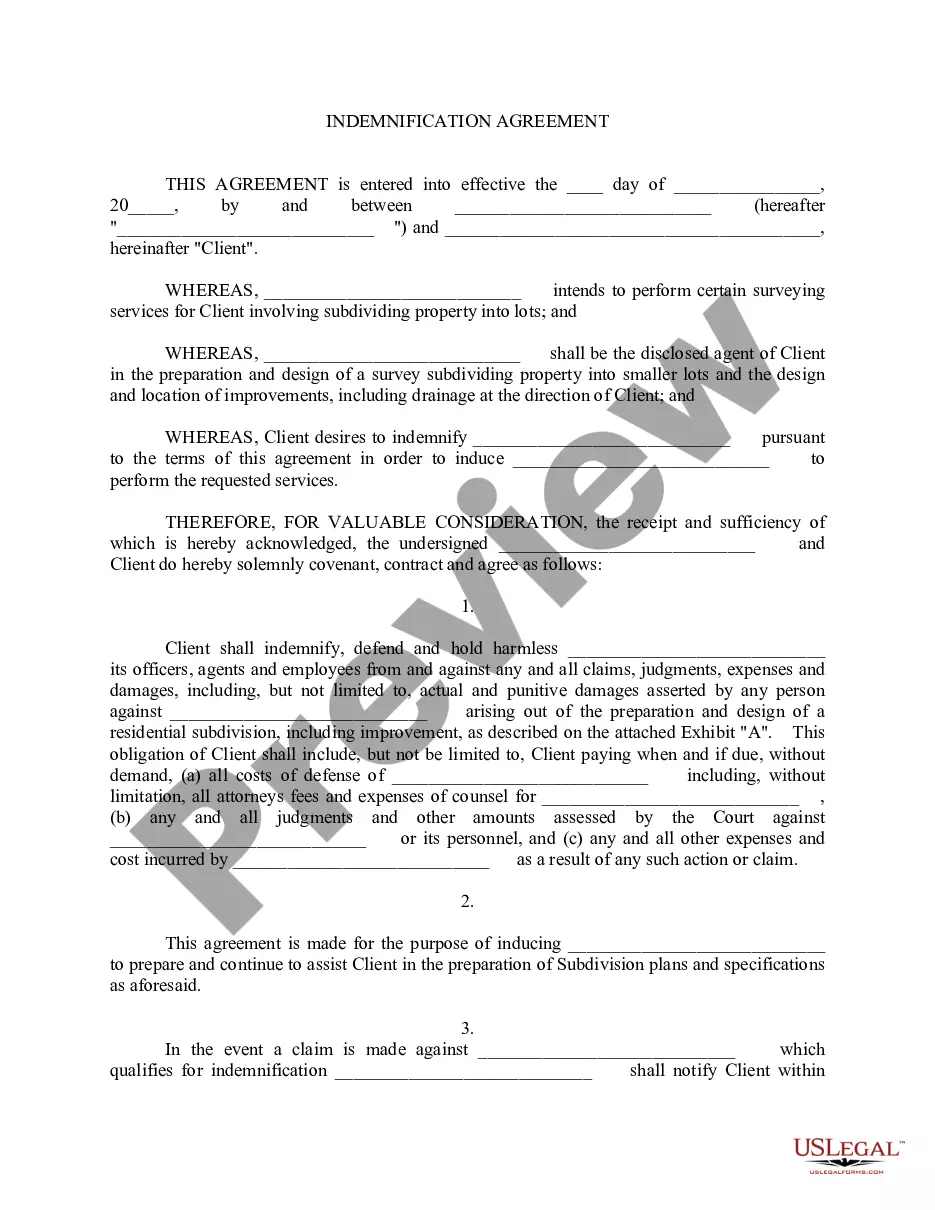
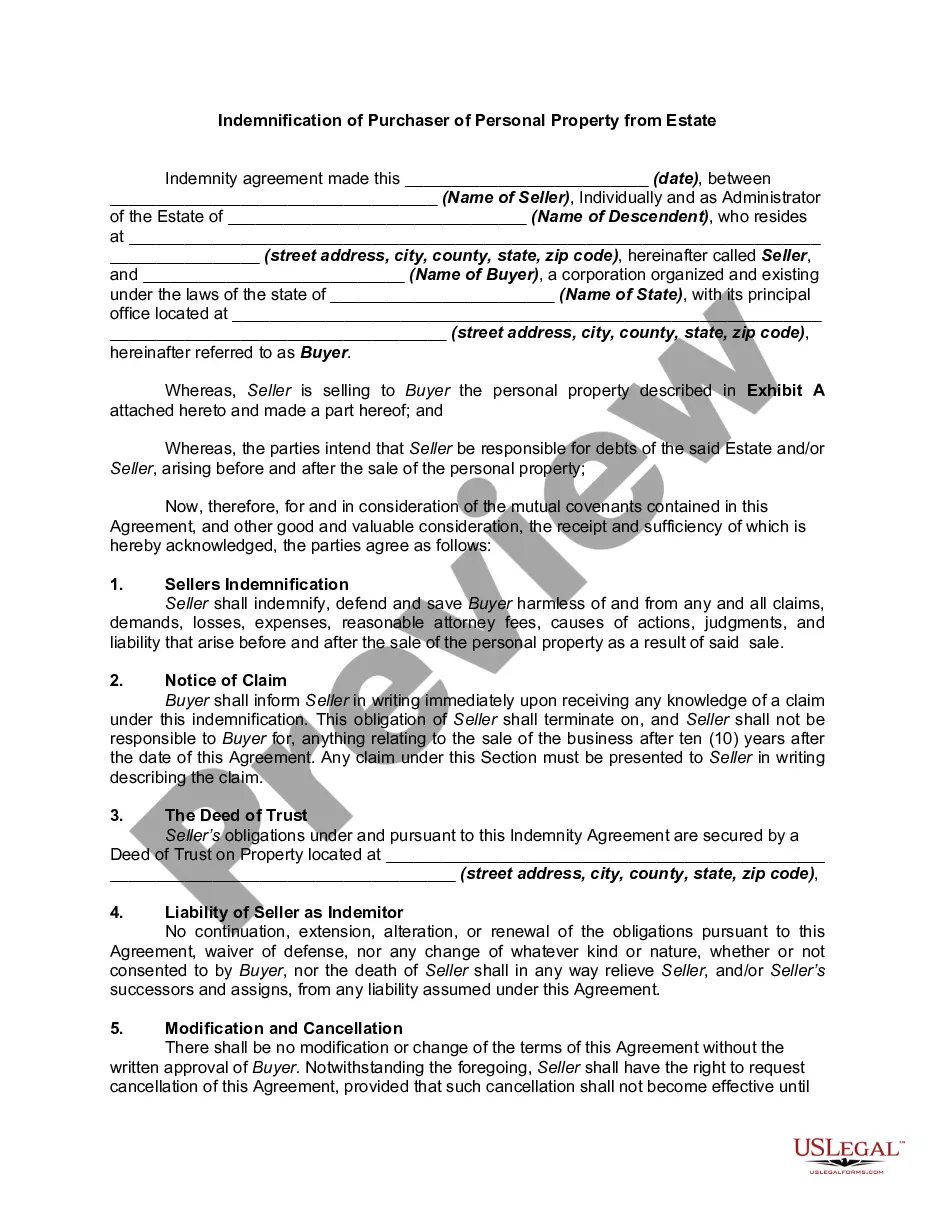
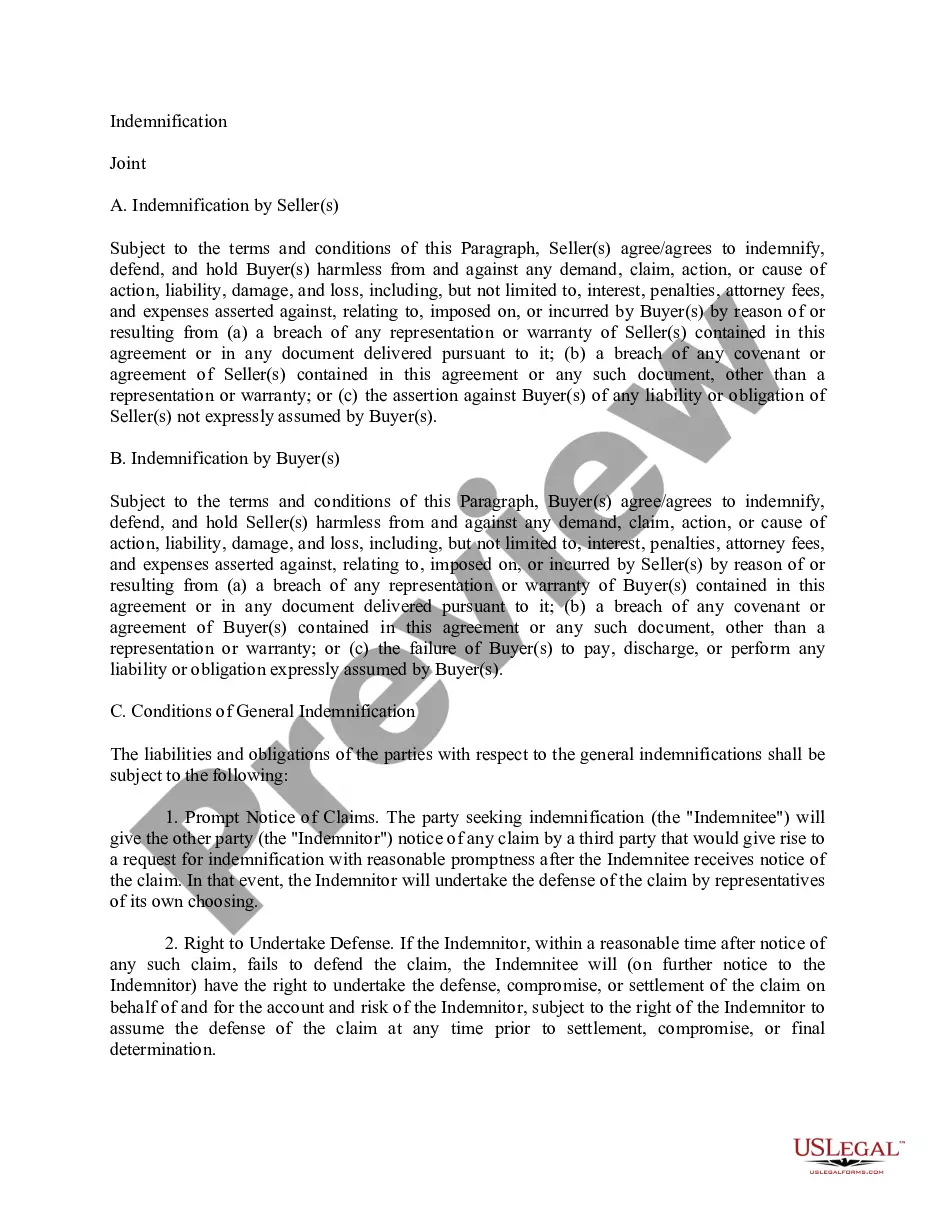
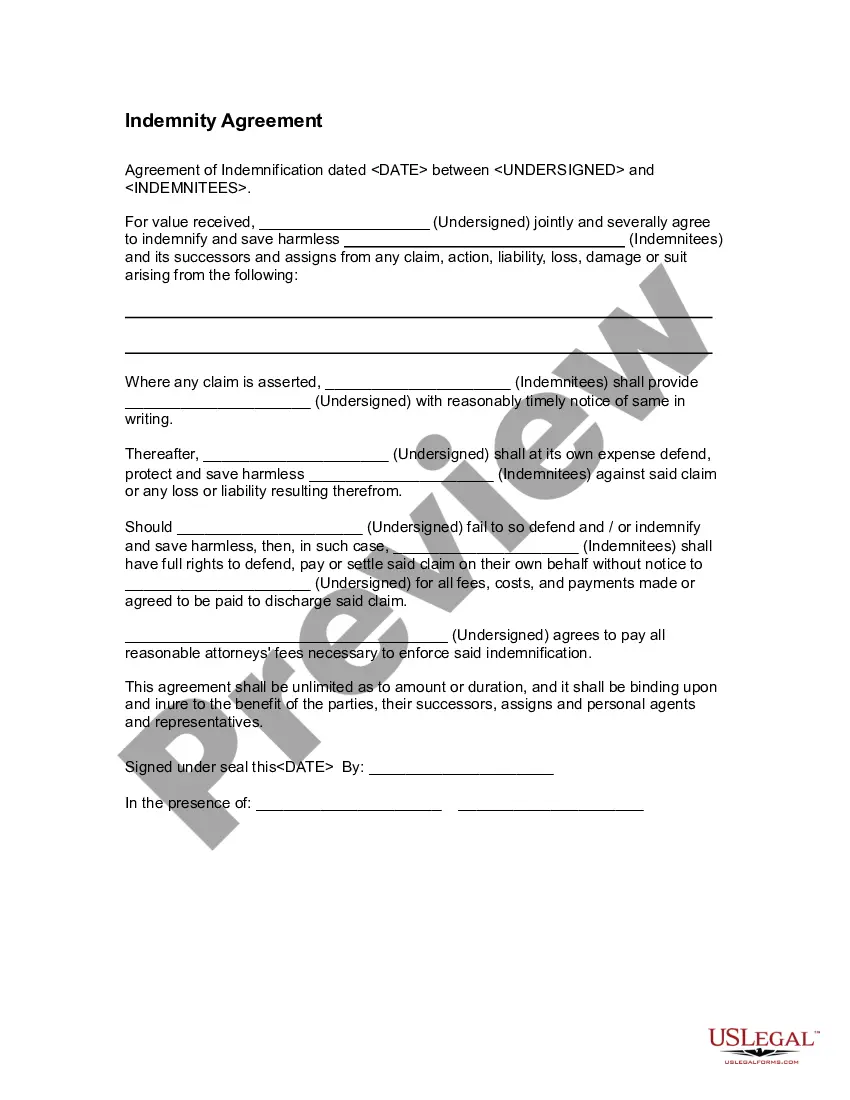
West Virginia Indemnification Agreement for Personal Property
Description
Get your form ready online
Our built-in tools help you complete, sign, share, and store your documents in one place.
Make edits, fill in missing information, and update formatting in US Legal Forms—just like you would in MS Word.
Download a copy, print it, send it by email, or mail it via USPS—whatever works best for your next step.
Sign and collect signatures with our SignNow integration. Send to multiple recipients, set reminders, and more. Go Premium to unlock E-Sign.
If this form requires notarization, complete it online through a secure video call—no need to meet a notary in person or wait for an appointment.
We protect your documents and personal data by following strict security and privacy standards.

Make edits, fill in missing information, and update formatting in US Legal Forms—just like you would in MS Word.

Download a copy, print it, send it by email, or mail it via USPS—whatever works best for your next step.

Sign and collect signatures with our SignNow integration. Send to multiple recipients, set reminders, and more. Go Premium to unlock E-Sign.

If this form requires notarization, complete it online through a secure video call—no need to meet a notary in person or wait for an appointment.

We protect your documents and personal data by following strict security and privacy standards.
Looking for another form?



How to fill out Indemnification Agreement For Personal Property?
Finding the appropriate legal document template can pose challenges. Naturally, there is an abundance of templates accessible online, but how can you locate the legal form you need? Utilize the US Legal Forms platform. This service provides a wide array of templates, such as the West Virginia Indemnification Agreement for Personal Property, which can be utilized for both business and personal purposes. All the forms are reviewed by experts and comply with federal and state regulations.
If you are currently registered, sign in to your account and click the Download button to retrieve the West Virginia Indemnification Agreement for Personal Property. Use your account to search for the legal forms you have previously purchased. Navigate to the My documents section of your account to obtain another copy of the document you seek.
If you are new to US Legal Forms, here are some straightforward directions for you to follow.
- First, confirm you have selected the correct form for your specific city/state.
- You can review the form using the Preview feature and examine the form details to ensure it is suitable for you.
- If the form does not meet your needs, utilize the Search field to find the appropriate form.
- Once you are convinced the form is satisfactory, click the Buy now button to acquire the form.
- Choose the pricing plan you desire and fill in the necessary information. Create your account and pay for the order using your PayPal account or credit/debit card.
- Select the file format and download the legal document template to your device.
Form popularity
FAQ
Indemnification clauses are clauses in contracts that set out to protect one party from liability if a third-party or third entity is harmed in any way. It's a clause that contractually obligates one party to compensate another party for losses or damages that have occurred or could occur in the future.
Sellers should also limit the survival period for most indemnification claims to just a short time after closing, i.e., six months to two years (although certain "fundamental" claims or particularly risky claims typically survive for much longer periods).
The most important tip for drafting an effective indemnity is to ensure that the clause is worded to suit the particular circumstances of the contracting parties. If there is a dispute about the operation of a contractual indemnity, the balance of the contract will help to identify how the indemnity operates.
California courts have held that indemnify and hold harmless confer distinct rights: (1) Indemnify is an offensive right, allowing the indemnified party to seek indemnification from the indemnifying party; (2) Hold harmless is a defensive right, protecting the indemnified party from being bothered by the other
At their core, indemnification provisions transfer liabilities related to a claim from one party to another party, generally in the event of a breach of contract or a party's negligence or misconduct in the performance of the agreement.
An indemnification agreement provides additional protection for businesses by ensuring that they are not held liable for damages or losses that occur outside of their control. This agreement allows the company to continue its operations while protecting against lawsuits.
Indemnification provisions are generally enforceable. There are certain exceptions however. Indemnifications that require a party to indemnify another party for any claim irrespective of fault ('broad form' or 'no fault' indemnities) generally have been found to violate public policy.
This Standard Clause gives the parties the option to require the indemnifying party to either: Indemnify and defend. Indemnify, defend, and hold harmless.
Tips for Enforcing Indemnification ProvisionsIdentify Time Periods for Asserting Indemnification Rights.Provide Notice in a Timely Fashion.Notify All Concerned Parties.Understand Limitations on Recovery.Exclusive Remedy.Scope of Damages.Claims Process/Dispute Resolution.