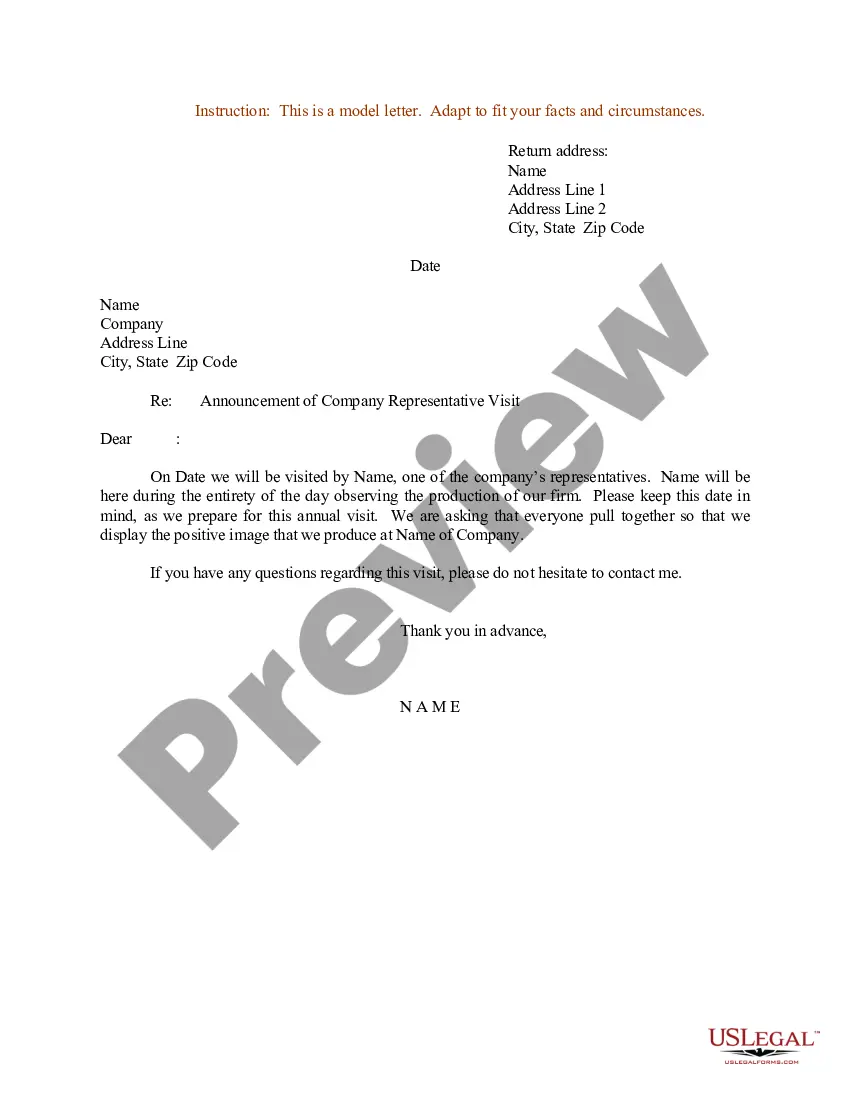
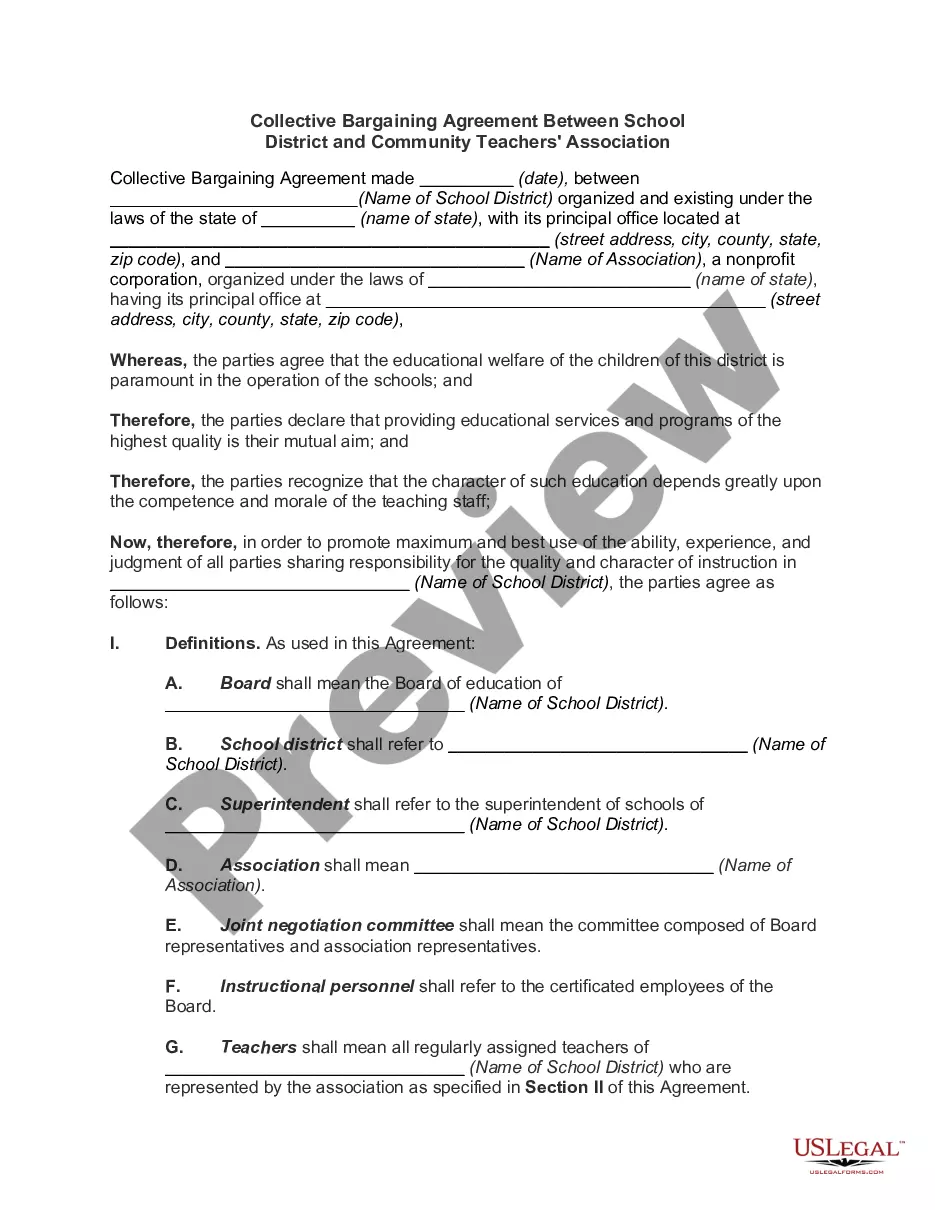
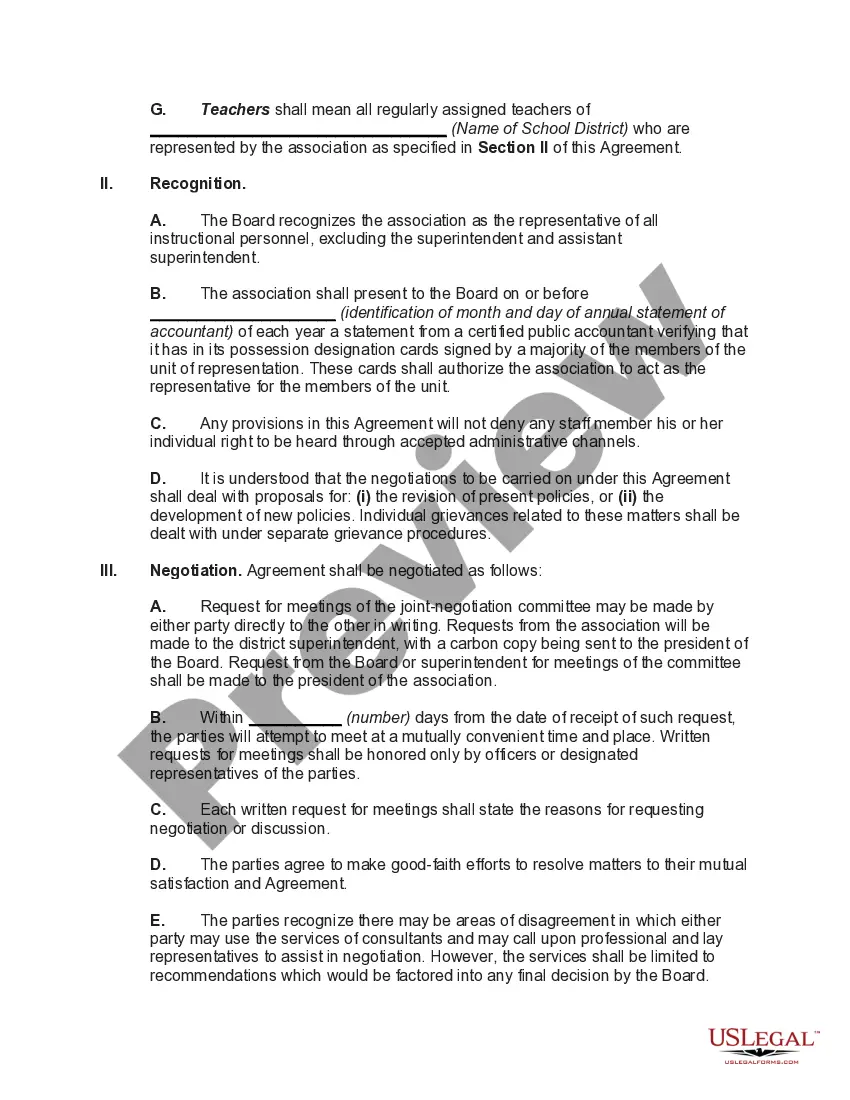
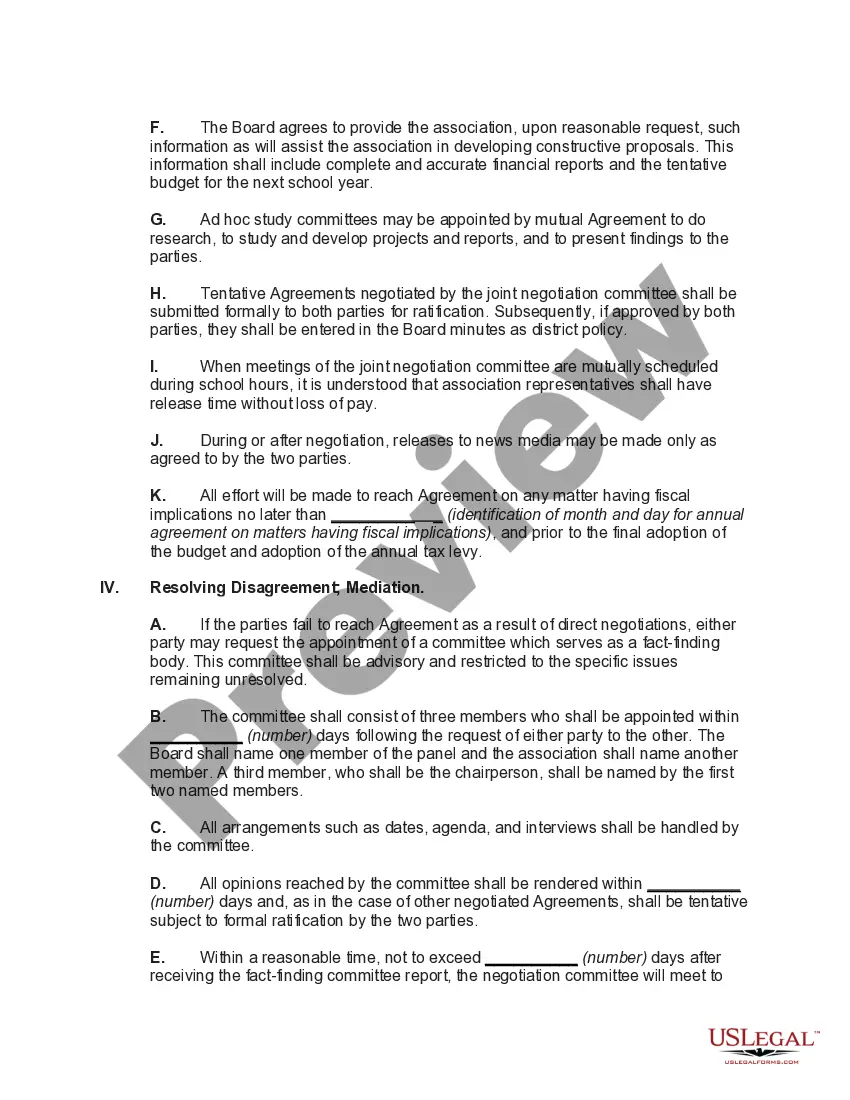
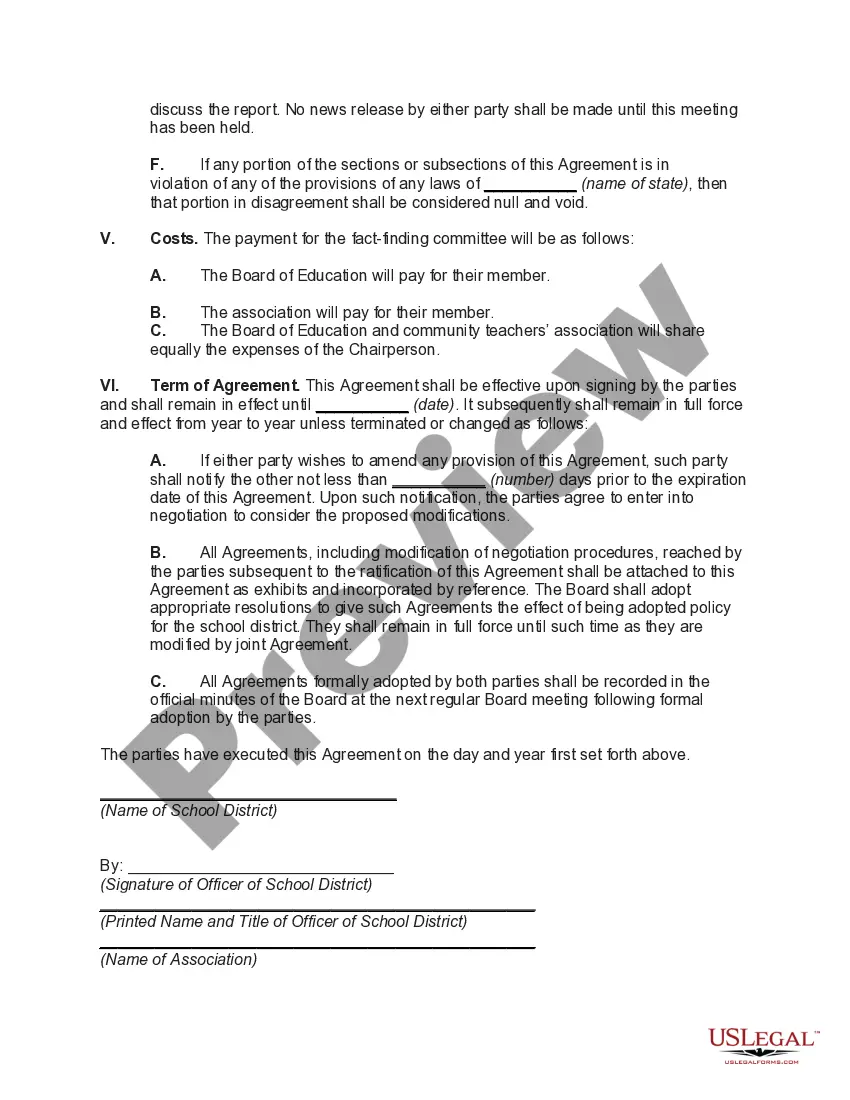
West Virginia Collective Bargaining Agreement Between School District and Community Teachers' Association
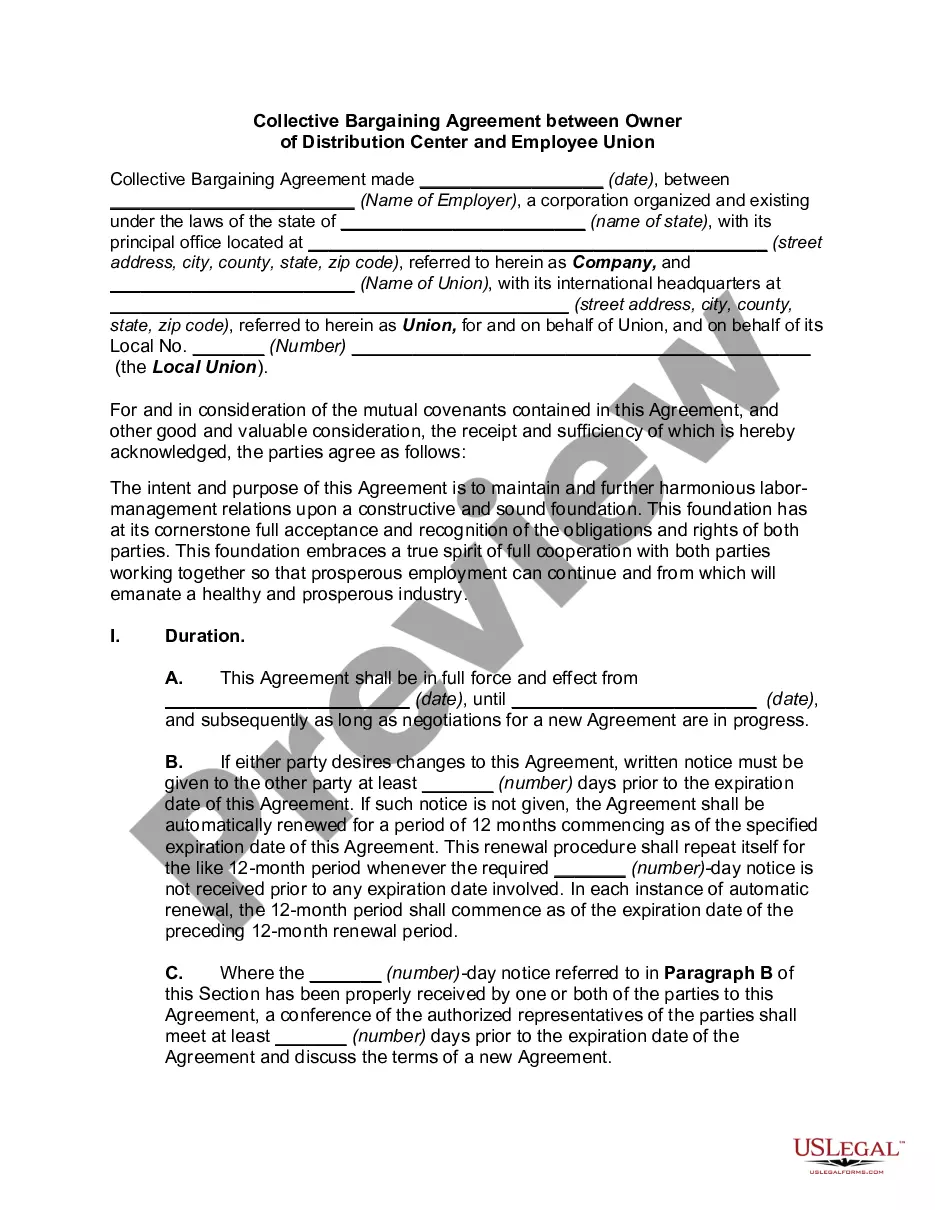
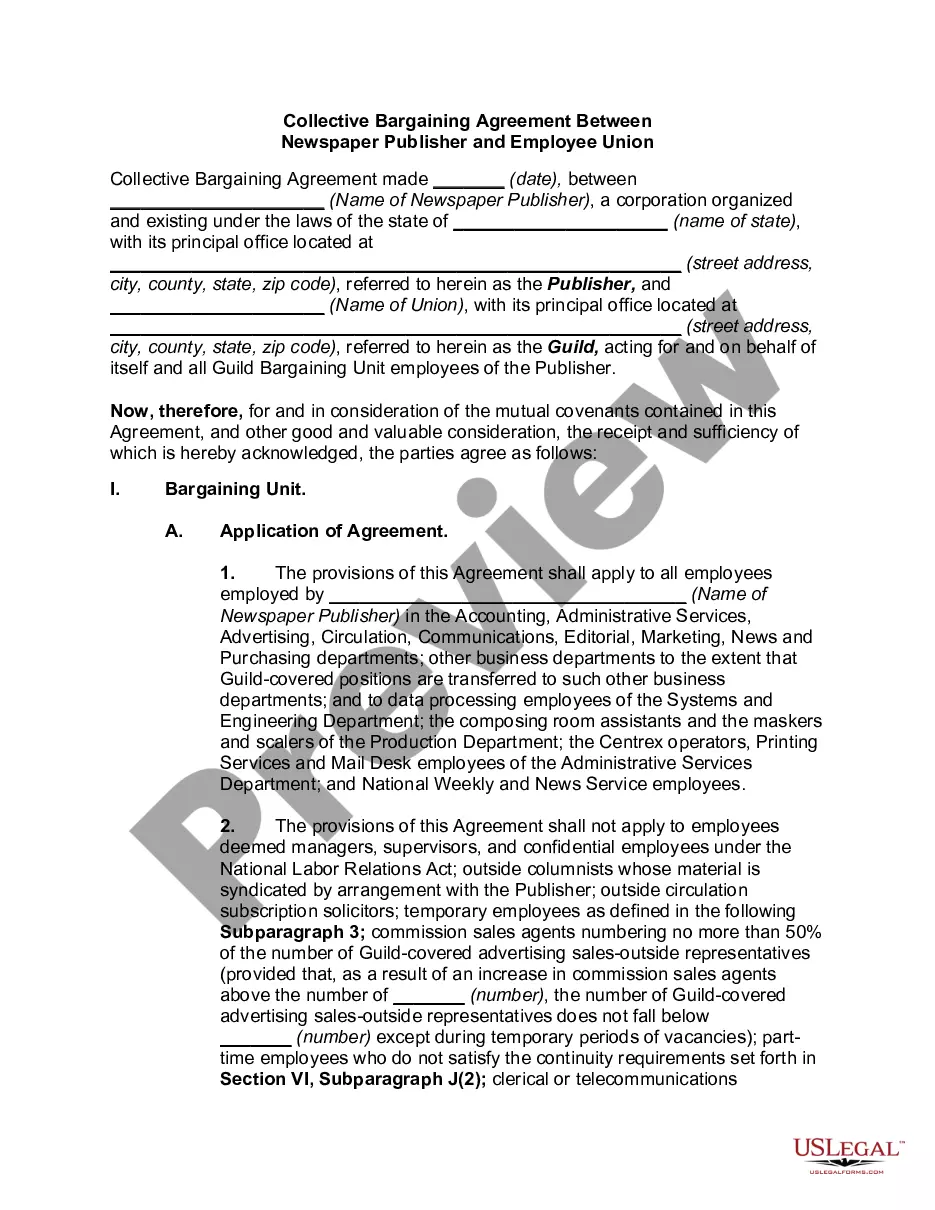
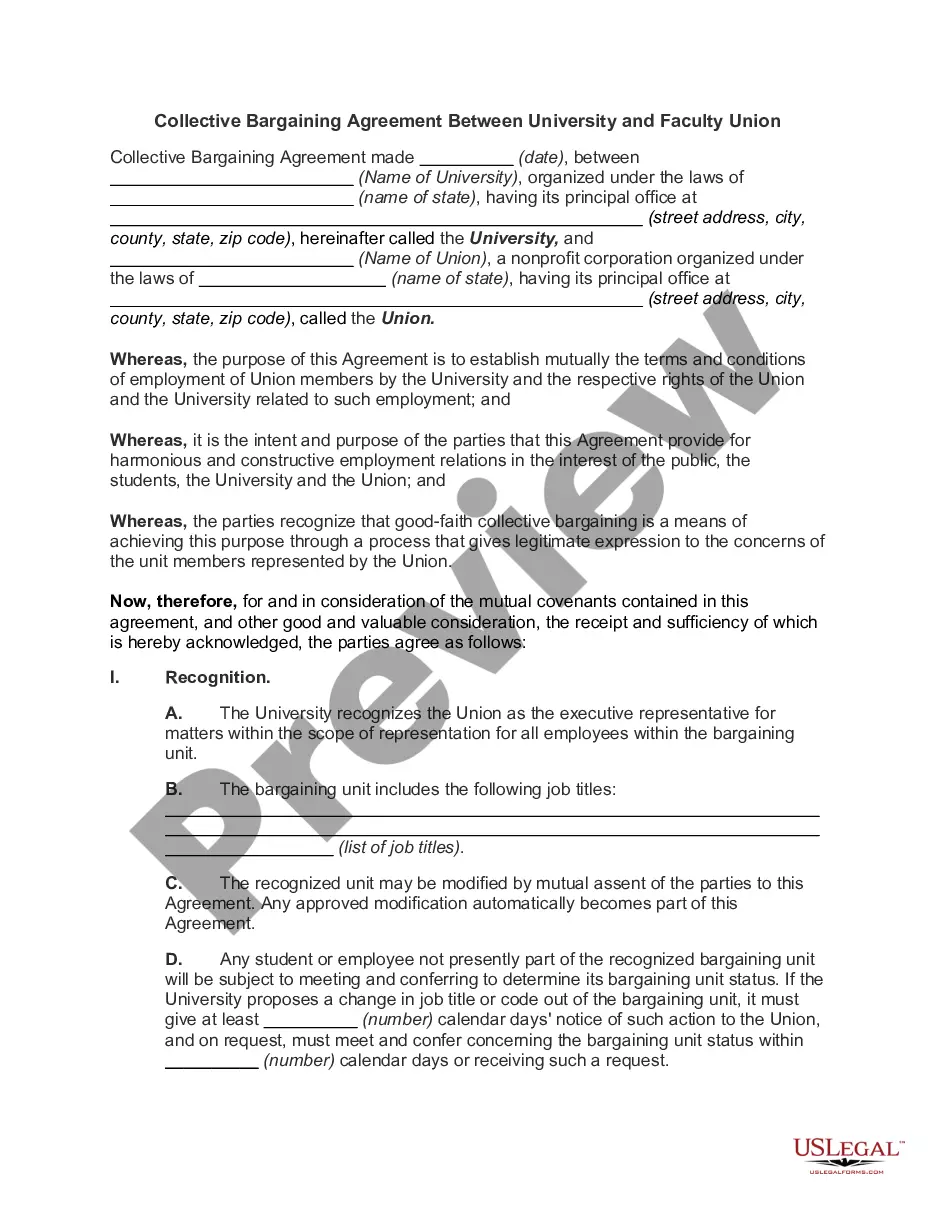
Description
Get your form ready online
Our built-in tools help you complete, sign, share, and store your documents in one place.
Make edits, fill in missing information, and update formatting in US Legal Forms—just like you would in MS Word.
Download a copy, print it, send it by email, or mail it via USPS—whatever works best for your next step.
Sign and collect signatures with our SignNow integration. Send to multiple recipients, set reminders, and more. Go Premium to unlock E-Sign.
If this form requires notarization, complete it online through a secure video call—no need to meet a notary in person or wait for an appointment.
We protect your documents and personal data by following strict security and privacy standards.

Make edits, fill in missing information, and update formatting in US Legal Forms—just like you would in MS Word.

Download a copy, print it, send it by email, or mail it via USPS—whatever works best for your next step.

Sign and collect signatures with our SignNow integration. Send to multiple recipients, set reminders, and more. Go Premium to unlock E-Sign.

If this form requires notarization, complete it online through a secure video call—no need to meet a notary in person or wait for an appointment.

We protect your documents and personal data by following strict security and privacy standards.
Looking for another form?

How to fill out Collective Bargaining Agreement Between School District And Community Teachers' Association?
US Legal Forms - one of the largest collections of legal documents in the United States - provides a broad selection of legal file templates that you can download or print.
By using the website, you can find thousands of forms for business and personal purposes, organized by categories, states, or keywords.
You can locate the latest versions of forms such as the West Virginia Collective Bargaining Agreement Between School District and Community Teachers' Association in moments.
If the form does not fit your requirements, use the Search area at the top of the screen to find one that does.
If you are satisfied with the form, confirm your choice by clicking the Purchase now button. Then, select your preferred pricing plan and provide your details to register for an account.
- If you already have a subscription, Log In to download the West Virginia Collective Bargaining Agreement Between School District and Community Teachers' Association from your US Legal Forms library.
- The Download button will appear on each form you review.
- You have access to all previously acquired forms in the My documents section of your account.
- If you are new to using US Legal Forms, here are straightforward instructions to help you begin.
- Ensure you have selected the correct form for your city/region.
- Review the Review option to confirm the details of the form.
Form popularity
FAQ
Collective bargaining gives educators a voice in their workplace. It helps assure fair wages and benefits, im- proving teacher recruitment and retention. Educators also negotiate better teaching and learning conditions.
Teachers, as with other public employees, do not have the constitutional right to collectively bargain (that is for the states to decide). But the First Amendment does provide that people have the right to "peaceably assemble," which includes the right to join a union (if not as a vehicle for collective bargaining).
Traditional teacher strikes occur when a teachers union and a school district cannot come to an agreement around various work issues through a process known as collective bargaining. Collective bargaining is legal for teachers in 34 states, optional in an additional 10 states, and illegal in seven states.
Those subjects include items like wages, overtime, bonuses, grievance procedures, safety and work practices, and seniority, as well as procedures for discharge, layoff, recall, or discipline.
CBAs commonly set forth provisions regarding wages, vacation time, working hours and conditions, and employee benefits. These provisions are enforced by the labor union to ensure that employees are treated fairly.
Academic collective bargaining includes the unionization of all sectors of the higher education workforcefrom tenure-line faculty to graduate student employees, and from academic professionals to support staff.
There are three main classification of bargaining topics: mandatory, permissive, and illegal. Wages, health and safety, management rights, work conditions, and benefits fall into the mandatory categoryA collective bargaining topic, such as wages, that must be discussed in the agreement.. Permissive topics.
Collective bargaining in education offers an organized and transparent system to improve student learning and the overall environment in public schools, and helps ensure that educators receive a professional level of pay.