West Virginia Mutual Confidential Disclosure Agreement
Description
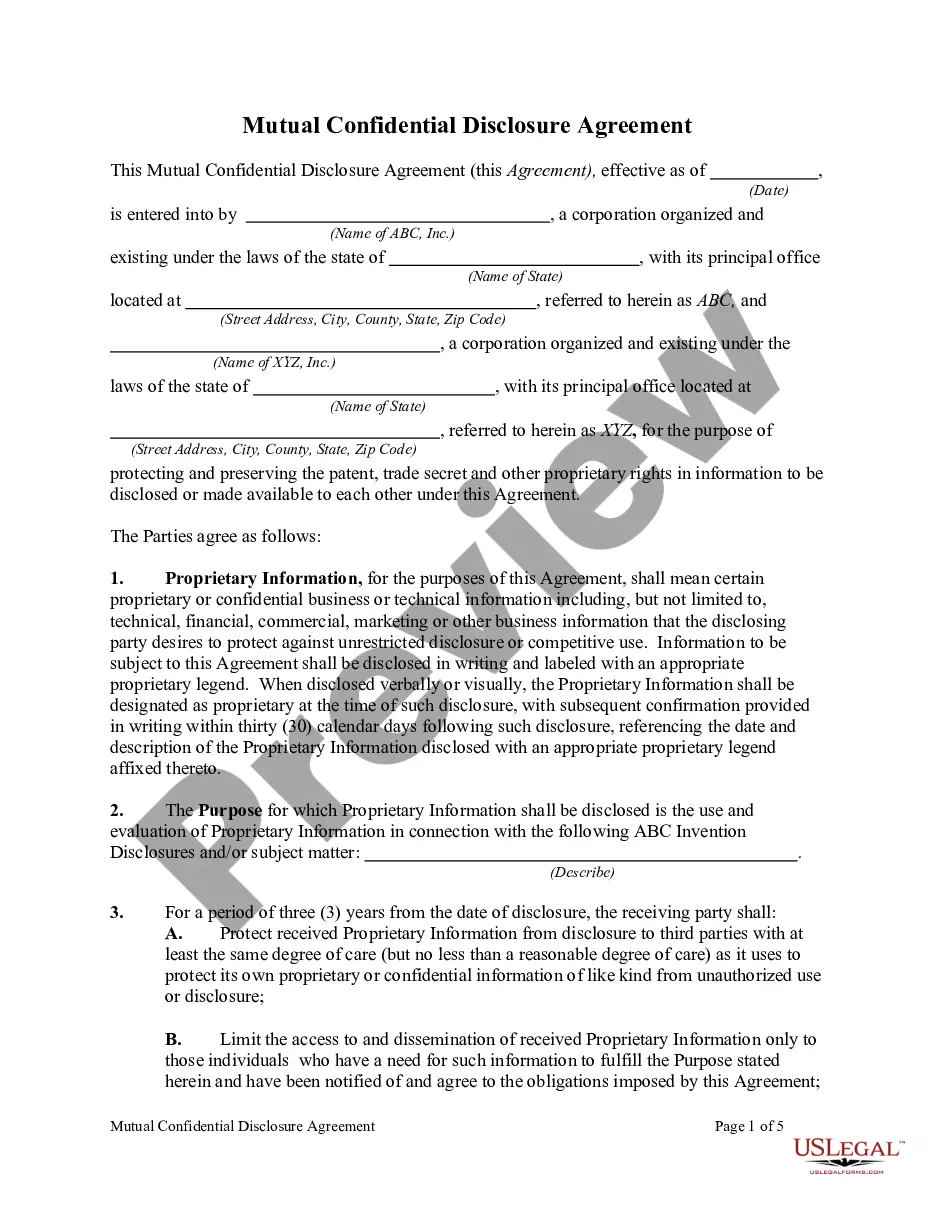
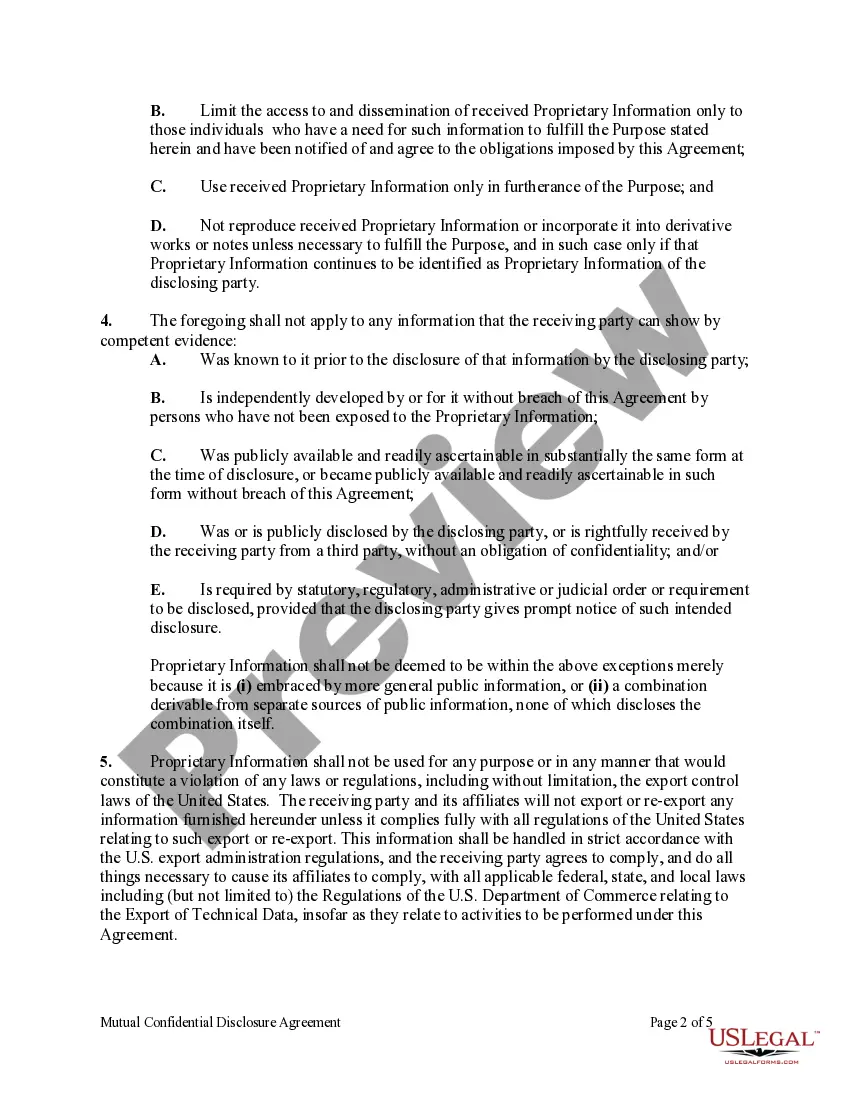
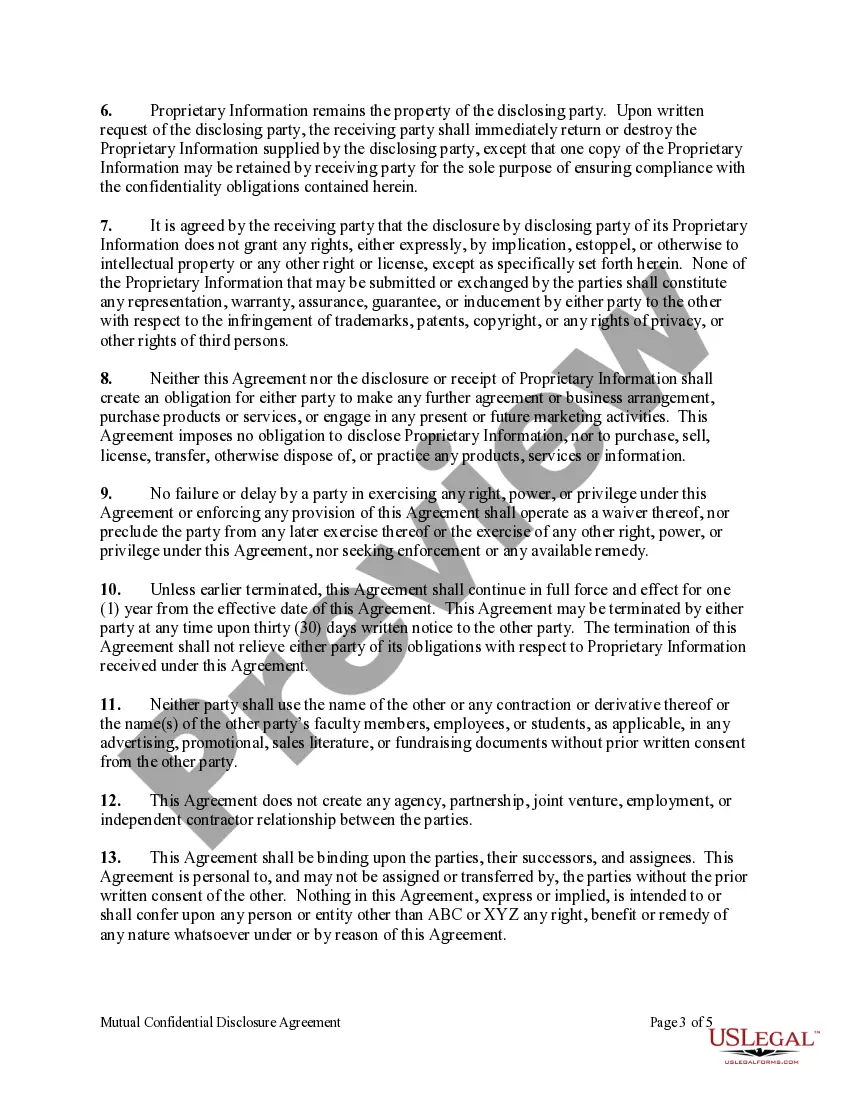
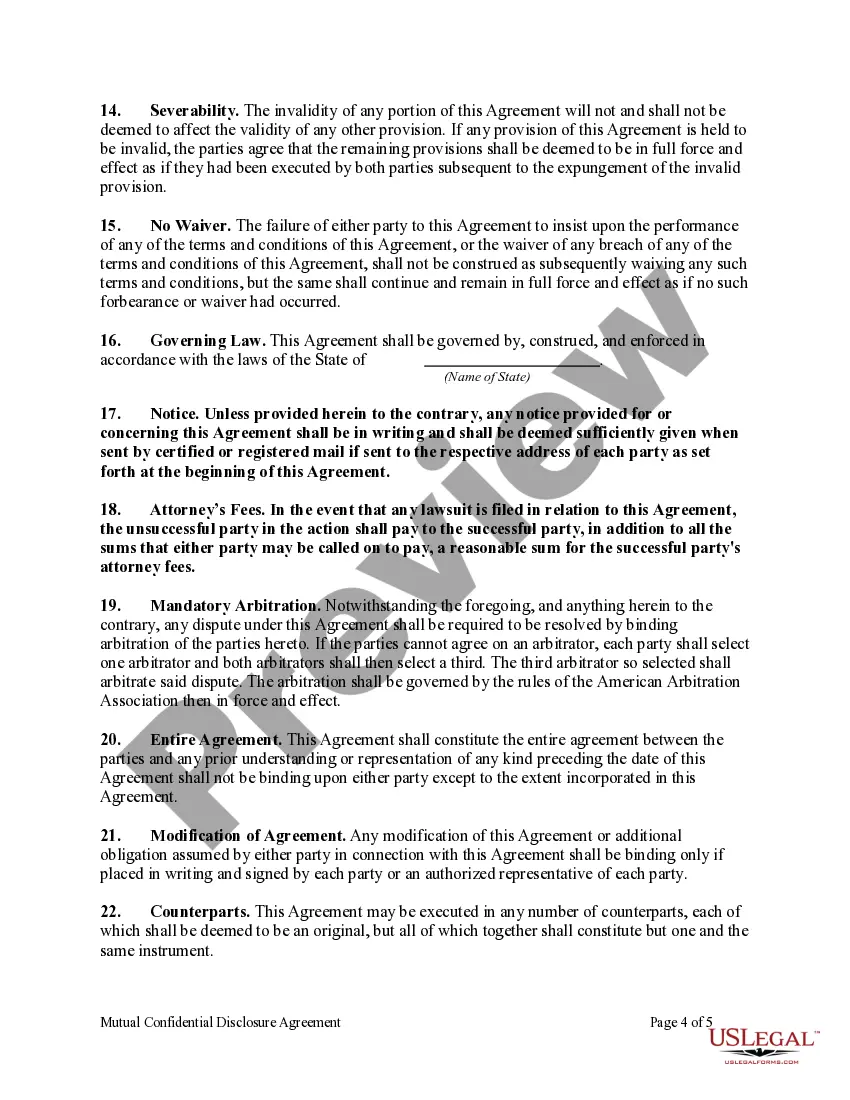
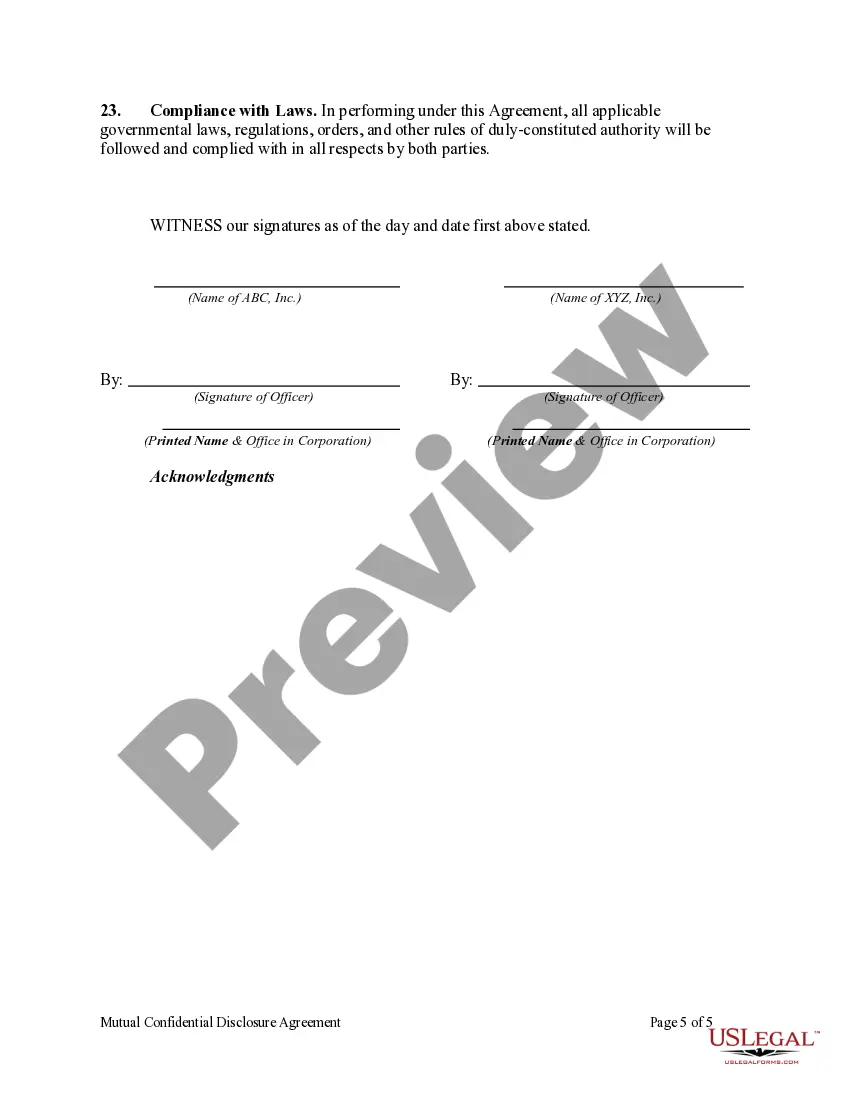
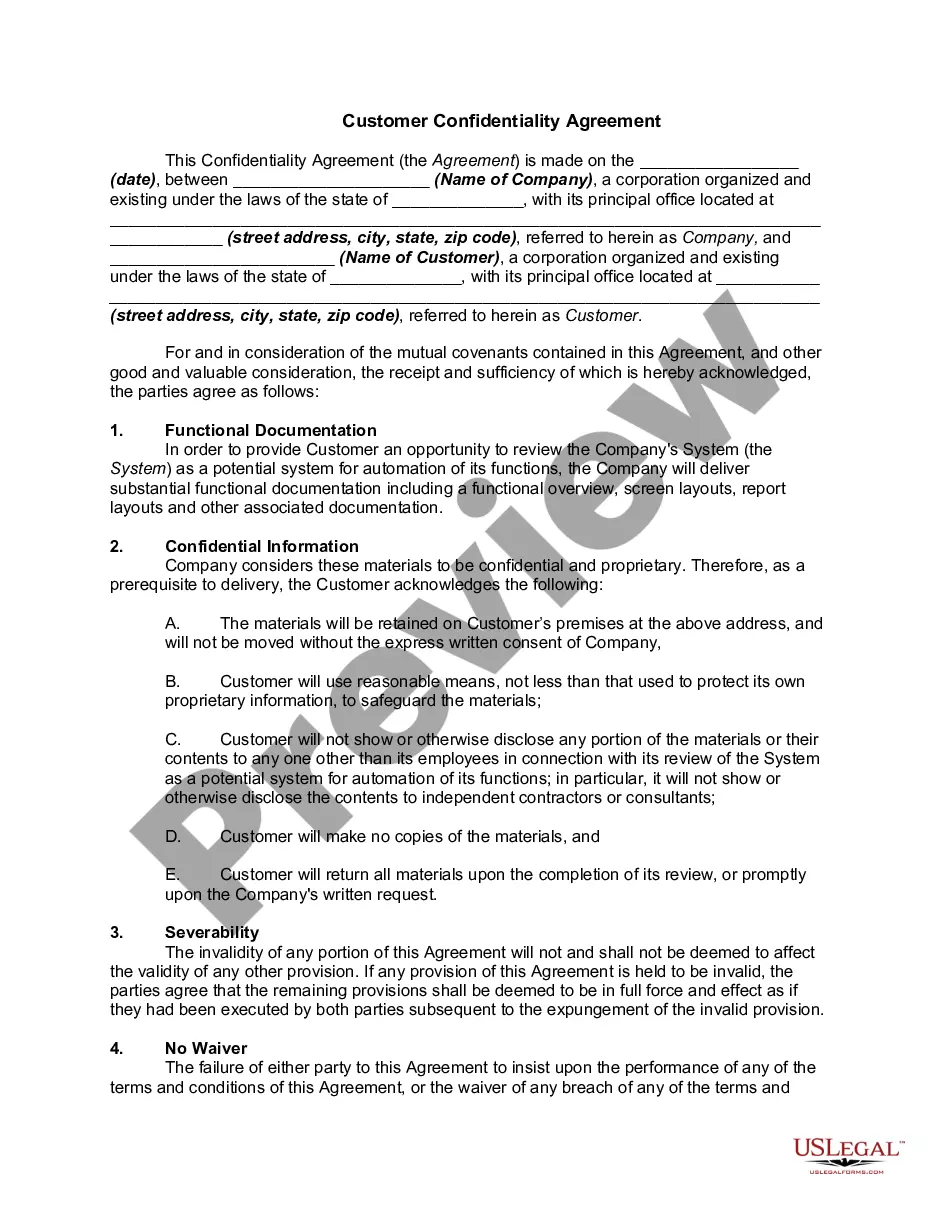
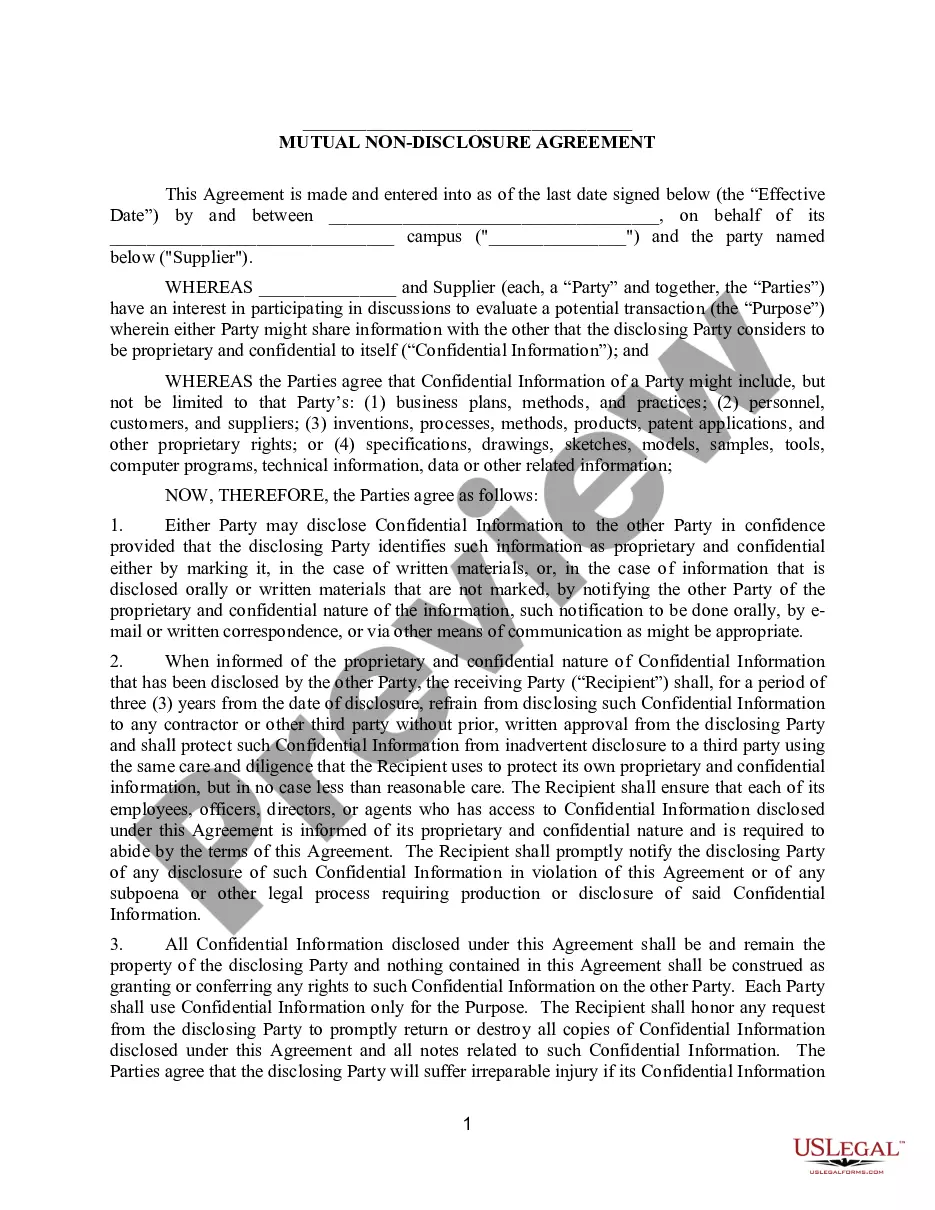
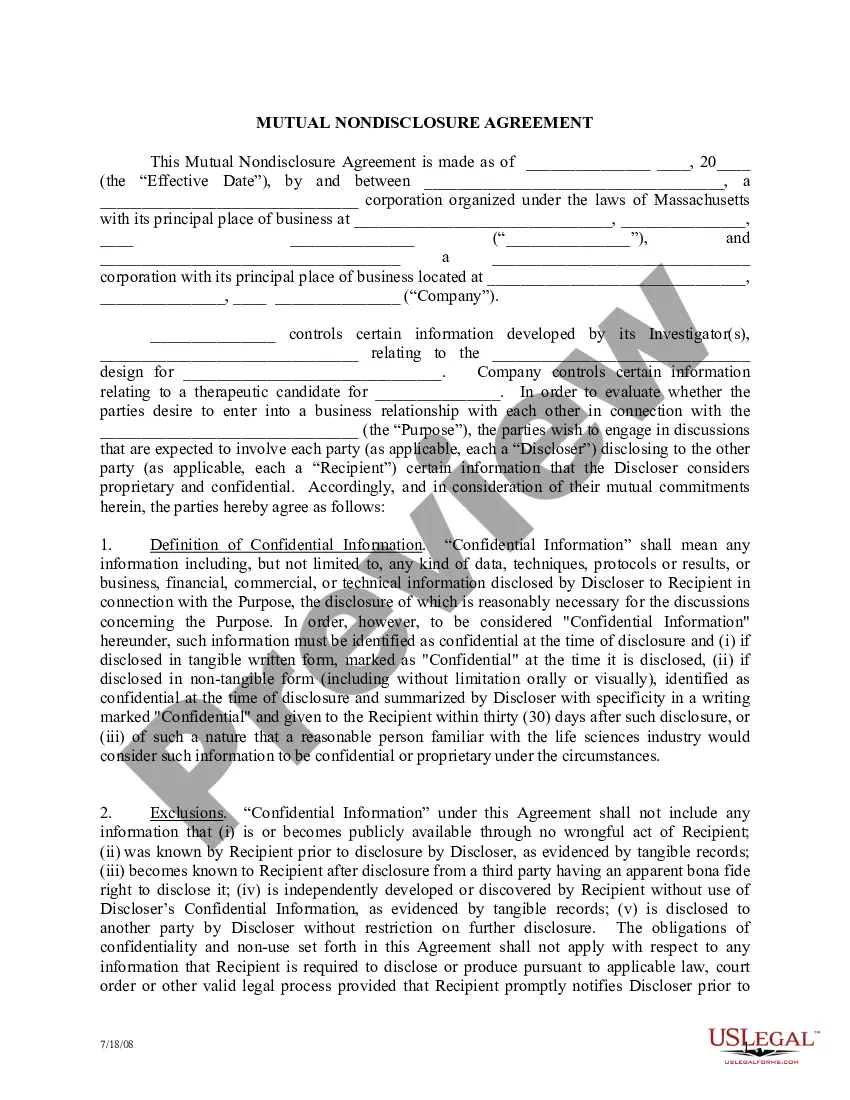
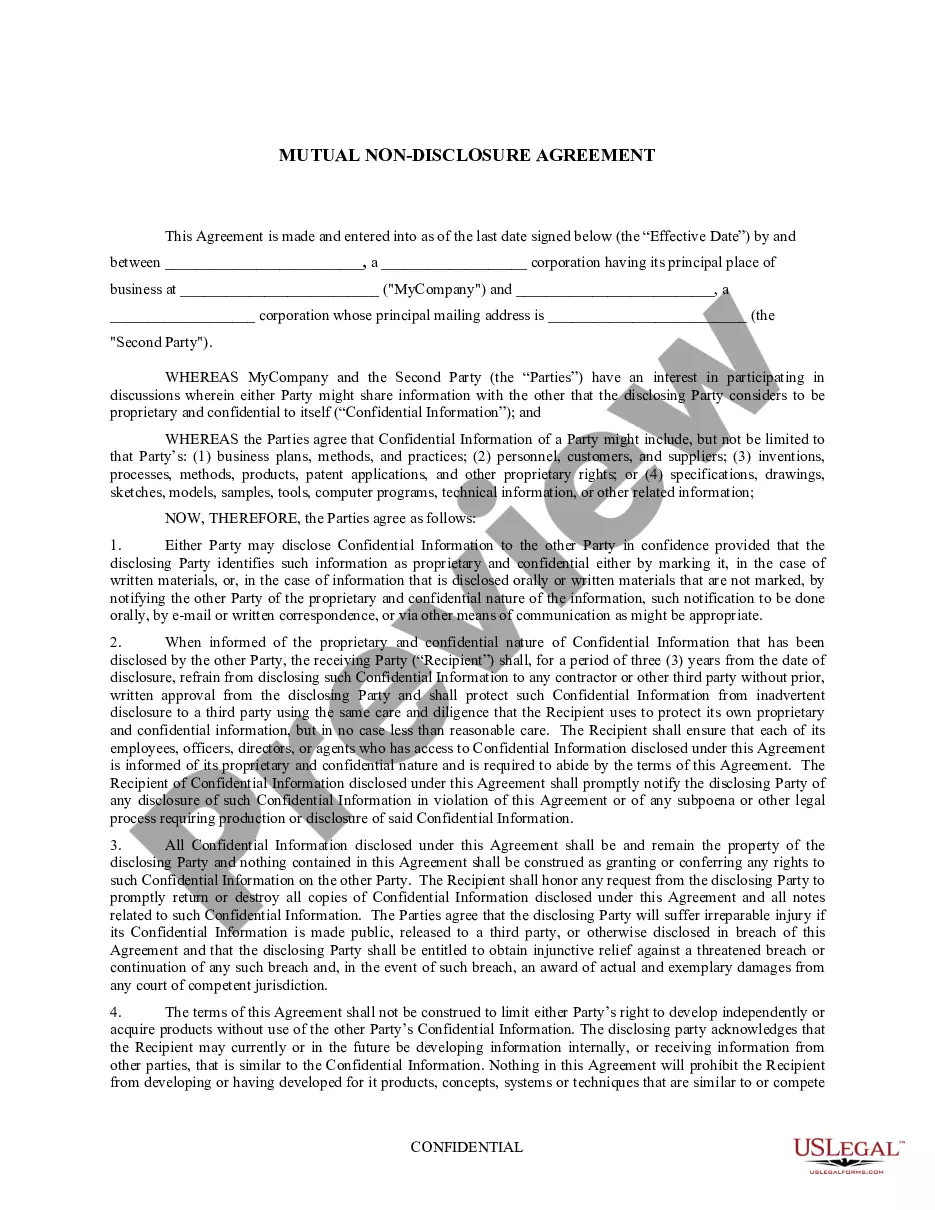
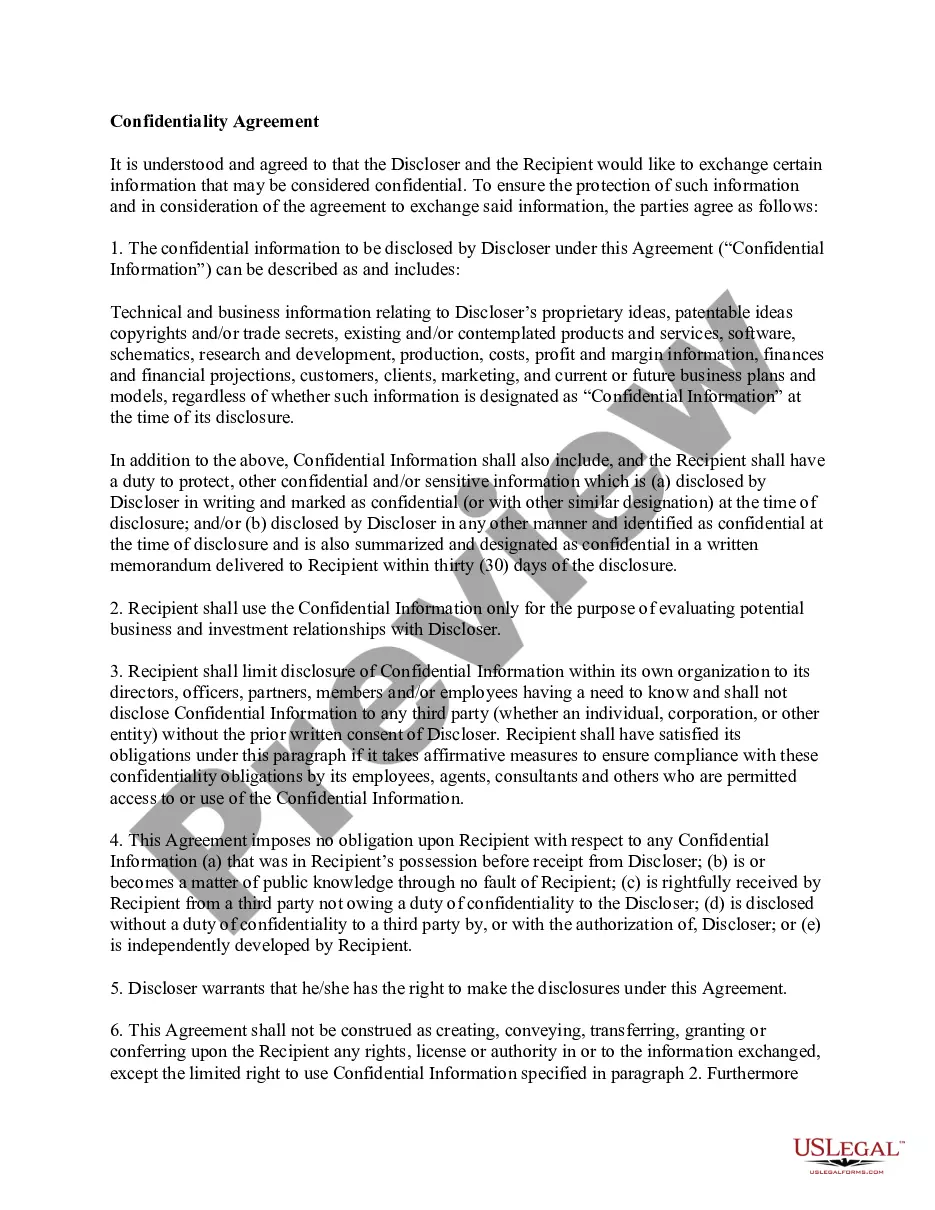

How to fill out Mutual Confidential Disclosure Agreement?
Are you presently situated in an area where you frequently require documents for business or specific reasons? There are numerous authorized document templates available online, but finding reliable versions can be challenging.
US Legal Forms offers a vast collection of form templates, such as the West Virginia Mutual Confidential Disclosure Agreement, which are designed to fulfill state and federal requirements.
If you are already familiar with the US Legal Forms website and possess an account, simply Log In.
You can find all the document templates you have purchased in the My documents section. You may retrieve an additional copy of the West Virginia Mutual Confidential Disclosure Agreement at any time if necessary. Just select the desired form to obtain or print the document template.
Utilize US Legal Forms, the most extensive collection of legal forms, to save time and avoid mistakes. The service offers professionally designed legal document templates that can be utilized for a variety of purposes. Create an account on US Legal Forms and start making your life a little easier.
- Obtain the form you need and ensure it corresponds to the correct city/region.
- Utilize the Review button to examine the form.
- Read the description to confirm you have chosen the correct form.
- If the form is not what you require, use the Search field to find the template that suits your needs.
- Once you have the right form, click Get now.
- Select the payment plan you desire, fill in the required information to create your account, and pay for your order using PayPal or a credit card.
- Choose a convenient file format and obtain your copy.
Form popularity
FAQ
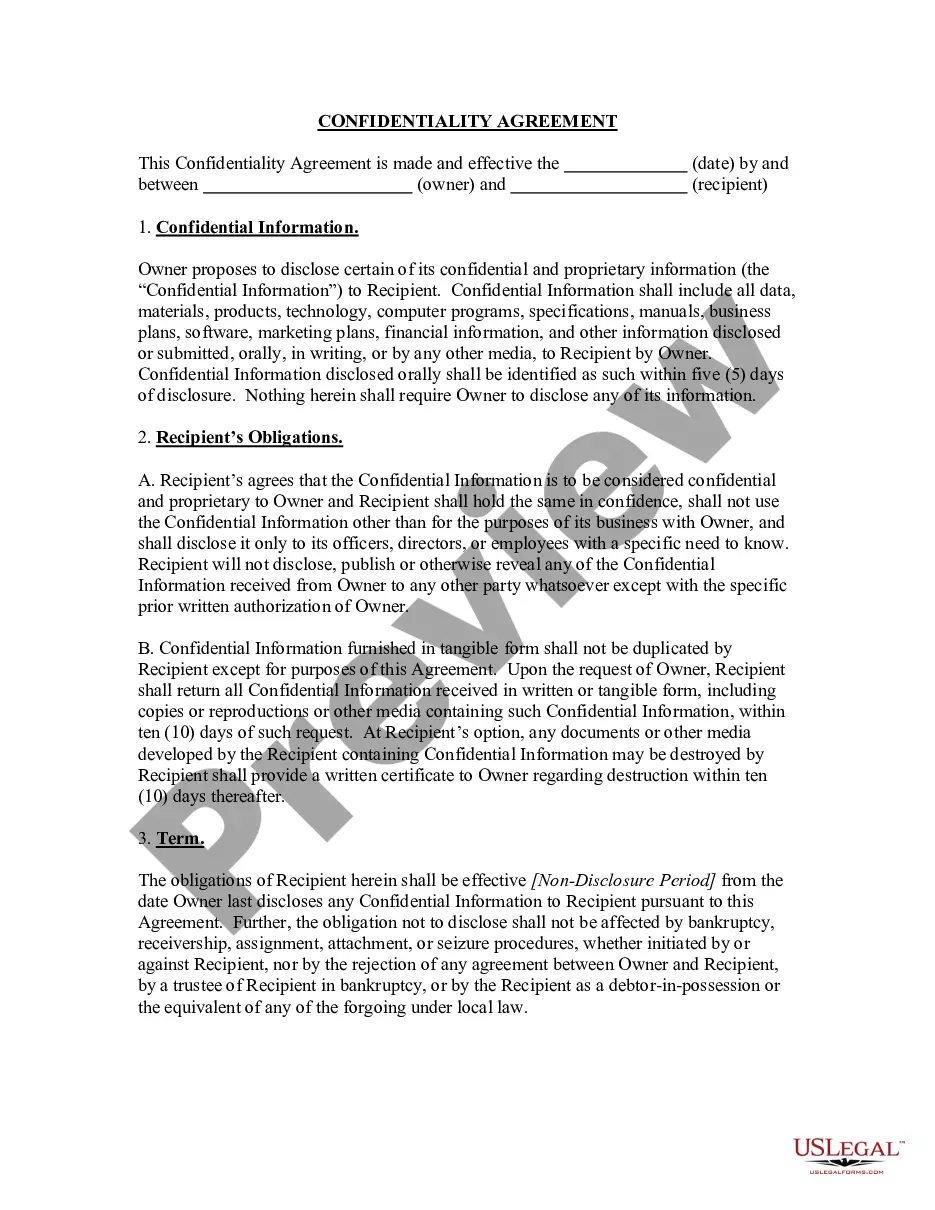
The primary difference between an NDA and an MNDA lies in the level of protection they offer. An NDA typically protects only one party's confidential information, while an MNDA provides mutual protection for both sides. When entering negotiations, you should consider a West Virginia Mutual Confidential Disclosure Agreement to ensure that both parties' sensitive data is secure and legally protected.
The three main types of Non-Disclosure Agreements are unilateral, bilateral, and multilateral. A unilateral NDA protects one party's information, while a bilateral NDA involves mutual protection for both parties' secrets. On the other hand, a multilateral NDA involves three or more parties. When drafting a West Virginia Mutual Confidential Disclosure Agreement, choosing the right type of NDA ensures your confidential information remains safeguarded.
West Virginia does not classify as a non-disclosure state in the context of the legal enforceability of NDAs. However, NDAs, including the West Virginia Mutual Confidential Disclosure Agreement, are legally valid and can protect sensitive information shared between parties. Therefore, it's crucial to tailor your agreement to comply with West Virginia state laws to maximize its effectiveness.
MNDA stands for Mutual Non-Disclosure Agreement, which is a specific type of NDA where both parties agree to protect each other's confidential information. This agreement is often used in business negotiations to ensure that sensitive information does not get disclosed to outside parties. If you are considering a West Virginia Mutual Confidential Disclosure Agreement, it's essential to clarify whether a mutual arrangement is needed for your situation.
No, a Master Service Agreement (MSA) is not the same as a Non-Disclosure Agreement (NDA). An MSA outlines the terms of a business relationship, while an NDA focuses on protecting confidential information. When entering into a West Virginia Mutual Confidential Disclosure Agreement, you need to clearly define the specifics of what information is protected to avoid confusion with agreements like MSAs.
One disadvantage of a Non-Disclosure Agreement (NDA) is that it may limit your ability to share information freely, which can hinder collaboration. Additionally, if you violate the NDA, you could face legal consequences, including potential financial penalties. Thus, when considering a West Virginia Mutual Confidential Disclosure Agreement, it is vital to understand the limitations it may impose on your communications.
Filling out a mutual non-disclosure agreement requires detailing both parties' obligations to protect each other's confidential information. Begin by identifying the parties and include the definitions of what constitutes confidential information. Ensure that the agreement outlines the terms of use and restrictions for shared information. For assistance, US Legal Forms provides a streamlined West Virginia Mutual Confidential Disclosure Agreement template that simplifies this process.
To fill out a Non-Disclosure Agreement (NDA), start by clearly outlining the parties involved. Next, specify the confidential information that is being protected under the agreement. Make sure to include the purpose of sharing this information and the duration of the confidentiality obligation. For a thorough and legally sound approach, consider using the West Virginia Mutual Confidential Disclosure Agreement available on the US Legal Forms platform.
To write a confidential agreement, follow a clear structure that includes introductions, definitions, obligations, and duration of confidentiality. Incorporate essential components such as what information is considered confidential and any exclusions. Utilizing resources like USLegalForms can simplify the drafting process, providing you with templates and legal guidance specific to the West Virginia Mutual Confidential Disclosure Agreement.
Creating a Non-Disclosure Agreement (NDA) requires careful consideration of the parties' needs, especially when drafting a West Virginia Mutual Confidential Disclosure Agreement. Start by defining the confidential information, specifying the obligations of both parties, and including the duration of confidentiality. You can streamline this process using platforms like USLegalForms, which provide templates and guidelines tailored to your requirements.