Vermont Brood Mare Lease Agreement
About this form
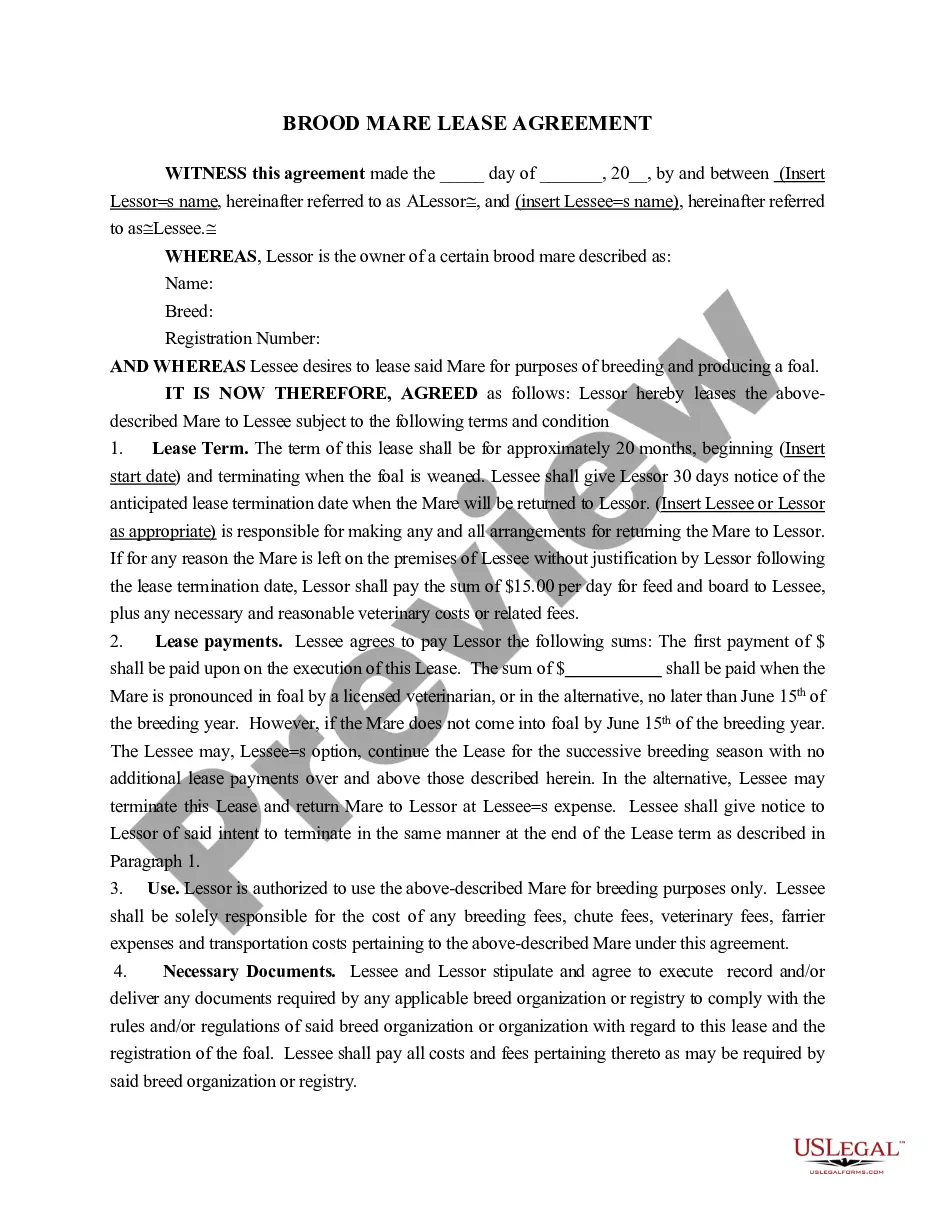
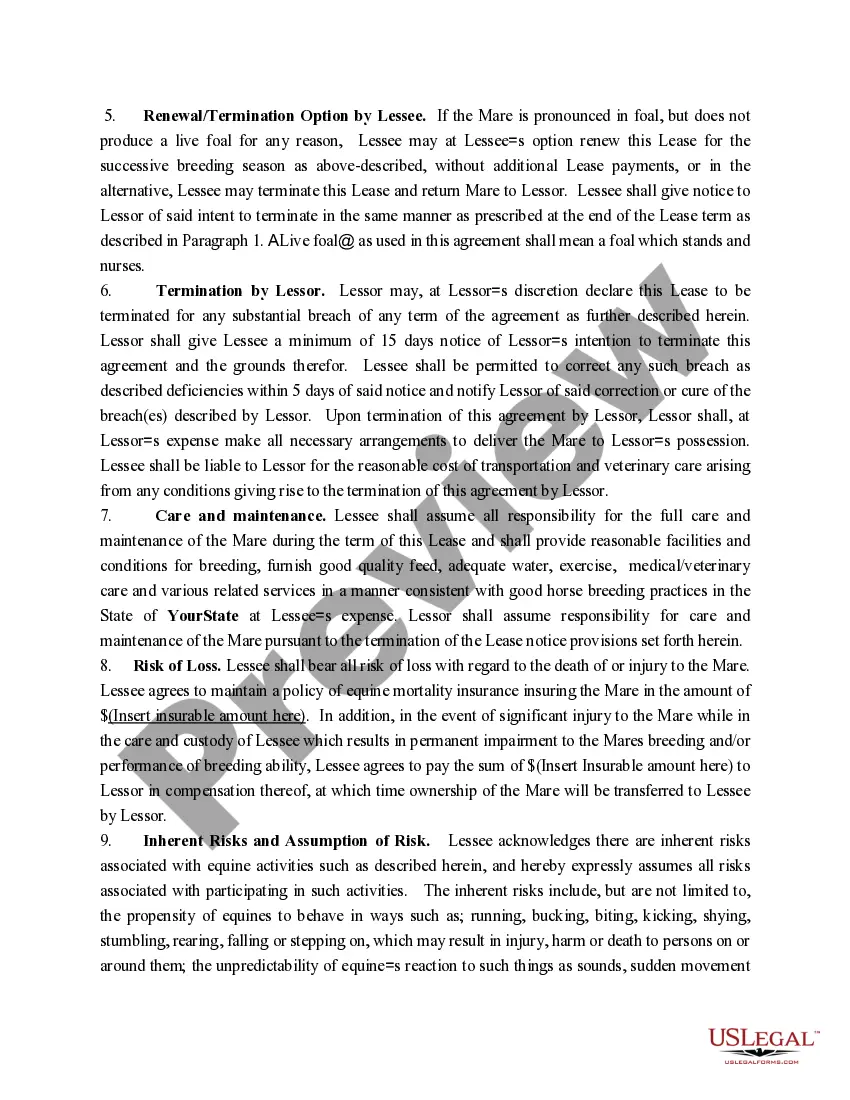
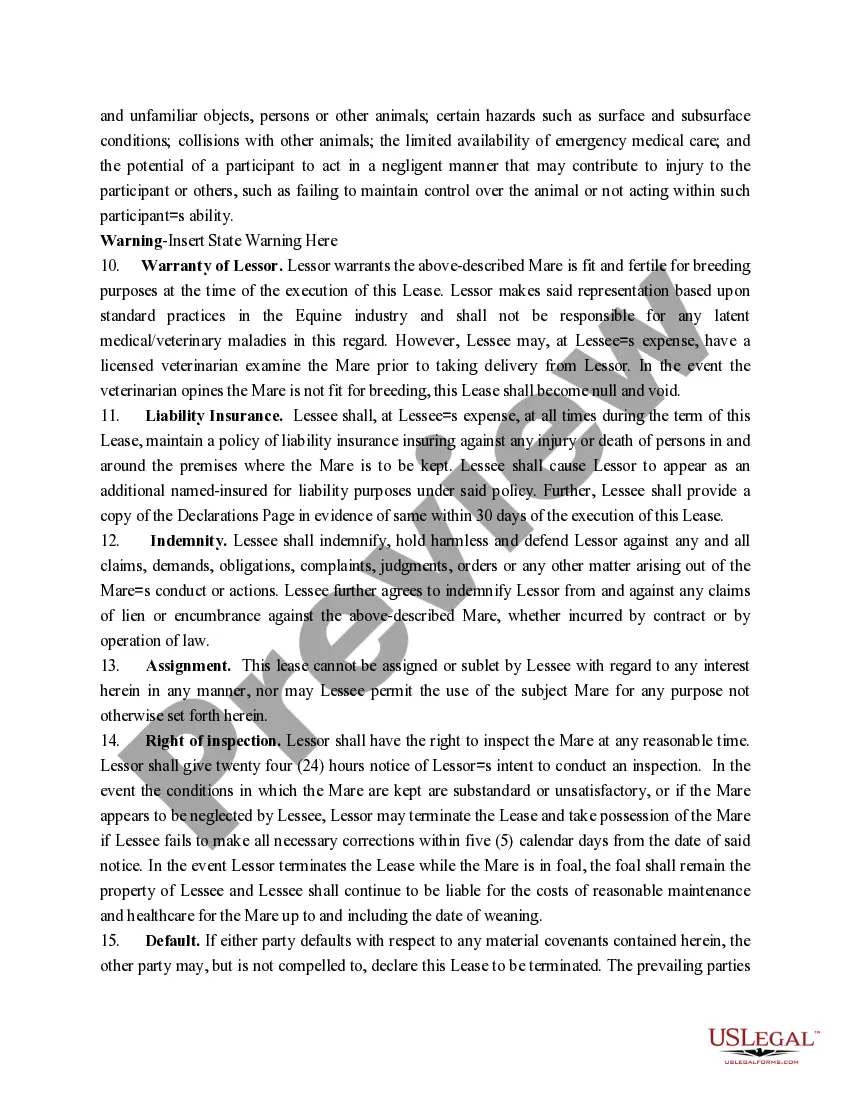
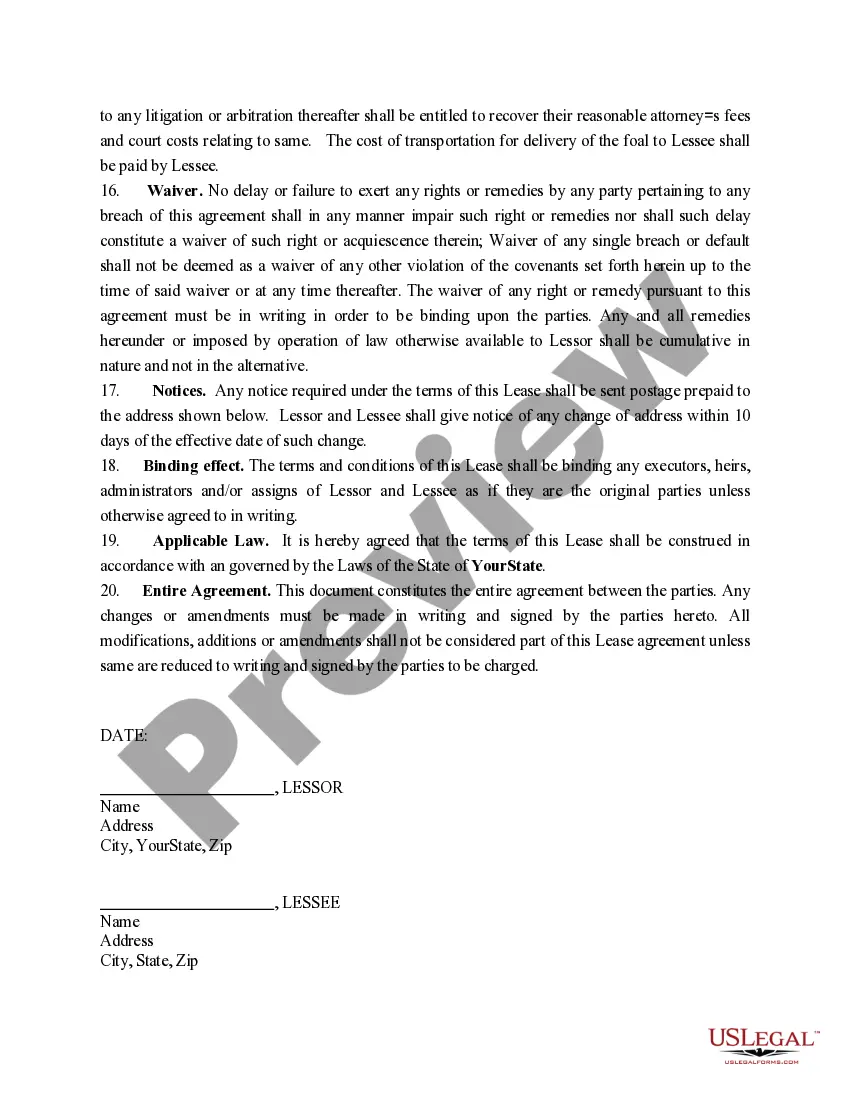
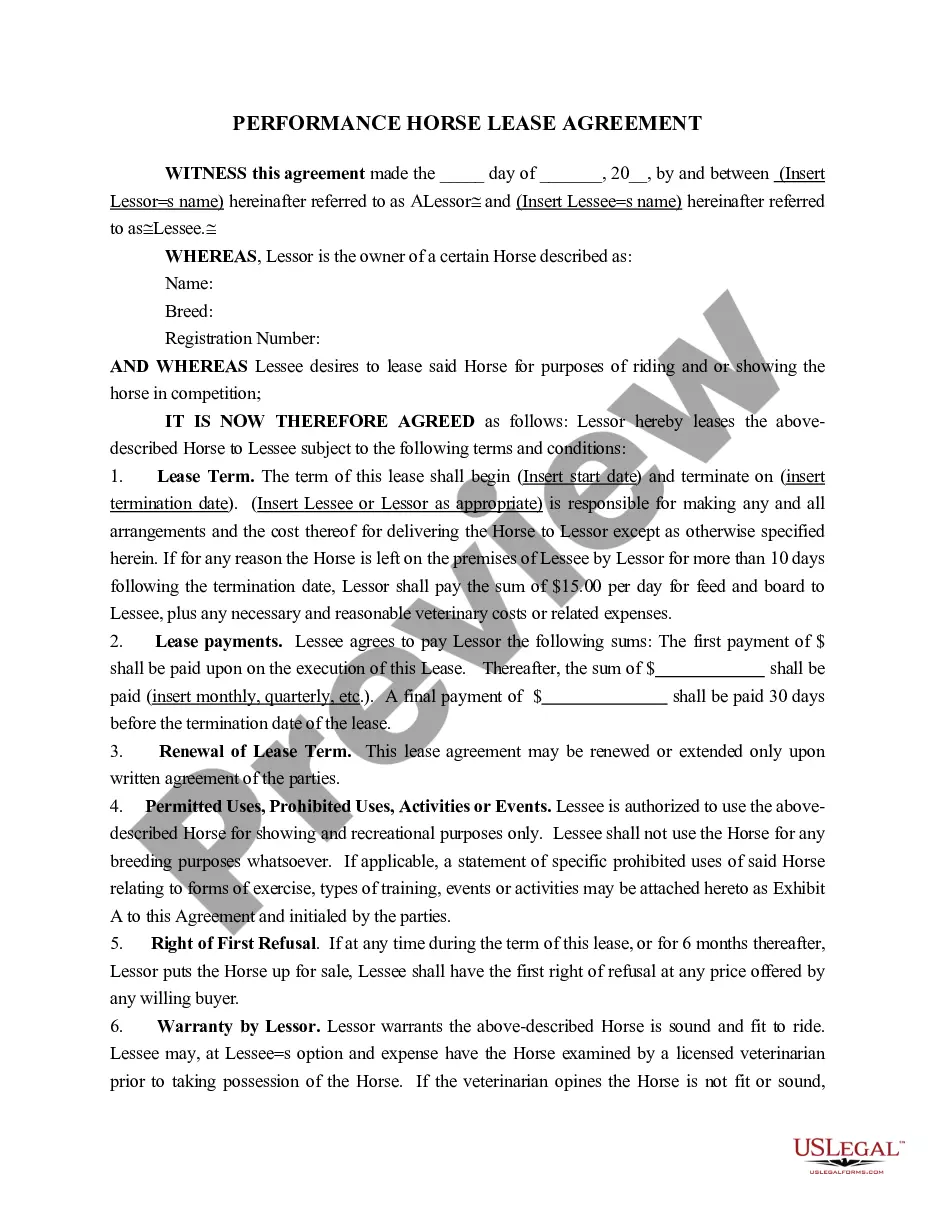
The Vermont Brood Mare Lease Agreement is a legal document that facilitates the leasing of a brood mare for breeding purposes. Unlike performance lease agreements focused on riding or showing, this lease specifically outlines the terms for breeding and producing a foal. The form includes essential provisions regarding lease payments, care responsibilities, and legal obligations between the lessor and lessee.
Key parts of this document
- Lease term: Specifies the duration of the lease, typically around 20 months.
- Use clause: Authorizes the mare's use solely for breeding purposes.
- Cost responsibilities: Outlines which costs (breeding fees, veterinary expenses, etc.) are borne by the lessee.
- Termination notice: Requires the lessee to notify the lessor of the anticipated return of the mare.
- Document compliance: Stipulates the execution of documents required by breed organizations for registration.
- Assignment clause: Prohibits assigning or subletting the lease without consent.

When this form is needed
This form is useful when an individual (lessee) wishes to lease a brood mare for breeding purposes from another owner (lessor). It is applicable when the lessee intends to produce a foal and requires clear guidelines on care, use, and financial responsibilities during the lease period.
Intended users of this form
- Horse owners looking to lease their brood mares for breeding.
- Individuals or organizations seeking to utilize a brood mare for breeding without full ownership.
- Those involved in equine breeding programs that require formal agreements.
Instructions for completing this form
- Identify the parties: Enter the names and addresses of both the lessor and lessee.
- Specify the mare: Complete the details of the mare being leased, including breed and registration number.
- Set the lease term: Insert the start date and ensure it reflects the duration until the foal is weaned.
- Outline responsibilities: Detail which party is responsible for various costs associated with the mare.
- Sign and date: Both parties must sign and date the agreement to make it legally binding.
Does this form need to be notarized?
Notarization is not commonly needed for this form. However, certain documents or local rules may make it necessary. Our notarization service, powered by Notarize, allows you to finalize it securely online anytime, day or night.
Get your form ready online
Our built-in tools help you complete, sign, share, and store your documents in one place.
Make edits, fill in missing information, and update formatting in US Legal Forms—just like you would in MS Word.
Download a copy, print it, send it by email, or mail it via USPS—whatever works best for your next step.
Sign and collect signatures with our SignNow integration. Send to multiple recipients, set reminders, and more. Go Premium to unlock E-Sign.
If this form requires notarization, complete it online through a secure video call—no need to meet a notary in person or wait for an appointment.
We protect your documents and personal data by following strict security and privacy standards.

Make edits, fill in missing information, and update formatting in US Legal Forms—just like you would in MS Word.

Download a copy, print it, send it by email, or mail it via USPS—whatever works best for your next step.

Sign and collect signatures with our SignNow integration. Send to multiple recipients, set reminders, and more. Go Premium to unlock E-Sign.

If this form requires notarization, complete it online through a secure video call—no need to meet a notary in person or wait for an appointment.

We protect your documents and personal data by following strict security and privacy standards.
Common mistakes
- Failing to clearly define the lease term can lead to disputes.
- Not specifying financial responsibilities for breeding-related costs.
- Neglecting to provide proper identification of the mare.
- Omitting a notice period for lease termination.
Advantages of online completion
- Convenient access: Download the form anytime, anywhere.
- Editability: Customize fields directly to suit your specific leasing arrangement.
- Reliability: Assurance that the form has been drafted by licensed attorneys adhering to legal standards.
What to keep in mind
- The Vermont Brood Mare Lease Agreement is essential for leasing mares for breeding.
- It clearly outlines responsibilities and terms to protect both parties.
- Ensure accurate completion of all relevant details to avoid future disputes.
Looking for another form?

Form popularity
FAQ
Vermont state law requires that before ending a tenancy a tenant must give the landlord notice in writing at least one full rental payment period prior to the move-out date, if there is no written rental agreement to the contrary.
As long as the contract spells out specific details and both parties have signed that they agree to the contract's terms, a handwritten contract is legally binding and enforceable in court.
Collect each party's information. Include specifics about your property. Consider all of the property's utilities and services. Know the terms of your lease. Set the monthly rent amount and due date. Calculate any additional fees. Determine a payment method. Consider your rights and obligations.
A lease can be written or verbal, but a verbal lease can be very difficult to enforce.Most leases are fairly standard and cover basic components such as rent amount, duration of lease term, resposiblities of each party and penalties for not following the terms.
The Lease Must be in Writing It does not matter if the lease is handwritten or typed.
A written agreement can act as a roadmap for the landlord-tenant relationship, especially if a dispute arises. Also, real estate (land) leases for more than one year must be in writing. If a lease for over one year is not in writing, it will generally not be enforceable in court.
The lease becomes legally binding when all parties have signed: the landlord and all tenants living in the unit who are 18 and older. If you're worried about situations where a lease needs to end early, learn about breaking a lease and grounds for eviction.
TENANTS CAN BE EVICTED THROUGH A LEGAL COURT PROCCESS AT ANY TIME OF THE YEAR. THERE IS NO PROHIBITION ON WINTER EVICTIONS. BASIC RESPONSIBILITIES OF TENANTS UNDER VERMONT LAW 2022 Pay rent on time.
In an eviction process for nonpayment of rent the landlord must begin by providing the tenant with a written termination notice giving the tenant at least 14 days to pay in full or to leave. The notice must specifically state how much rent is due.