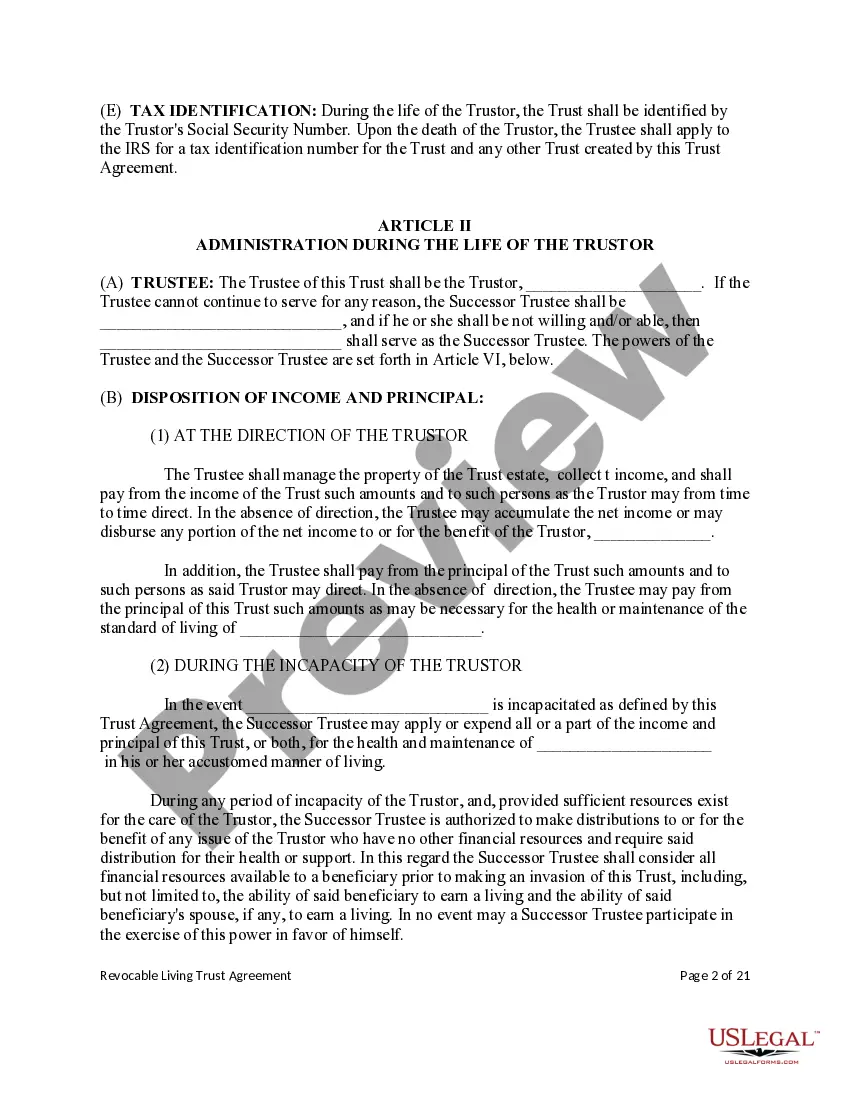
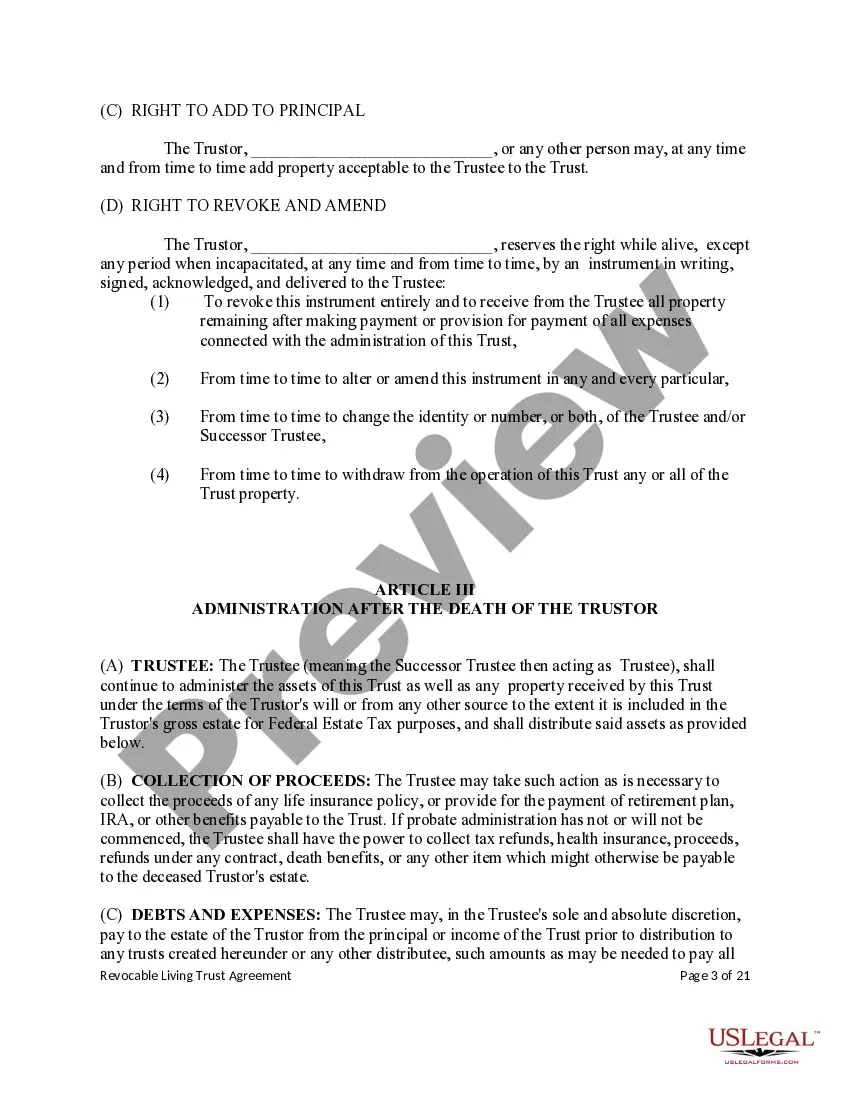
West Virginia Revocable Living Trust for Pets
Description
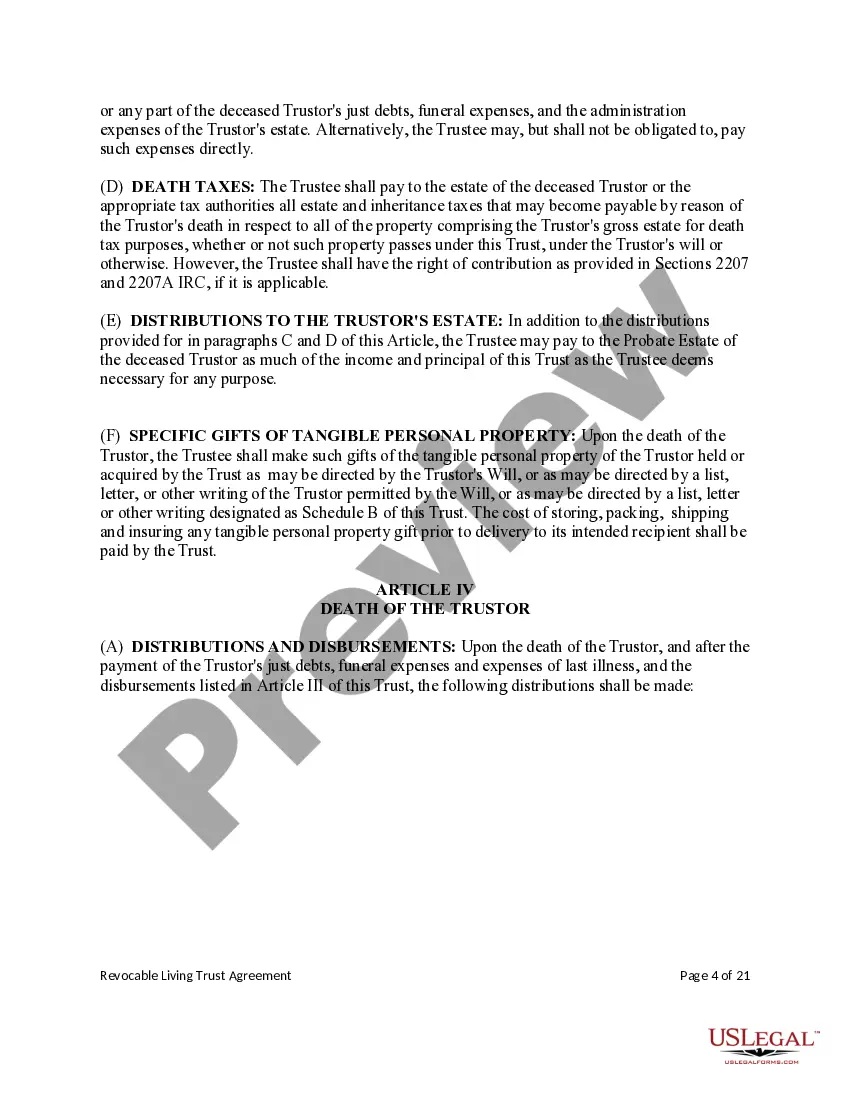
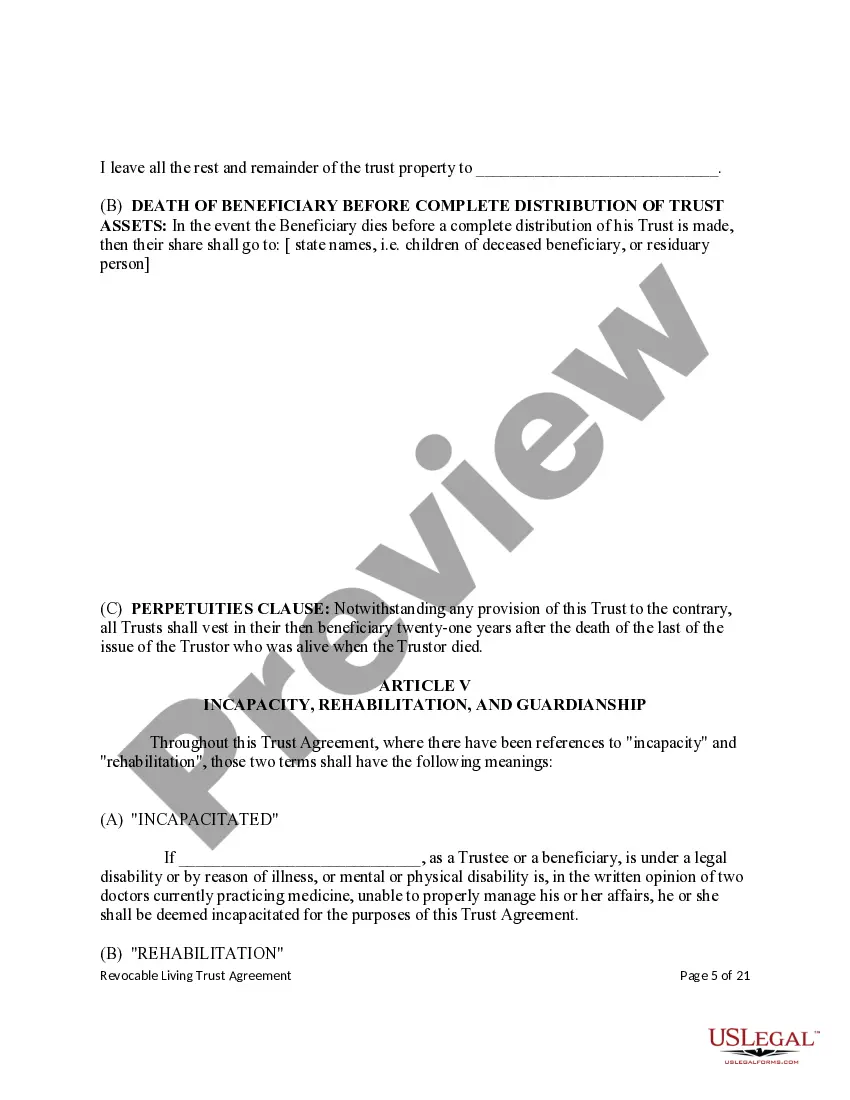
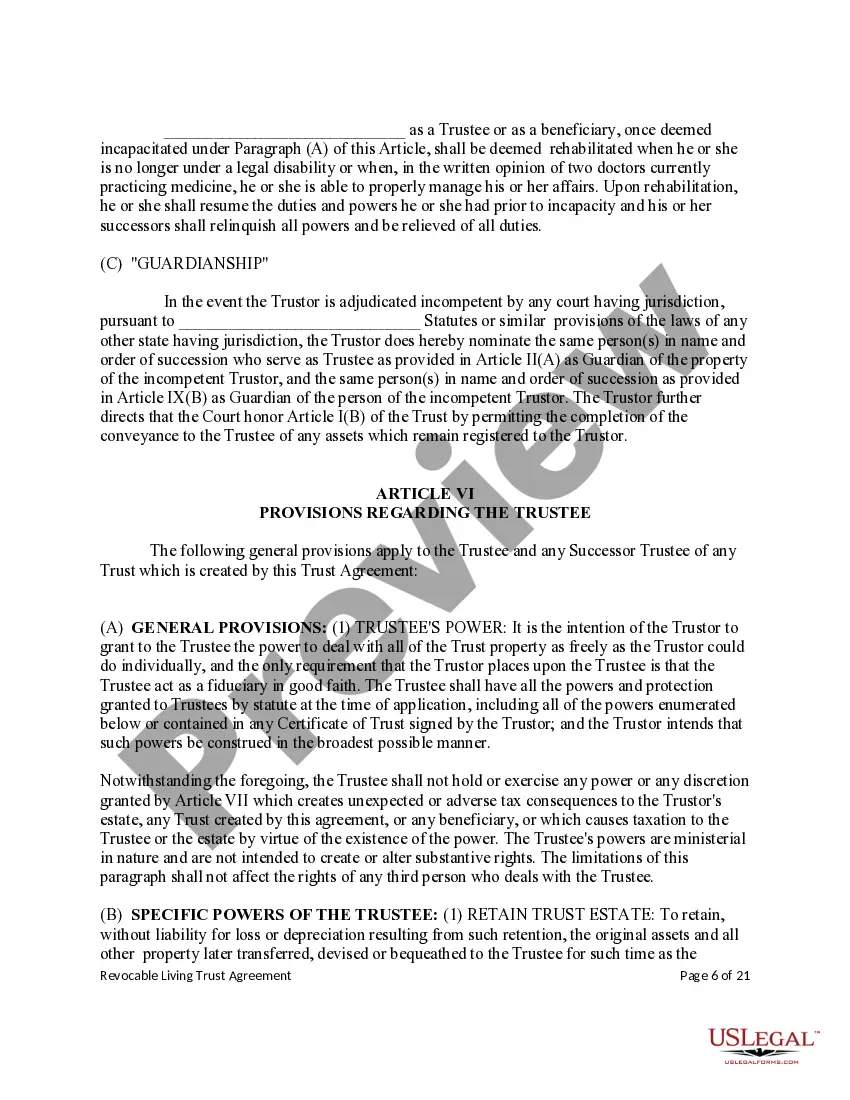
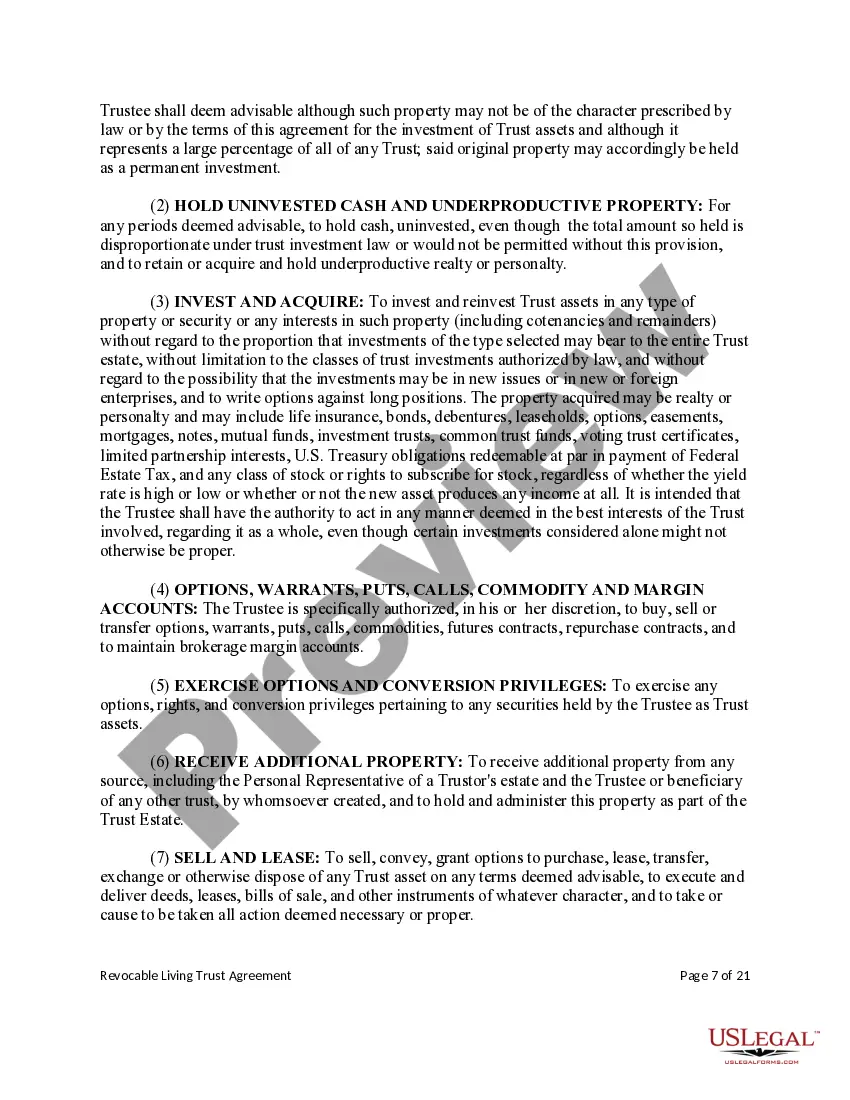
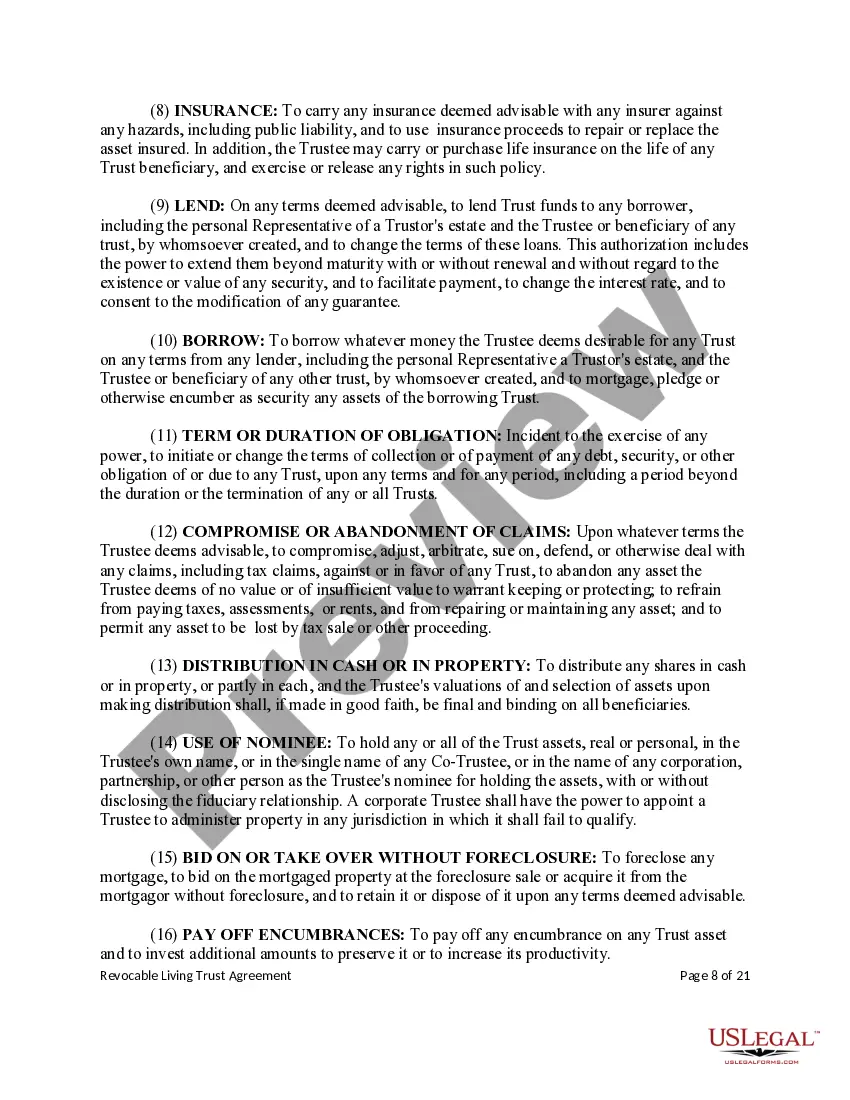
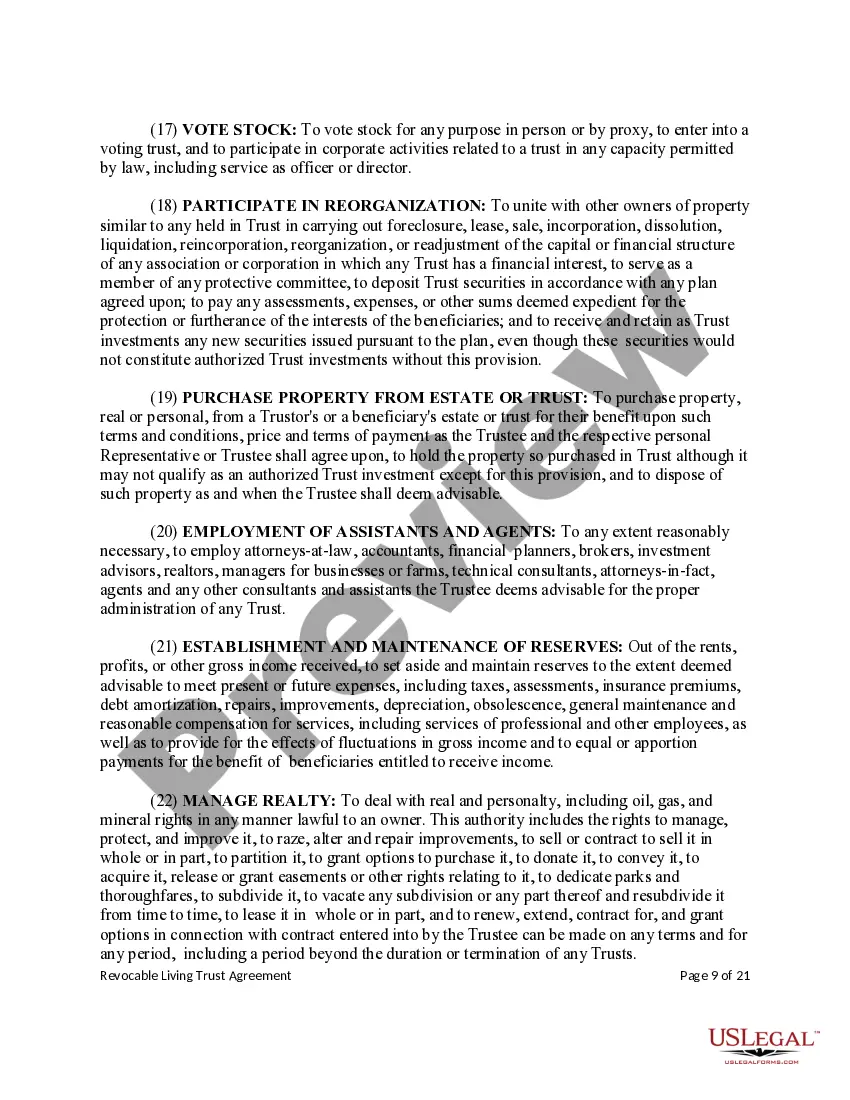
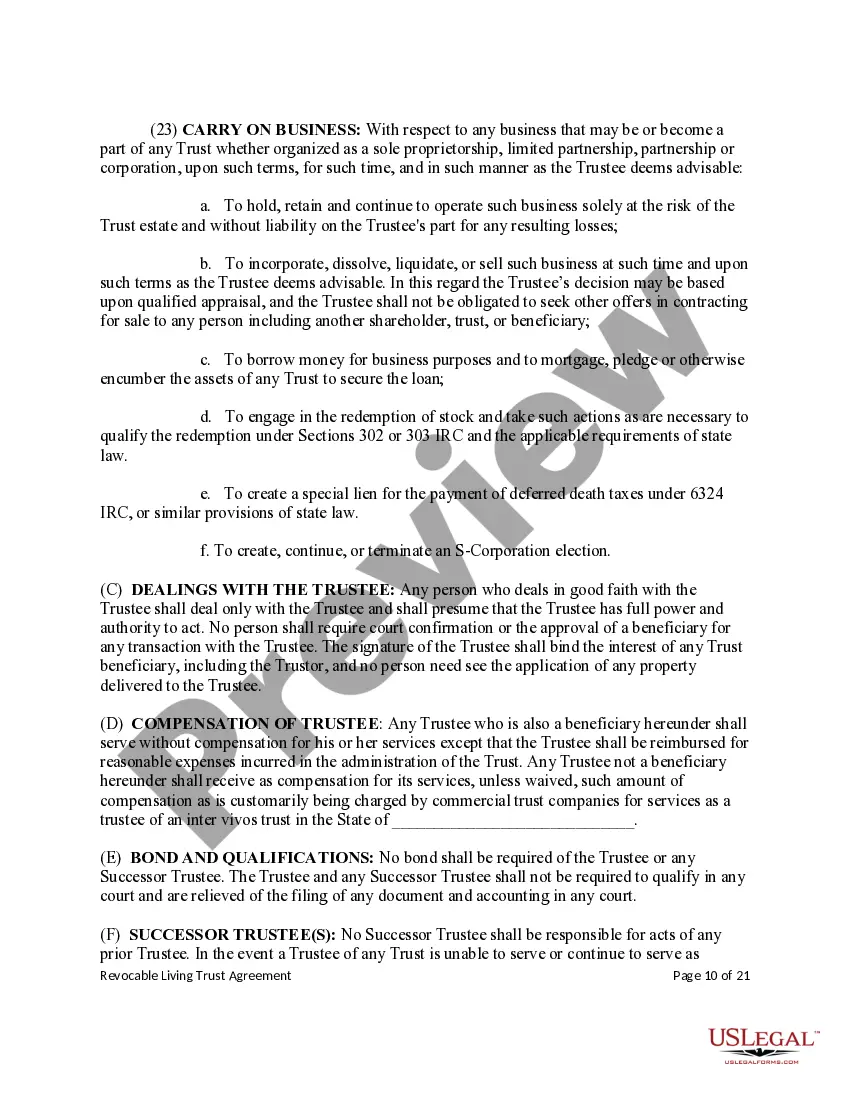

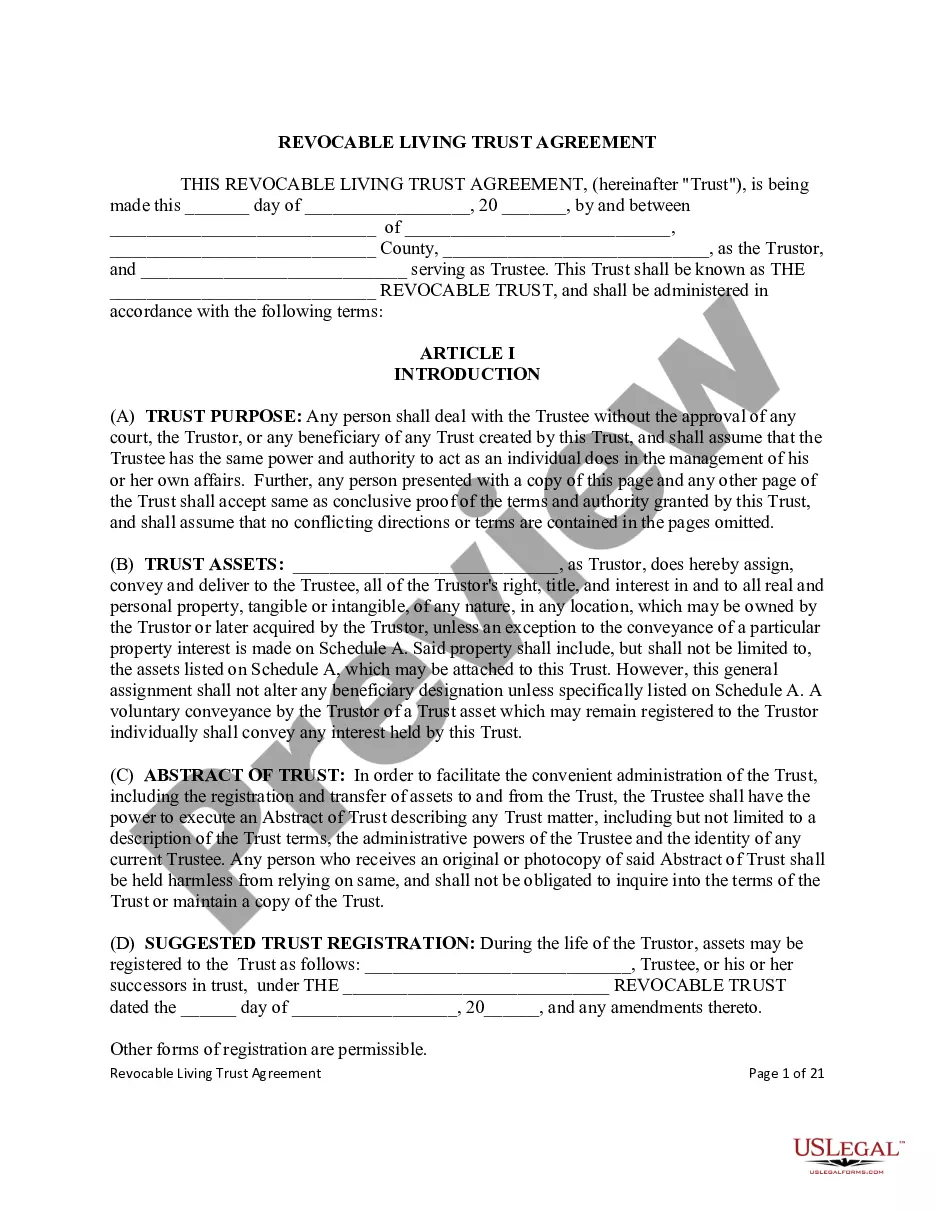
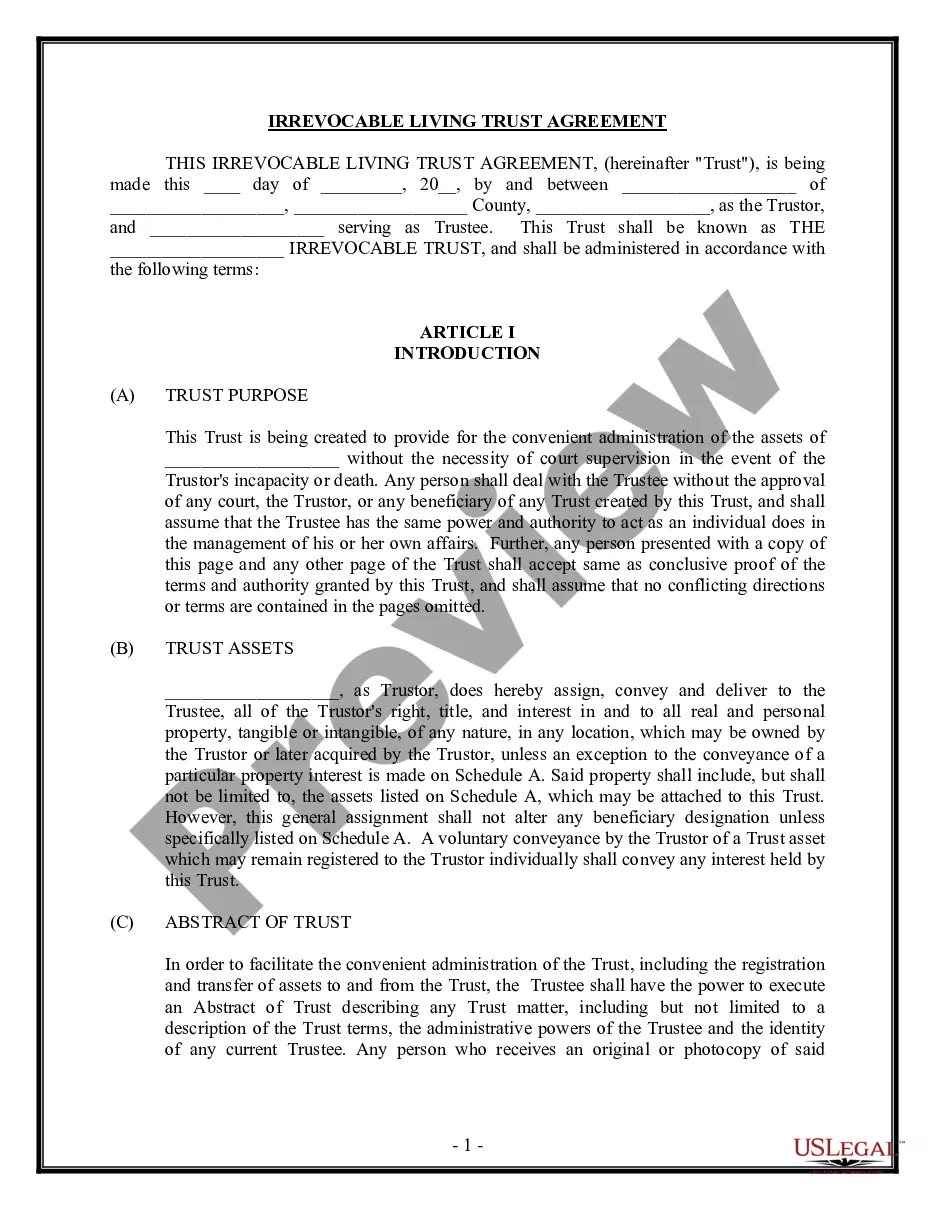
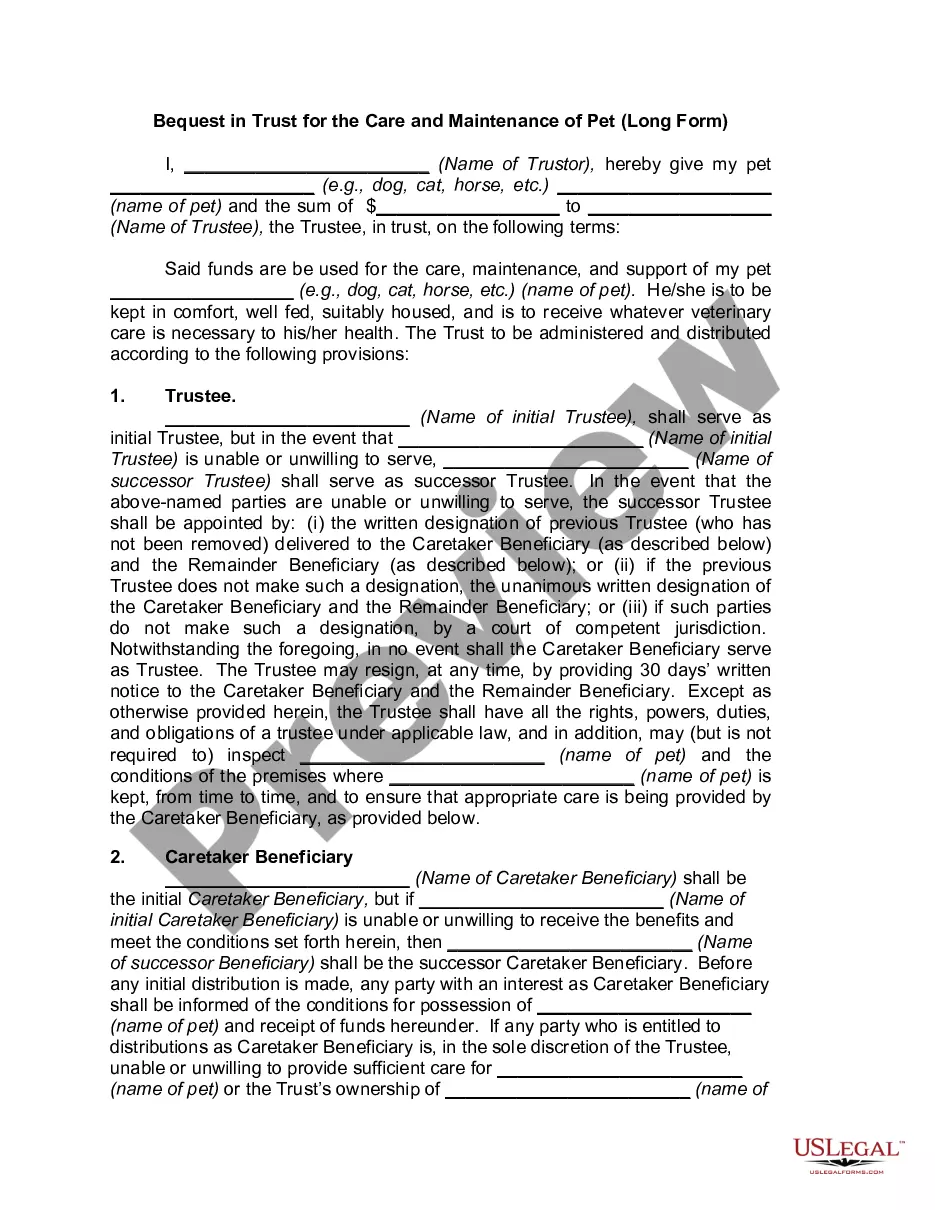
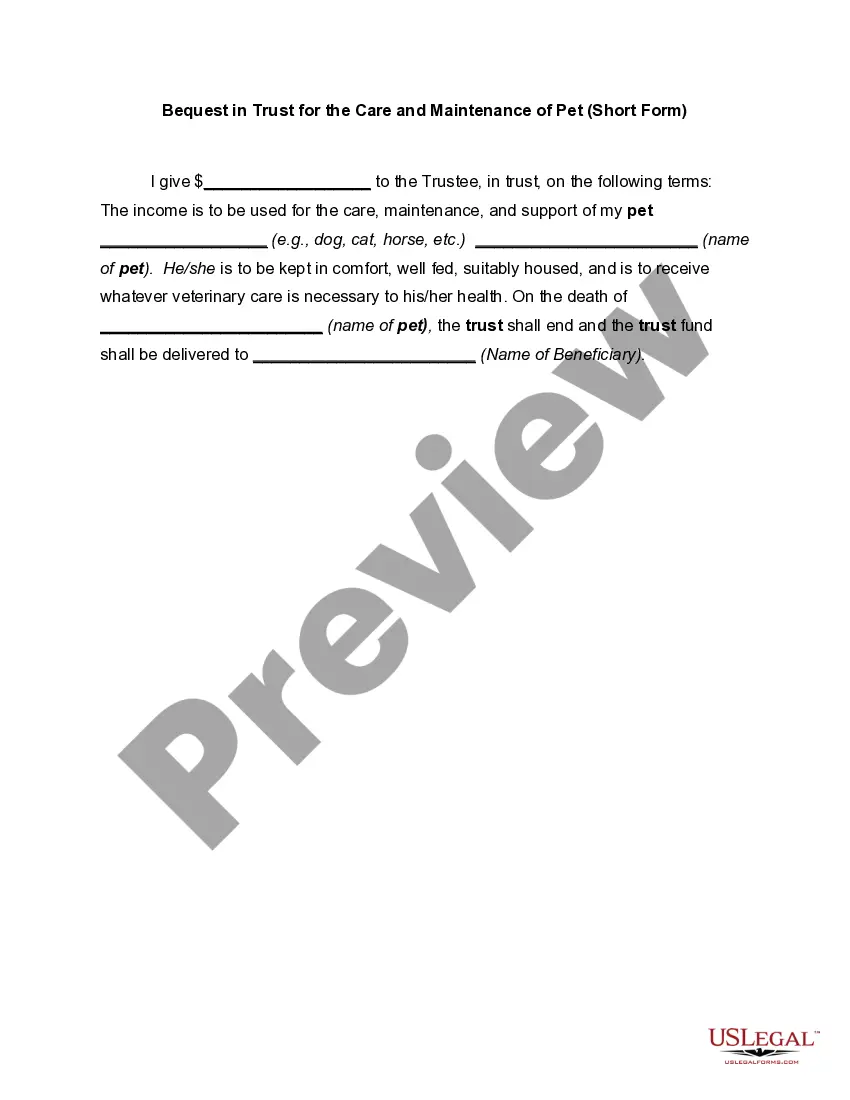
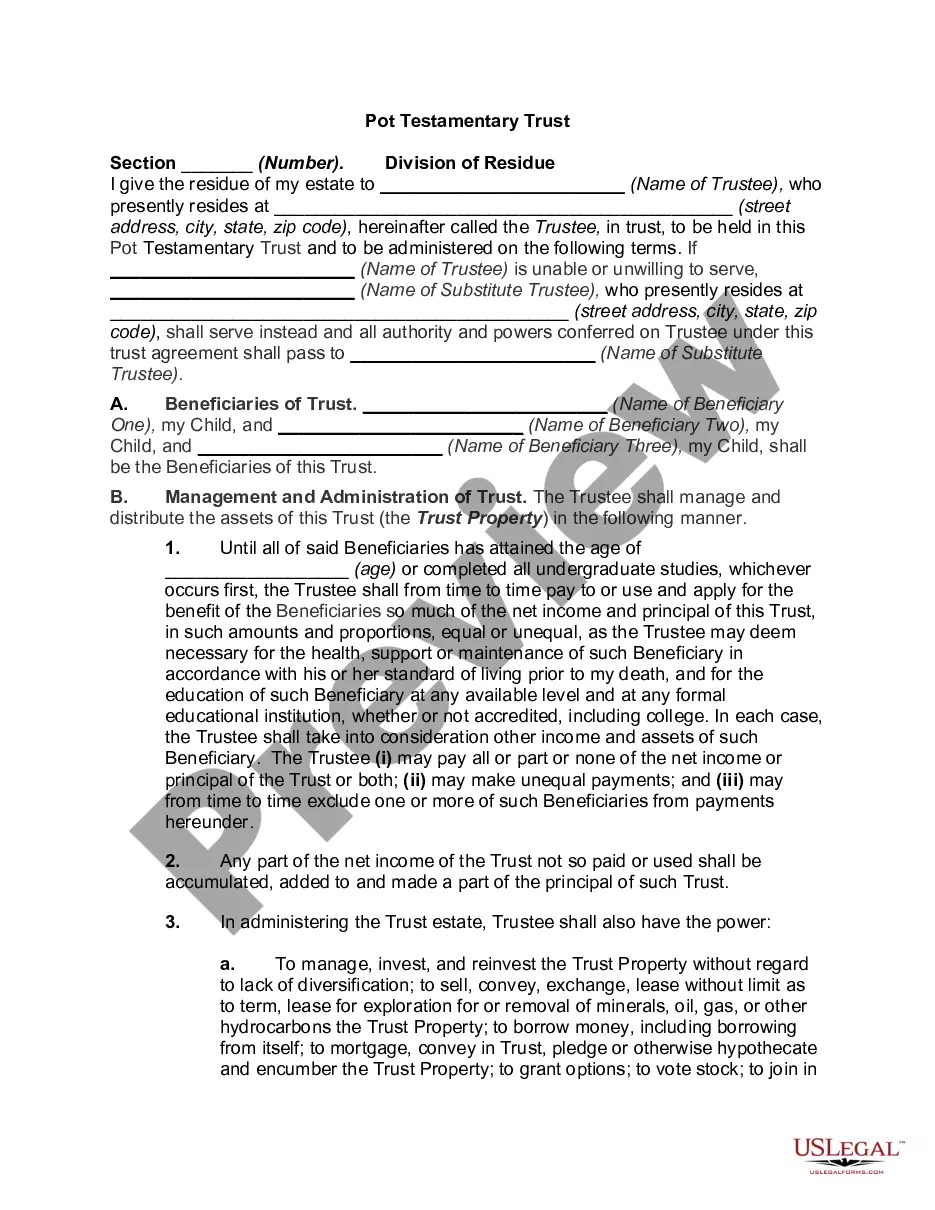
Get your form ready online
Our built-in tools help you complete, sign, share, and store your documents in one place.
Make edits, fill in missing information, and update formatting in US Legal Forms—just like you would in MS Word.
Download a copy, print it, send it by email, or mail it via USPS—whatever works best for your next step.
Sign and collect signatures with our SignNow integration. Send to multiple recipients, set reminders, and more. Go Premium to unlock E-Sign.
If this form requires notarization, complete it online through a secure video call—no need to meet a notary in person or wait for an appointment.
We protect your documents and personal data by following strict security and privacy standards.

Make edits, fill in missing information, and update formatting in US Legal Forms—just like you would in MS Word.

Download a copy, print it, send it by email, or mail it via USPS—whatever works best for your next step.

Sign and collect signatures with our SignNow integration. Send to multiple recipients, set reminders, and more. Go Premium to unlock E-Sign.

If this form requires notarization, complete it online through a secure video call—no need to meet a notary in person or wait for an appointment.

We protect your documents and personal data by following strict security and privacy standards.
Looking for another form?



How to fill out Revocable Living Trust For Pets?
Selecting the correct authorized document template can be quite a challenge.
Of course, there are numerous templates accessible online, but how can you find the legal document you need.
Utilize the US Legal Forms website. This service offers a vast array of templates, including the West Virginia Revocable Living Trust for Pets, which can be utilized for both business and personal purposes.
You can review the document using the Review button and examine the document details to ensure it is suitable for your needs.
- All of the forms are reviewed by professionals and meet federal and state regulations.
- If you are currently a registered user, Log In to your account and then click the Download button to access the West Virginia Revocable Living Trust for Pets.
- You can use your account to review the legal forms you have purchased previously.
- Navigate to the My documents section of your account and retrieve another copy of the document you need.
- If you are a new user of US Legal Forms, here are simple steps for you to follow.
- First, make certain that you have selected the correct document for your area/region.
Form popularity
FAQ
In a West Virginia Revocable Living Trust for Pets, it’s best not to include retirement accounts or health savings accounts. These types of accounts often require special handling, making a trust unnecessary. Additionally, avoid any property that you want to maintain control over during your lifetime, like personal residences. Knowing what to exclude can enhance the efficiency of your estate plan.
You should consider placing various assets in your West Virginia Revocable Living Trust for Pets, including bank accounts, real estate, and stocks. These assets can be managed in a way that ensures your pet’s needs are met without the delays of probate. Additionally, including life insurance policies can add a layer of security for your pet’s future. Make sure to evaluate what’s best suited for your specific situation.
It’s important to avoid certain assets in a West Virginia Revocable Living Trust for Pets. Do not include personal items that you want to distribute through a will, like family heirlooms. Additionally, avoid assets that have been jointly owned, as these usually pass directly to the co-owner without needing a trust. By keeping these items separate, you can simplify your estate planning process.
Yes, under a West Virginia Revocable Living Trust for Pets, you can name your pet as a beneficiary. This allows you to allocate funds specifically for their care after you pass. It's a great way to ensure your furry friend receives proper support, including food, shelter, and medical care. With careful planning, you can provide peace of mind for both you and your pet.
Many people consider West Virginia to be an excellent choice for establishing a revocable living trust, especially when it comes to managing assets for pets. A West Virginia Revocable Living Trust for Pets offers flexibility, allowing you to designate funds and care instructions for your beloved animals. This type of trust can simplify the process of distributing your assets and can provide peace of mind that your pets will be well cared for. If you're exploring options, US Legal Forms can guide you in creating a tailored trust that meets your specific needs.
Yes, you can write your own living trust in Virginia, but it's crucial to ensure it meets legal requirements. However, using a professional service or platform like uslegalforms can guide you in creating a West Virginia Revocable Living Trust for Pets, ensuring the trust complies with state laws. Relying on experts can prevent costly mistakes and ensure that your wishes are clearly outlined and honored.
A pet trust is a specific type of trust that allocates funds and care instructions for your pets after your passing. Within the framework of a West Virginia Revocable Living Trust for Pets, you can designate a trustee to manage the assets and ensure your furry companions receive proper care. This trust helps you secure your pet’s future, guaranteeing they have the necessary resources and care they need, even in your absence.
While trust funds can provide significant benefits, such as the West Virginia Revocable Living Trust for Pets, there are dangers to consider. Mismanagement of the trust by trustees can lead to assets being improperly used, which could impact intended beneficiaries. Furthermore, if the terms of the trust are unclear, it may lead to disputes among heirs. Clear documentation and professional guidance can help mitigate these risks.
If your parents wish to protect their assets and ensure their pets are cared for, establishing a West Virginia Revocable Living Trust for Pets may be beneficial. This type of trust provides clear instructions for asset management and pet care after their passing. It can also simplify the transfer of assets to beneficiaries, making the process smoother for everyone involved. Consider encouraging them to explore this option.
One major disadvantage of a trust, such as the West Virginia Revocable Living Trust for Pets, is the potential for ongoing administrative costs. While the trust avoids probate, it still requires maintenance and may involve legal fees. Additionally, if assets are not properly titled into the trust, it may not fully protect your intentions. Being informed about these potential pitfalls can help you plan effectively.