An easement gives one party the right to go onto another party's property. That property may be owned by a private person, a business entity, or a group of owners. Utilities often get easements that allow them to run pipes or phone lines beneath private property. Easements may be obtained for access to another property, called "access and egress", use of spring water, entry to make repairs on a fence or slide area, drive cattle across and other uses. The easement is a real property interest, but separate from the legal title of the owner of the underlying land.
West Virginia Easement for Access to Property
State:
Multi-State
Control #:
US-00495
Format:
Word;
Rich Text
488 downloads
Description
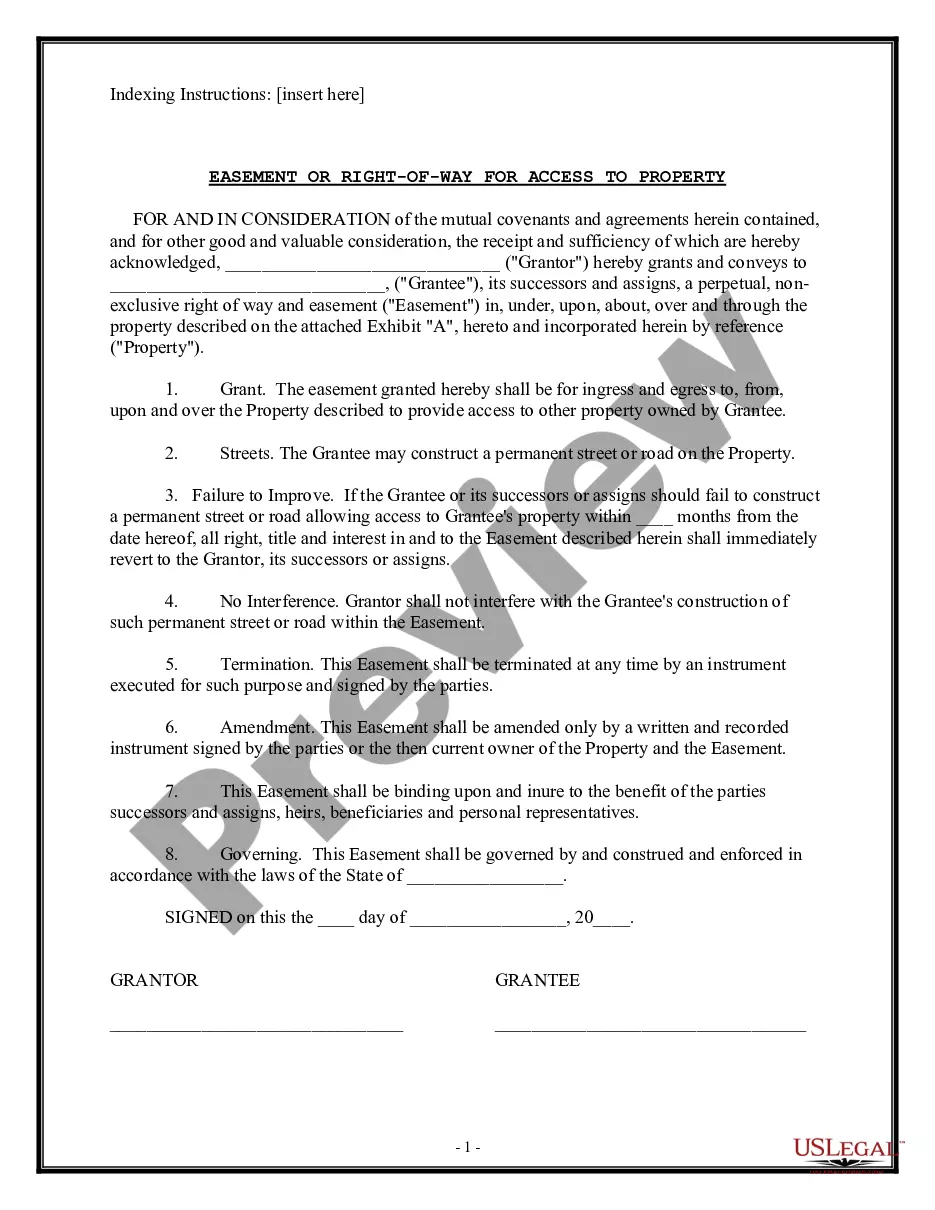
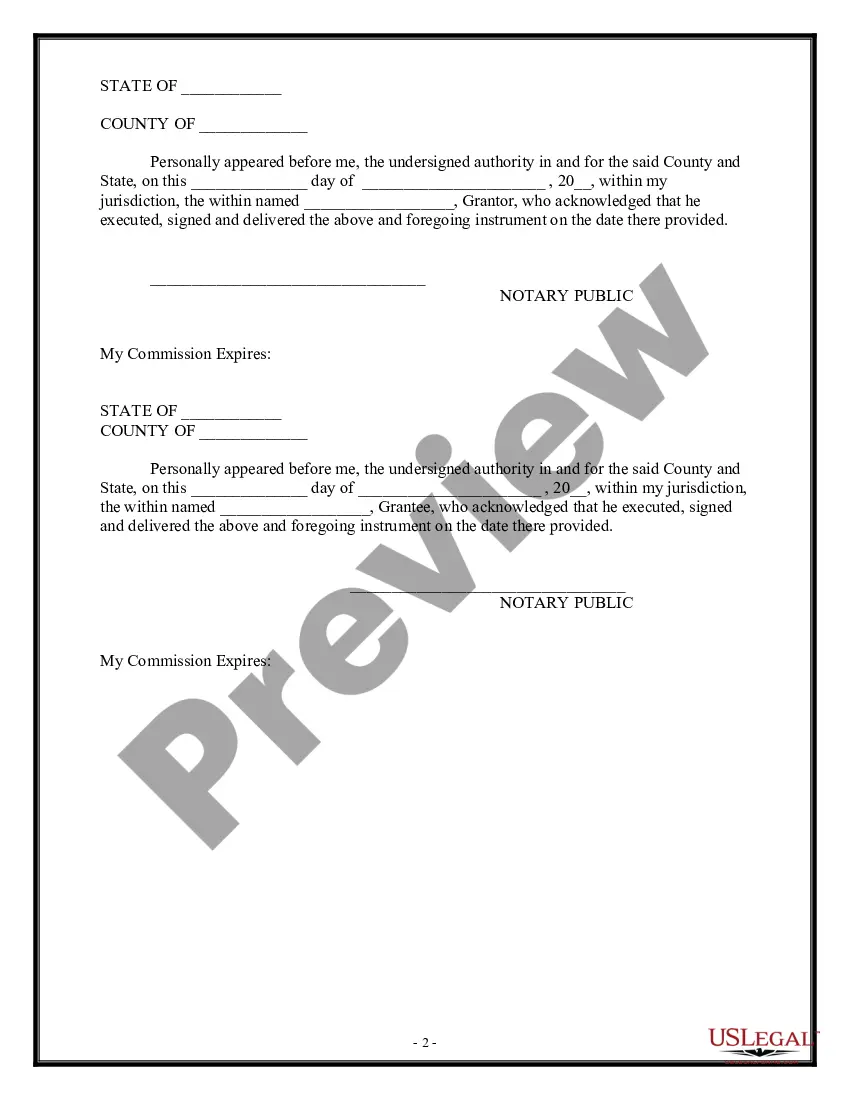
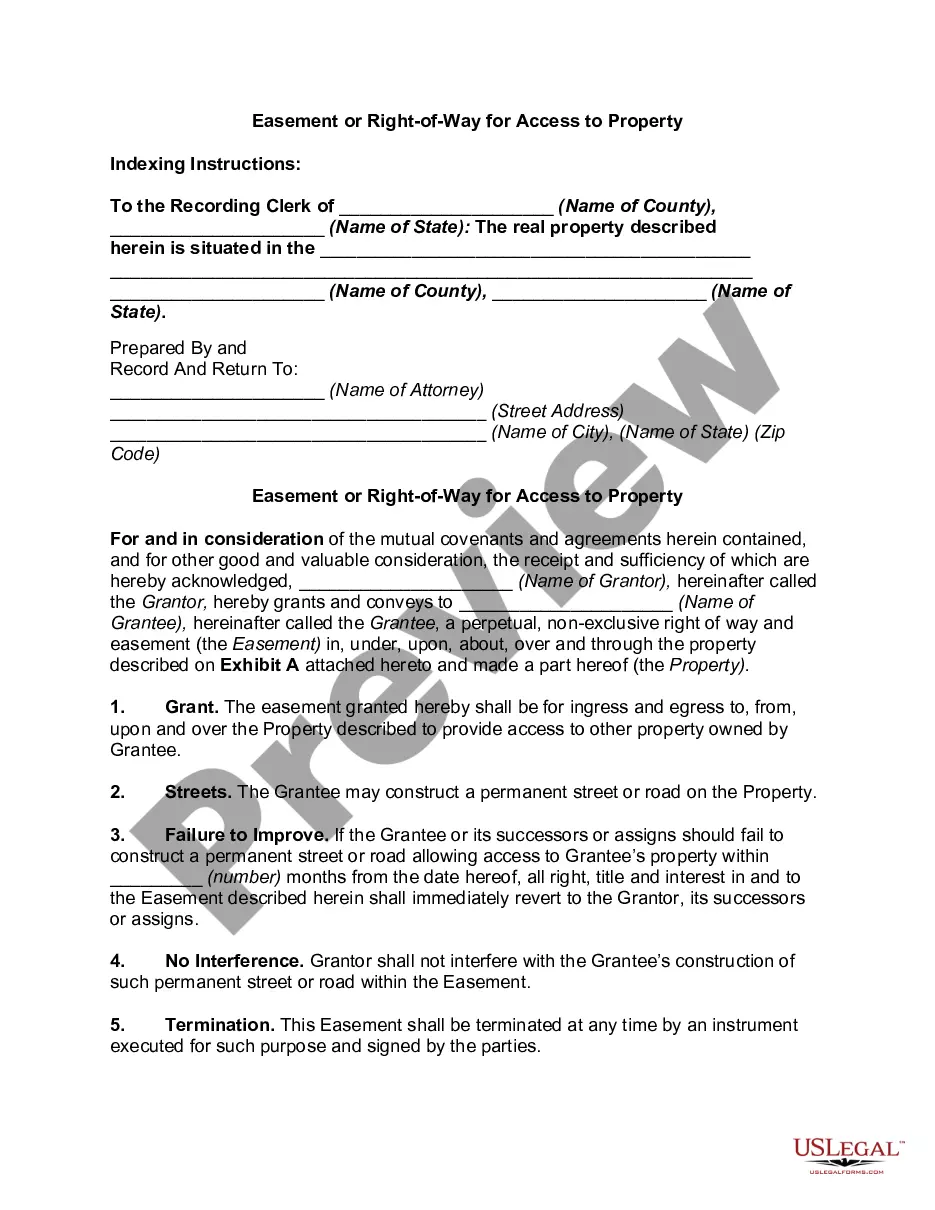
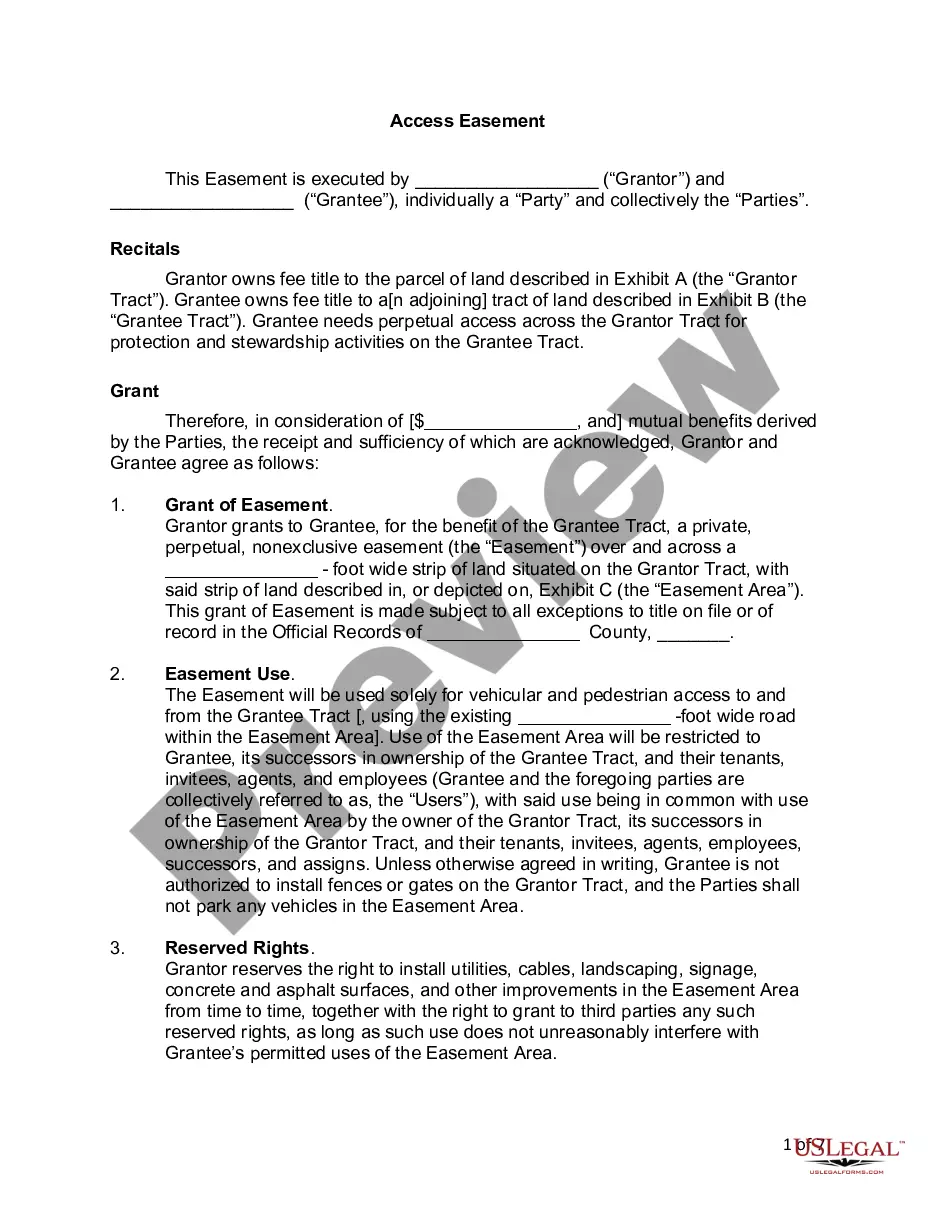
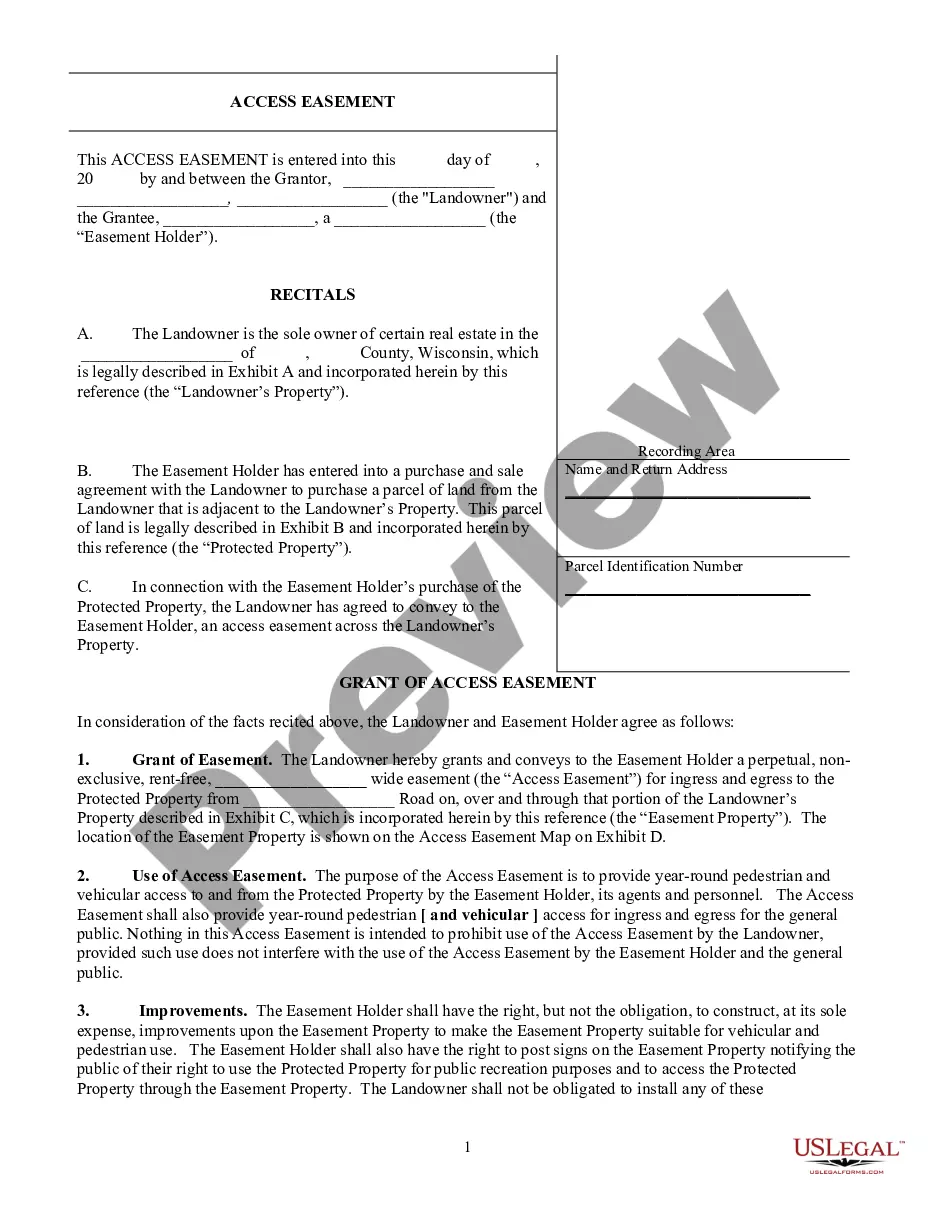
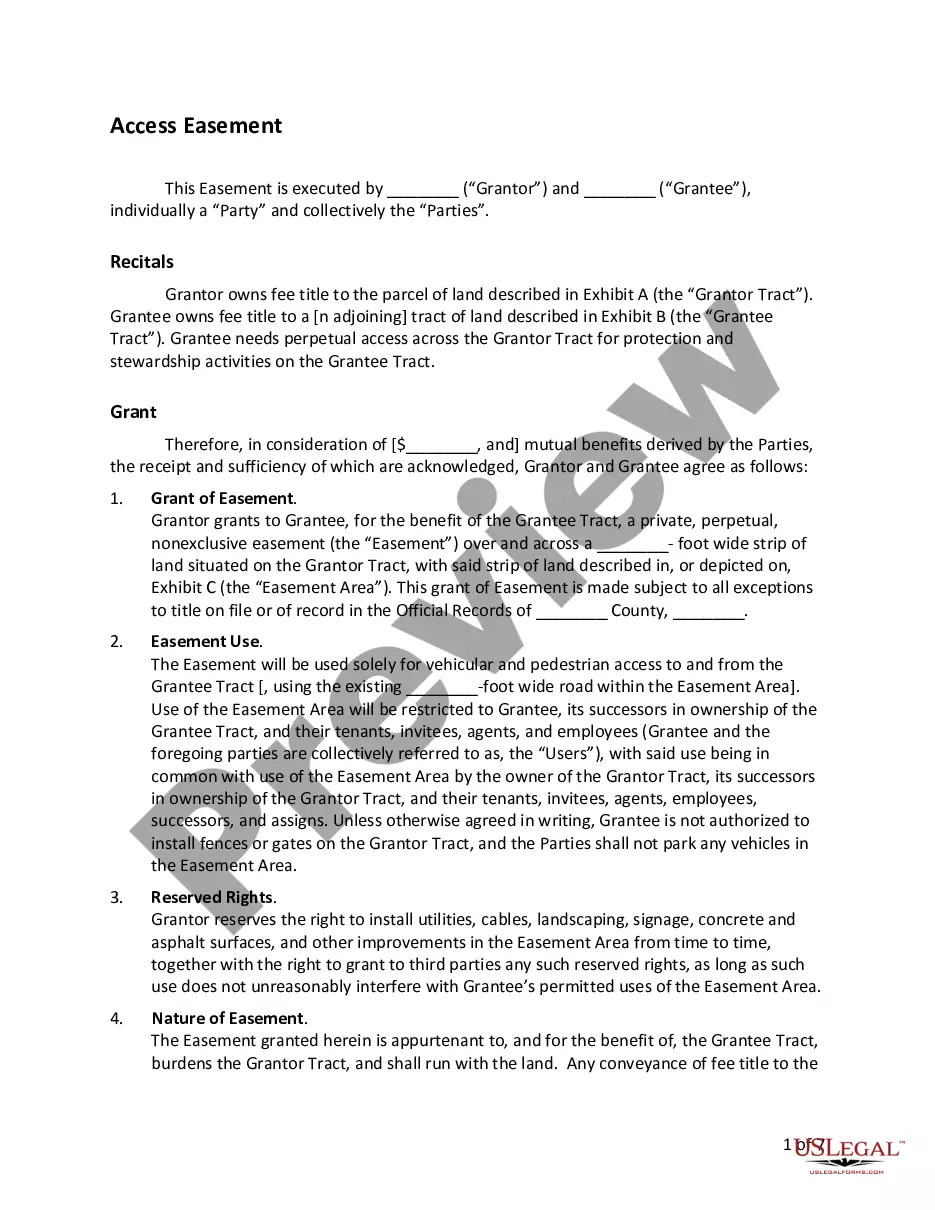
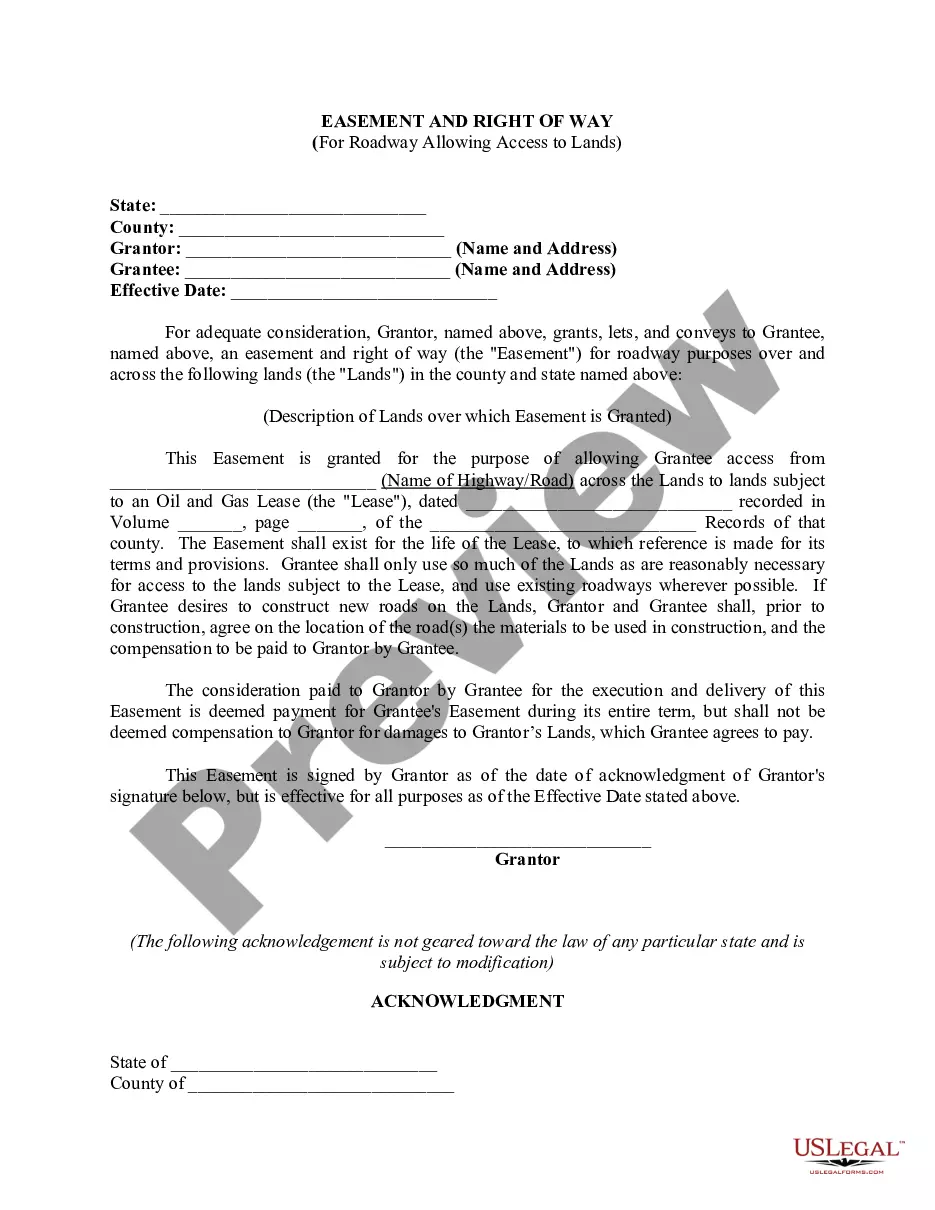
This form is an Easement or Right-of-Way for Access to Property. The form provides that an easement is granted for the ingress and egress to, from, upon, and over the property described in the agreement. The form also provides that the grantee may construct a permanent street or road on the property.
Free preview
Get your form ready online
Our built-in tools help you complete, sign, share, and store your documents in one place.
Built-in online Word editor
Make edits, fill in missing information, and update formatting in US Legal Forms—just like you would in MS Word.
Export easily
Download a copy, print it, send it by email, or mail it via USPS—whatever works best for your next step.
E-sign your document
Sign and collect signatures with our SignNow integration. Send to multiple recipients, set reminders, and more. Go Premium to unlock E-Sign.
Notarize online 24/7
If this form requires notarization, complete it online through a secure video call—no need to meet a notary in person or wait for an appointment.
Store your document securely
We protect your documents and personal data by following strict security and privacy standards.

Make edits, fill in missing information, and update formatting in US Legal Forms—just like you would in MS Word.

Download a copy, print it, send it by email, or mail it via USPS—whatever works best for your next step.

Sign and collect signatures with our SignNow integration. Send to multiple recipients, set reminders, and more. Go Premium to unlock E-Sign.

If this form requires notarization, complete it online through a secure video call—no need to meet a notary in person or wait for an appointment.

We protect your documents and personal data by following strict security and privacy standards.
Looking for another form?



How to fill out Easement For Access To Property?
Have you ever been in the situation where you need documents for either business or personal reasons almost all the time.
There are numerous legal document templates accessible online, but finding ones you can rely on isn't simple.
US Legal Forms offers a vast array of form templates, such as the West Virginia Easement for Access to Property, which are designed to meet state and federal requirements.
Find all the document templates you have purchased in the My documents section.
You can obtain another copy of the West Virginia Easement for Access to Property anytime, if needed. Just click on the desired form to download or print the document template.
- If you are already familiar with the US Legal Forms website and have an account, simply Log In.
- After that, you can download the West Virginia Easement for Access to Property template.
- If you do not have an account and wish to start using US Legal Forms, follow these steps.
- Locate the form you need and ensure it is for the correct state/region.
- Use the Review button to examine the form.
- Check the description to confirm you have selected the correct form.
- If the form isn't what you're looking for, utilize the Lookup field to find the form that fits your needs.
- When you find the right form, click on Get now.
- Select the pricing plan you prefer, provide the required information to create your account, and pay for the order using your PayPal or credit card.
- Choose a convenient document format and download your copy.
Form popularity
FAQ
Competing Easement Rights Sometimes homeowners want to understand if they can remove an easement from their property or can a property owner block an easement. If the intent is to prevent or obstruct the use of the easement, the answer is probably no. In Virginia, a specific statute addresses this last point.
You might be able to negotiate directly with your neighbor to get an easement. This might include paying your neighbor a fee to allow you to access the land. Be sure, though, to never rely on a verbal or handshake agreement. Instead, sign legal documents to make the easement official.
All easements held by the Virginia Board of Historic Resources are recorded with the land records of the city or county in which the parcel of land subject to the easement is located.
A conservation easement protects the land from further residential development, maintains the unique agricultural qualities, and protects headwaters and riverbanks for an ecologically important river and trout fishery.
Prescription ? a legal Easement may be presumed if a claimant can show a long and continuous use of the area. The period of uninterrupted use must be 20 years. Where the land is unregistered the legal right created by 'prescription' is legally binding.
Typically, losing a right of way happens in one of three ways: The parties involved expressly agree to extinguish the right by entering into a formal deed of release. The person with the benefit of the right demonstrates by their actions that they intend to abandon it.
A ?right of way? is an easement which allows the owner of one property to cross another, in order to access it. Further, a right of way may become a 'right to roam. ' This can happen if the landowner has given permission or the local community has used the right of way for many years.
The easement of necessity doctrine (also called easement by necessity or ways of necessity) implies an easement right for parcels that become landlocked after partition or partial transfer. That is, the context in which easement of necessity arises is limited.